Marlow and Wes
1, rue Saint-Claude, Paris
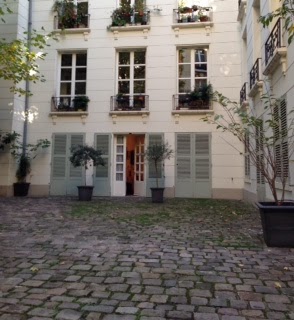
31 October 2013We were staying in the Marais for the first ten days. The small building was elegant. Our ground floor unit, (see open door in the photo,) a one-
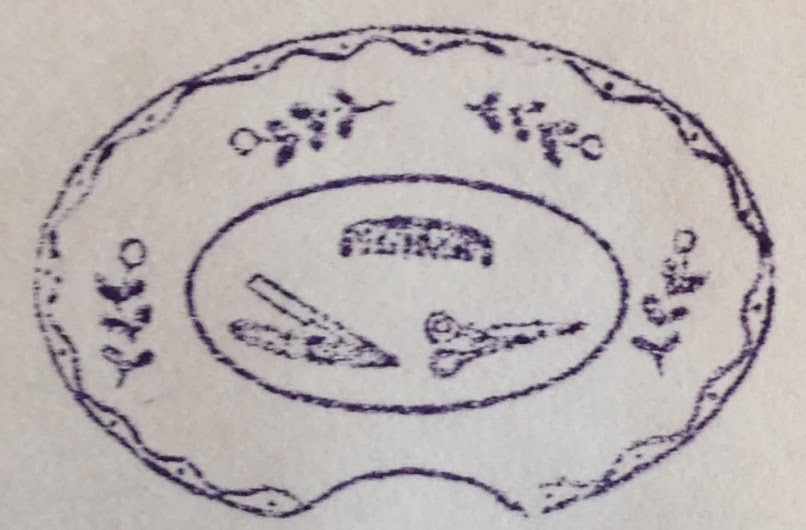
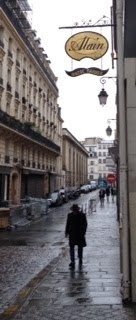
bedroom, opened onto a tree-lined cobblestone courtyard. Beyond the distant wall, through large green doors—large enough for your carriage and horses—is rue Saint Claude. A few paces to the left is a small barber shop. More than a barber, really. As per his card, his title is, “Maître Barbier Coiffeur.” (Master Barber Hairstylist.) His name is Alain. He offers “coupe personnaliste, taille de barbe, rasage à l’ancienne.” His shop is a “salon musée.” The walls are hung with antique porcelain bowls, for washing hair, each with a crescent shaped indentation (like this)
to accommodate a human neck. For several days we walked our unruly hair past his windows. We peered in. He peered out. He knew we needed him. We made appointments. He was polite and formal. He wrapped us in capacious robes of flouncy fabric. Christening gowns. Classical music wafted. Our hair was washed in warm water with soothing hands. After a quick rub with a towel the snipping began. Quick, confident, without conversation, and finished in ten minutes. I have to admit we looked great. Maître Alain was
pleased. Seeing us daily through his windows, he knew he had skills we needed. What will we do without him.Marlow and Wes
1, rue Saint-Claude, Paris
31 October 2013
Monuments of Paris
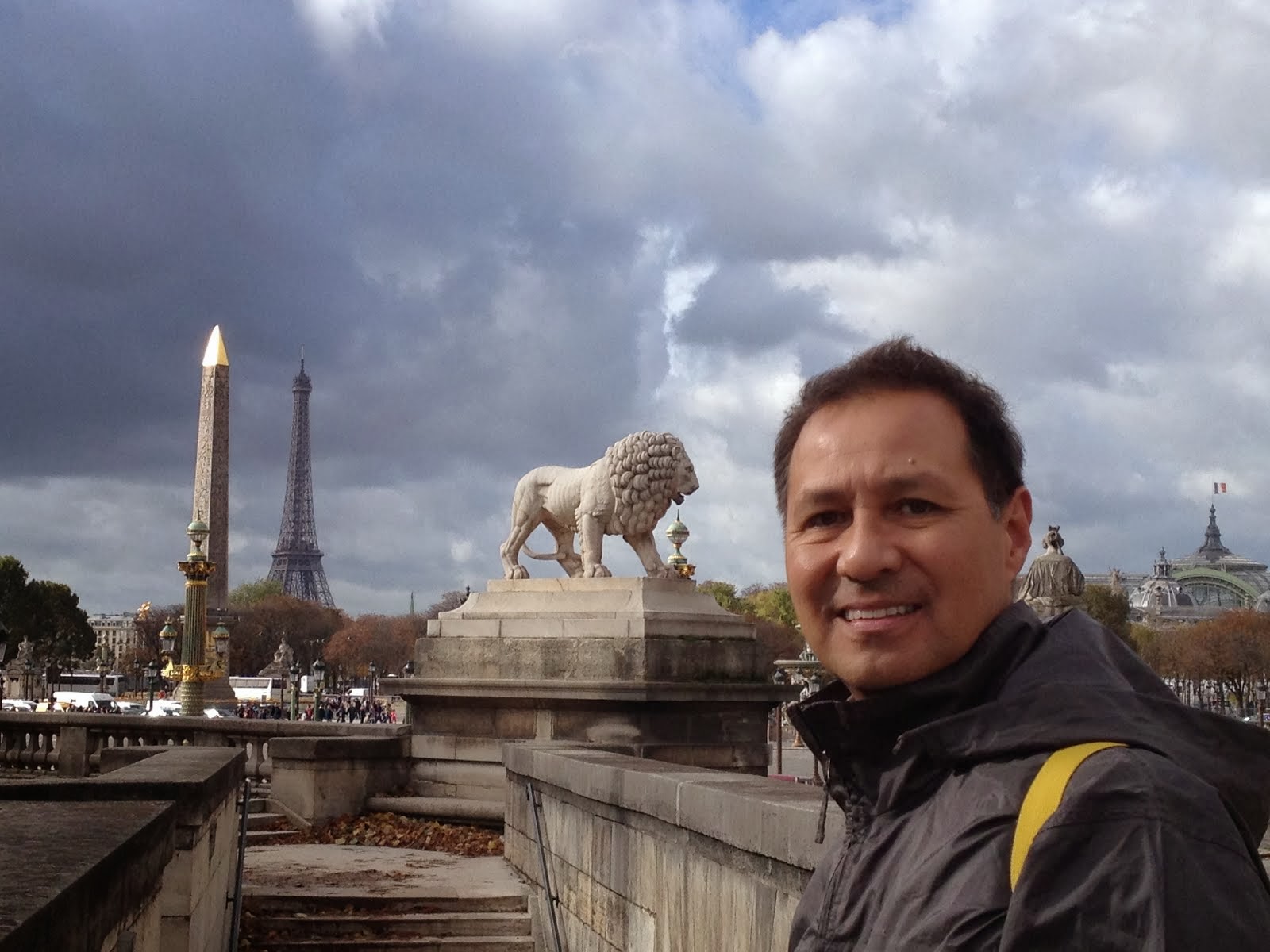
Paris, 1 November 2013
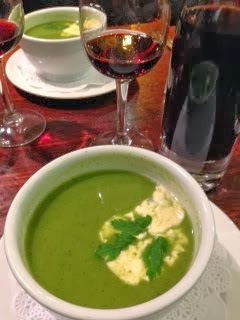
Take several handfuls of watercress leaves. Put them in a pot. Add an onion and water. Simmer. Purée. Voila! Watercress soup. That was the start of dinner at the Café des Musées.
In Spain, they raise small black pigs within an oak forest. Their entire diet is acorns. They are pampered. Their meat and fat taste subtly of nuts. On my plate is the filet mignon of such a pig. It is tender. It is juicy. Surrounded by cloves of roasted garlic. On the side is a ceramic dish of gratin potatoes smothered in cream, or is it butter, and cheese.
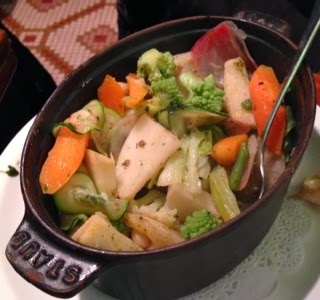
Across the table is a Staub cast-iron miniature dutch oven. Inside it are vegetables. Green beans. Carrots. Turnips. Mushrooms. Cauliflower. Pale green, pointy tipped broccoli. Onions, red and white. They are cooked individually and lightly then layered inside the oval pot. On with the lid and into oven. The flavors meld. And it is our main course number two.
We have eaten here before. The chef does clean honest cooking. The meats are cooked perfectly. Even the steak tartare is just right. The seasoning is moderate. The flavors of the main ingredients speak for themselves. We are happy.
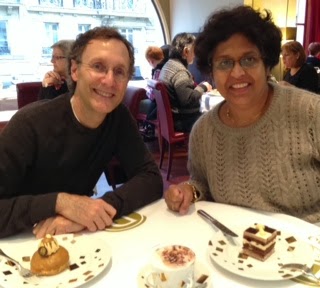
Earlier today we visited the salon de thé of Dalloyau on the rue Faubourg du Saint-Honoré. It was four in the afternoon. Quiet and calm. We gorged on Baba au Rhum and Financier and Chantilly cream. Everything rich and decadent and what the cardiologist bans. We were happy to flout the doctors advice for the afternoon.
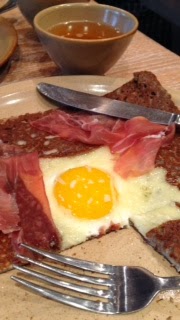
Before the pastry-fest we ate lunch at the Breizh Café. It’s owner has come to Paris from Brittany, in the north, and brought with him the special cheese, the special ham, the special eggs of the north which he converts into galettes. A galette is simply a crêpe made with a buckwheat batter. We ate our galettes
and each drank a small bowl of fresh, fermented, hard cider made from the fresh crop of apples.Is breakfast really the most important meal of the day? Not in Paris.
Marlow and Wes
Paris
1 November 2013
Paris: Lang Lang, Place des Vosges, 31 Oct 2013
Wes and Marlow in Paris31 October 2013It is Thursday, October 31, Halloween in Paris. We are inside the Theatre des Champs-Élysées. In thirty minutes, we will hear Mr. Lang Lang play Chopin while the soloists of the Houston Ballet dance beside and around his piano.
This theatre was built in 1913. In it’s first season, on this stage, Sergei Diaghilev’s Ballet Russe gave a performance of a new ballet by a young composer. His name was Igor Stravinsky. His ballet was called, Le Sacre du Printemps. The Rite of Spring. It ends with a young woman in a dance so frenzied that it kills her. The premiere scandalized the music and the dance world. So primal. So sensuous. That was in nineteen-thirteen. We once met a woman, Beatrice Wood, who was at that famous performance in this exquisite theater and she told us what it was like.
The theater is looking good in it’s hundredth year. It is Art Deco. Elegant. Gold leaf, Lalique glass, marble, rose-color walls. Every seat on the first two levels is an individual armchair: wood framed with brass tacks and velvet upholstery. We are sitting in them.
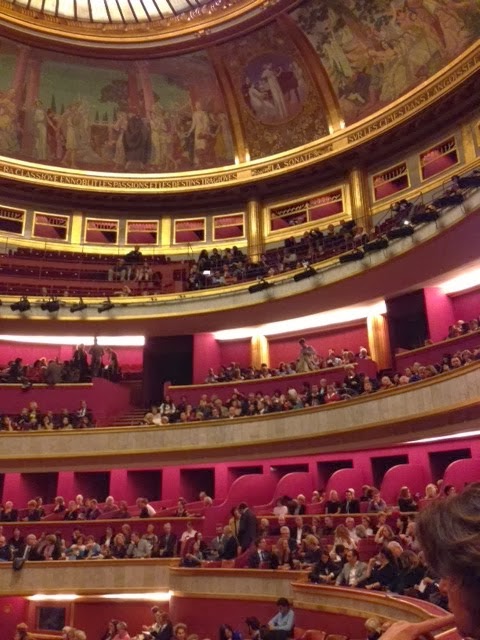
one hour later ….It is lovely program. Mr. Lang Lang gets to play and play. Uninterrupted. One beautiful Chopin work after another while the dancers dance. Only a few streets away from this theater, delicate and sickly Frederic Chopin lived, taught, composed and induced swoons from the elite who attended the salons where he played, where he dazzled. Tonight, too, has a salon ambiance. The interior of the theater is round. The chairs are typical of a living room. The lighting gives the room a warm glow. It feels intimate.
The sixteen dancers began and ended the show together on stage. In between, there were solos, duos, trios and quartets. Typically, during a dance concert the musicians will follow the dancers. In this instance, with a celebrity piano soloist, the dancers were obliged at times to follow the piano when he’d get in a lickity split mood. In these days when dance companies cannot afford live musicians, the Houston Ballet must be under a lucky star.
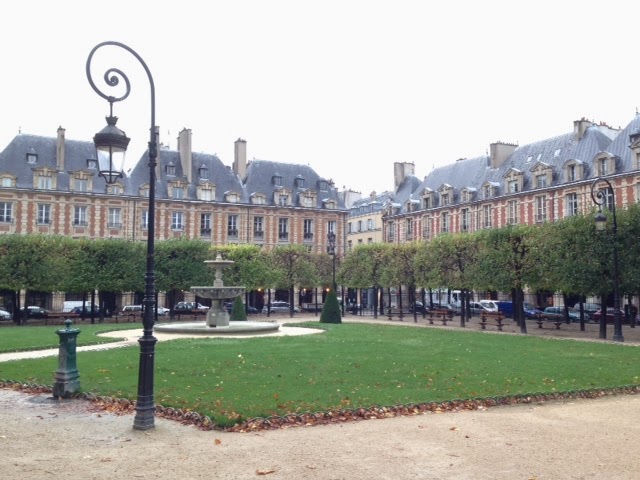
We have been in Paris for one week. Everyday we walk in the Place des Vosges, a square with former royal apartments and a park in the center. The park has double rows of trees on the perimeter and in each corner is a two-tiered fountain and lawns. In the center of it all is a circle of chestnut trees surrounding a stone statue of King Louis the Thirteenth on his horse (which is anatomically correct).
The current statue was erected near 1830 as a replacement for a bronze statue installed in the sixteen-thirties. That statue was pulled down and destroyed during the French Revolution.There is in the Place des Vosges an outstanding hotel, the Pavillon de la Reine. We stayed there twenty-five years ago, in our youth. We stopped in this week to have a look, rekindle a memory. If one wants to splurge it is a great place to stay. You’d never have to leave the square. There are restaurants, an art museum, the park to promenade in, and there is the residence of Victor Hugo, the author of Les Miserables.
Place des Vosges is an elite address. The apartments, no longer royal, are still palatial. On the ground floor are various restaurants. I peeked into one. It is called L’Ambroise. Sumptuous. Luxurious. Intimate. Living room like. Velvet, mahogany, brocade, gold leaf, every material the best of it’s kind. I read the posted menu. Here are the general prices in US dollars: appetizers, $130; main course, $200; dessert, $110. And that is the Place des Vosges.
Wes and Marlow in Paris
31 October 2013
Lyon, October 21-24, 2013
We arrived into Lyon on the high speed train for a three-night stay at the Cour des Loges hotel located in the Vieux Lyon district which is narrow lanes paved with white marble and cobble stones. A perfect cloak and dagger setting. Lots of twisty streets barely one car’s width. And old, founded by the Romans in 43 B.C.The Cour des Loges was cobbled together in 1986 from four existing fourteenth-Century buildings that surround a courtyard. It is a colorful and eccentric place. Amusing to explore the all the stone spiral stairwells and akimbo passageways. Though it becomes serious to imagine the Jesuits in the seventeen-eighties who, during the French Revolution, were taken from our building and probably guillotined. The revolutionaries were keen to exterminate aristocrats and the clergy who they felt were responsible for keeping the rich rich and the poor poor.
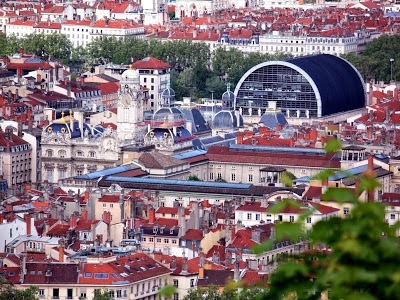
We went to a performance at the Lyon Opera of “The Dialogue of the Carmelites” composed in the nineteen-fifties by Mr. Francis Poulenc. It tells the story of a church full of Carmelite nuns who were rounded up and guillotined during the French Revolution. Was it at “our” hotel?
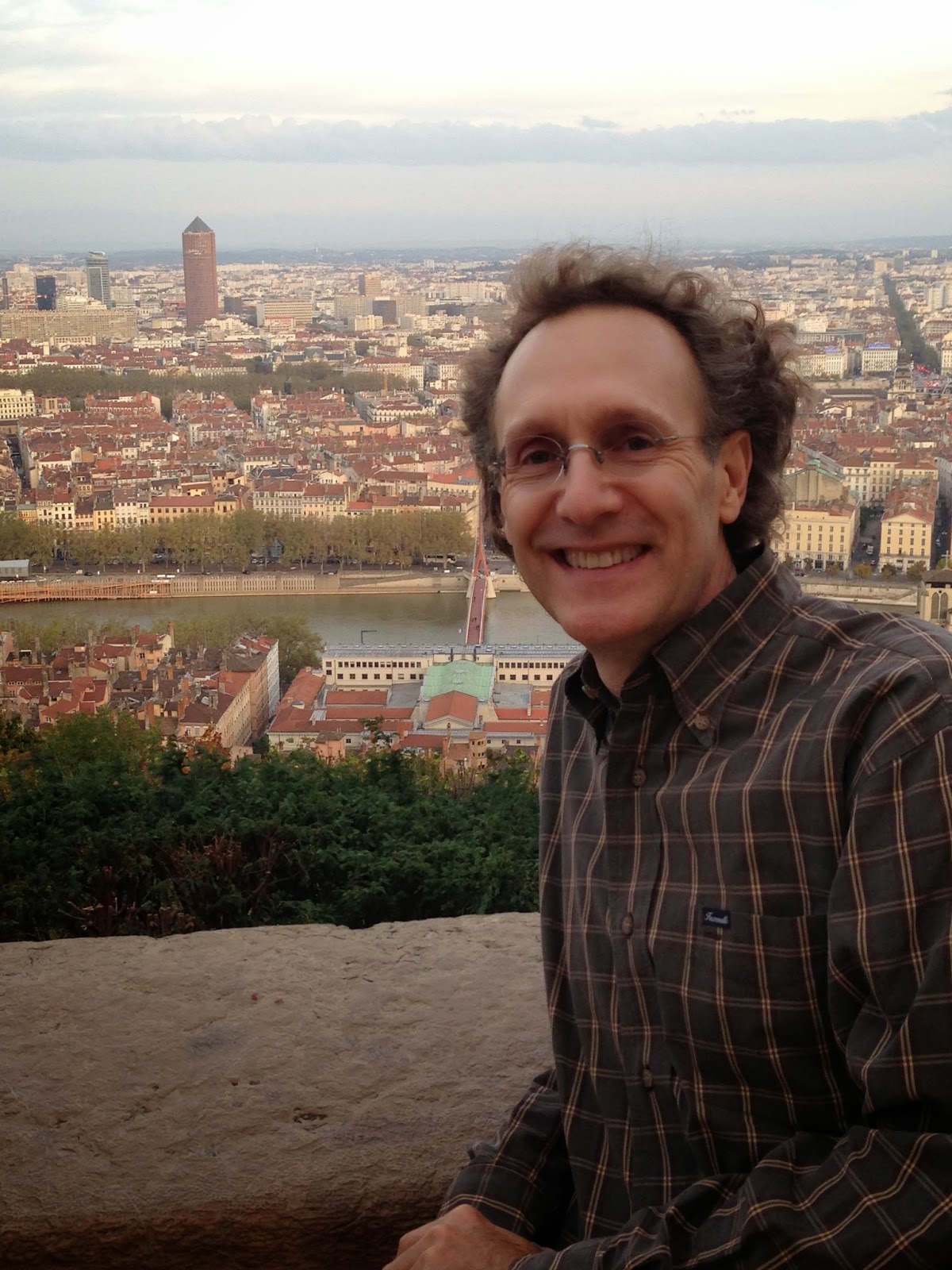
The layout of Lyon is very attractive. Hilly like San Francisco, but with two rivers slicing through it. Between the rivers are spacious plazas, a large fountain by Bartholdi who built our Statue of Liberty and the grand city government buildings. There are of course a lot of bridges. And in general, most of Lyon is a pleasure stroll with allées of trees and river fronts and boulevards and hilltop vistas.
Much attention is given in travel literature to the Traboules of Lyon. These are in essence short cuts that go right through the ground floors of buildings. We visited a few. I felt awkward. These shortcuts go through residential buildings. I would not enjoy random tourists squawking in foreign languages walking through my backyard and I’m certain the Lyonnaise don’t like it either.
Did we eat? Yes we did. Cream and butter and organ meats are alive and well in Lyon. We passed on the organs, but brought on the butter and cream. Our outstanding meal was in the bouchon of “Daniel et Denise”. The new owner, Charles Viola, kept the old name and the old style cuisine. He’s been recognized and awarded many honors, but in the end, is his food delicious? Yes, very. At our table was a salad lyonnaise of frisée lettuce, lardon (bacon chunks), bacon slices and a poached egg. I’ve had it many times before, this one was “the one”. There was a plate of pommes dorées, thick potato slices cooked in butter till golden and crisp. And a carafe of outstanding house wine. And a plate of macaroni doused with cream and cheese. And a filet of a fish called, bar. And pork roast. And squash soup laden with cream. And île flottante for dessert. The room was filled with happy diners. There was pleasure and laughter. The table cloths were a classic red and white checked pattern. The servers were young, kind and patient. It was a wonderful meal, but probably not something one should have regularly.
We ate an excellent lunch at, Maison Villemancy, perched on the edge of a hill in a park overlooking the city and the Rhone River. We ate “Volaille fermière des Dombes à la crème parfumée à la châtaigne et riz basmati”. The Dombes plateau in the northeast, and the adjacent plain of Bresse, produce the finest chickens in France, with red combs, white plumage, and blue feet, the colors of the French flag! Our chicken was, indeed, served with several inches of it’s blue leg in a chestnut cream sauce.
For dessert we had the “clafoutis aux figues fraiche et glacé pain d’épices”: fresh figs baked in a light egg custard batter with a scoop of anise-spice-bread ice cream in the center.We visited the Lumiere Museum which is housed in the mansion of the Lumiere brothers. The house alone is worth the visit. It is very grand with many original carved wooden banisters, large expanses of stained glass windows, ornate floor tiles, parquet wood and a a bedroom with original furnishings. But the museum’s mission is to recall the day in eighteen-ninety-five when the brothers set a camera atop a tripod and filmed the workers coming out of their factory. It is the first motion picture ever made on film stock. There are blue lights embedded in the sidewalk where the camera once stood and a large glass panel etched with the life-sized images of the workers erected where the factory gate once stood. That is the entryway to the pavilion for the Lyon Film Festival which occurred two weeks ago.
Overlooking Lyon, on a plateau, is the Croix Rousse, named for a russet color cross that was long ago placed there. That neighborhood was the center of the hive of silk manufacturing. There they would cultivate the silkworms, unravel their cocoons, feed sixty silk fibers into a machine to make thread, then weave the thread into fabric. That was in the seventeenth, eighteenth and nineteenth-Centuries. The wages were low. The conditions harsh. Silk is still created in the neighborhood, though not on the same scale. And the machines are still there. Fascinating concoctions of thousands of moving parts and hole-punched cards seeming like primitive computer technology. The machines are still standing in rooms in the buildings where they were once operated. Their complexity boggles the mind.
Lyon was a hit with us.
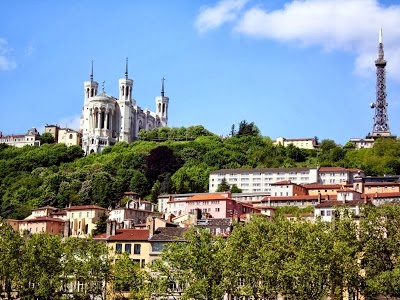
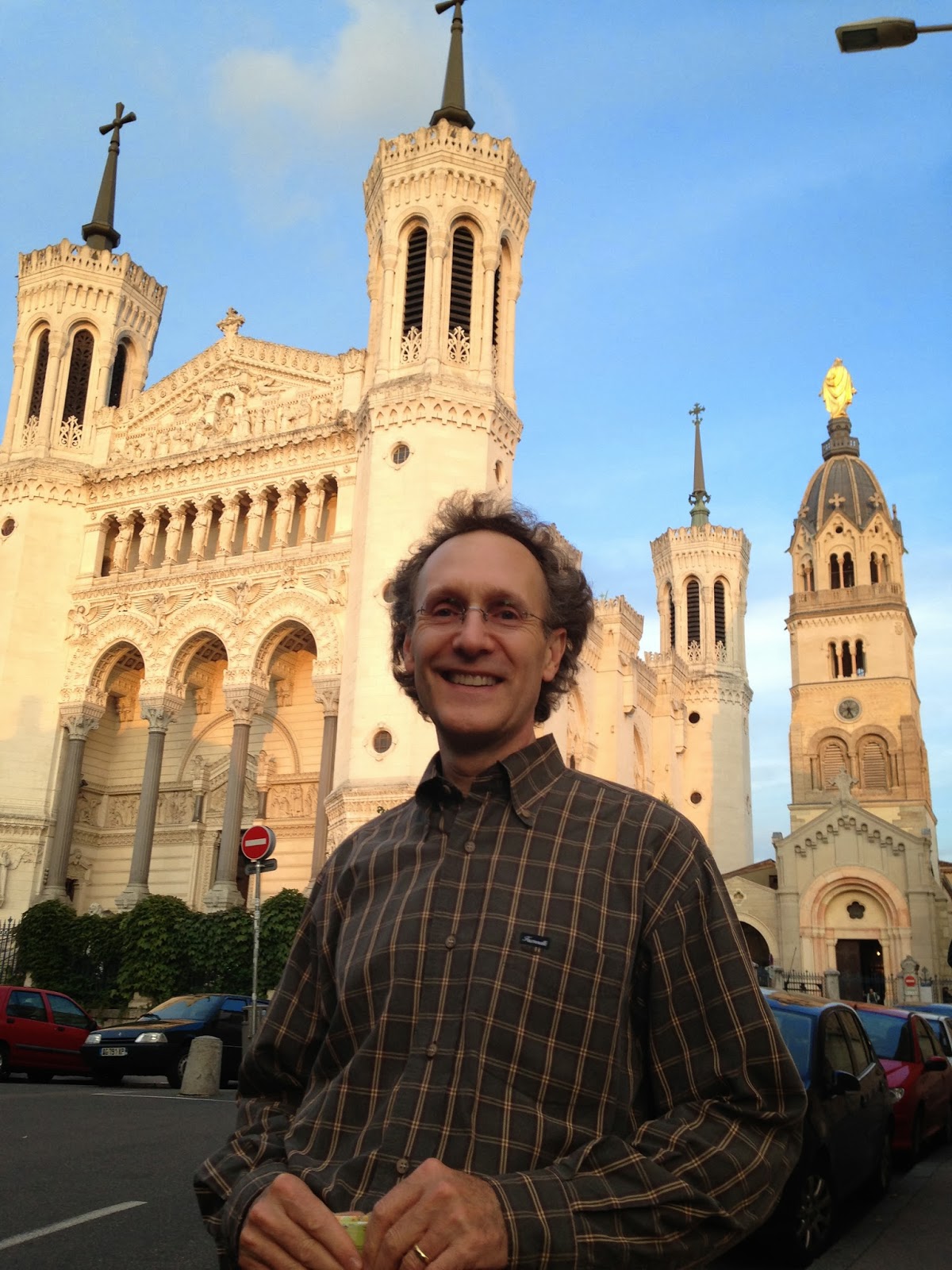
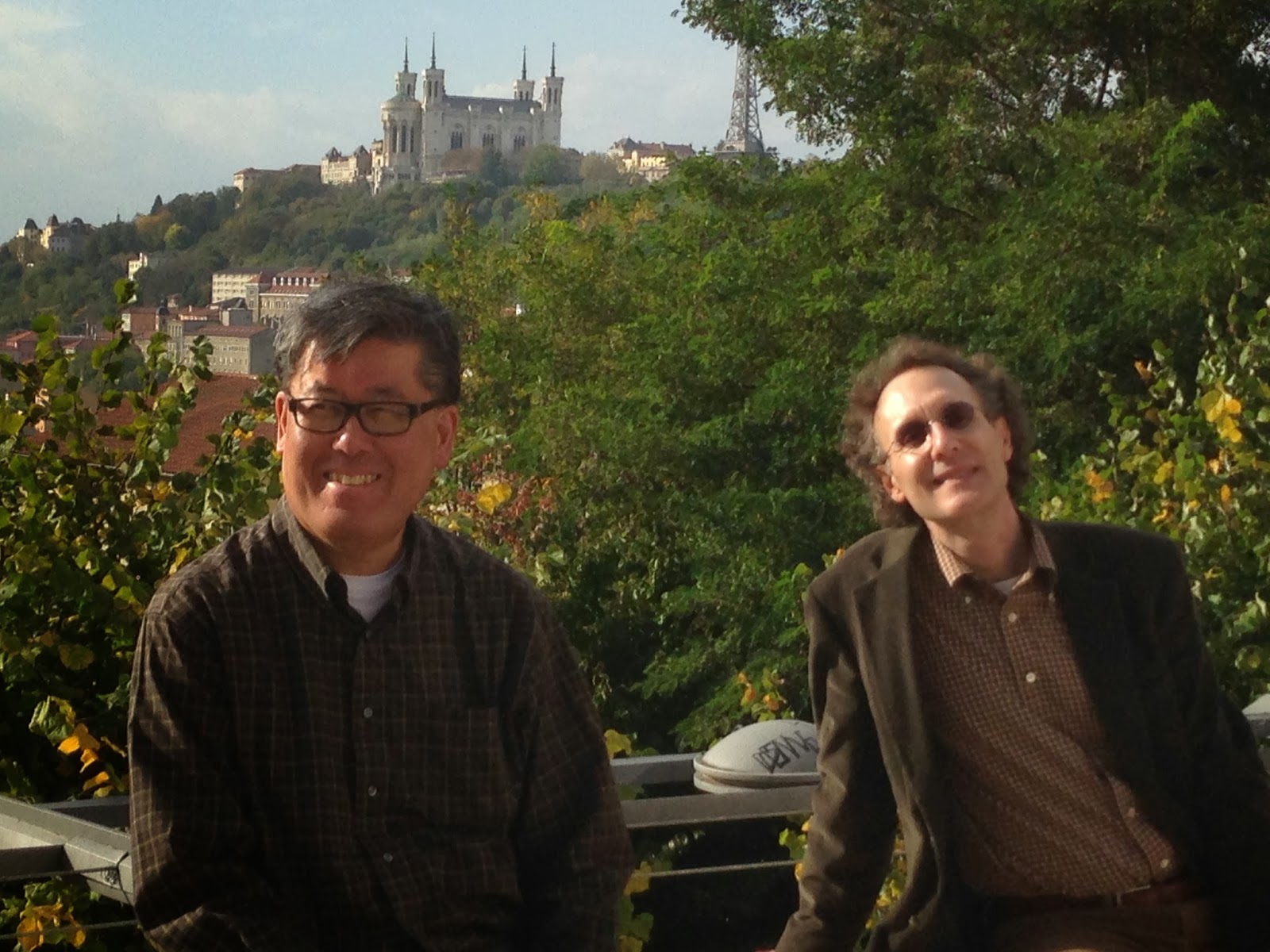
Lyon
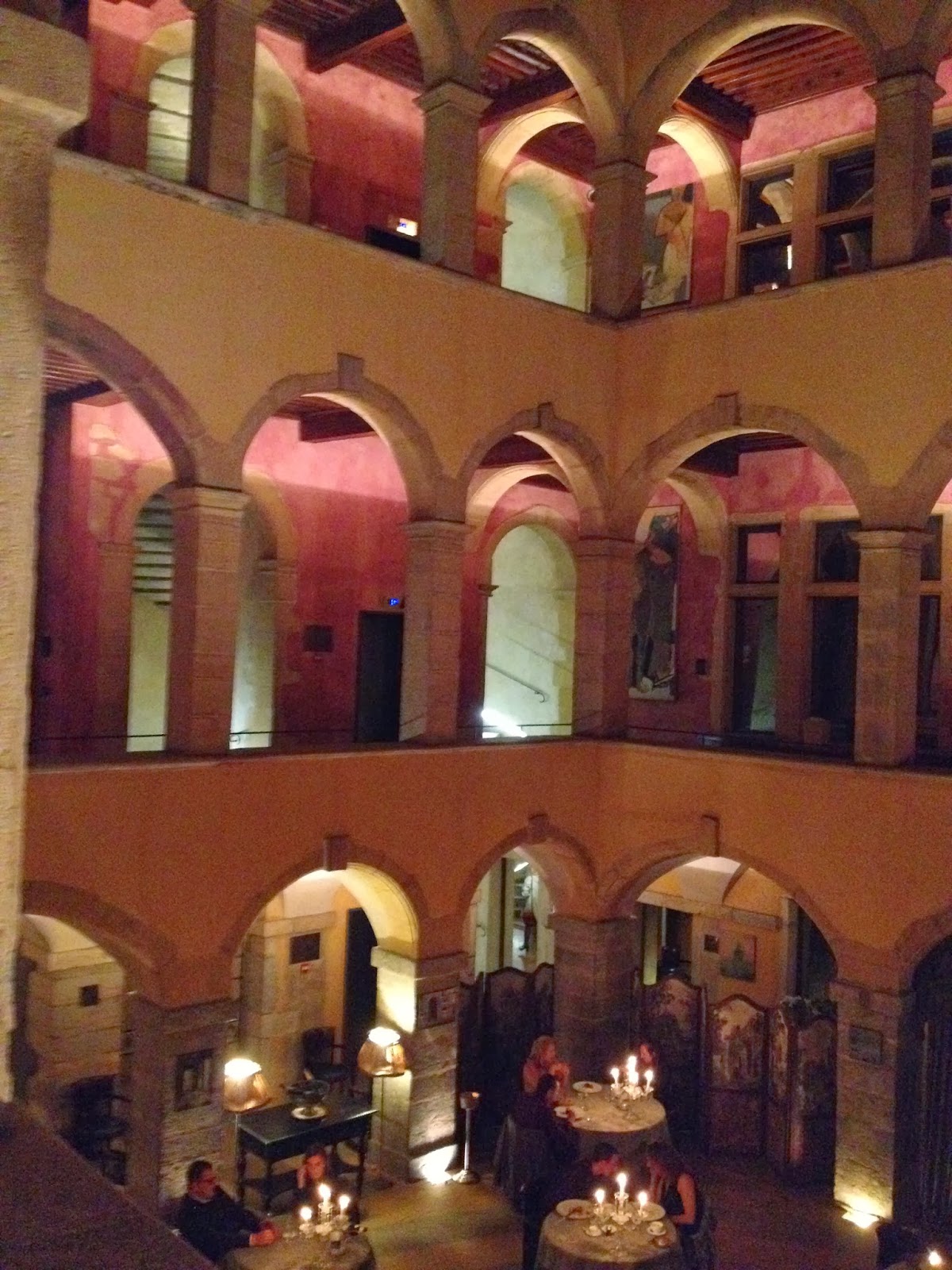 |
| Cour des Loges Hotel |
Lyon lies about midway between Turin and Paris so it seemed like an opportune time to visit the city in Paris that is best known for its restaurants. That’s right, they say that Paris is heart of France but Lyon is its stomach! Based on our short time there we didn’t find any reason to disagree! Food is first and foremost what people in Lyon talk about and young start-up chefs and their restaurants are everywhere. Lyon is also a UNESCO world heritage city. We stayed in one of the most interesting hotels I’ve ever seen. Located in the oldest part of Lyon the hotel has a fantastic courtyard right out of the Renaissance and consists of a warren of rooms on various levels. But it also has modern conveniences including a swimming pool tiled with mosaics akin to a Roman bath but with an automated current machine so I could swim in place.
I was anxious to try the famous chicken raised in Bresse – just to the north of Lyon. And fortunately we found it on several menus.
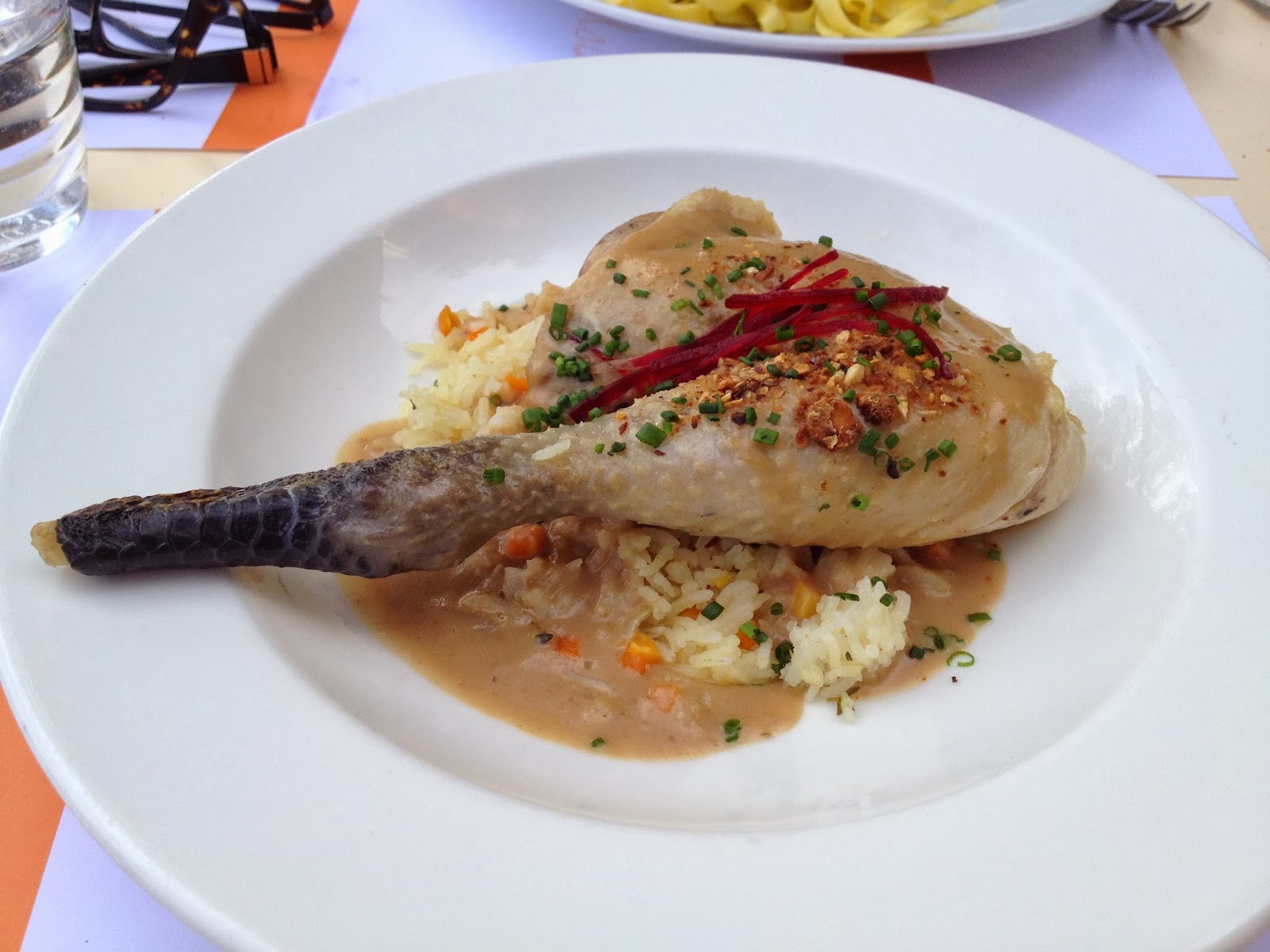 |
| Bresse chicken leg and thigh |
The chef Paul Bocuse is from Lyon and one of his enterprises is Les Halles de Lyon – a food emporium (shopping mall) where each of the 80+ stores sell prepared foods of a very high quality. There are also cheese, meat and fish purveyors. But it bears little resemblance to the other colorful markets of Europe we have visited in Paris, Barcelona or Rome. This marketplace has a high gloss very rich feel and there is no sawdust on the floor or vendors shouting out the prices of their goods.
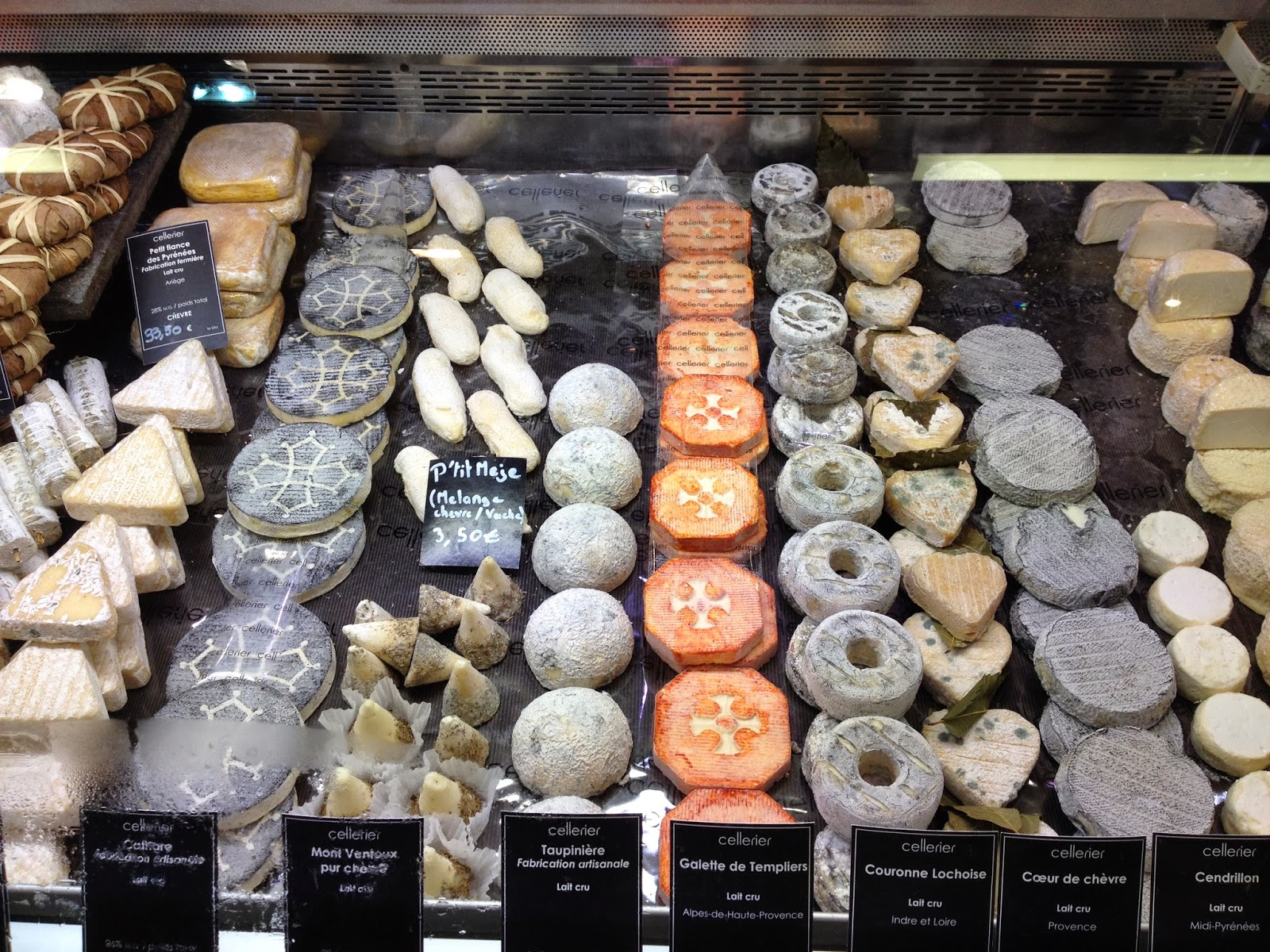 |
| Goat cheese on display at the Paul Bocuse food emporium “les Halles” |
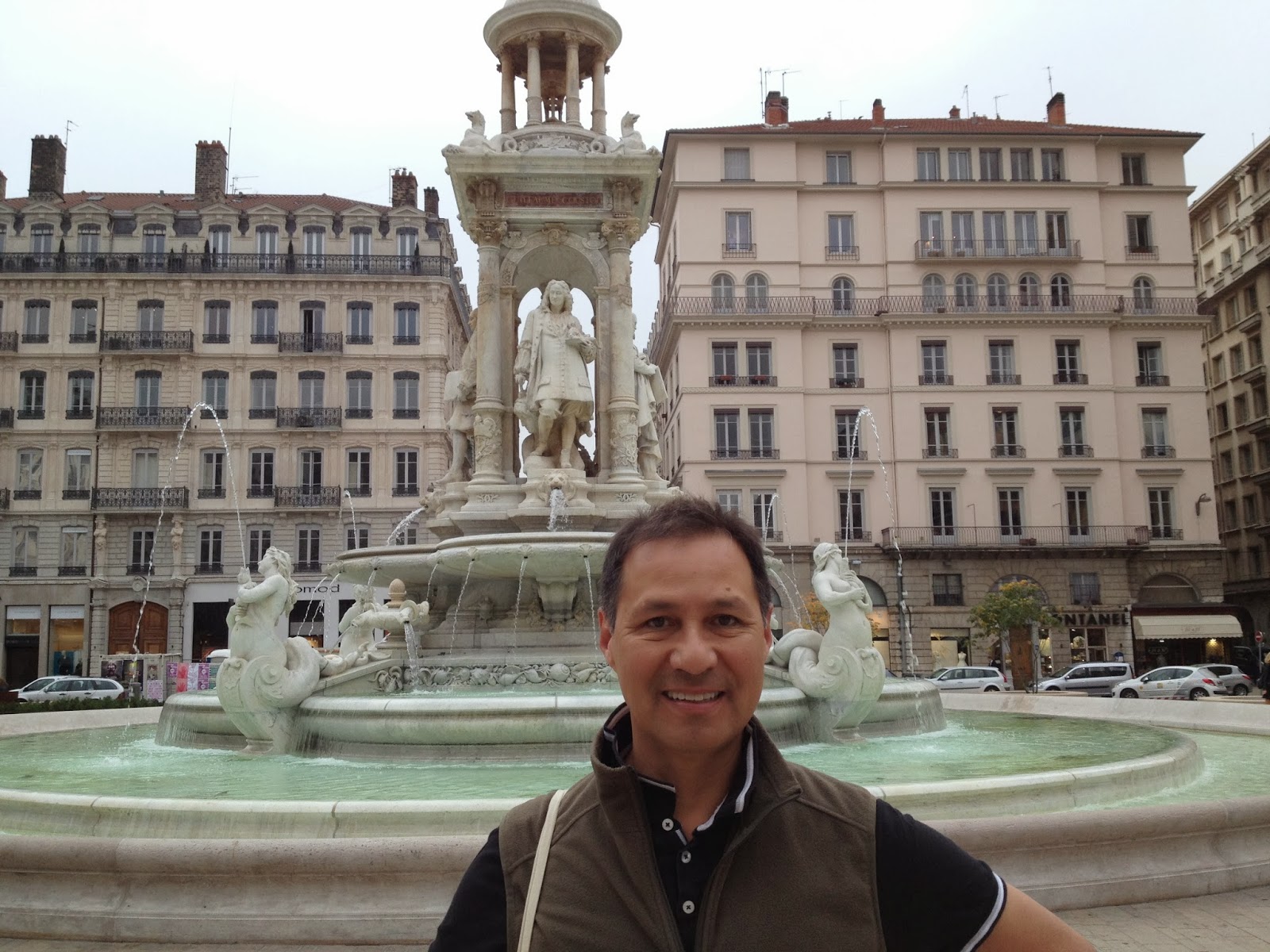 |
| Jacobin square |
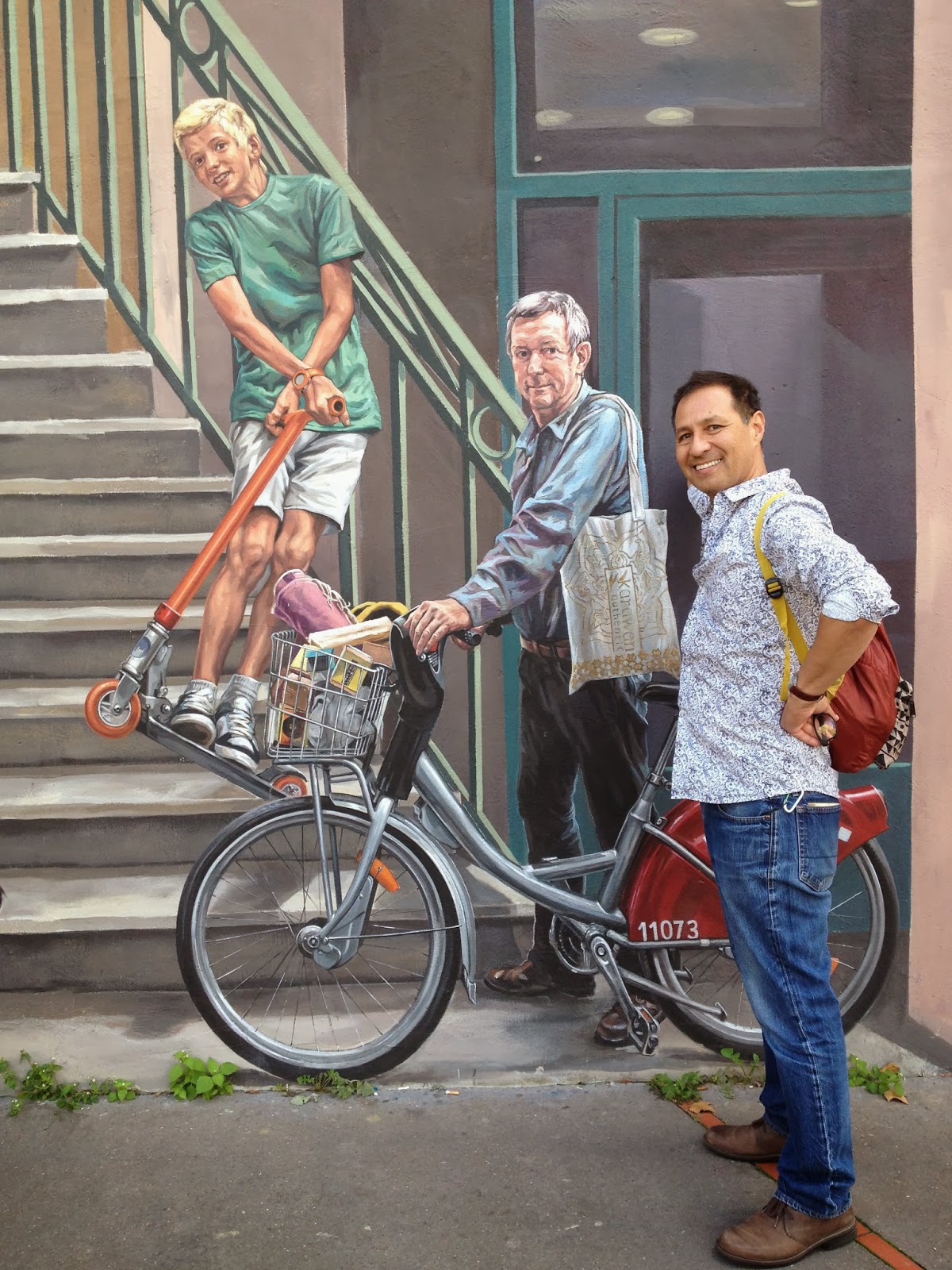
We also came upon an interesting mural on the side of a building some six or seven stories tall. It depicts the hilly landscape of Lyon and is so realistic it seems as though one could walk right up the stairs. Here is a photo of Marlow standing next to one of the people depicted in the mural that provides a good sense of the scale of this mural.
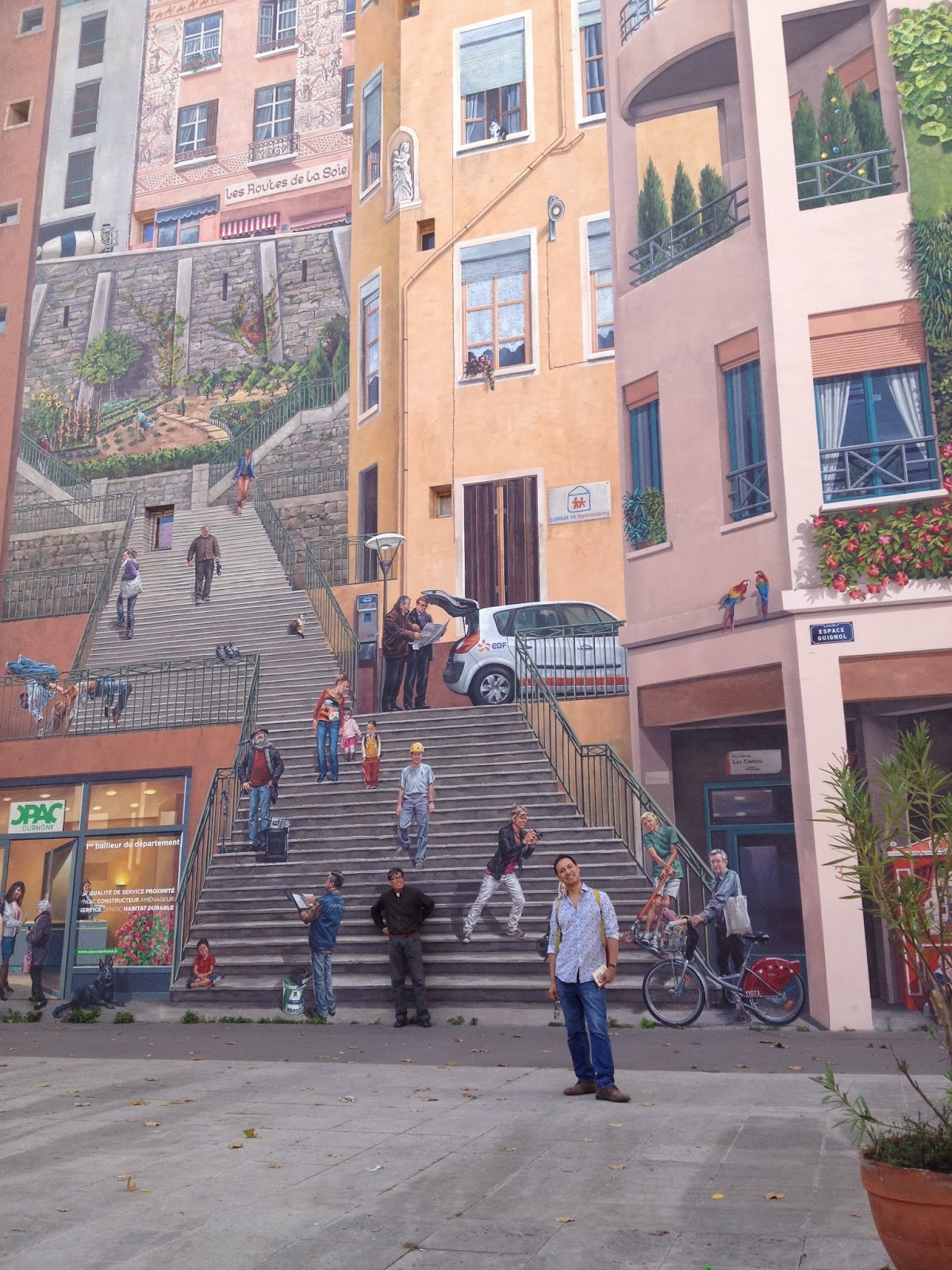 |
| Realistic life-size mural on side of building |
 |
| Detail from mural |
October 27, 2013
Canal St. Martin
On a sunny fall Saturday we rode our velib bikes up to the Bassin de la Villette – the starting point of the Canal St. Martin. The Canal was built by Napoleon I in 1802-1825 to bring fresh water into the Seine from bodies of water to the north of Paris. The Bassin is located in the north of Paris past the Gare de l’est. The canal passes under many footbridges and several “draw bridges” where the road passing over the canal shifts to the side rather than rising to permit the boats to pass. A major portion of the canal between the Place de la Republic and the Place de la Bastile is covered over so many people are not even aware of the canal beneath them. But the boats continue to pass through the very long tunnel until they reach the Seine. I have always been fascinated to watch the locks operate to adjust the water levels but have never taken the 2.5 hours needed to actually view the canal from the perspective of a boat…until now!
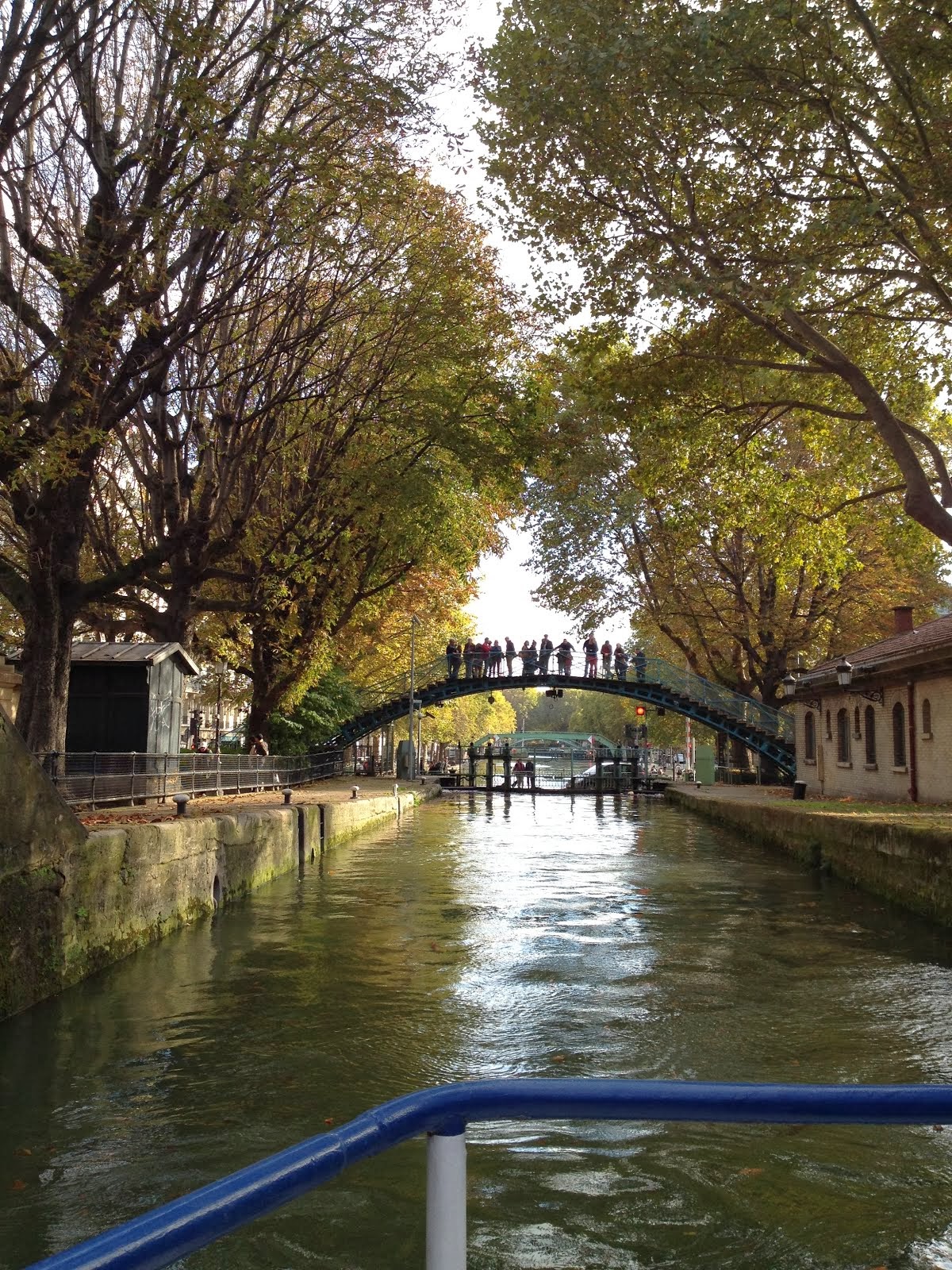 |
| Entering the 4.5km Canal at the Bassin de la Villette in NE Paris |
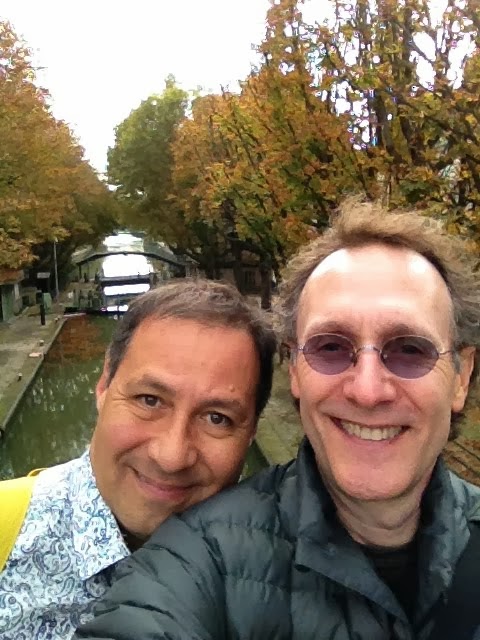 |
| Sur la passerelle |
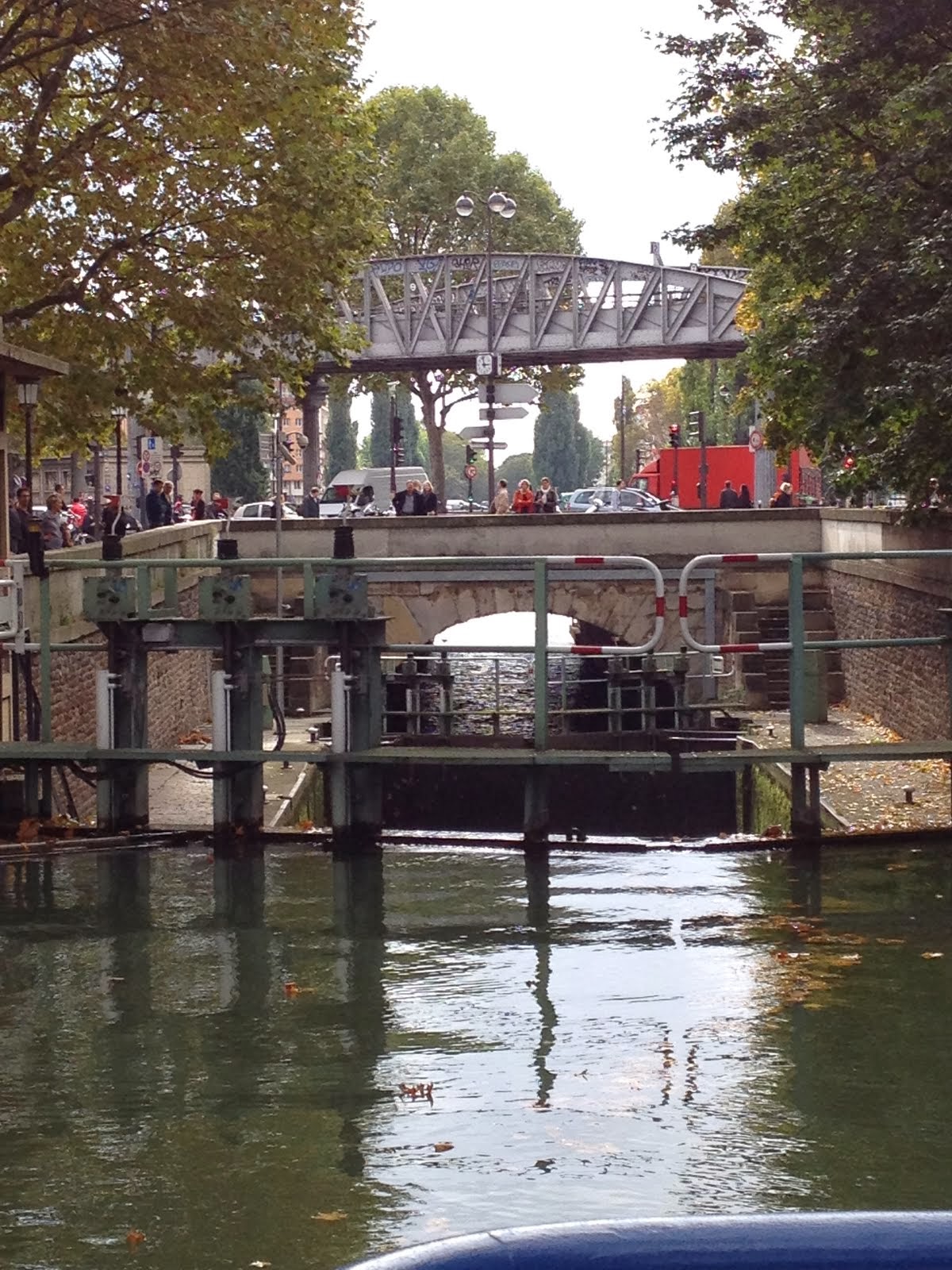 |
| A lock on our way down to meet the Seine |
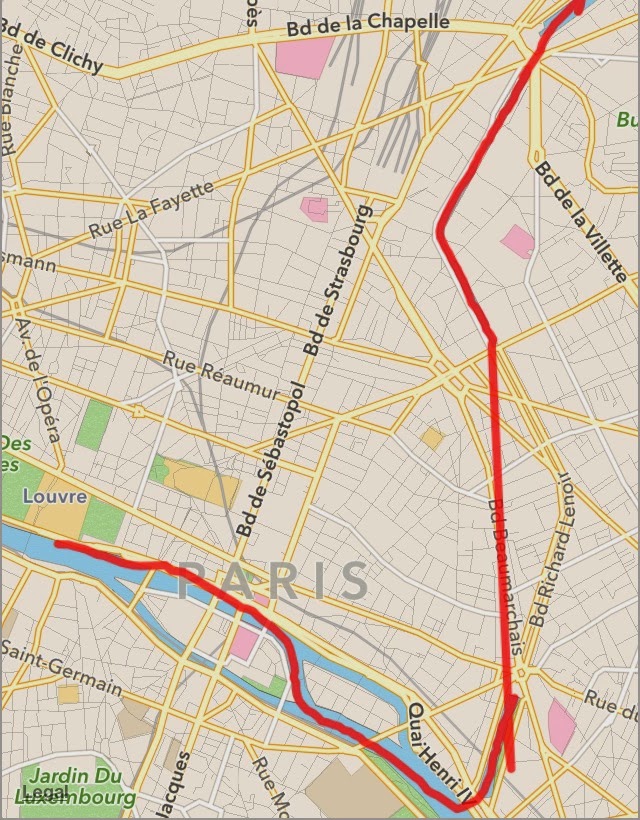 |
| Route of the canal St. Martin cruise into the Seine |
October 26, 2103
16 Oct 2013, "da Felicin" in Monforte d’Alba
Have I mentioned the bread sticks? Called grissini in Italian. They are made by hand and quite long. Fourteen to eighteen inches of thin, light as air, delicate crispness that call out to be picked up from their pile and eaten inch by inch. The crumbs fall onto the tablecloth and, here, that is not a problem, bread plates are foreign. When the grissini arrive on the table the meal begins.
And so it was on Thursday night when we arrived at the hilly village of Monforte d’Alba. From the small piazza, in the flats of the town, cobblestoned streets begin a steep, curving ascent to a three-cornered, grassy, terraced, intimate piazza called the Auditorium Horszowski, named in 1986 for the Polish pianist who played until he was one hundred years old. The buildings in that particular area are in an outstanding state of repair. Beautifully painted. Perfectly landscaped, with occasional passion fruit vines, kiwi and pomegranate trees, and not an ivy leaf out of place. And once back down the hill there is the ristorante, “da Felicin.”
What a friendly bunch they are at “da Felicin.” They met us at the door all smiles and warmth. Inside, our table, with grissini, for seven was in a long room. Intricate carpets lay on the floor. Large wooden tables held sprays of orchids in large vases and cyclamen in delicate bowls. And it was quiet. Imagine, a restaurant where you can hear across the table.“da Felicin’s” wine cellar is famous. We were happy to be asked to see it. Even happier when it’s door was opened and we were immersed in essence of white truffle. I swooned. The truffles are stored there in the cool and damp cellar. There was a lot of wine, too. Bottles of the most esteemed local wines from the greatest years. The best of Barolo.
Back at the table we settled on our menu choices. The waiter, though, had other plans so, instead, we put ourselves in his hands and this is what we had.
First up, Merluzzo, a white fish over puréed root vegetables, sprinkled with pumpkin seeds.
Next was, “Rotonda di reale di Fassone marinato con crema al Gorgonzola, favette e profumi,” which was thin slices of raw Fassone beef, bright red, strewn with raw porcini mushroom slices, fava beans fresh out of their shells and drizzled with a purée of Gorgonzola dolce and anchovy.
Then came, “Zabajone di Parmigiano, verdure di stagione e top in ambour (?) crocanti”, otherwise known as endive leaves with florets of broccoli and cauliflower, crisp fried fingerling potato chips drizzled with a zabaglione of golden egg yolks, lemon and mascarpone cheese.
Finally, the main course, “Faraona disossata, verdure au tunnali (?), funghi porcini e tartuffo nero”. Crisp skinned guinea hen, deboned, then rolled up with black truffle and porcini mushrooms, and sliced into discs.
A member of our dining party is passionate about wine. He chose for our dinner two wines. First, a Barbera D’Alba by G.D. Vajra from 2007. It was an excellent opening act for the star, our second wine, a Barolo by Sandrone, “Le Vigne,” from 1999. It was outstanding. Love at first sip.
Marlow and Wes
Monforte d’Alba
16 October 2013
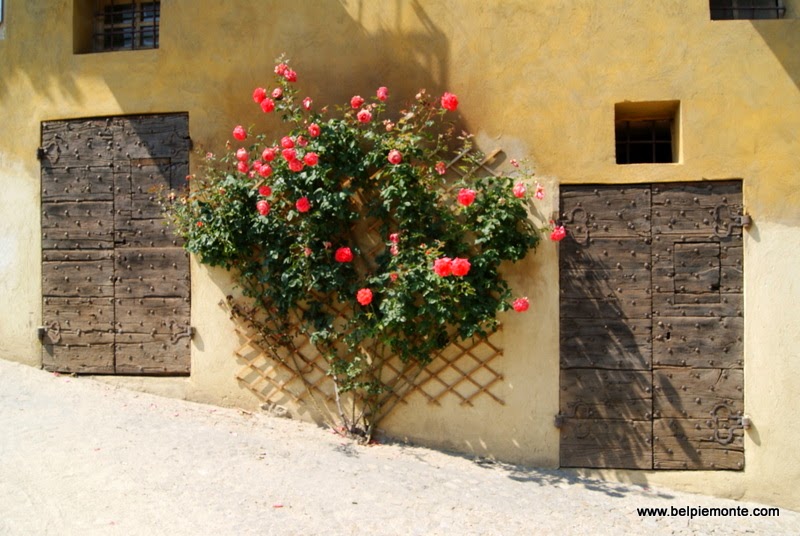
A few more photos from the Langhe
We were so fortunate to have ideal Fall weather for our five days in the Langhe. Each day was sunny, after the morning fog burned off, and in the high 60s. Just perfect for hiking in the vineyards. On the last day of our visit the weather started to turn to a thicker fog and they were predicting rain for the following day. The pace of activity in the vineyards picked up considerably once the thick fog arrived. The farmers swiftly shifted from an attitude of letting the grapes stay on the vines as long as possible to soak in the sun and improve sugar content to one of clipping the bunches of grapes as quickly as possible. The roads and hillsides were filled with activity related to the harvest. Loads and loads of small trucks ferrying the just picked grapes to the processing locations. And many people about the village with clippers in their back pockets.
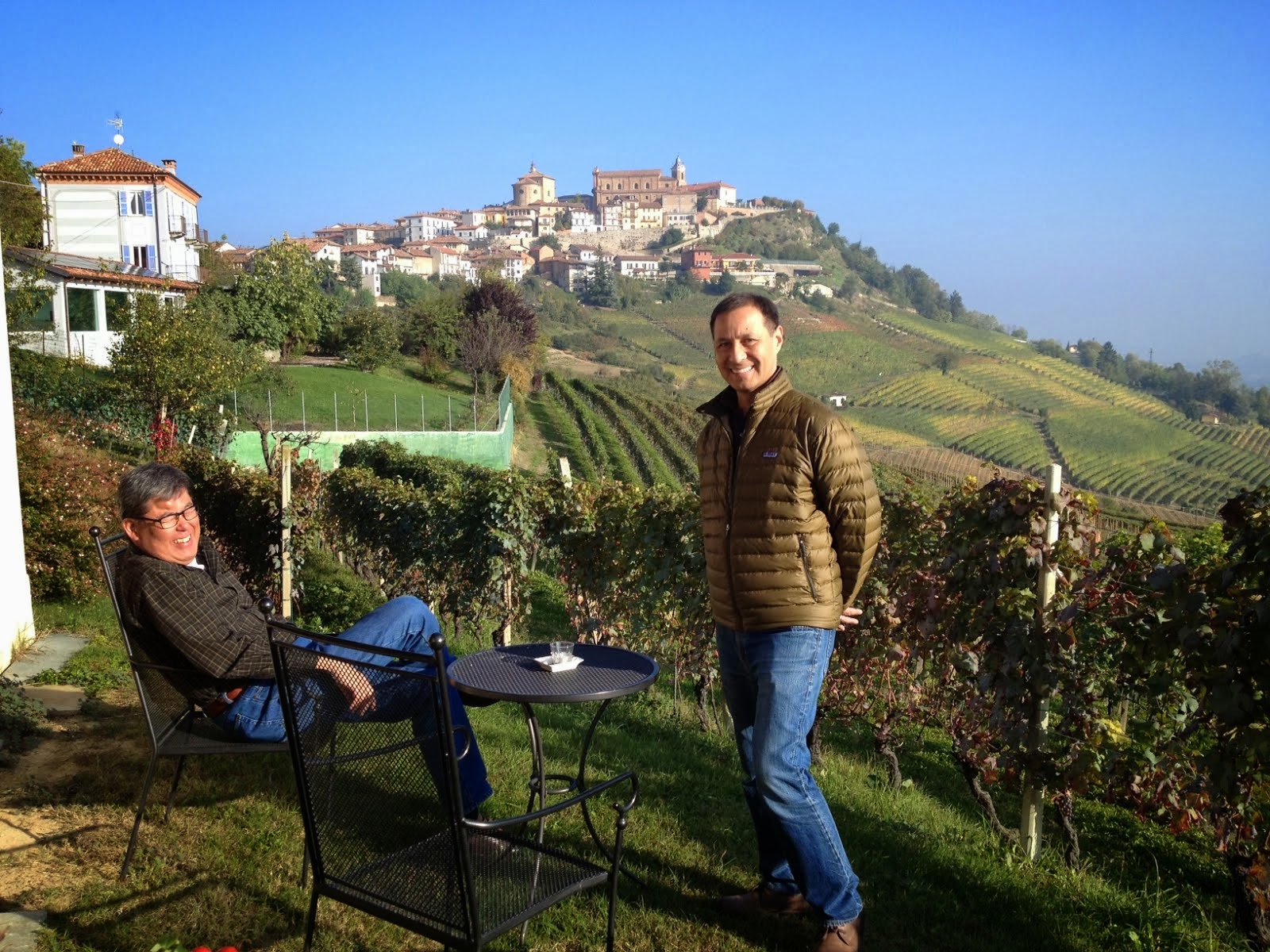 |
| Relaxing at our home in the vineyard – villa carita |
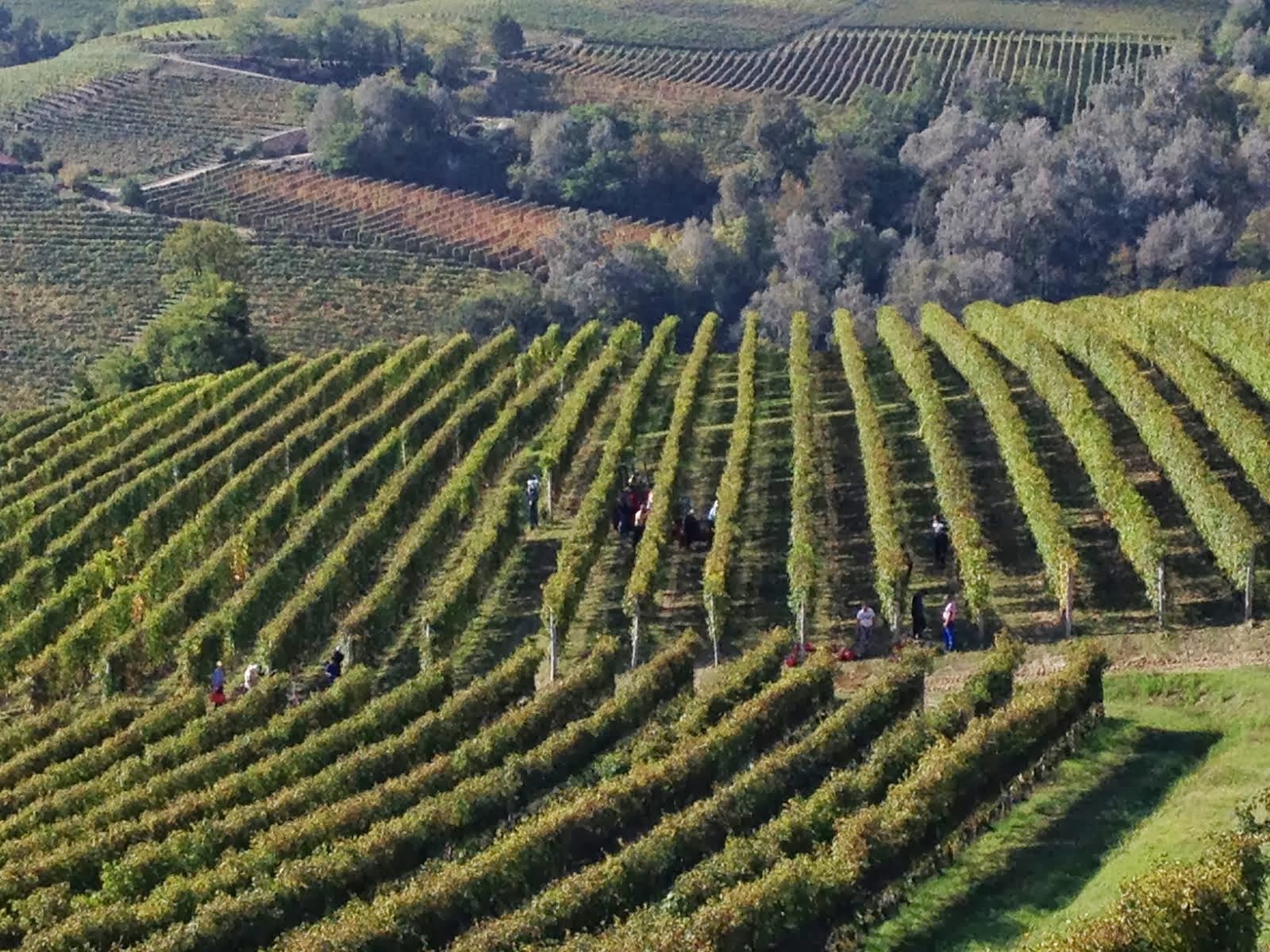 |
| The harvest |
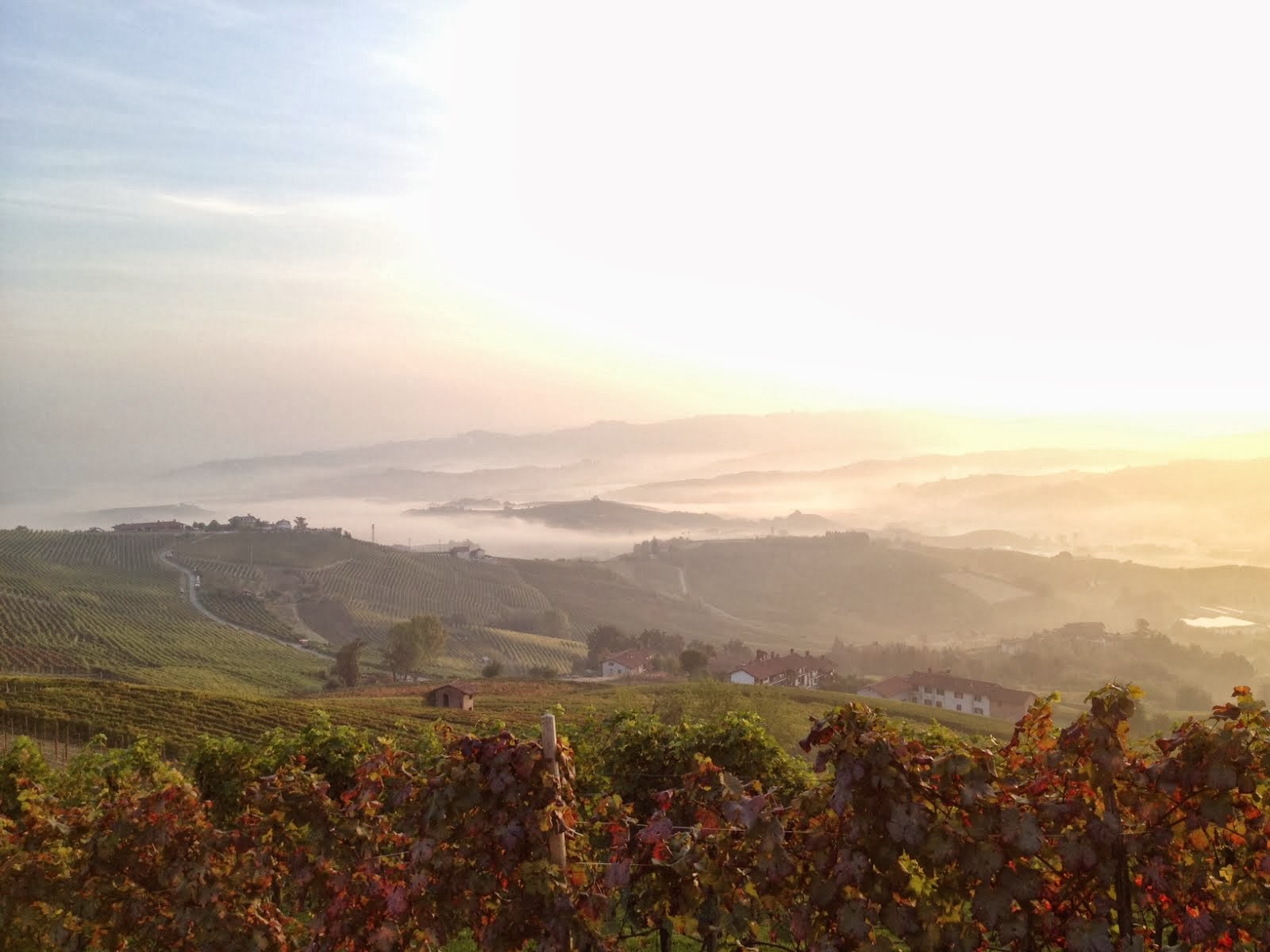 |
| Morning fog |
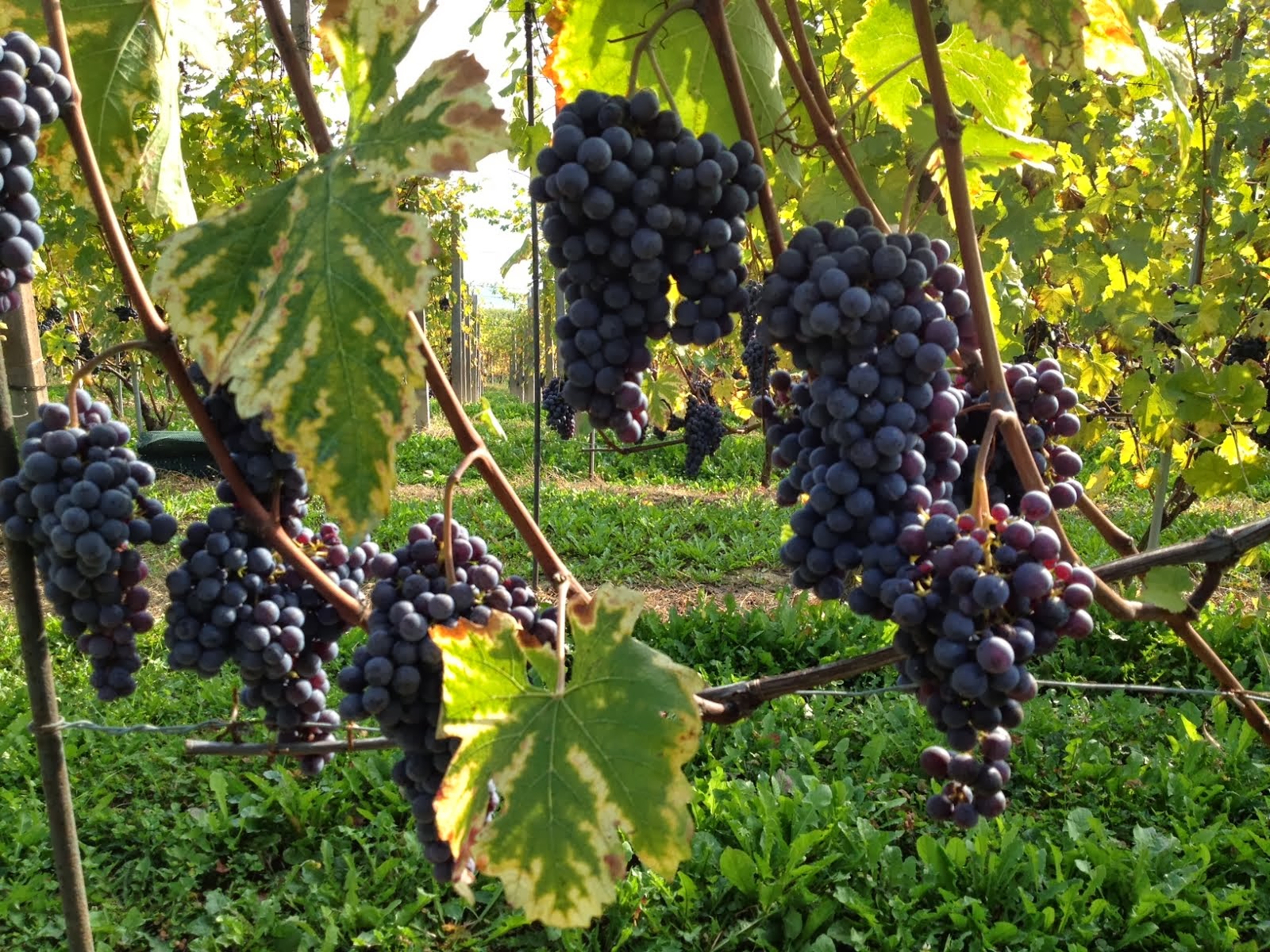 |
| Ready for picking |
La Morra, Oct 15, 2013
Tuesday, October 15, 2013Village of La Morra. Province of Cuneo. State of Piemonte. In the far north west corner of Italy.So, I have been a slacker. We are in Torino and I’ve said nothing about La Morra in the Piemonte. Here are a few words. Piemonte means the foot of the mountain. That is seriously true. Tootling around La Morra on certain roads we can see the Matterhorn. Yes, the Matterhorn. It pokes up above the local scenery. It is craggy, pointy and snow covered. That is the mountain we are at the foot of. There are Alps to the north, south and west of us.
Our Villa Carita rooms are in a small building carved into a hillside. The building has only two guest suites in it. The grape vines begin their tremendous descent into the valley from twelve feet away from our bed.
We are in a vineyard. And not just any vineyard. We are in the “cru” of La Serra, Boiolo and Brunatte. The “cru” means a particular patch of grape vines. They are owned co-operatively by farmers. And several wine makers get a row or two of these various cru’s. The greatest of the cru’s produce superior grapes.
When a batch of grapes is harvested their juice is analyzed. Color, tannin and sugar are measured. At the end of the harvest, whichever batch of grapes had the best numbers wins a premium price for the farmer who grew them: five euros per kilo versus two euros per kilo. Some grapes consistently beat all the others. The ones in our “yard” are some of the best. I can tell you they taste great eaten off the vine.
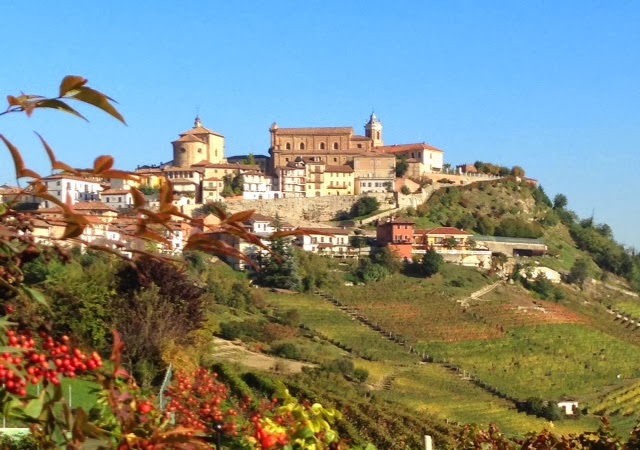
As for these villages, they are so darn sweet. Like fairy tale places. I skip around humming “Camelot” or “funiculee, funiculah”. Hill top castles, ancient bell towers. And all those grape leaves which currently are putting on a show of autumn color.
And there are old fashioned people who care passionately about a cow, a grape, a mushroom, a cheese. The food here is distinct. The local white Fassone cows are so pampered their meat is eaten raw, like steak tartar, or cooked extremely rare. The white truffles are smelling up the forests in October so one eats a lot of those. The pasta here is made with so many yolks it is golden. Twenty yolks per pound of flour. Bad for your veins. Good for your taste buds. It gets dressed with butter, cheese and sage or with freshly picked porcini mushrooms. They take pride in knowing who made their cheese, who baked their bread, who raised their beef, what their chicken ate to lay such golden yolks. We are pampered.
Marlow and Wes
Tuesday, October 15, 2013
Village of La Morra. Province of Cuneo. State of Piemonte. In the far north west corner of Italy.
 Wes & Marlow Travel Blog