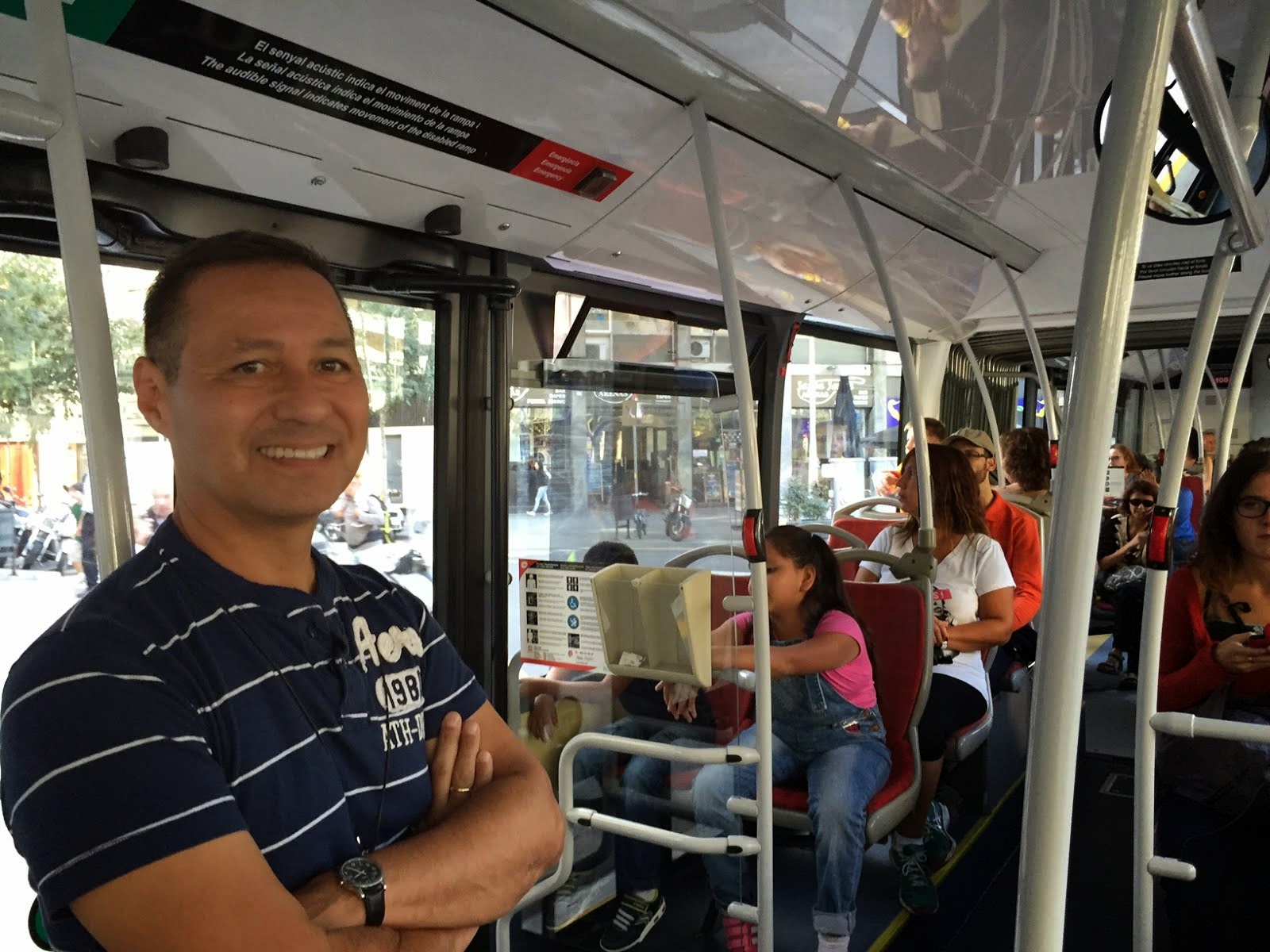
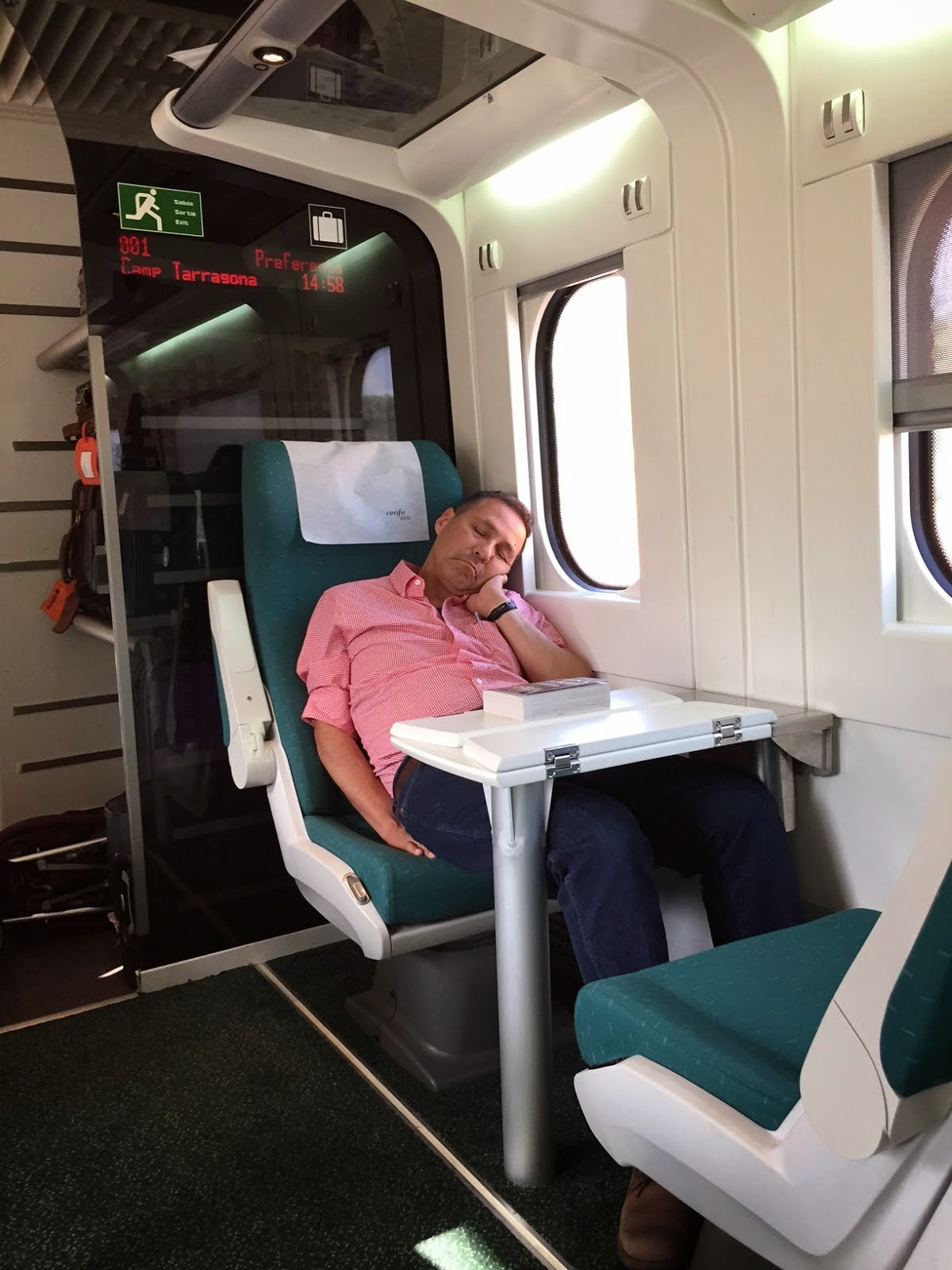
We love taking public transit and Barcelona has an outstanding bus network.
We love taking public transit and Barcelona has an outstanding bus network.
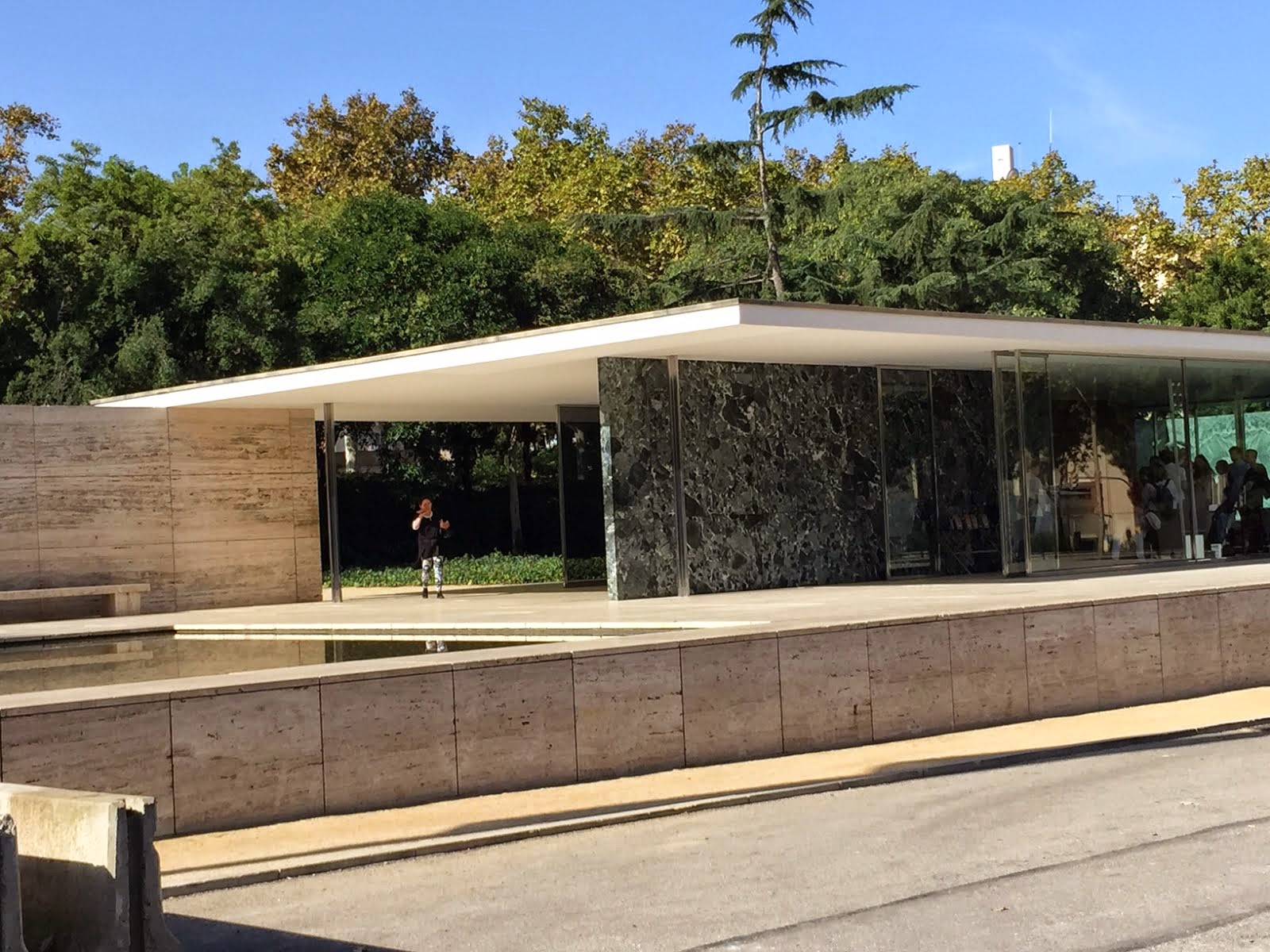
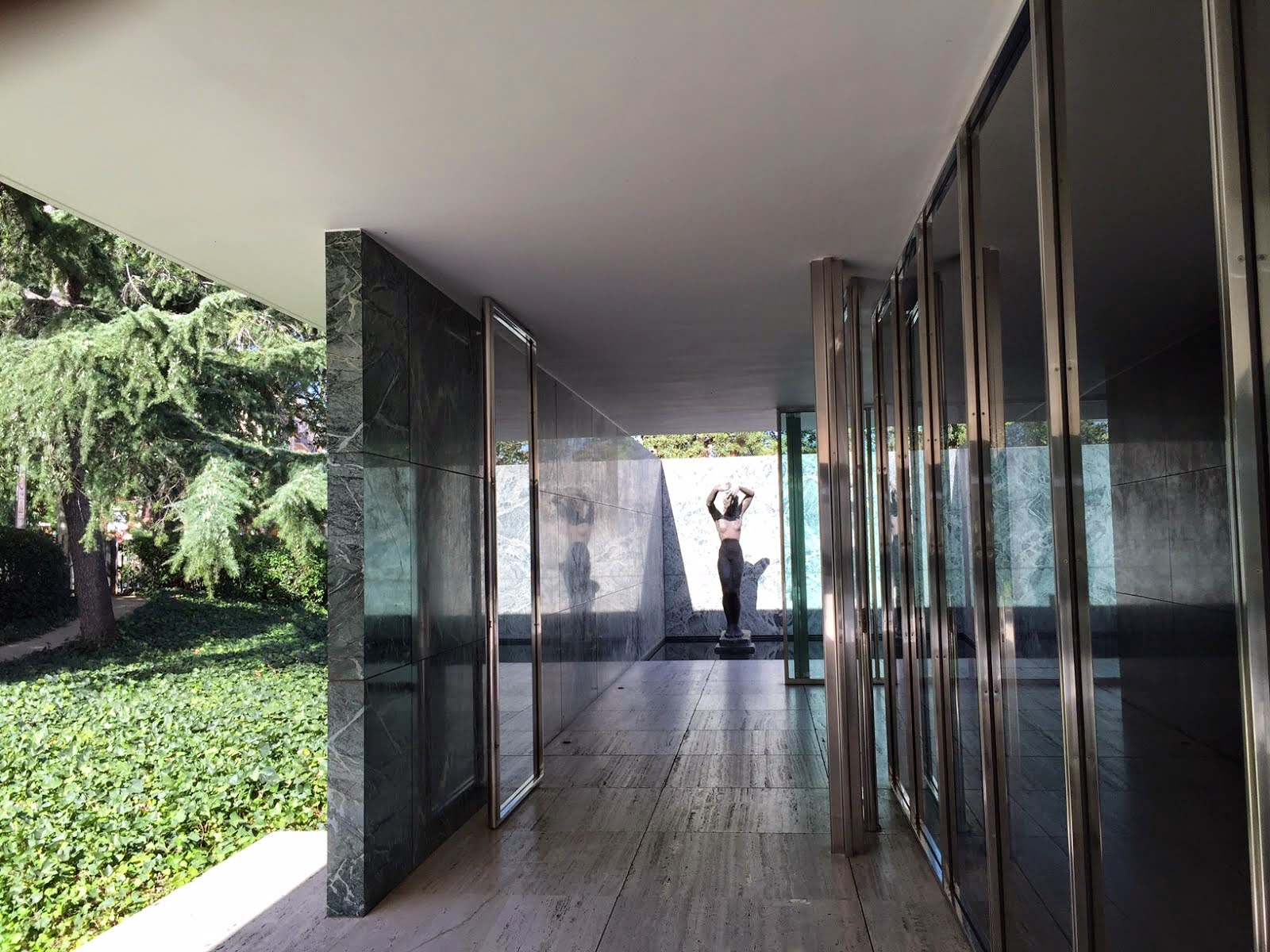
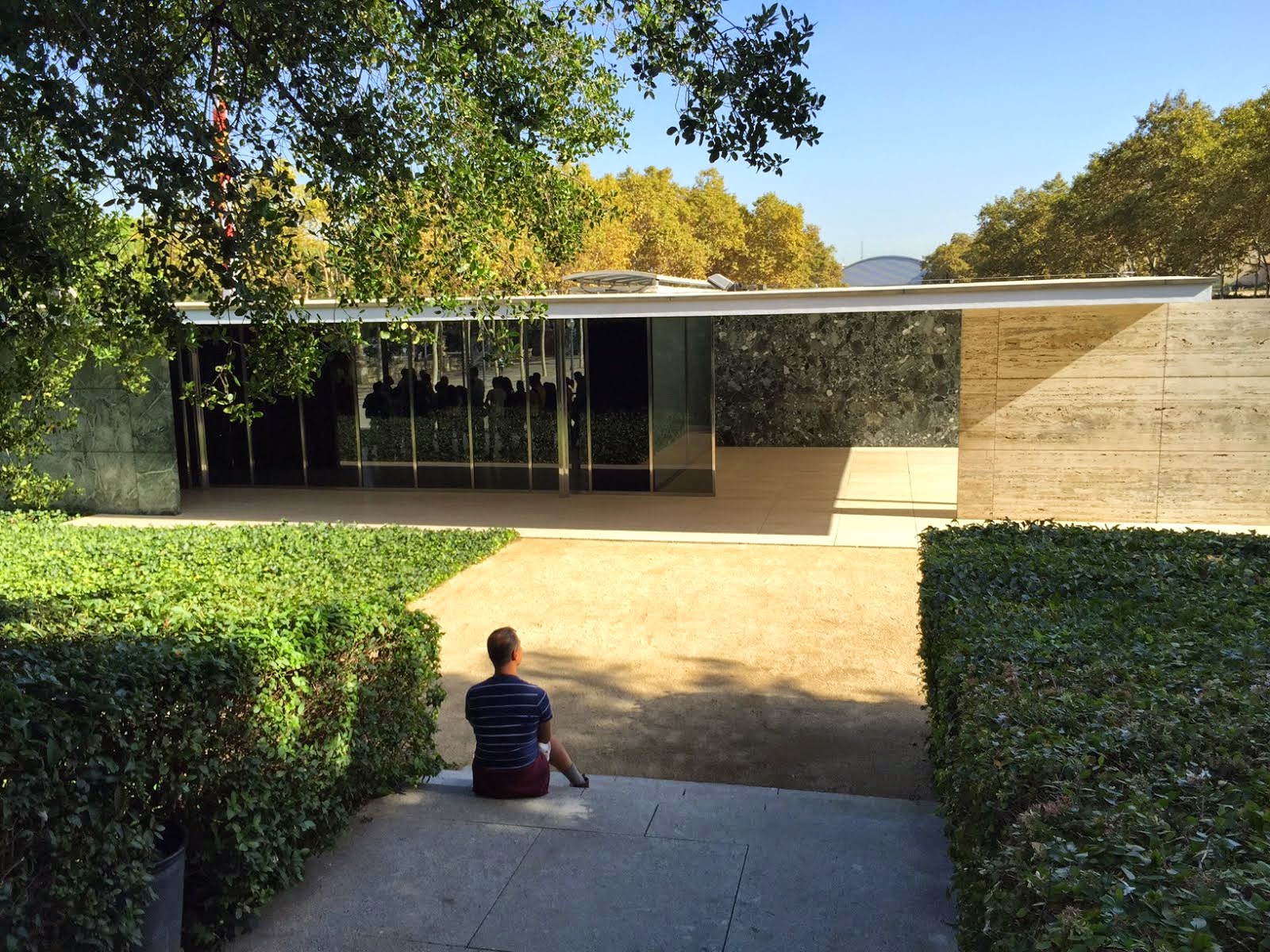
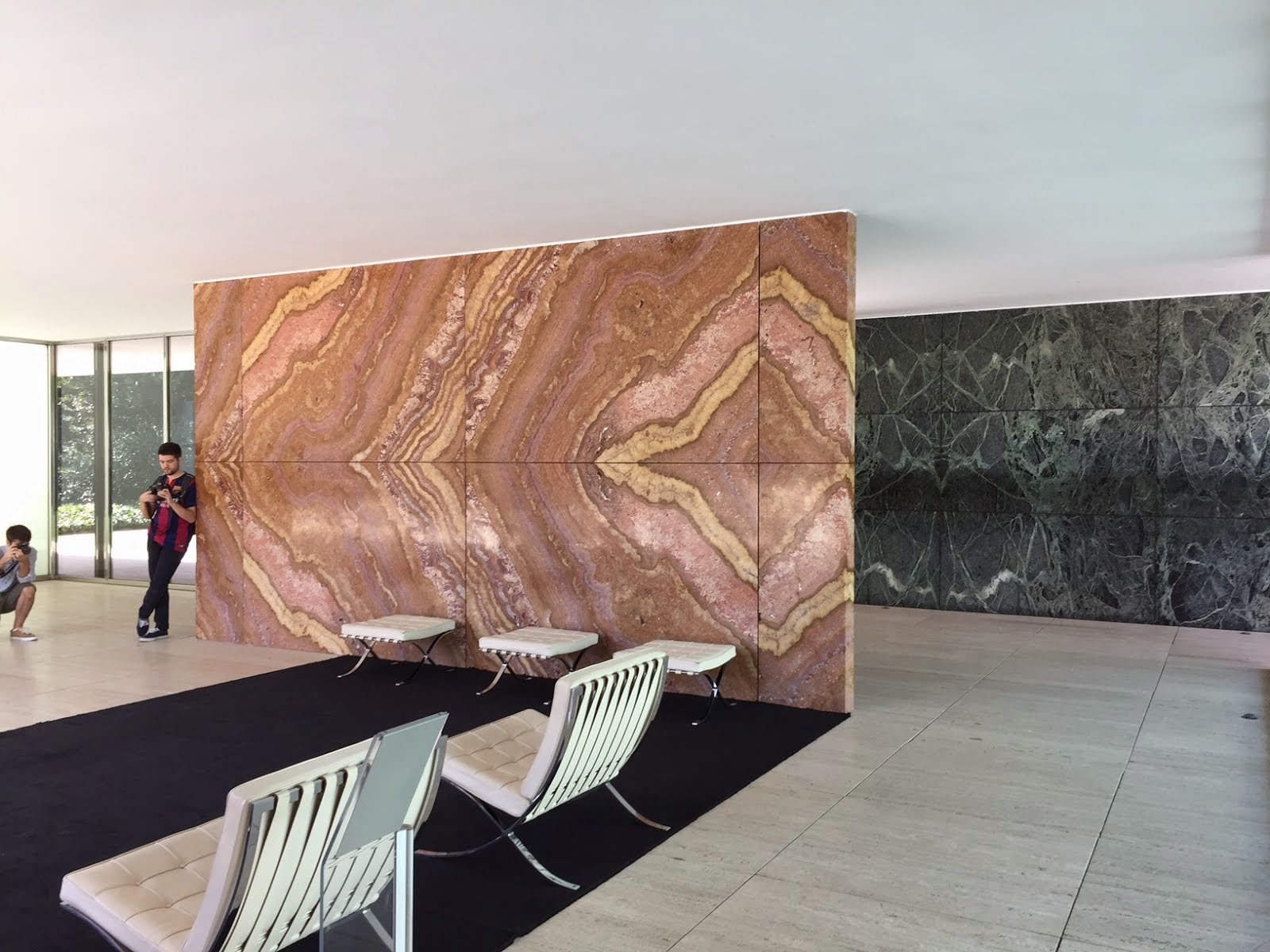
Our trip to Spain provided a break from our focus of the past six + months of constructing our own pavilion in our rear yard. The original inspiration for our project was a home in the US designed by Mies van der Rohe. It turns out Mr. van der Rohe also designed a similar Pavillion in Barcelona.
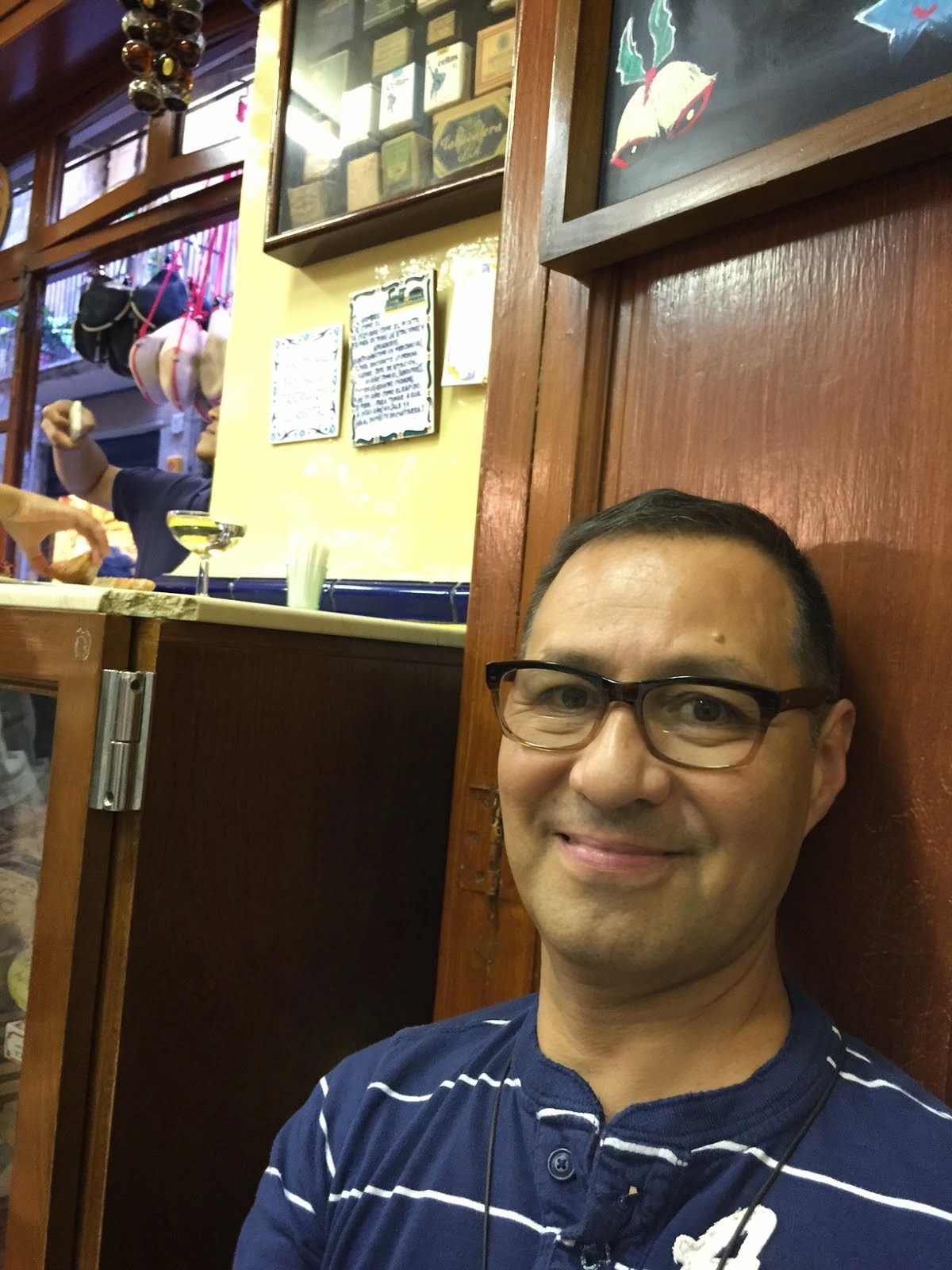
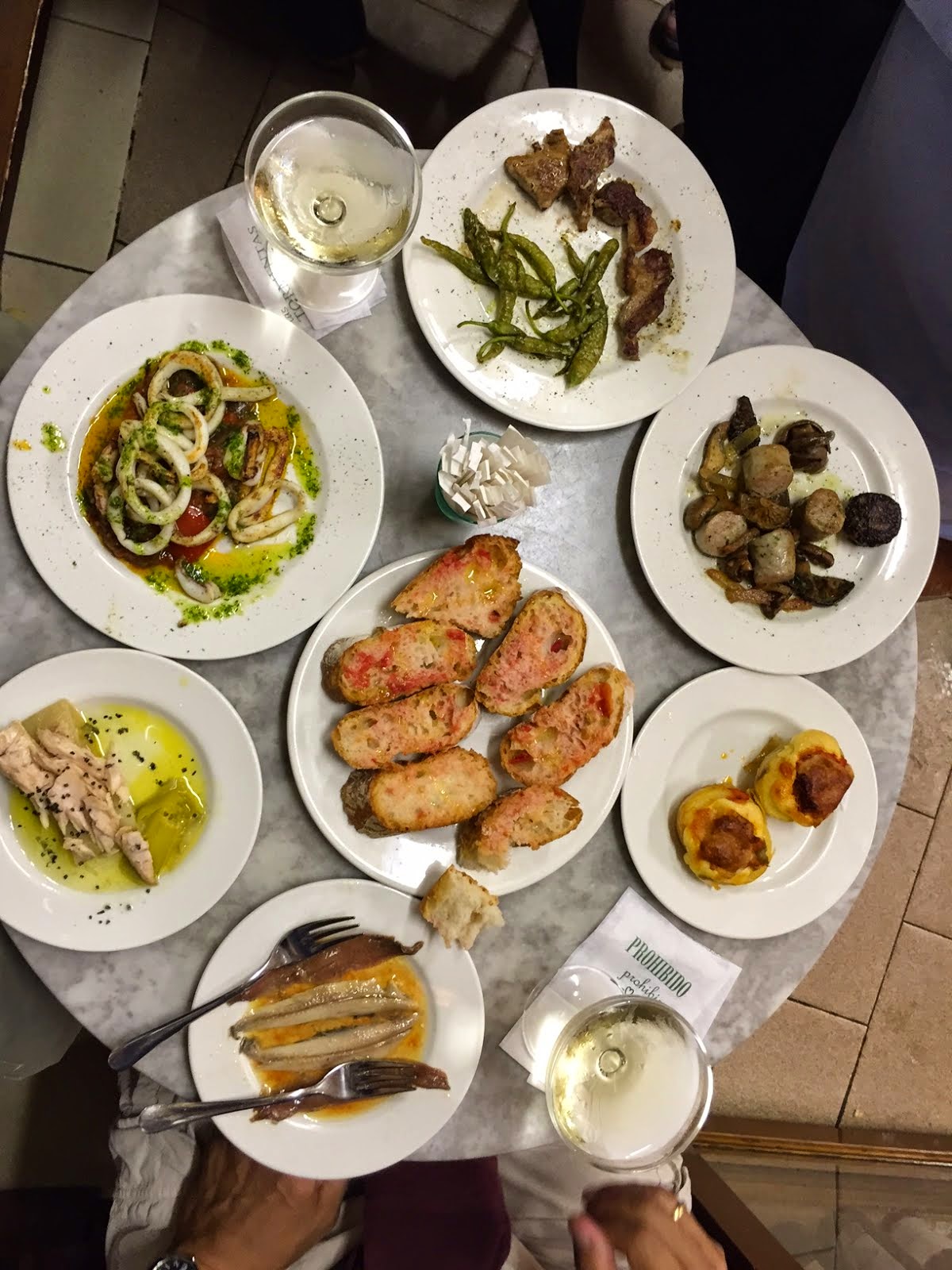


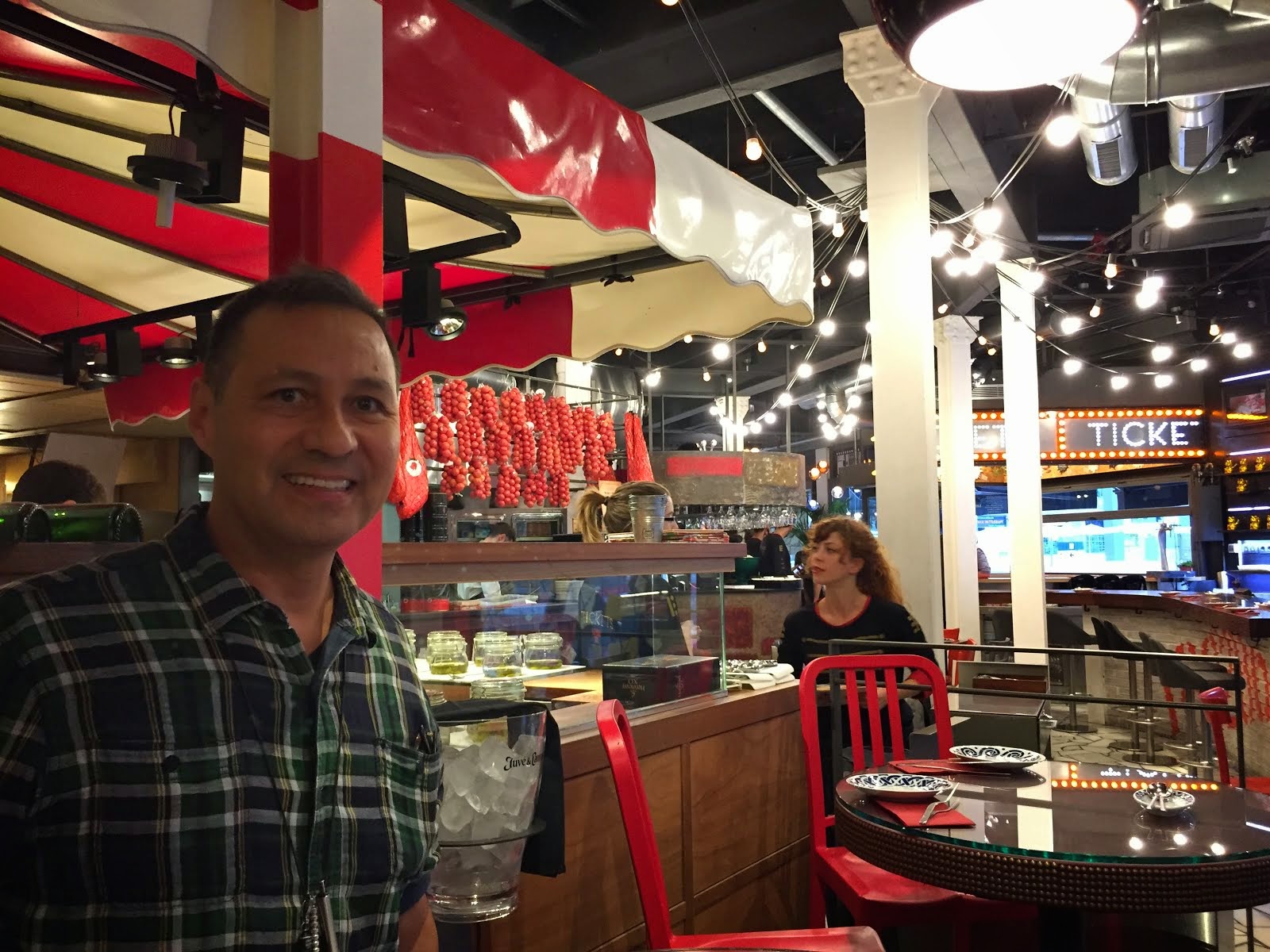
Marlow looking satisfied with our meals at Xampanyet.
 |
| Anticipation |
 |
| Add caption |
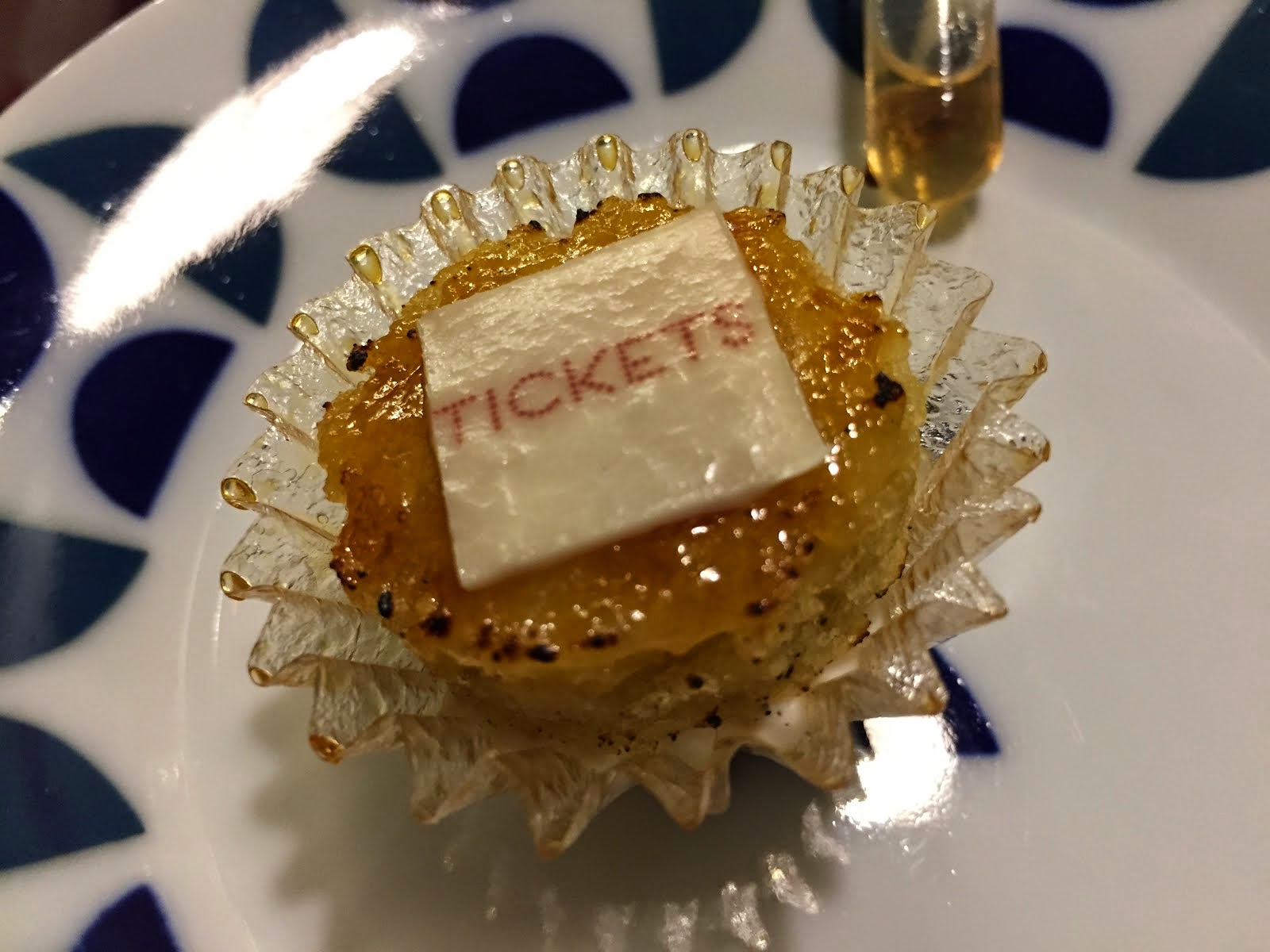
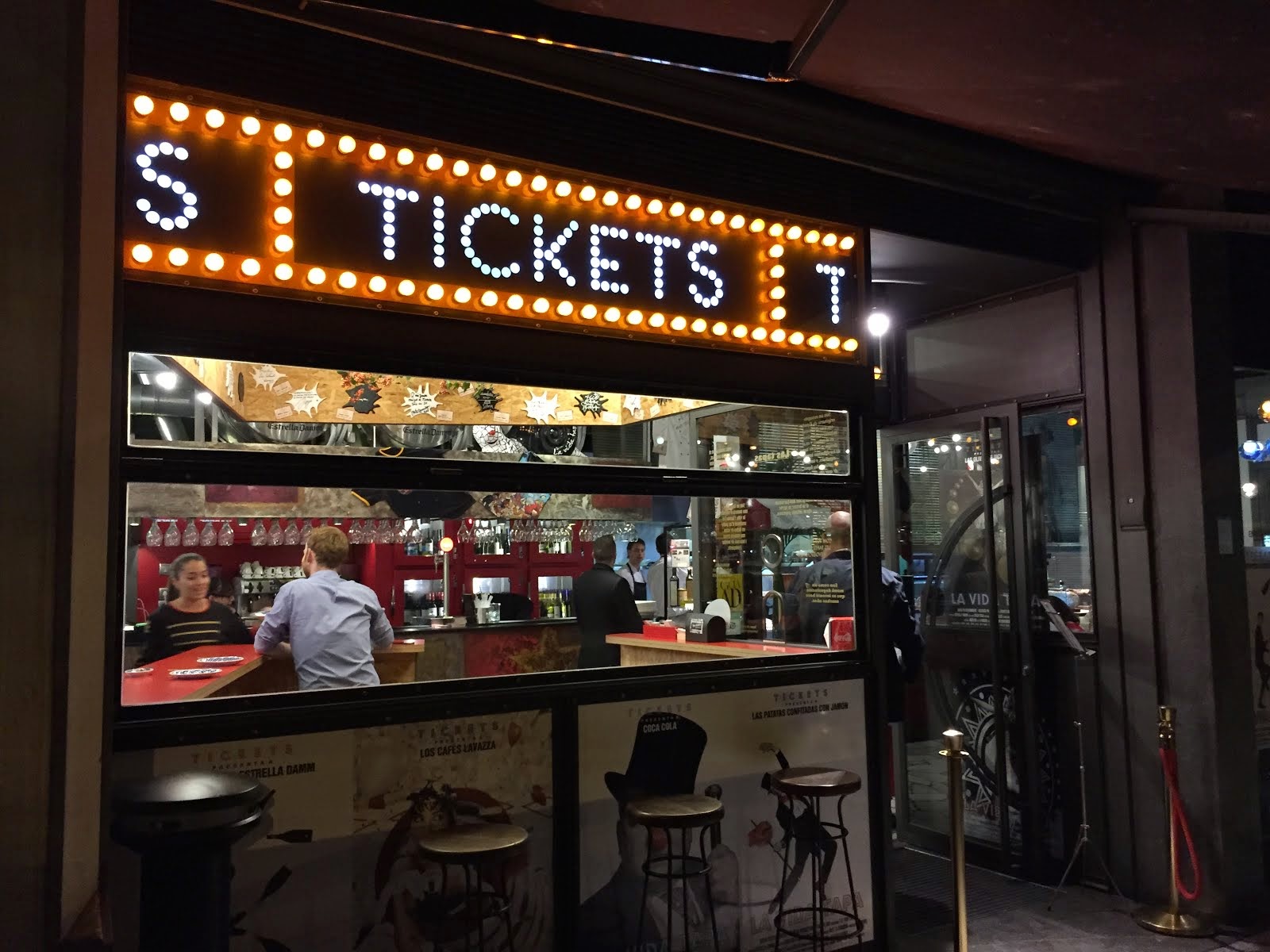
We have come to Spain for a two week journey. We have been here before, many times. This time is a bit special as it comes near the end of a challenging year. Here are a few words about what we are up to.
It is a challenge to write about Barcelona. I find it intensely stimulating. In it’s food, language, music, clothing, architecture, it is vivid, it takes a stand, it is not middle of the road. The phrase, less is more, does not apply here.
Wes rented for us a neat as a pin, second floor, one bedroom apartment in the neighborhood called the Eixample. That is pronounced: Ay-jahm-pluh. The Eixample is the part of Barcelona that underwent urban renovation around the Eighteen-Eighties. Many buildings were demolished. Many were renovated in the new style of Modernisma. Modernisma was Barcelona’s distinctive interpretation of Art Nouveau. Most of the world knows of Modernisma through the buildings of Antonio Gaudi. His Sagrada Familia Cathedral, almost done—due to be completed in Twenty-Twenty-Six—has been under construction for one hundred and twenty years. But, and it is a big but, Gaudi was not alone, he may be the most famous, but there were many architects creating extra-ordinary buildings and our neighborhood, the Eixample was the site of most of them.
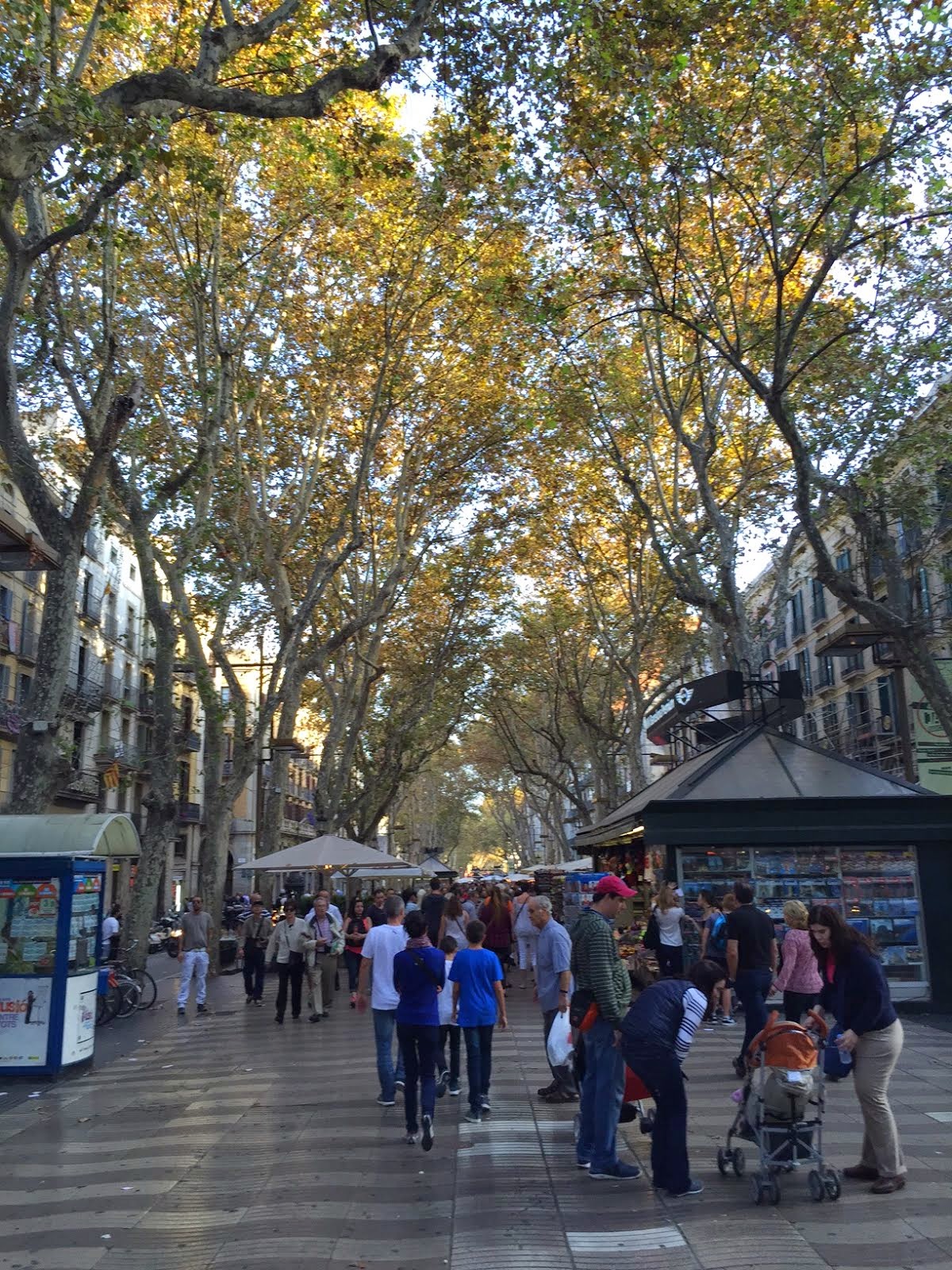
Most of the buildings are four or five floors. At every intersection they cut the tips of the street corners to make graceful diagonals. And they inserted leafy shady promenades down the center of the avenues. The promenades have benchs and cafés. The facades of the buildings are beyond ornate. Chiseled from blocks of stone in wavy, curvy, undulating shapes. There are tiles and ceramic ornaments and beautiful glass work. Carved wood and shapely iron frame the doors and windows. Mr. Tiffany, the lamp maker, would have fit right in. One just has to imagine the most beautiful Tiffany lamp enlarged into a grand town house or a concert hall or a cathedral or a park. There is also older stuff in our neighborhood, the Universitat de Barcelona, down the street turns five hundred and sixty four years old on November third.
Wes and Marlow
Barcelona
October 23, 2014
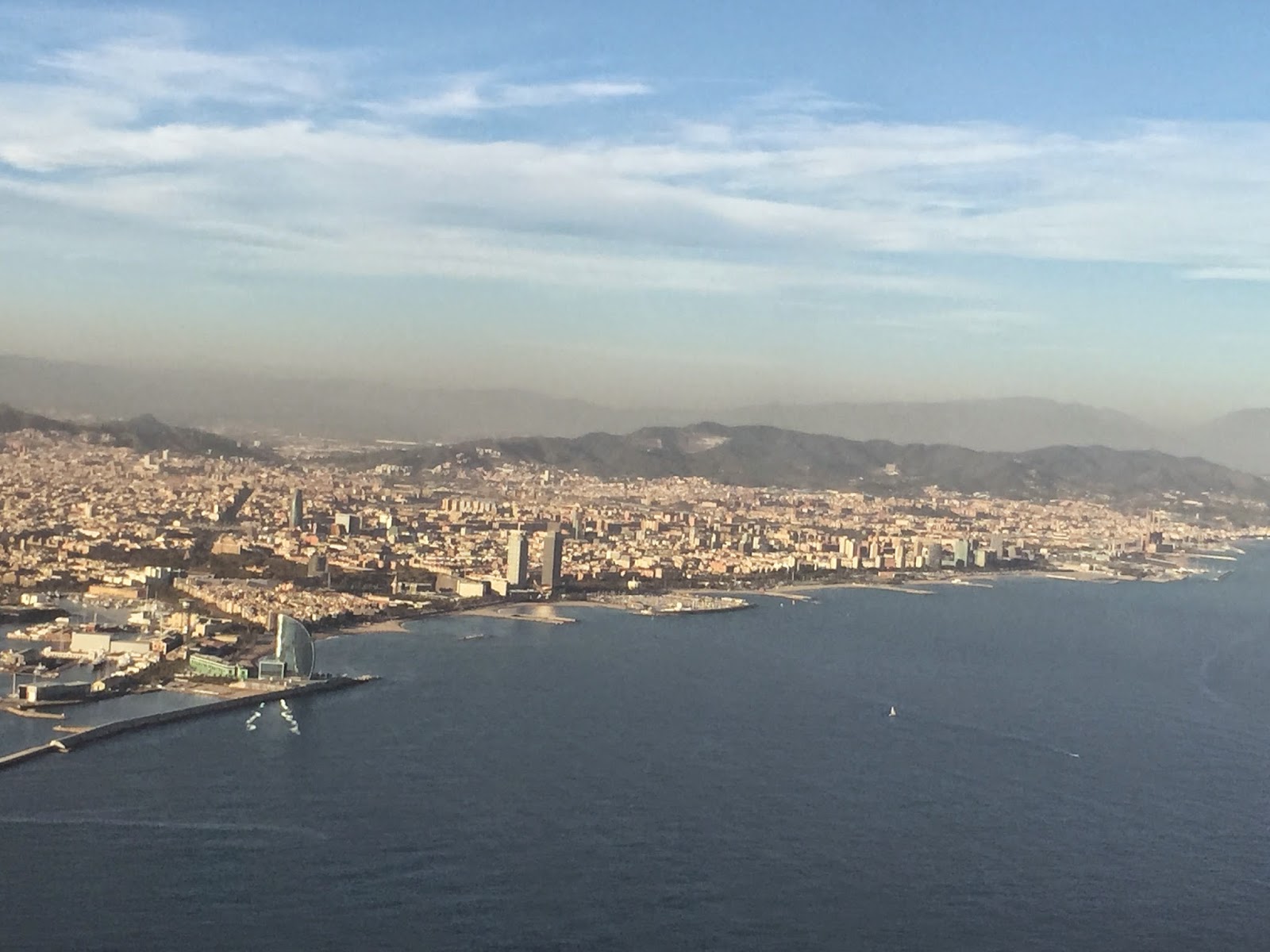 |
| Barcelona as we approached by air. |
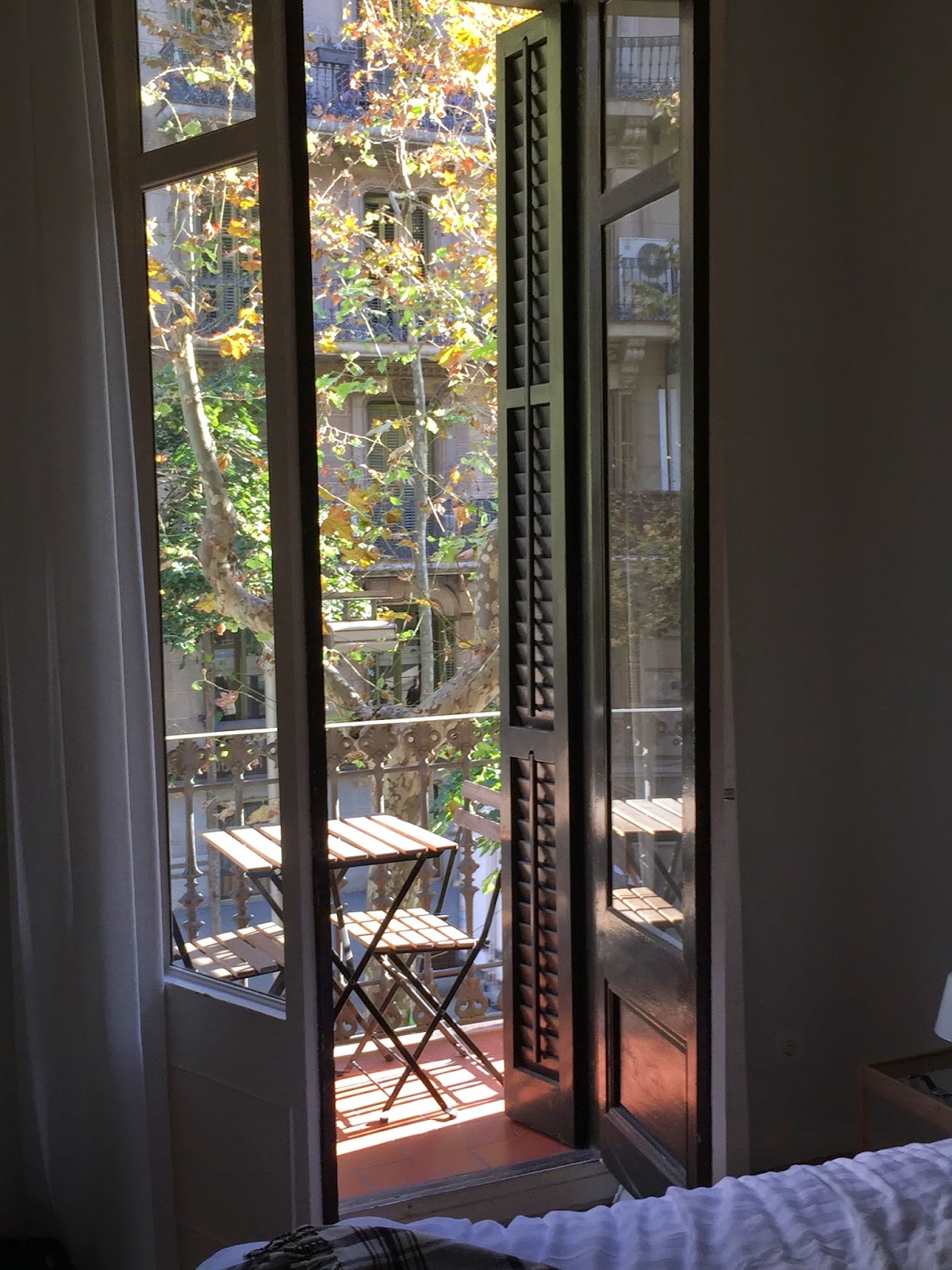 |
| We love french doors, and of course our apartment has two sets! |
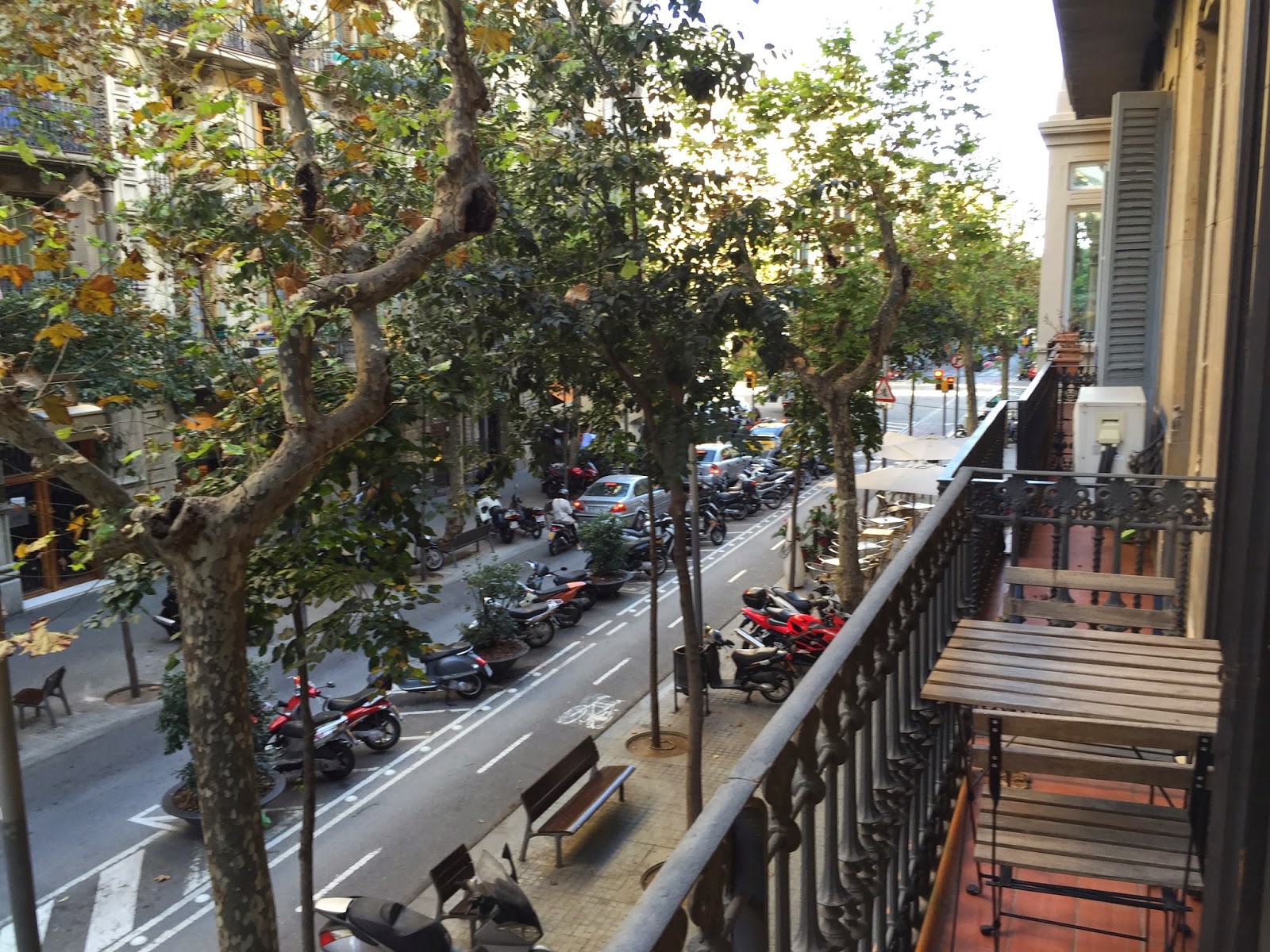 |
| Second story with small balcony overlooking Carrer Enric Granados |
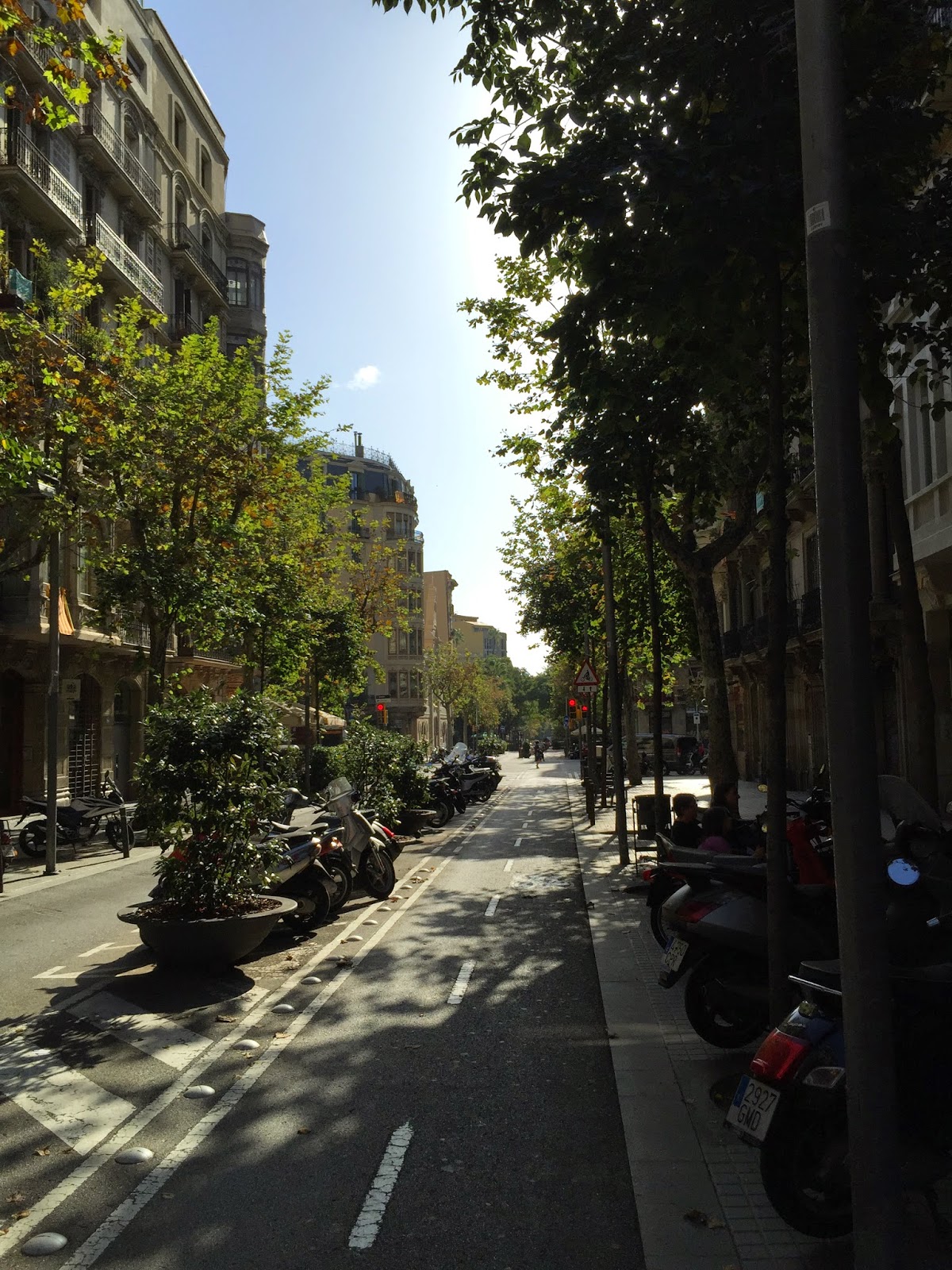 |
| Carrer Enric Granados between Calle Majorca and Calle Valencia |
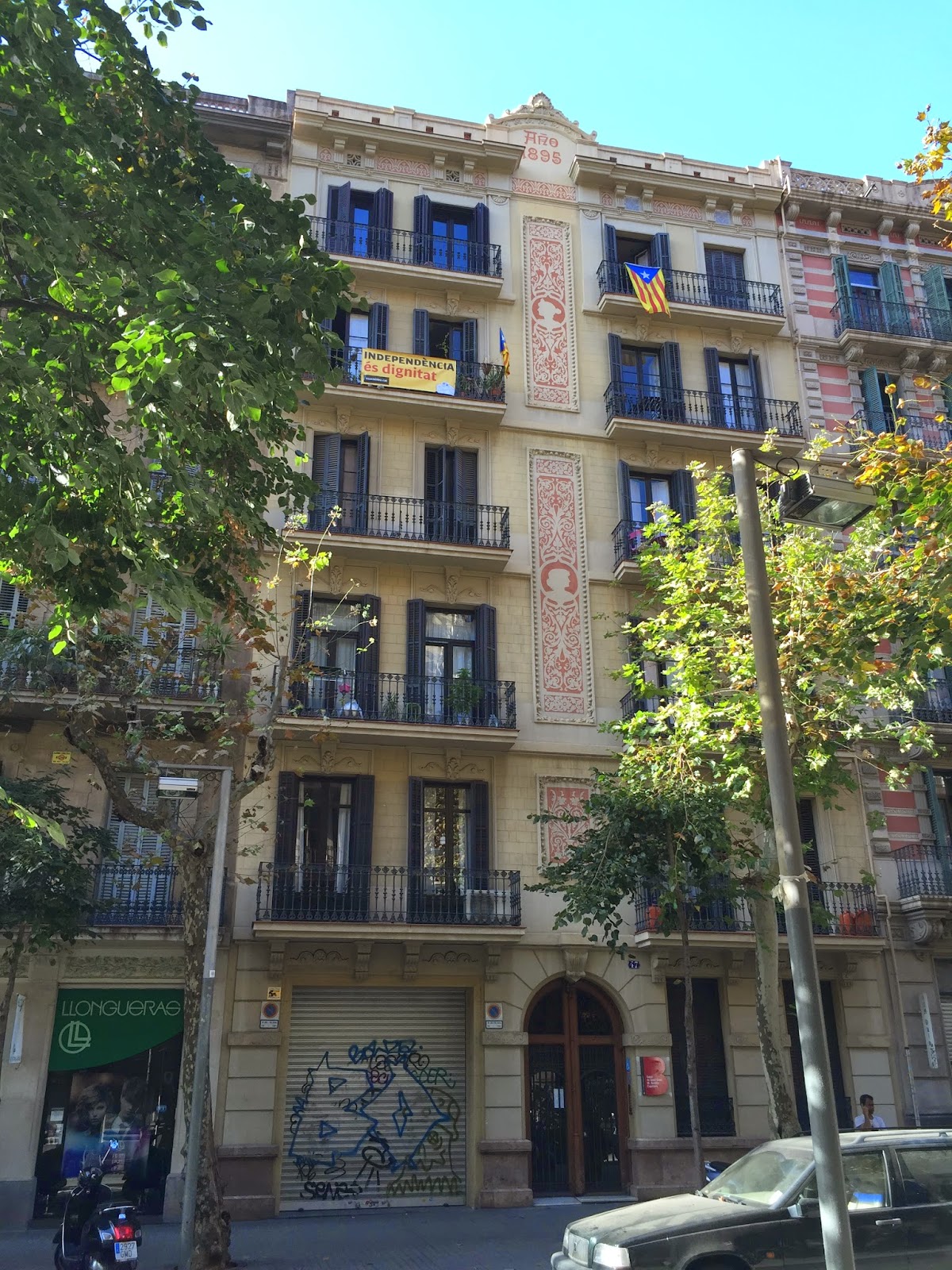 |
| Our building – apartment is on the 2nd floor |
Tuesday, 13 November 2013
Heathrow Airport
LondonOur European trip is concluded. We are en route home…in business class. I am pampered. Wes is too good to me. I appreciate it.
London was a whirlwind of outstanding things.
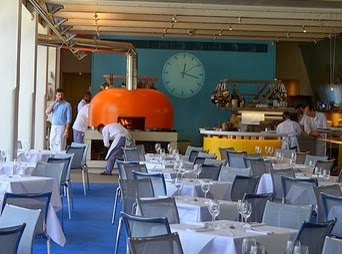
The River Cafe was warm, comfortable, expensive, sumptuous, delicious. Wild grouse quick roasted in a huge orange wood-fire oven.
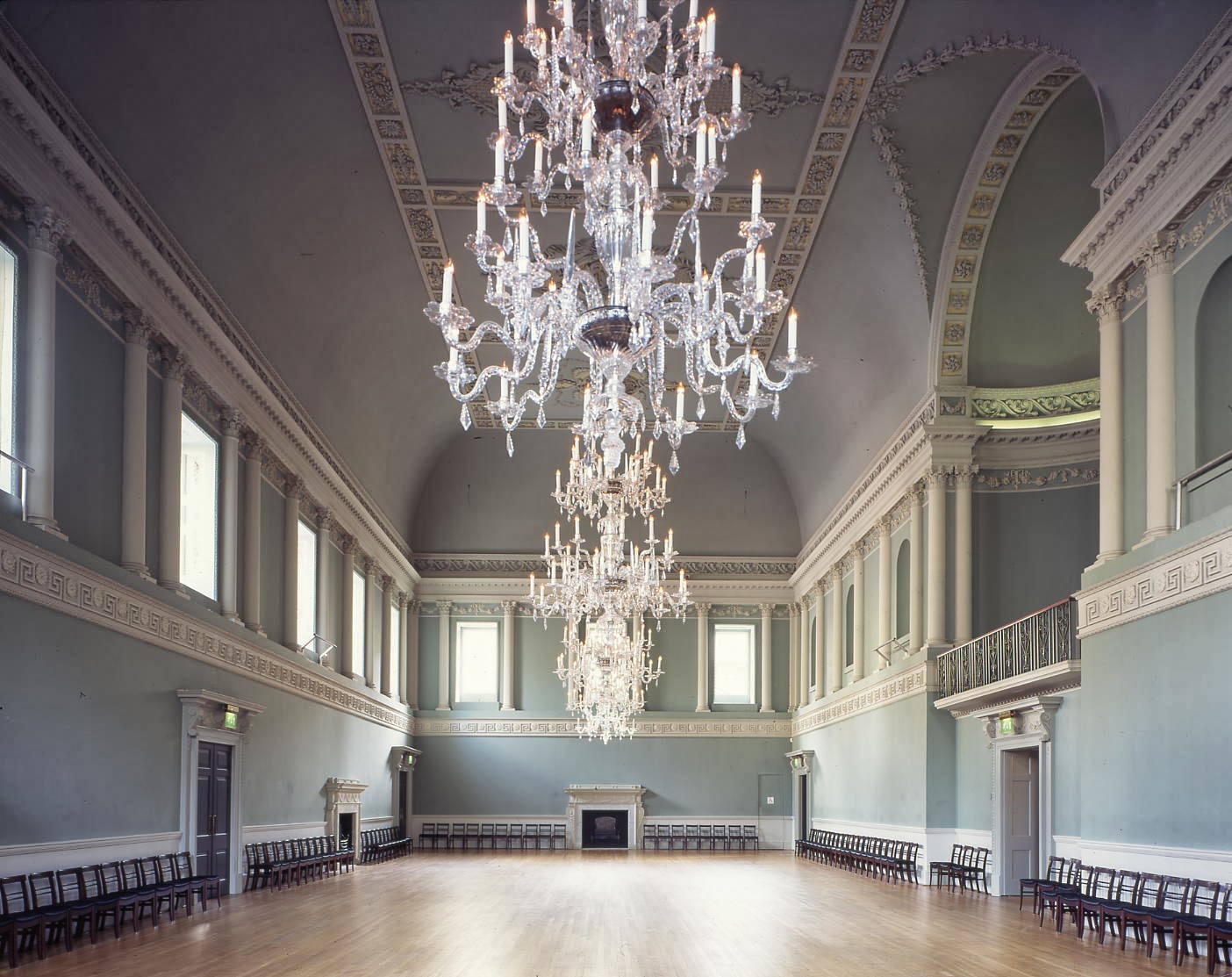
Turbot steak, perfect, juicy with tender braised small fennel bulbs. Roast porcini and buttery pan-sautéed bruschetta drenched in merlot. We drank our own wine. A two-thousand-four Barolo. We brought it with us from La Morra. It’s specific grapes were grown on our inn’s hillside. The wine, to our surprise, had a white truffle aroma.We heard the Takács String Quartet in two concerts. We heard them in the spacious, elegant, blue and white, Georgian-era Assembly Hall in Bath where hang five brilliantly gleaming very oversize chandeliers.
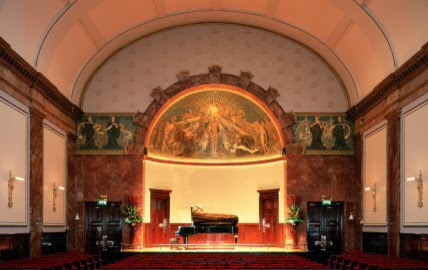
I imagined them to be Waterford crystal. And we heard the Takács in London’s Wigmore Hall. Superlatives aren’t enough. An event like this is the reason one hears a group live instead of on a recording. The Takács are meticulously rehearsed, yet they play as if the music originates from deep within them and bubbles out like a natural spring and at times like a geyser. With great ease. Incisive rhythm. Ravishing tone. Thrilling and stunning. Words fail. Wes sat in the third row. It is not an exaggeration to say he was sitting among the musicians. The violist is an acquaintance. We were privileged to get to know her a bit over cocktails after the Wigmore concert. We met her in the Green Room. Wow! What a room. On it’s four walls are photos autographed to the Wigmore by the legendary performers from one-hundred years ago. Of course they loved Wigmore. It’s acoustics are perfect. Flattering in every way. Geri took us to stand on the stage. I gasped at the thought of playing on it. It is a serious platform for creating hand-wrought musical beauty. For musical rituals. Behind and over the musicians heads is a quarter-sphere frescoed wall that serves to thrust the sound out to the listeners. And serves for the listeners as a something beautiful to rest their eyes upon. Paraphrasing Harriet Beecher Stowe, “the room was designed so that anywhere her eyes would fall it would be upon something beautiful.”
Wigmore Hall is like that. Walking the violist back to her hotel, we passed Queen Anne Street where five years ago we met Charles Beare who waxed poetic over my viola made by Jacob Rayman in London in sixteen-fifty, and where I played a few notes on the famed “McDonald” Stradivari viola, but that was five years ago. Back to Wigmore, after the concert I was so excited, exhilarated, I could hardly sleep. Months ago, I mentioned to Wes that the Takács program was tailor made, as if they had selected my favorites. We tried for tickets. SOLD OUT. Entirely sold out. Wes showed once again his ability to make dreams come true. He got two tickets by checking daily for returns and my dream came true. Command performance.We saw Shakespeare’s Midsummer Night’s Dream directed by Michael Grandage. We swooned. The backdrop was a large luminous moon. It made everything seem an enchanted dream. The staging seemed inspired by Hair, the musical. Slightly hippy. The director and performers made the story absolutely clear from beginning to end. David Walliams stole the show with his Bottom. He was hammy, extroverted, over the top, charming and adorable. It is said he is a best-selling author of six children’s books published by HarperCollins. And that he is admittedly bi-polar. He, like his cast mates, expressed much of his character without requiring a spoken word, so expressive was his physical depiction. And when they did speak their diction, their articulation, their projection was impeccable. Lots of consonants: tee’s and pee’s.
We went to see Shakespeare’s Much Ado About Nothing. It was the opposite of the above. Though it was perfectly fine, it was not particularly funny and the live and real cigar smoke blown from the stage was affronting and annoying. The cast seemed in two teams. One, American, with James Earl Jones. The other, British, with Vanessa Redgrave. The Americans, to my ear, to a man, lacked consonants. Not quite mumbling, but lacking in clarity. Their acting was from the neck up. Bodies unexpressive of character, with an occasional hip-hop hand gesture inappropriate for their World War Two characters. The British were extremely articulate. I don’t think diction is dependent upon country of origin, but in this instance it was. The director, Mark Rylance, was AWOL. He is in New York starring as Olivia in the Globe Theatre’s all-male production of Shakespeare’s Twelfth Night which we will see during Thanksgiving weekend.
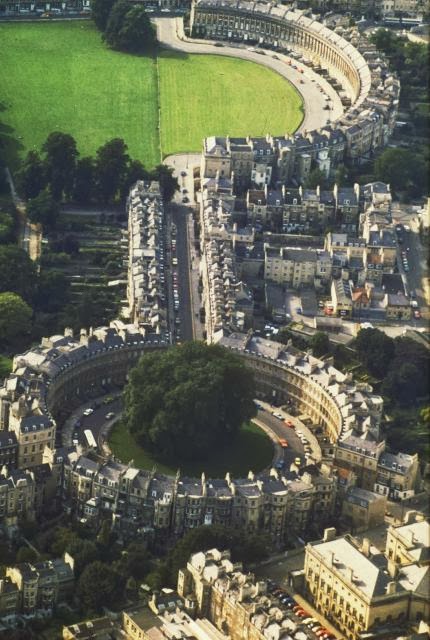
We visited the small city of Bath. Much of it dates to the Georgian era which refers to the one hundred and twenty six years when there were four King George’s in a row. Seventeen-fourteen to eighteen-forty. The four King Georges loved music, literature, and architecture and manners and tea and letter writing and botanical paintings and all things aesthetic. As I understand it, not so interested in governance, they performed makeovers on English villages. Built crescents or circles of residences. In Bath there is the Royal Crescent and the Circus.
The Royal Crescent is as it sounds, an arc, a continuous row of several dozen connected stone townhouses forming an arc overlooking a vast descending lawn with woods in the distance. The Circus is also a series of connected townhouses but it is comprised of four arcs which form a large circle. In the center is a lawn with a grove of trees. All these were constructed during the Georgian era. They are fairly simple in design, uncluttered, without excessive ornamentation. Unpainted stone. Part of their beauty results from the rhythm created by their repetition. A friend said, “you should see them at night when all the lanterns on the townhouses are lit.” We walked amidst them on a cold drizzly, wet day. It was peaceful, calm and the stones of the pavement and of the townhouses glistened in the rain.We heard a retired concert pianist speak, Alfred Brendel. He is also a poet, scholar, painter, author and thinker. I have read his books. I admire his probing mind. I repeatedly listen to his recordings finding in them a logic, an orderliness, that soothes me. He spoke for an hour in the previously mentioned Bath Assembly Room. He is in his early eighties, lives in London and his hearing is weak. He is well spoken and has a Germanic inflection in his English. Shortly before retiring, he recorded Beethoven’s sonatas for cello and piano with his son. Months ago, I heard a bit of it on the radio. To my ear, I hear the piano-father lovingly coaxing the best out of the cello-son. I asked him to autograph his recent book, An A to Z for Pianists. As he signed, I asked him what literature he’d take to a deserted island. Without hesitation, he raised his head, looked me in the eyes and said, “Shakespeare. And Lichtenberg’s Aphorisms.”
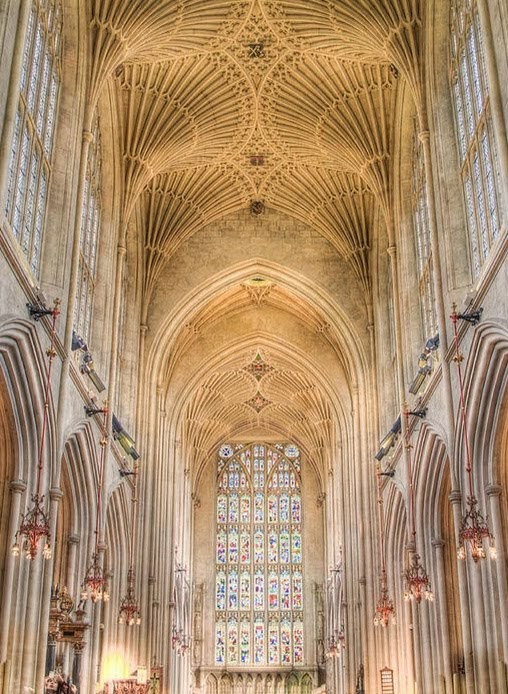
In Bath, during the late afternoon, we visited the Abbey. Inside, music was playing. A small chorus and orchestra. Handel’s oratorio, Jeputha. Something to do with a father who in payment for a benefit he’s received takes a vow to slay the first person he sees, which tragically is his daughter. Father and Daughter were singing when we entered the Abbey. The music was ethereal, gentle, emotional, regretful, foreboding. The Abbey’s interior is a magnificent display of elegant details. Long rows of fluted gothic columns on both sides of the room rise to the ceiling where the flutes blossom into fans. Looking up,
the ceiling has a compelling visual rhythm from how the fans splay out and where they meet in the center. The most architecturally beautiful ceiling I’ve ever seen. The abbey is very old. Parts of it vary in age from five-hundred to eight-hundred to twelve-hundred years old. The small highly regarded chorus is called Sixteen. Their orchestra had two violists. One of them looked familiar. Could it be? From thirty-three years ago at Banff Centre’s summer music program? Yes, it is an old acquaintance. We did not know each other well and he may not remember me at all, but I’ll leave him a note. The Abbey was closing and I could not speak to him directly. Fast forward twenty-four hours…we heard from him the next day and spent our final London evening with him and his partner. They have an exceptionally nice place and are great hosts. We had an excellent time with them.I travel to learn about the people of the world. How they co-existed, solved problems, what they created, what were their difficulties, what made them happy, what were their challenges, what evidence did they leave behind. I tend to dwell on the past. But when there are live performances as there were this week in London and earlier in Paris I become very emotional. When I walk into an ancient cave—Font de Gaume—where nineteen-thousand years ago people, by torchlight, made drawings of animals on the walls—two deer touching their noses together—I can’t help but imagine them as you or me or anyone present day that wants to be remembered and leaves a
mark of some kind. Musicians do it with sound. And maybe knowing it is only of the moment, not a trace left behind, they go at it with a special ardor. “Listen! What beauty resides inside of us! Listen!”I have a viola made in the year sixteen-fifty in London. Specifically the area south of the London Bridge called Southwark. Near the Tabard Inn where Chaucer thought up the Canterbury Tales. Near the Marshalsea debtors prison where little Charles Dickens’s father was held. Near Shakespeare’s Globe Theatre and near Saint Saviour’s Church where Shakespeare used to go to cry over his brother’s grave. My viola maker, Jacob Rayman “dwelt in Bell Yard” and we went to find Bell Yard. Streets have been slightly rearranged through the centuries, but armed with enough old maps we were able to locate within one-hundred feet where he “dwelt.” Though the present day buildings are old, very little remains from sixteen-fifty, but little by little the picture of the history of this viola is coming into focus. The wife of it’s owner in nineteen-hundred was an actress that put the teenage John Gielgud in his first plays. That same owner did not join his string quartet’s cellist on the Titanic. I love the hunt. Magnifying glass in hand. Sherlock Holmes hat. Snooping for the clues. Connecting the dots. We roamed Southwark today. Slipped thru the slender alleyways. Popped into small community gardens, libraries. I told anyone who’d listen what I was researching, about the viola. Several people became excited. They want to see the viola. They want me to come play it on it’s home turf. Nothing to do with music. It involves local pride. One of their own citizens. The viola is his cave drawing. It survived him. Proof he was here. That he once lived, worked, loved, died in Southwark. Will I return with it? Yes.
It was a perfect end to a perfect trip. I told Wes/Casey last night, you are like a genie in a bottle. I only have to imagine a desire and you make it come true.
At this moment, we are en route to Kalamazoo, Michigan to visit the two genies that made this all possible, Kit and Joan Hough, Wes’s parents. They are a cornucopia overflowing with goodness. In not too many hours we will be with them to celebrate Wesley’s, aka Casey’s birthday and that will be the truly perfect ending to our perfect trip.
Marlow and Wes
Tuesday, 13 November 2013
Heathrow Airport
London(I did not take any of the photographs in this e-mail. Photo credits are available on request.)
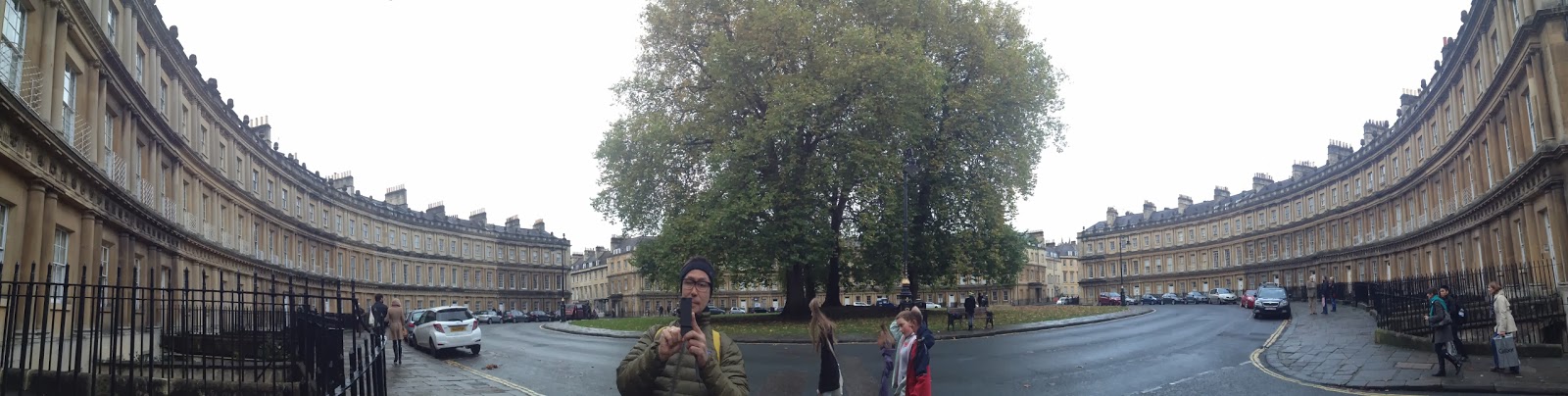 |
| The Circus at Bath Spa |
Bath is known for its Georgian architecture and there is plenty of it. But I think we felt that the older, Gothic Bath Abbey was the jewel in this lovely city.
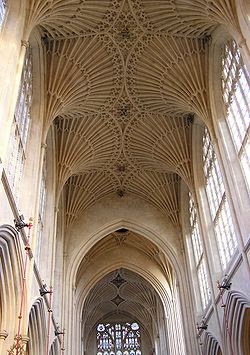 |
| Fan vaulting in Bath Abbey |
Upon entering this great space we heard live vocal music being performed by a Baroque ensemble rehearsing for a concert in the Abbey later that evening. So we were able to sit and enjoy the music and the space. One of the many unexpected pleasures of travel!
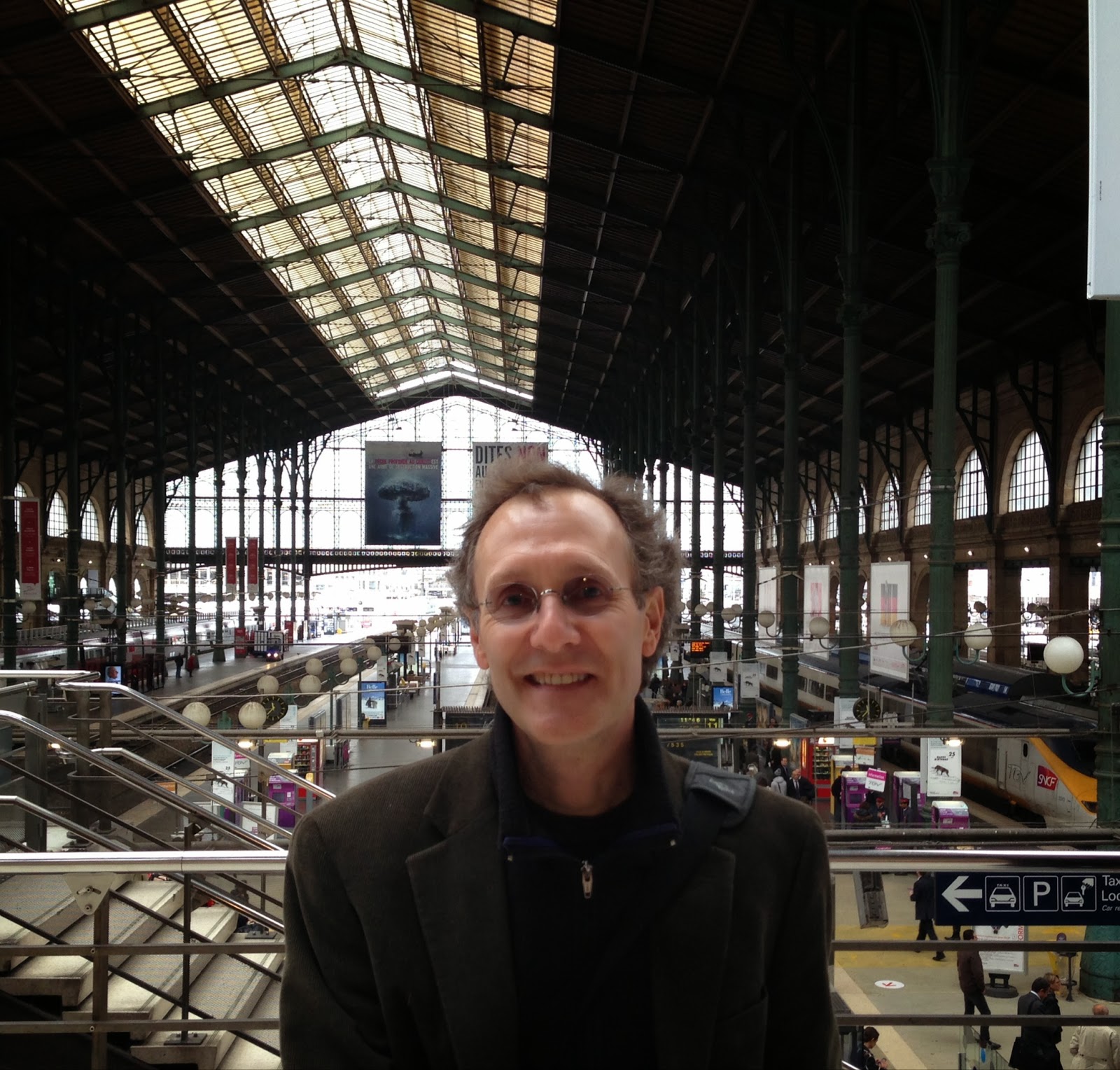 |
| Departing Gare du Nord |
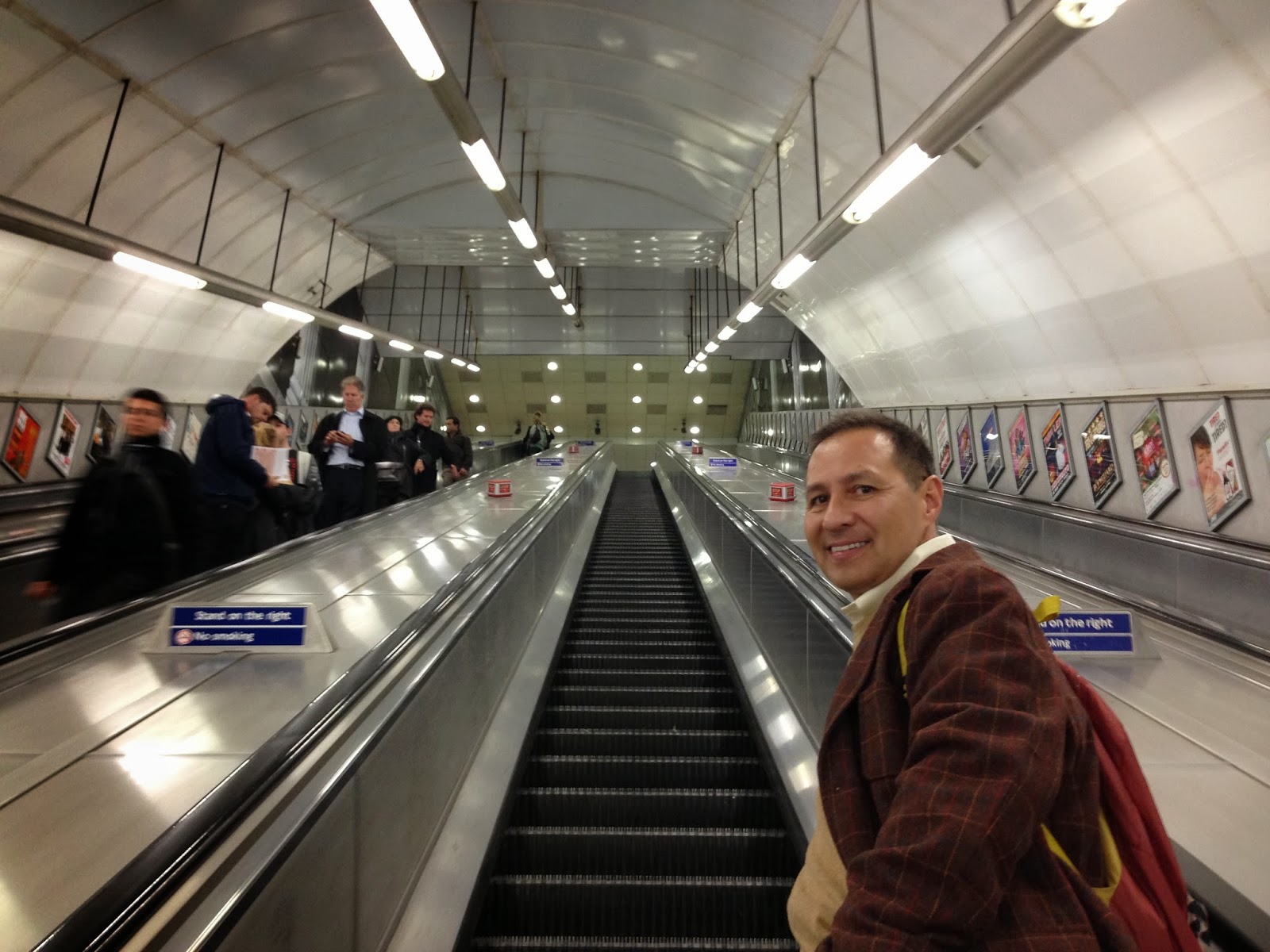 |
| Arriving London Underground |
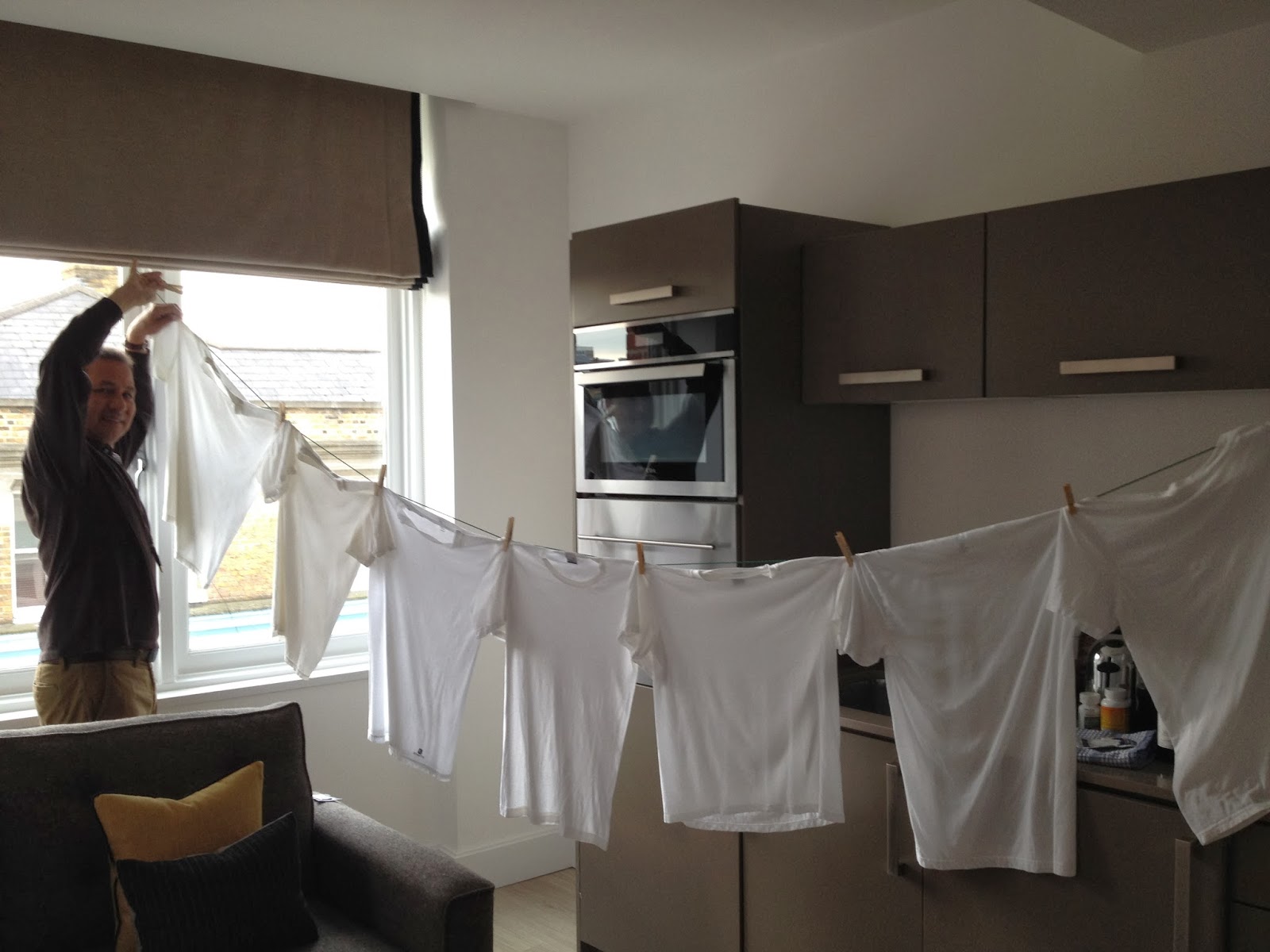 |
| Time for laundry in our London flat |
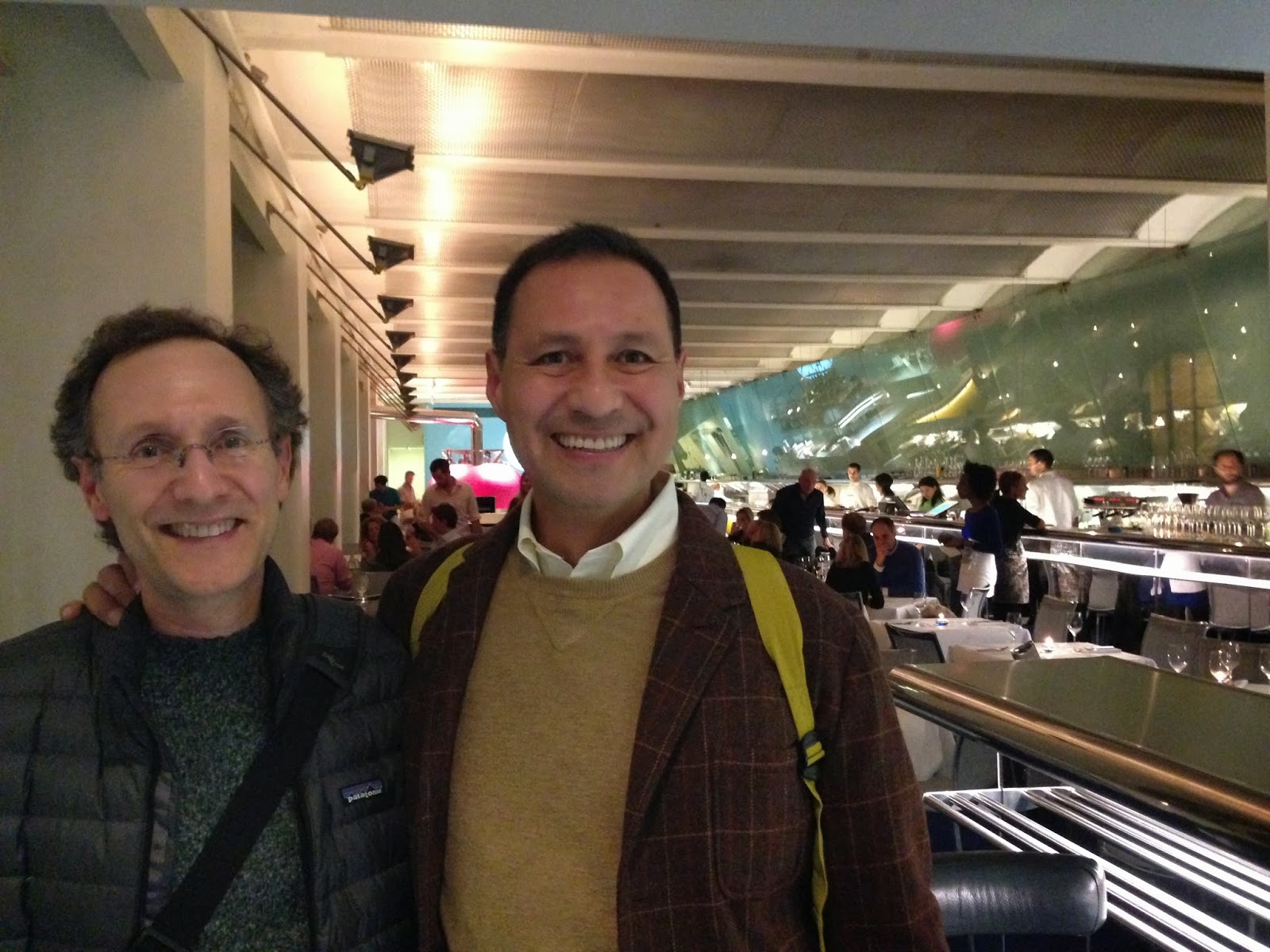 |
| Birthday dinner at the River Cafe |
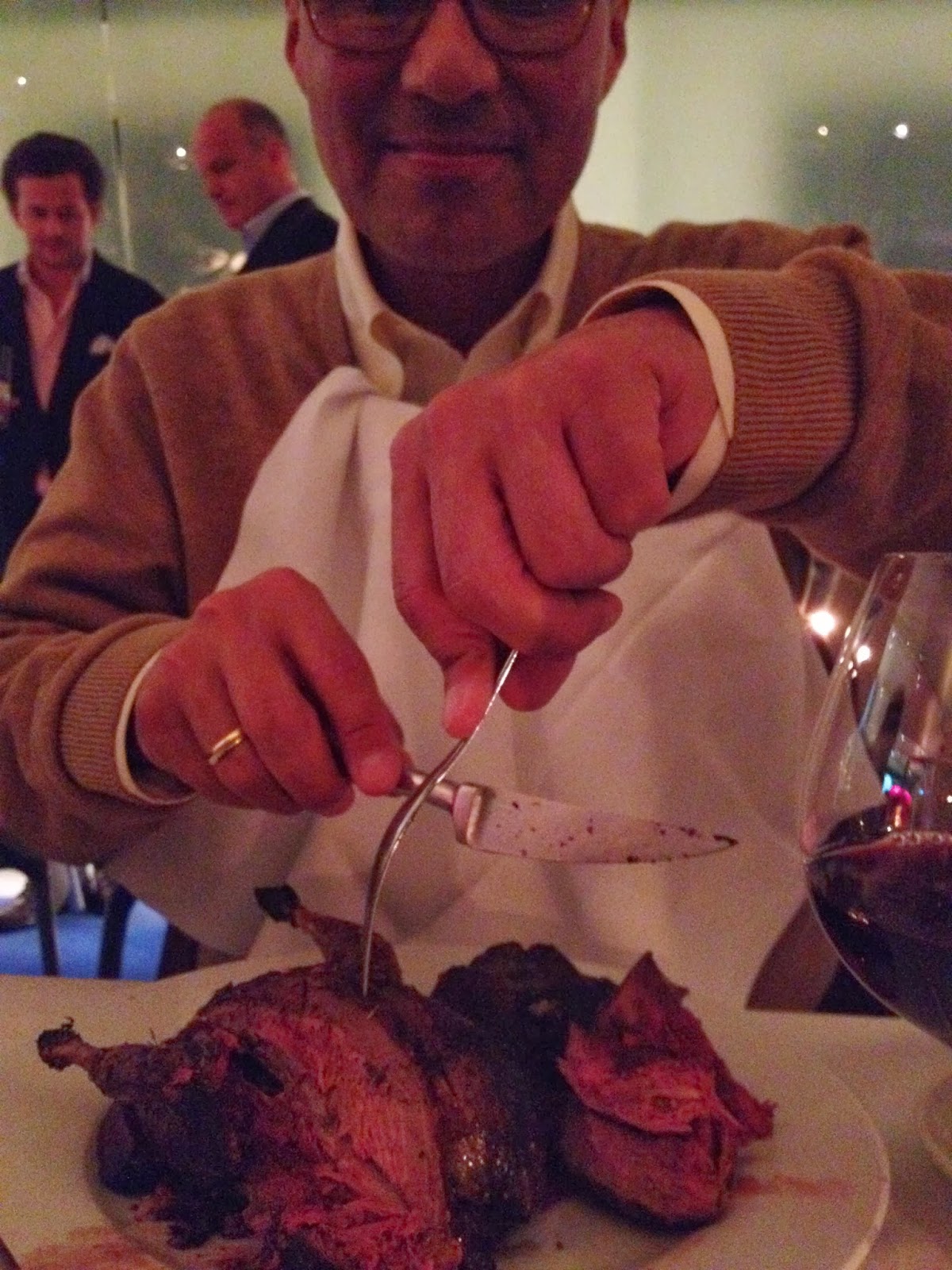 |
| Attacking the grouse |
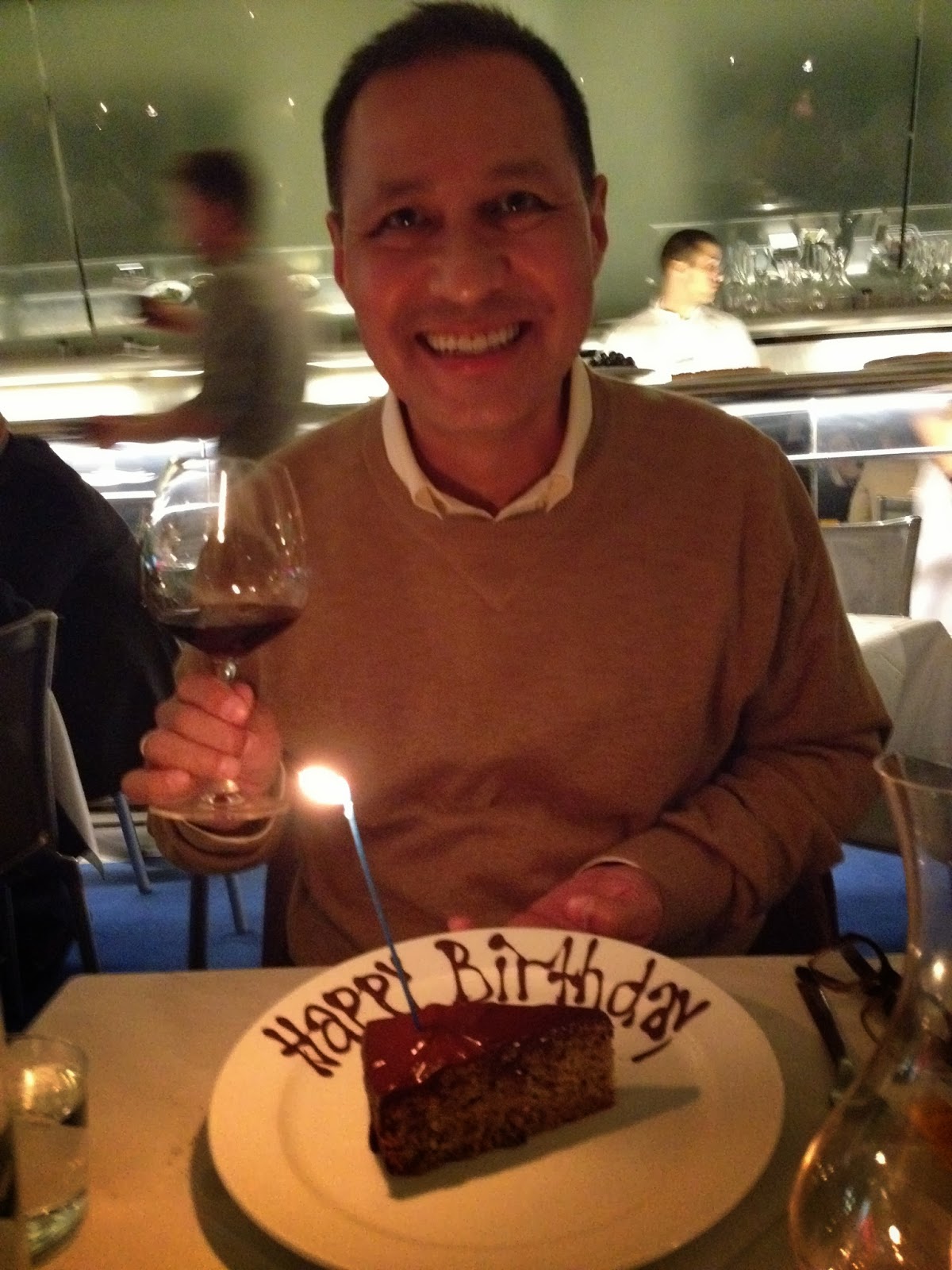 |
| Birthday Boy |
 |
| BM and Wes |
 |
| 12th c. glass windows |
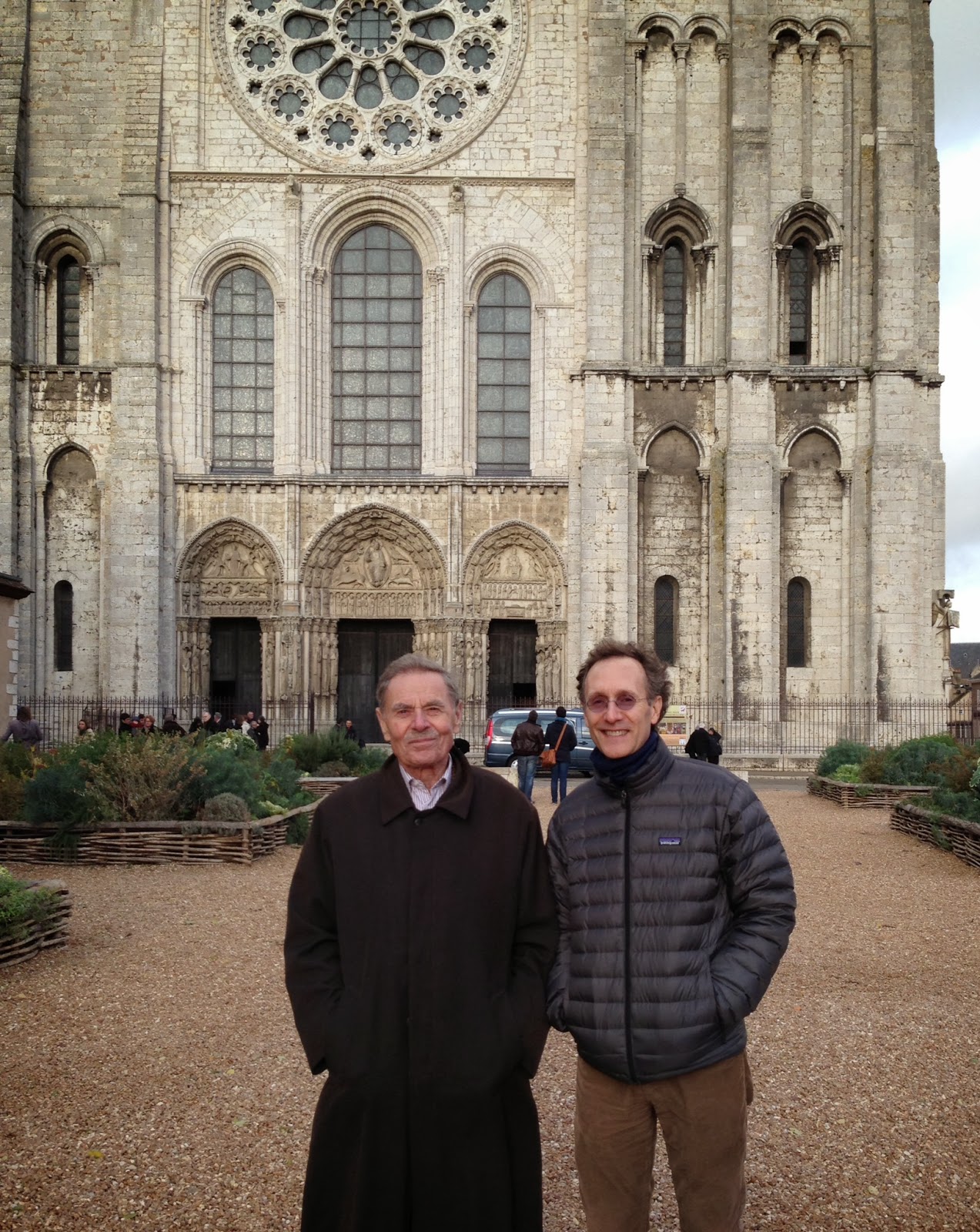
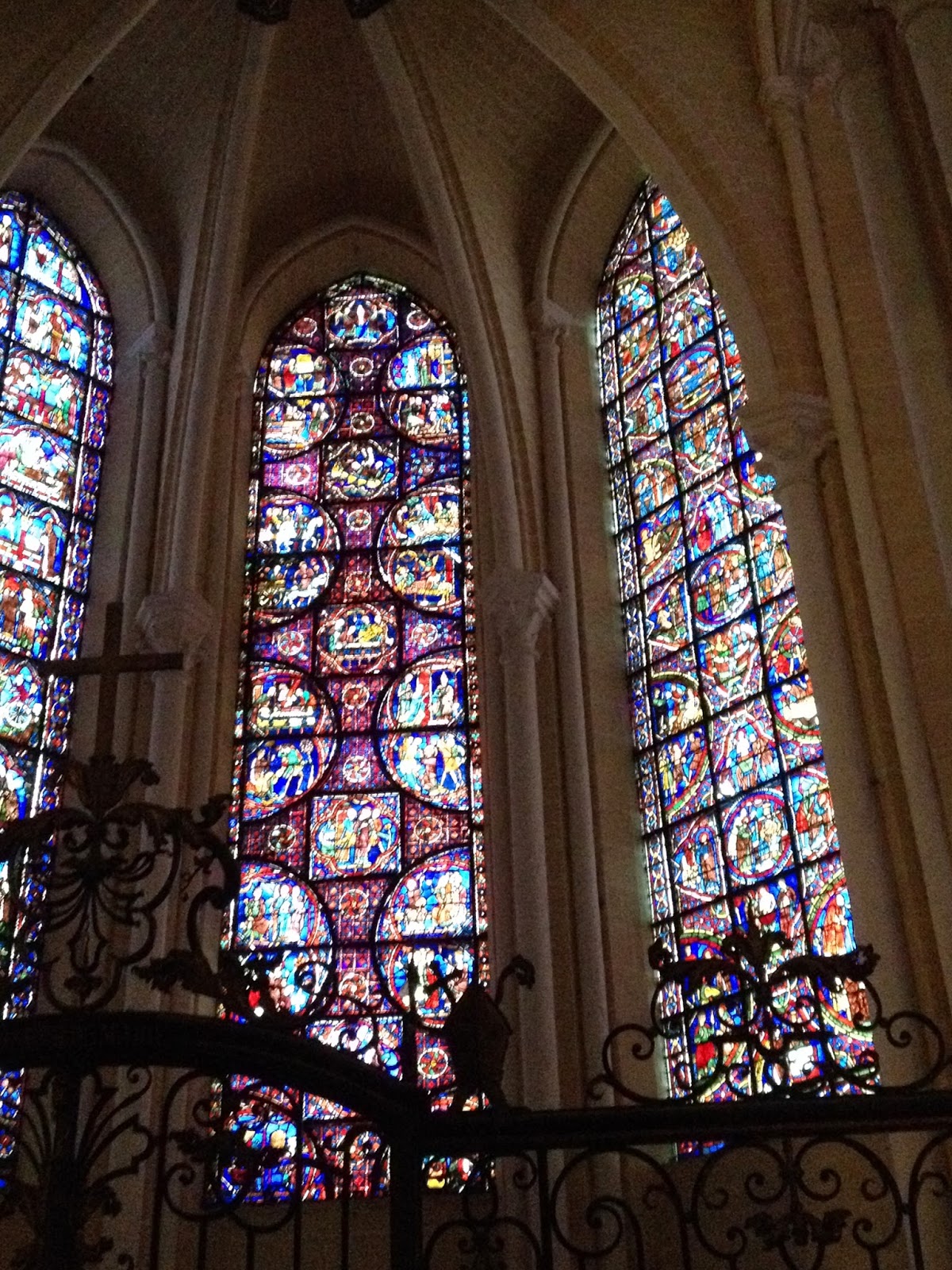
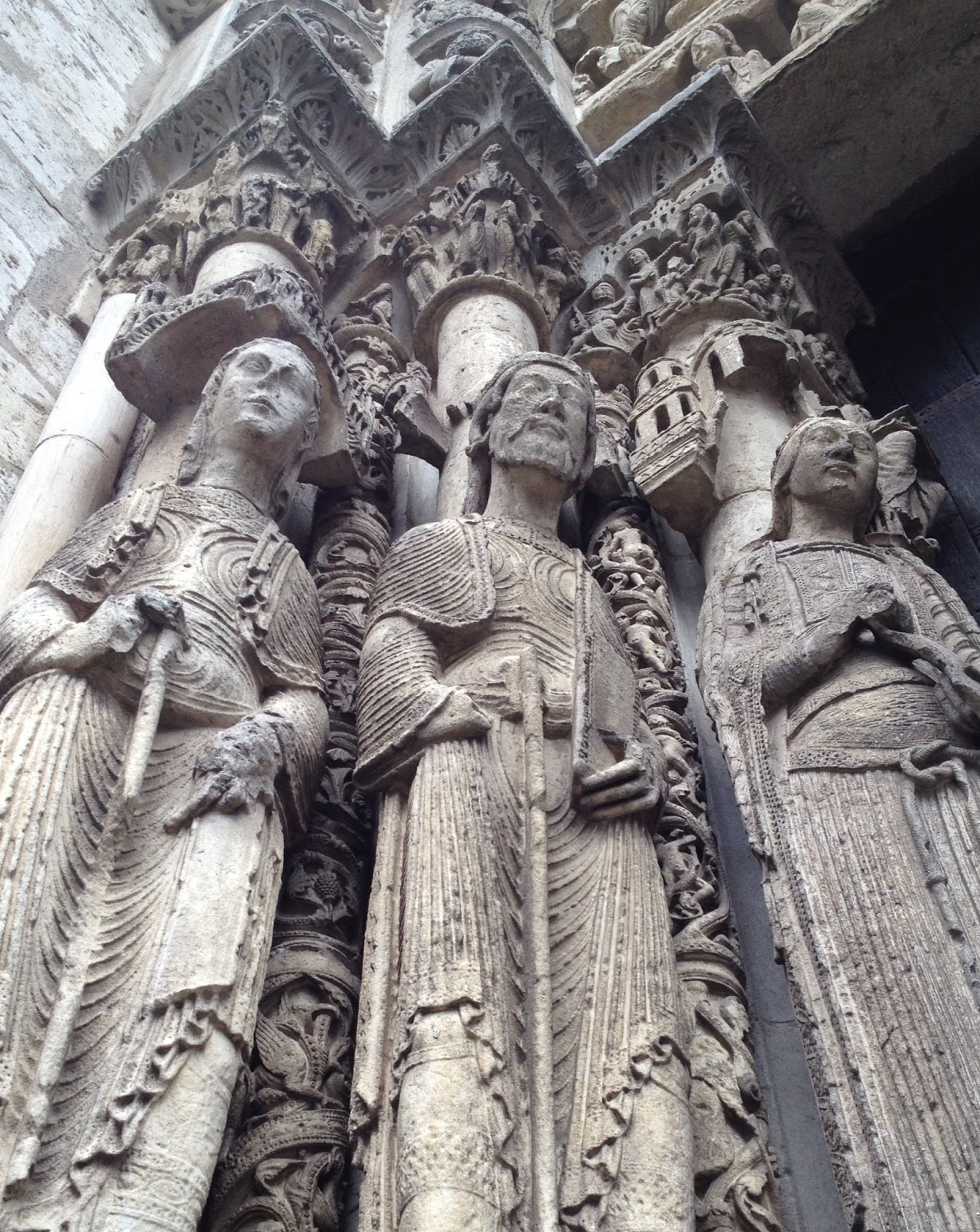
Before leaving Paris we wanted to visit Chartres Cathedral located just an hour south of Paris. Our friend Bernard insisted on driving us and it was wonderful to have not only a chauffeur for the trip but a well informed guide as well! Among the Cathedral’s many distinctions is that it is extremely well preserved – the magnificent stained glass windows are original dating from the 12th and 13th centuries. And the facade and interior is pretty much the same as it was when constructed in the 13th century.
 |
| Chartres exterior |
We couldn’t leave from our apartment in Montmartre without an evening of chansons, so enjoyed desert in a classic cabaret-bar down the street.
 |
| Caught checking e-mail – again! |
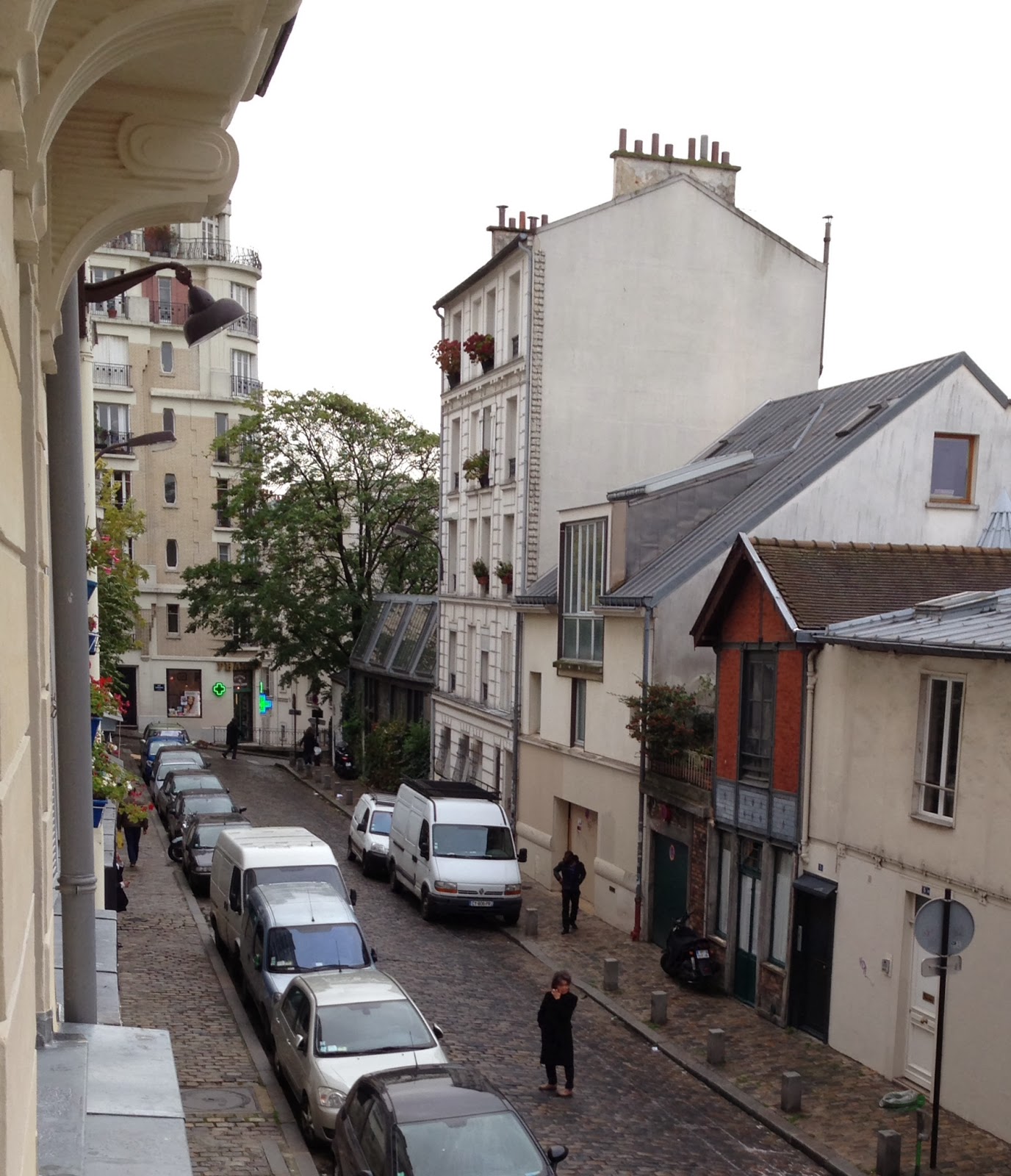 |
| View from our apartment of Batteau Lavoir artist studios used by Picasso and Brancussi among others |
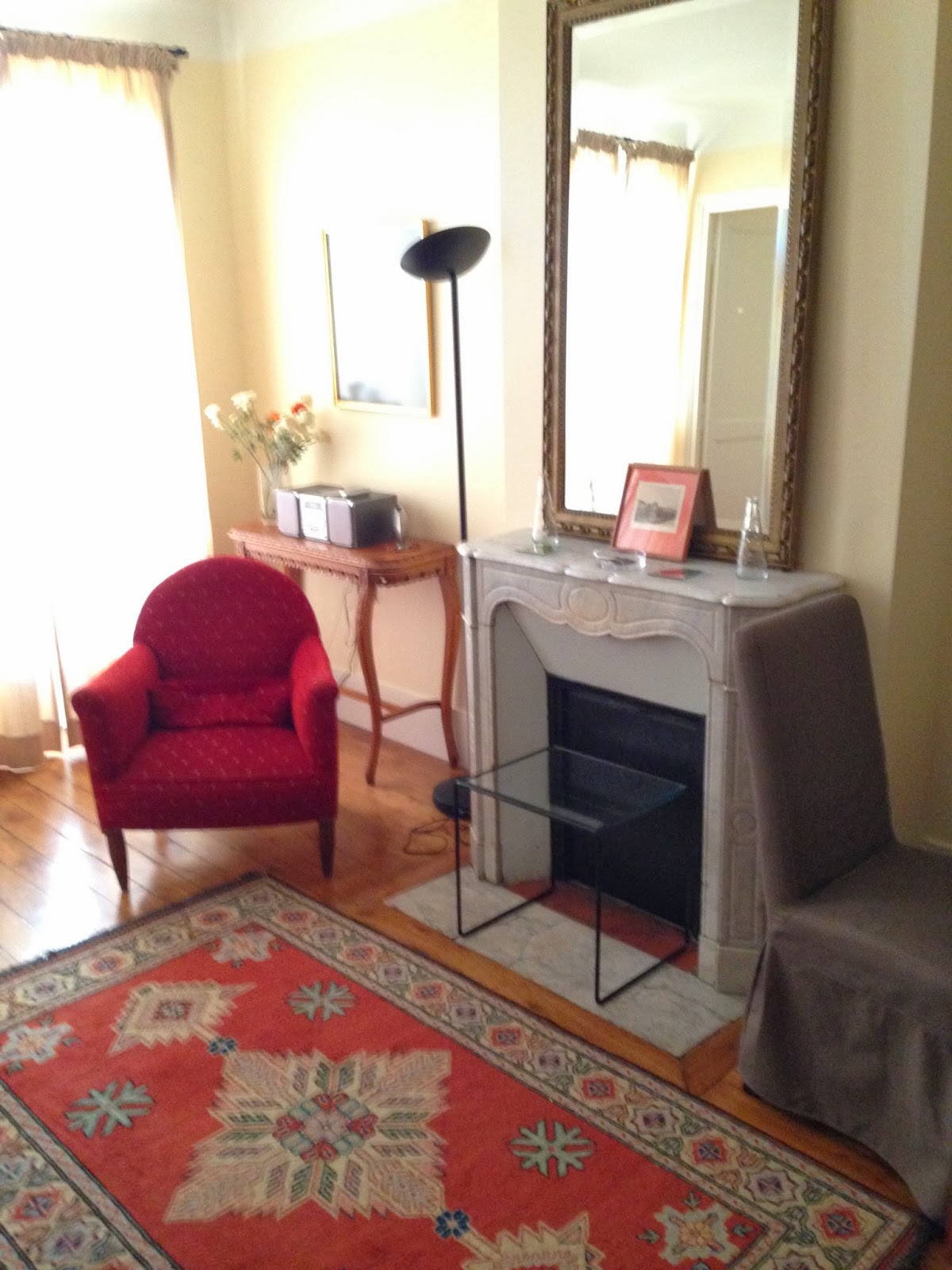 |
| Montmartre apartment |
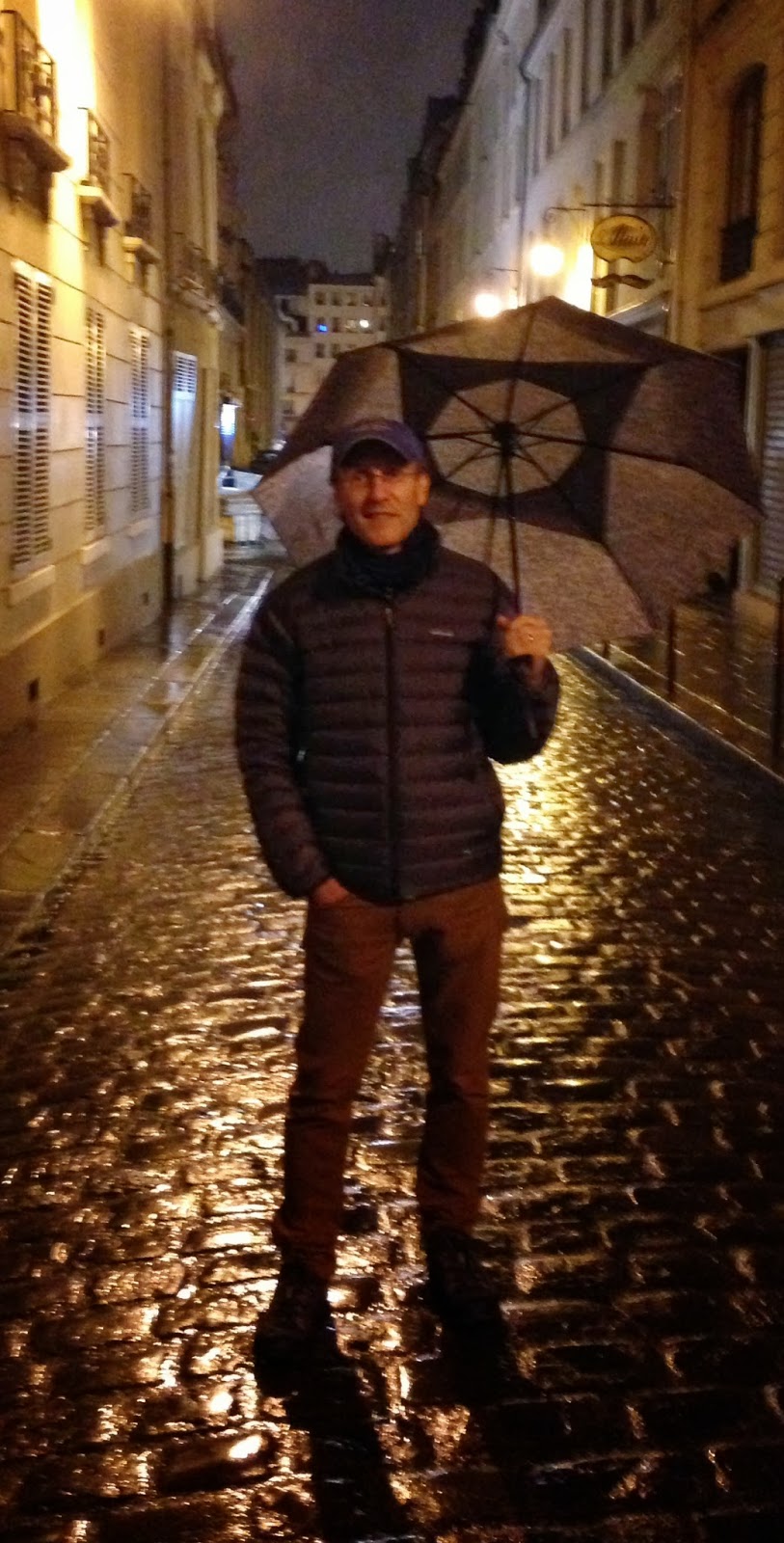 |
| Rainy night in Paris |
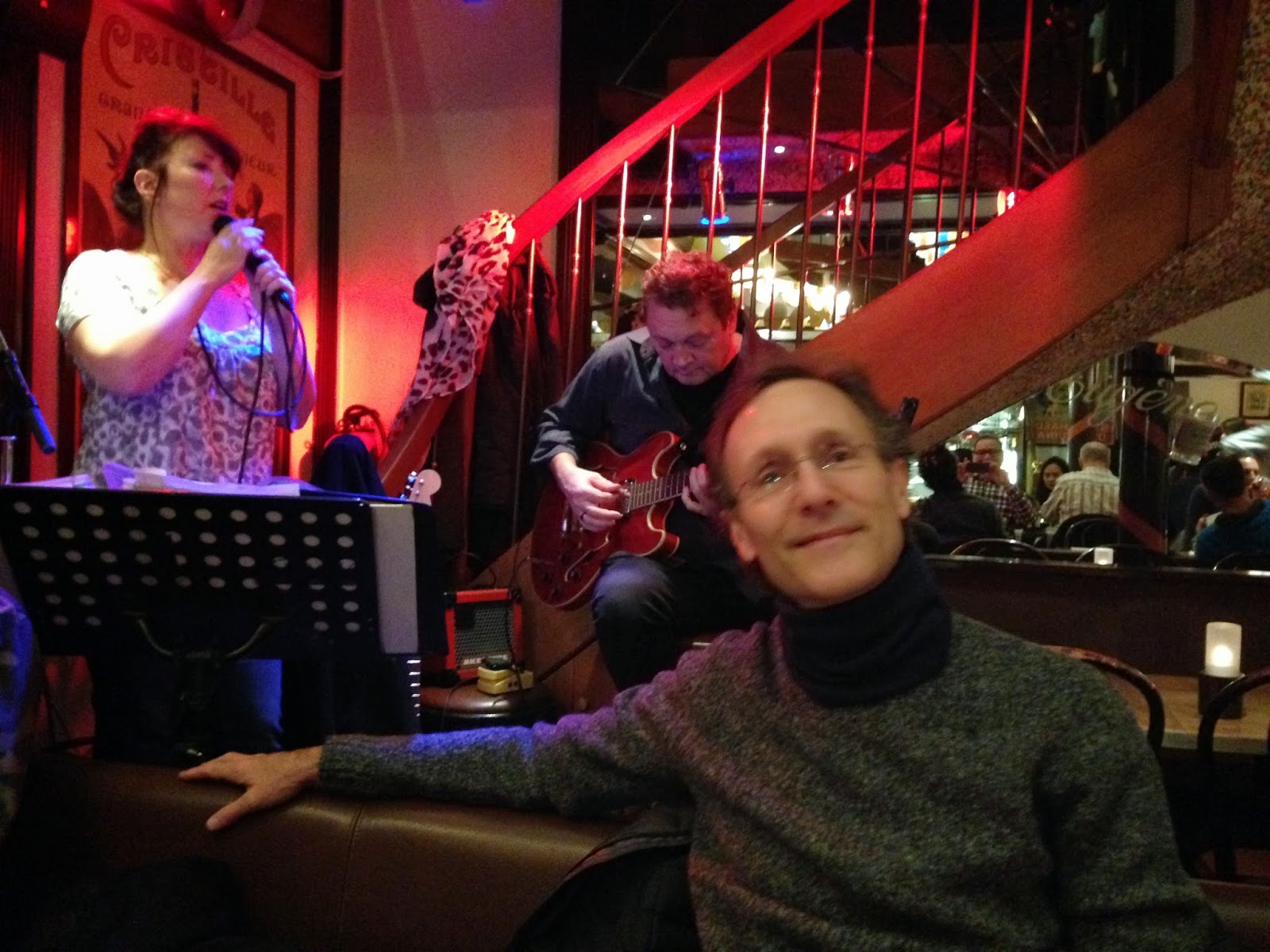 |
| J’aime les chansons |
We are in London. It is wonderful. But there was more to tell about Paris. Here it is…
We were at the Salle Pleyel on two evenings for concerts. It is a large venue. Two thousand four hundred seats. We selected our seat locations so as to be near the stage where what we might lose in optimal balance is made up for by the visceral thrill of seeing the musicians’s faces up close and feeling the strong vibrations of the powerful sound rattle our bones.
For the Leipzig Gewandhaus Orchestra we were in the second row. Riccardo Chailly, from Milan, conducted a symphony and a concerto by Johannes Brahms. Chailly, in his youth, was a jazz drummer. His rhythm was to me like the course a river runs from it’s source to the sea. Think of the Continental Divide where rivers originate. Their ultimate destination is determined. During the journey they are at times more wide or more slender. They twist and turn or they straighten out. Their velocity races or slows, but they never stop. Relentlessly in motion, their destination is inevitable.
For the Budapest Festival Orchestra, we were seated above and behind the orchestra,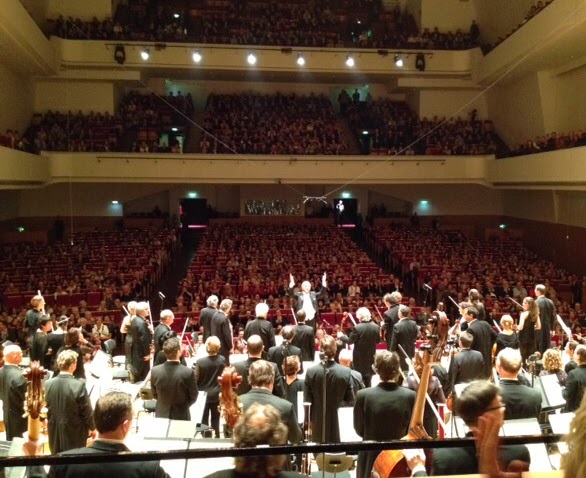 facing it’s conductor, Ivan Fischer. Recently, he made headlines. He composed an opera on the subject of eliminating anti-semitism in the current Hungarian government. His concert began with an Homage to Bela Bartok—somber, reflective, mildly folk tune laden. Continued with Beethoven’s fourth piano concerto. And concluded with Dvorak’s eighth symphony. We once visited Dvorak’s Prague, particularly the house that he was born in. It is in a verdant hilly countryside. Our guide said, “Dvorak did not have to search for inspiration, he simply opened his window and wrote what was outside.” Budapest is similarly beautiful. The orchestra has those images in their blood. Their Dvorak was ravishing and in it’s ending where the music sounds like laughter the players gave an audible in unison hearty “ha-ha-ha” before the ecstatic joyous circus finale. Then came the encores. First, a gentle, tonal, old fashioned waltz by, surprisingly, Toru Takemitsu, a challenging modern composer. Next up was
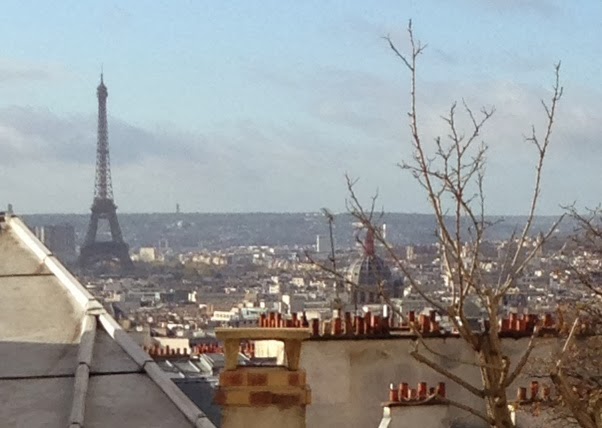
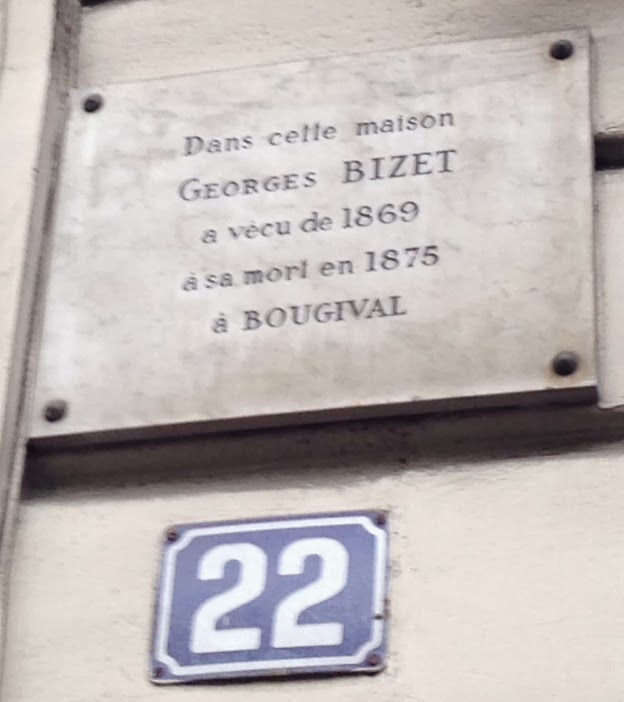
The neighborhood made me swoon. So much history concentrated in so few blocks. On our immediate corner, nineteen year old Picasso invented cubism and Van Gogh lived still with two ears. Five or six blocks away Bizet wrote Carmen then died at thirty-six,
and Renoir painted canvases of colorful dances beneath the moulins (windmills) and of little girls, rosy-cheeked, swinging under trees in a garden. The Moulin Rouge inspired Toulouse Lautrec to drink, carouse, fall in love with music, faces, capes, red scarves, can can girls and everything he put into his huge colorful posters. Berlioz lived in a little cottage around the bend and wrote Harold In Italy so Paganini could show off his Stradivari viola and he was visited by his friend, “chopinetto mio”—Frederic Chopin. Closer to our time, violinist, Stephane Grappelli played jazz with Django Reinhardt’s guitar at Le Roulotte, which means gypsy wooden caravan wagon.
Henri Murger, a writer, in the Latin Quarter perfectly spot on captured it all in his short stories in eighteen-forty-two He created Marcel and Schaunard and Colline, starving artists—painter, composer, writer. Fifty years later, Giacomo Puccini made himself and the “bohemians” famous when he turned Murger’s short stories into an opera, La Boheme.
Montmartre is steep and hilly with twisting narrow cobble stone lanes that glisten in the rain. During our stay it was overcast, drizzly and rainy. Which heightened the “bohemian” ambiance. Much has changed. Much remains the same. There are artist studios aplenty, garrets with banks of extra tall windows. There are lots of tiny apartments for creatives to settle into, to struggle and work hard in. Hungry for food, shelter and for the day the public will discover their genius.
Next stop London.
Marlow and Wes
Montmartre
5 November 2013

 Wes & Marlow Travel Blog