Cisternino & Martina Franca, 5/12/16

Cisternino and Martina Franca, Puglia, Italy
May 12, 2016

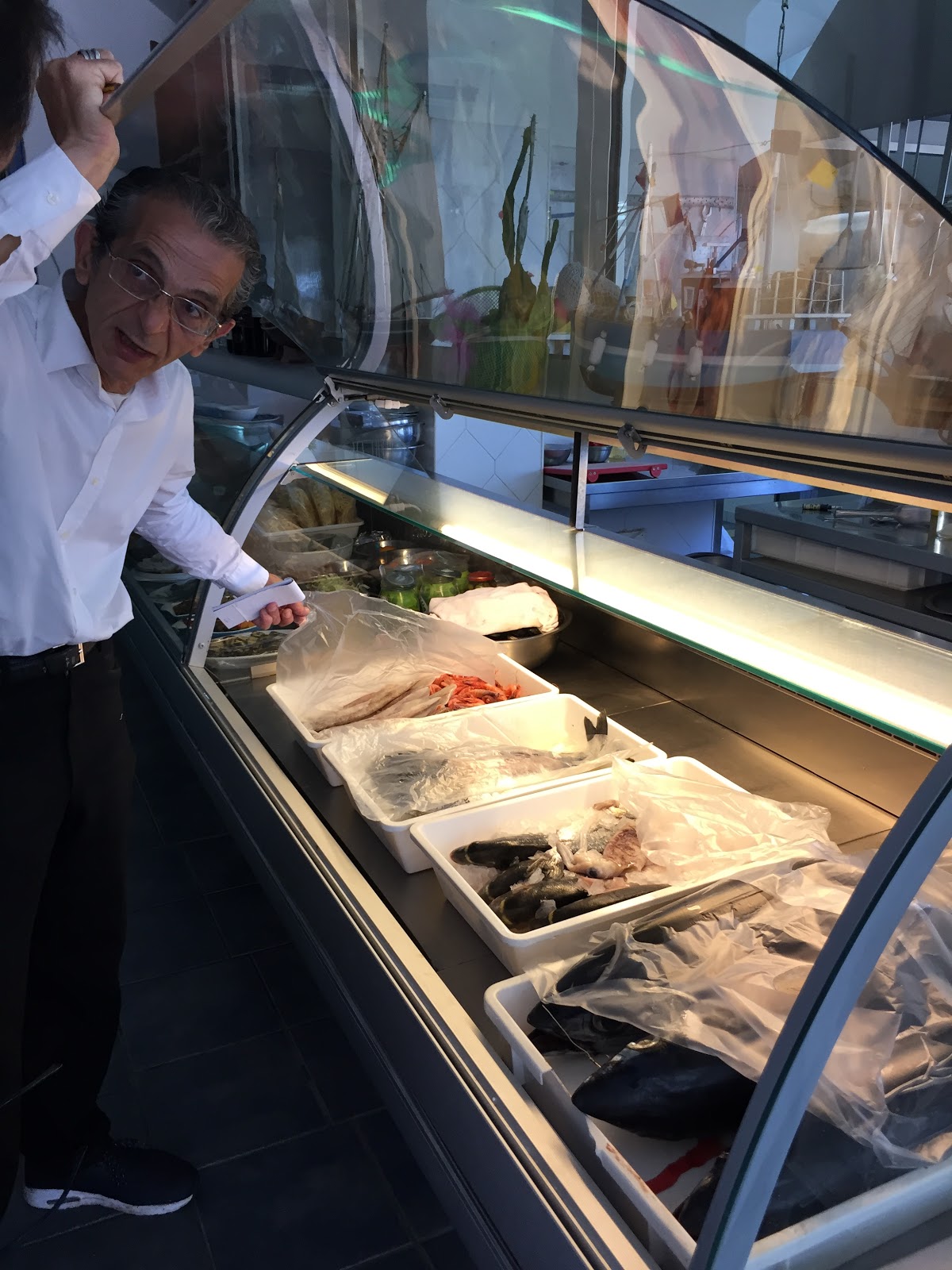
Between Locorotondo and our next stop, Lecce, we visited Ostuni and Cilegie Messapica for meals. The ristoranti we sought were both closed.  We moved on and went to tiny Cisternino to have dinner in a maccelleria. A maccelleria is a butcher shop. The butcher helps you choose meat, then cooks it in a forno di legno—a wood fired oven—and serves it to you at a table.   

Customers consulting with the butcher 
It was a blustery night. We snaked through the narrow white marble Cisternino streets in search of two particular maccellerias. Both were closed. There were others that were open. One, through the door, looked warm and cozy. The people inside, adults and children, had smiles. We entered. The butcher stood with a smile. We spoke our usual opening phrase, “abbiamo studiato Italiano dal giugno scorso e parliamo un po’ ma non molto”, “we have studied Italian since last June and we speak a little, but not much”.  That phrase has set the tone for many wonderful and not at all awkward exchanges. It makes clear we are not demanding they speak English and with their help and patience we will operate in Italian.  Mostly, they are pleased to be our teachers and help us improve.

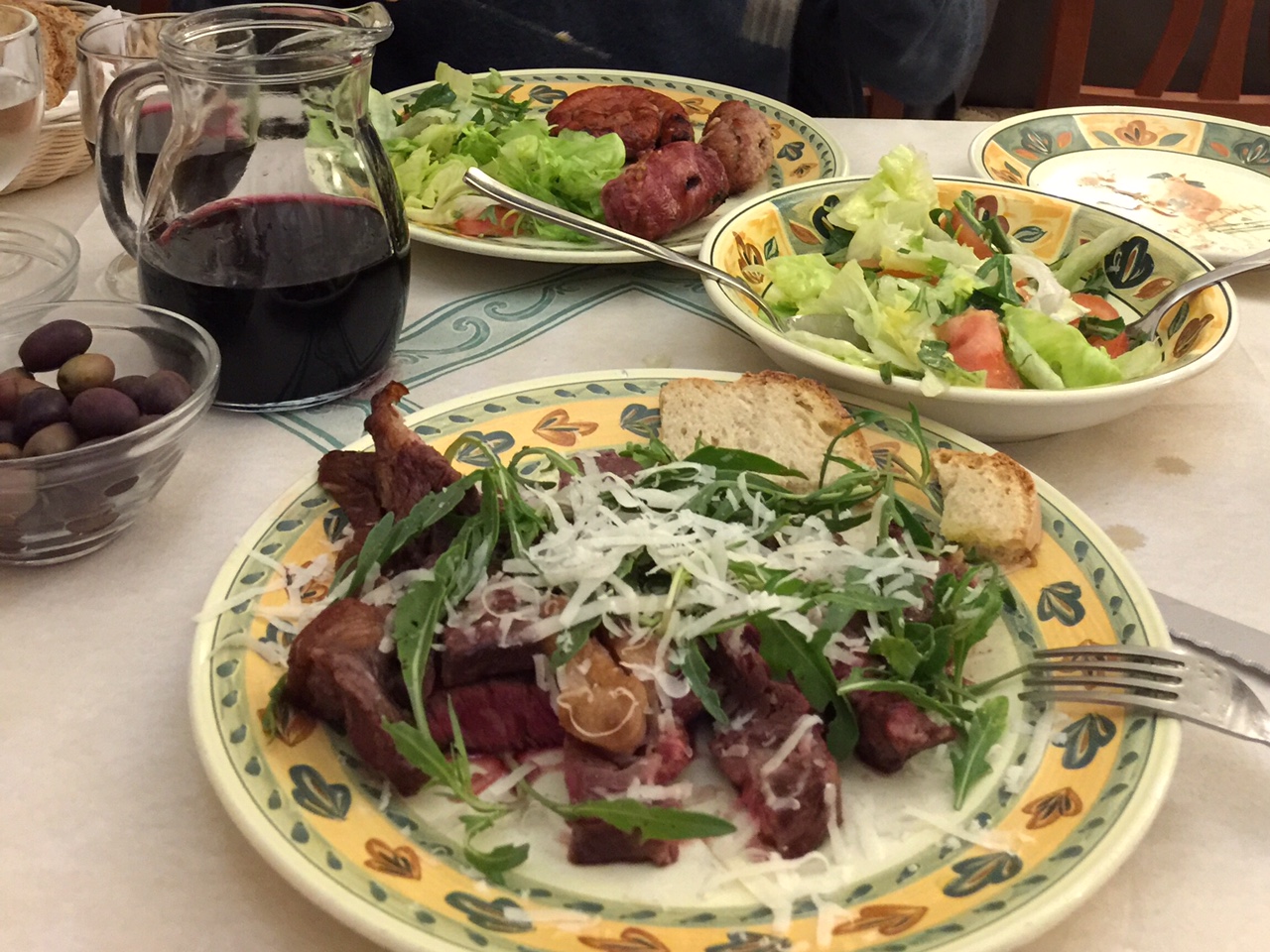
Tagliatta di manzo

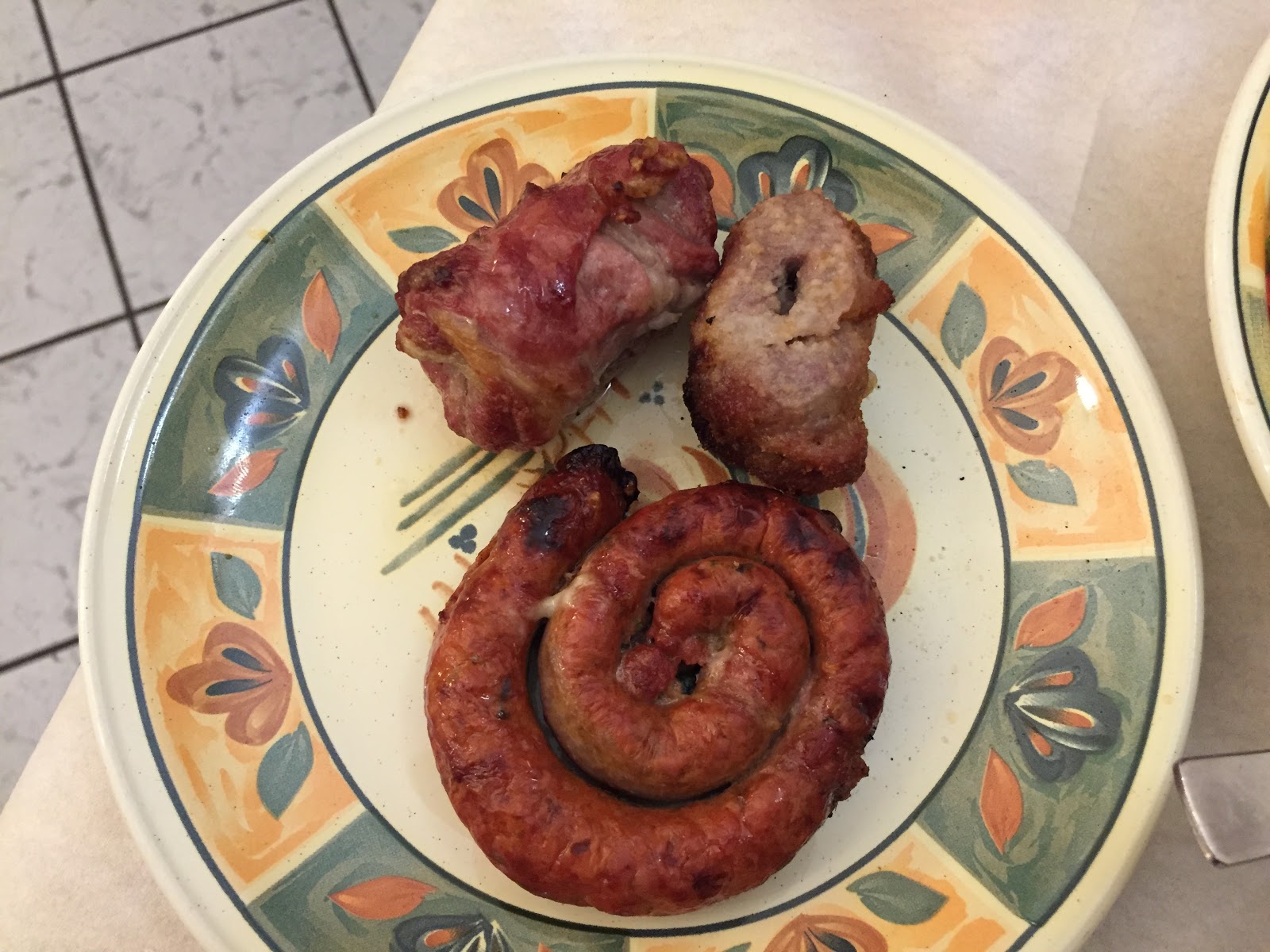
Wes ordered bombettes, a local specialty of one meat rolled around another meat and about the size of an egg. The variations of what gets rolled around what are huge. They can be very tasty and Wes’s were. I ordered a tagliatta di manzo, which is a steak cooked on the grill, thinly sliced, topped with arugula, fresh shaved parmigiano and finished with a drizzle of local olive oil. 


Grilled bombettes and sausage
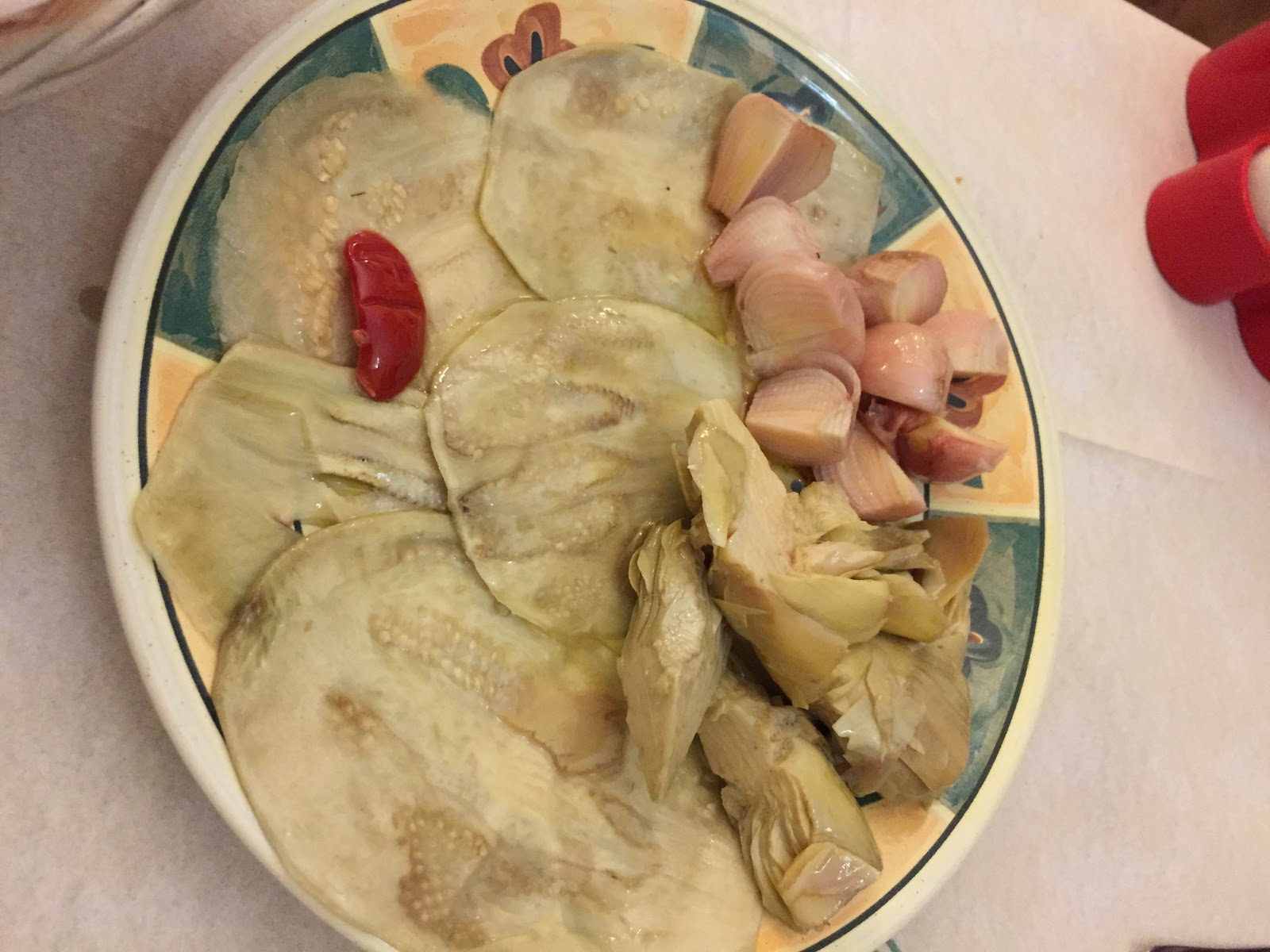
Verdure sott’olio
All olive oil here is local. There are far more olive trees than people. And there are cooperative olive presses where you take your olive harvest to be pressed into oil.  With our meat we asked for a plate of verdure sott’olio: vegetables preserved in olive oil. Parchment thin eggplant slices, baby artichokes and lampascioni, which are grape-sized bitter onions. We drank the local red wine, Primitivo. It is plentiful, inexpensive and goes well with everything in Puglia. 

Two other towns we enjoyed were Alberobello and Martina Franca.  Alberobello has a dense concentration of trulli which, as mentioned in an earlier post are the cone-shaped dwellings made of stones piled, without mortar. Much is made of seeing the trulli, as if they were a Holy Grail. I will simply say they are interesting in the way an adobe structure or a teepee  is.

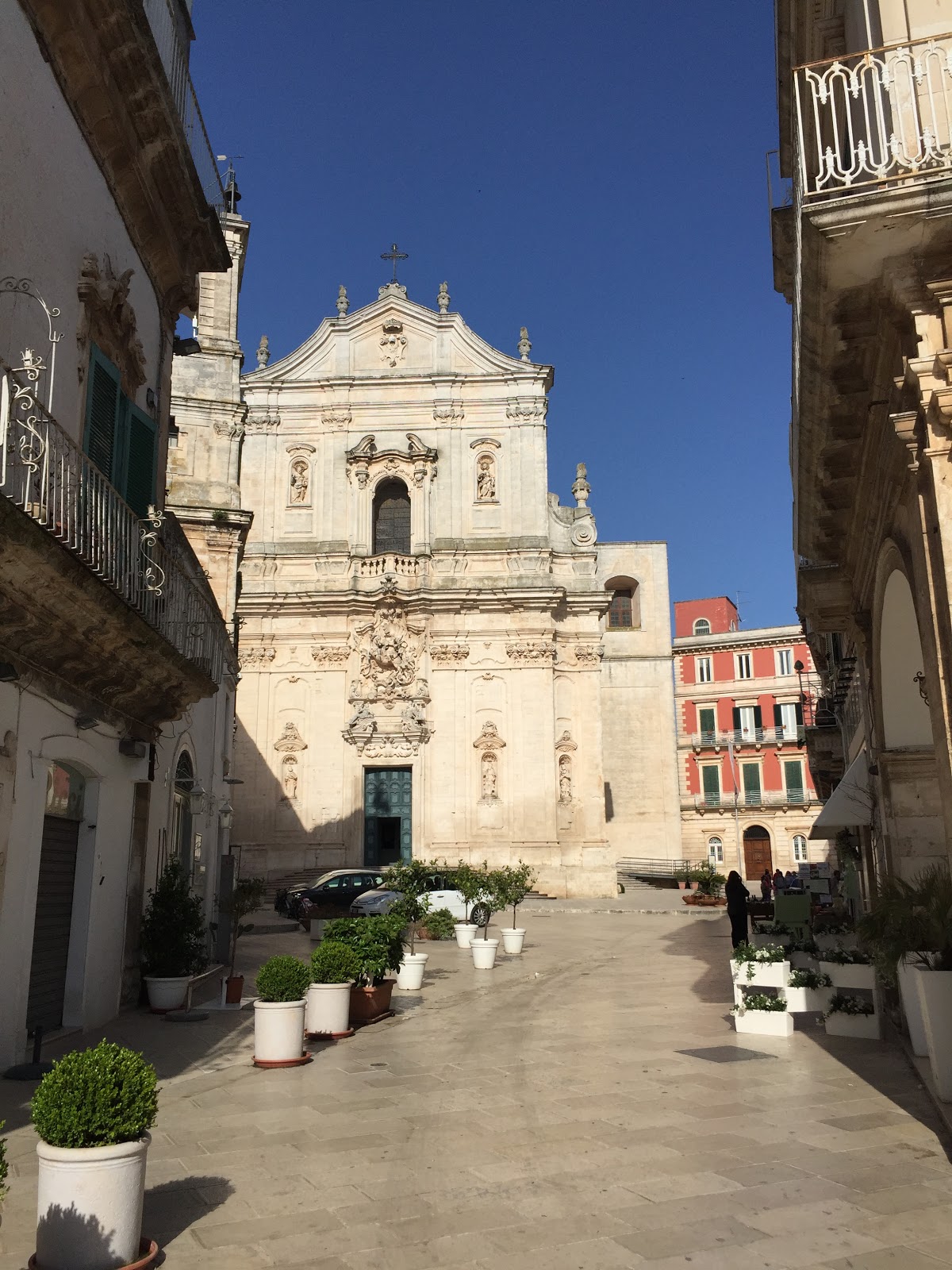
Martina Franca 
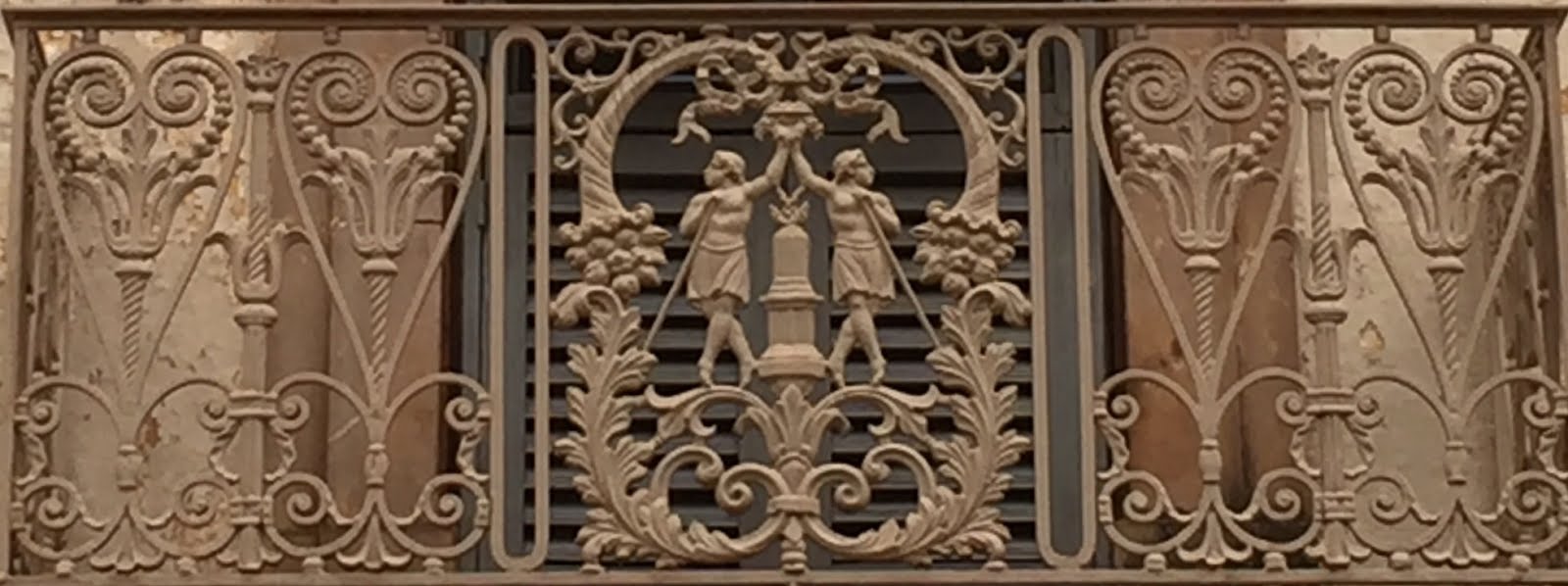
Detail of Marina Franca balcony

Martina Franca was pure pleasure. At the passeggiata hour everyone is out taking a walk, getting fresh air, visiting with friends, taking caffè or an aperitivo. Martina Franca’s streets and piazzas sprawl. One leads to another.  There are interesting details everywhere. 


We have enjoyed northern Puglia. Now, we are off, in the car, to Lecce, pronounced Lay-Chay. See you there.

Wes and Marlow
Cisternino and Martina Franca, Puglia, Italy
May 12, 2016


Polignano a Mare, 5/11/2016

Polignano a Mare, Puglia, Italy
Wednesday, May 11, 2016

We are in the tenth day of our voyage.  We are driving around in a black Fiat Cinquecento. The pope, on his recent American tour, abandoned his high security pope-mobile and drove in the same Fiat car.  His model was tiny. When he got into and out of it in his long white robe it looked like an act from the circus. Our model is the hatchback, a little larger than his, but still compact enough to get through the narrow, crooked, cobblestone village streets.

By now, the car is dust covered. All cars here in southern-most Italy are dust covered. The sand blows over from the north African deserts. With their finger, someone wrote on our window, “lavami”.  

We have had great weather. It has been mostly sunny, but cool inland and sunny and hot at the shore. Imagine the shape of Italy. It is described as a boot. Imagine the boot has a particularly high heel. That heel is the Salatine peninsula. It has water on three sides. On the east coast is the Adriatic Sea. On the west coast is the Ionian Sea. Throughout the length of the peninsula the distance between the seas averages about twenty miles. In our car, we have zig-zagged north, south, east and west. Here is what we found. 

Polignano a Mare

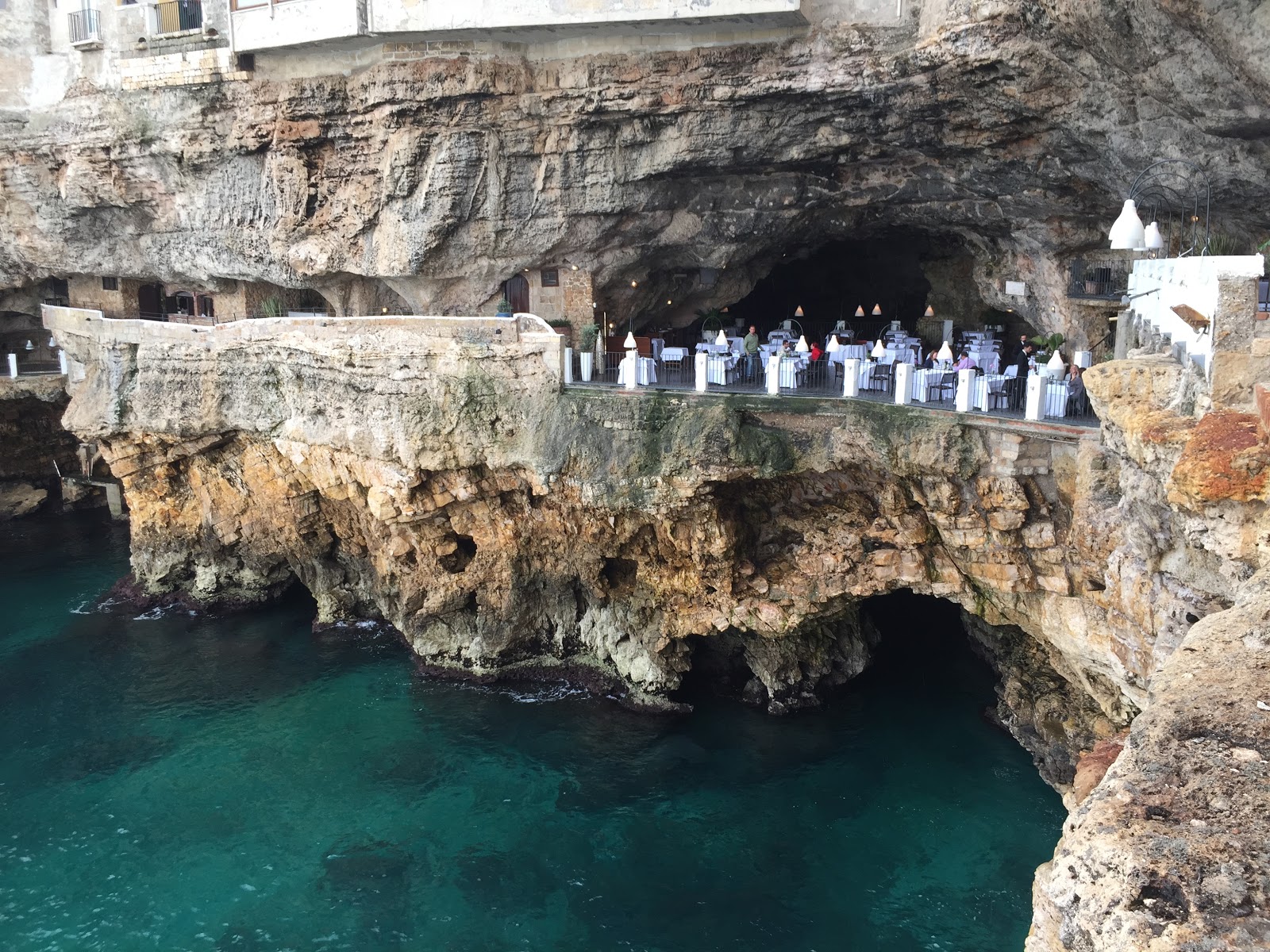
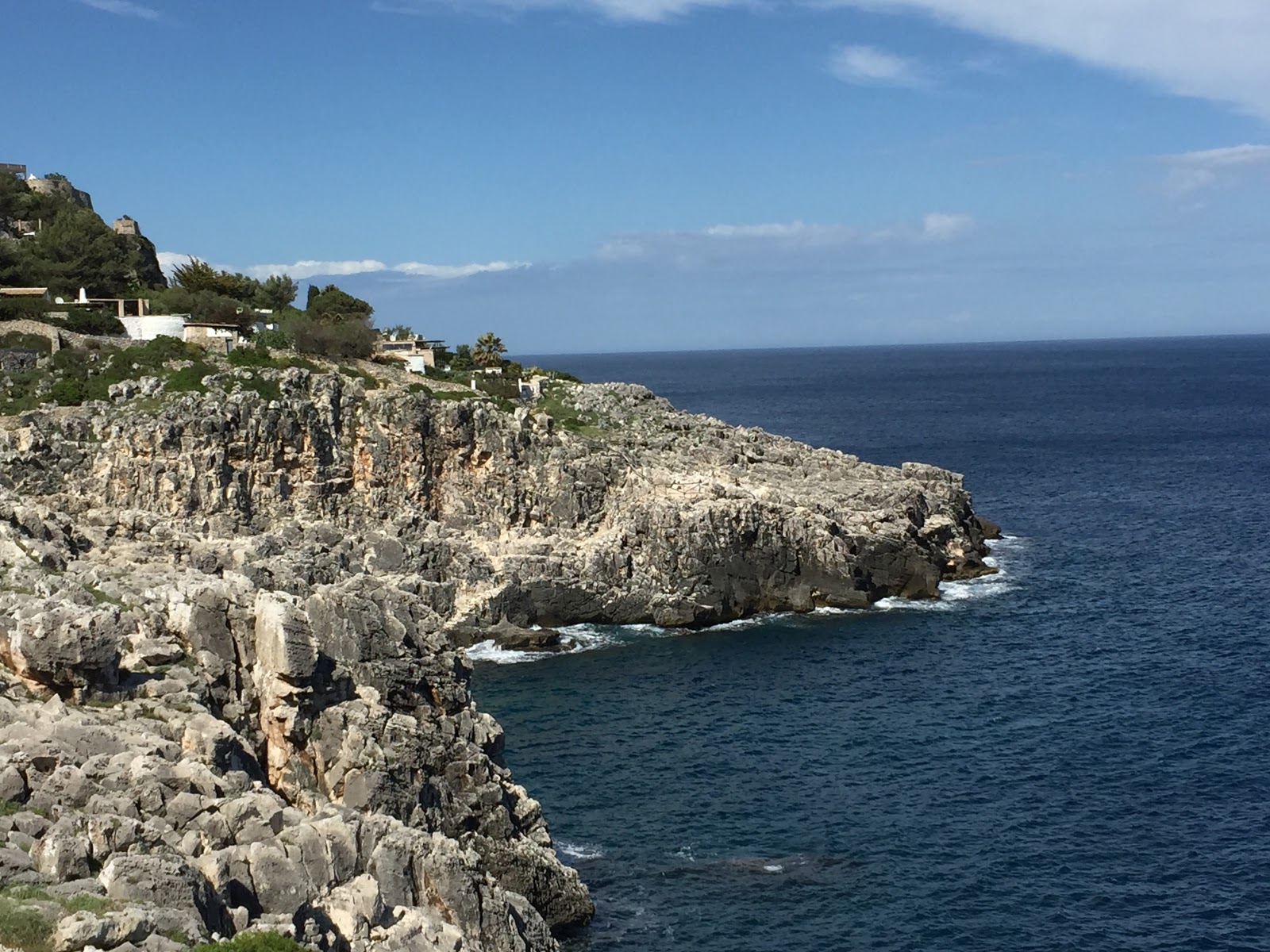
On the east coast, the town, though on the water, is raised above it; somewhat of a mesa with the shore at the foot of steep cliffs. The water roils and churns. It slaps the cliffs with the force of a battering ram. Over the past several thousand years, it has eroded the cliffs into grottoes.

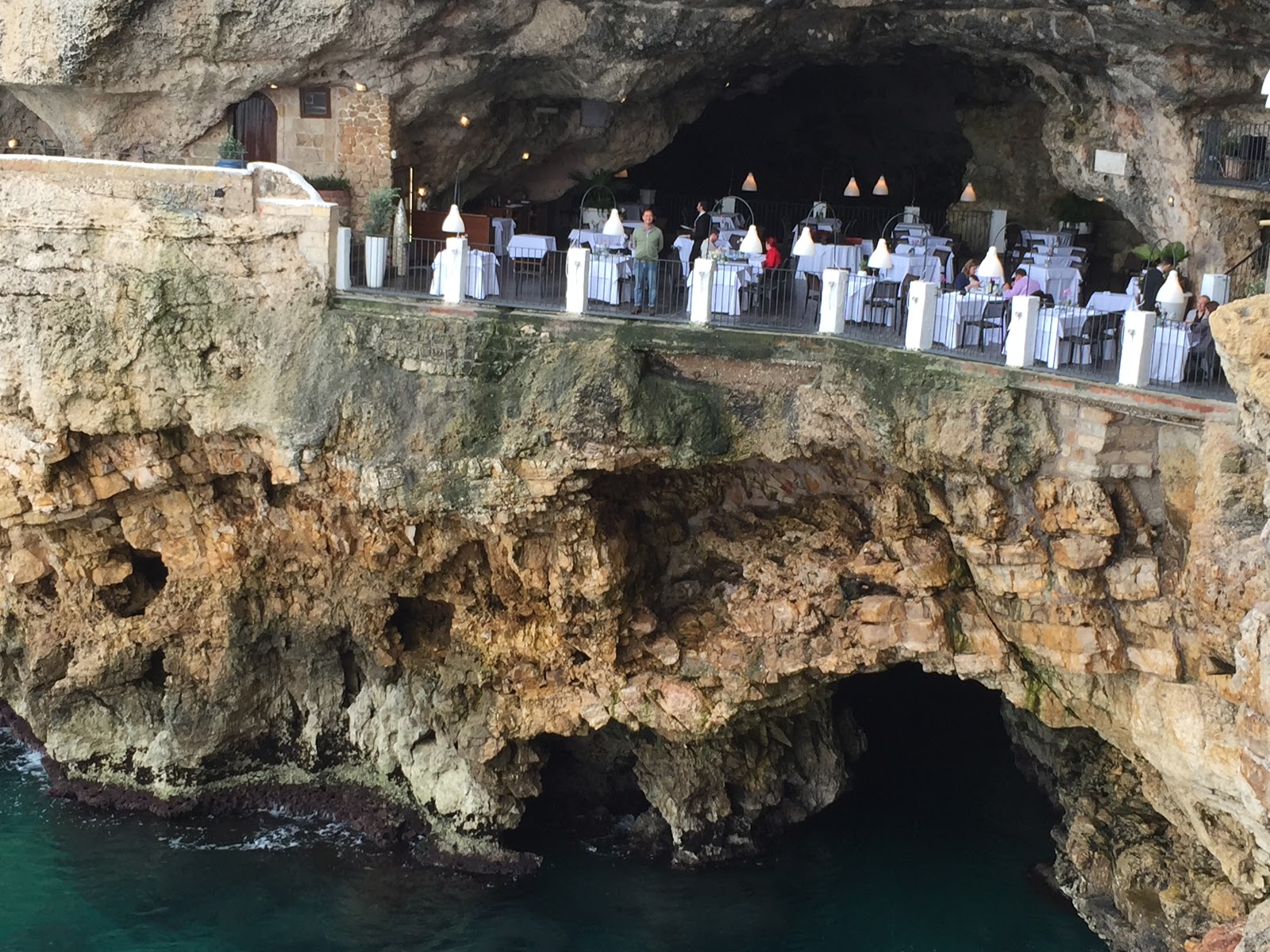
One particular grotto, a natural cathedral, both tall and wide, is the site of a restaurant. There is a stone shelf which spans the grotto walls. One side of the shelf opens to the sea, the other opens into a cavern. The ristorante sits upon the shelf. The shelf has two sides, each one with a guard rail. One faces the ocean. The other faces an underground cavern. The shelf is elegant. It has wood floors. It’s tables are handsomely dressed. So are it’s waiters. On the ocean side, the water is the color of gemstones: emerald and aquamarine.  On the cavern side, the water is less active and a spot of daylight indicates another grotto opening to the sea. The menu is expensive. It reflects the unique location. The food was excellent, but the dramatic setting is a scene stealing show stopper. Wes had Salmon Tataki: a rectangle of salmon, smoked till it’s exterior was savory and smooth. It’s interior was perfectly cooked. I had calamari which jumped from the sea, into a sauté pan and onto my plate atop a bed of pureed black chickpeas. 


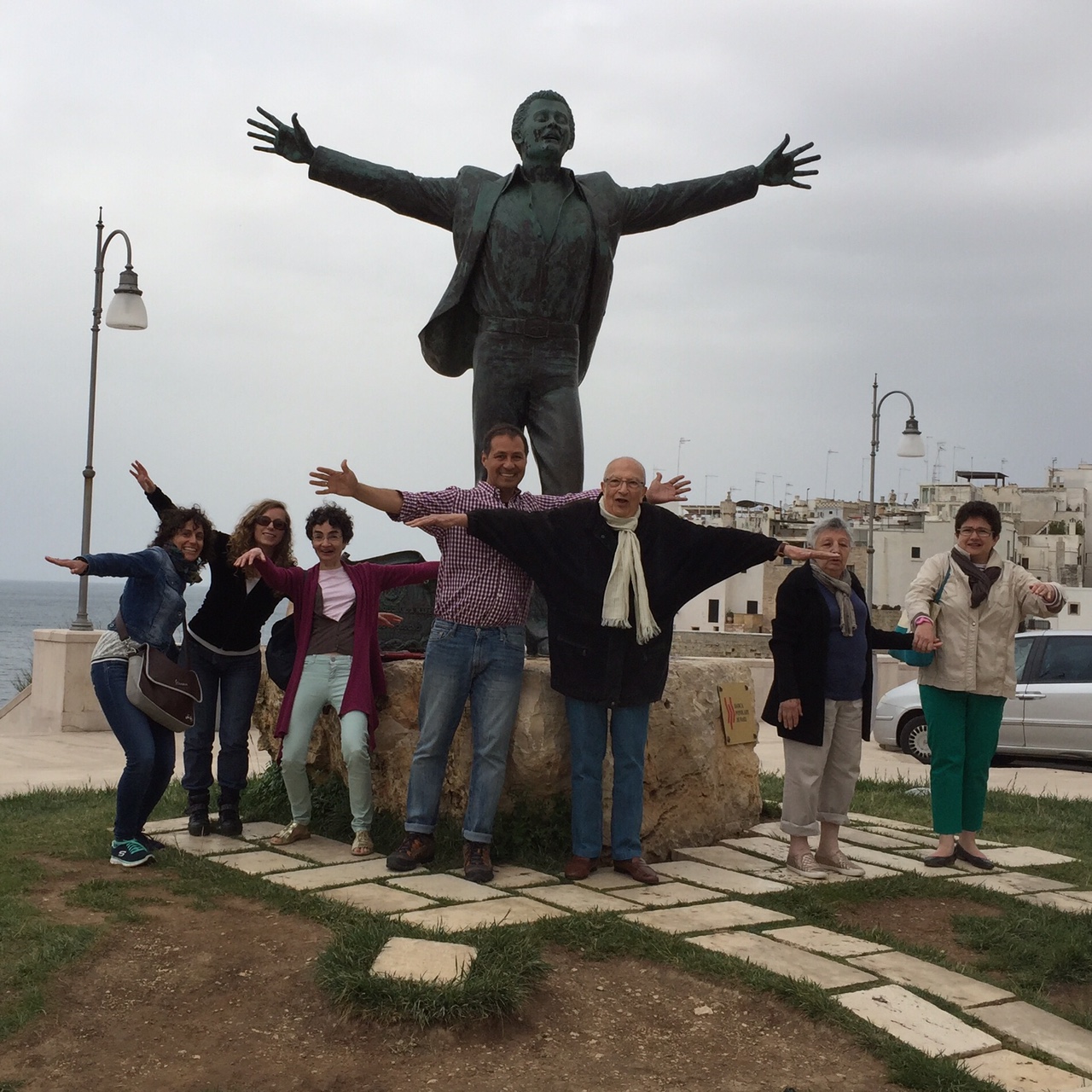
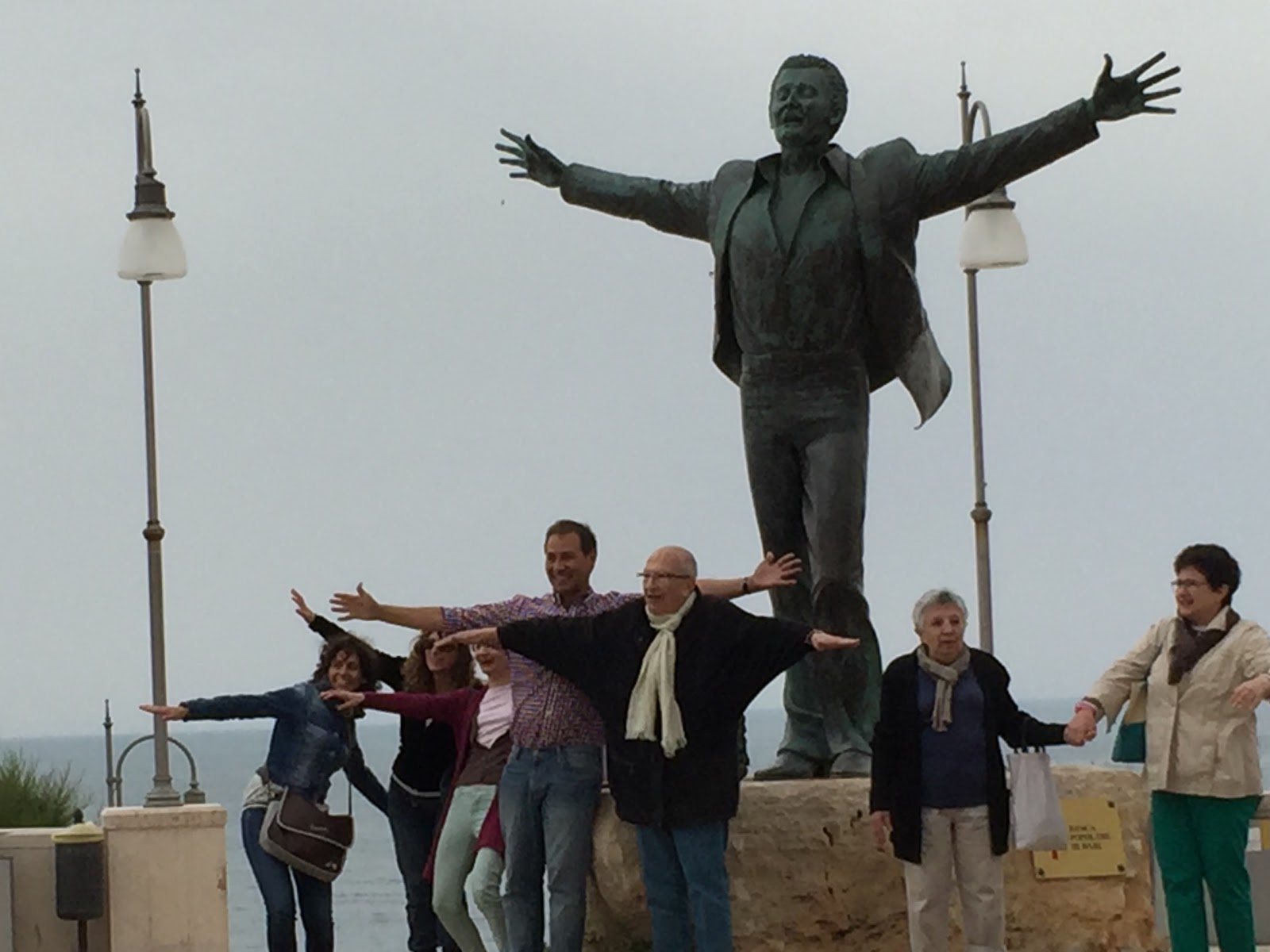
Polignano a Mare is ground zero for the fans of Domenico Modugno. He was born there. The town erected a monument in his honor. With his arms outstretched, he stands in the fierce wind above the shore. His eyes closed, he imagines the wind will fill his arms with thrust and take him high above the sun. His hands and face will become blue like the sky. Volare … Oh oh … Cantare … O ho ho ho … Nel blu, dipinto di blu. Felice di stare lassu. And which precocious—edging toward obnoxious—American was breaking into song showing off his Italian lyrics? It was I. I, who have never ever sang before, have become the crazy, singing, American fool. 


Our thirty-second anniversary occurred during this trip. It was a happy anniversary in Polignano a Mare. The sea, it’s color, the wind, it’s force, the grotto, it’s vista, and the celebration. Years from now we will feel, “it seems like only yesterday”. 

Wes and Marlow
Polignano a Mare, Puglia, Italy
Wednesday, May 11, 2016


Agriturismo Masseria Aprile, Locorotondo

During our first three nights in Italy we will stay in the Masseria Aprile. It is possible I will describe this incorrectly, but an “agriturismo masseria” is a government designation which allows a family with a farm to operate it as a hotel.

The family farm where we are staying has exceptional stone buildings in outstanding condition. And it has agricultural land, about thirty acres, with edible plants. Not enough to sell and feed the masses, but crops enough for the family to be self-sustaining.


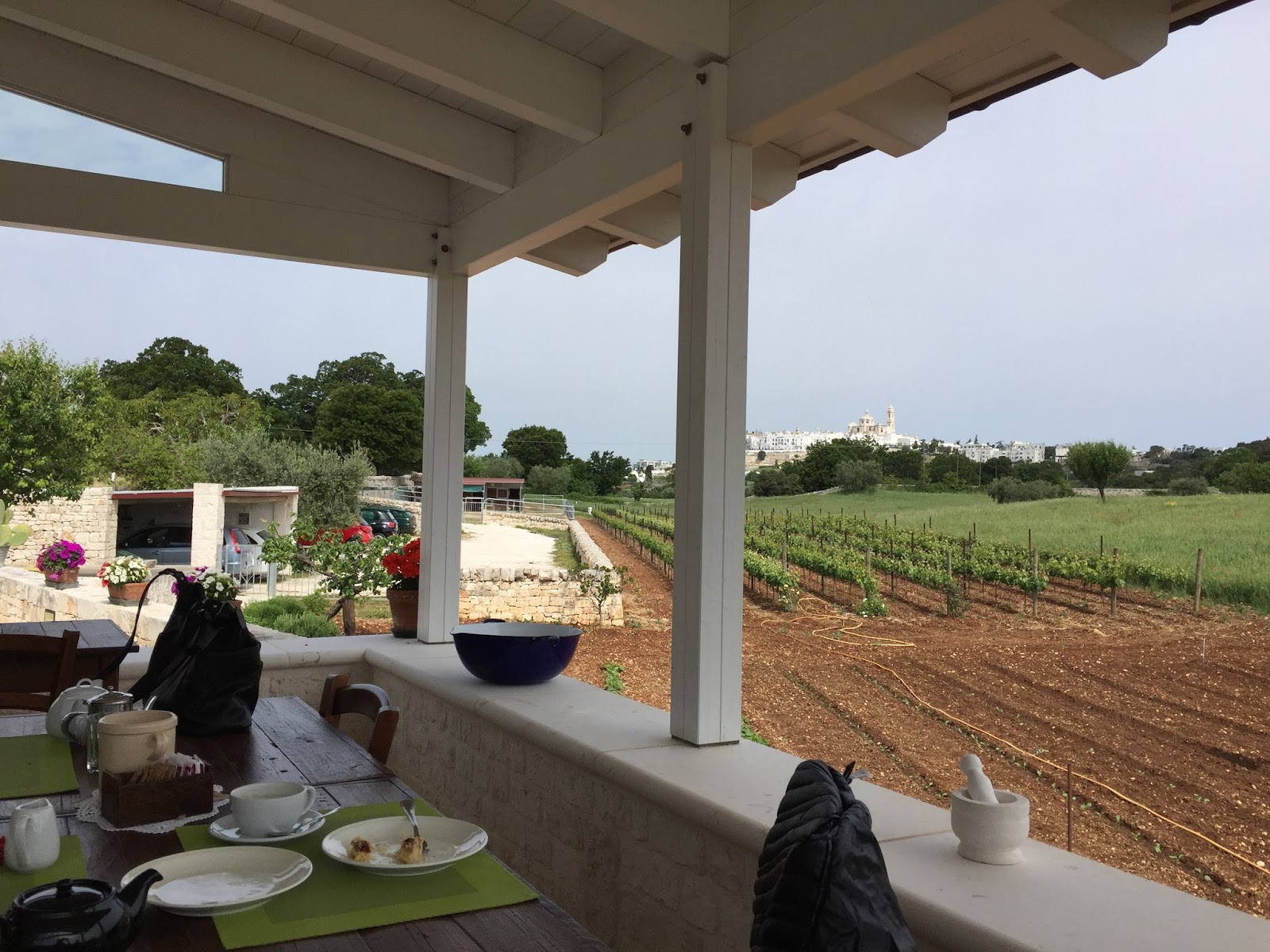
From the covered terrace of the stone breakfast pavilion, as we sip our cappuccini, we look onto the cherry orchard, tall sculptural artichoke plants, grape vineyards and fields of poppies and grasses swaying whichever way the wind blows. Also there is a pony. And there is an asino, which we call burro, donkey, ass. I asked if the asino has a job. No, they said, he is a pet. Last week, we saw Shakespeare’s A MIdsummer NIght’s Dream which has a character named Bottom who turns into an asino with tall pointy ears. Here, our pet asino has those tall ears, too, and a crooked bottom as if he has too much stuffing on one side of his tail and not enough on the other. In the morning, he walks the grounds mowing the lawn with his teeth.

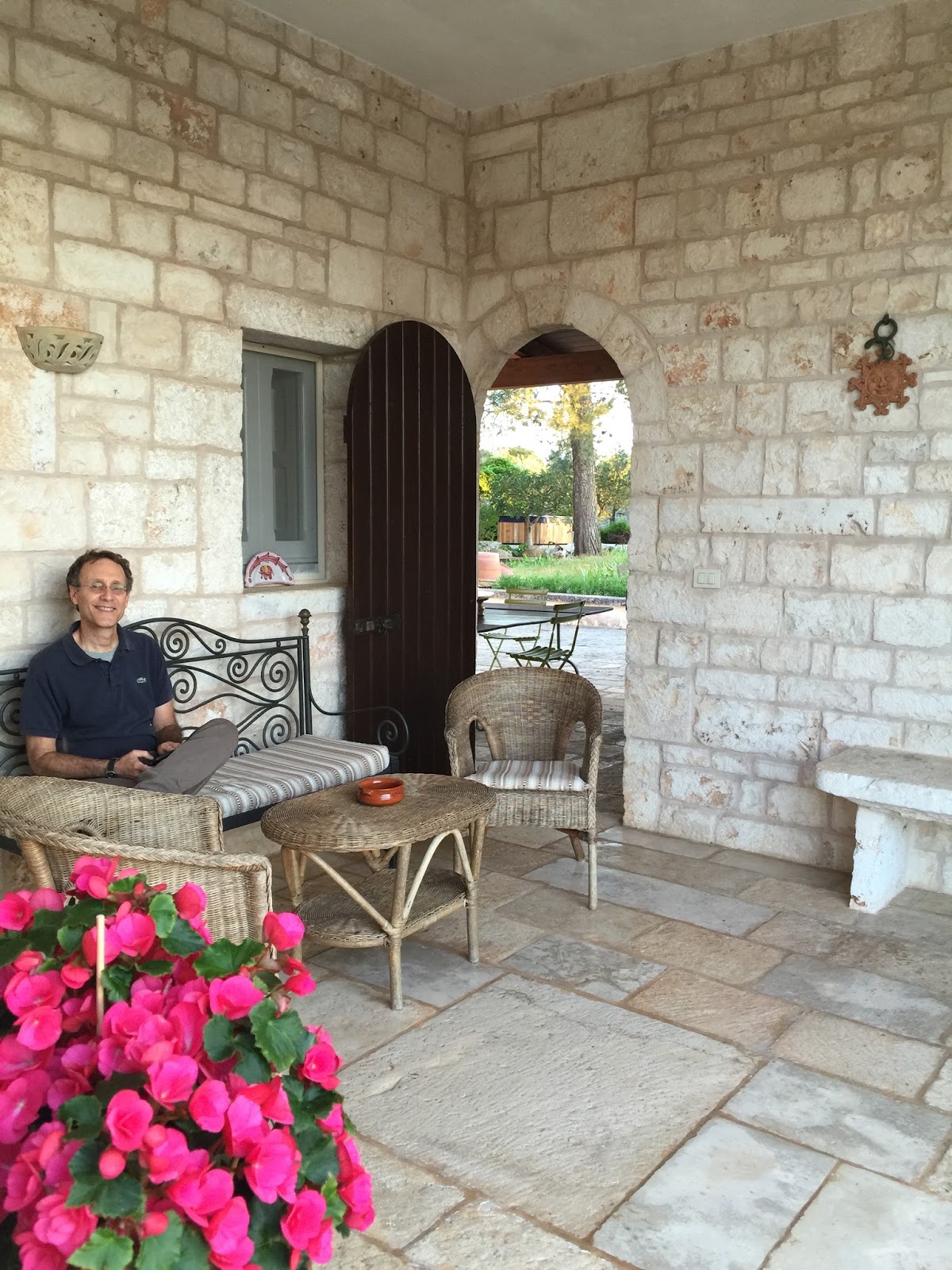
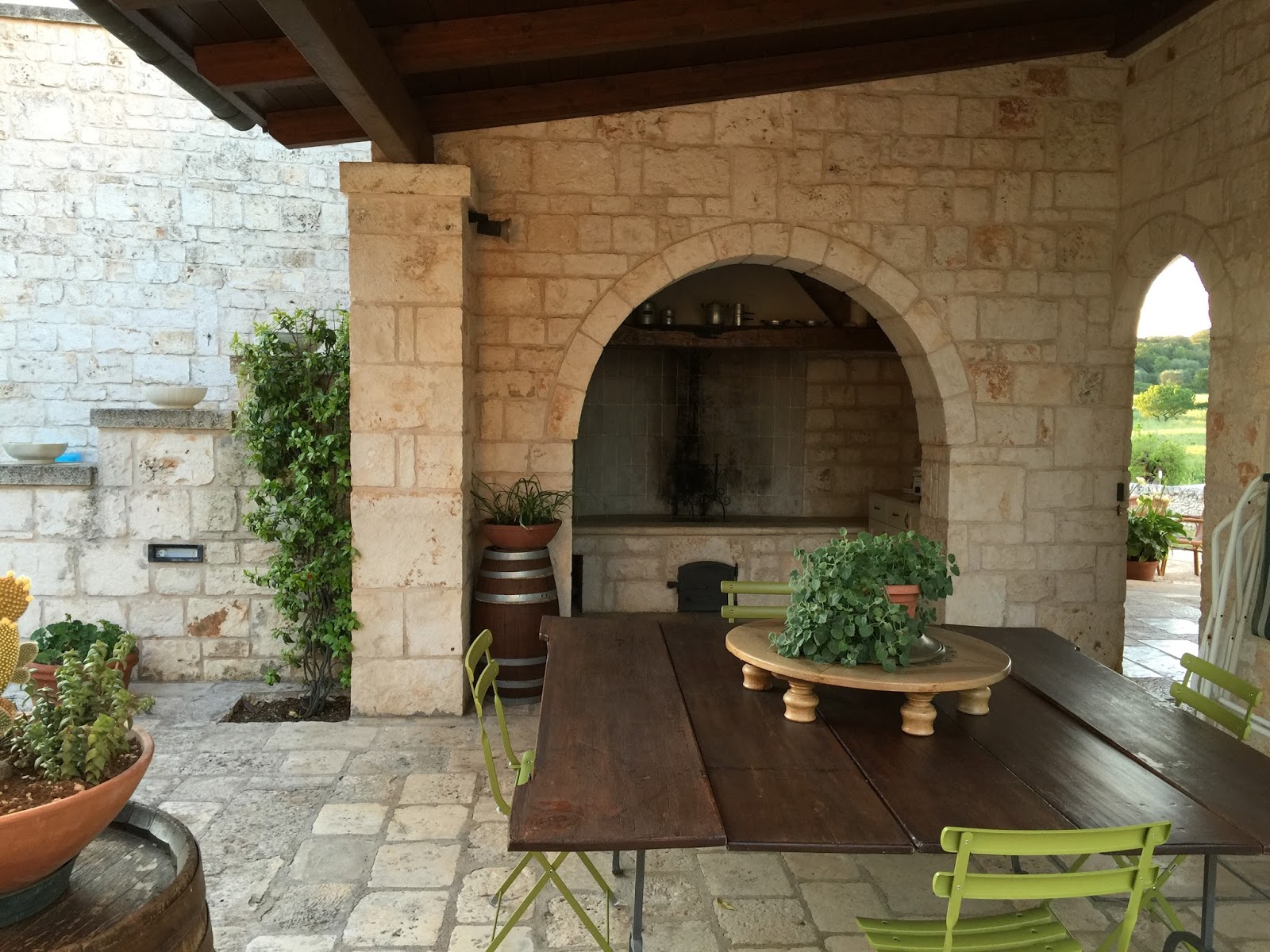
Our room, on the ground floor of the main building, is located where the corners of two buildings come together. We have a stone room with bath and we have a covered patio with tile floor and coved stone roof. Passing through a door of the patio we have an outdoor dining table, for twelve, facing a large garden and stone terrace. That dining table is just outside a stone arch. Inside the stone arch is a food preparation area with a stone fireplace for cooking over a wood fire. Finally, there is an outdoor shower and a stone wash basin for laundry.  


We are in the the village of Locorotondo in the Province of Bari. It runs down the east coast of the Italian peninsula and ends at the southern-most tip of the boot. (We will explore it next week when we relocate to Lecce, pronounced, lay-chay). It is mostly flat. It has more olive trees than Italy has people. Also there are fig trees. Anywhere a fig seed can find a speck of dirt it moves in and grows. There is bougainvillea and cactus and sago palms. Everything that grows in California grows here, too. 

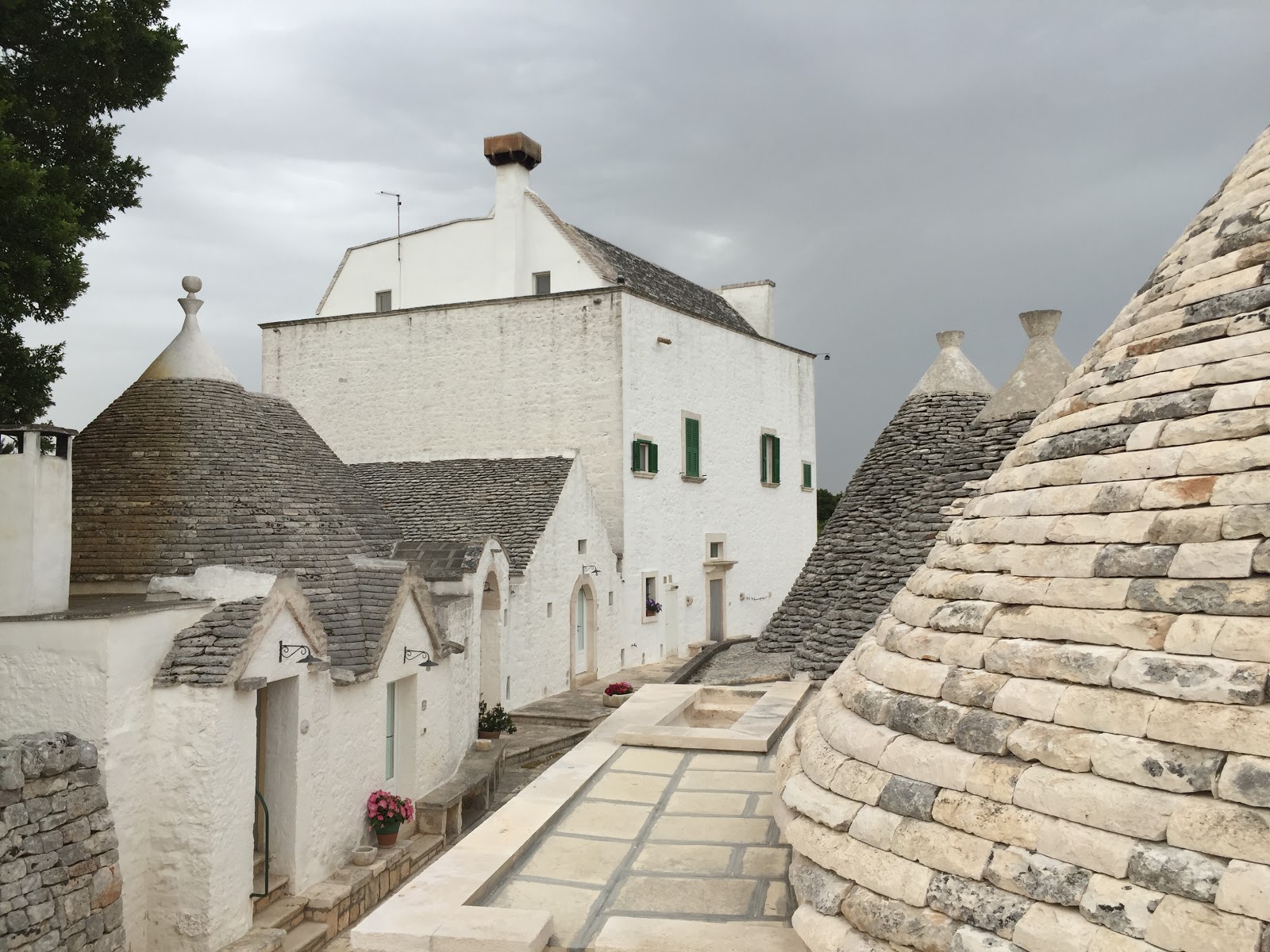
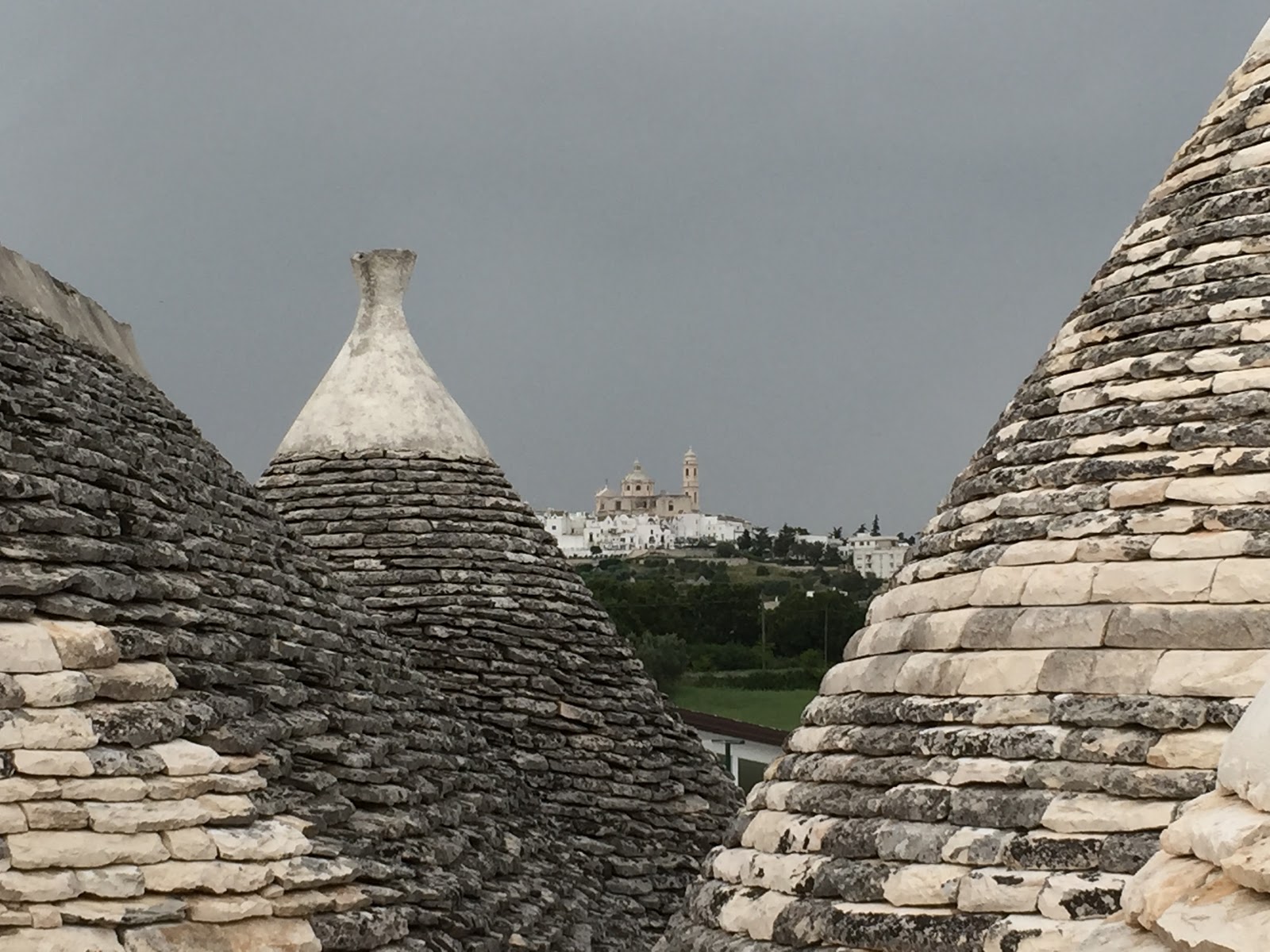
There is a type of small building unique to this area. It is called a trullo. It is a pile of stones without mortar or stucco. The bottom portion can be square or round, but the top portion, the top half, is a cone, a large pointy-tipped cone. Our masseria has a cluster of them. They are attractive and handsome. I would not want to endure an earthquake in one, but I love looking at them. 

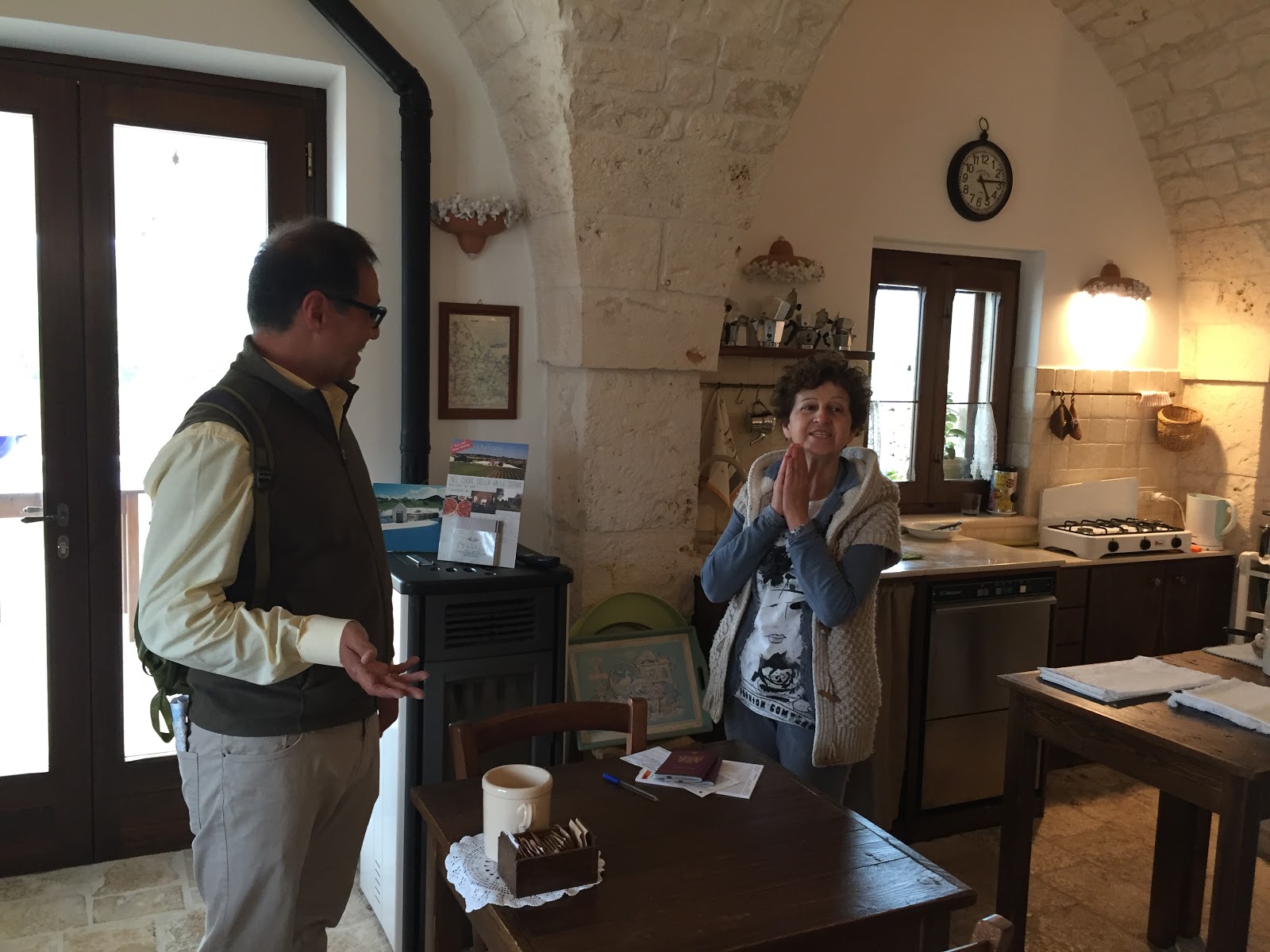
Saving the best for last, a few words about our inn keepers. They are an affectionate family and very proud to share the best of their Italian life with visitors. The exceptional mama is Anna Marie. One morning she said, “I coccolarvi”, I want to pamper you. Every morning she, (and her daughter), bake the breakfast items and make the coffee. They are our family for a sweet few days. She makes a Piemontese cake with ground hazelnuts. A coffee cake made with coffee, rich and dark. She cultivates fresh yogurt and creates the jams—of apricot and fig from her trees—to spoon into it. She has made them all of her life for her own family. we are lucky she takes care of us, too.

She, her husband and their daughter Stefania were amused by our attempt to speak their Italian. They were helpful and good teachers of Italian. Anna Marie has a beautiful voice. One morning she began to sing a song written by a native son a few villages away. I know that song, Nel Blu Dipinto di Blu. in America, we call it Volare. I have memorized the Italian lyrics. I sang along with her and we laughed and smiled and drank more coffee and ate more yogurt and jam and cake and life in that moment was outstanding.

Anna Marie grew up on her farm. It has been in her family for several centuries. It is more than a job. She is proud to share the best of her Italian life with her guests. I wrote a short speech of appreciation. I read it to her when we parted. There was a moment of sweet silence at the end. We were happy to have met her. Wes chose Masseria Aprile out of hundreds of listings. It was perfect. Thank you, Wes, and thank you, Anna Maria and Stefania.

Wes and Marlow
Agriturismo Masseria Aprile
Locorotondo, Bari Province, Italy
May 10, 2016

Puglia: Trani and Locorotondo, 5/9/16

Today was a perfect day. We arrived into the Aeroporto Internazionale in Bari, Italy. We drove an hour north to Trani. We parked in the Piazza del Popolo. Interestingly, the paid parking is free from one-thirty in the afternoon until four o’clock because the city wants it’s citizens to enjoy their two and one-half hour lunches without concern for parking fees.


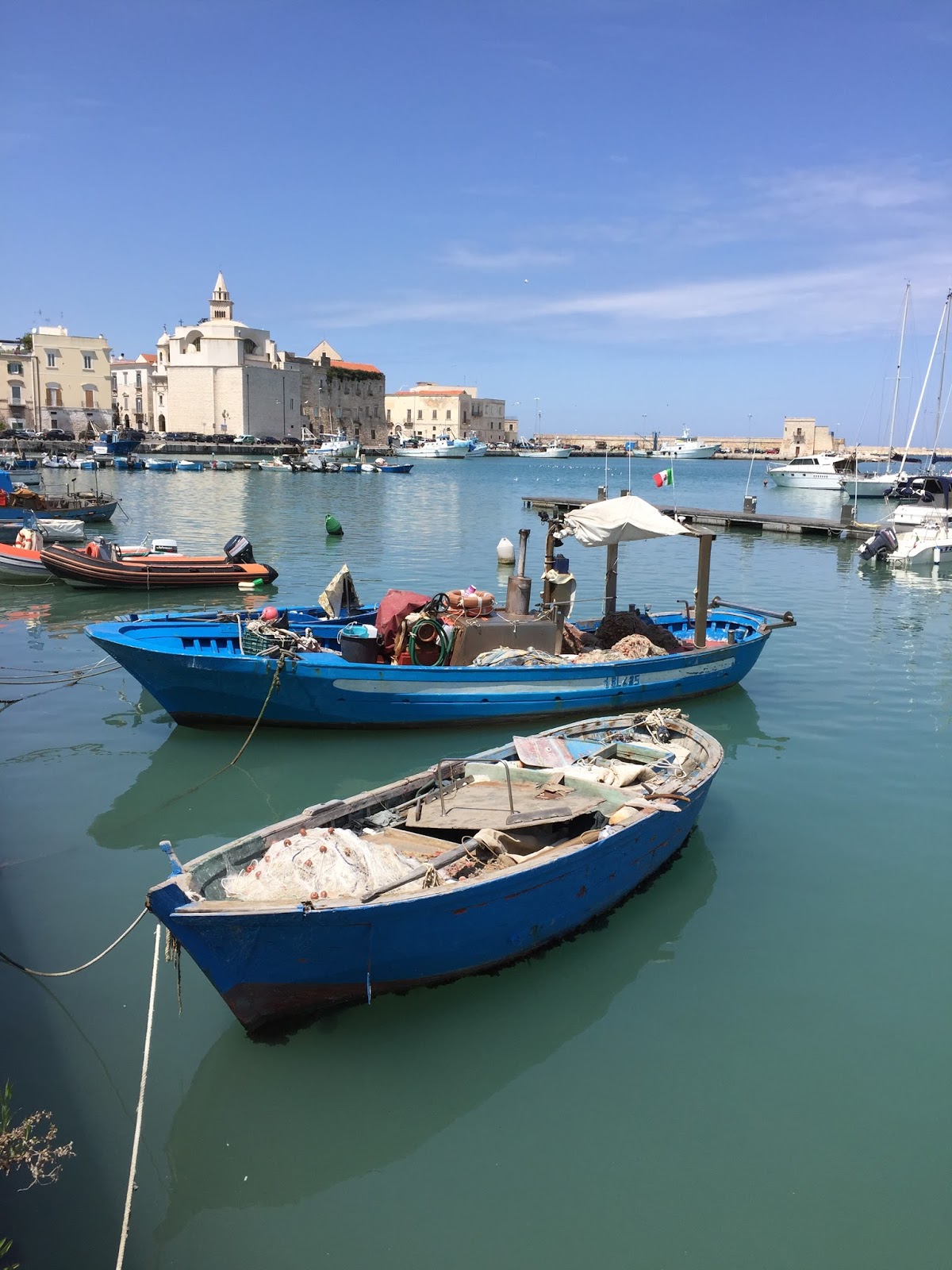
Trani is a waterfront town on the Adriatic Sea.  We walked to the waterfront. There were very few people. It is not the tourist season. But more than that, there were not many people on view, local or touristic. When we got our first glimpse of the water through the buildings, it was stunning. The harbor almost forms a circle, of course it has outlets to the sea, but they are not much visible. The boats in the harbor are mostly small fishing boats painted blue with nets  piled neatly.

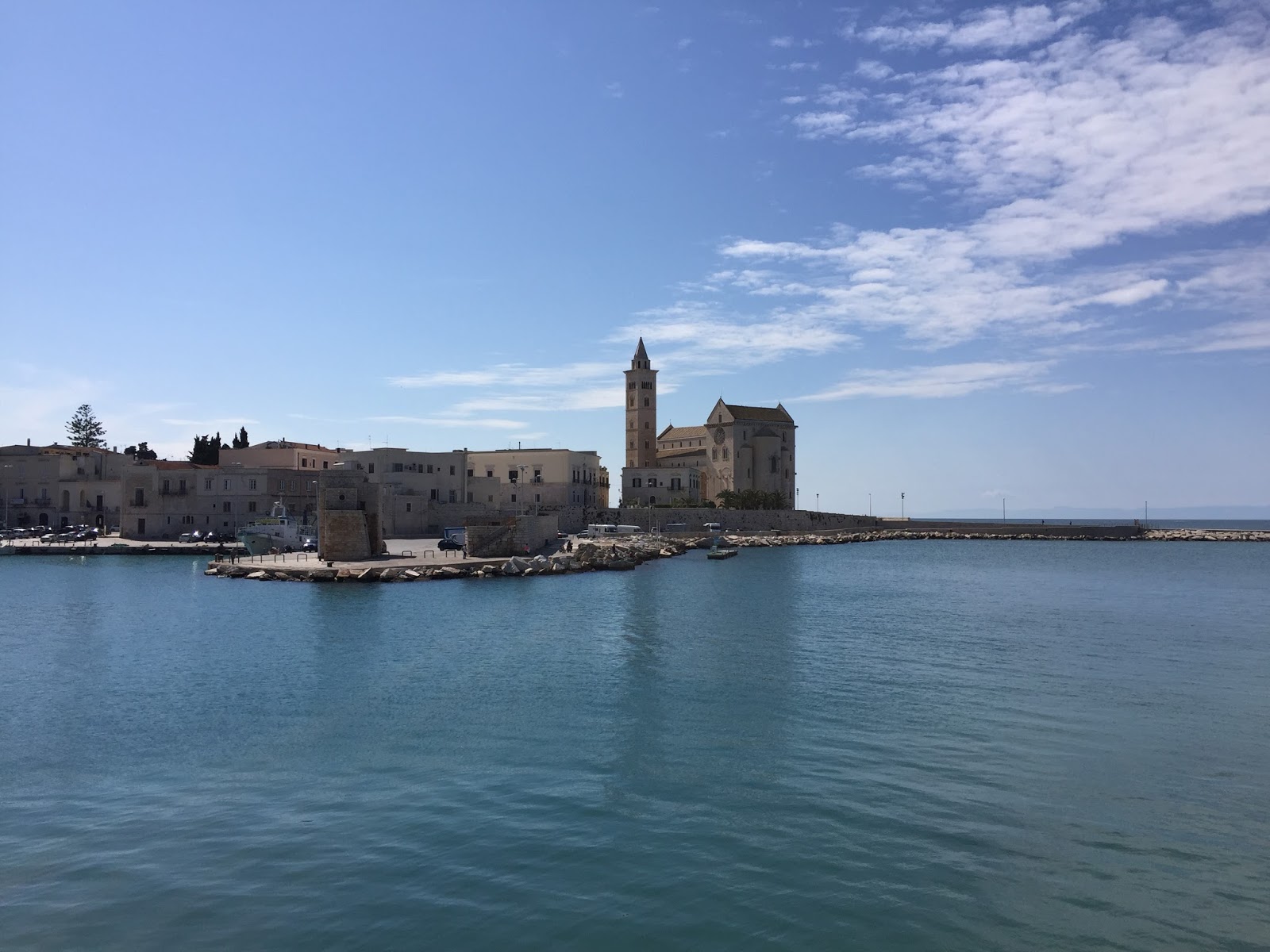
The water is green; a shade between coke bottle and emerald. The waterfront buildings are low slung, three story, stone structures. They are human scale, not monumental. The stone color is creamy; a blend of beige with a hint of rose. Much of the street and sidewalk pavement is white, rough-hewn marble. On the part of the harbor that projects most into the sea is the local church. We did not go inside. It was closed during our short lunch visit.  Most cathedrals are located on a plaza, a piazza or a town square. They are inland and landlocked. The site of the Trani church, on the waterfront, a jewel in the harbor tiara, is unquestionably one of the most beautiful on the planet.


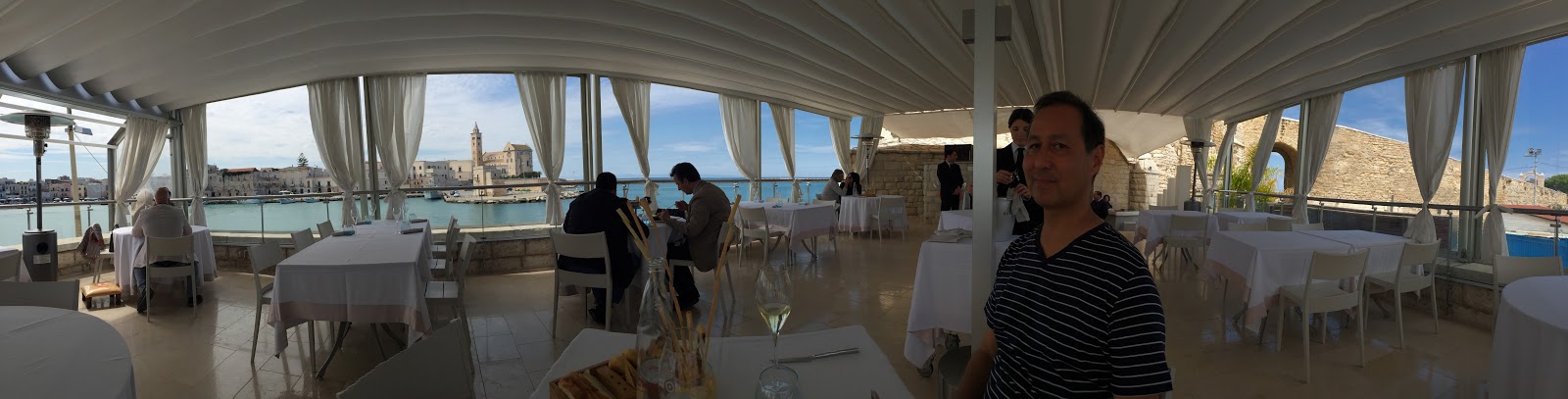
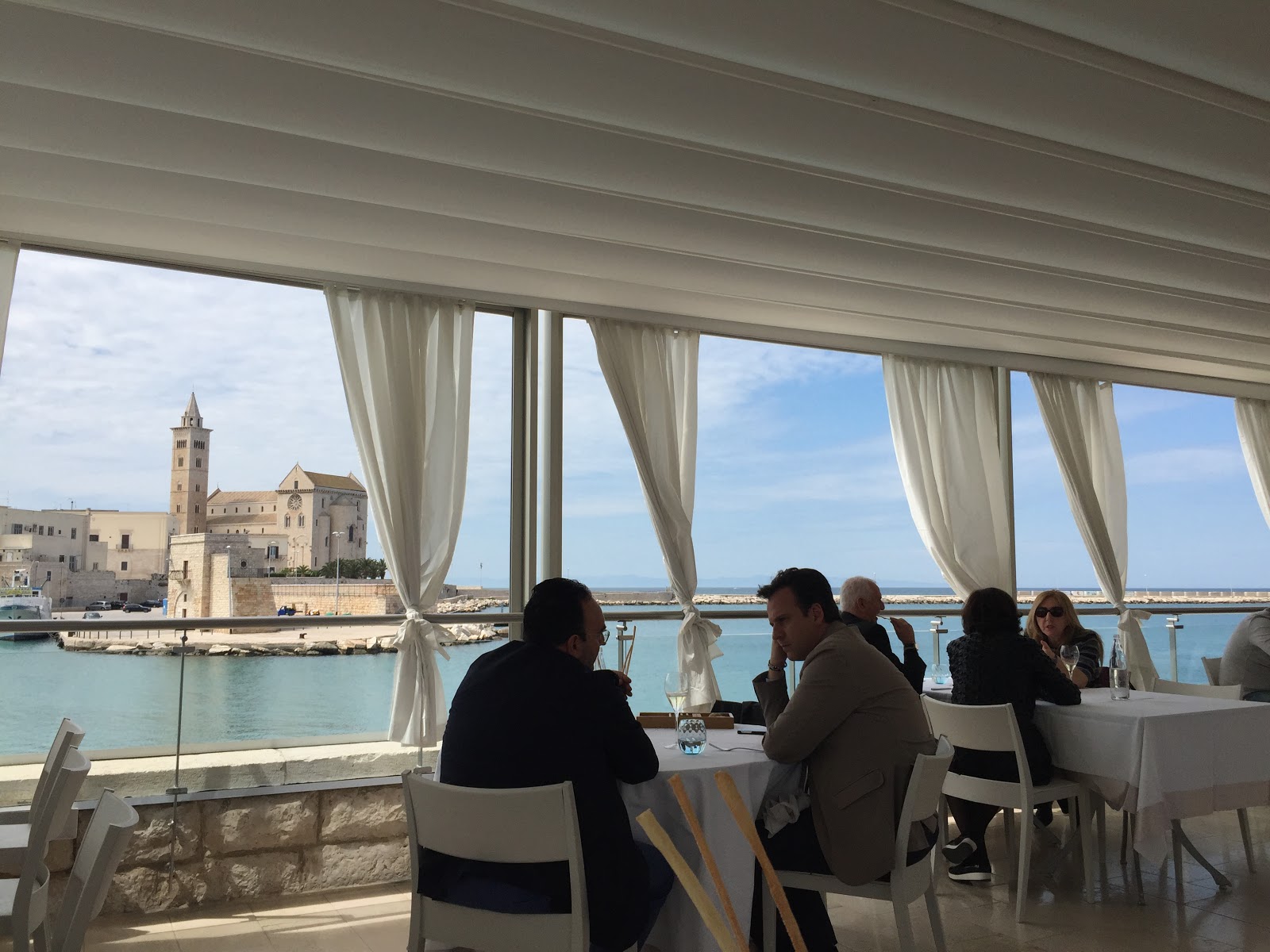
We searched for a ristorante for lunch. Wes and I were wandering on opposite sides of the harbor. At the same time, we both took note of the same ristorante.  I was reading Mario Batali’s description of it. Wes was actually looking at it. It was situated in the center of the harbor, almost an island, atop a mound of stone that seemed part of an ancient fort. We entered the place – Le Lampard al Fortino. We were one of four parties there. The eating area is a covered terrace open on three sides across the water to the buildings on the shore, to the fishing boats in the harbor, to the cathedral and to the sea. The vistas in all directions were magnificent. The climate was perfect; clear sky, sparkling sunlight, cool temperature, yet with warm breezes.


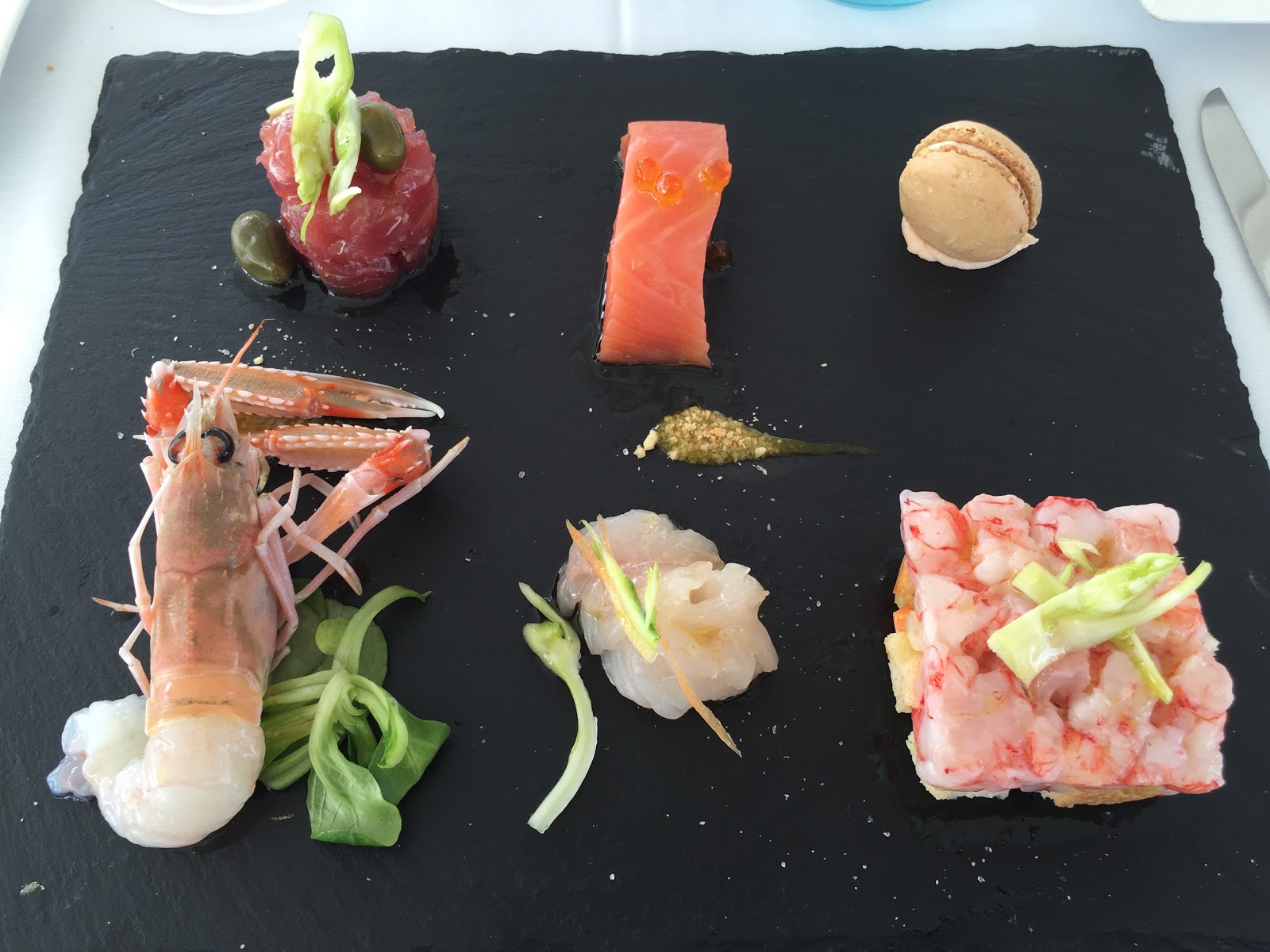
The meal was perfection.  It is the Adriatic. The harbor is full of fishing boats. The boats come to shore constantly with just caught fish and shellfish. We began with Franciacorte sparkling wine. It heightened our appreciation of where we were and what we were doing.  For food, first up was a large and perfect scallop, seared outside, yet “crudo” (uncooked) inside. It rested in a shallow pool of drippings from a sweet tomato. On top were curled, fine strands of raw celery.  Next, a thin slab of black slate arrived with various crudo (uncooked) items arranged on top.

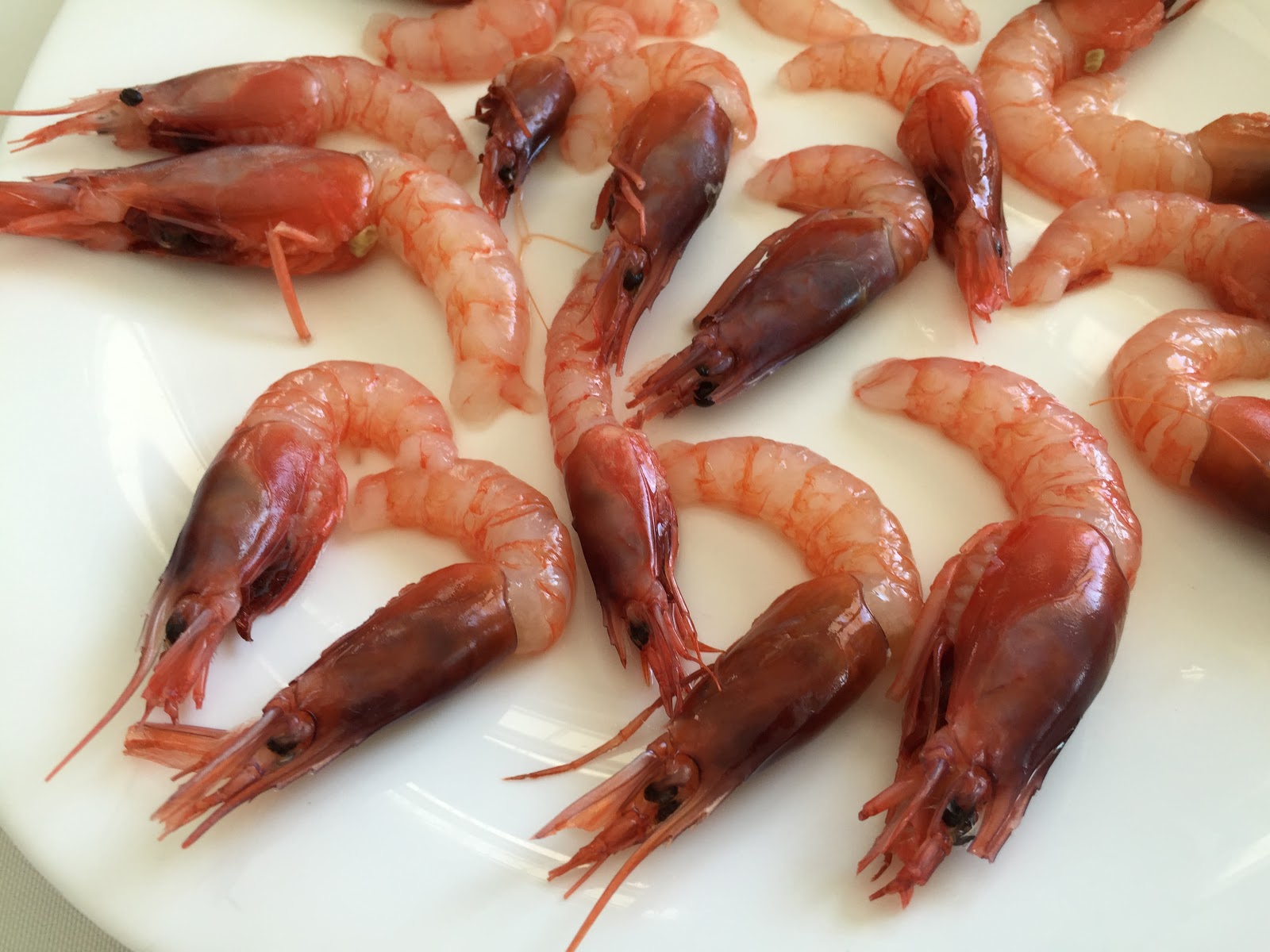
There were salmon, tuna, a macaron filled with salmon puree, and a sculptural item that was a whole gambero rosso, a five-inch long mini-lobster with head and tiny claws attached and absolutely sweet meat.

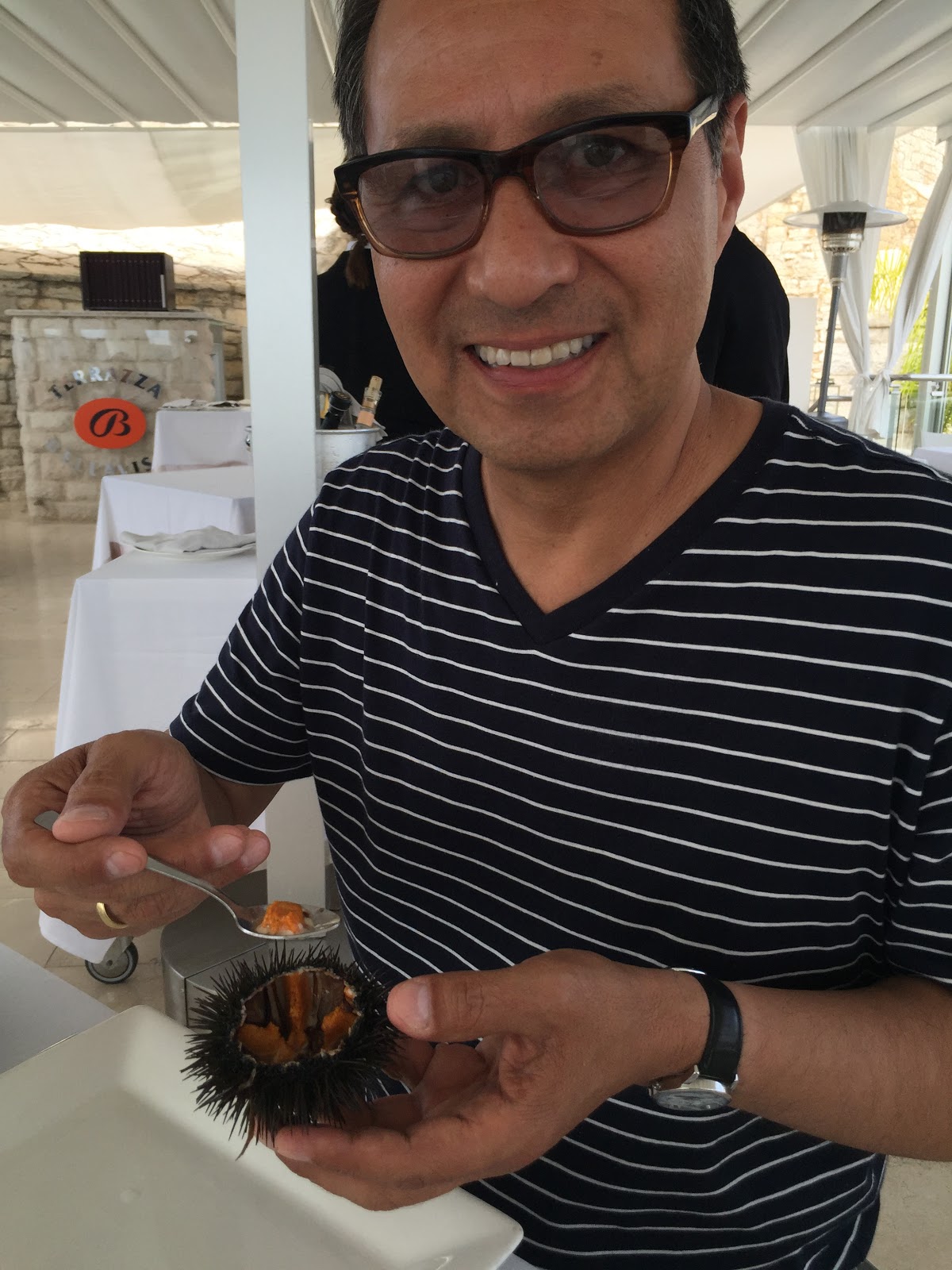
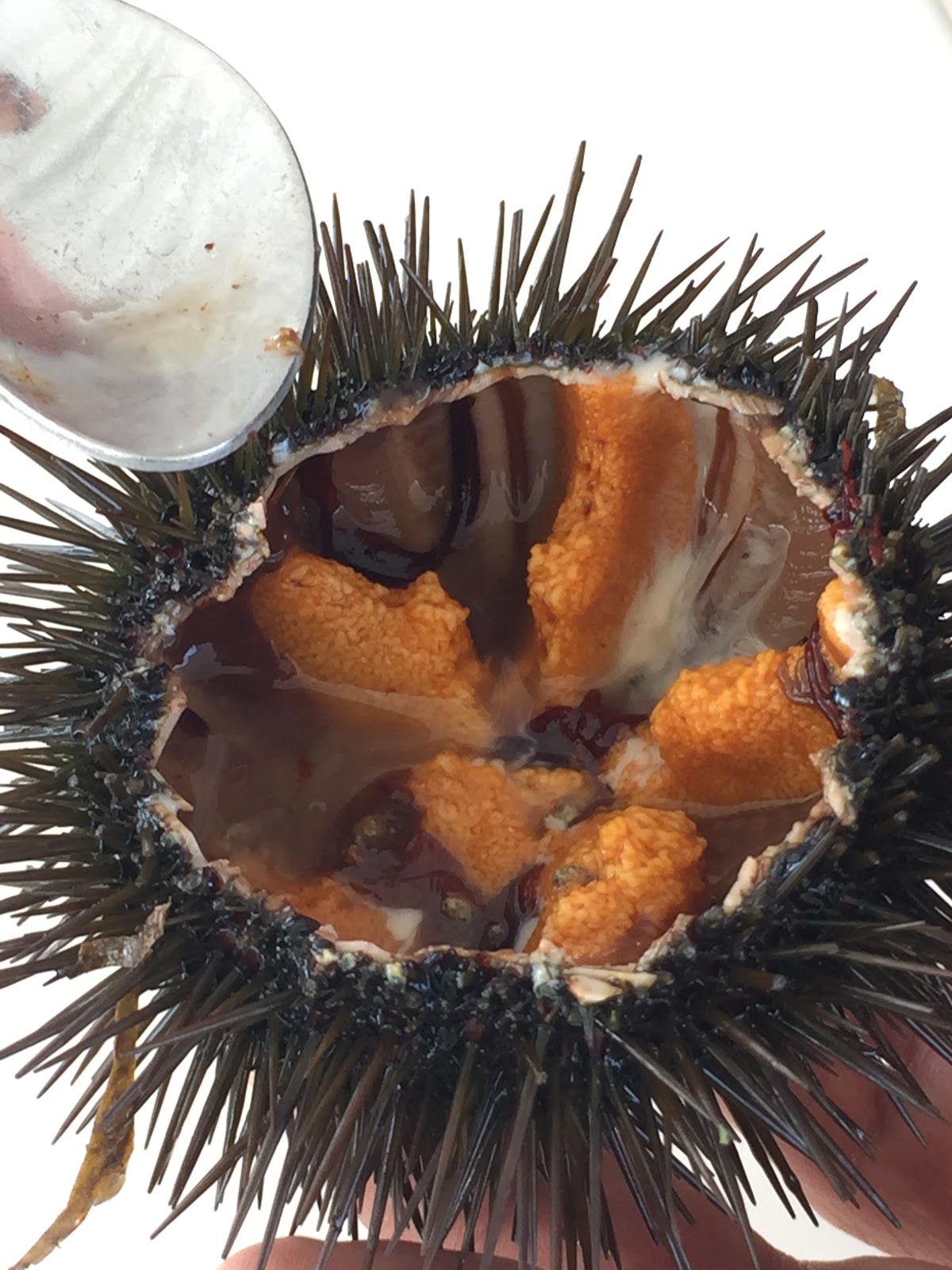
Two years ago on the island of Saint Bart’s, we had a cottage on the sand, only a few feet from the bluest, warmest water, filled with, over populated by, live sea urchins. They were on today’s menu. I requested several and had my first experience with them. They are menacing looking: fist-sized, gleaming black, covered with needle sharp spikes, with an edible fluorescent-orange filling. Remarkably, they did not taste of seafood, nor of fish. They tasted like the sea—briny, watery—and had I been asked what they were, if I had been blindfolded, I’d have guessed they were plants or vegetables from the sea.

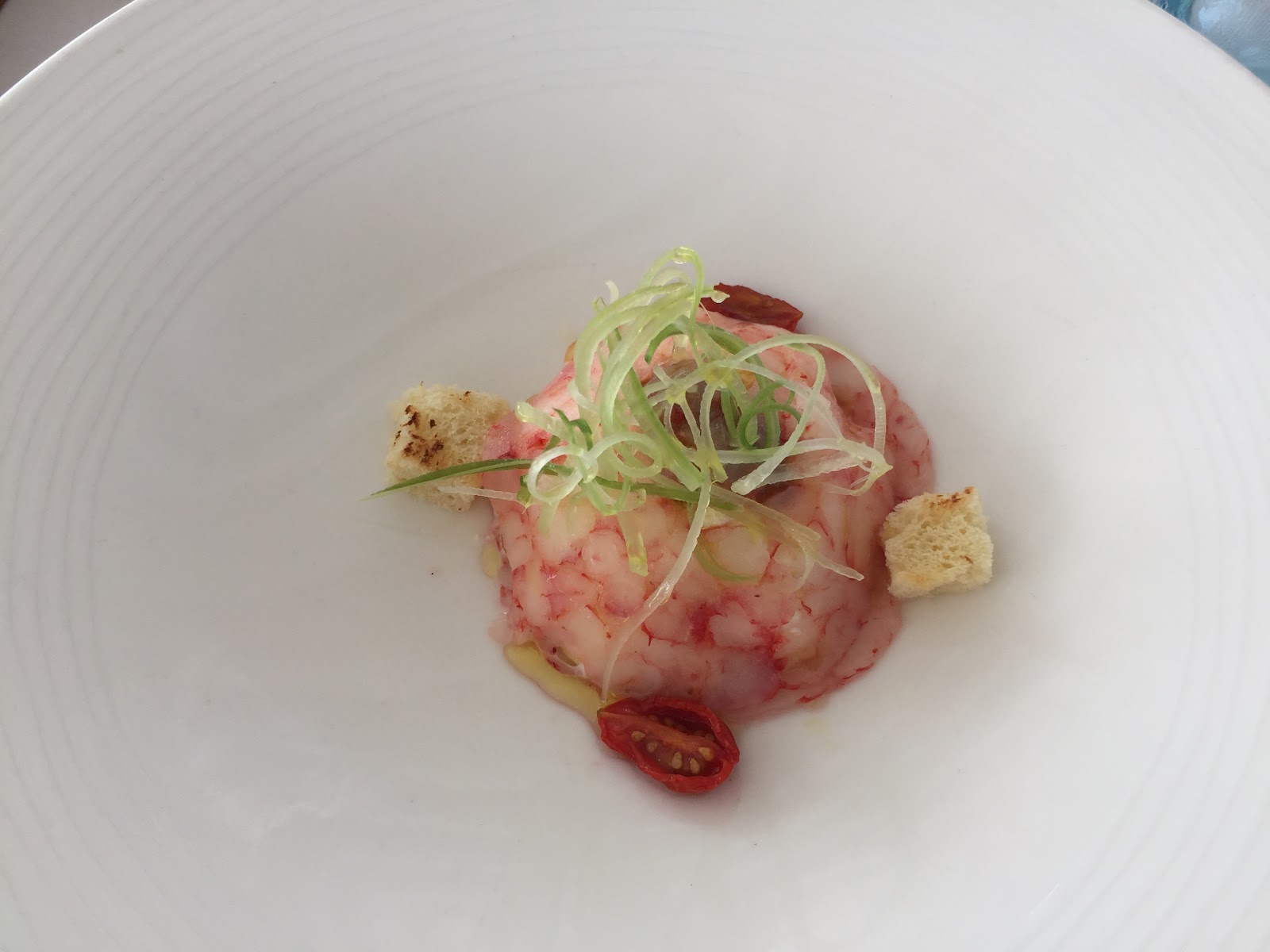
Next up, gambero rosso, (sweet pink shrimp), sliced paper thin, layed over a mound of burrata cheese, and with a few sundried, wondrously sweet, teeny tiny pinky-sized roma tomatoes. An adjacent table was having a large branzino baked in a salt crust. I was hugely tempted to have it, too, but it was way too large for two people and Wes encouraged me to have restraint. I have been known to over stuff myself when presented with food that is new to me and irresistible. 

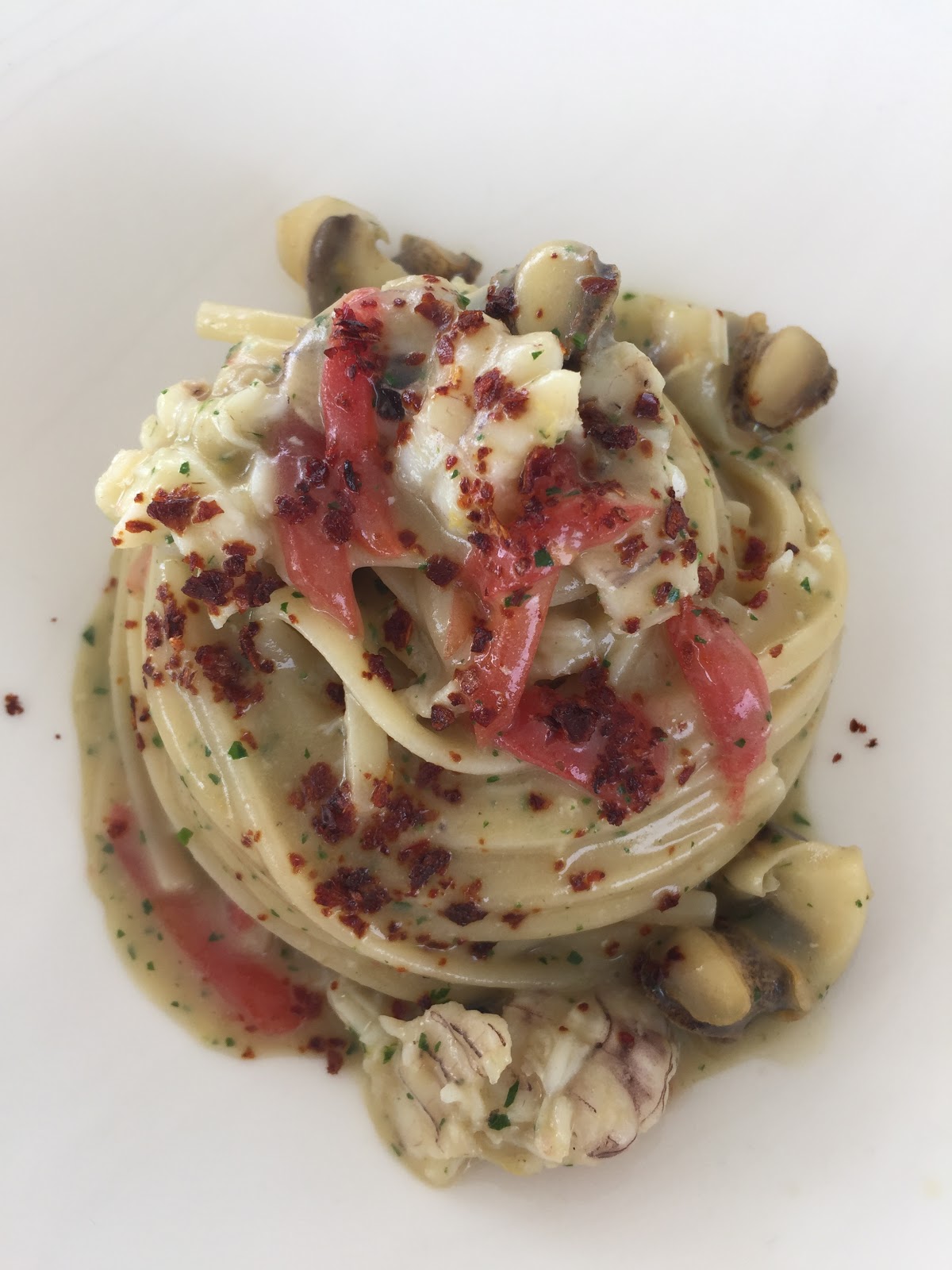
Instead, we had two pastas. One was a long noodle with sweet gambero rosso tails, dollops of creamy burrata-like cheese and snails. I am not  a frequent snail eater. I have nothing against them, but often they are just a texture without much to offer on their own. In this dish, their texture was an asset and they earned their keep.  The final pasta was a short noodle. It featured fresh black chickpeas, which, aside from their unique color, had a wonderful texture and flavor distinct from their common garbanzo cousins.


It was time for us to conclude our meal. Our lunch parking time allotment was almost concluded. And we were full. And we were the only table that remained. But then I remembered: Moscato di Trani. It is unique to that town. It is one of their specialities. It was on the menu. How could I miss the opportunity. I ordered it. It was floral and mildly sweet and nectar-like and wonderful. Now, we really had to go, but first, before the check arrived they sent out another black slate laden with tiny and colorful single bite desserts. My favorite was a cream puff with hazelnut creme. We paid. We went to the car.

The day was perfect. Could it get better? Yes, it could. Yes, it did. We drove south, one hour, to Locorotondo. Wes, is an outstanding and superior researcher. We arrived to the farmhouse inn (called an “agriturismo masseria”) he selected, from the probably hundreds he surveyed, and it is more than perfect. The host probably was born here on this land, some thirty acres of vineyards, cherry orchards, ancient olive trees, a horse, a pointy-eared donkey with a mis-shapen rear end, etc. Each morning, Anna Maria Aprile rises before the sun to bake the breakfast goods. The Italian classic breakfast is a few spoons of unsweetened yogurt and coffee with a sweet cookie, roll, cake or toast with preserves. (Everything made from scratch by Anna Maria.) They do not take eggs or meats or cheeses or cereals.


Our room is a suit of spaces both indoors and out. Our room, of course, is indoors, but our kitchen is outdoors.  It is a stone arched alcove. Inside is a stone slab counter with a grill in it’s center. Beneath the grill is a small area for arranging wood to make a fire for the cooking. There is another stone arched alcove seating area with a vista—past the horse, the cherry orchard, the donkey, past the vineyard, through the meadows of swaying-in-the-breeze red poppies—uphill to the scenic village of Locorotondo. And there is yet a final covered dining area that faces an orchard and garden, stone courtyards and large planters of exotic flowering plants busy with large black and yellow fuzzy buzzing bees.

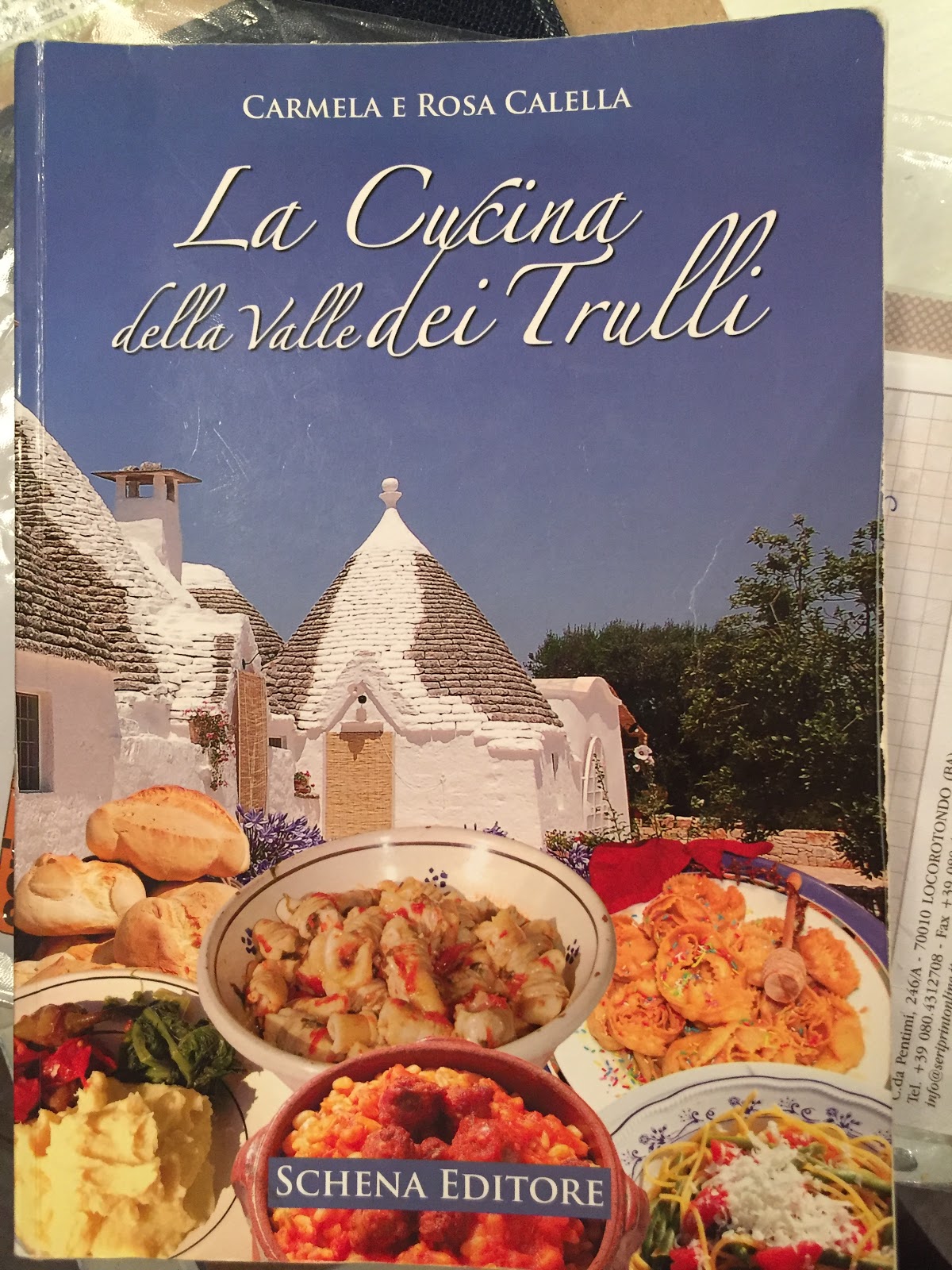
The innkeeper loaned us a book of recipes of the local specialities. Then she sent us uphill to a ristorante to sample them. The ristorante, uCurdunn da Peppino e Margherita, had vaulted stone ceilings and stone walls all painted white. Outside, the village is also stone painted white with rough white marble pavement. So many parts of the village are perfect locales for putting on a chamber music concert or a play or a recitation of Shakespeare’s sonnets.

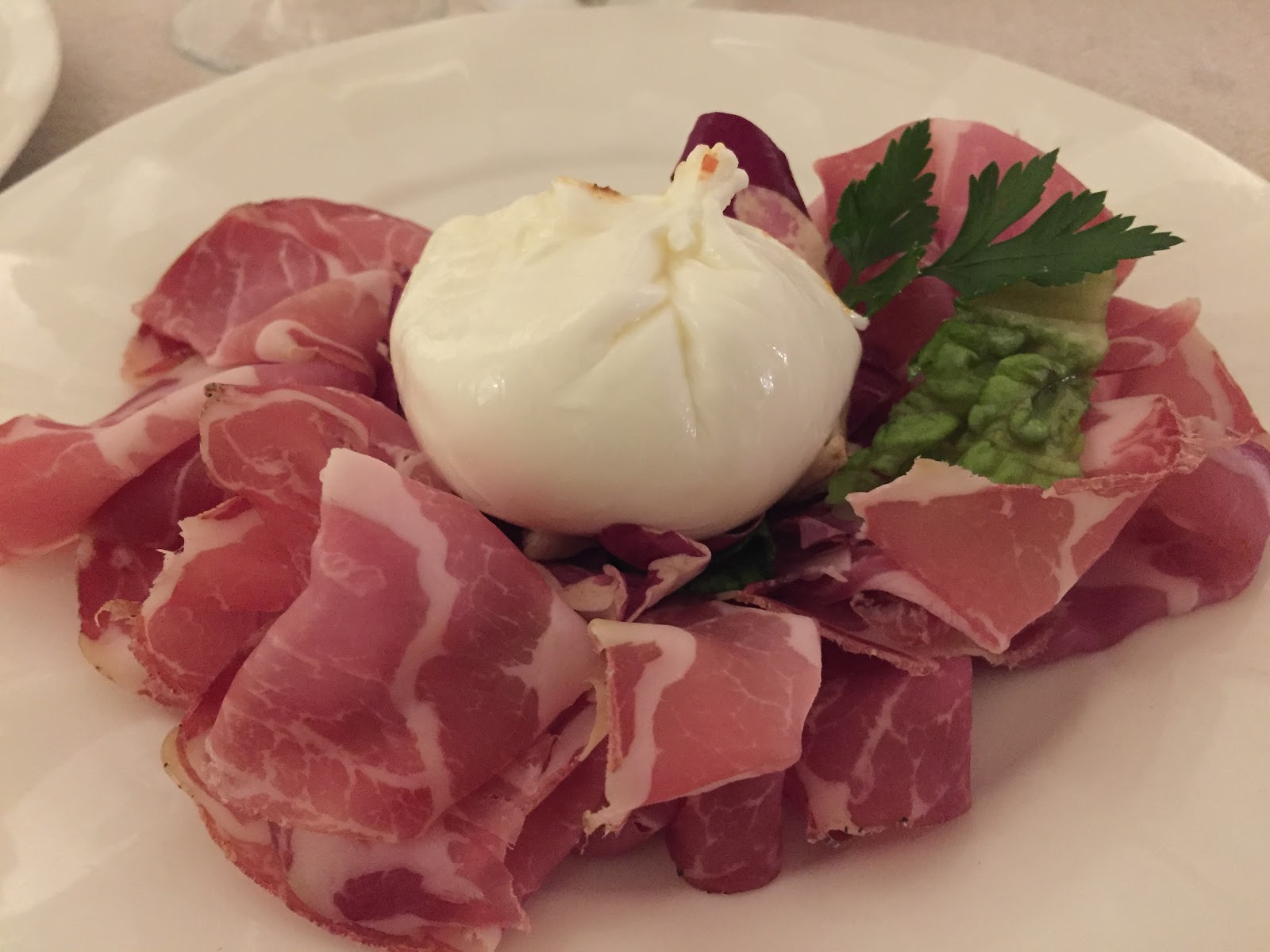
Our dinner began with capocollo, sliced meat. Initially, I was unenthusiastic. Sliced meat, I thought, it will be nice I am sure, but I’d rather have cooked food. I was so wrong. It was not a sausage, but a cured pork concoction. The meat was put into a mold, weighed down, poached in white wine and salt, then dried, smoked and sliced. Wildly good. It was thinly sliced and piled around the edge of the plate—like rose petals. In the center was a bed of chopped radicchio beneath a ball of burrata cheese . It came with a side of caponata: eggplant cubes simply cooked and seasoned. Perfect.


Next, came fresh, made in house, orecchiette (ear shaped pasta), in tomato sauce with tiny meatballs. Meatballs from heaven. More parmesan cheese and chopped garlic than meat. They struck my palate as wonderful. The pasta itself took me  by surprise. In far northern Italy, some pasta noodles contain dozens of egg yolks. They are golden and rich. Here, in the south, it is entirely opposite. Pasta noodles here are made without eggs. Their texture could be called bland, a touch squishy, maybe incapable of having the beloved “al dente” mouthfeel.

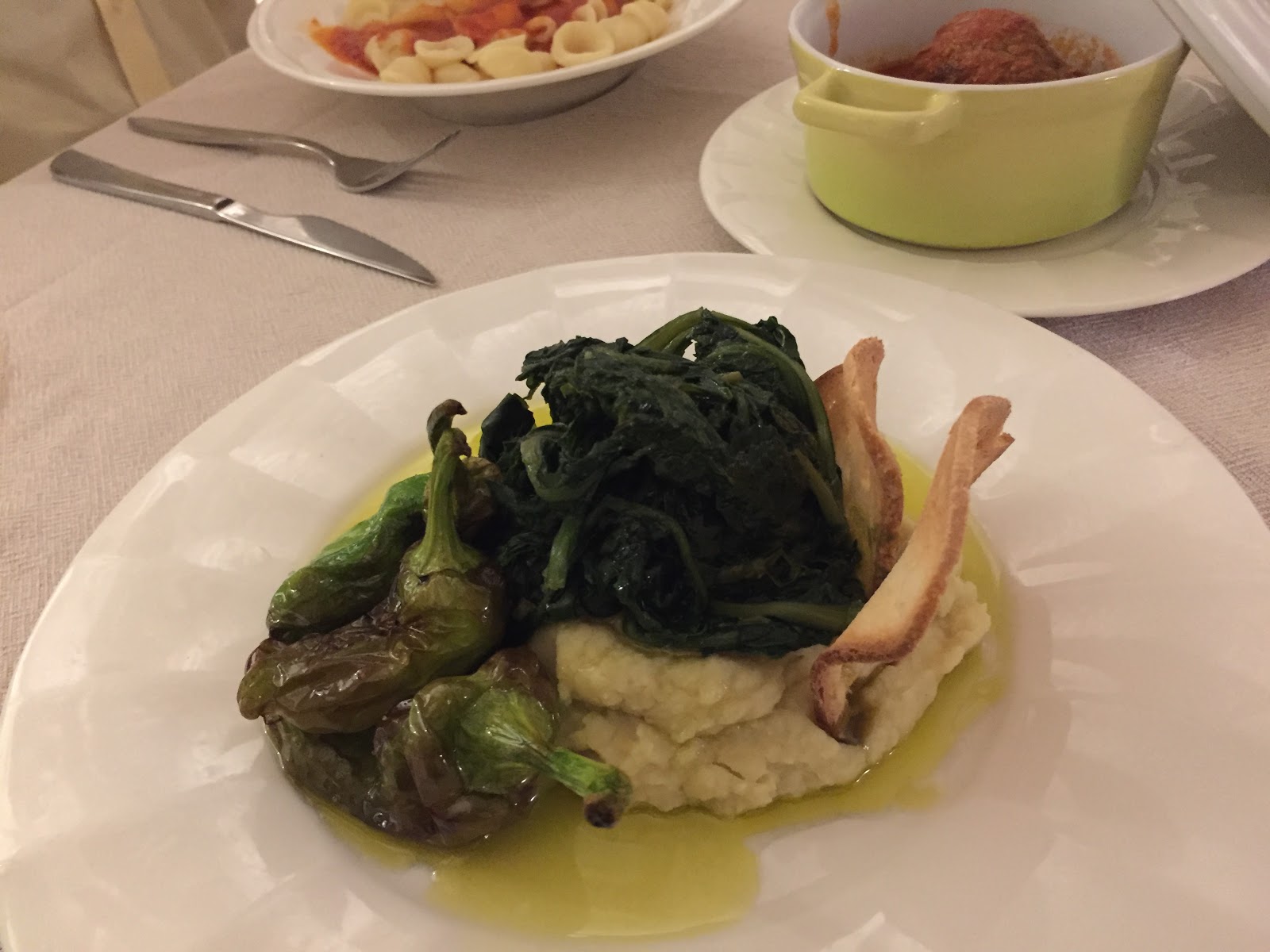
Finally, the local legendary dish, “fave e ciccorie.” Dried fava beans pureed with a touch of potato, topped with sauteed chicory, (which in Italy is across between spinach and swiss chard), and drizzled with the best olive oil.


We drank a local white wine; a specialty of Locorotondo. To finish we had a house made liqueur. Packed with sugar and herbs, I have found it takes the edge off of feeling indigestive. It is called a digestivo. One drinks a mere thimble of it for a good result. Our ristorante makes their own. It was dark and green. We thought it tasted of clove and basil, but in fact it was made from leaves from a laurel tree, which those of us who make chicken stock call bay leaves.

Now, it is time for bed. Arrivederci.  Ciao belli.

Wes and Marlow
Locorotondo, Puglia,  Italy
Monday, May 9, 2006


Ravenna: 26 November 2015


Wes and Marlow
26 November 2015
Bologna

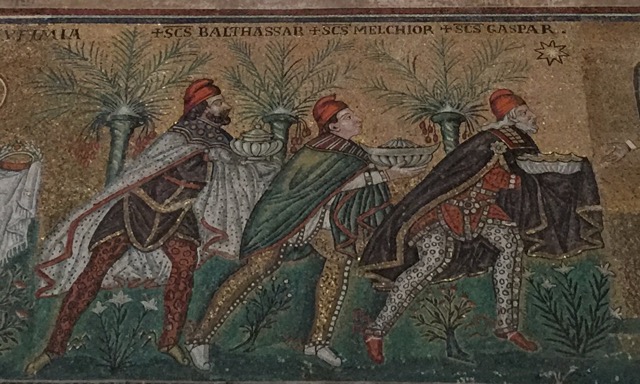
Here is a final letter from Italy. It is about the day we spent in Ravenna. It is a story told by photographs. It is a story about humans who documented their lives one thousand and five hundred years ago. They did it using tiny pieces of colored glass. Mosaics. I have heard about Ravenna’s mosaics. But walking into the churches and seeing them was stunning. They are visually ravishing. One can discuss the events they depict. And who paid for them. Who was in power. But one does not need to know a thing about them to be swept away by their brilliance.

We took the train from Bologna. We arrived within an hour and walked twenty minutes from the train station to see these buildings. It was very simple. Here are very few highlights.

The Basilica di Sant’Apollinare Nuovo. It was dedicated in the year, 504, by King Theodoric the Great, as his private chapel, his large private chapel. The walls are populated on one side with about fifty life size women. And on the other side with about fifty men. It might have been fun to know these fun loving men one thousand five hundred and eleven years ago.

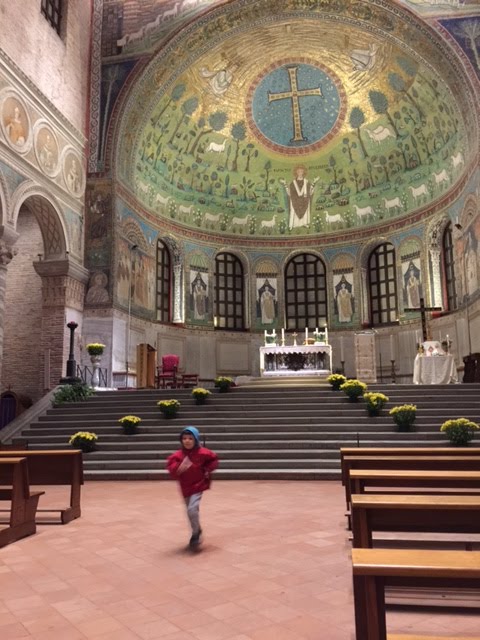
Next up, the Basilica di Sant’Apollinare in Classe. It was consecrated on the ninth of May in the year five hundred and forty nine.Please note the fun loving adorable bravo ragazzo showing me how to enjoy the mosaic and not be so serious.

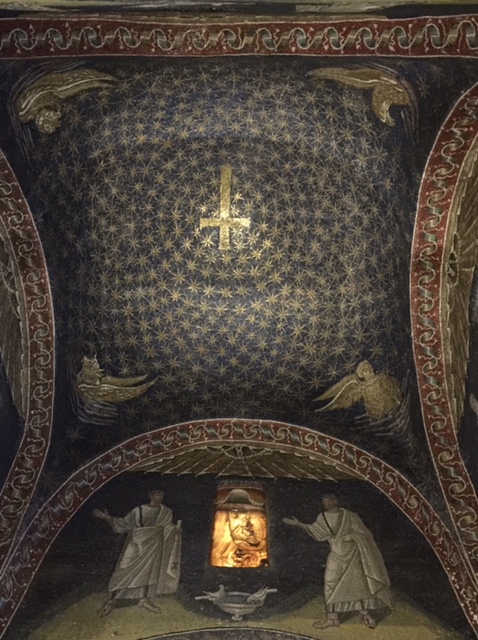
Then, we have the Mausoleo di Galla Placidia.This brick building feels more intimate than it’s forty feet long and thirty feet wide size. Just inside the door, in the center of the room is this ceiling that depicts a starry blue night with eight hundred gleaming gold stars making concentric circles around a cross that faces east. The building and it’s mosaics were created around the year four hundred and thirty.


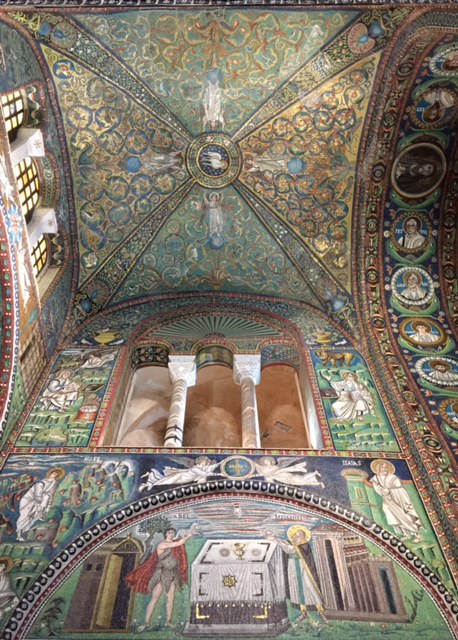
Finally, we visited the “grand finale”, “bet you can’t top this”, “save he best for last” church, The Basilica di San Vitali.The Byzantines finished this basilica in the year five hundred and forty eight. The images depicted on it’s walls are a who’s who of the era. The cast is comprised of the top religious figures, Jesus himself in the center of the arch surrounded by his apostles. Biblical characters and events. Dolphins with tails intertwined. Birds and lambs. Before there was photography there were mosaics. Clear, distinct, detailed images. Moments frozen in time. Yet, aside from the content, the composition, the brilliance of the materials and the fact of their survival through fifteen centuries, they are inexpressibly special.

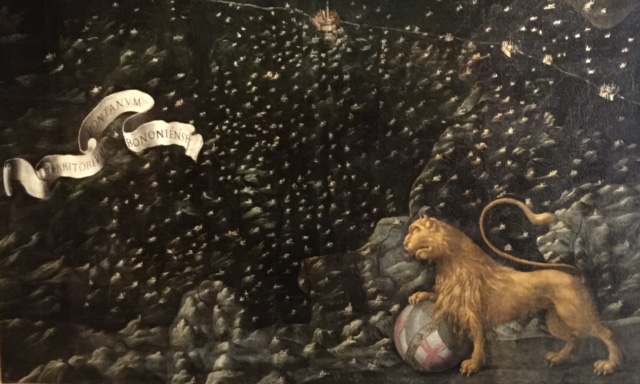
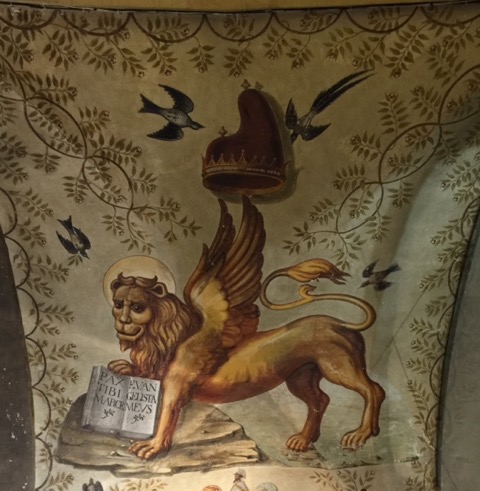
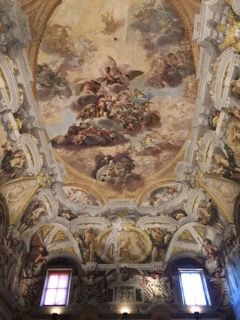
To conclude our journey, I offer two photos for those who like lions. One, is a large centuries old canvas in the city museum.The other, is from the ceiling of University’s first campus building from the sixteenth century. Every square inch of the walls and ceilings of every corridor, staircase and class room is painted. This lion is one of the highlights and is dedicated to Myrna.

Lots of love from Bologna

Wes and Marlow
26 November 2015
Bologna


Bologna cooking classes

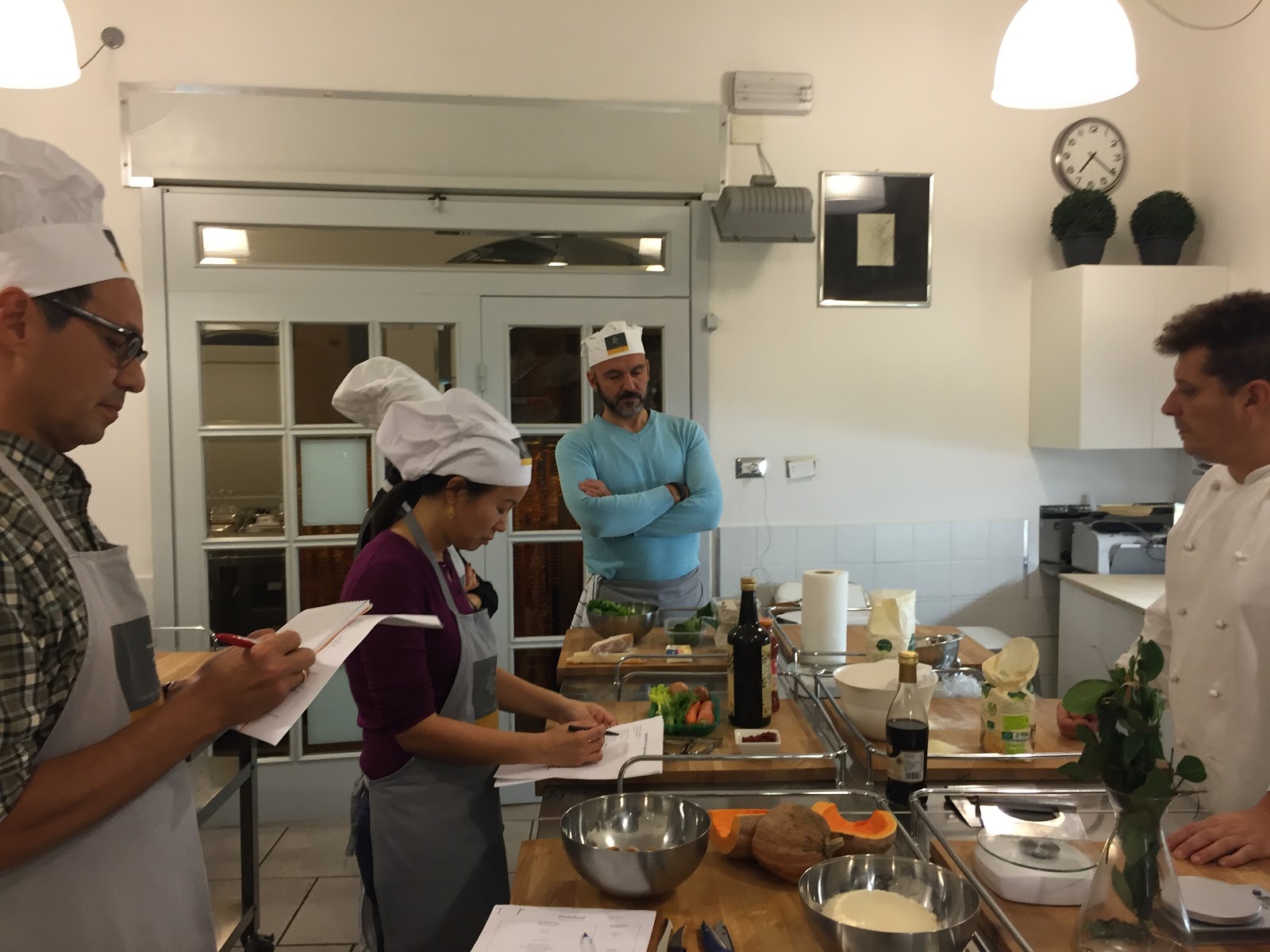
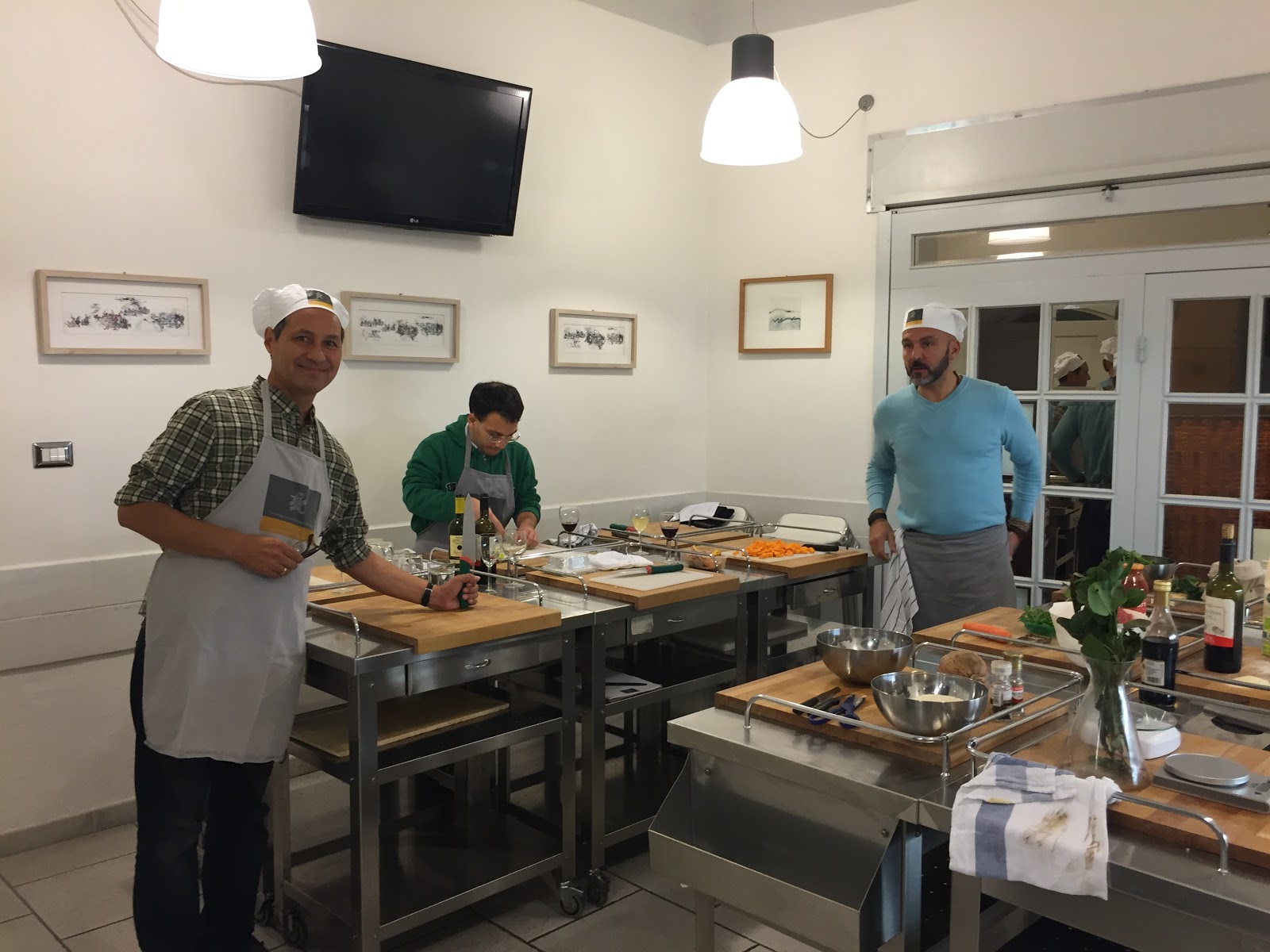
We came to Bologna to enroll in Italian language classes.  When we arrived to the school we learned that they also have a very well regarded cooking program that offers evening programs to students enrolled in the language program.  The three hour evening class (7 to ~10 pm) ends with a three-course meal.  At the start of each week they post the menus for the three evening classes (W, Th, Fr).  After taking our first class (three kinds of pasta: tagliatelle al ragu bolognese, tortelloni di ricotta, ravioli di zucca con aceto balsamico) we couldn’t wait until the next class!  We were surprised that in addition to a few language students, there were also several Italian students from Bologna in our classes.  That is a sign of how well regarded the program is.  The class is taught in Italian, but the chef also speaks english well and when asked will explain each step in english too.  The classes are small – six our first class and then 10 the second.  The kitchen is not located in the same part of the City as the language school.  It is on the ground floor on a street popular in the evenings with moderately priced osterias,  trattorias, wine bars and pizzerias.   It is well equipped and clean!

Chef Davide and his students

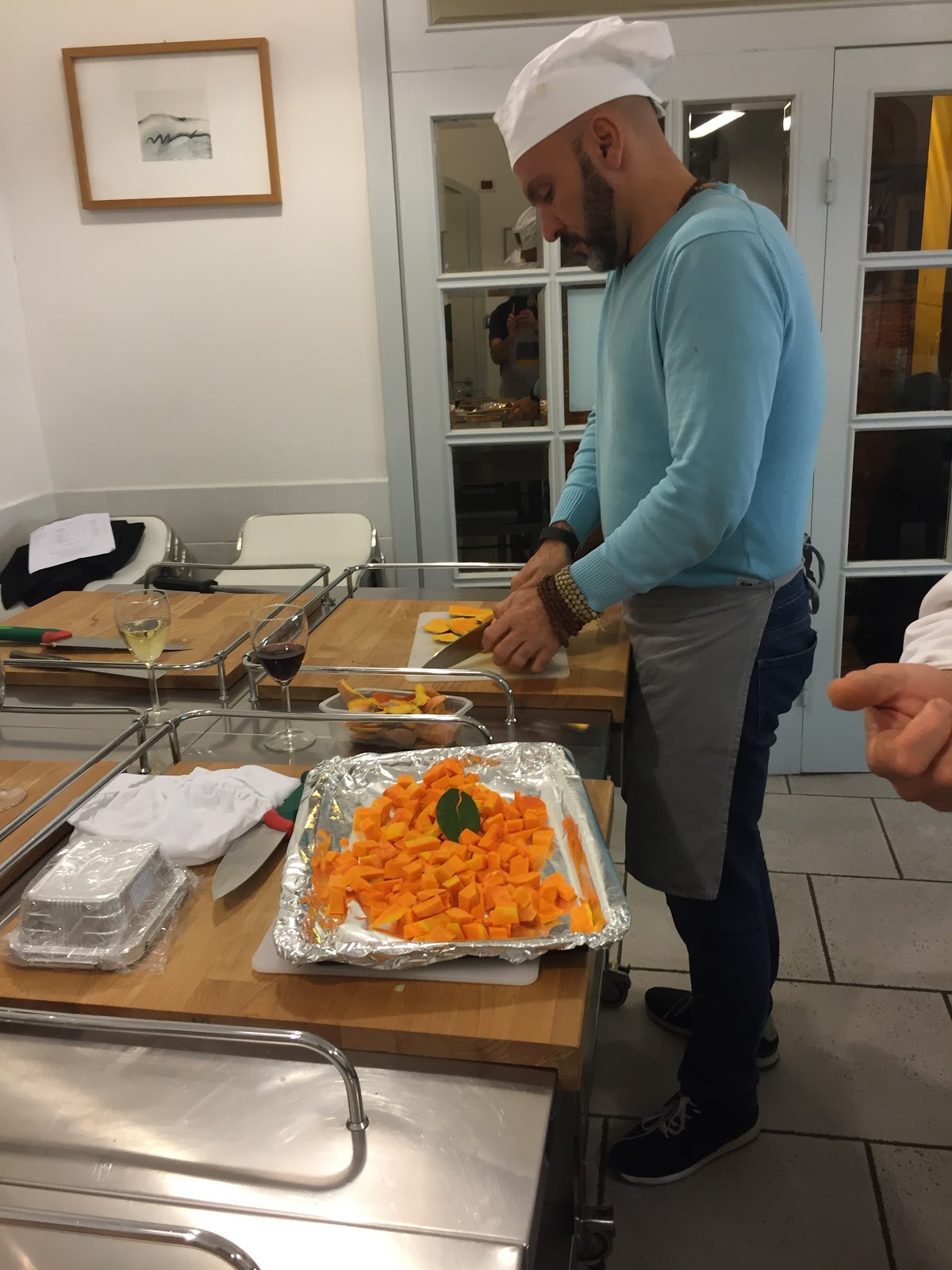
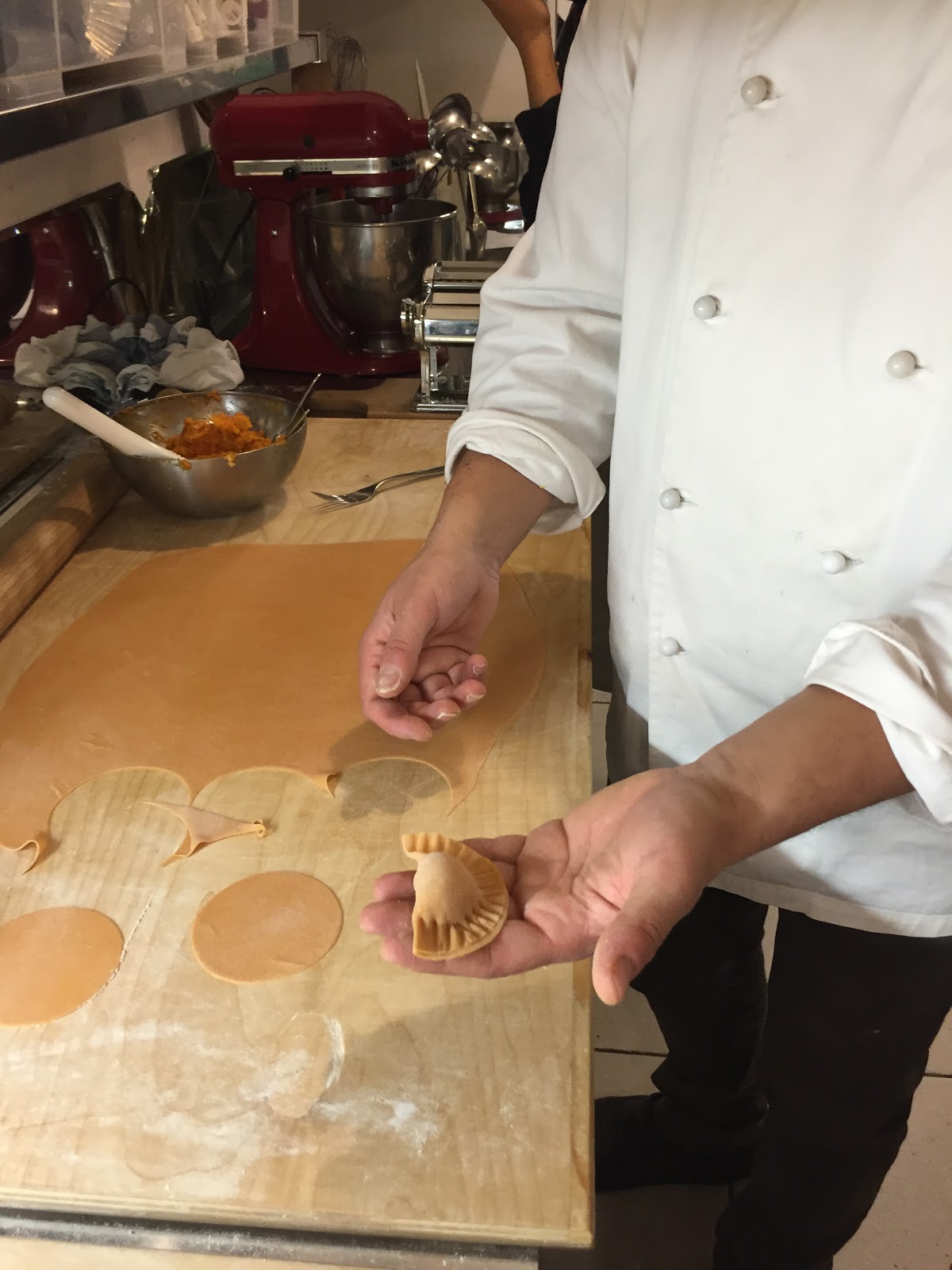
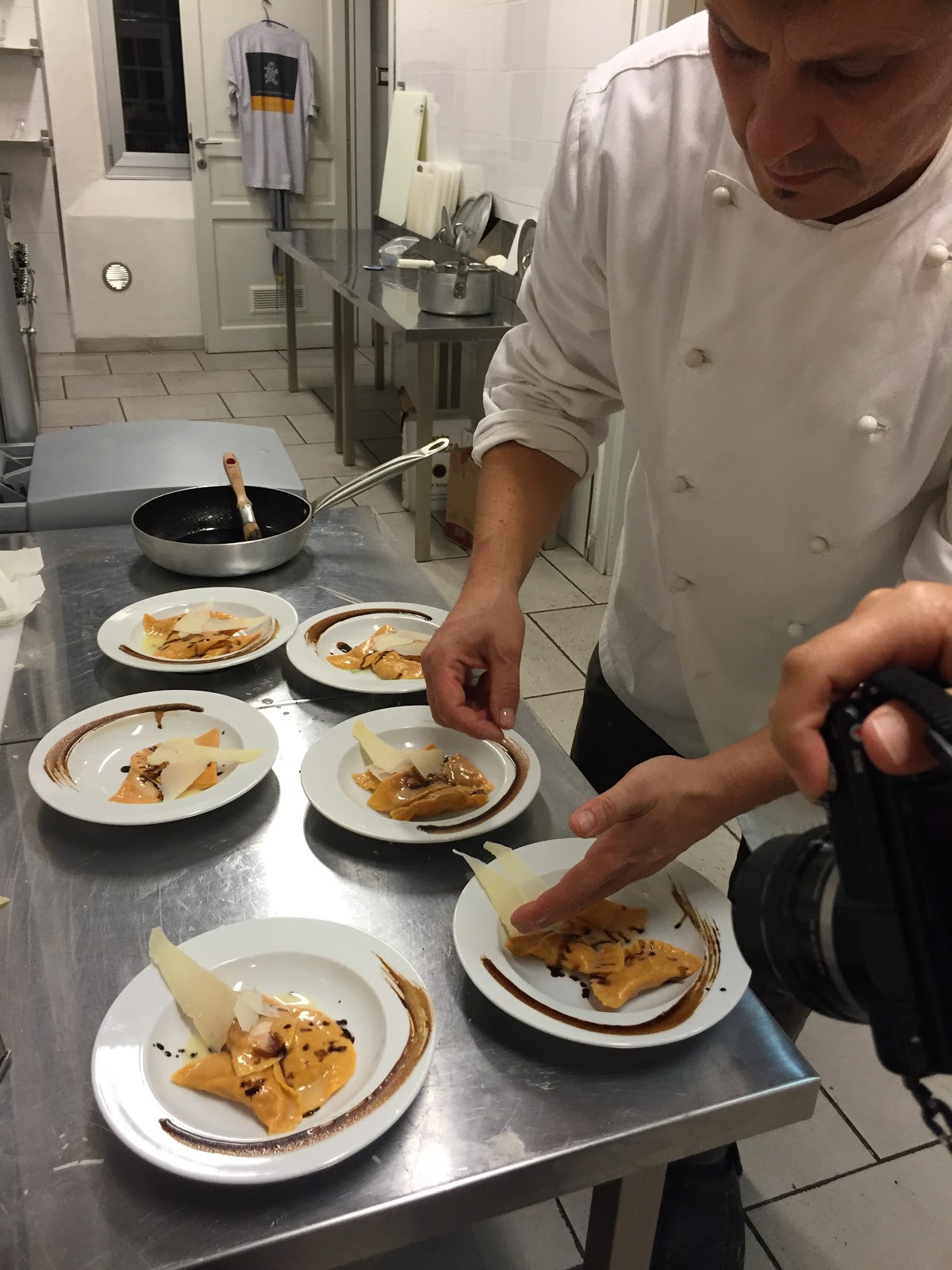
Preparation of the zucca for the ravioli

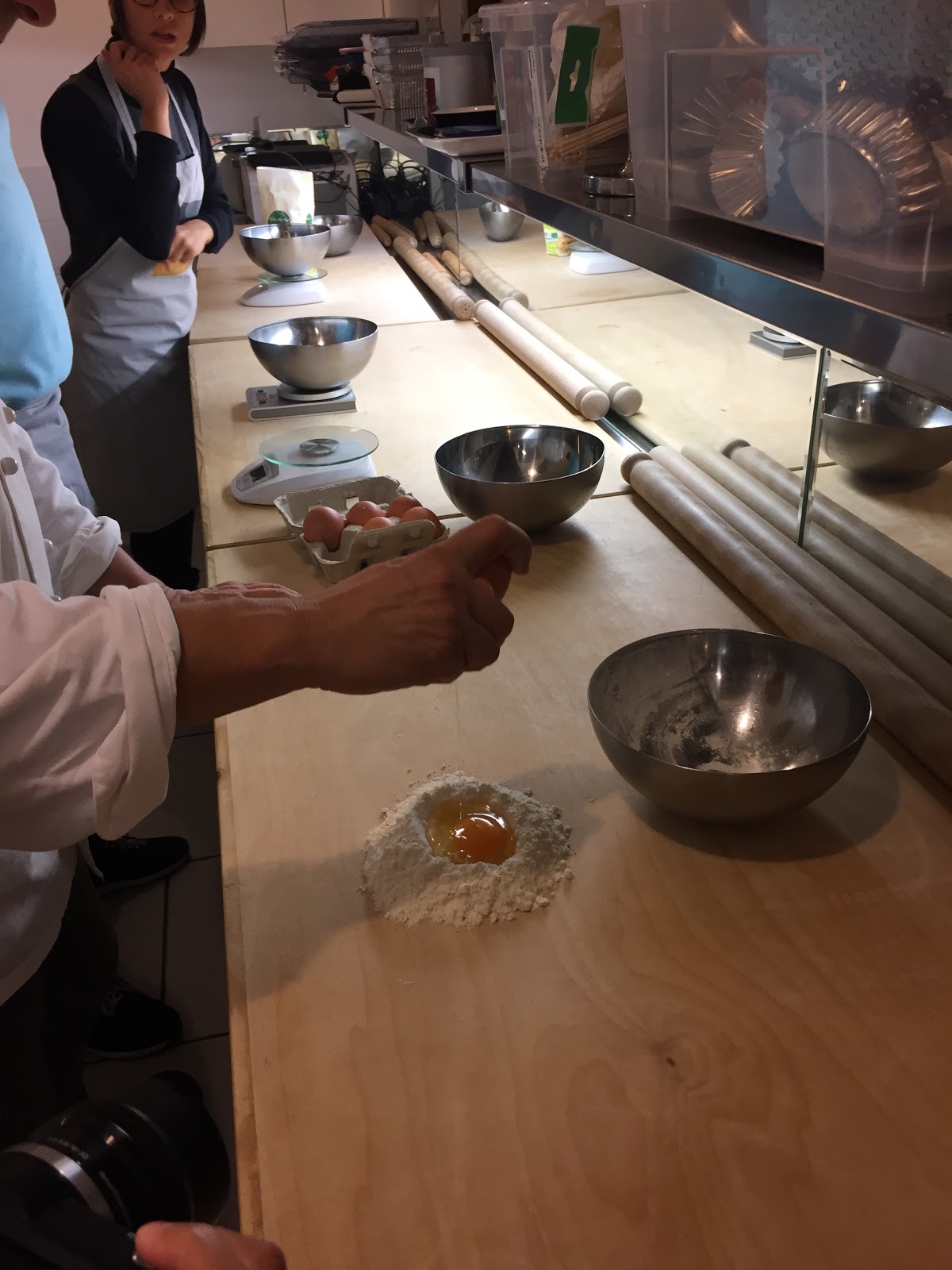
Starting the pasta, one egg, 100 g. flour 00

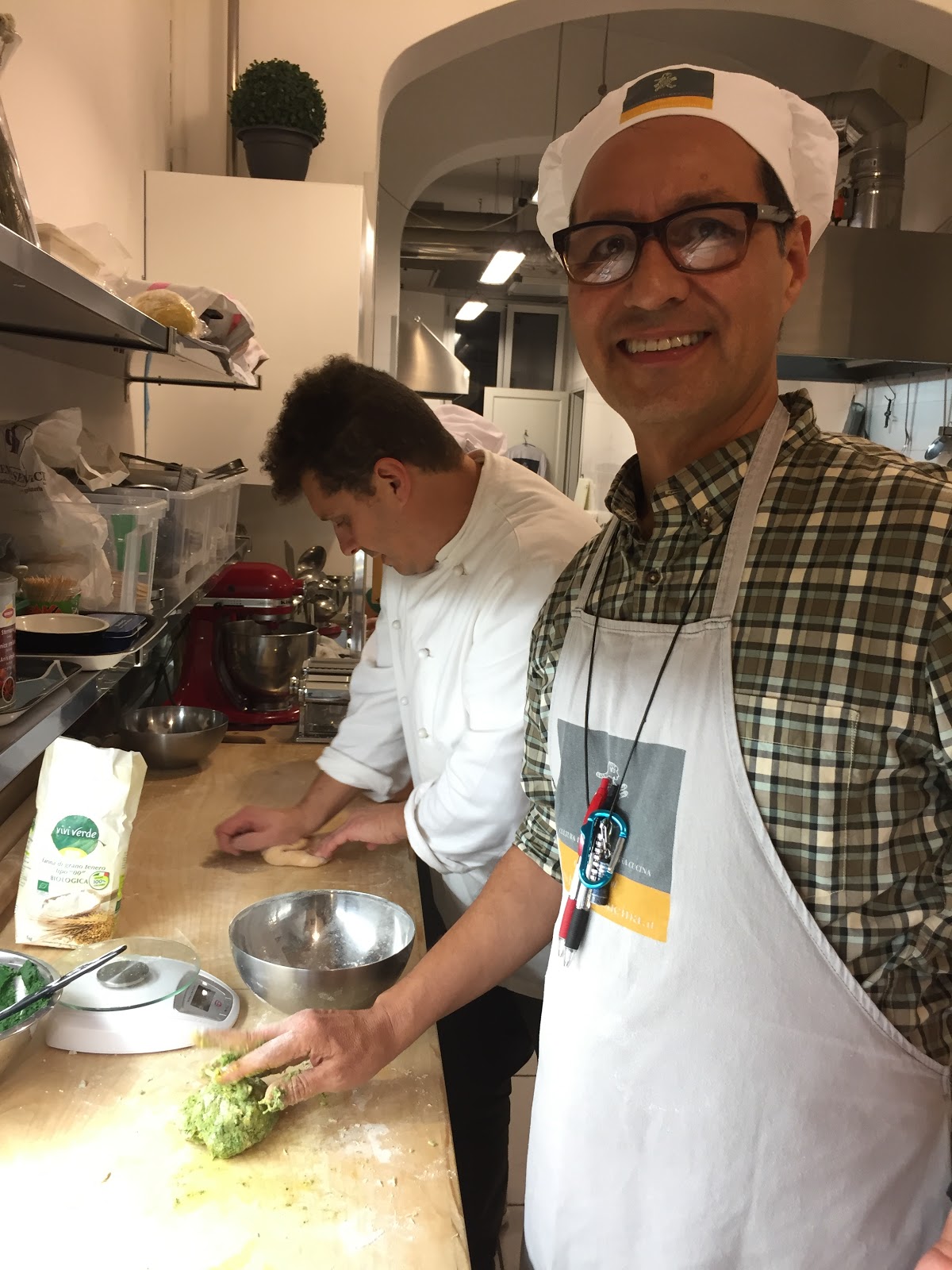
Marlow made a “green pasta” using a tablespoon of puree spinach for color.  We also made a “red pasta” using a tablespoon of tomato paste.

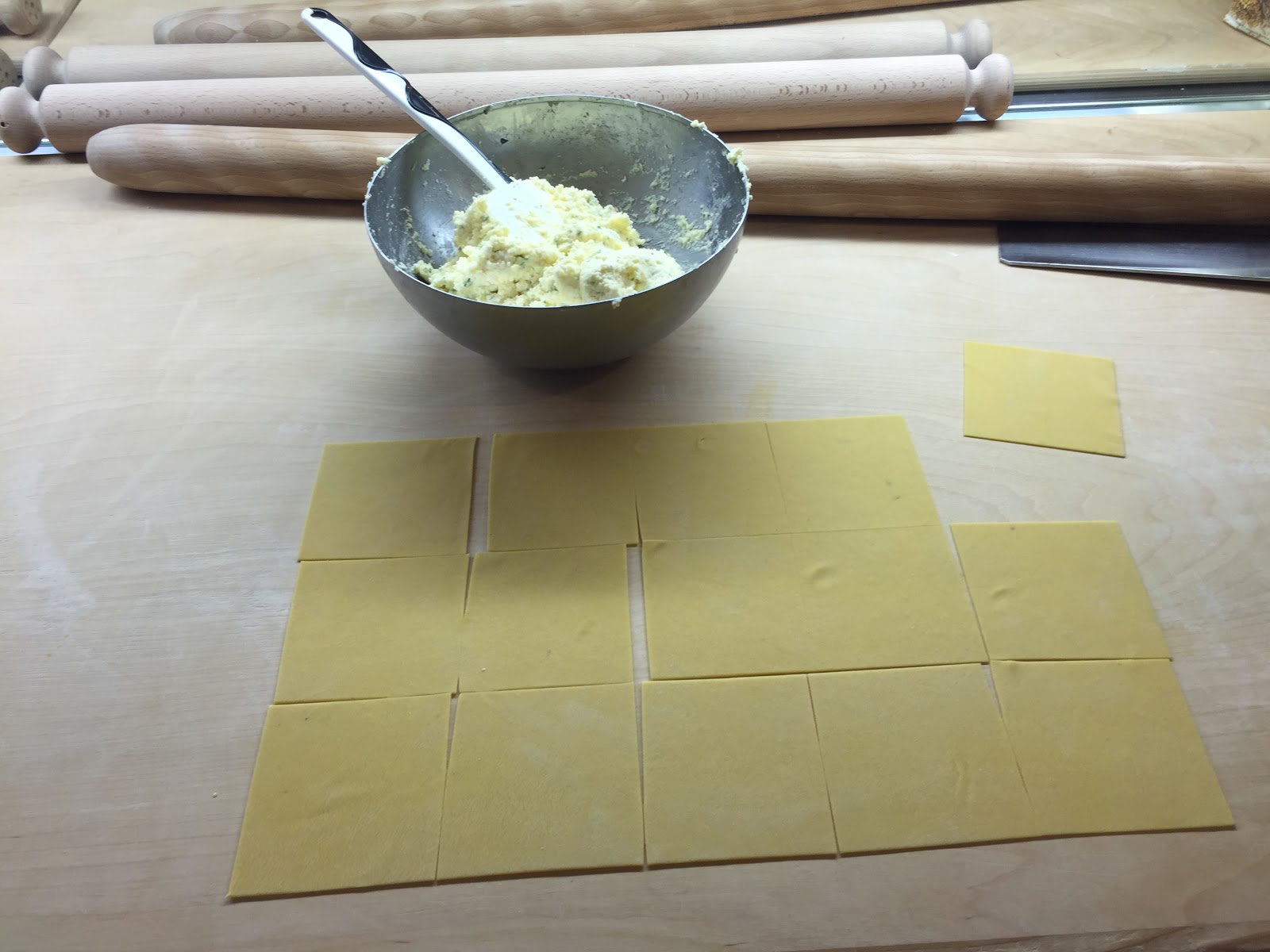
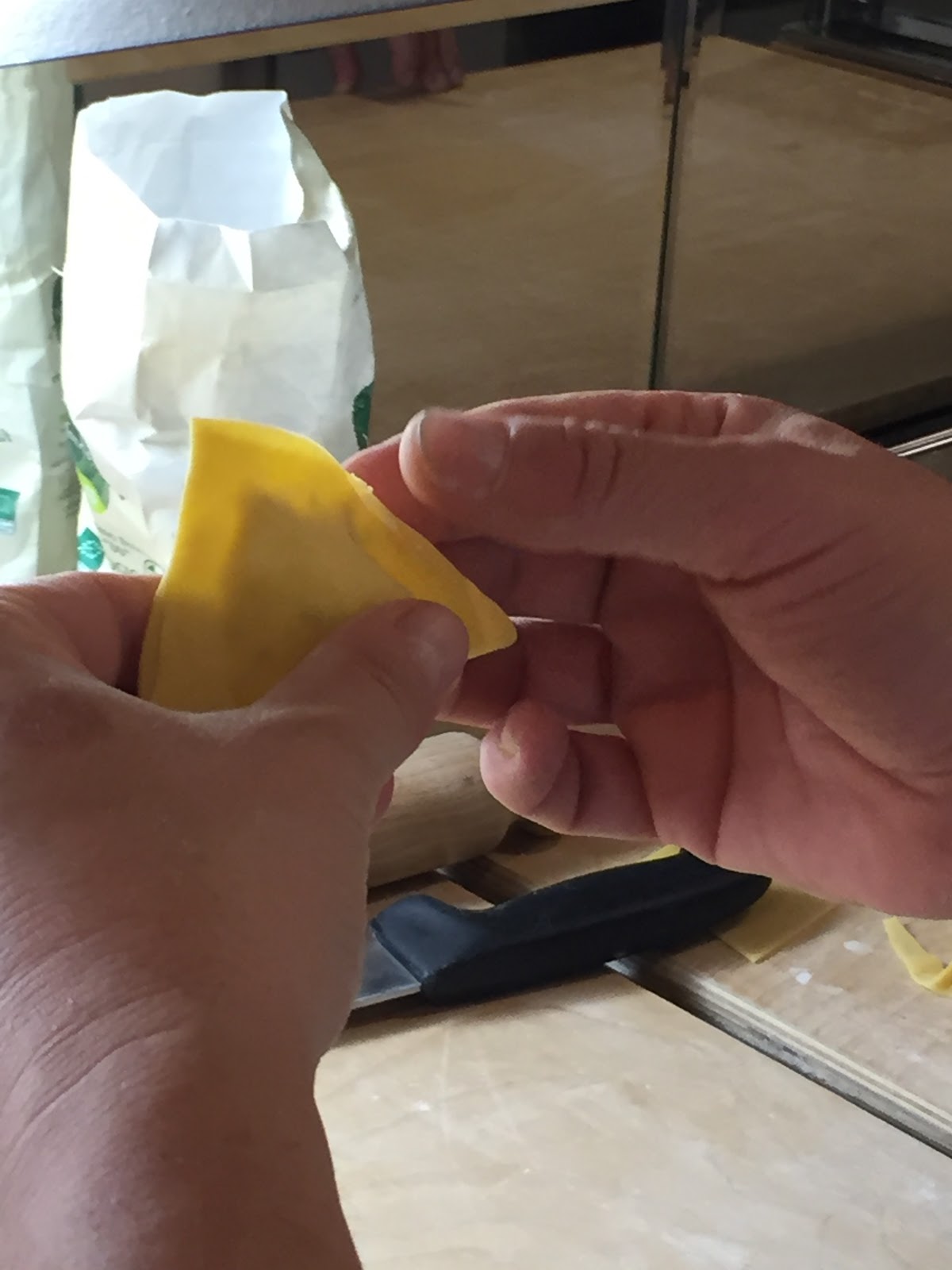
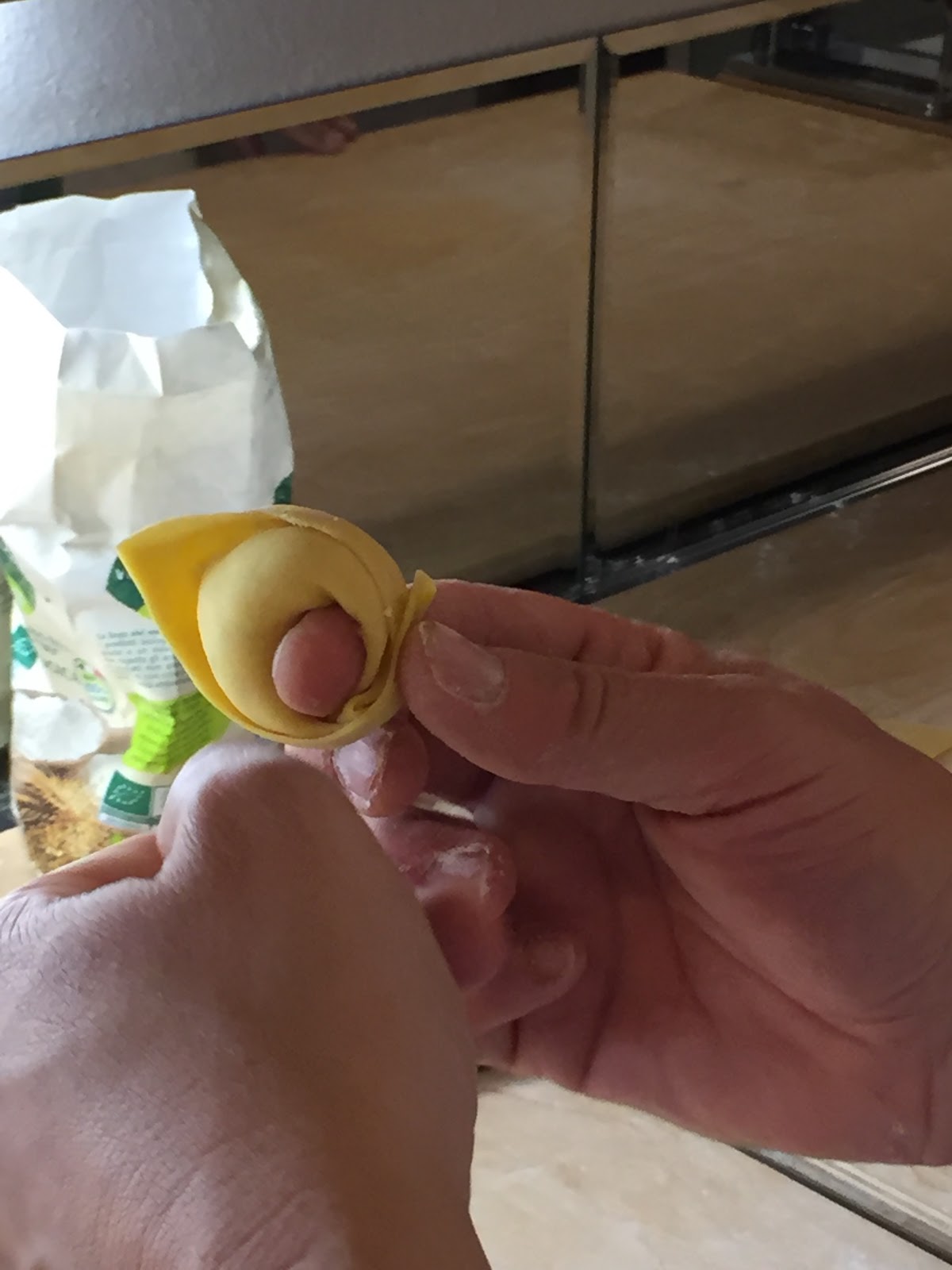
After rolling into sheets so thin you can see through them we cut into squares for the tortelloni.

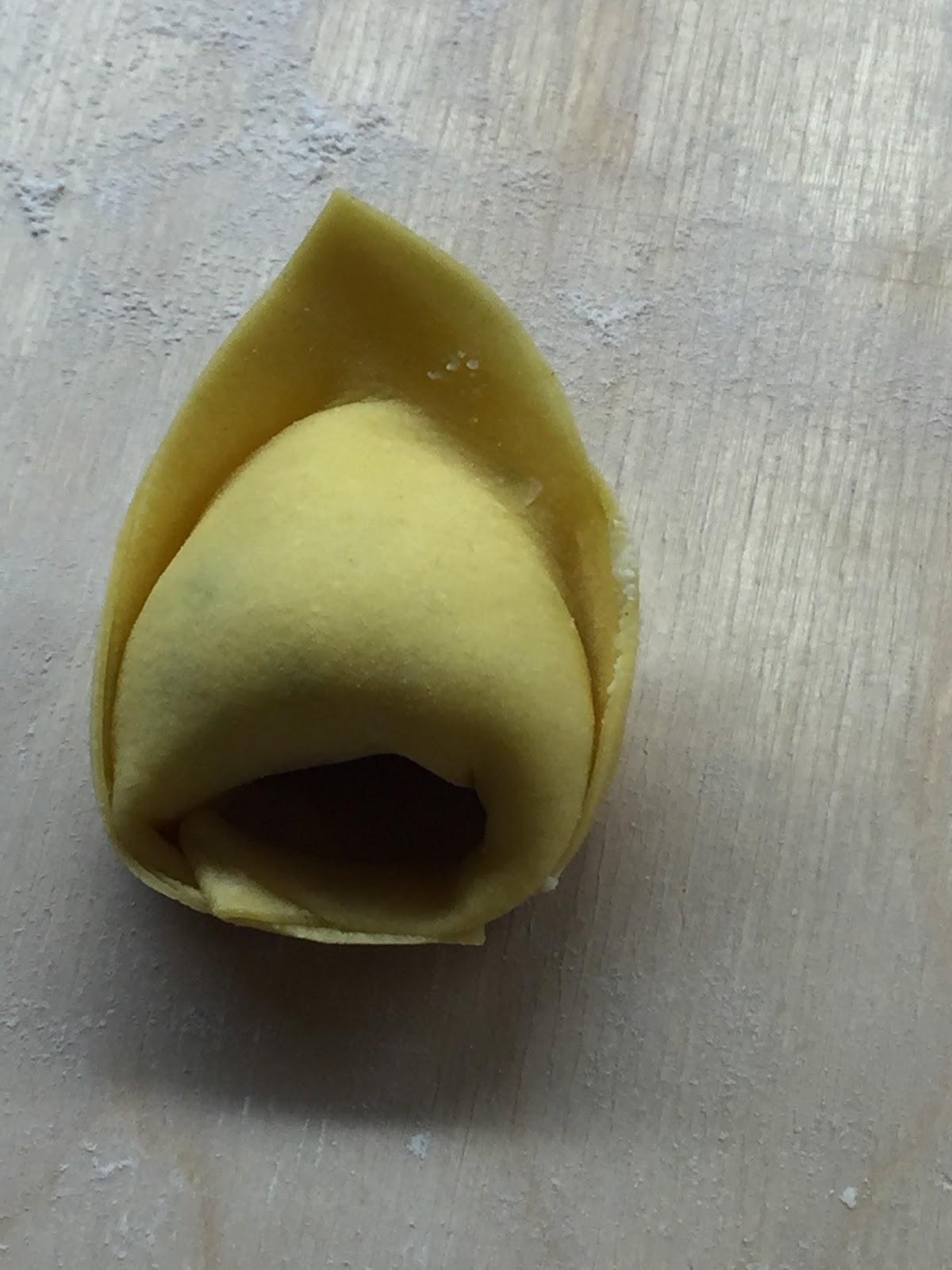
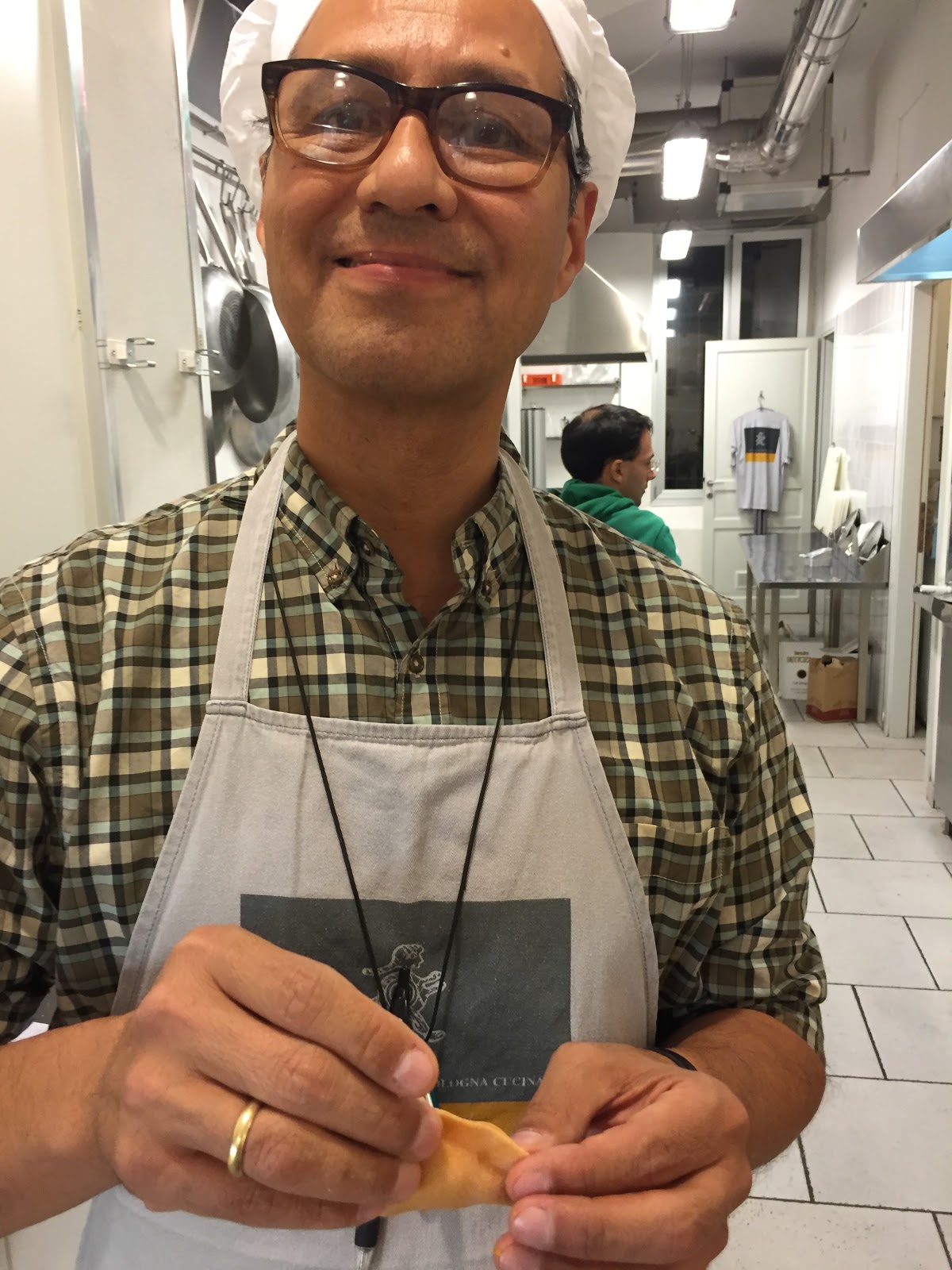
The finished tortelloni.

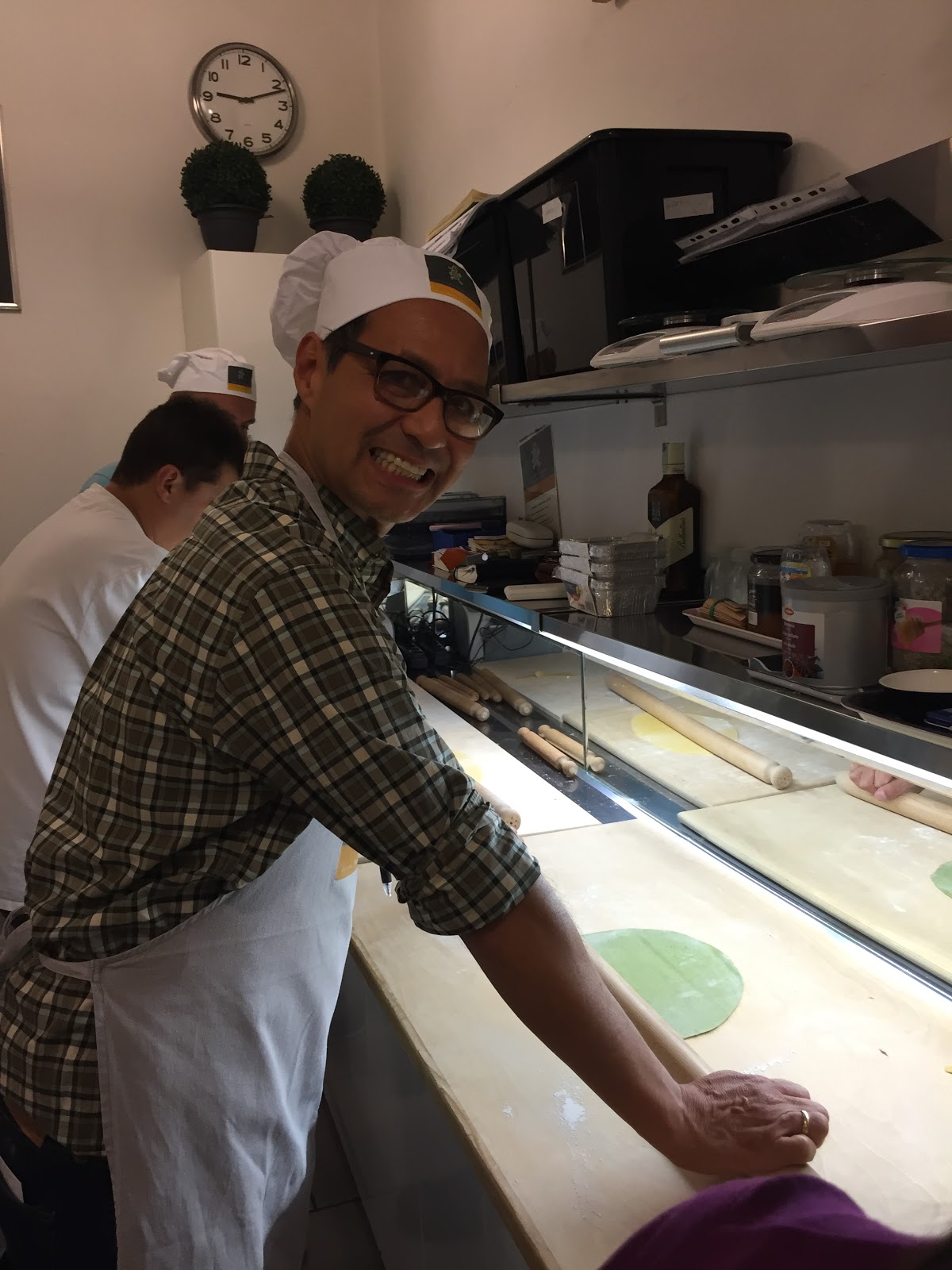
Rolling the green pasta.

A ravioli ready to be cooked.

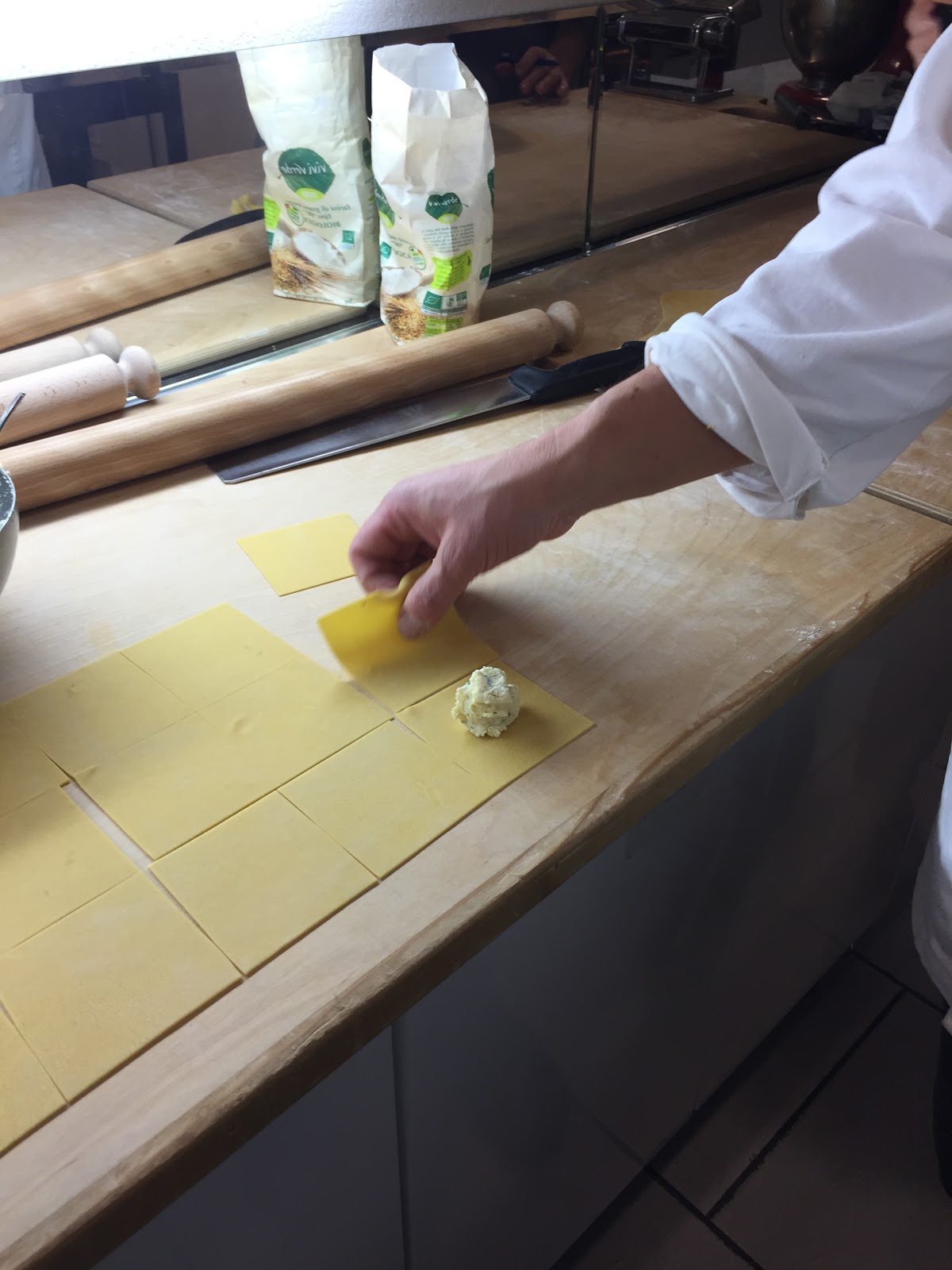
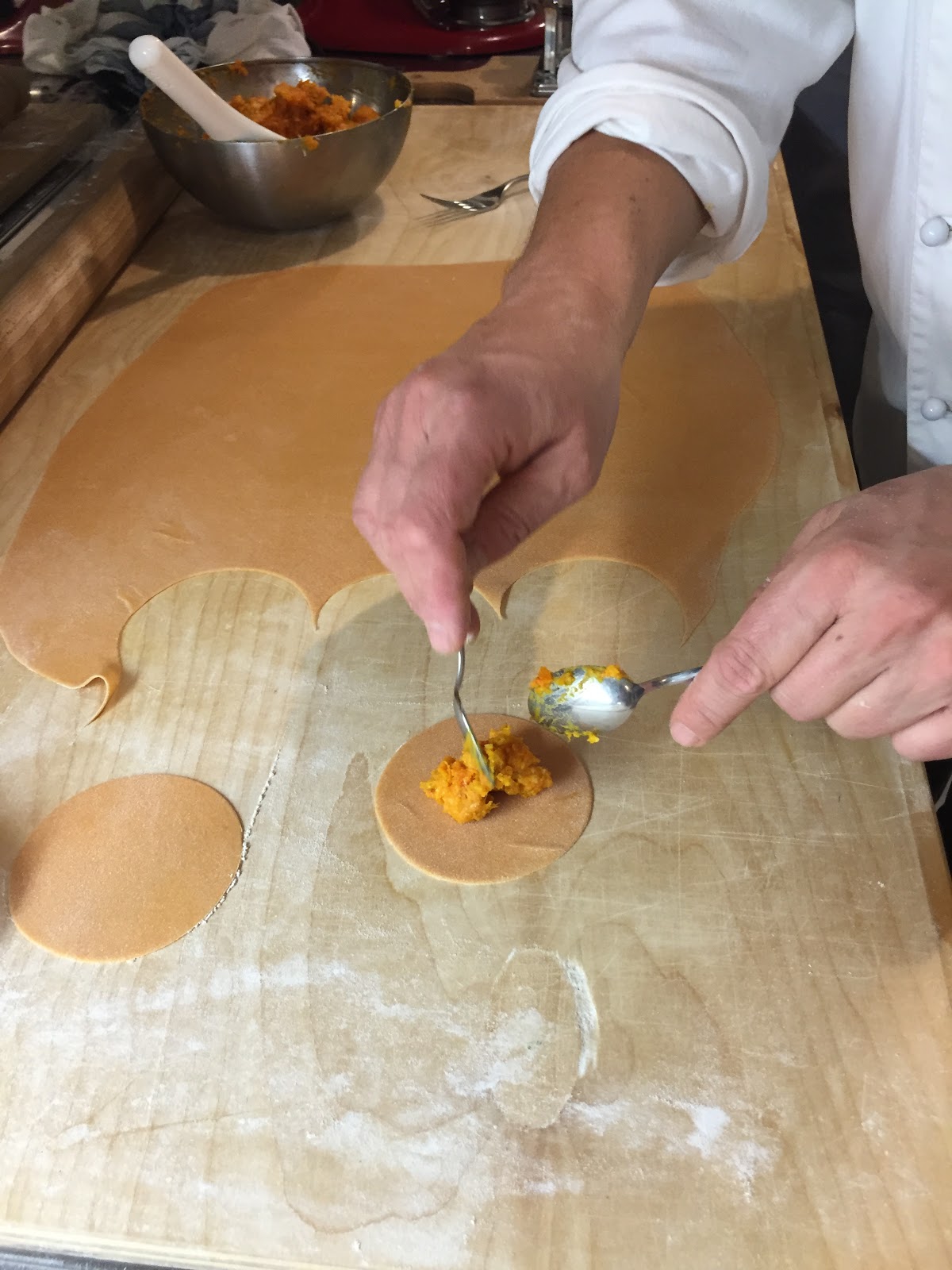
Adding the zucca to the ravioli.

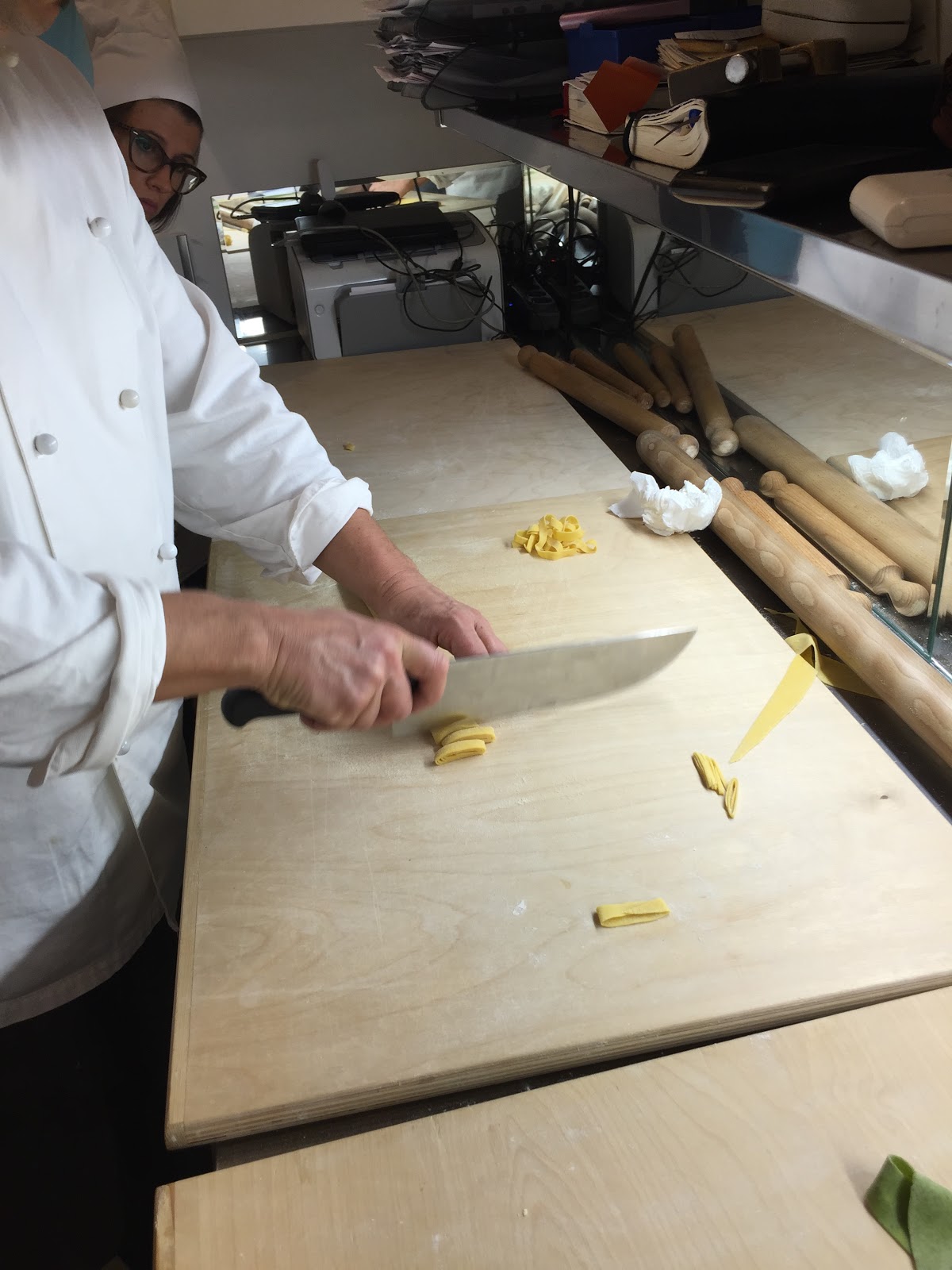
Cutting the tagliatelle.

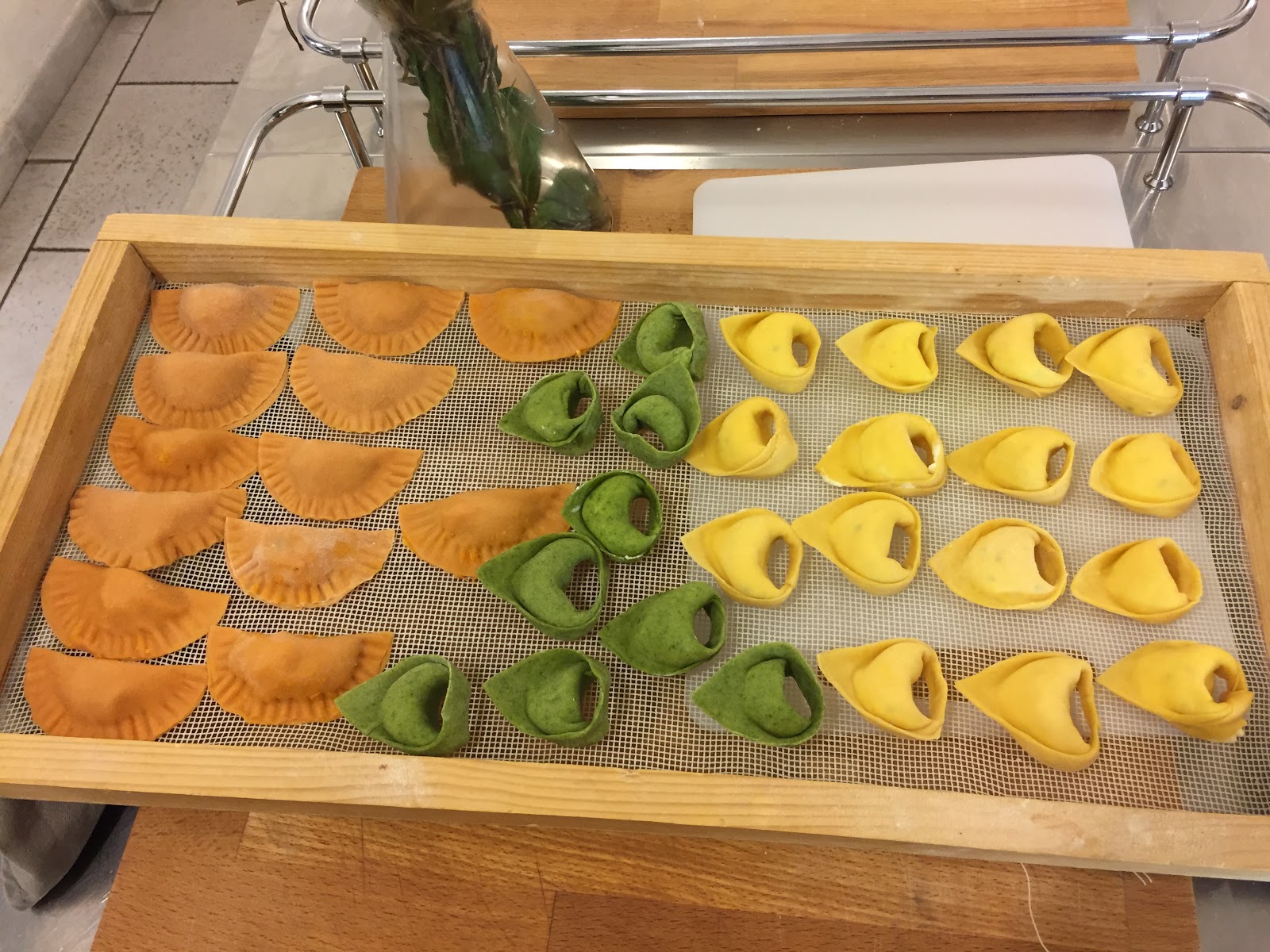
Our pastas drying for a few moments before cooking.

Plating the ravioli.

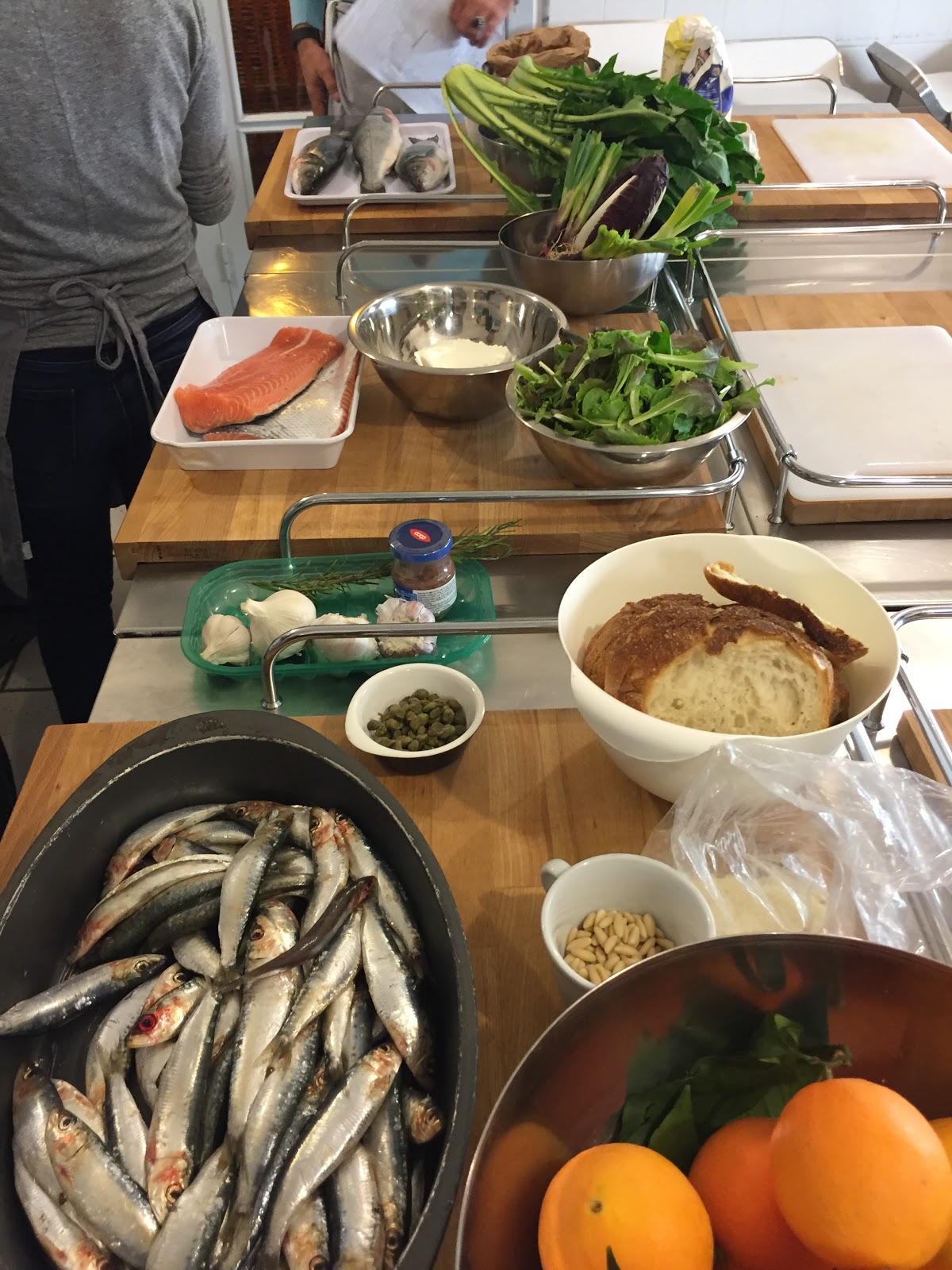
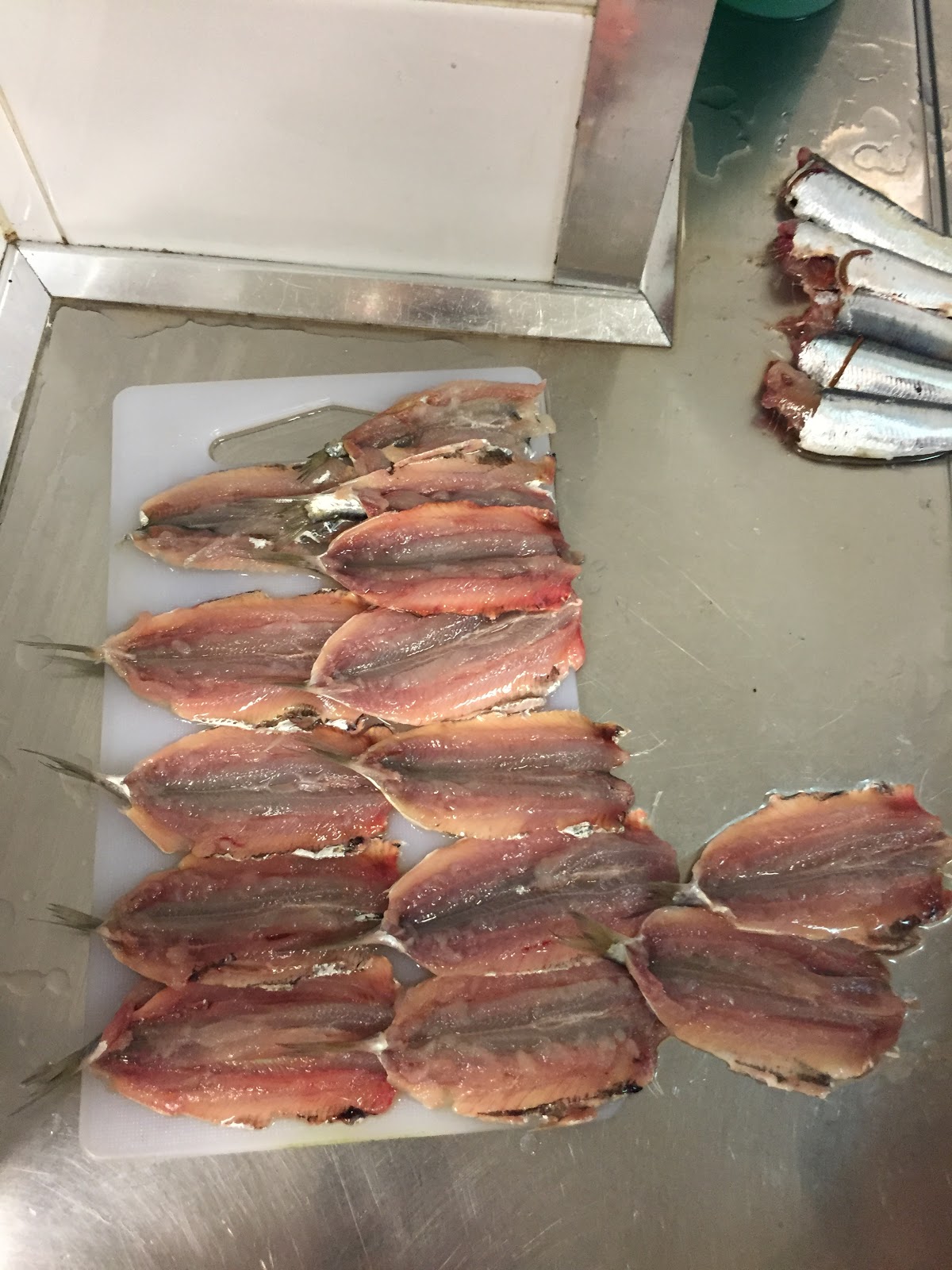
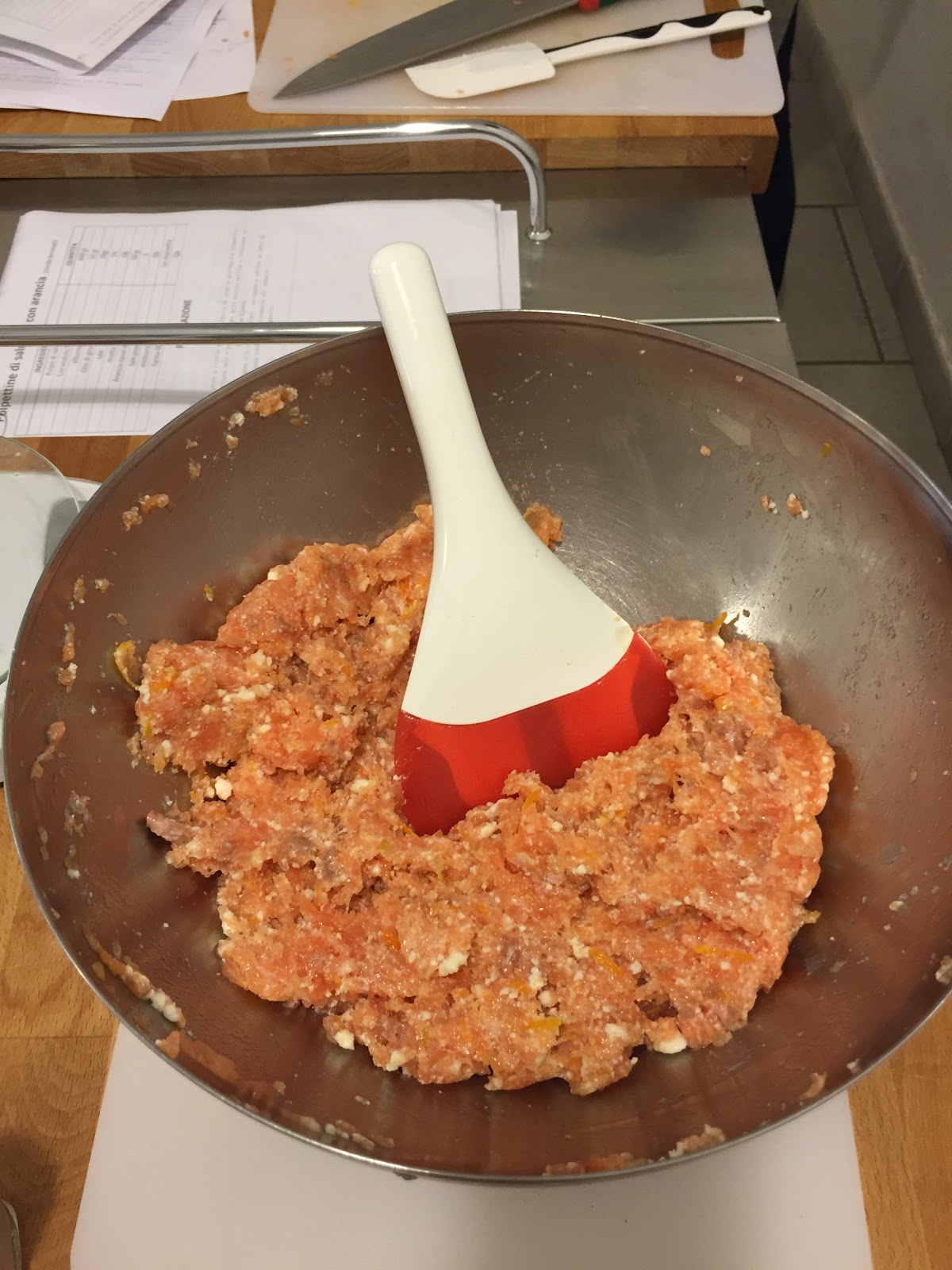
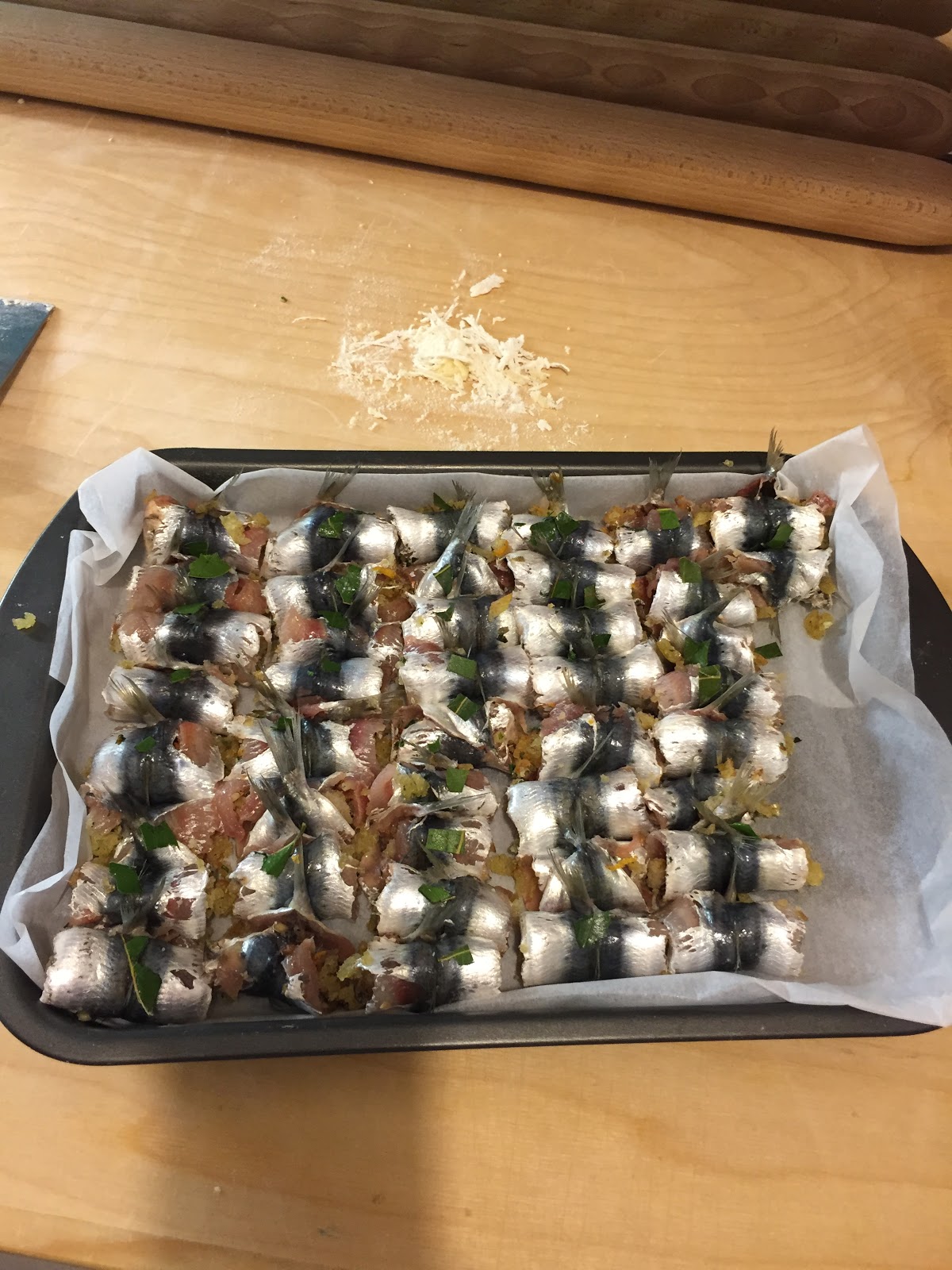
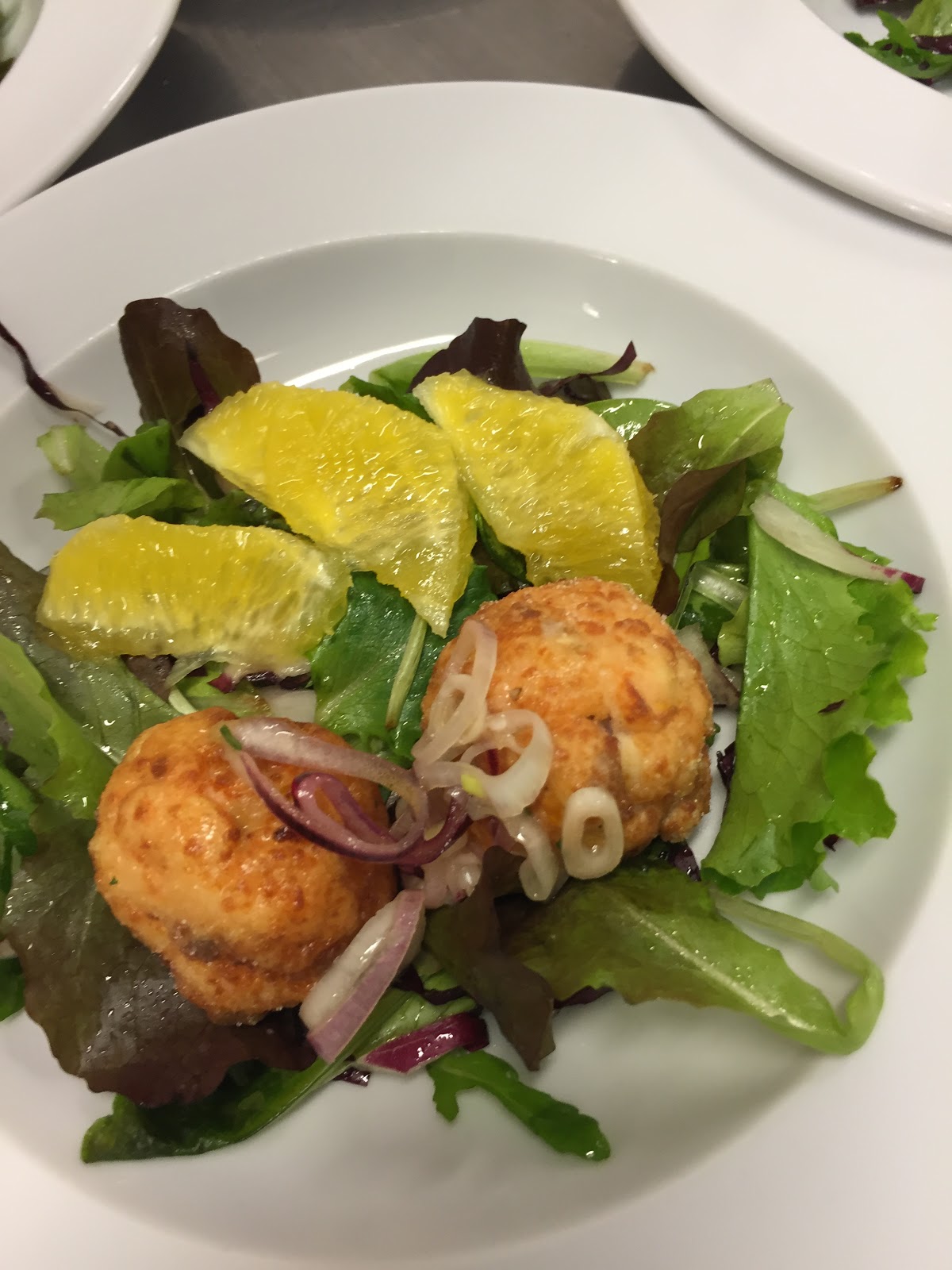
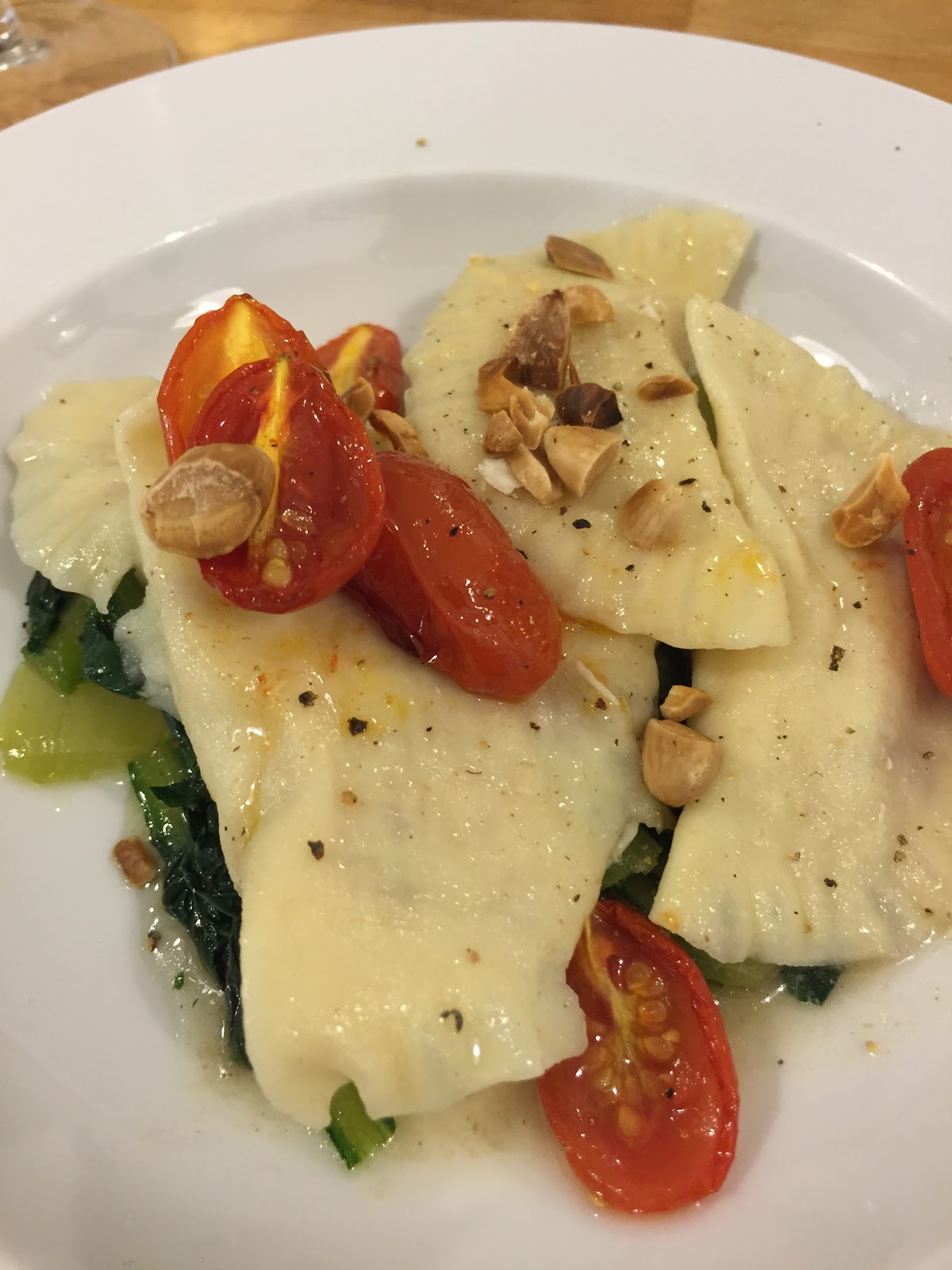
Our second class covered fish dishes: a starter of sardines beccafico, ravioli di branzino and polpette di salmone all’arancia.  

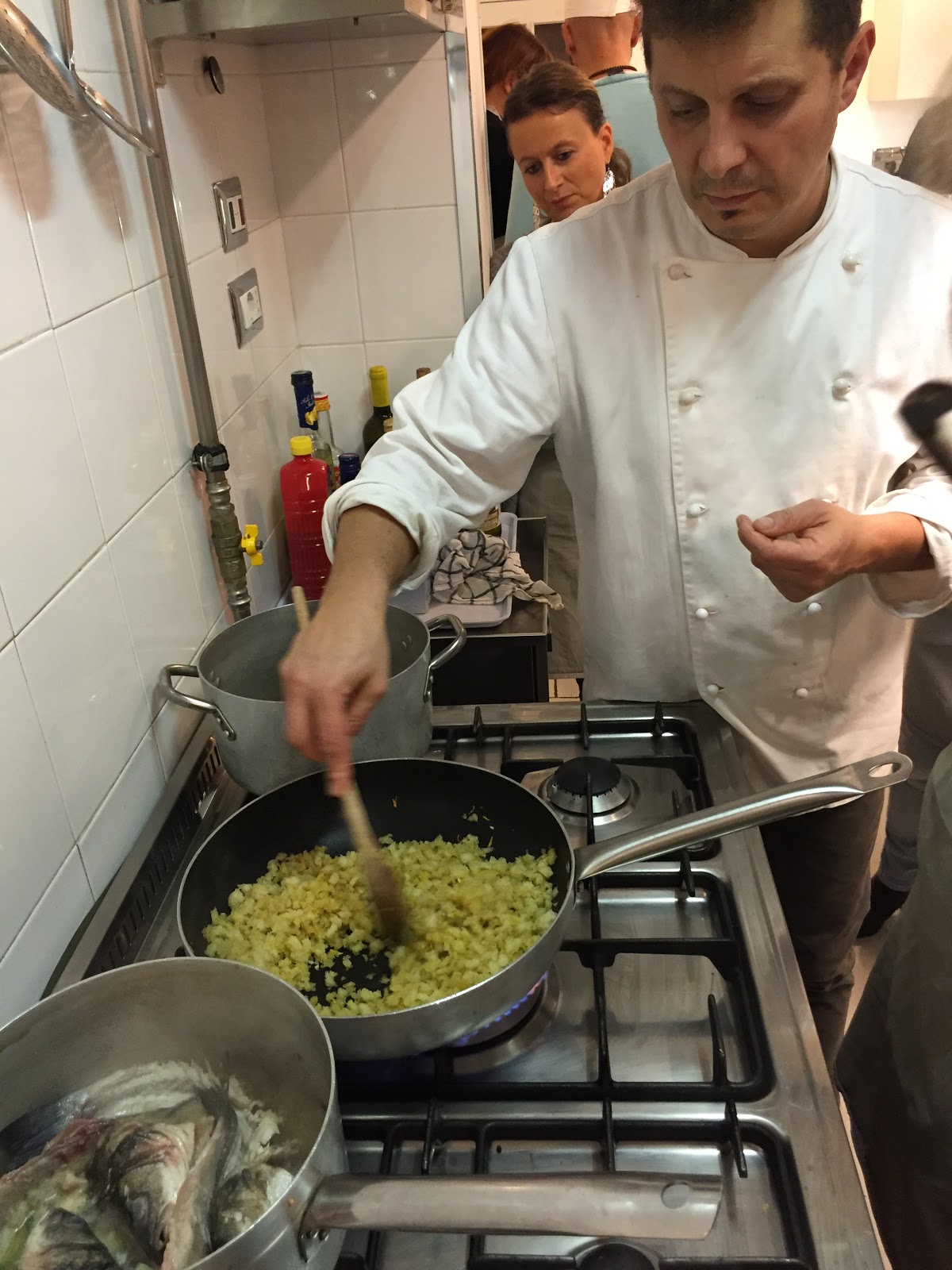
Class starts with an explanation of the steps required to complete each dish.  When we arrive the ingredients are laid out in our work stations.  Two/three people are assigned to each dish, but it’s very informal and everyone just chips in and helps prepare all the dishes.

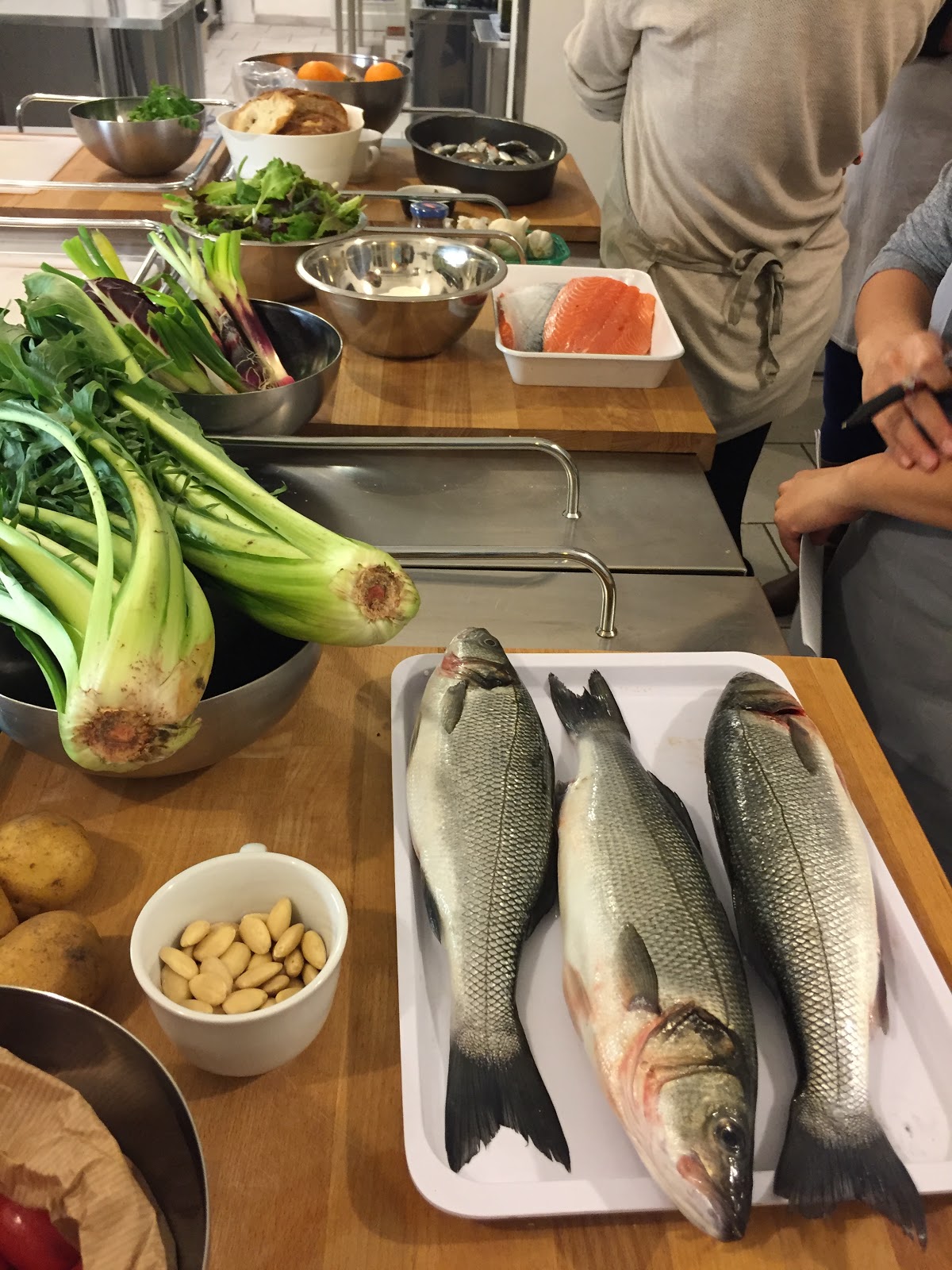
The branzino!

Rolling the sardine up around the bread crump mixture.

Cleaned sardines.

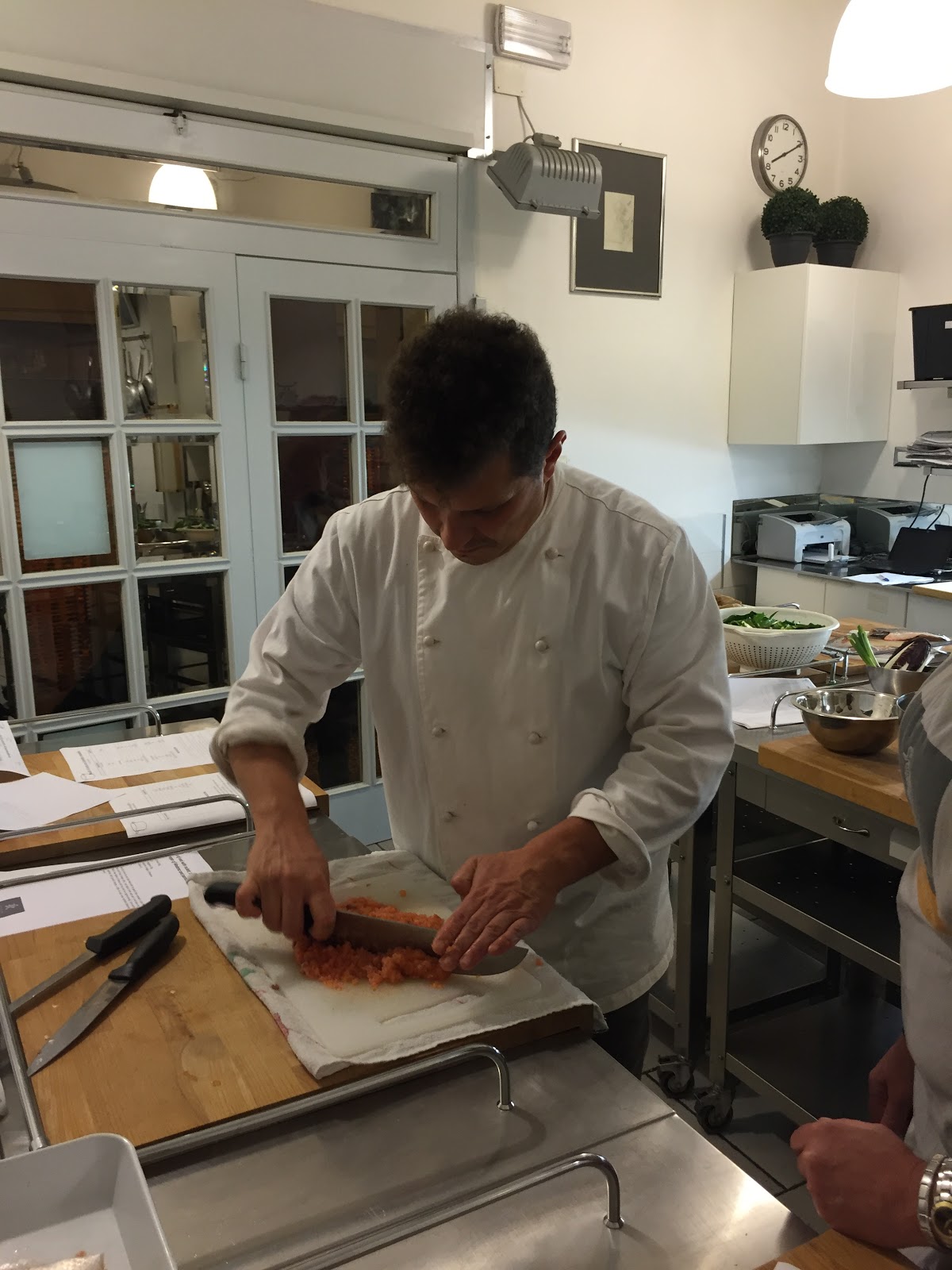
Chef Davide creating salmon tartar for the polpettes.

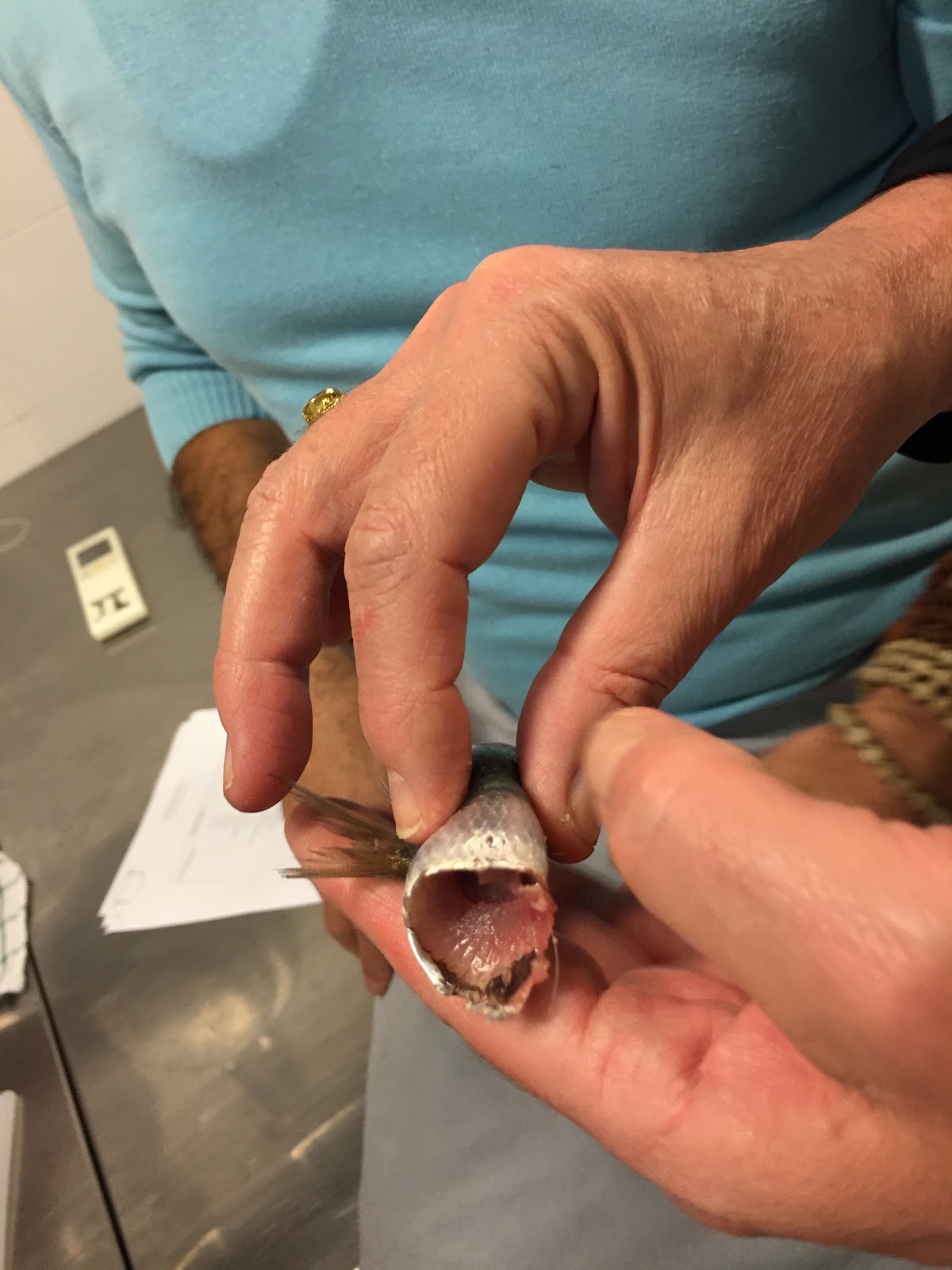
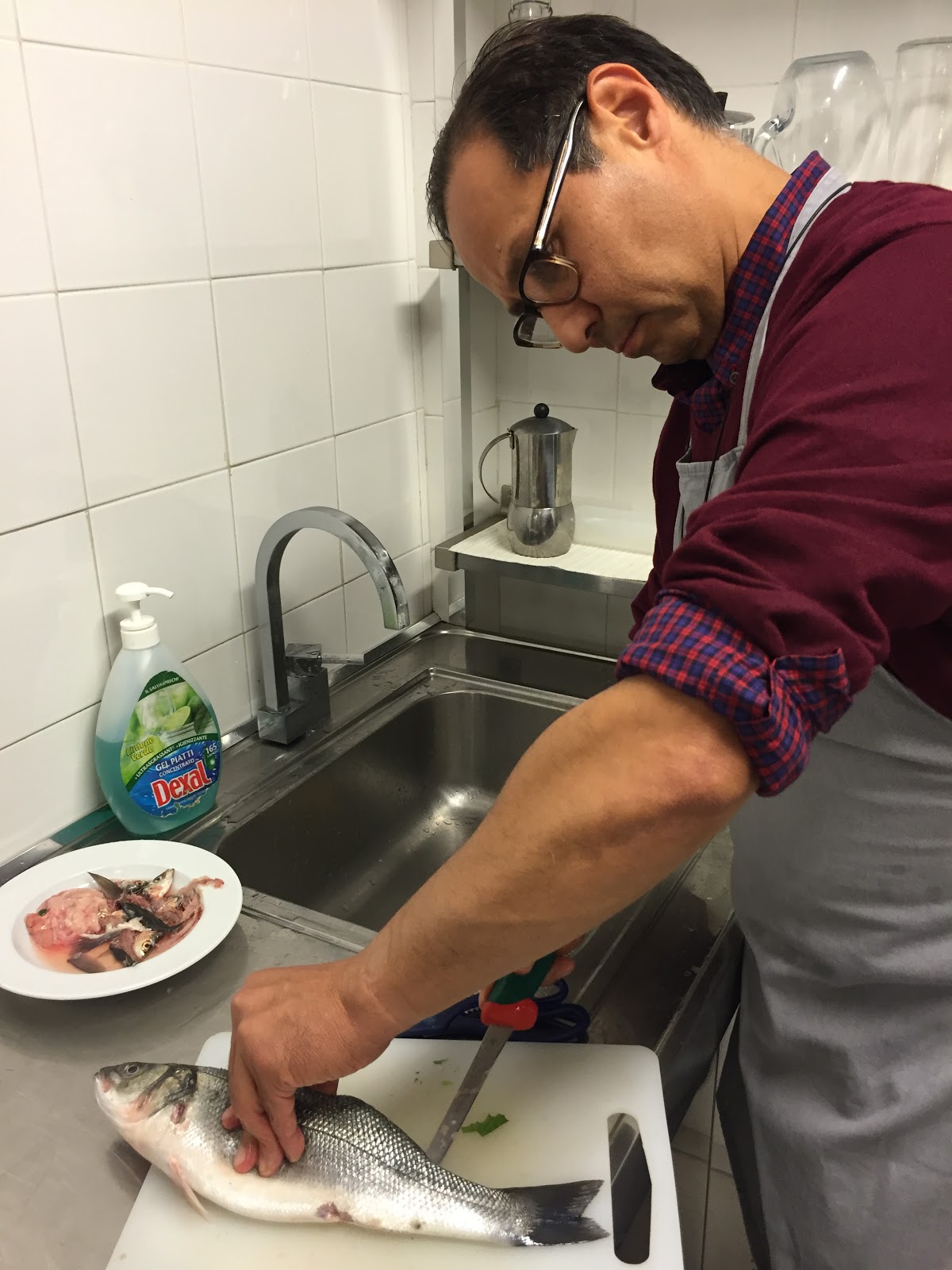
Marlow enjoyed gutting and scaling the branzino.  The guts, etc. are used to make a broth used for the recipe.

The salmon mixed with ricotta.

The breadcrumb mixture for the sardines.

Sardines ready for the oven.  

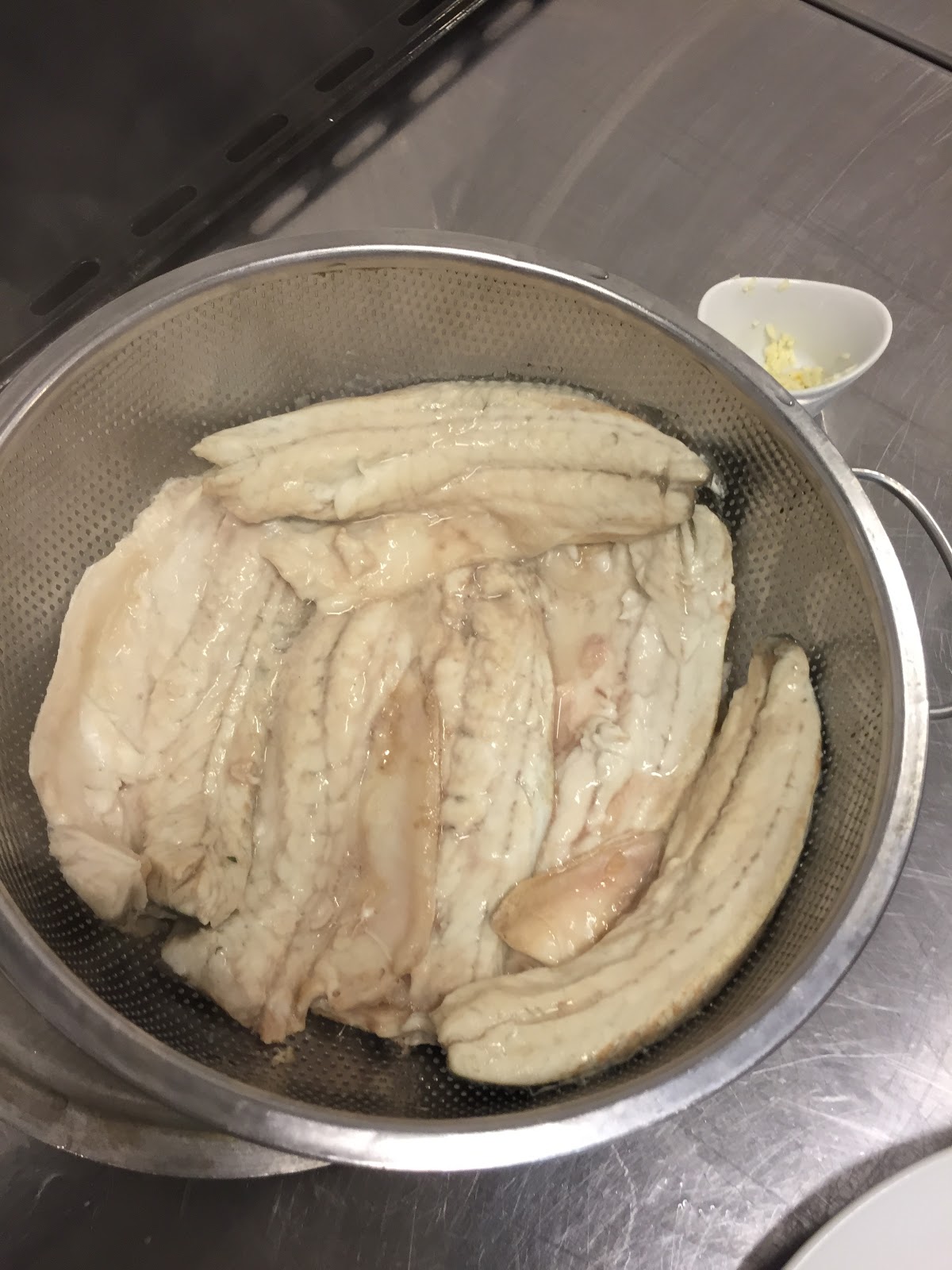
Lightly steamed branzino ready to mix with a few potatoes for the raviolis.

Plating of the salmon polpettes.

Plating of the branzino ravioli.  Served on chicory and topped with roasted roma tomatoes and chopped almonds.

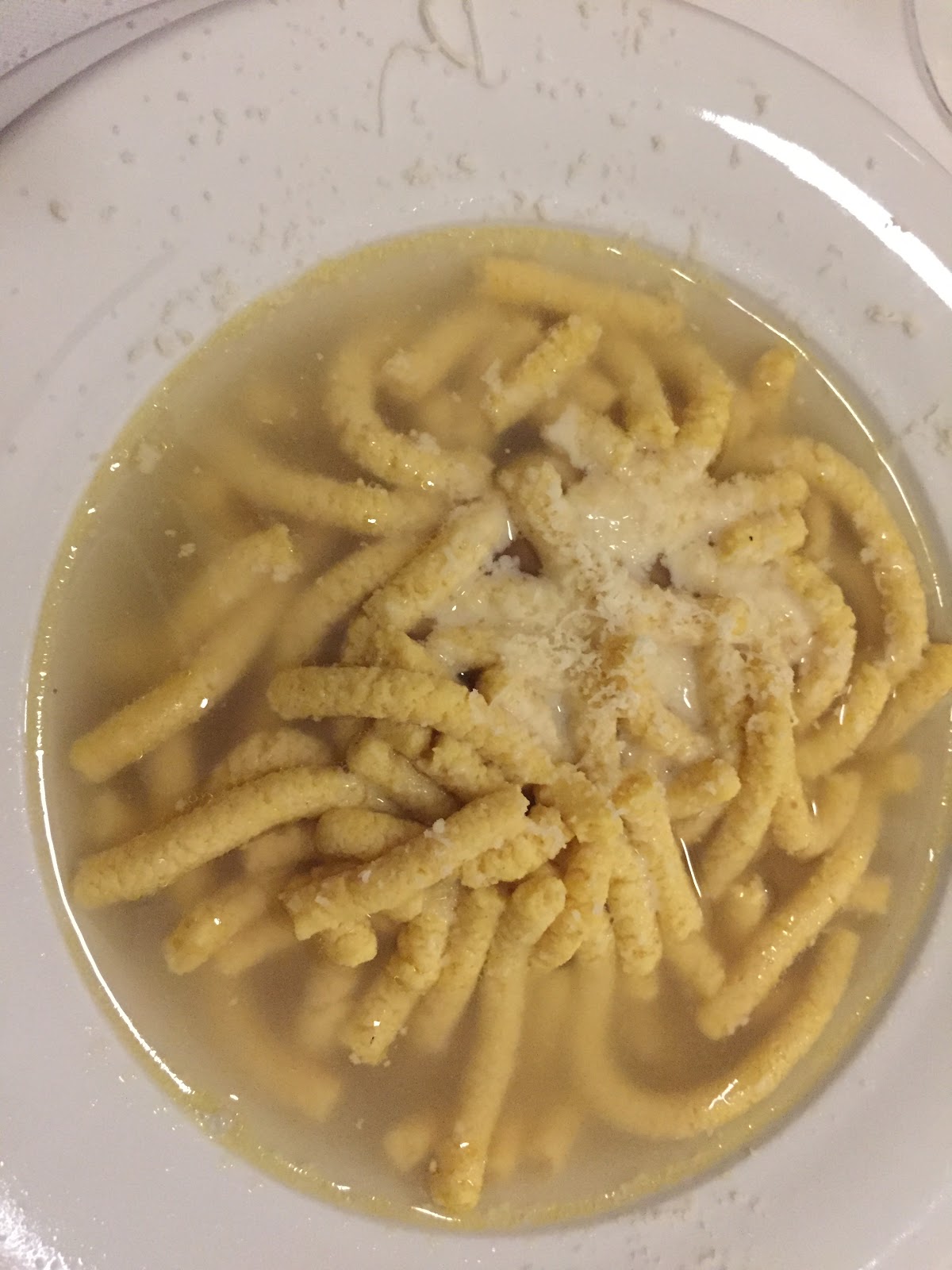
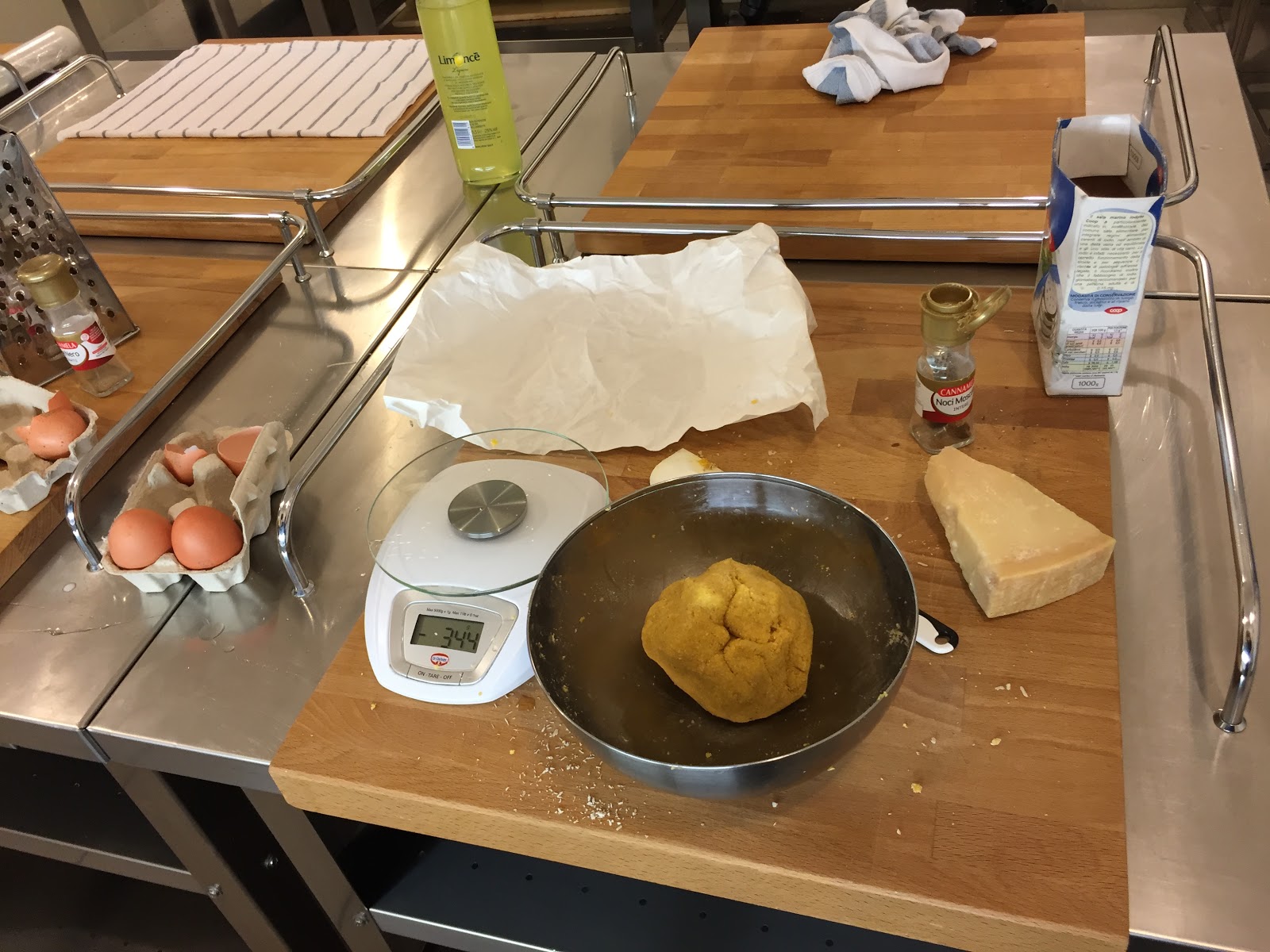
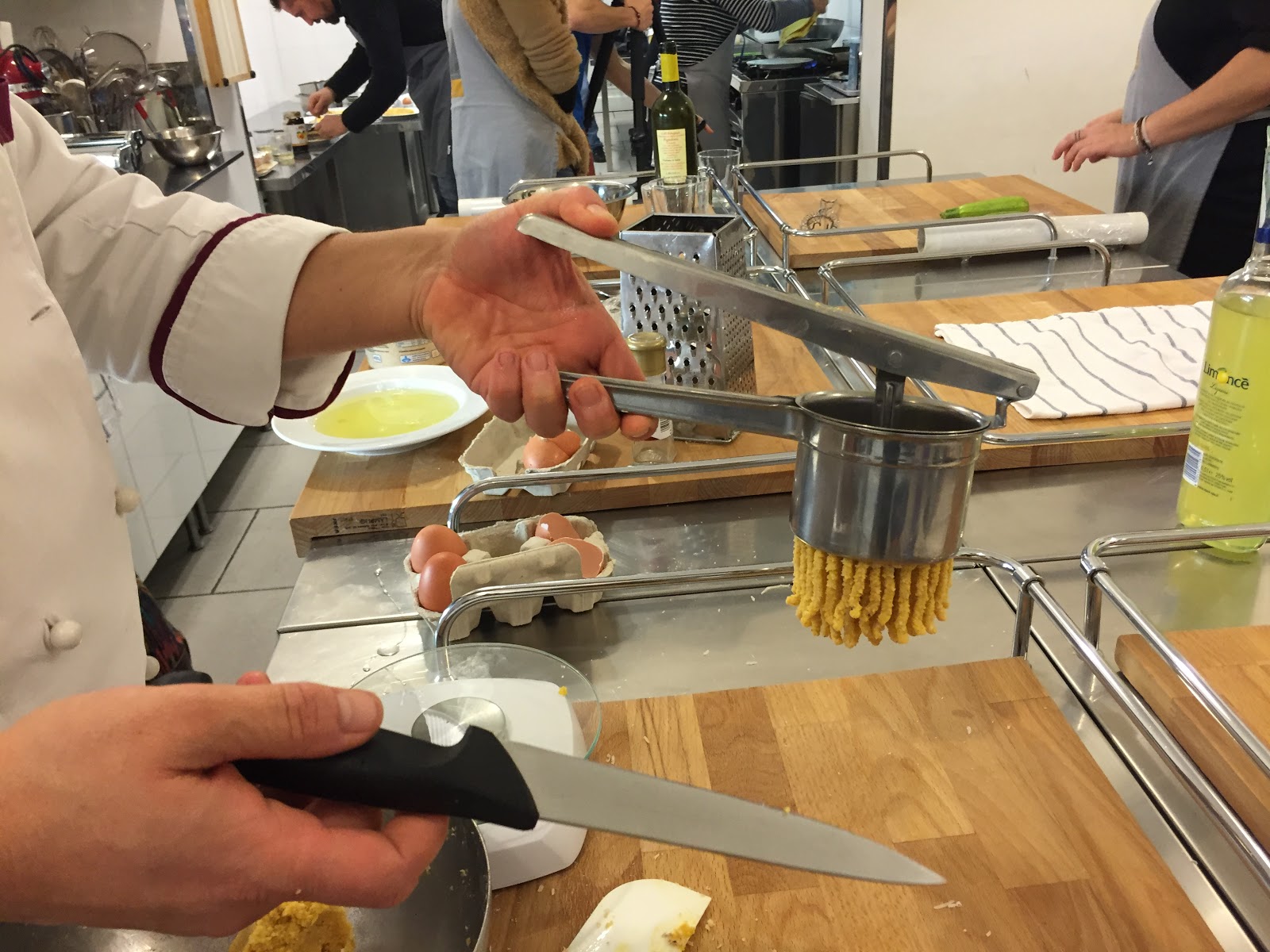
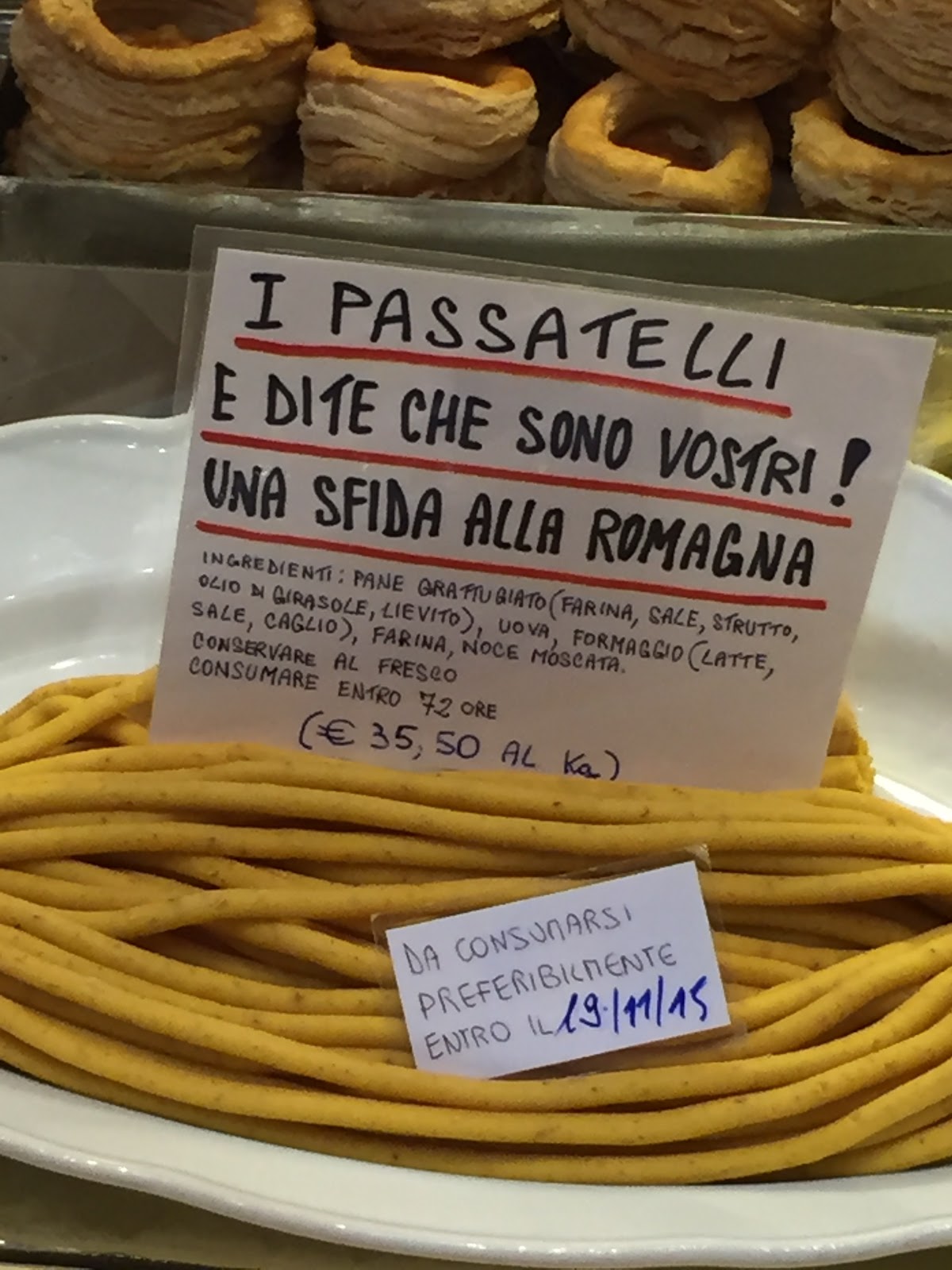
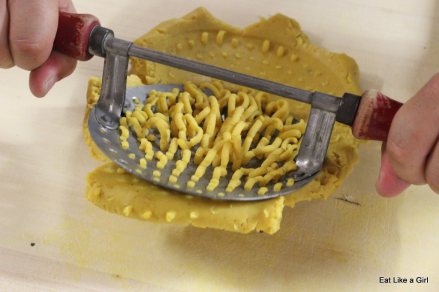
I enjoyed the classes so much that I requested a private class to watch Chef Davide prepare pasatelli – a pasta noodle unique to Bologna that I fell head over stomach in love with.  Pasatelli is not available in a dry version which is probably why it is not known outside of Emilia Romagna.  It is much easier to make than regular flour based pastas because it does not require rolling or kneading.  It is simply made with equal parts of parmesan reggiano and bread crumbs and egg and nutmeg.  Doesn’t that sound great!  It is typically served “in brodo” (chicken broth) but also served “dry” which means it is accompanied by a more substantial sauce and not cooked as long.  Although the “brodo” version is only cooked for three minutes.  All versions are great!  I even purchased a pasatelli press so that I can make it at home.  In the photo below you will see the Chef using a potato ricer to extrude the pasatelli.  That is the “modern” way.  The preferred way is to use a pasatelli press of which there is also a photo below.

Pasatelli in Brodo – the traditional serving.

Pasatelli ball ready for extrusion.

Using the potato ricer to make the noodle.

As sold in the pasta stores.  The noodle is longer than it typically is served.  I have no idea how they manage to get it to be that long!

My pasatelli press.

The cooking program itself is a fantastic and well worthwhile reason for coming to Bologna!

Bon Appetite!

(this is a link to the cooking school web site)
http://www.cookingschoolbologna.com

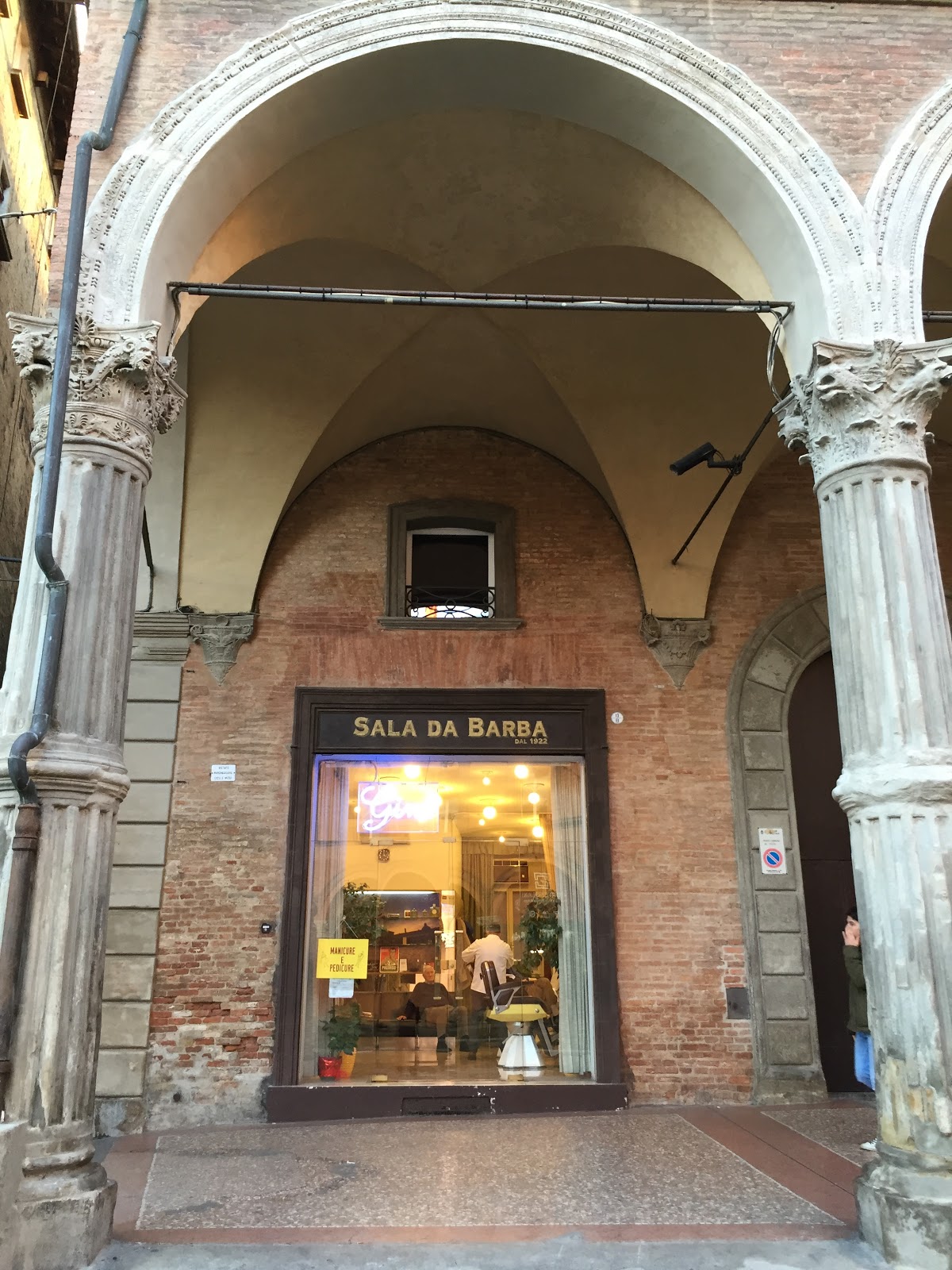
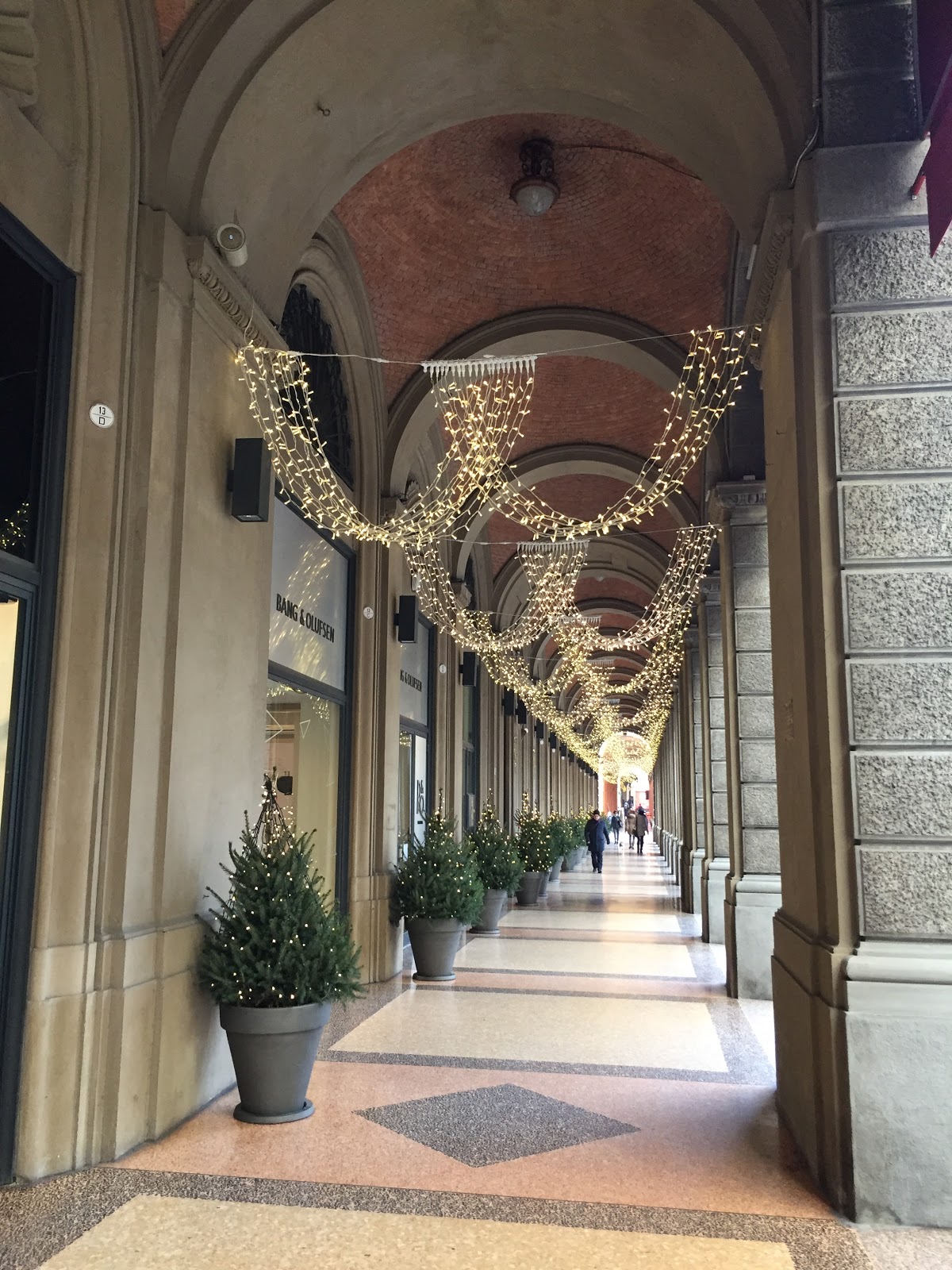
Porticos of Bologna

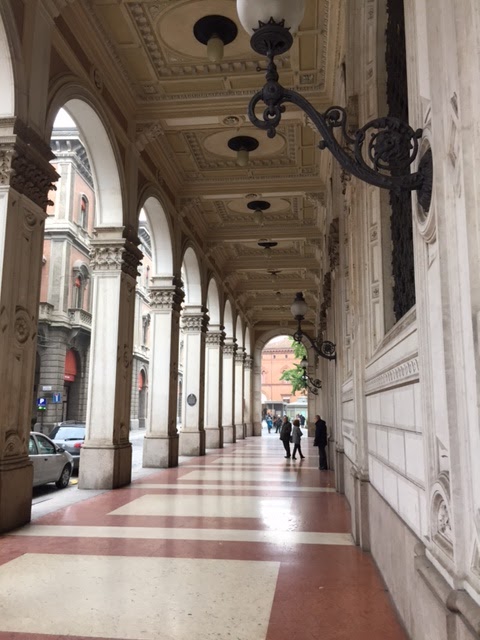
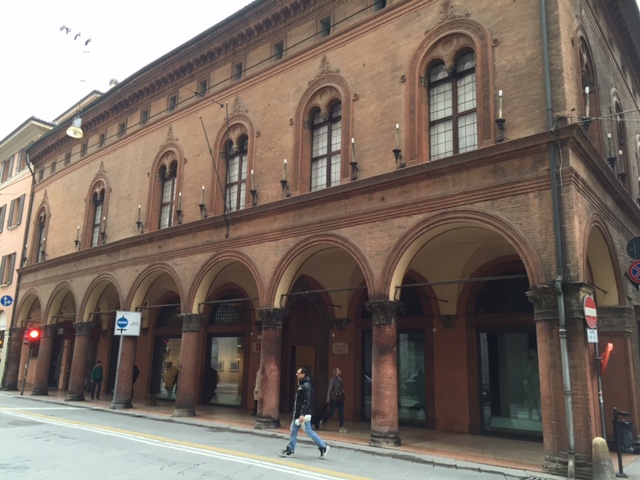
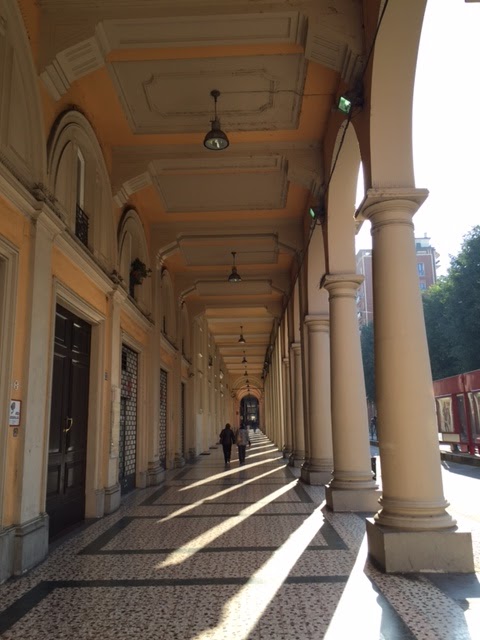
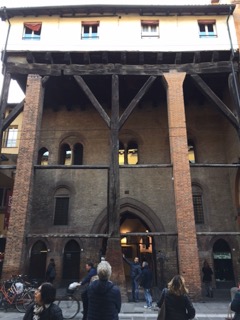
One of Bologna’s distinctive attributes is the abundance of porticos (“portici”).  While many European cities have occasional buildings in their historic centers where porticos are still present, it is much more common for the “public space” that lies under the portico to have been filled in over time by expansion of a building outwards towards the street.  The portico posts provided the support necessary to enable a building owner to have a second (and eventually third or more) story that projected into the street.  So the practice of using porticos was common throughout Europe from the 14th to 18thcenturies.  In addition to providing support for upper floors, porticos provided shelter from sun, rain and snow.

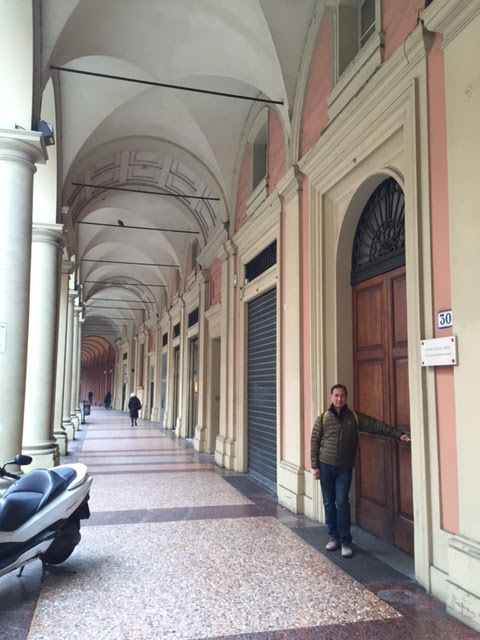
Marlow stands at the door to our apartment beneath “our” portico.

As time passed many building owners sought to expand the ground floor by eliminating the public space of the portico.  The practice of taking over what was a public area for private use was common throughout Europe in the 18th and 19thcenturies.  However, Bologna prohibited this activity and in fact required all wooden porticos to be replaced over time with stone.  And the City further required all new construction to include a portico at the front of the building.  While it was possible to be exempted from the portico requirement by paying a fee, fortunately most building owners maintained the practice. 

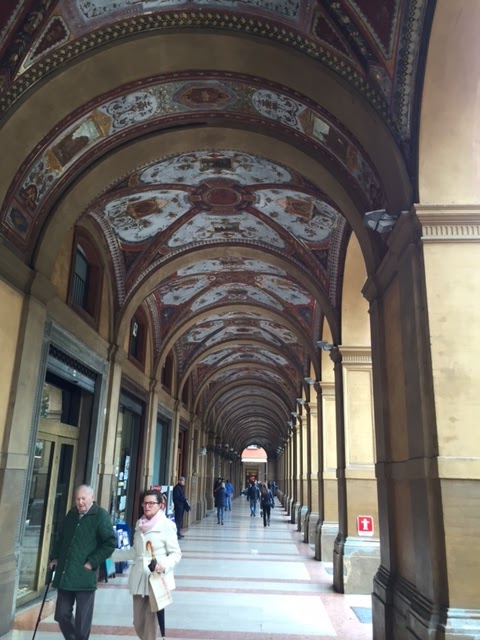
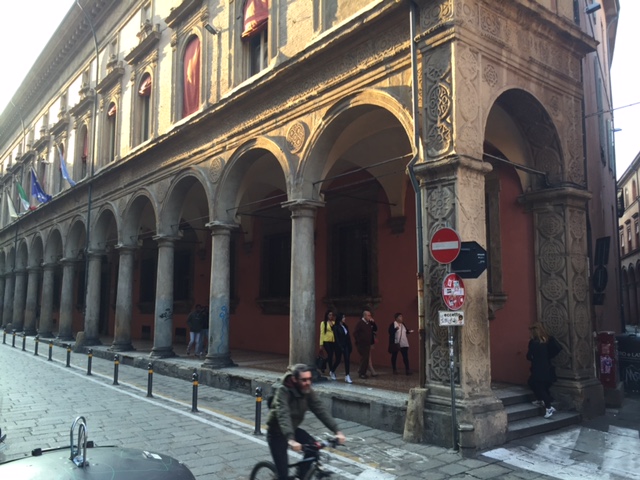
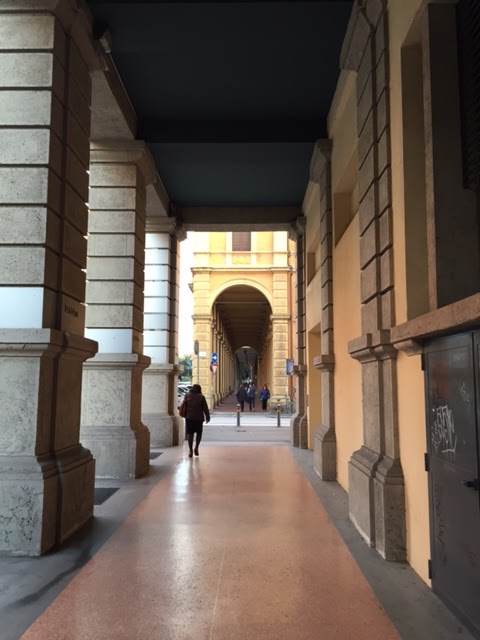
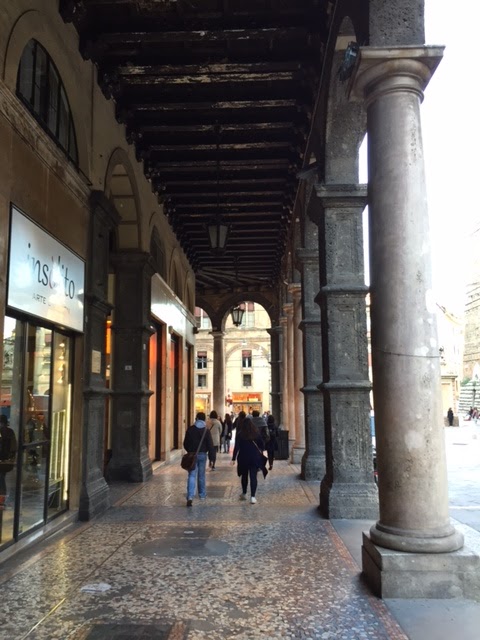
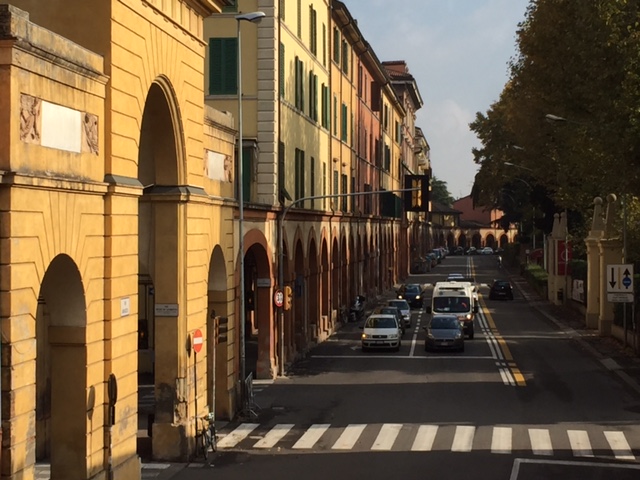
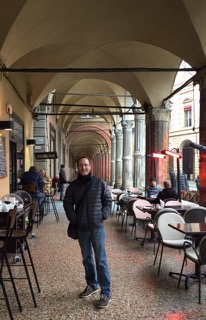
As a result of its unique focus on maintaining the public portico space, Bologna has miles and miles of porticos.  They are not only handy to make walking about the City easier when it is raining, etc, they provide a clear separation from bicycle and vehicle traffic in the road.  And they make the otherwise narrow streets seem wider for the pedestrian. 

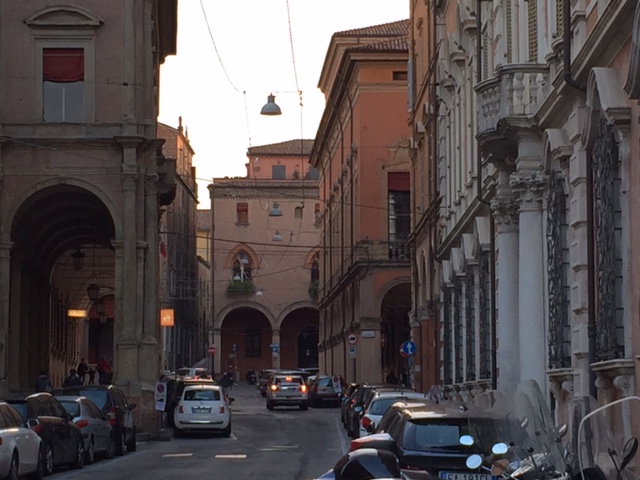
Here are a few photos of the many miles of porticos we’ve enjoyed walking on during our time in Bologna.

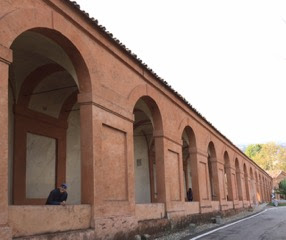
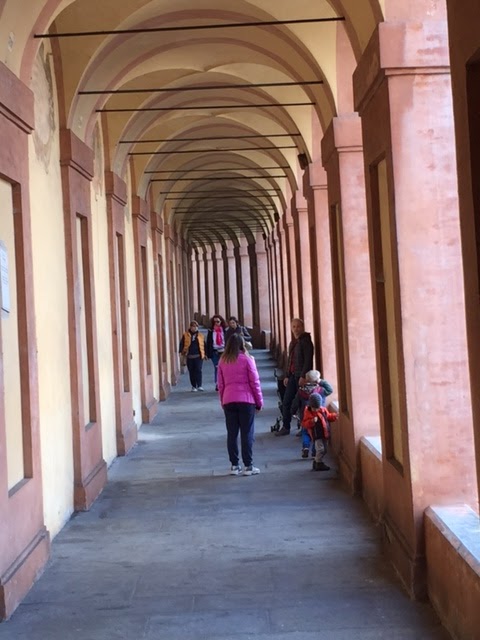
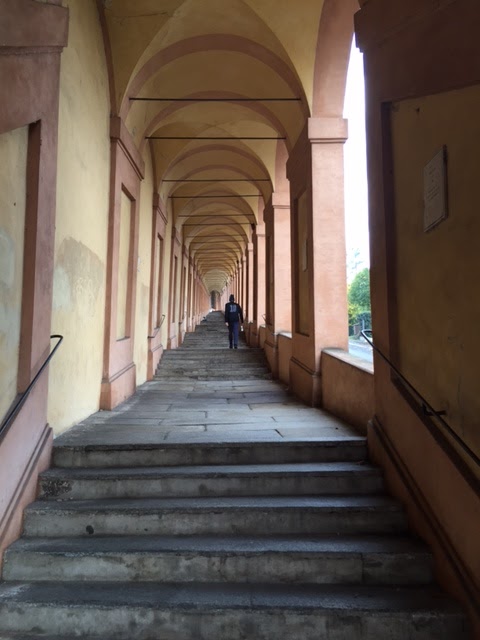
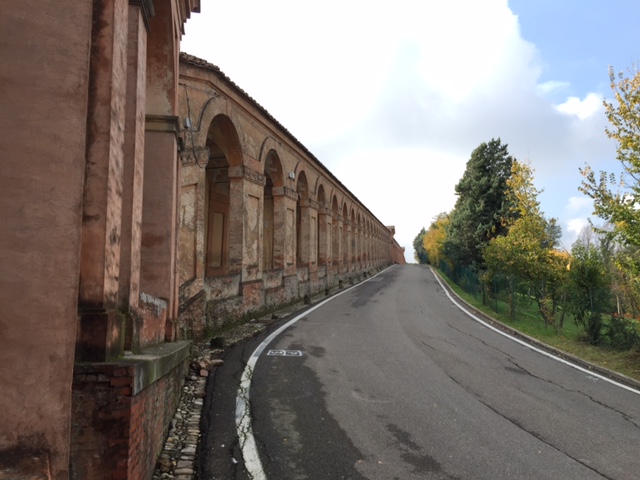
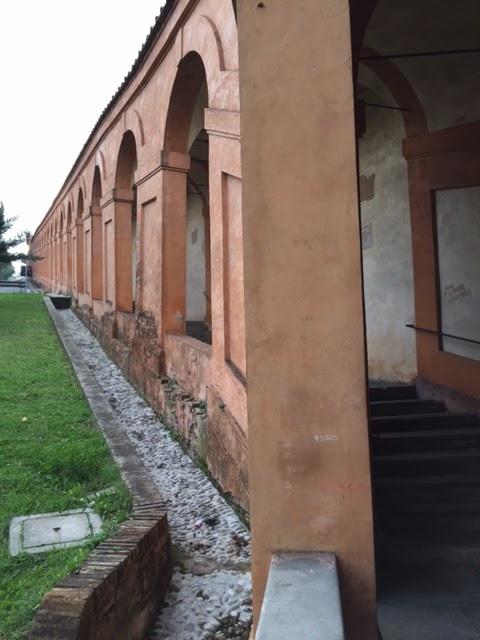
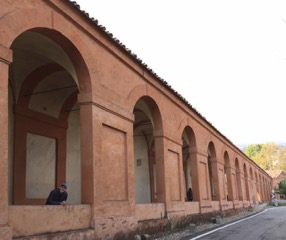
Marlow mentioned our 5 mile walk under the porticos to visit the Sanctuary of San Luca, here are a few photos of that unusual stretch.  Notice particularly the incline!


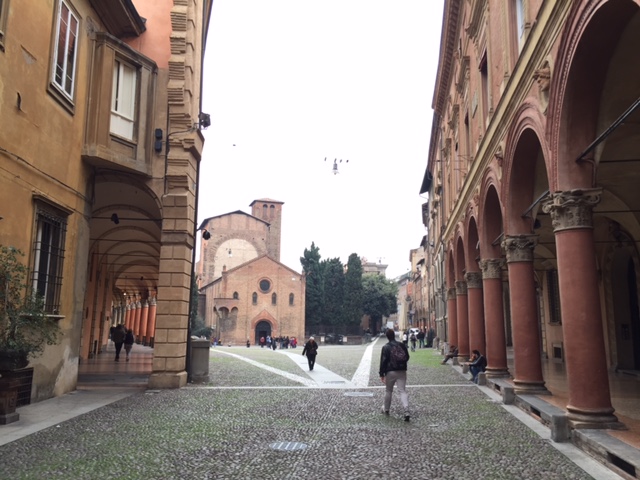
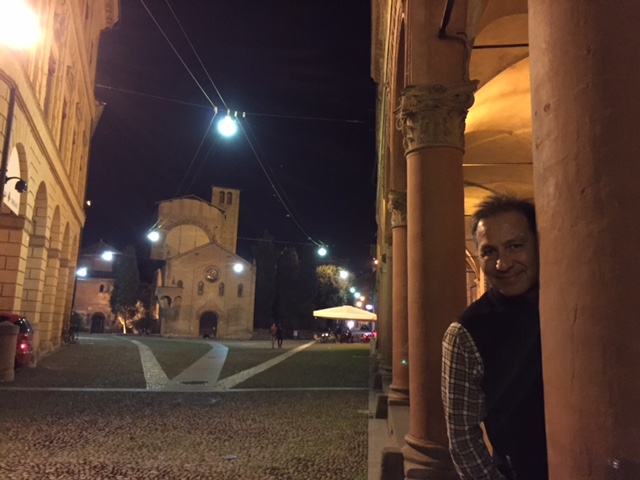
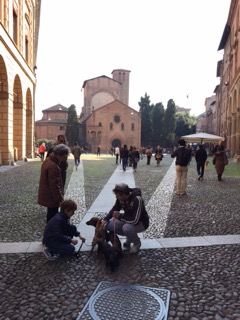
Finally, here is a daytime and night time view of “our” piazza Santo Stefano and someone peaking out from a portico!


Bologna Letter #6: 25 November 2015


Wes and Marlow
25 November 2015

We are approaching the end of our stay in Bologna. I will say a few things about a few things.

The school. It is housed in a twelfth century palazzo. The bones of the building are, as they say here, monumental. That means a three story building can have an entry area with thirty feet tall ceilings.  On the floor above that, the ceilings are twenty five feet tall. And on the top floor, the ceilings are twelve feet tall. A total of sixty seven feet for a three story building. Monumental. Larger than life. That is typical in Bologna. It is a city of palazzos.
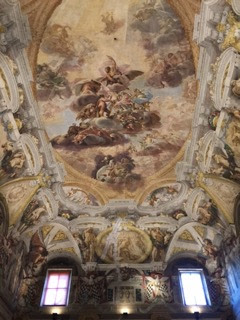
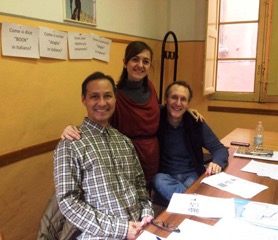
We enter our monumental school building, pass through the huge space created for coaches and horses, then ascend the monumental marble stairs.  At the top we turn left into an enormous corridor hung with twenty foot tall round framed portraits—maybe of the original owners. At the end of the corridor, we turn right and into an area less grand, not grand at all. An area quite carved up into little spaces, some outfitted with the narrowest perilous stairs up to a loft. Our teacher, Marina is outstanding and smart.She speaks very clearly and never a word in English. The school, too, is outstanding, but it’s method is a challenge for me which I am confident we can adjust next time. They use work sheets with illustrations of the verbs and nouns we work on. At the end of each day, I struggle to aggregate the illustrations into a tangible body of knowledge. But we have finished our three weeks and we did make progress, especially on the last two days when Marina expressed wonderful sentiments about the necessity, and beauty, of language, of communication skills. From that point we began dwelling on conversation. I felt we began to find our student teacher rhythm. If we return, we will pick up with that conversational approach.

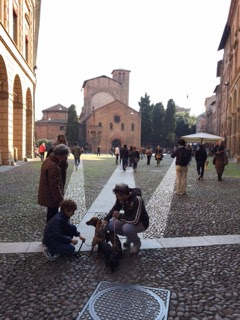
Our neighborhood. We are on the Piazza Santo Stefano. It is an outstanding triangular piazza paved like the piazza in Parma with fist sized round stones pressed into dirt with a sheen of grass in between.On the two long sides are palazzos, semi-monumental. On the short side is the Basilica di Santo Stefano. The basilica would be interesting simply as an attractive collection of buildings.But it is more than that. It began life in the early fifth century when Petronio decided to honor both Santo Stefano, and his own memory of Jerusalem.  He ordered, to be built, a complex of interconnected buildings each one corresponding to a stricture in Jerusalem related to the Jesus story: condemnation, crucifixion, interment and the resurrection.  Historians and archaeologists say Santo Stefano had seven buildings that duplicated seven Jerusalem structures. Now there are only four and they were significantly remodeled and altered nine hundred years ago. No one knows precisely how the original buildings looked.  There are significant churches all over Bologna, on almost every other street, but the Basilica di Santo Stefano has a special aura that shines on the the piazza and we love being there.

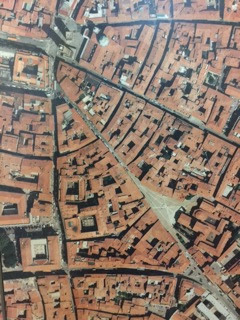
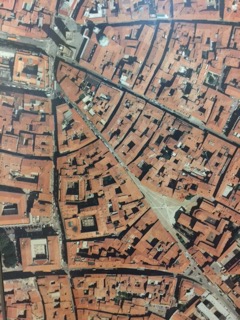
Old Bologna, the historic center. From our Piazza Santo Stefano spot it is a twenty minute walk in any direction to one of the twelve gates of the city. The Romans were not the first to settle here, but when they did, two thousand years ago, they built a wall around the city and some of the gates, arches actually, still stand, though they were remodeled eight hundred years ago. Within the circle implied the twelve gates is the historic center of Bologna.  If you slice Bologna in thirds, the center is a tidy rectangular grid. On either side of the rectangle the streets radiate outward diagonally toward the gates. In those areas the streets are a maze of narrow and narrower lanes with twists and turns and dead ends. There are plaques on buildings with notable histories. Copernicus lived there. Rossini lived here. Marconi was born there. Donizetti lived here. Which brings me to coffee.

Coffee does not exist as a large cup you carry down the street. It is tiny. It is piccolo. One ounce. Expresso. Or two ounces of cappuccino. You have it standing at a caffè. The price is posted and varies from one euro to one euro forty cents. You could sit to drink it, but so small a portion would be cold before you reached your seat. There is a caffè bar about every seventy five feet. One’s ounce of coffee is consumed early in the morning, late in the morning, early afternoon and in the late afternoon. The tiny amount with it’s tiny dose of caffeine has a tiny affect.

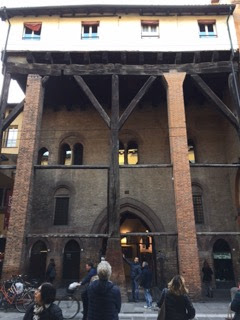
The covered sidewalks. The university is nine hundred and thirty years old. It began small. A few students engaged the service of an educated person to help them become educated. It became an institution. As it grew it strained the available housing. Home owners recognized the opportunity to rent space and make money. They built out the second floor of their homes right over the sidewalks. The new rooms stood on posts. Voila, the portico, the covered sidewalk was discovered.Over time they were created intentionally. There are twenty four miles of covered sidewalks today in the historic center of Bologna. On a rainy day you can walk for hours without an umbrella. And on a sunny day you can walk in the shade of the porticoes.

The longest portico. We took a walk to the Santuario della Beata Vergine di San Luca. Saint Luke lived two thousand years ago. It is said, he painted. One of his paintings, a tiny one, of the Madonna’s face, arrived nine hundred years ago in Bologna to a hilltop monastery. A shrine was ordered to house it. Construction began. Construction was completed six hundred years later. The tiny madonna painting is installed in a frame, in a niche, on a wall surrounded with a small marble balcony. The wall is awash with baroque gold curlicues with winged silver angels projecting from the wall holding candles. In the center of the wall is the frame. The frame has a large gold crown and is strewn with precious gems and strands of pearls. Just above the pearls is a small hole cut into the frame. Showing through the hole is the tiny madonna face. The church closes for lunch. At that time, two iron doors close over her. To arrive at her shrine we walked two miles entirely under the cover of a portico with near to seven hundred arches. Two miles of portico.The first mile is flat. The second mile is uphill, very uphill. The lane turns this way and that. It is hard to gauge your progress. My delicate thermostat reached it’s limit. It was cold. People were bundled. I was, too, at the start. Then came the stripping. First the scarf. Then the jacket. The fleece vest. The shirt. I arrived up top drenched, in a tee shirt, on a frigid day. Wes did not break a sweat. Later, down the hill we had lunch at Trattoria Casa Mia.

About passatelli. We had never heard of it. Casa Mia served it to us. We loved it.  Here is what it is. One egg. Equal parts bread crumbs and parmigiano-reggiano cheese. A scrape of nutmeg. A shave of lemon zest. Mush it together into a lump of dough. If it is too dry add a dab of egg white. Knead it a bit. Wrap it in plastic wrap. Put it to rest for an hour on the counter. When the time is up, grab your potato ricer—if you have a choice of hole size, go with the larger—put the dough in the ricer and push it through. It should come out like thick strands of Playdough. (In fact, you can use a Playdough extruder.) Optimal noodle size is a couple of inches. They are served here two ways. One way is in broth which I do not favor because the bread crumbs develop a soggy aspect. (Plus, you have to have an outstanding broth, which is an extra chore.) If it is not served in brodo (broth), then it is considered served asciutti (dry). Last week, we had dinner in a small restaurant. So small they called it a ristorantino. We had passatelli served in fonduta di parmigiano (melted cheese) with shaved white truffle. I think they consider that dry. I consider it wildly, indescribably, primordially good.

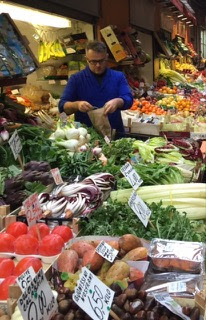
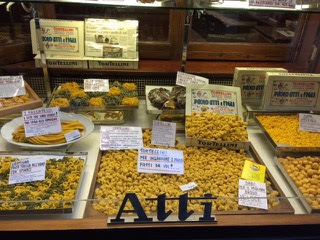
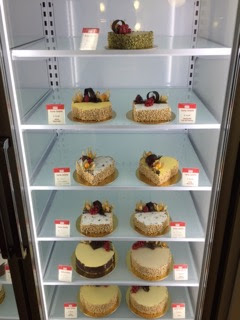
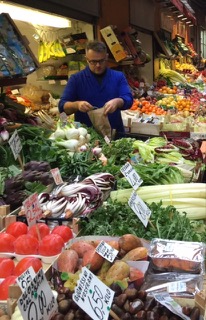
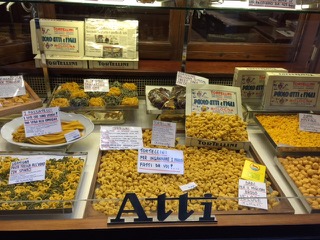
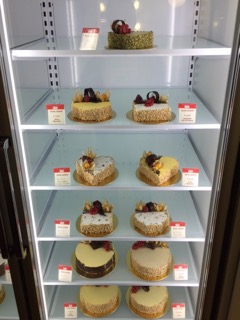
About neighborhood food shopping. Around the corner is a district known for centuries as a market area. A collection of streets housing a collection of specialists. Each store is the best place to go for that particular thing. You want parmegiano-reggiano cheese? Six months old? One year? Two years? Three years old? Do you want to try them?  Go to Amadeo Ceccarelli. Sliced meats? Prosciutto secco, cotto, crudo, San Daniele, culatello? Go to Tamburini. Fruits and vegetables? There are four open air vendors. Each has occupied their site for about one hundred years. The name of their job has a nice ring, fruttivendolo.And there is Atti, who for more than one hundred years has made, continues to make, fresh daily, dozens of different stuffed and not stuffed pastas.Tortellini, tortelloni, tagliatelle, gnocchi of potato or gnocchi of zucca (sweet squash) and passatelli. The quality is the highest possible. I forgot to mention gelato. It is everywhere in town. Each shop I try becomes my new favorite. First it was salted sicilian pistachio. Then it was toasted pine nut. Then chestnut. Then almond granita. This week Wes indulged in a torta di gelato, an ice cream cake. The bottom layer was pistachio. Atop that was nocciola, hazelnut. Pressed into the side were chopped pistachios.On half of the top was an arrangement, a still life, of red currants, raspberries and yellow gooseberries win their delicate leaves sugared and splayed outward.

These are the things that have occupied our days these past three weeks. And Wes has made them all possible.I might have dreamed of Bologna. I might have dreamed of wandering on old European streets. I might have dreamed of speaking Italian. He did more than dream. He set the wheels in motion. He brought the dream to life.We once had a guide in Rome. She said, “we understand what we know. The more we know, the more we understand.” That has been the focus of our month. Ciao from Bologna.

Wes and Marlow
25 November 2015
Bologna
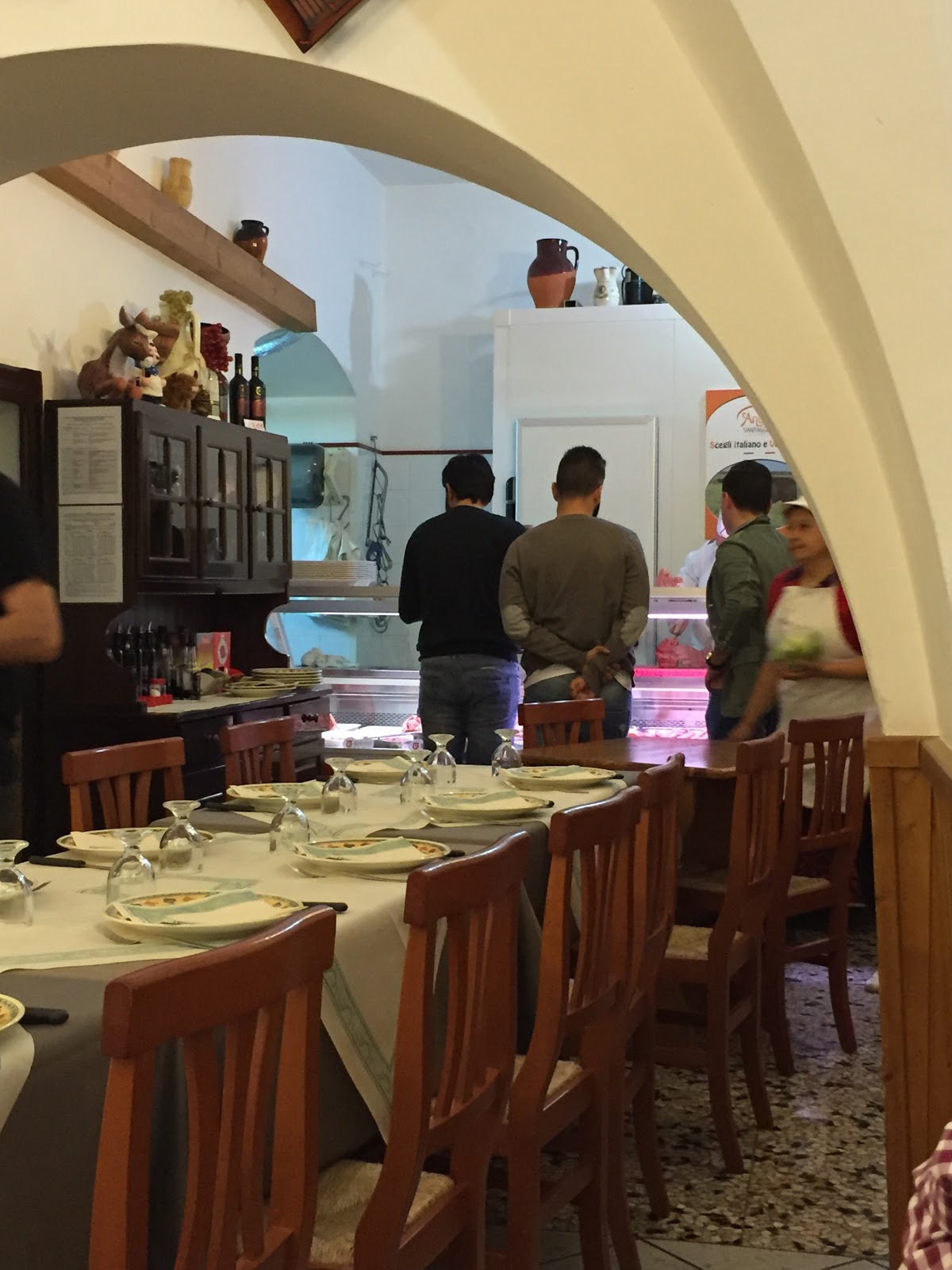


Design a site like this with WordPress.com
Get started