Day trip to Greek Island of Aegina, October 27

We traveled to Greece primarily to see Athens and its ancient sites but we were hoping to take a day trip to a nearby island to get a sense of what a Greek island experience entails.  There are many islands close by Athens and reachable within a couple of hours on a ferry but the one island that called out to us, and was highly recommended by our Accropolis walking tour guide, is Aegina.  Aegina is a favorite weekend destination for Atheneans and has many small harbors with fishing boats and sailboats.  It also has great hiking opportunities in the hills with grand views of the Aegean Sea and nearby islands.

Once we saw the weather forecast for Friday indicated clear skies and nice temperatures, we decided to visit Aegina.  We took a 11:00 am ferry, arrived at the Aegina port about 12:15 pm and met our guide for the day, Sherry.  I found Sherry through a search for private guided tours of Aegina just the day before.

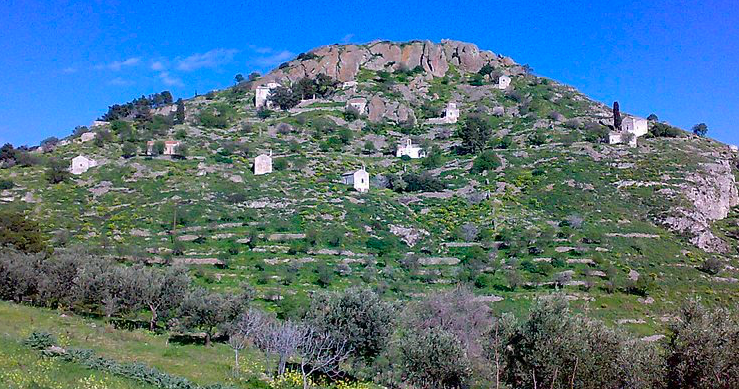
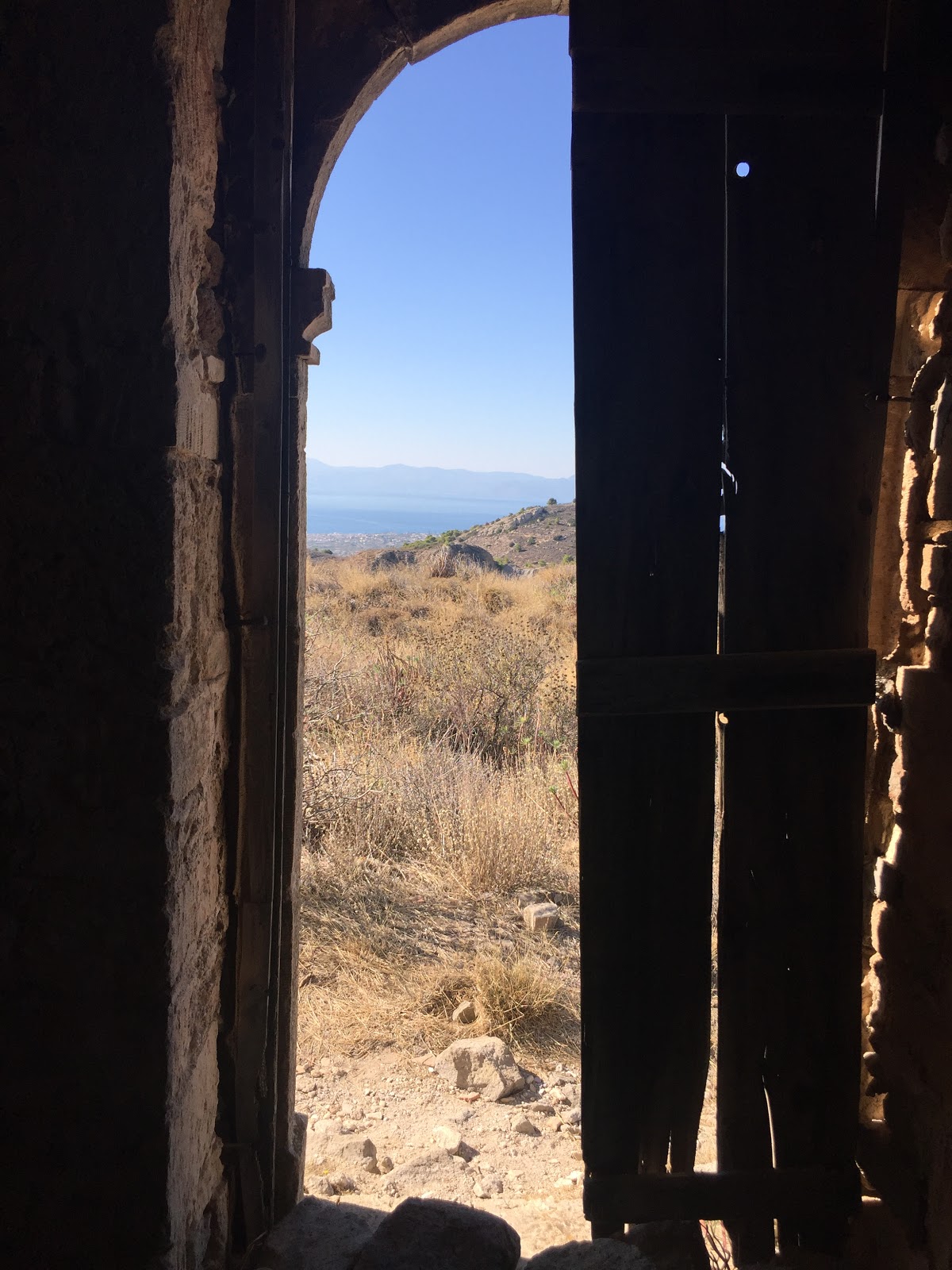
Hilltop of Paliachora

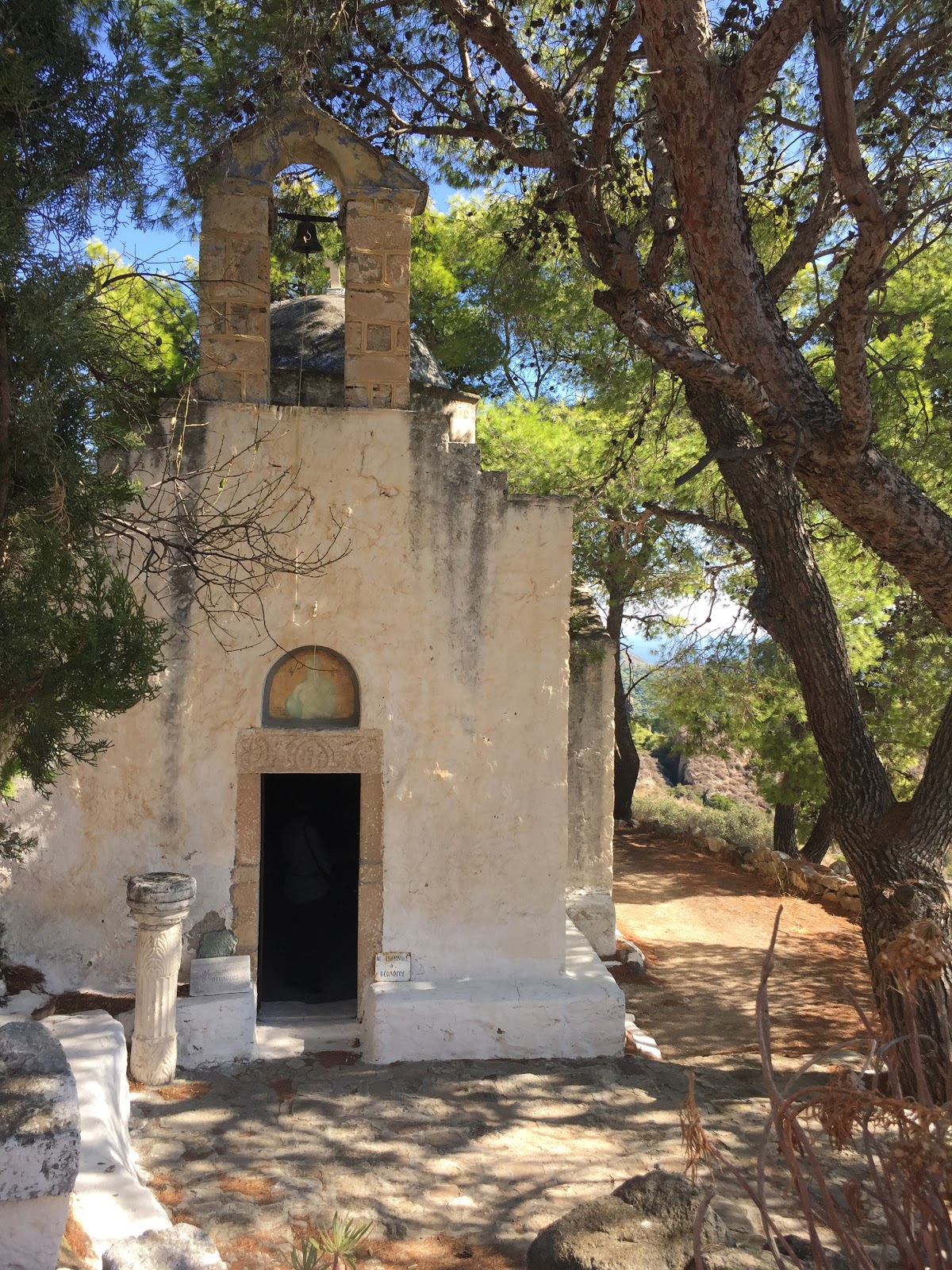
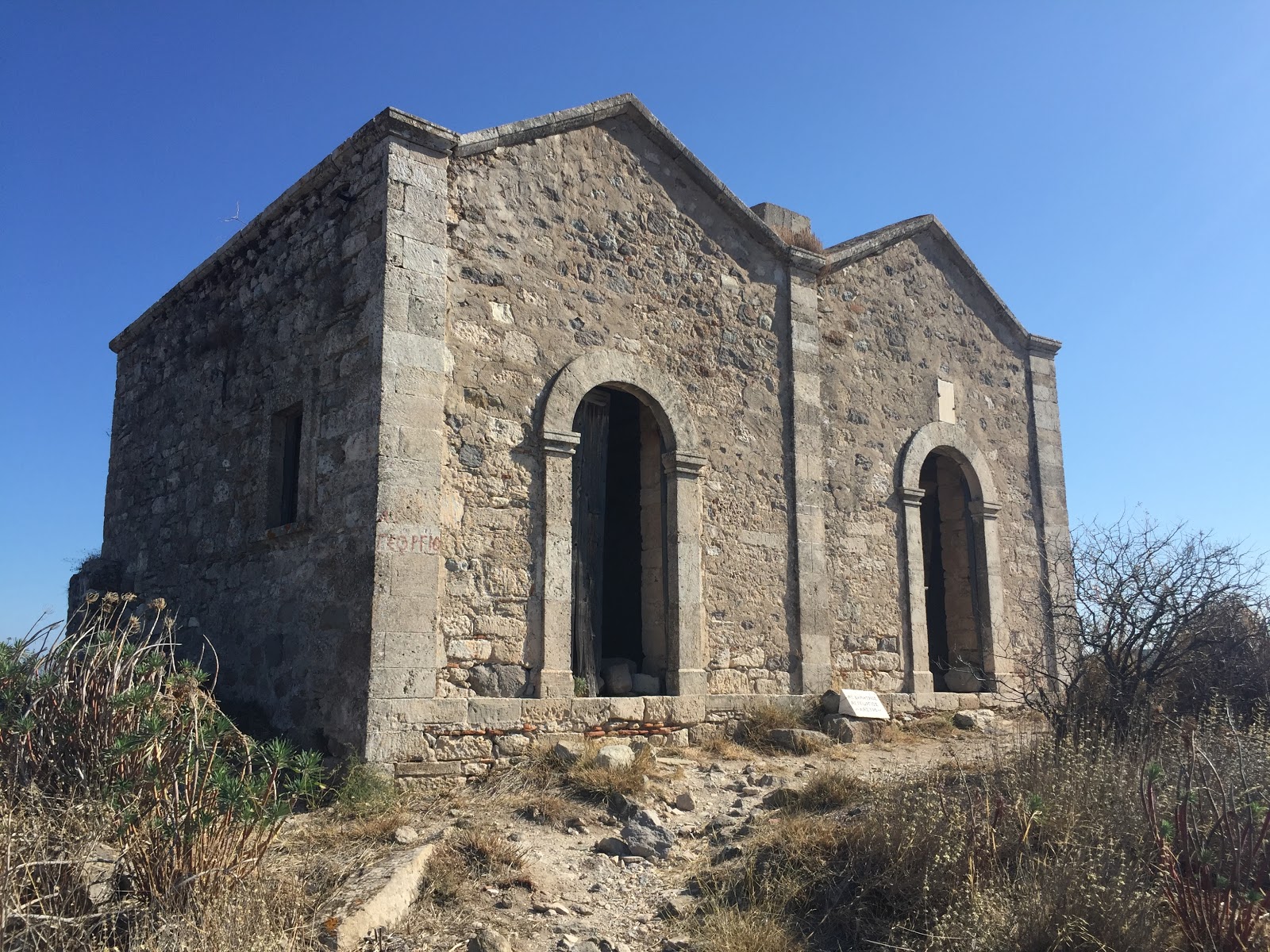
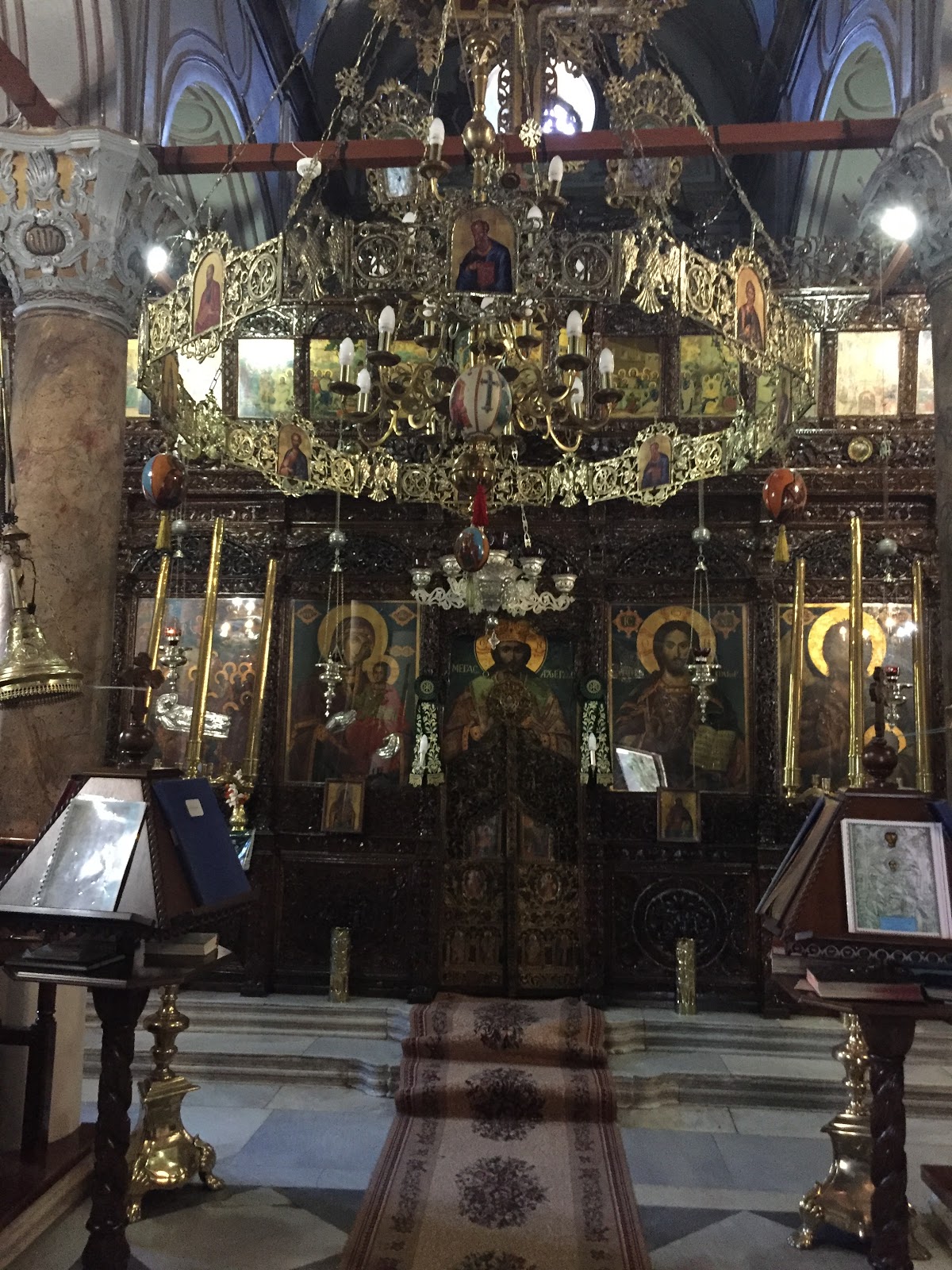
She met us with her car and proceeded to take us to the first stop, a hilltop enclave of 30+ tiny chapels built mostly in the 13th c. referred to as Paliachora.  There were originally 365 chapels on this hillside – one for each day of the year and for each saint’s day.  There are about 30 remaining in various stages of repair.  We visited about 15 on our several hours walking around the hill.  The chapels are still in use by local worshipers who come to visit the chapel of the saint named for the day of their birth.

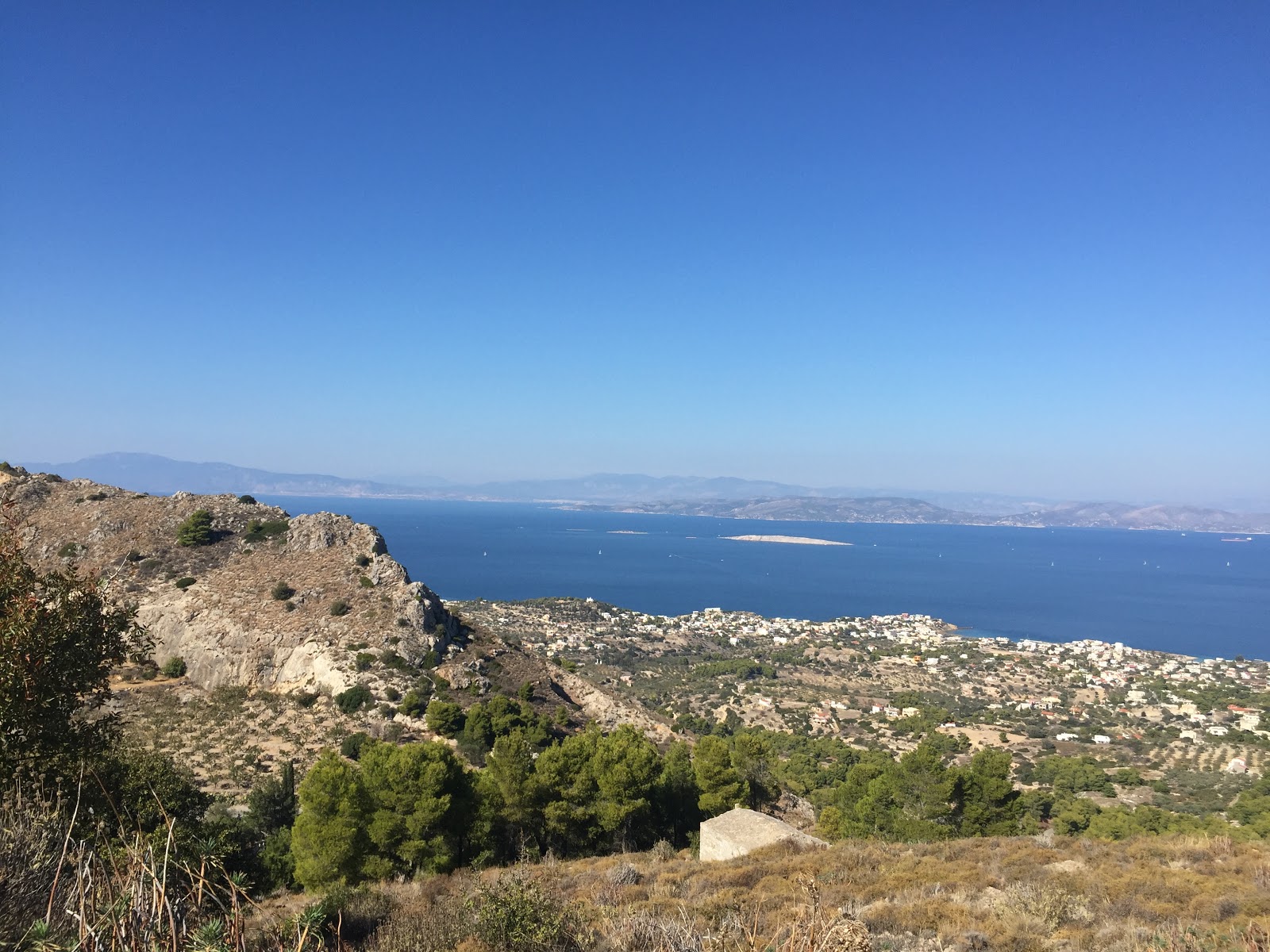
View towards hazy Athens

The hilltop was originally settled over 1,000 years ago to provide defenses against pirates who frequented the islands.

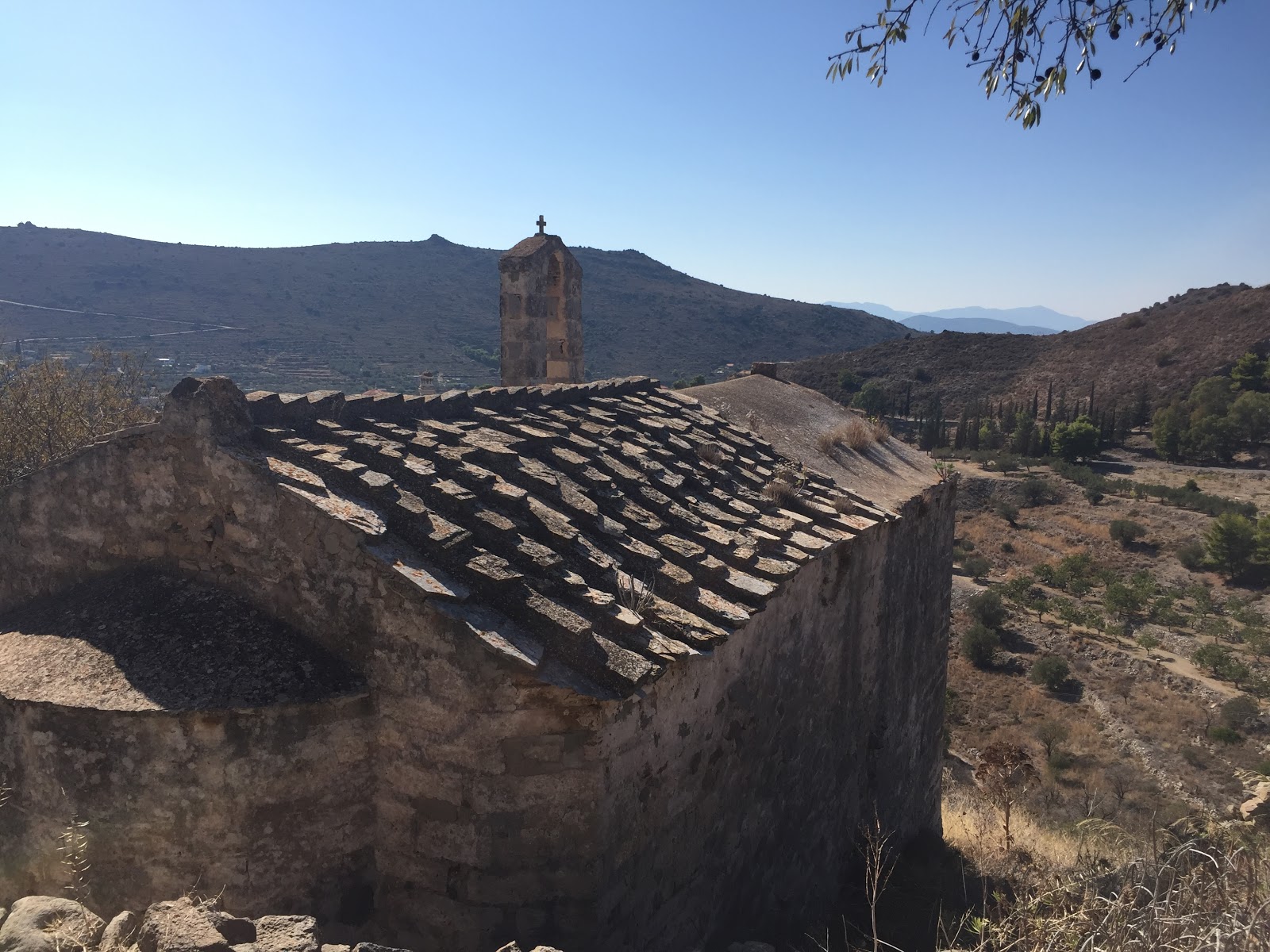
Paliachora chapel

Paliachora chapel
Double chapel
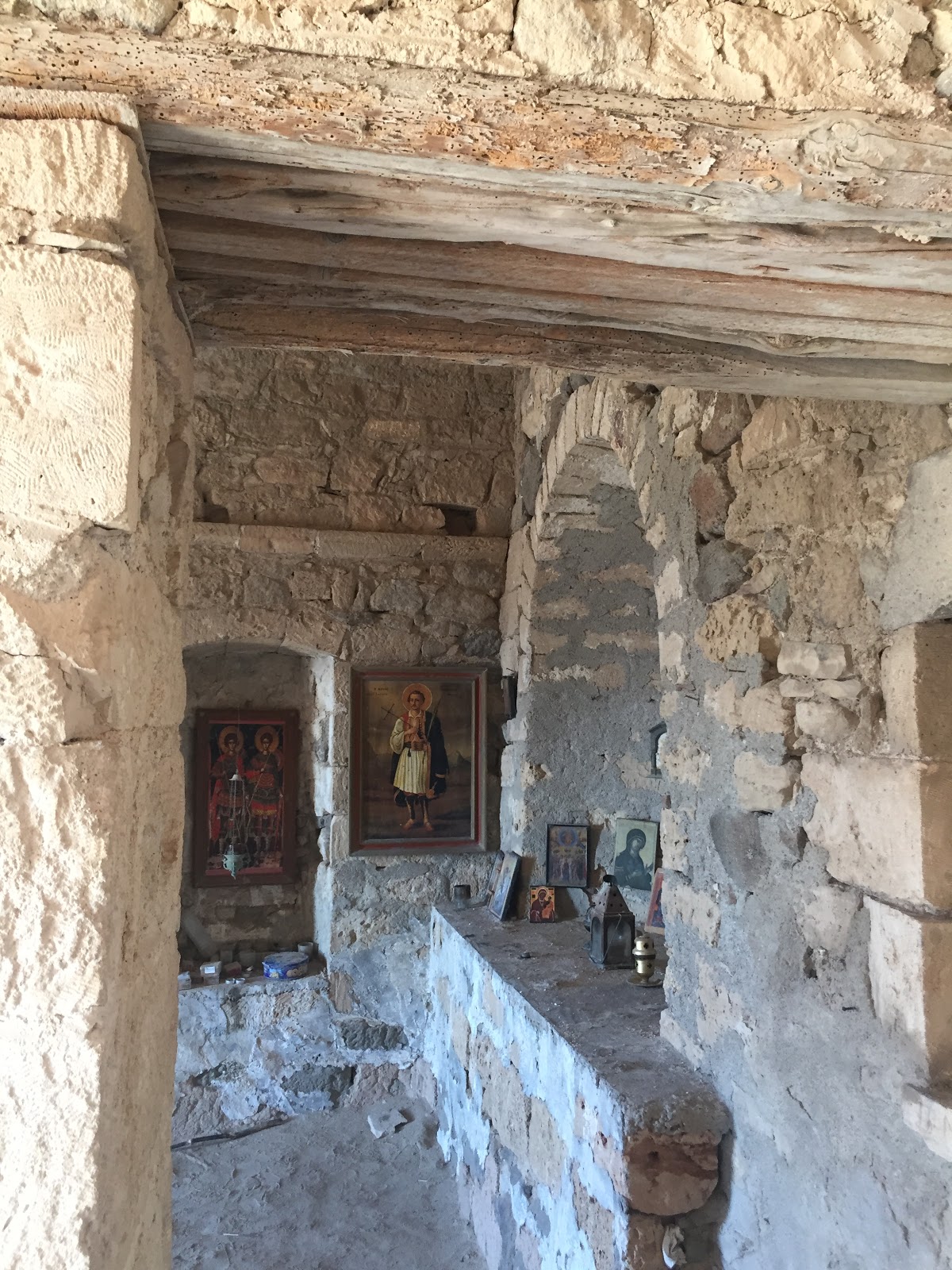
Interior of double chapel with passage between.
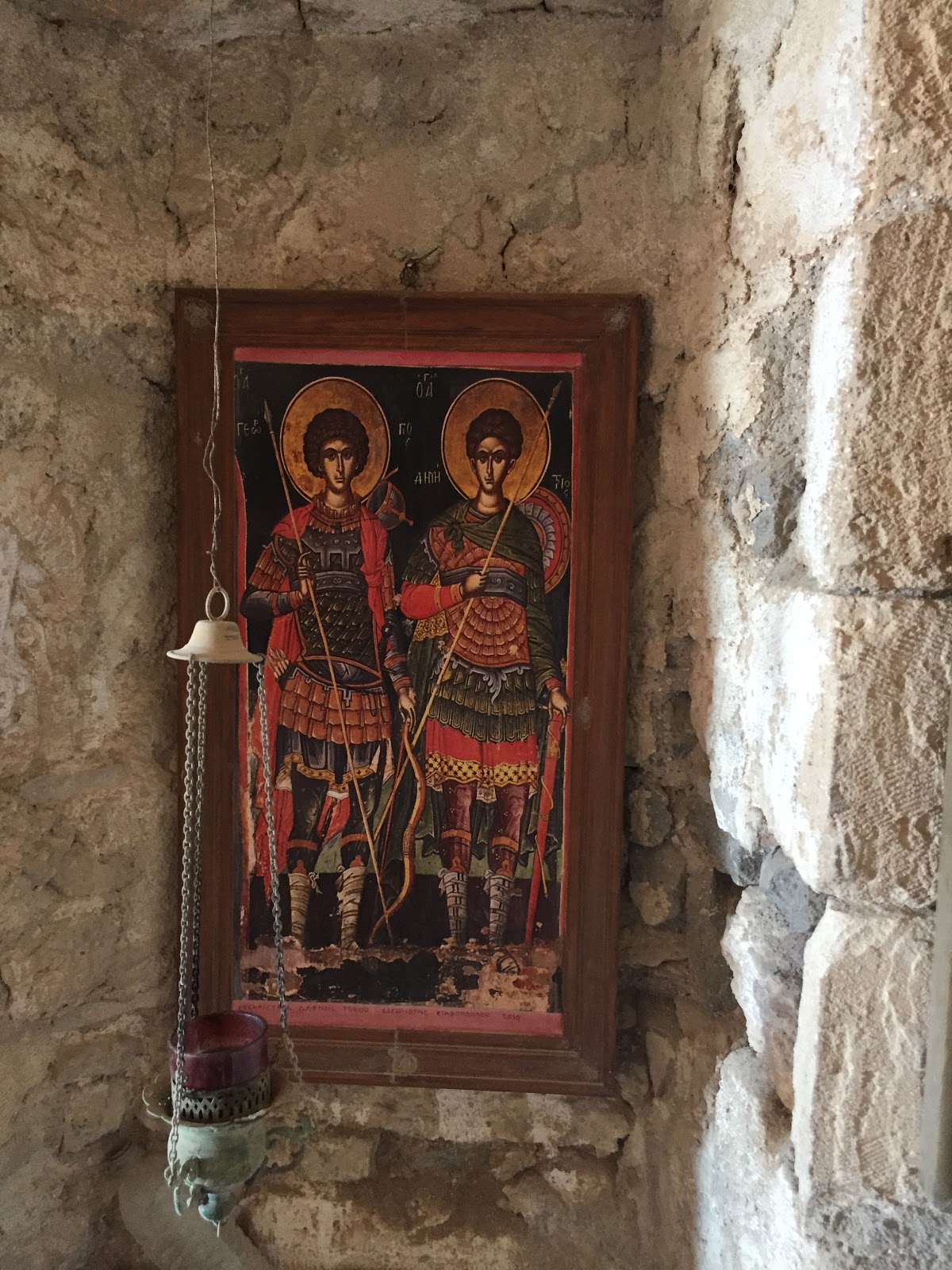
Two saints living side by side.
Paliachora chapel

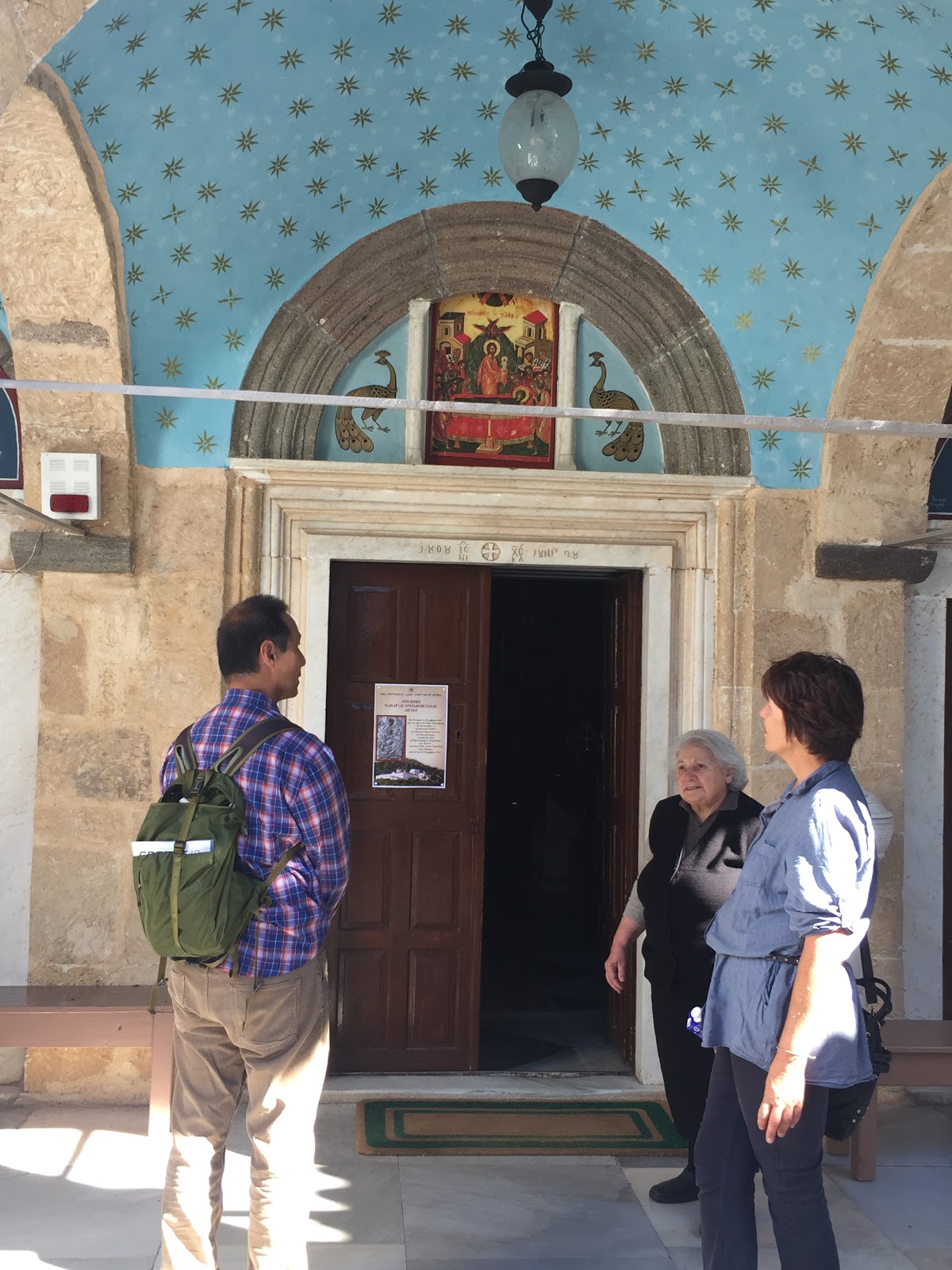
We also visited a functioning monastery built to protect an important icon of Mary.  

Aegina is also the site of Greece’s best-preserved doric temple built about 2,500 years ago.  Perched atop another of Aegnia’s hills with 360 degree views of the water and nearby islands.

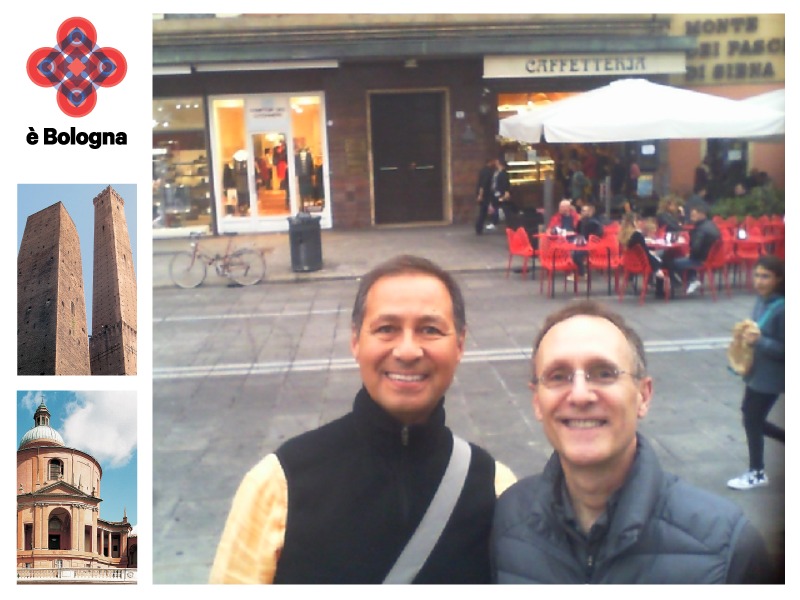
Bologna: Archiginnasio, San Petronio Organs

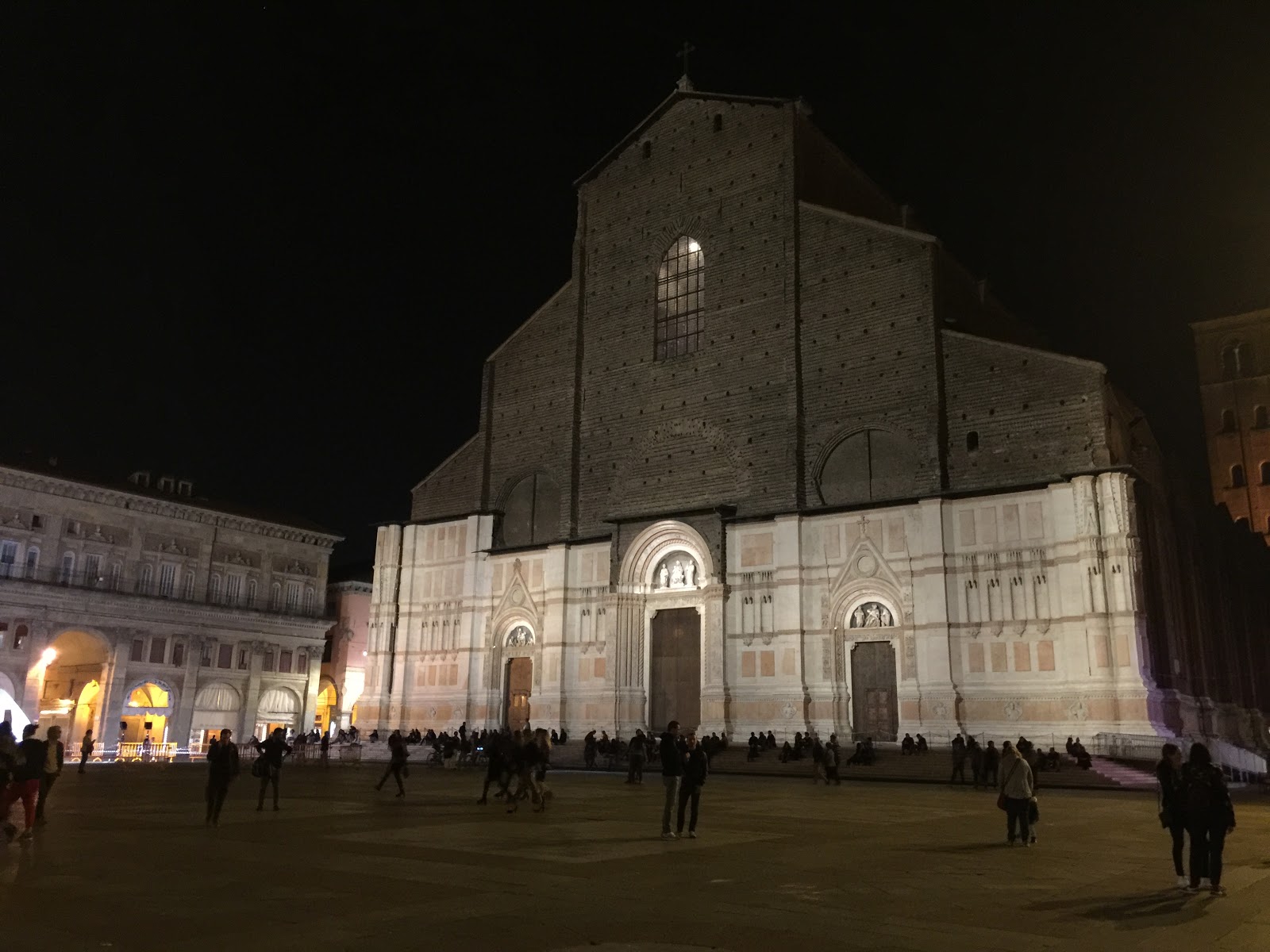
The Basilica di San Petronio was intended to be the largest church ever. But it did not reach it’s full length or full width and the facade is only clad from the ground up to a bit above the doors.

Basilica of San Petronio facade


Rome was upset that Bologna might build a church larger than the Vatican’s. The pope owned a piece of Bologna land right in the path of construction. He said, let’s build a campus so the university classes can be in one building instead of all over the city.

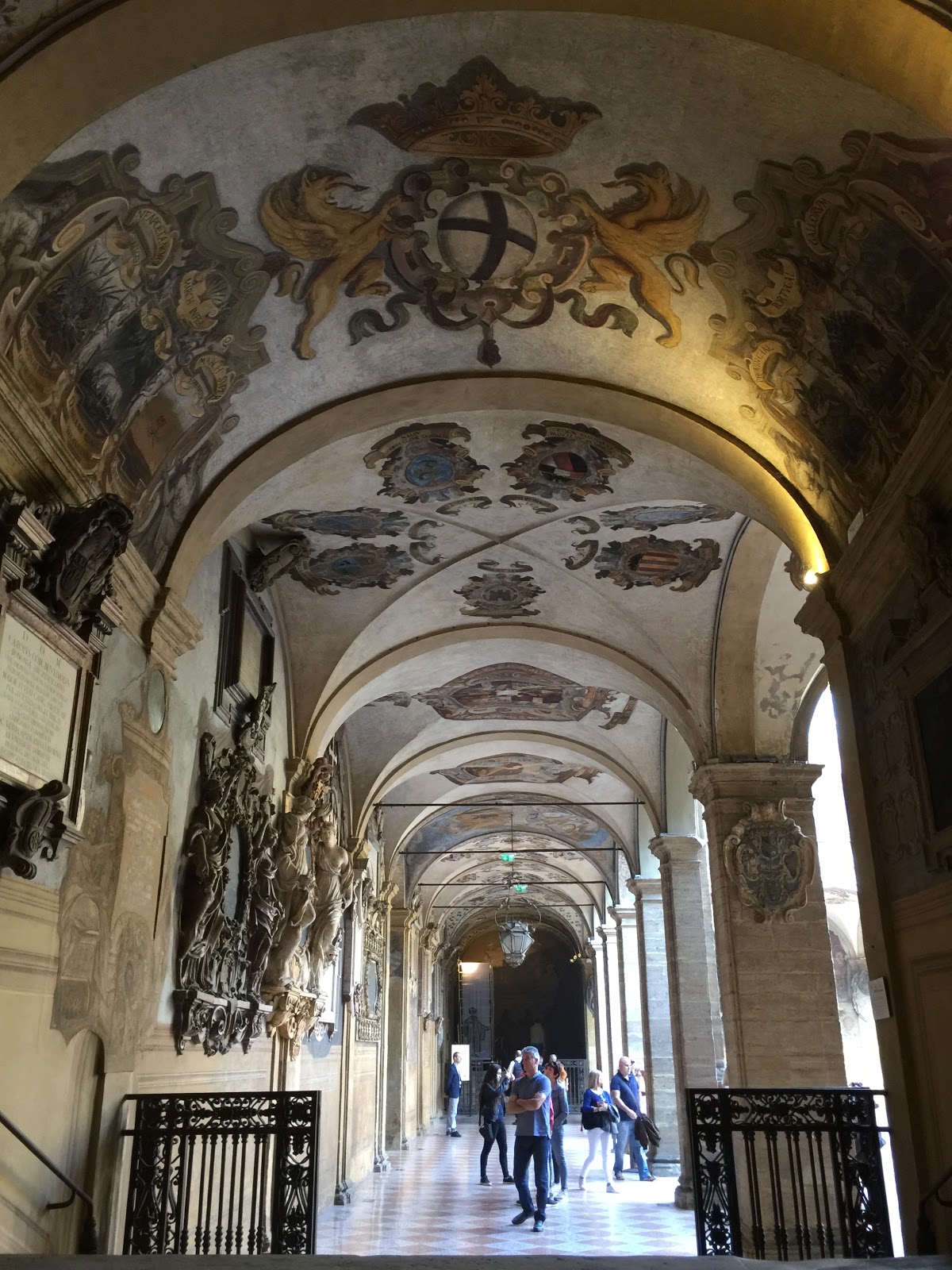
Archiginnasio

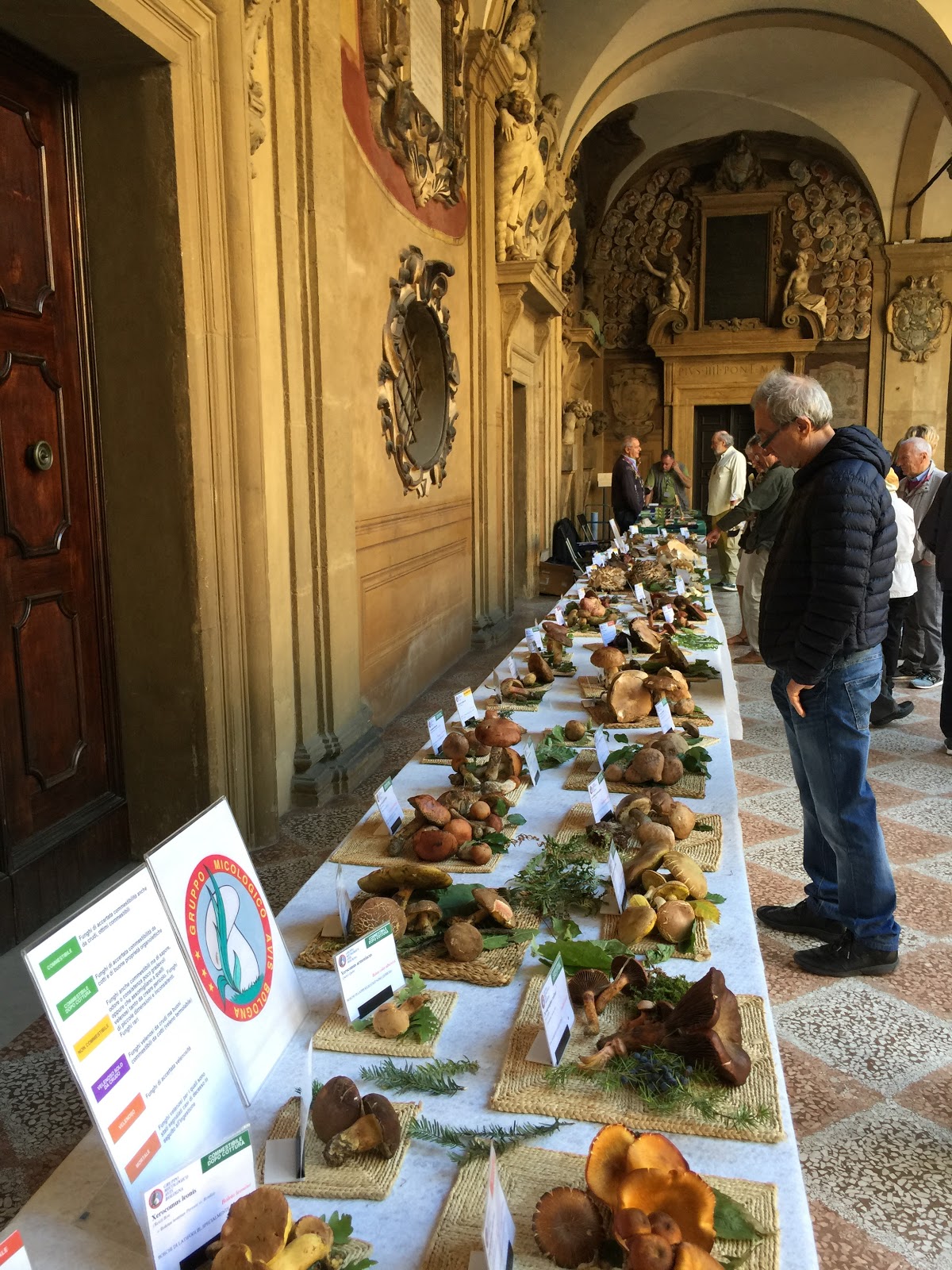
So in 1562, he built the Archiginnasio, where for 200 plus years the university thrived. Today, it is a joy to visit. Two stories tall with a central courtyard. The walls are intensely decorated with family crests of the students and ornate reliefs to honor favorite faculty members. In 1830 the municipal library replaced the university. The library has the regions most precious books. We saw some in a lovely book cage from the late 1400’s.

Fresh mushroom (250+) exhibit in Archiginnasio

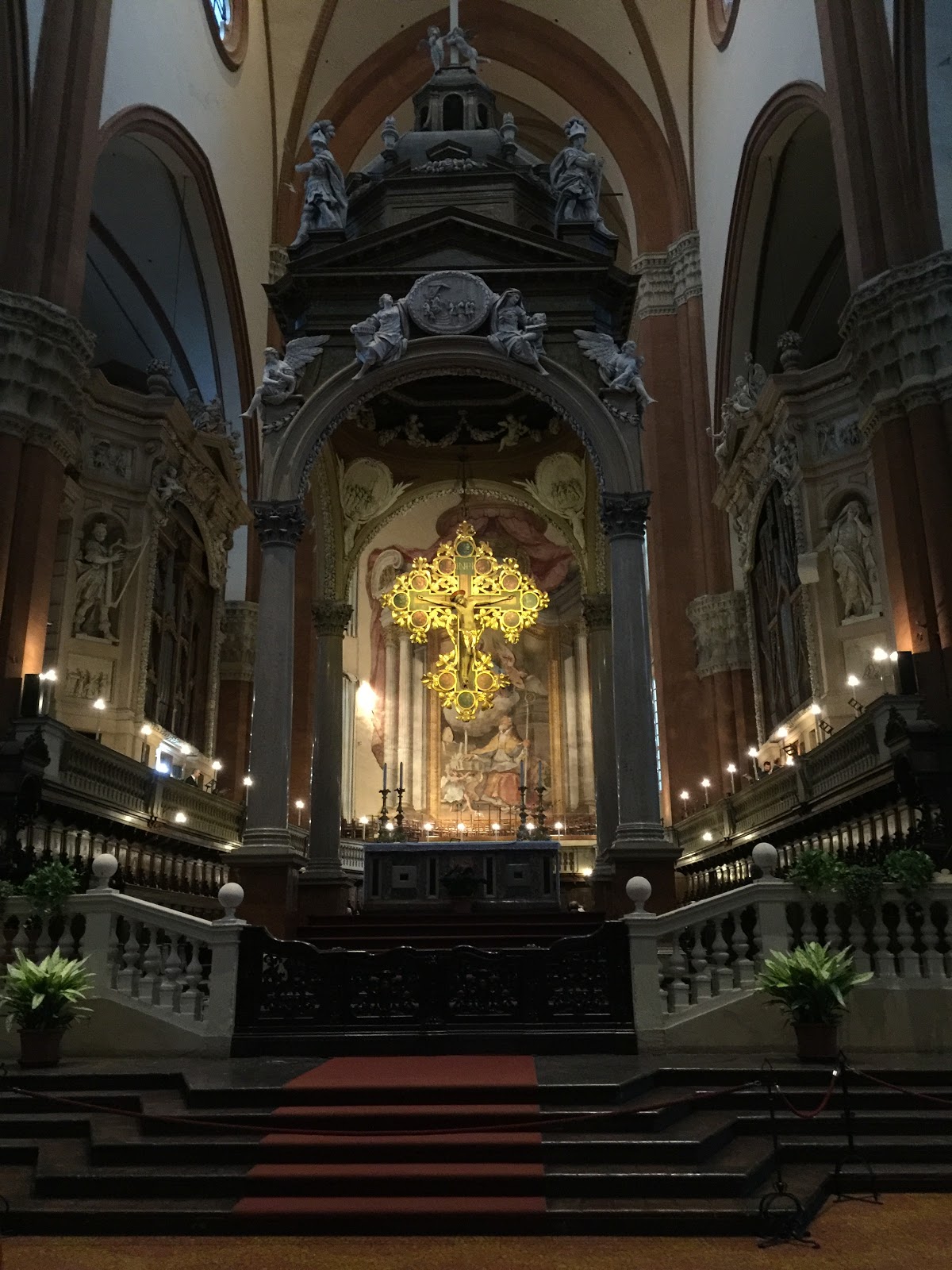
San Petronio, Vatican interference or not, is still massive. (The facade is 165 feet tall. The interior is 430 feet long. The width is 215 feet.) Inside it has two pipe organs. One of them is the third oldest in the world, built in 1476 by Lorenzo di Prato.  The other organ was built by Malamini in 1596. We went to a concert for two organs. The organs are on opposing sides above the carved, old, dark, creaky, wooden choir chairs, more like thrones, where we sat.

San Petronio organ

The program was mostly Italian compositions from the mid-1500’s. All the composers’ names were unfamiliar to me. They were compositions intended to allow improvisation and embellishment by the player. The players were outstanding. We all loved it.

San Petronio has restoration going on. The backside is covered in scaffolding. When work is slow, they allow civilians to ride the rickety metal cage elevator to the top. We did that. The view was splendid. Bologna consists of narrow stone streets lined with stone buildings with large entry gates. Usually the large, horse-drawn-carriage scaled, wooden doors are closed. We know beyond the doors are gardens. So getting above the roof line was interesting. There was a nominal fee of three euros to go up. The church said it was a fundraiser to pay for restoration; three euros at a time.


Bologna: Pope, San Petronio, Santo Stefano, September 29 – October 1

We slipped out of Barcelona in the nick of time, the day before the messy election.

Then after taking a taxi, a huge ship, a walk, a normal train and a high speed train we arrived in Bologna, just in time for the visit by the Pope, il Papa Francesco. (Be certain it is “il” and not “la” papa. La papa is “the potato.”)

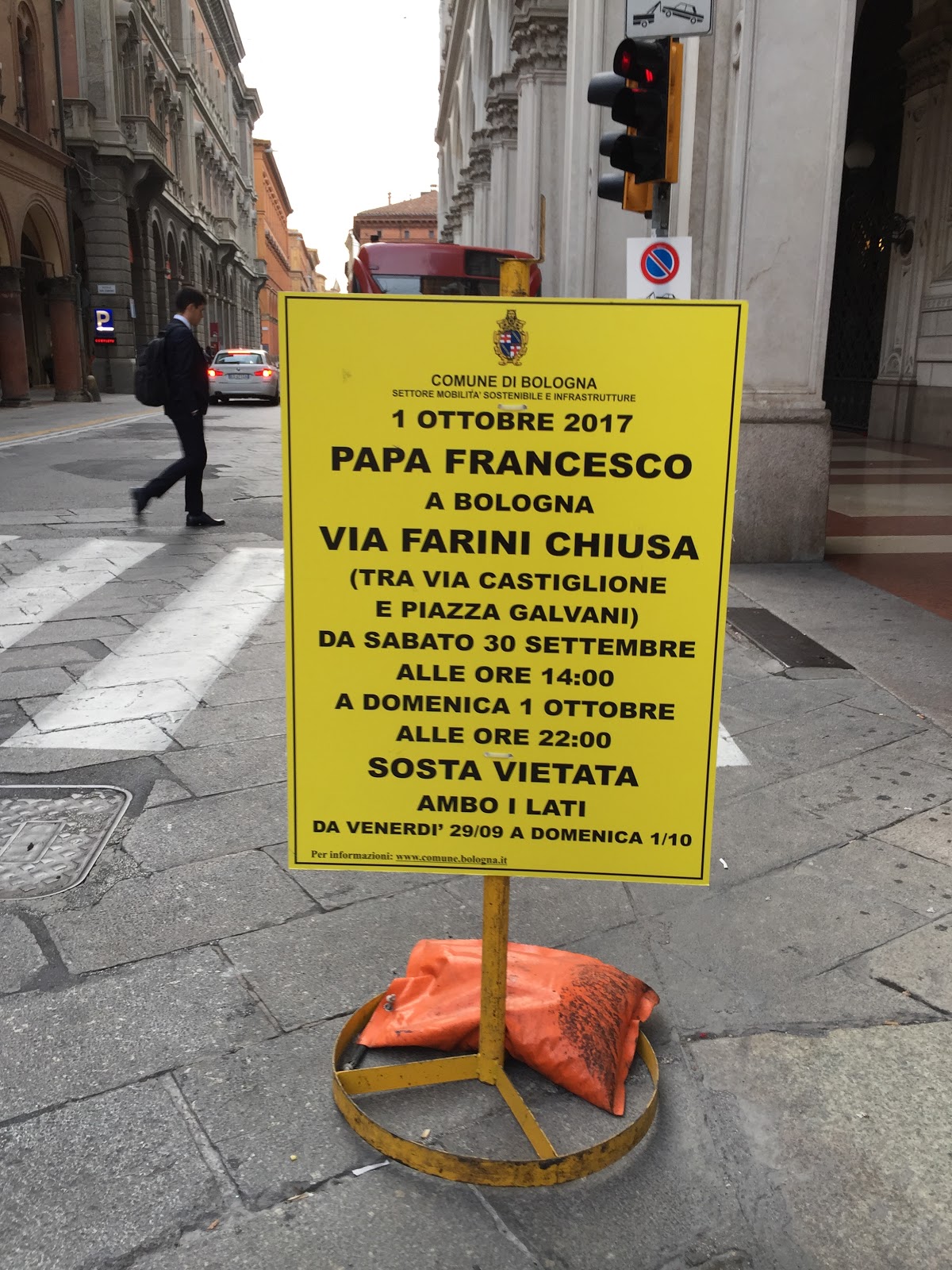
Bologna was in full pope prep mode. Signs about closed streets and rerouted trains and metal guard rails on miles of sidewalks were up.  Police scurried. Shops put pope placards in their windows.

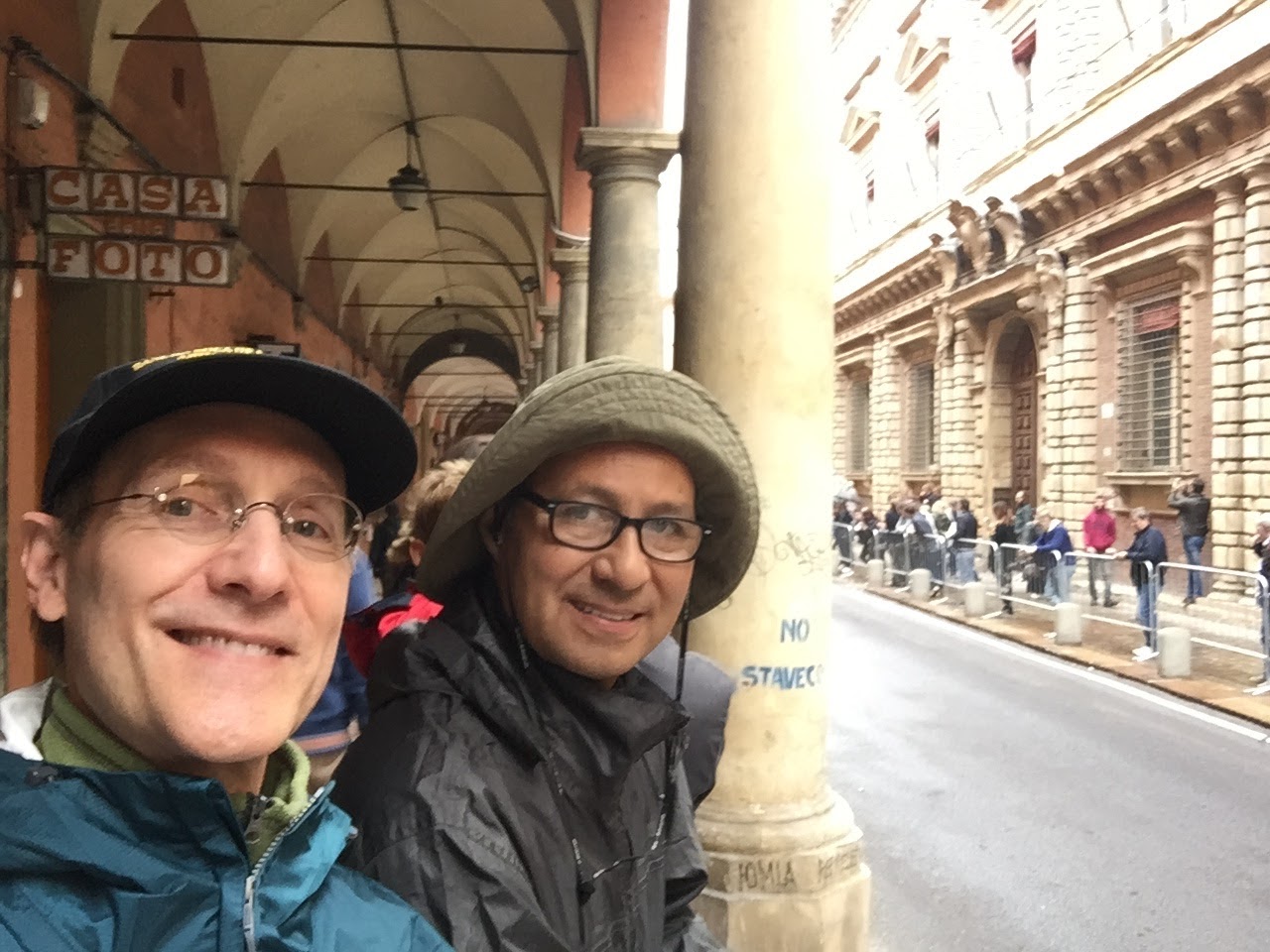
On the day of, we planted ourselves, on a sidewalk, under a portico, against a temporary guard rail. We heard gasps and applause. Seconds later, the Popemobile wafted by. He was standing under it’s clear canopy and waving out the open sides. The street is narrow. We would be sure to see him close up. When he did pass he was looking right at us. We exchanged eye contact and a smile.


See video below of Il Papa waving at us!
A few blocks later, he arrived to the Piazza Maggiore. There, he stood on the steps of, massive, Basilica di San Petronio and said, with warmth and a smile, “Cari fratelli e sorelle”, (dear brothers and sisters). It was so sweet. He continued with kind words of encouragement.  The gist was, be a good citizen, care for others, especially those in need.

The piazza maggiore is ground zero for Bologna’s “centro storico”, (historic center).  And Basilica di San Petronio is ground zero for the piazza. In the year 450, Petronio was the bishop of Bologna.

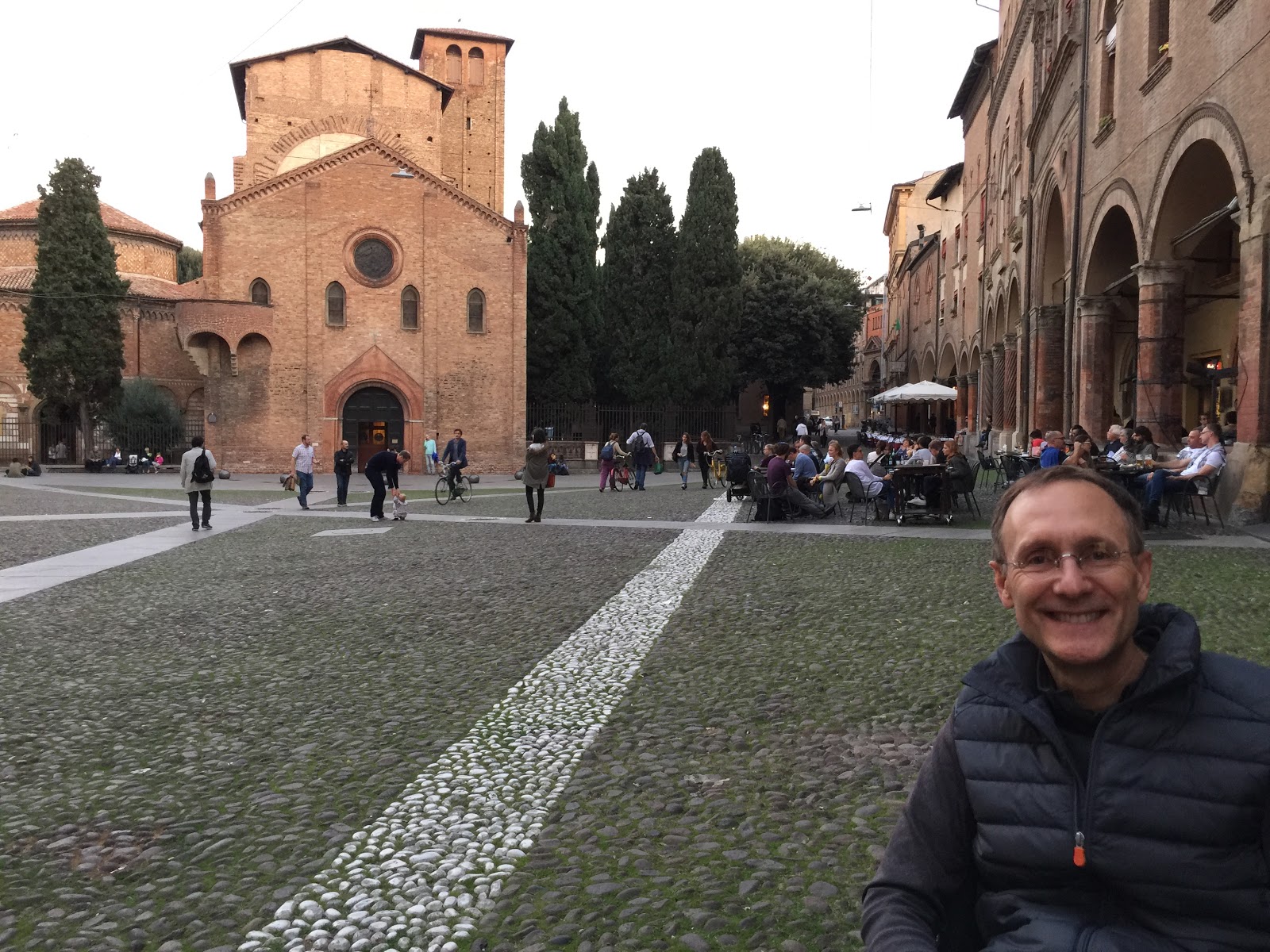
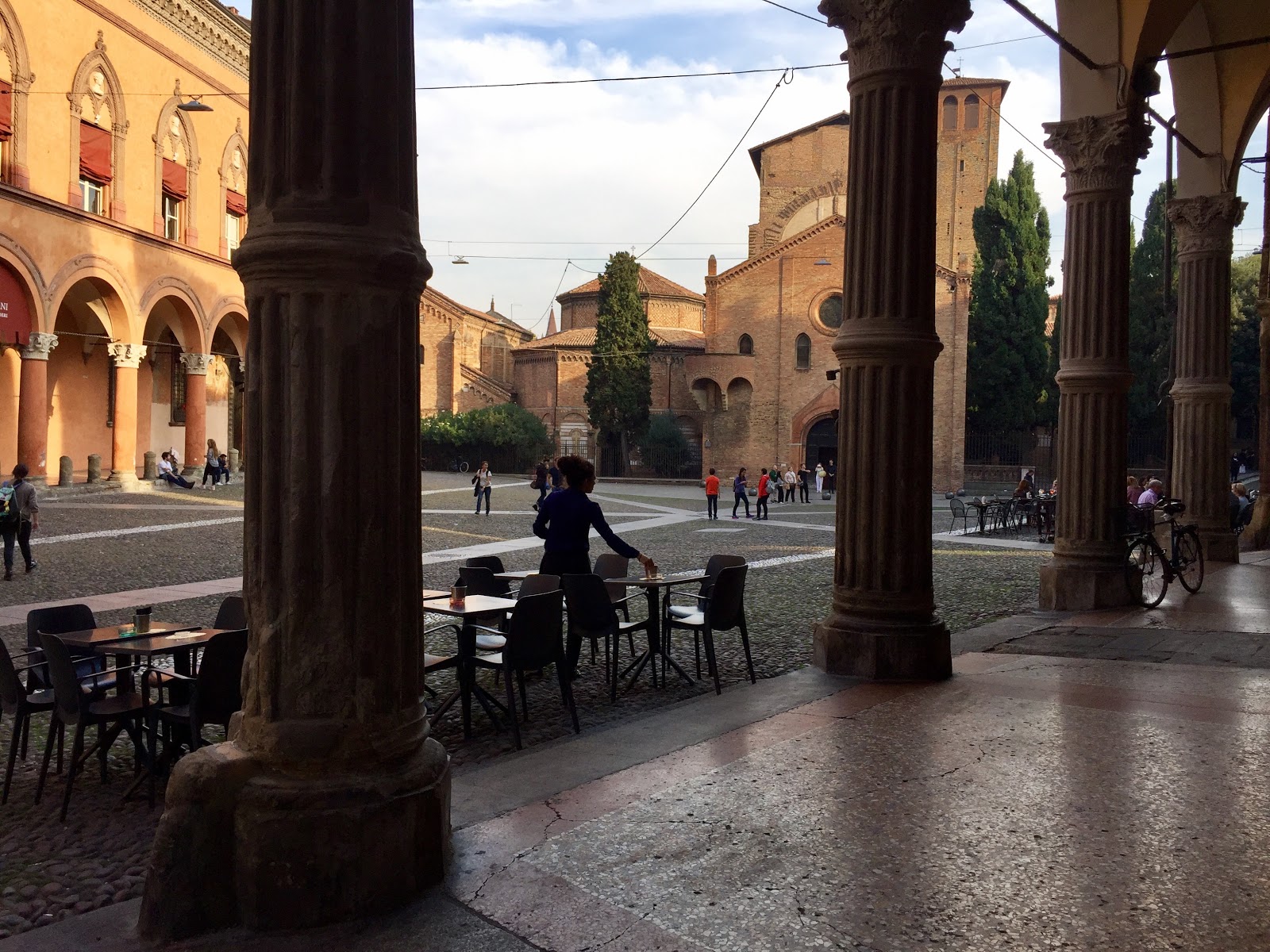
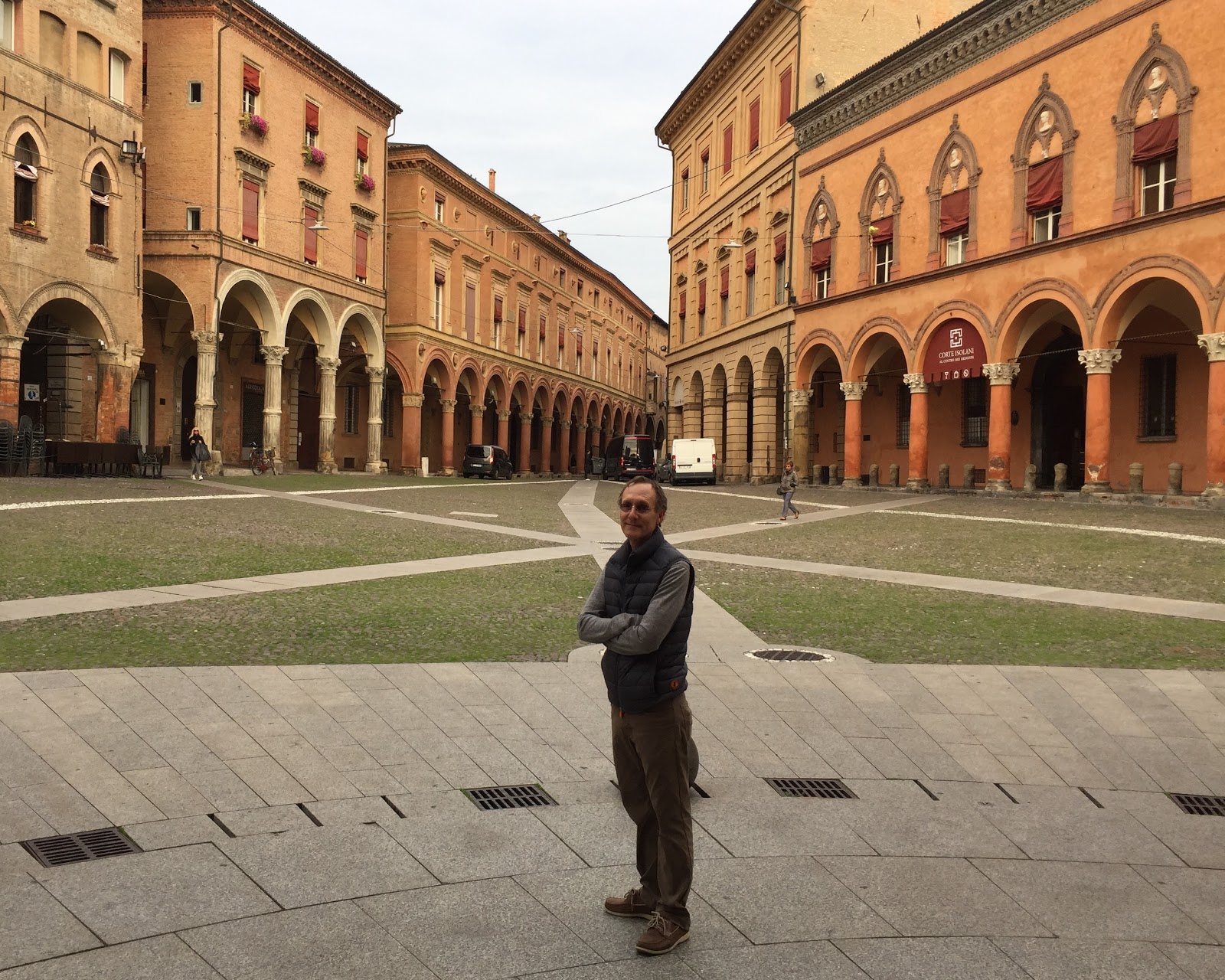
His legacy is the church he built, Santo Stefano, in which he recreated Jerusalem’s Church of the Holy Sepulchre. He wanted to make Bologna, like Jerusalem, a pilgrimage site. The church still stands, 16 centuries later, though with additions, subtractions and alterations. It remains a popular and beloved destination. The triangle of a piazza in front of it is our favorite hangout and where our apartment is located.

Church of Santo Stefano in background


Church of Santo Stefano Interior
Piazza Santo Stefano adjacent to our Bologna apartment
Piazza Santo Stefano

Barcelona, September 24-27, 2017

Our third city, Barcelona, is one of our favorites. On this visit, instead of renting an apartment, (as we usually do), we stayed in the new, five-star, twenty-eight room, six-story, Hotel The Serras, facing the Mediterranean. In the lobby, they greeted us with smiles and glasses of cava, (Spanish sparkling wine. The French prohibit them from calling it “Champagne”, but that is what it is).  Our room, sleek and modern, had two balconies with harbor views. It also had an iPhone, which we were invited to use throughout our stay.  It was set up for international calls and free data!

The top floor has a large painting of the face of Pablo Picasso. It commemorates his presence there at age fifteen. It was his painting studio. (Picasso was not native to Barcelona, but spent his teenage years there before moving to Paris.)

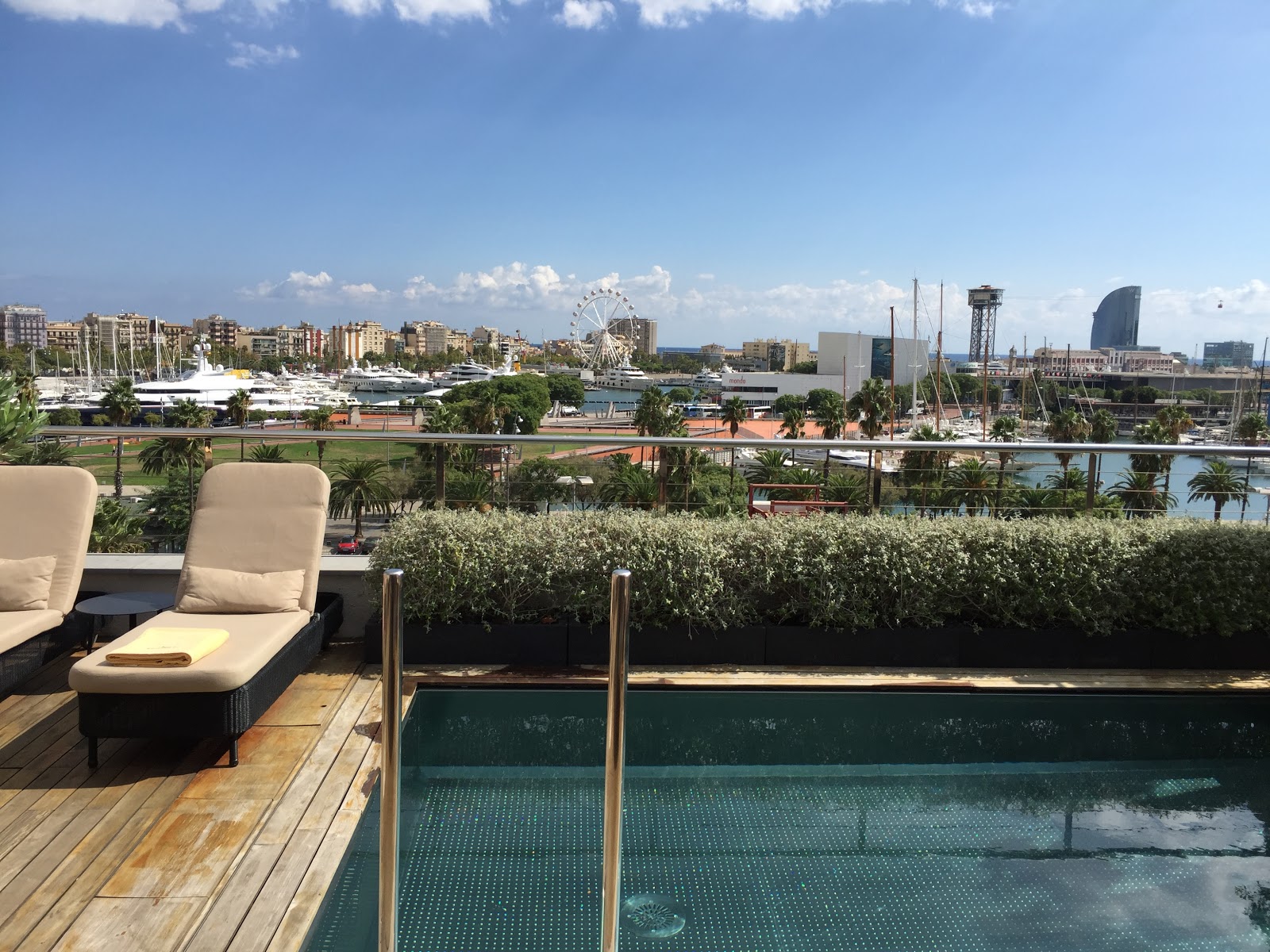
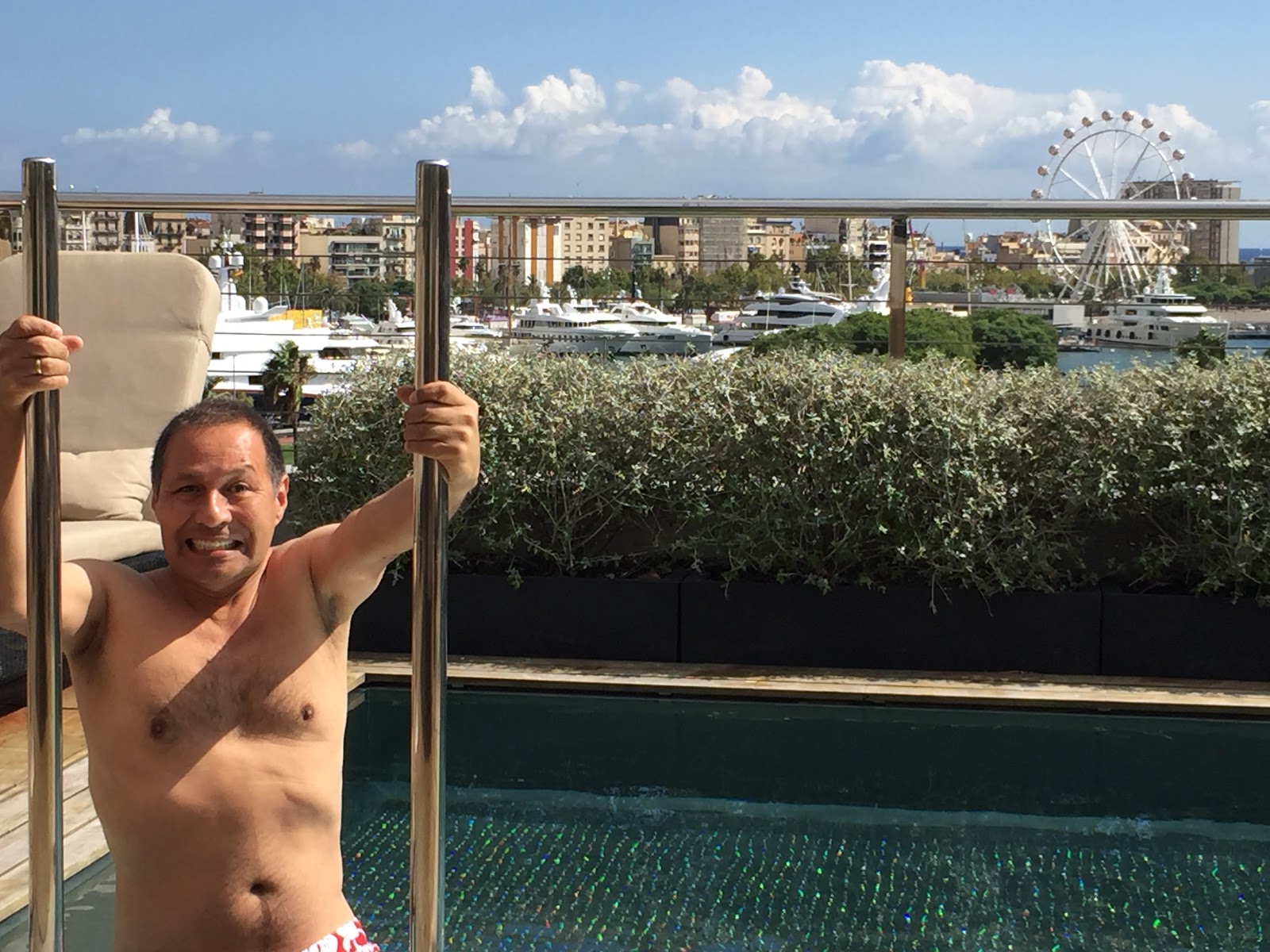
It must have been a great place to paint. Great light off the sea. There is a great view now, as I imagine there was then, lots of activity to hone in on. The waterfront, the Mediterranean, has the huge commercial ships, the little local boats and luxury yachts. (The Nirvana, a yacht, was conspicuously parked in view. It is 300 feet long and rents for $900,000 per week.)

Also there are iron towers holding up cables for aerial gondolas which travel from the waterfront up to Mont Juic, the hill full of museums (the Miro), the old Olympic stadium and Mies van der Rohe’s Barcelona Pavilion. 

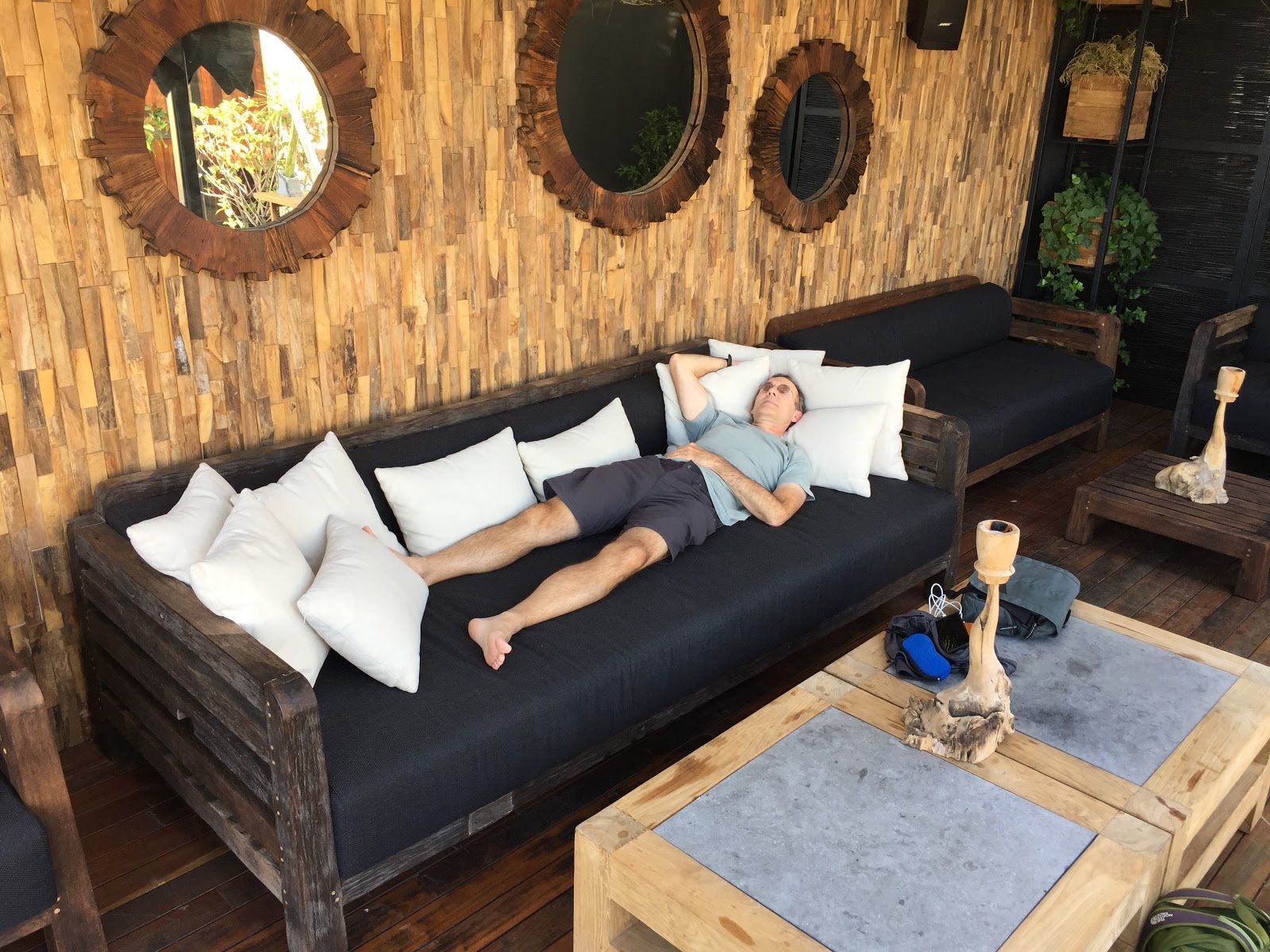
The roof top space is outfitted as a very comfortable hangout spot. There is comfortable furniture for sitting upright at a table, lounging on a chaise or sprawling on a sofa for a snooze. There is shade and open air.  A stainless steel, rectangular pool is perfect for a dip, but only a dip because it is only four swim strokes long. There is a bar which offers food, drinks and towels all day. We used it a lot.

Our stay in Barcelona was only for a few days, but they were the days of the annual Mercè Festival when the city teems with activity. Mercè refers to Our Lady of Mercy, which sounds like it would be a religious holiday, but if it is religious, it is not apparent.

Two traditional activities stand out. In a tangential way, they are related to the current dilemma with the recent vote for independence from Spain.

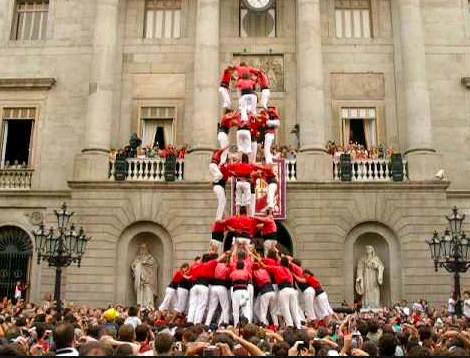
There is something called, Castells, which is Catalan for castles. They are towers of people standing upon each others shoulders. They can rise ten people tall. The beefy men with strong shoulders stand at the bottom. The lighter weight people stand atop them, etc., etc. For the grand finale, a small child runs up all the shoulders, to the top, where their little arm is raised in a victory wave.  According to recorded history, they have been doing this for a little over three hundred years.  Seven years ago, UNESCO declared it a “Masterpiece of the Oral and Intangible Heritage of Humanity.”  Typically, in Barcelona, it is done in the Plaça Sant Jaume where the important city and state government offices are. It is currently ground zero for the independence vote. The plaza gets jammed with spectators. So jammed, you might not fall if you raised both legs.

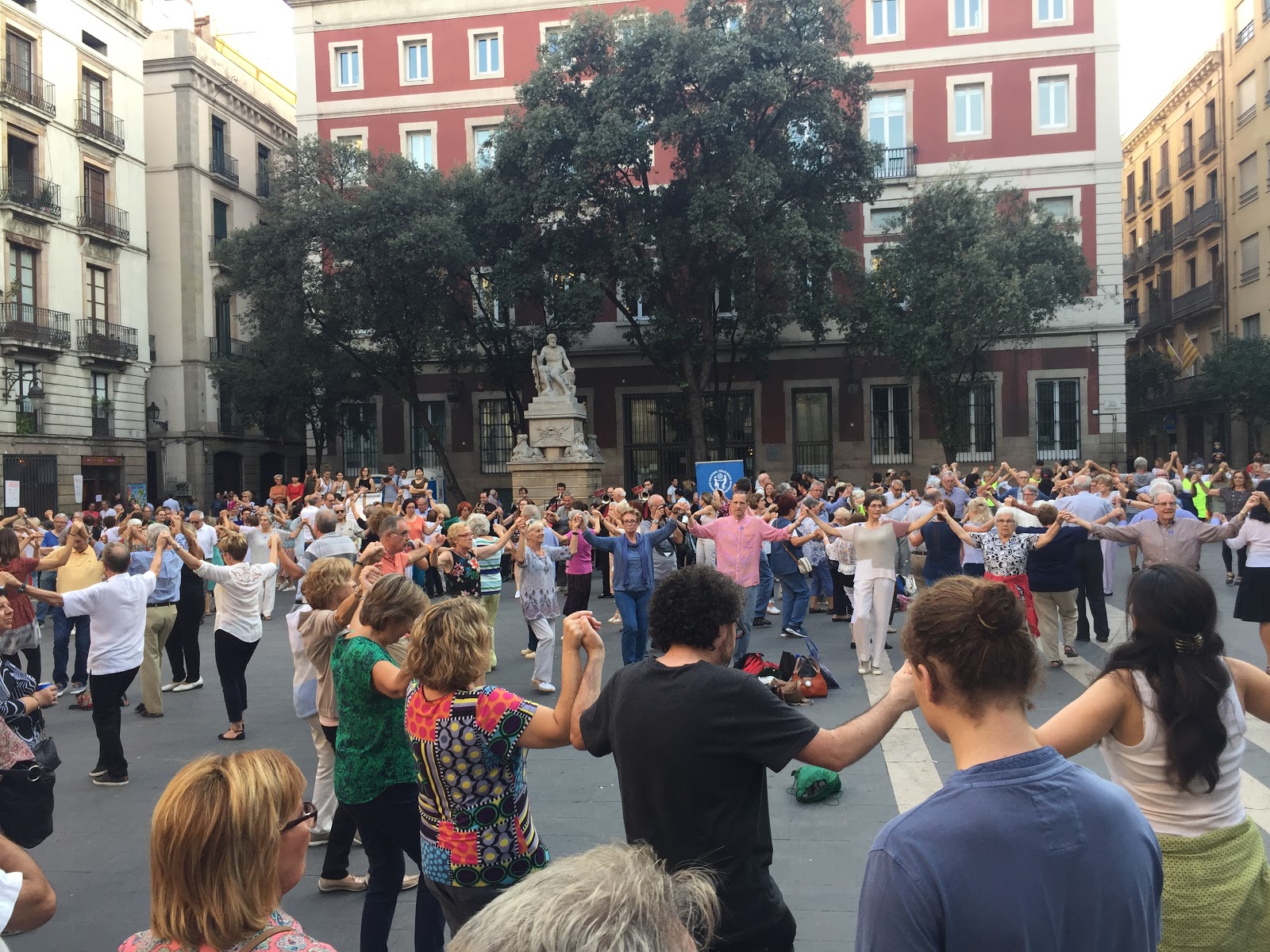
The other popular event is a dance, the sardana, done to the live music of traditional, Catalan, reed instruments.  The sound is coarse, reedy and a bit screechy, but the melodies, like from a Spanish Puccini, are sweet, romantic and somehow make you feel something, maybe nostalgia. The dance is done in a circle. The circle begins with only a few people, usually Catalans, native born. More folks join in. The circle grows. When it gets too big, it breaks into small circles. They have been doing the sardana in Catalunya for more than five hundred years.

During the last century, Generalissimo Franco, the dictator, while he was alive, made a great effort to extinguish Catalan culture; to compel the Catalans to become  “Spanish” in their culture and language. Banned in public, things “Catalan” went underground in order to be kept alive. Franco’s death enabled a renaissance of Catalan expression.  During the recent weeks, as Barcelona has struggled with their vote for independence, the issue of maintaining their Catalan cultural identity is front and center. When they dance their dance, in their circles, to their sweet melodies, (played on screechy reeds), when they stand atop each others shoulders to make castells, they are remembering, and honoring, their centuries old culture that was once imperiled by autocratic policies.  Whether one is Catalan or not, it is easy, while hearing and watching, to sense what they are doing is deeply special to them.

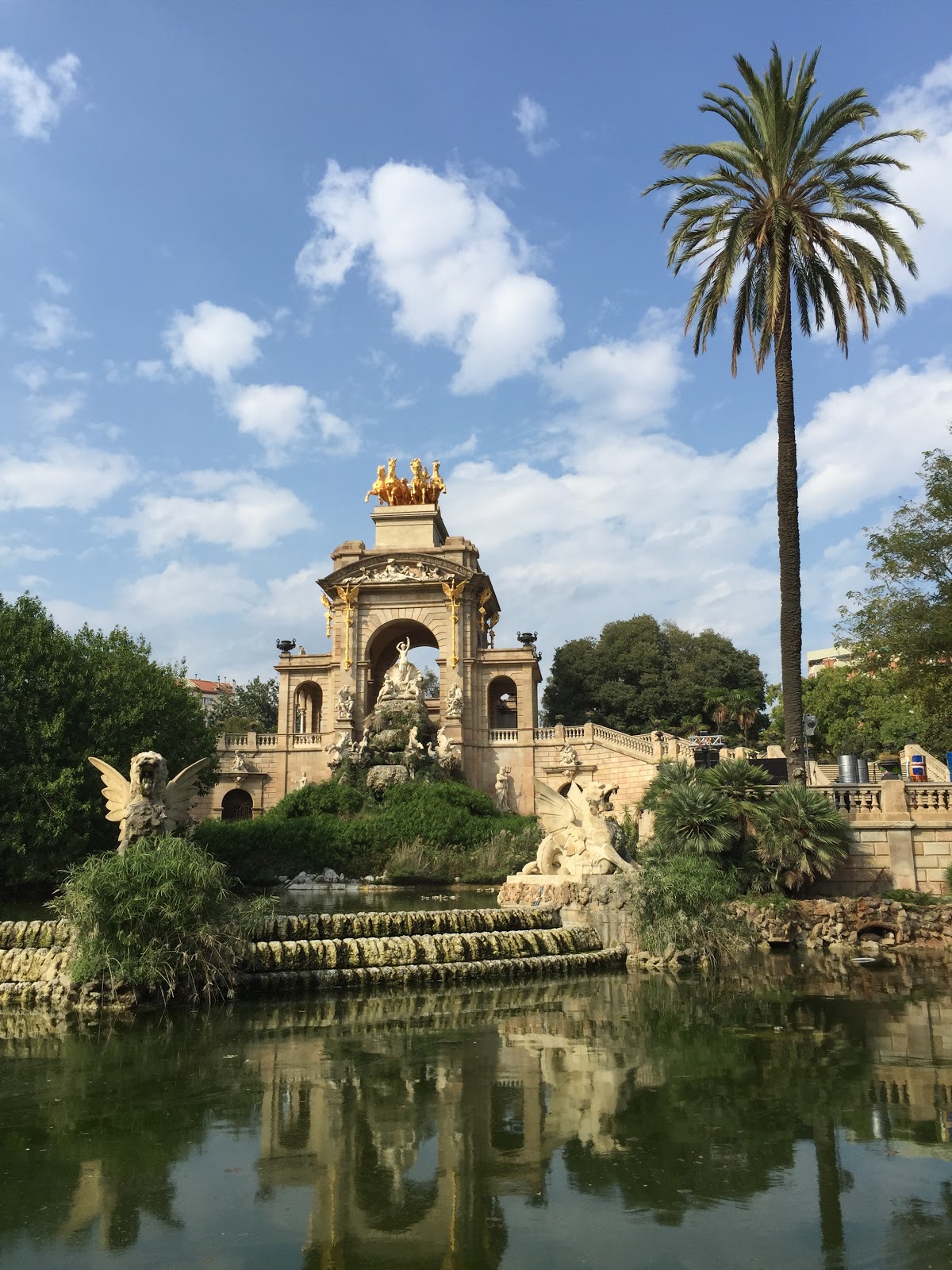
Other Mercè Festival events are held in the Ciutadella Park. Enormous, like New York City’s Central Park, on most weekends it is filled with joyous activity. On Mercè weekend it is absolutely crazy. There were so many people. Some lounged in their hippie-like bacchanal, on India print bedspreads, on the grass. Children, everywhere, ran and laughed. There were food stalls and exhibition pavilions with long lines.  There were street performers invited from around the world to roam the park and make people joyful.

One attraction caught my eye. It was a curved dirt lane with about a dozen home made metal machines, contraptions really, which all together looked like a Willy Wonka gymnasium. One, a twelve foot tall metal man, sculpted from scrap metal, had lanky pipe arms. They arms had levers. Children pulled the levers with the goal of making a lanky arm poke it’s long finger into the metal nose. Small children gave it a go. It was harder than it looked. But when the finger poked the nostril we all howled.

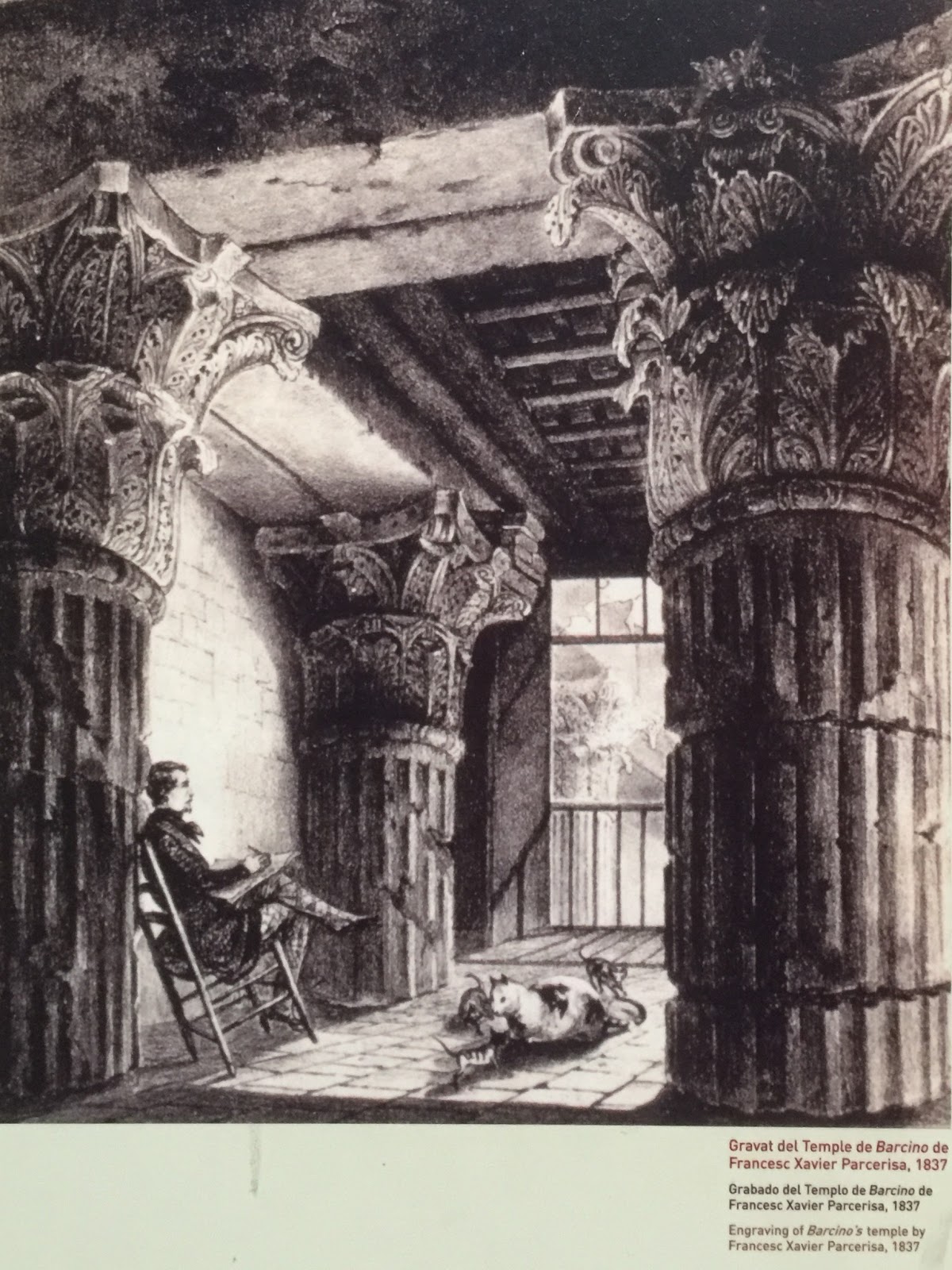
No matter how much of the city we get to know over time, there are always surprises. One day, while wandering among very old stone buildings, we saw a little sign which directed us into a little vestibule. The vestibule, on the ground floor, lead into a room with four soaring Roman columns, fully intact, standing since the year 100. Originally, they stood as part of a temple to the goddess, Isis. After the temple fell into ruin, the columns were used to support a five story palace. The palace eventually fell into disrepair and became apartments in the 1800’s. A book shows a photo of an apartment with the columns supporting the floor, walls and roof. Finally, a portion of the building’s core was removed to reveal for us the enduring work of human beings. I am always thinking, while in Europe, the “old world”, what do we build in America that will last two-thousand years.

Wes and Marlow
Barcelona, September 24-27, 2017


La Traviata, Teatro Guiseppe Verdi, Busseto (near Parma), October 9

One of the highlights of early Fall in Emilia-Romagna, in addition to fresh porcini, zucca and chestnuts, is the Verdi festival of Parma.  The Parma/Modena area has been home to many opera legends, e.g.: Pavarotti, Tebaldi, Toscanini and Verdi.  The annual Verdi festival celebrates this heritage with performances of several Verdi operas in various venues around Parma.  Most performances are sold out months in advance to opera lovers from all over Europe and opera tour companies.  Wes was checking out availability for several months before our arrival but the pickings were slim and expensive.

But checking last week we found availability of reasonably priced tickets to a performance of La
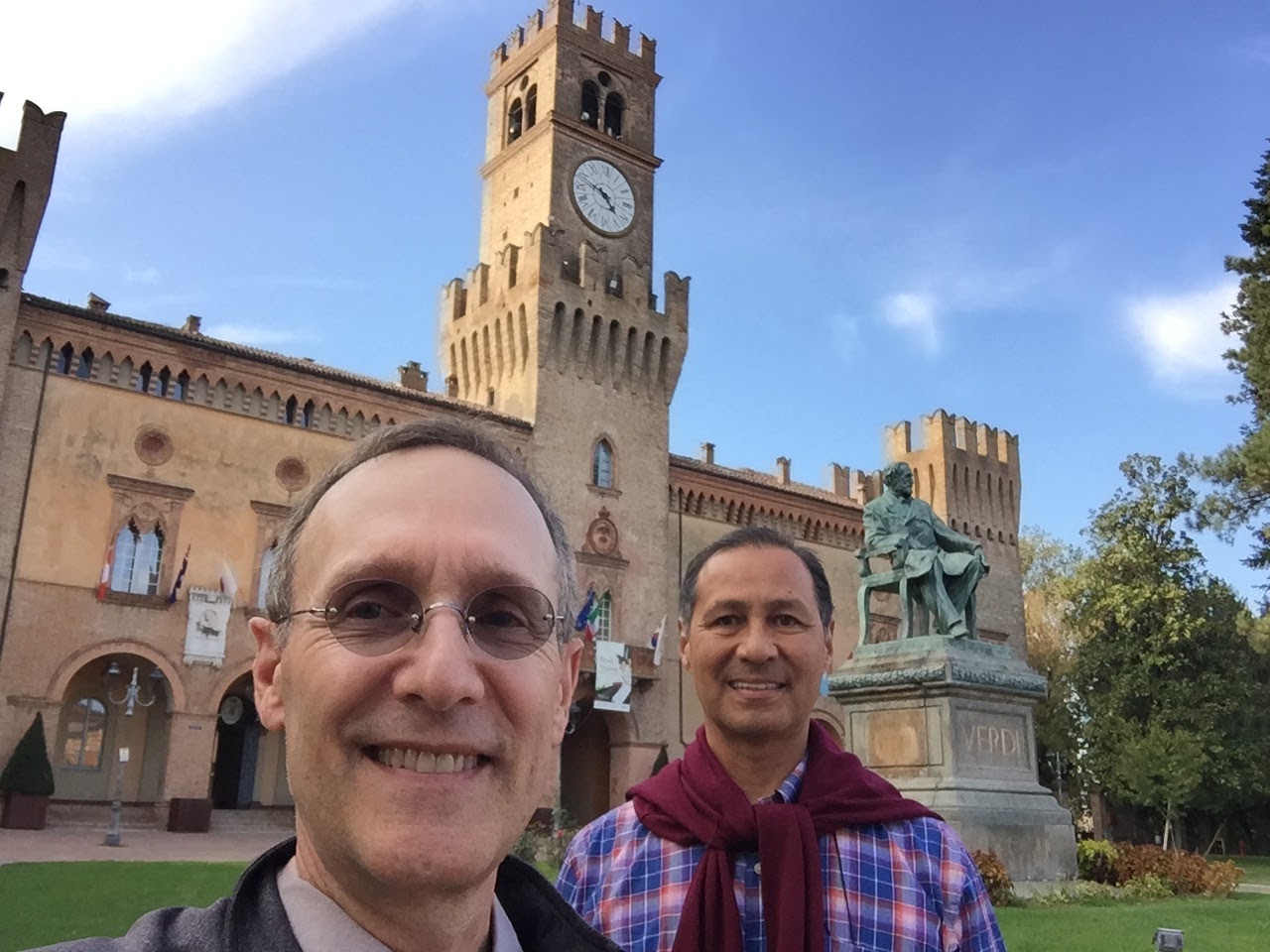
Traviata.  The Teatro Giuseppe Verdi opera house, located in the small town of Busseto, just to the north of Parma, was unknown to us.  But checking train schedules we found it was easy to reach by train from Bologna (about 1.5 hours) as long as we could locate a place to spend the night.  After a bit of research we learned that Busseto was actually where Verdi lived for much of his career and we soon saw for our selves just how great a legend he was for this community.

Teatro Giuseppi Verdi

The opera house has only 300 seats and is located in a former fortress from the 13th century.  At one point in the past, a moat surrounded the palace.  The opera house opened about the time of Verdi’s death in 1868 after the building was acquired by the town.

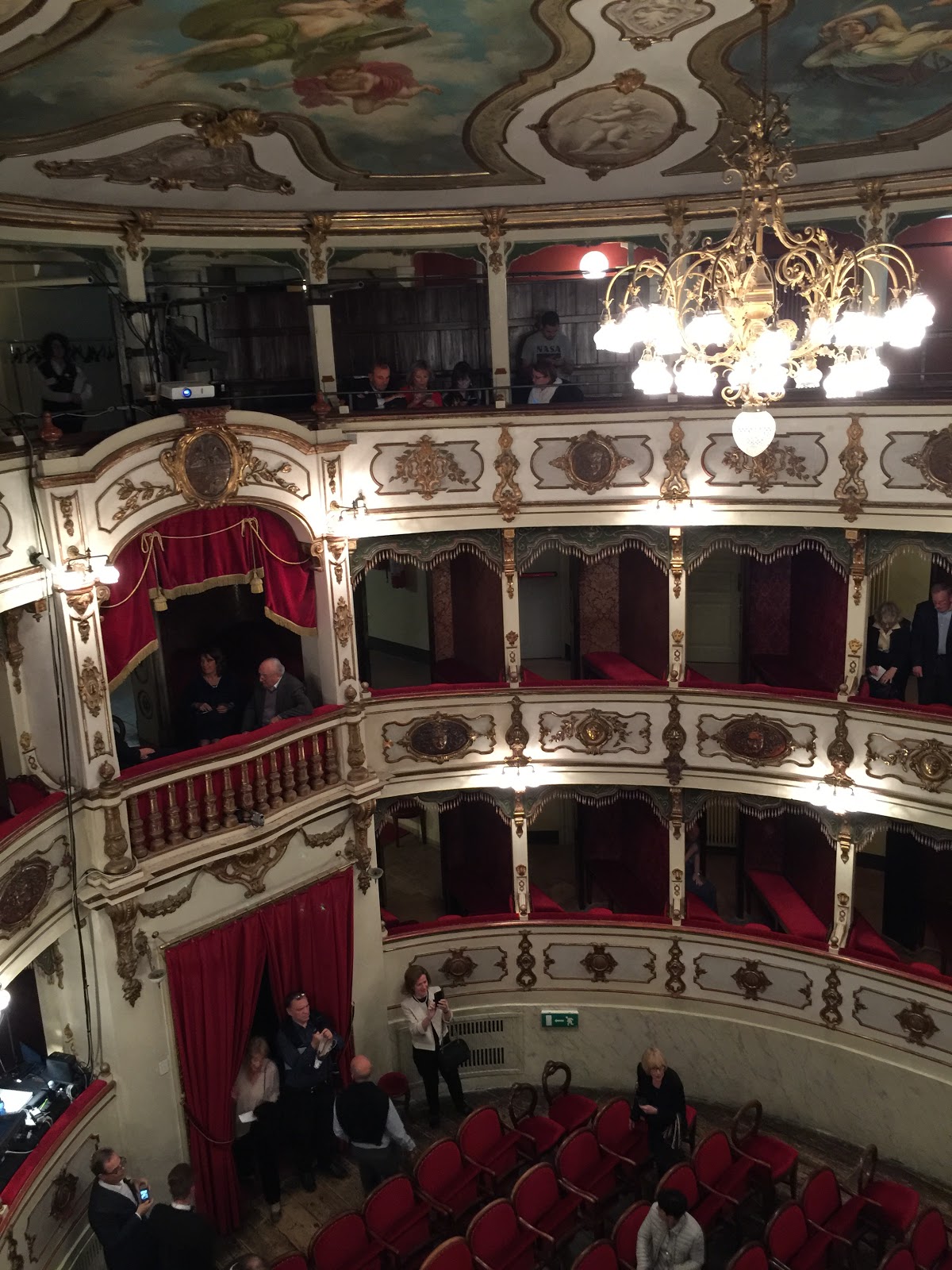
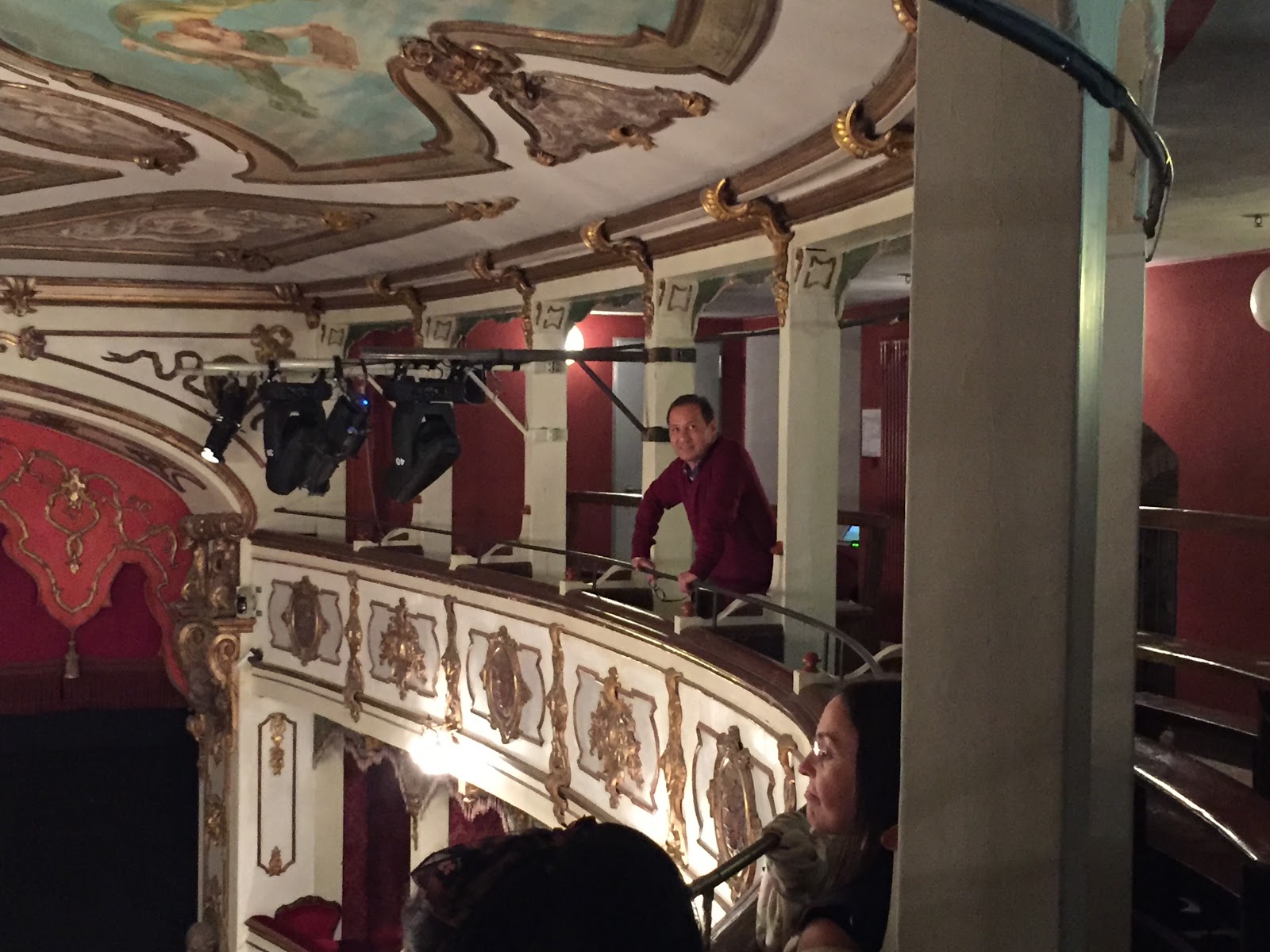
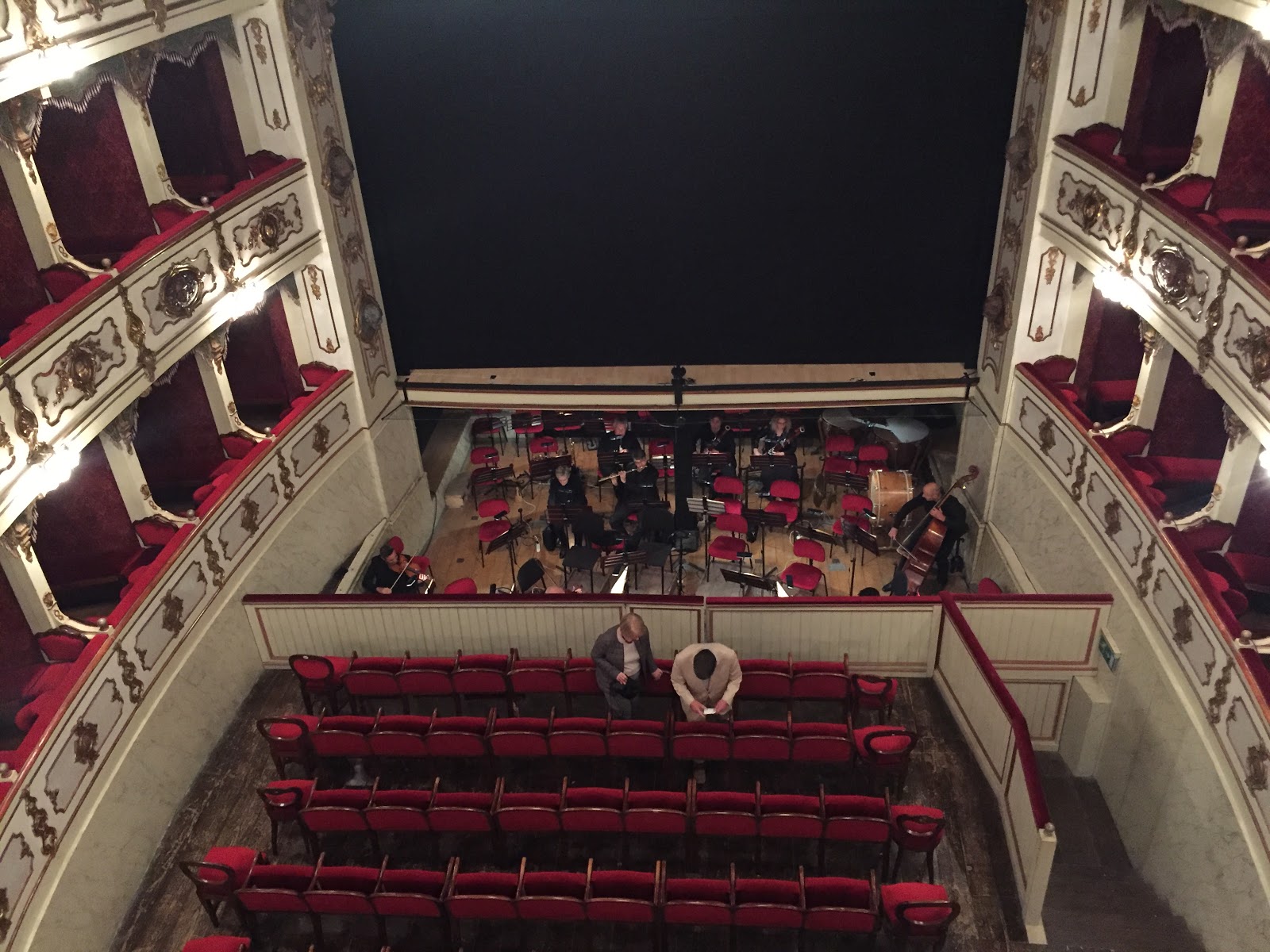
You don’t realize just how small a 300-seat theater is until you are inside.  It is so precious, we felt as though we were inside a jewel box.  You can practically reach out and touch the people in the gallery on the opposite side.  The orchestra (from Bologna) took up nearly 20% of the main floor; the stage another 30%.  So actual orchestra level seats comprise only 50% of the main floor area.  You can imagine how alive the sound was.  The acoustics were perfect.  The balance was perfect.  In spite of the large orchestra the singers could be heard clearly throughout the performance.  The orchestra never seemed to be overpowering.

Main floor of theater with orchestra.

Our seats were in the top gallery at the center/rear.  It was all bench seating up in the gallery.  But the theater wisely limited the number of seats actually sold in the gallery to about 50% of capacity so there was plenty of room to move around and stand up (we sat on the last row of benches).

View from our seats in the top gallery.

A special treat was learning that the hotel we stayed in, directly next door to the opera house, is run by the sons of the famous tenor Carlo Bergonzi.  When we checked out, we met one of the sons at the front desk.

Hotel I Due Foscari, Busseto

Barcelona to Civitaveccia by overnight ferry, September 27/28

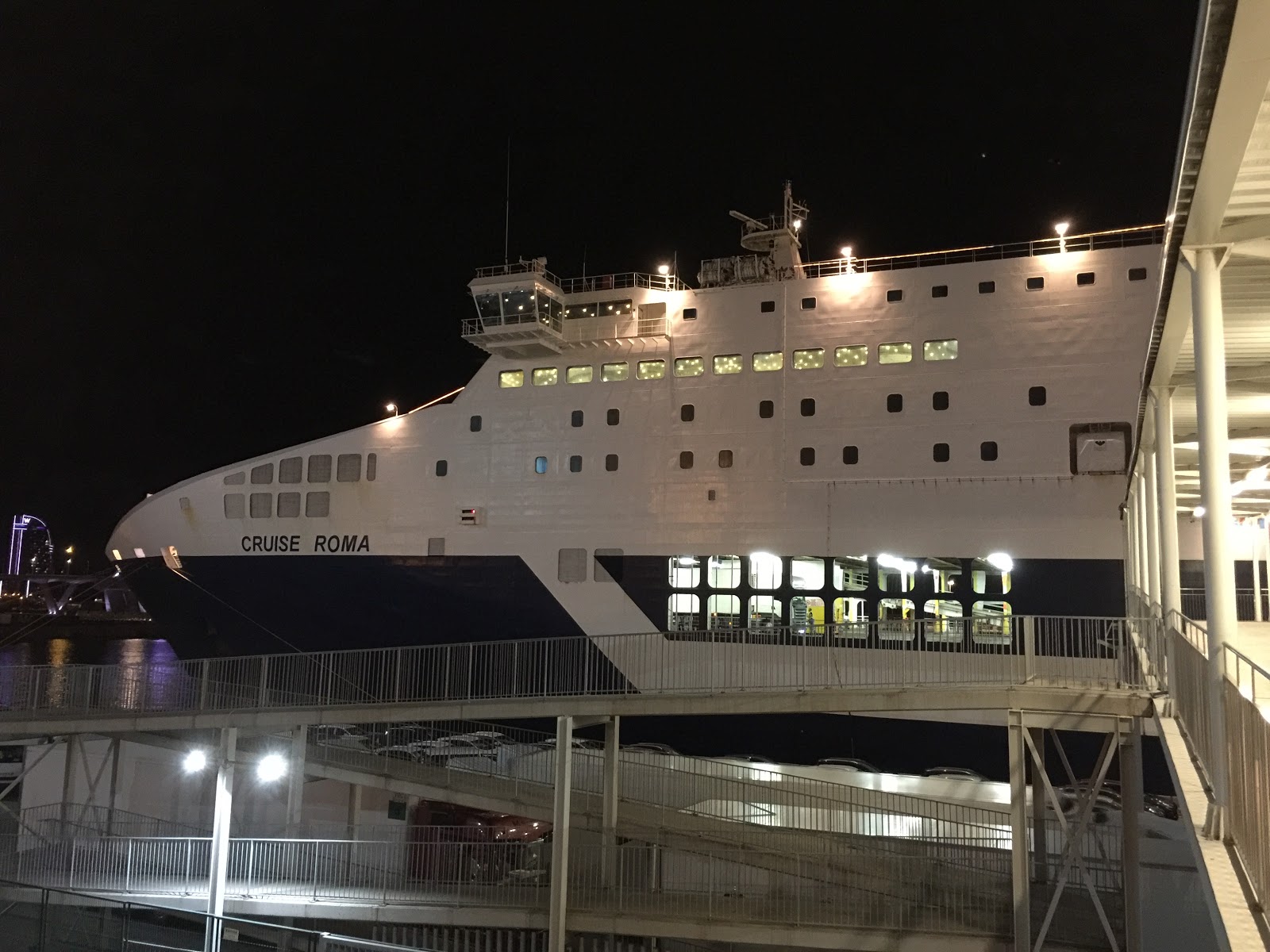
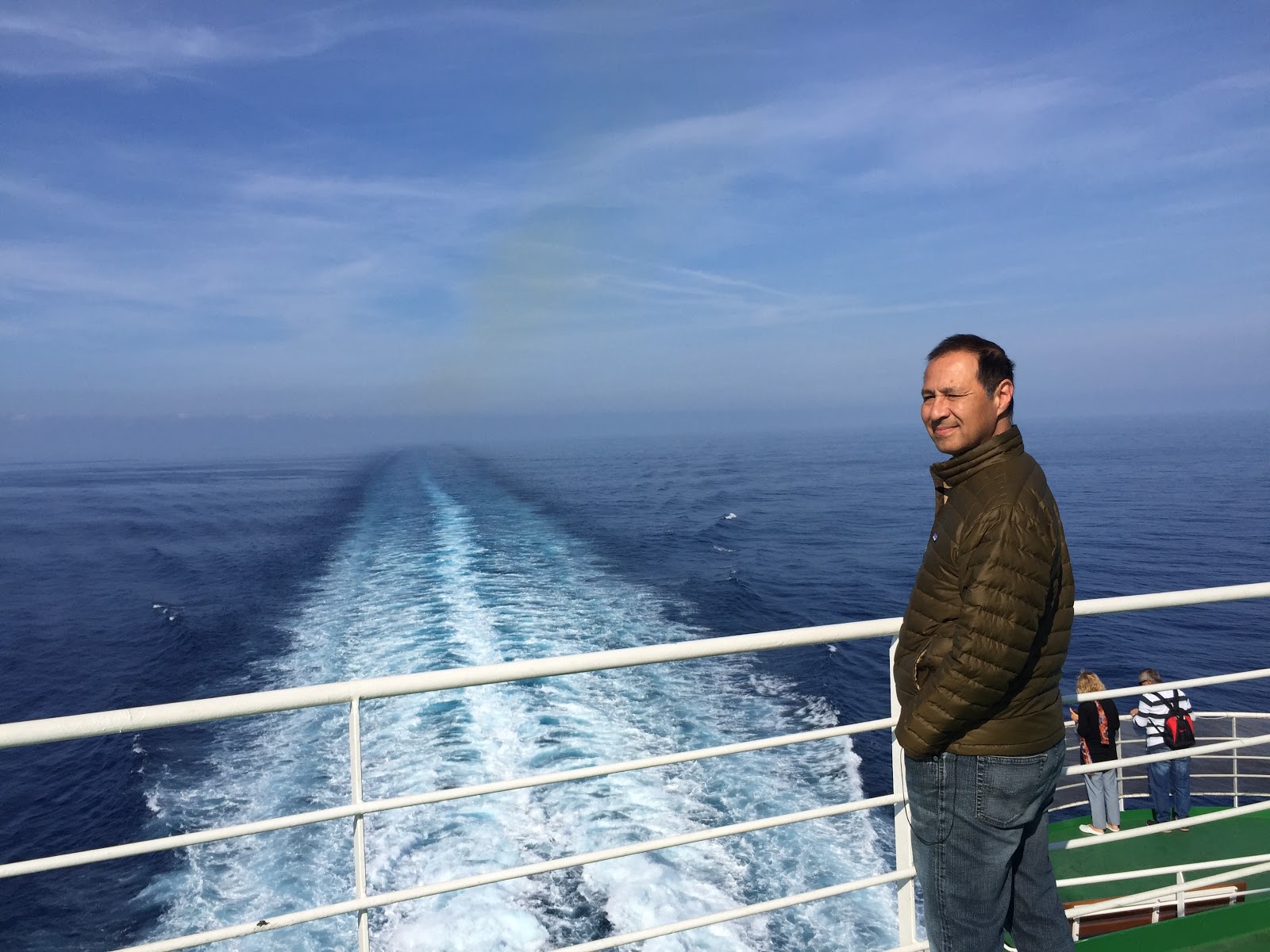
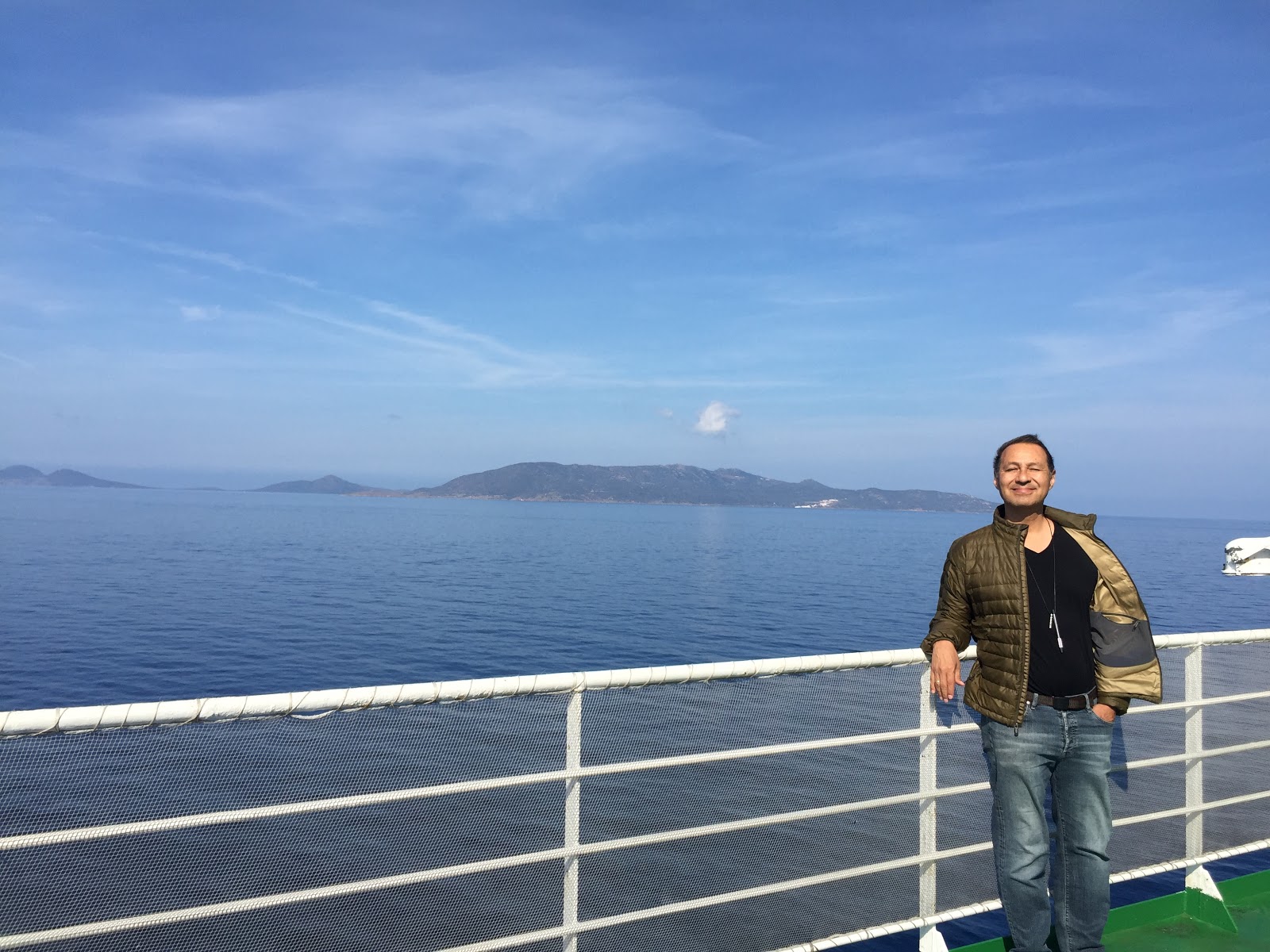
Our next destination was Bologna, Italy.  The easiest way to travel from Spain to Italy is by a 1 1/2 hour plane ride.  But Wes thought the idea of traveling by ship on the Mediterranean would be more adventurous.  While cruise ships make this journey routinely, they take several days and make stops along the way.  The direct route is provided by an overnight ferry boat primarily designed to accommodate passengers with vehicles – a lot of them.  Fully loaded, this ferry could handle over 2,800 passengers and their vehicles.  Fortunately, the boat was not at capacity the night we sailed.  It seemed fairly empty and we estimate there were fewer than 200 passengers.  There are various options for cabins on board, but it seemed that many passengers “camp out” in one of the several lounges, bars, etc.  We booked an “owners cabin” which contained a double bed, a large window, a bathtub, sofa and dining table.  The ride was comfortable and the Mediterranean was smooth with hardly any waves the entire trip.

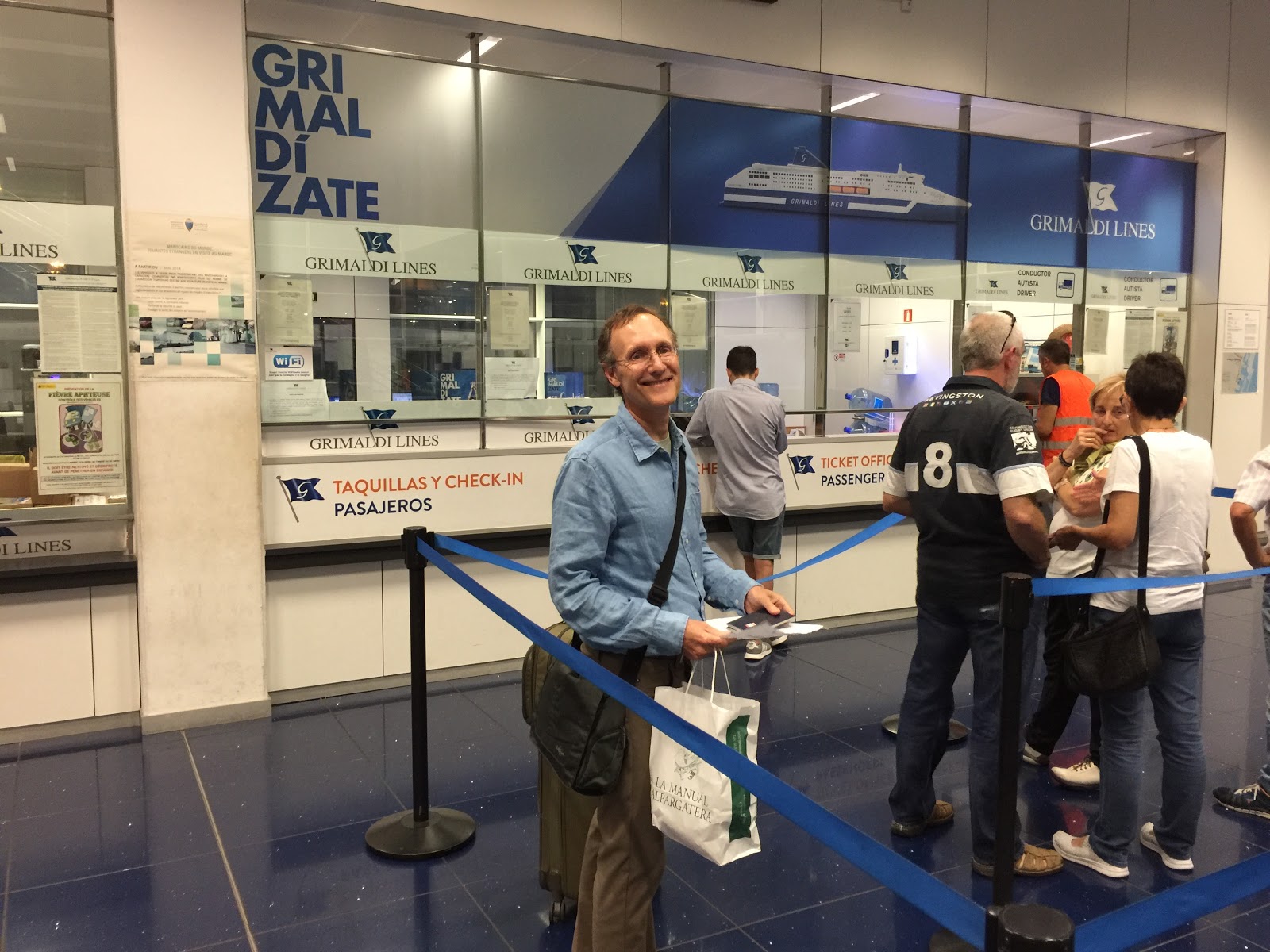
Checking in for the trip


Our boat

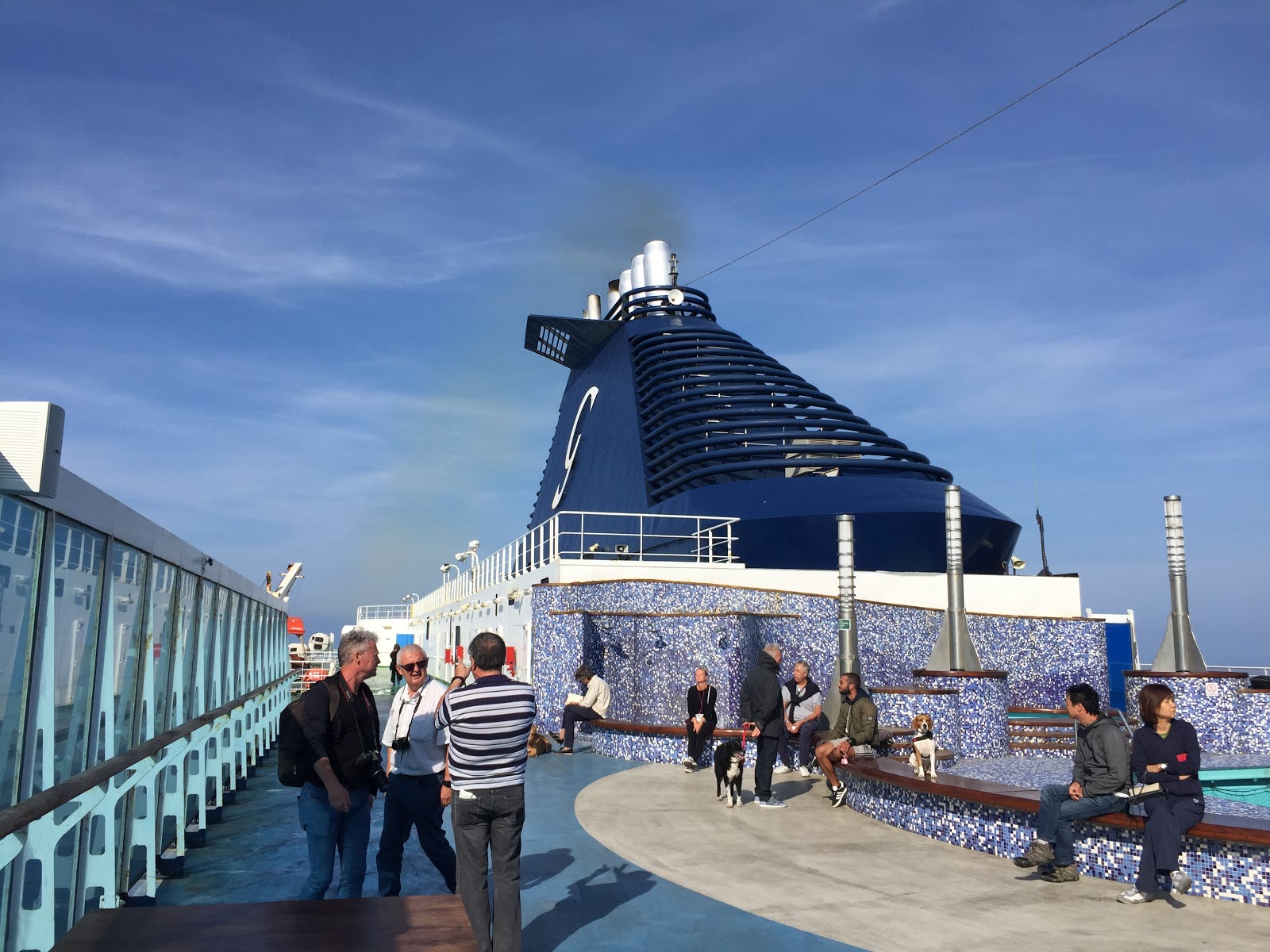
Sardinia in the background as
we passed between Corsica and Sardinia

Granada, September 20-24, 2017

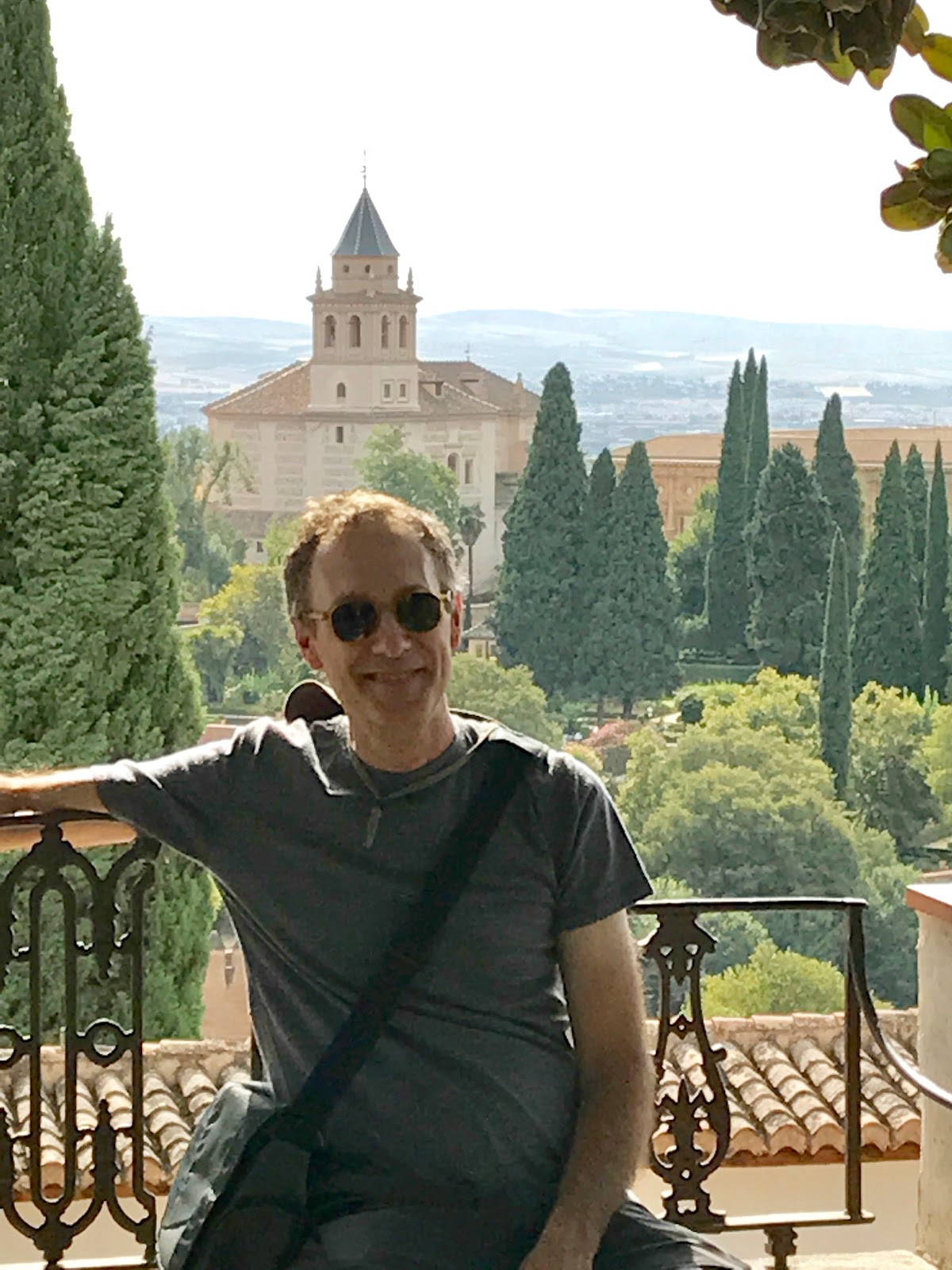
Granada, our next city is like a dream. On one of it’s hills is the Alhambra, which is a combination of fortress, village and royal palaces.

Here is a bit of very general backstory. In the year 711, people from north Africa, we will call them moors, islamic moors, flooded into Spain. They took possession of the entire Iberian peninsula except for the north coast. They displaced what we will call the Spaniards, christian Spaniards. The Spaniards battled the moors until 1492. The Spaniards won. The final conquering occurred in Granada.

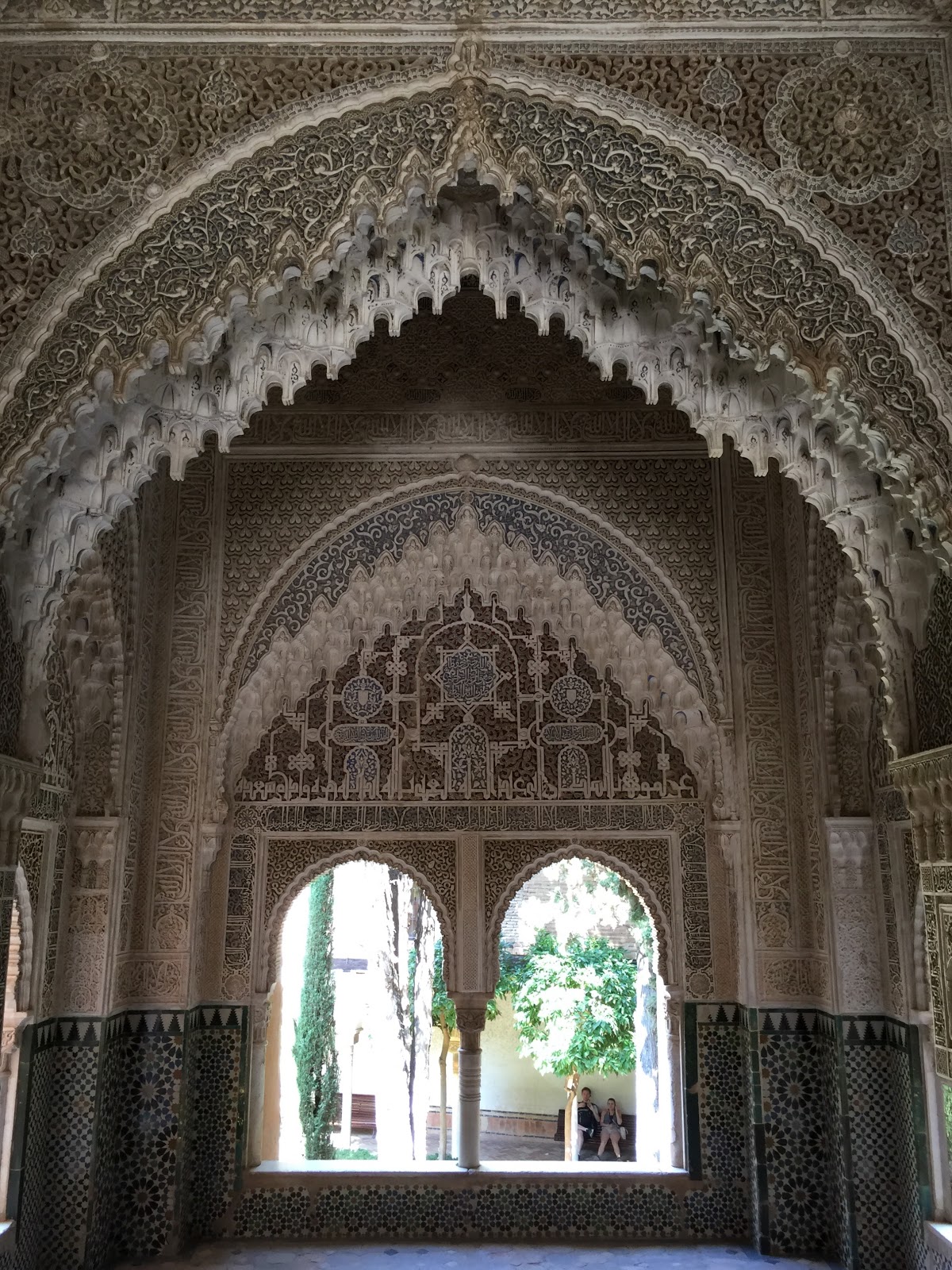
The early arriving moors, in the 700’s, made outstanding settlements in Cordoba and Seville. They created buildings with extraordinary interior decorations. Though they had inhabited Granada from 711, it was during the 1200’s when the sultan ordered the creation of the Alhambra.

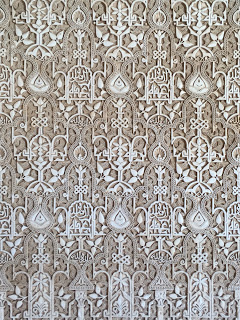
They erected buildings which from the outside are large, plain, stone rectangles. The

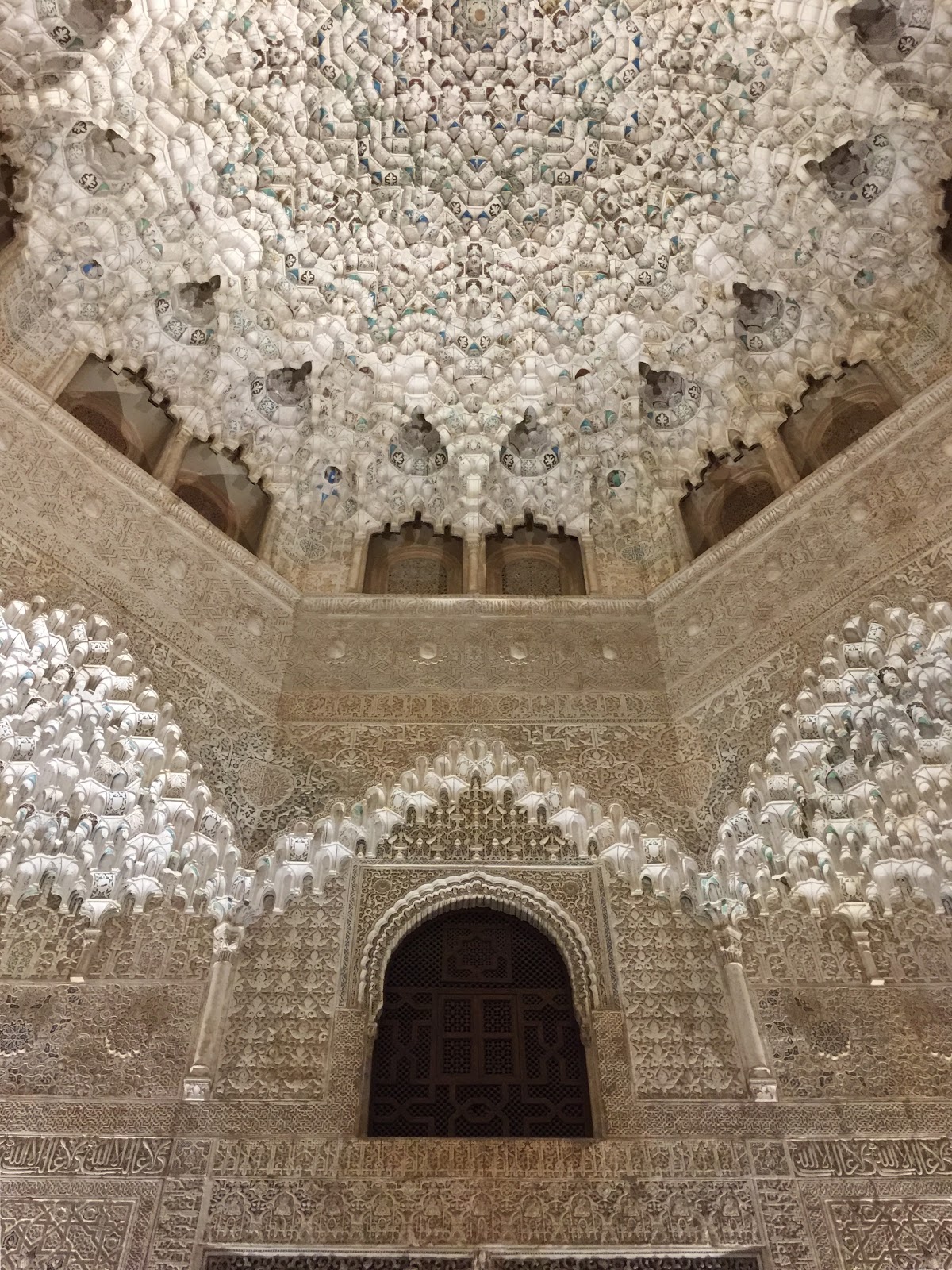
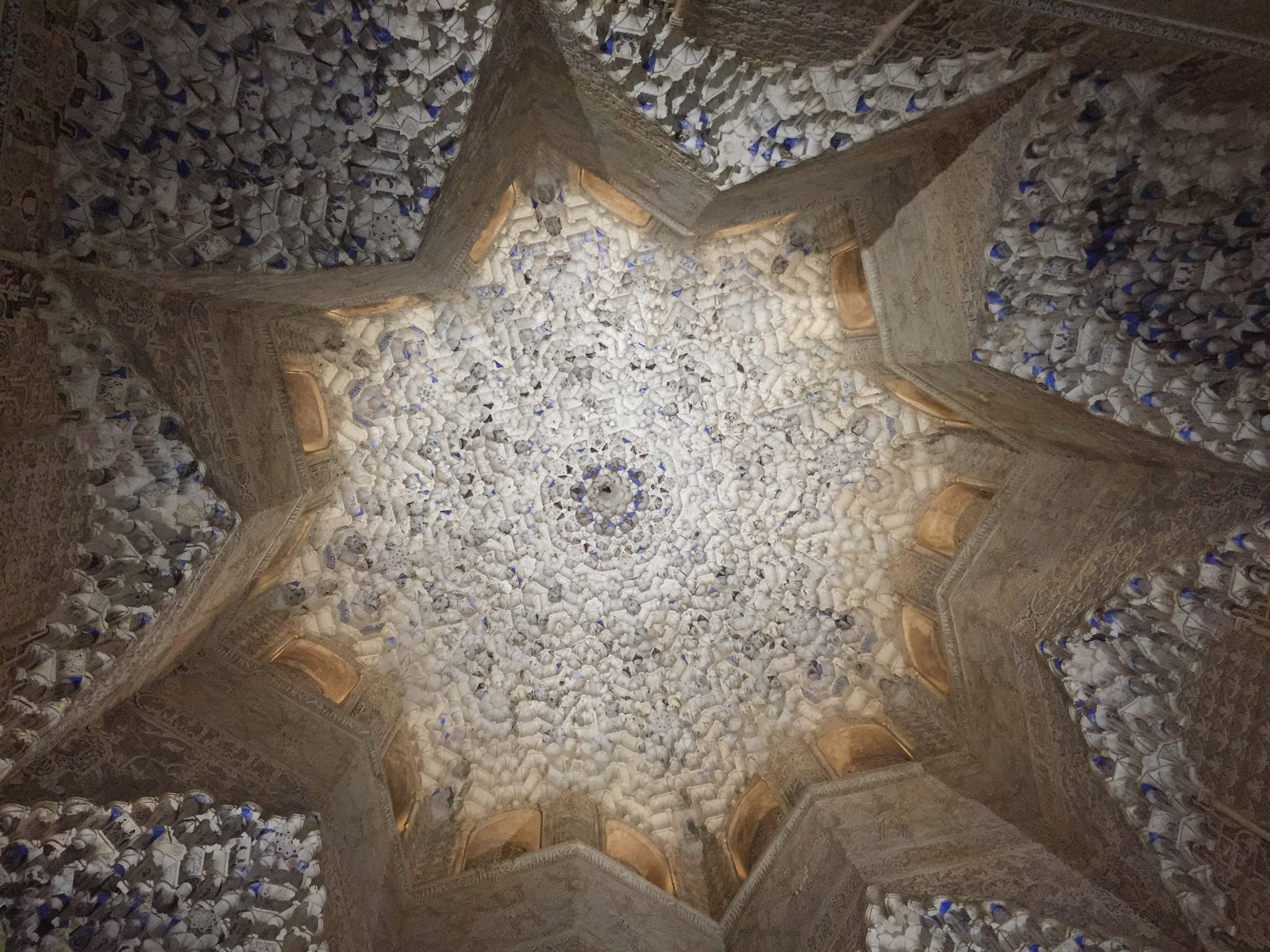
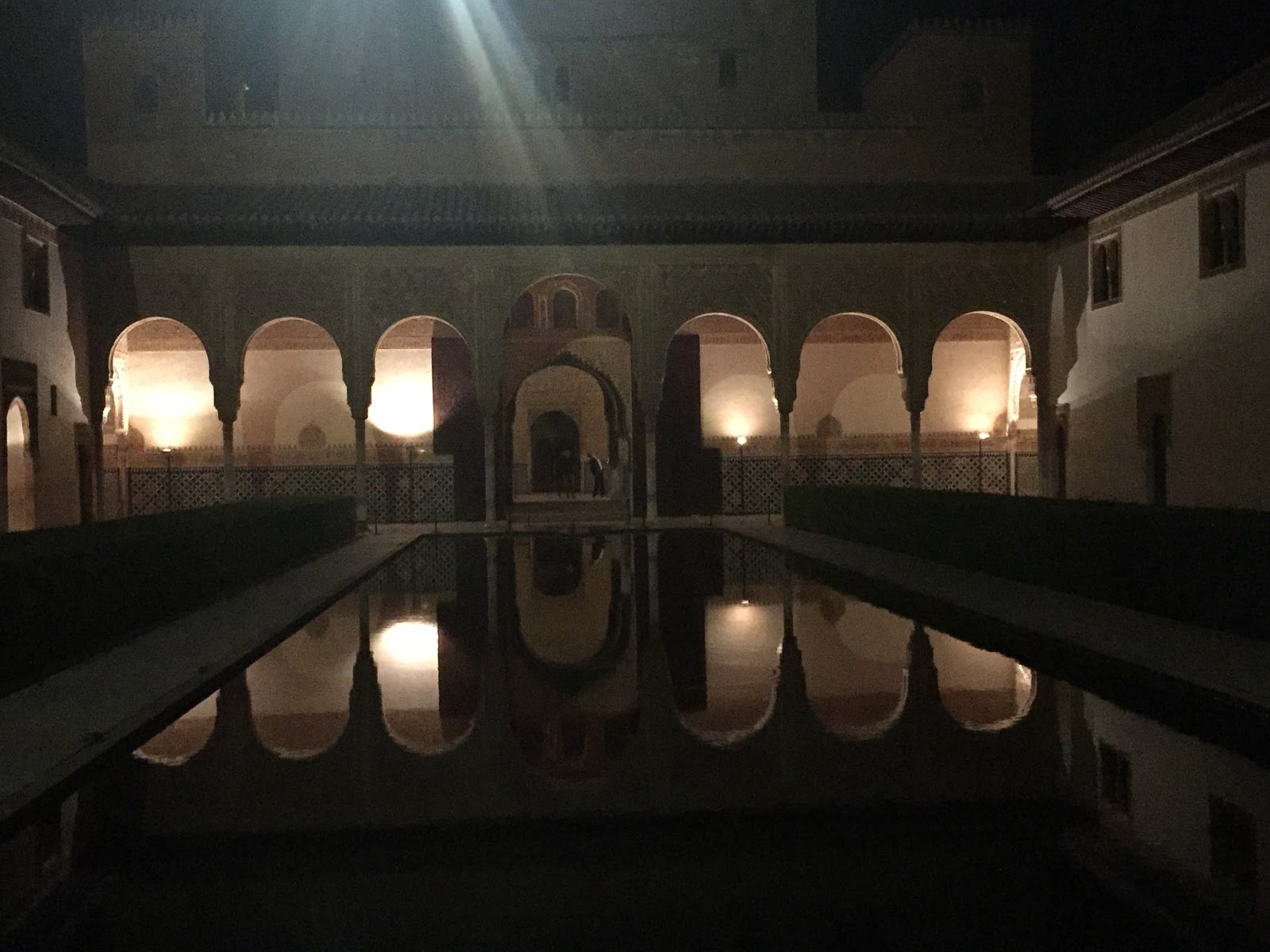
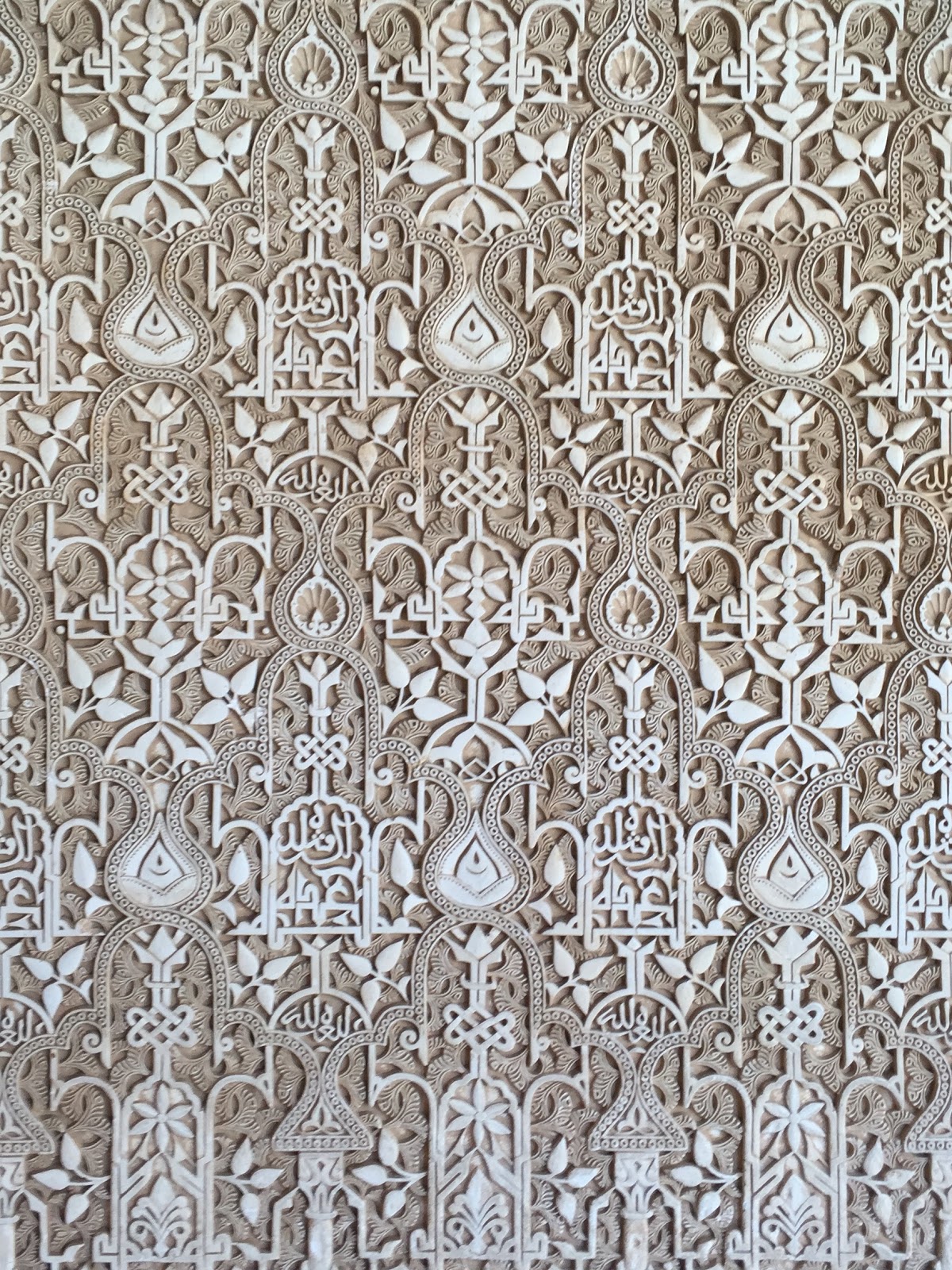
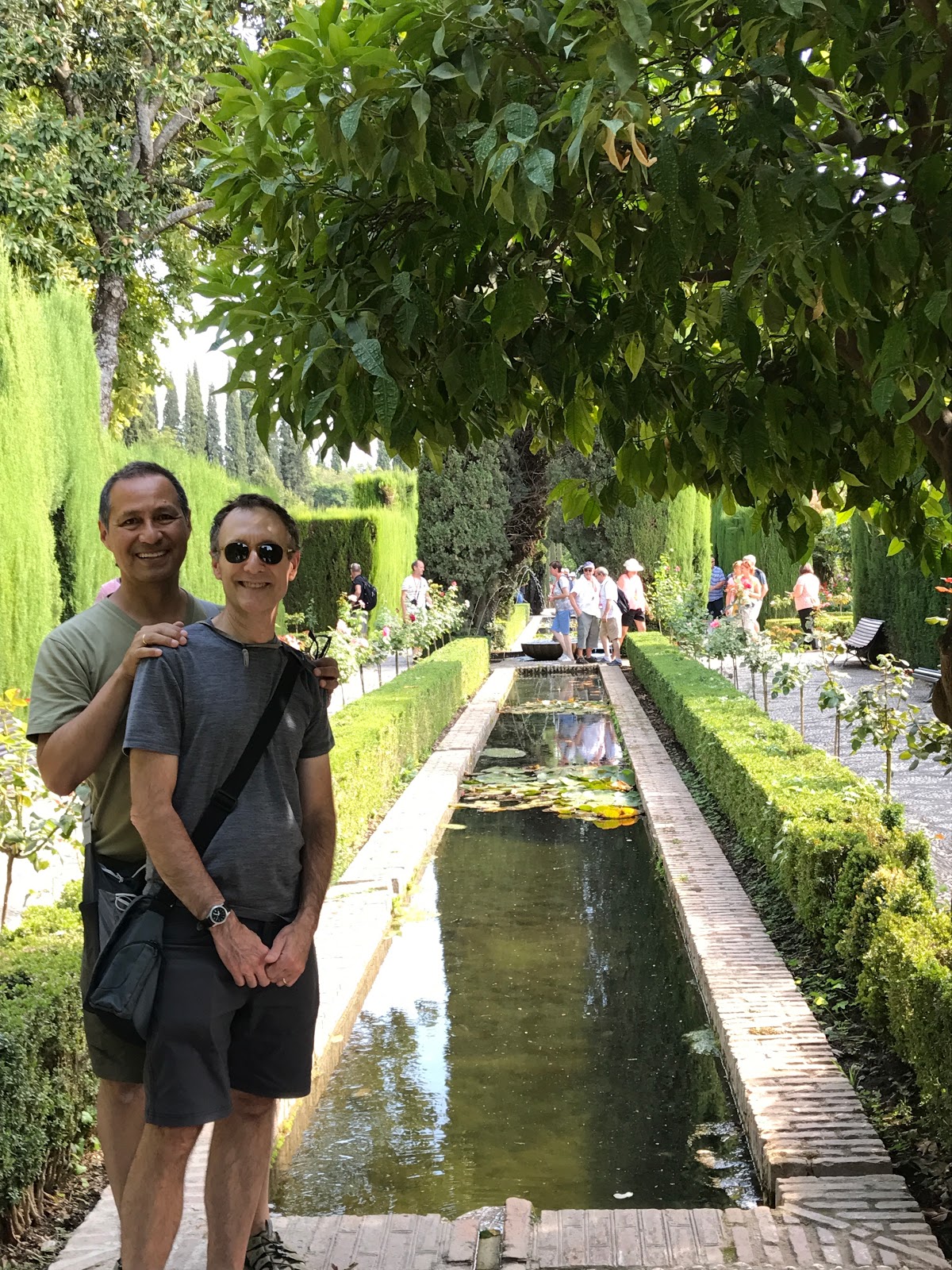
interiors were, and remain, decorated with elaborate and extreme plaster work. The walls have geometric designs engraved in the plaster. The ceilings have what resemble stalactites crafted from thousands of plaster cylinders affixed to the ceiling and carved to create the effect. The outdoor spaces which connect the buildings have reflecting pools, fountains and slender troughs embedded in the pavement. The water comes from the melting snow on the Sierra Nevada. The moors crafted an intricate system of aqueducts and cisterns and valves; and they constructed their water features according to elevation so each pool and fountain could feed the lower ones. The water enables verdant gardens of trees, hedges and flowers. It makes the ambiance cool on hot days. And the water supplies a continuous sound. A Spanish composer, Francisco Tarrega, wrote Recuerdos de la Alhambra for solo guitar, to reflect the hypnotic beauty of walking through the Alhambra.  

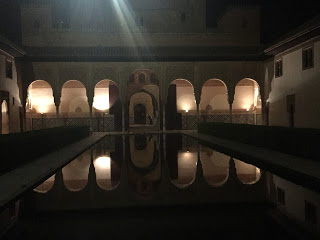
We walked through it twice; once by day, once by night. On our night in the Alhambra,
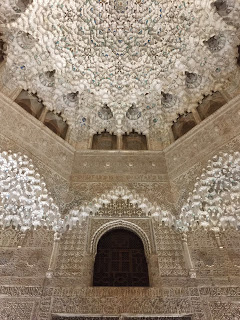
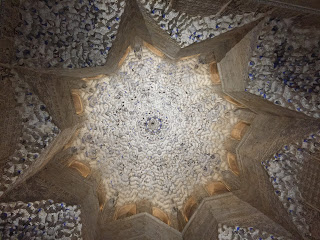
  

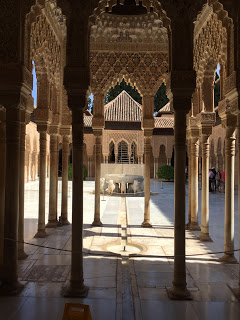
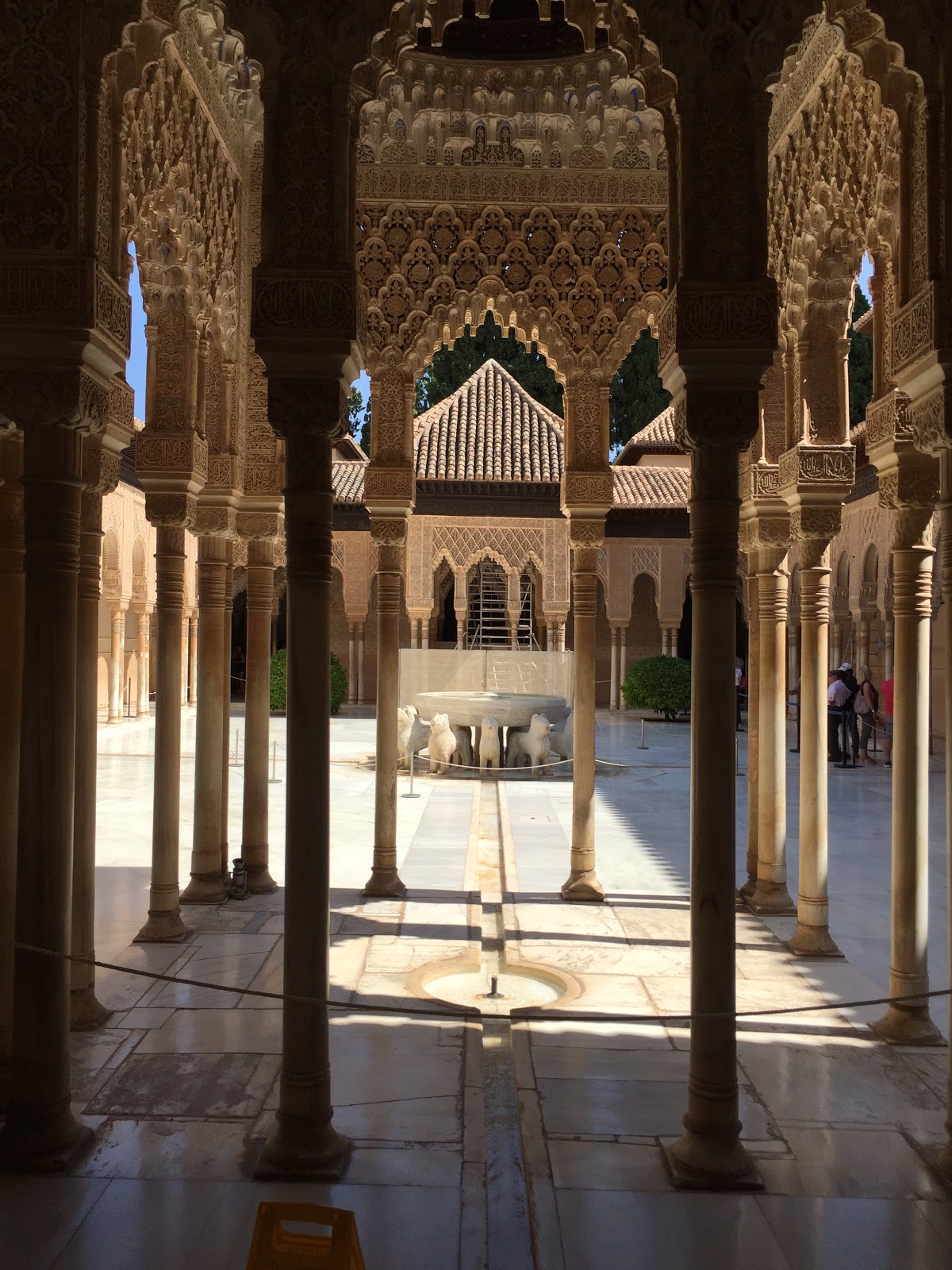
the moon was shining. The ornate interior facades were mirrored in the still water of the reflecting pools. The air was cool. We shared the space with very few people. The sultan’s palace has buildings for various purposes. One for receiving solicitors. One for entertaining. And one, the most intimate and lovely, the courtyard of the lions, for his residence and being with the harem. The courtyard is lined with elegant slender columns, far more than necessary, over one hundred.  They constantly divide your vista.  In the center is a fountain supported on the backs of twelve lions. Twelve lions: one for each month, each hour of the day, each sign of the zodiac, etc. The lip of the fountain is engraved with a poem. The poem extols allah, over and over. A significant portion of Alhambra’s the engraved plaster wall decoration consists of the written word, allah.

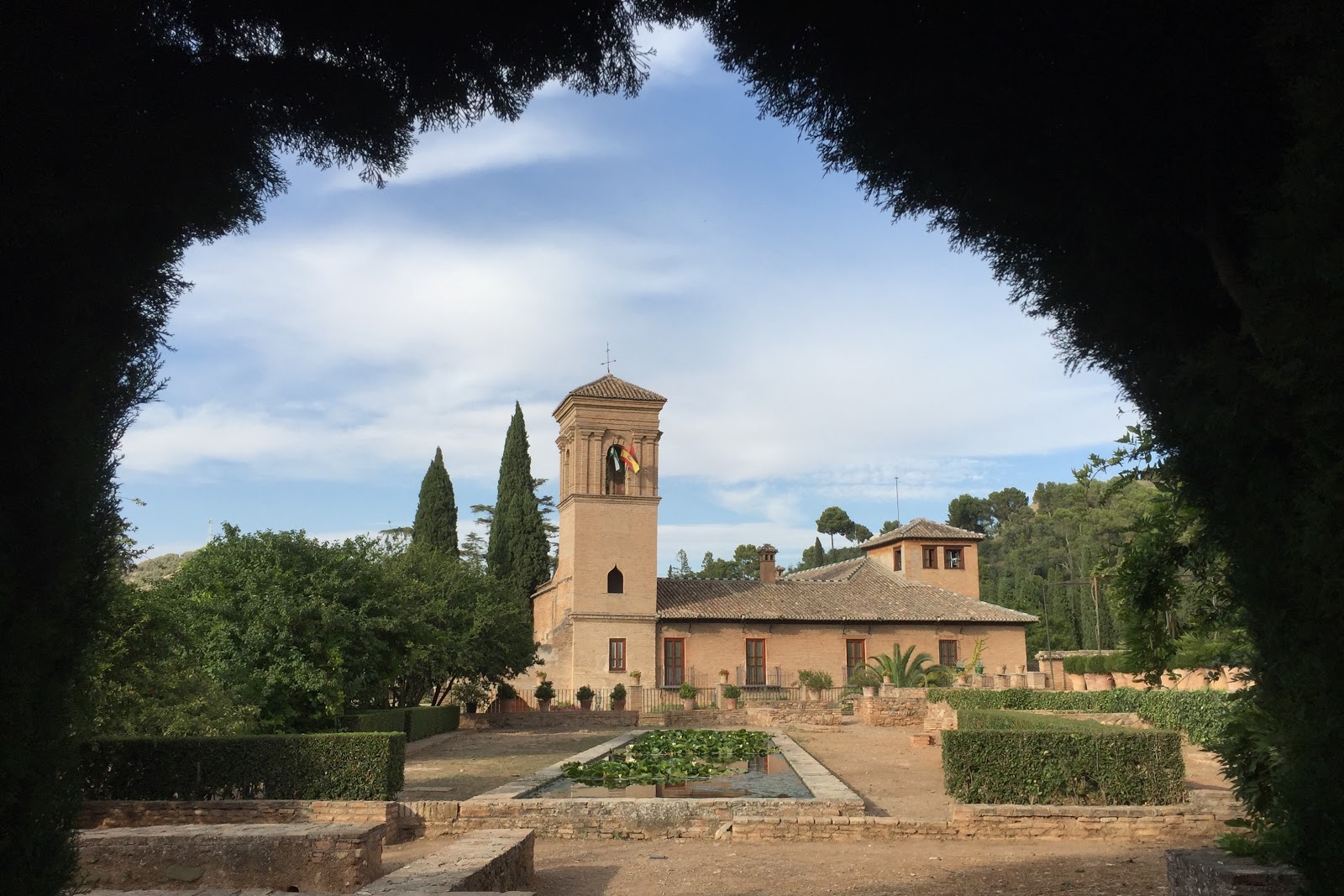
Our hotel, the Parador San Francisco, is part of the Alhambra. When Queen Ysabel and
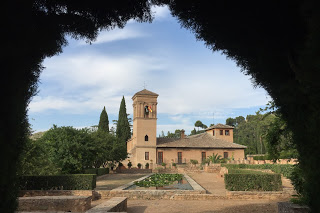
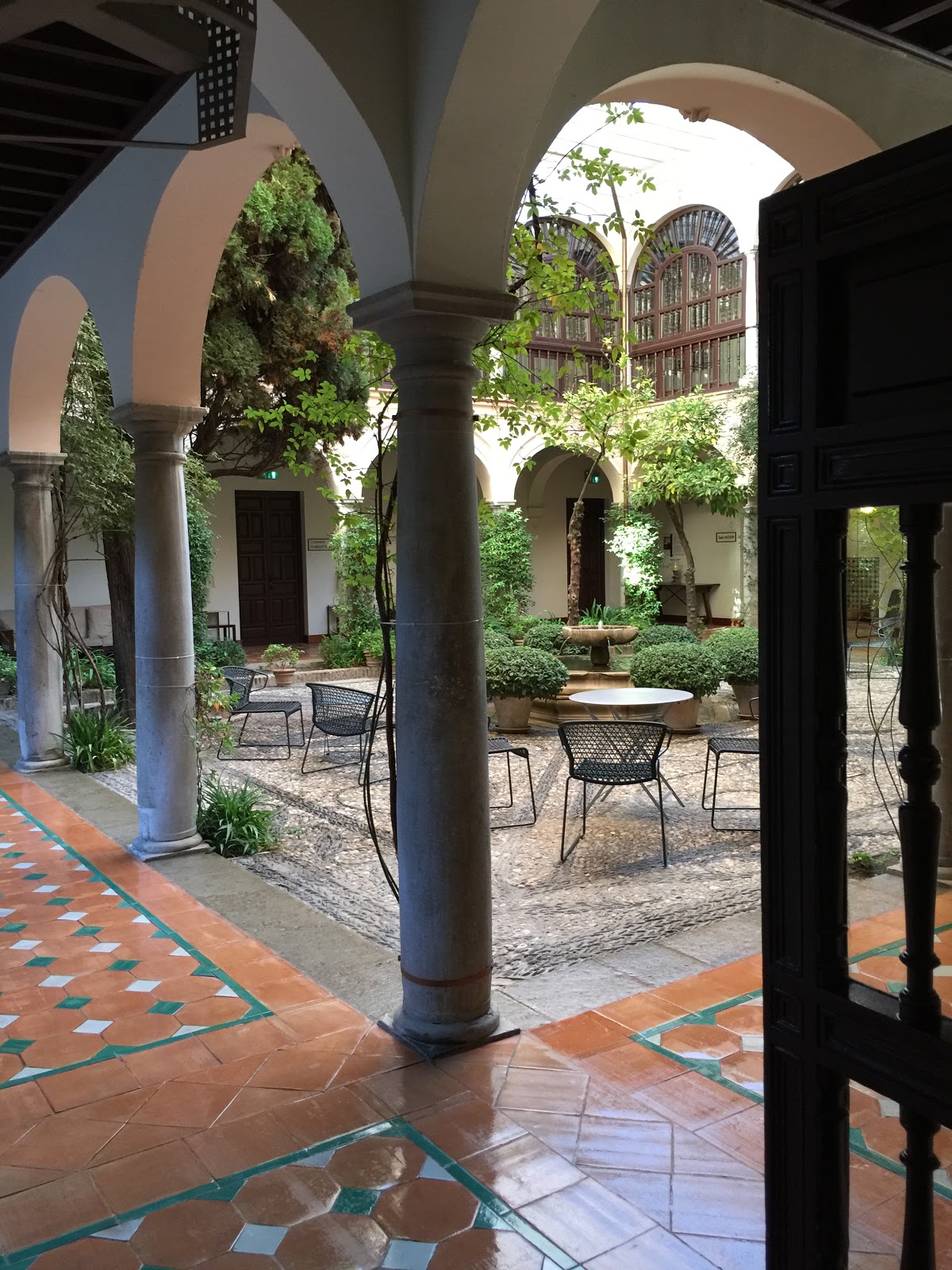
King Fernando won possesion of the Alhambra from the last sultan, they kept most of the buildings intact, but a few they razed or repurposed. Our hotel was that way. A few bits of the hotel had the islamic moorish decoration, but the remainder of the building was a monastery built by the Spanish in the early 1500’s.  In it’s beautiful courtyard, there is a photo of the building from 100 years ago. It was falling apart, in extreme disrepair. The intervention was made just in time to save all the buildings of the Alhambra.

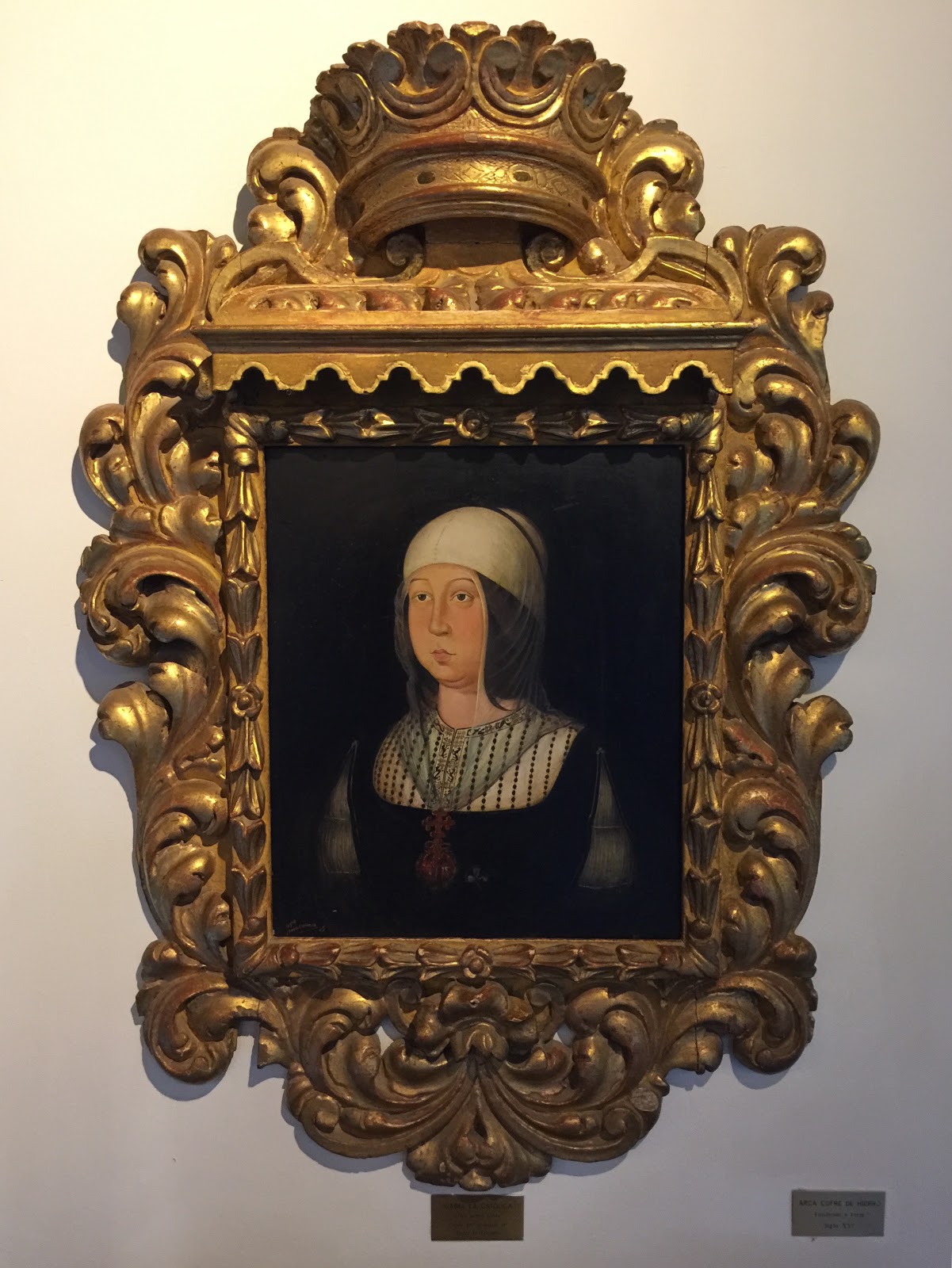
There is an oil portrait of Queen Ysabel in the lobby. It is not attractive, not something
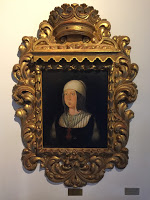
you’d expect a monarch would approve of. When she died in 1504, she was interred in the islamic part of our building. She and later her husband remained there until their grandson completed, down the hill, the Capilla Real, where their tombs are today. Referring back to the Prado and the Rogier van der Weyden painting, a copy of it hangs facing the marble royal tombs in Granada. There is a funny aside regarding these tombs. Laying beside the king and queen are their daughter and her husband. Folklore says, the daughter’s husband, Felipe “el Hermoso”, died and a priest convinced her he could revive him so she traveled with her husband’s corpse for several years, occasionally lifting the lid to have a peek, until she was declared “loca”  Juana “la Loca”.

Before visiting the Alhambra, I read Tales of the Alhambra, by Washington Irving. It was like a book of fairy tales and Arabian Nights stories. He lived in one of the palaces in the 1828, when the buildings were in extreme disrepair, when they served neither royal nor political functions. He wrote of looking down to the river, where at night there was always life going on and the sound of the guitar.

There is still the sound of the guitar in Granada. We went to a flamenco establishment,
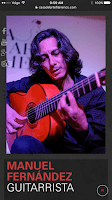
Peña la Plateria. It functions as a private club and a flamenco school. On site there is a terrace restaurant. We ate Spanish home cooking of simple foods: beans with ham, gaspacho, eggplant with honey. Afterward, we paid our ten euros, sat indoors at our table and enjoyed a young man and his guitar. He mesmerized us for a dozen minutes when a dancer came out to accompany him.

In the twentieth Century, the leading Spanish guitarist, famous enough to be called by one name, Segovia, began his guitar instruction in Granada in 1900. There is a recording of him sharing, in English, his recollections of the streetcars, the bougainvillea, the lovely girls, the magical Alhambra in the moonlight and the sweet perfume of the orangeblossoms. We have been there and every thing he said is still true.

Wes and Marlow
Granada, September 20-24, 2017
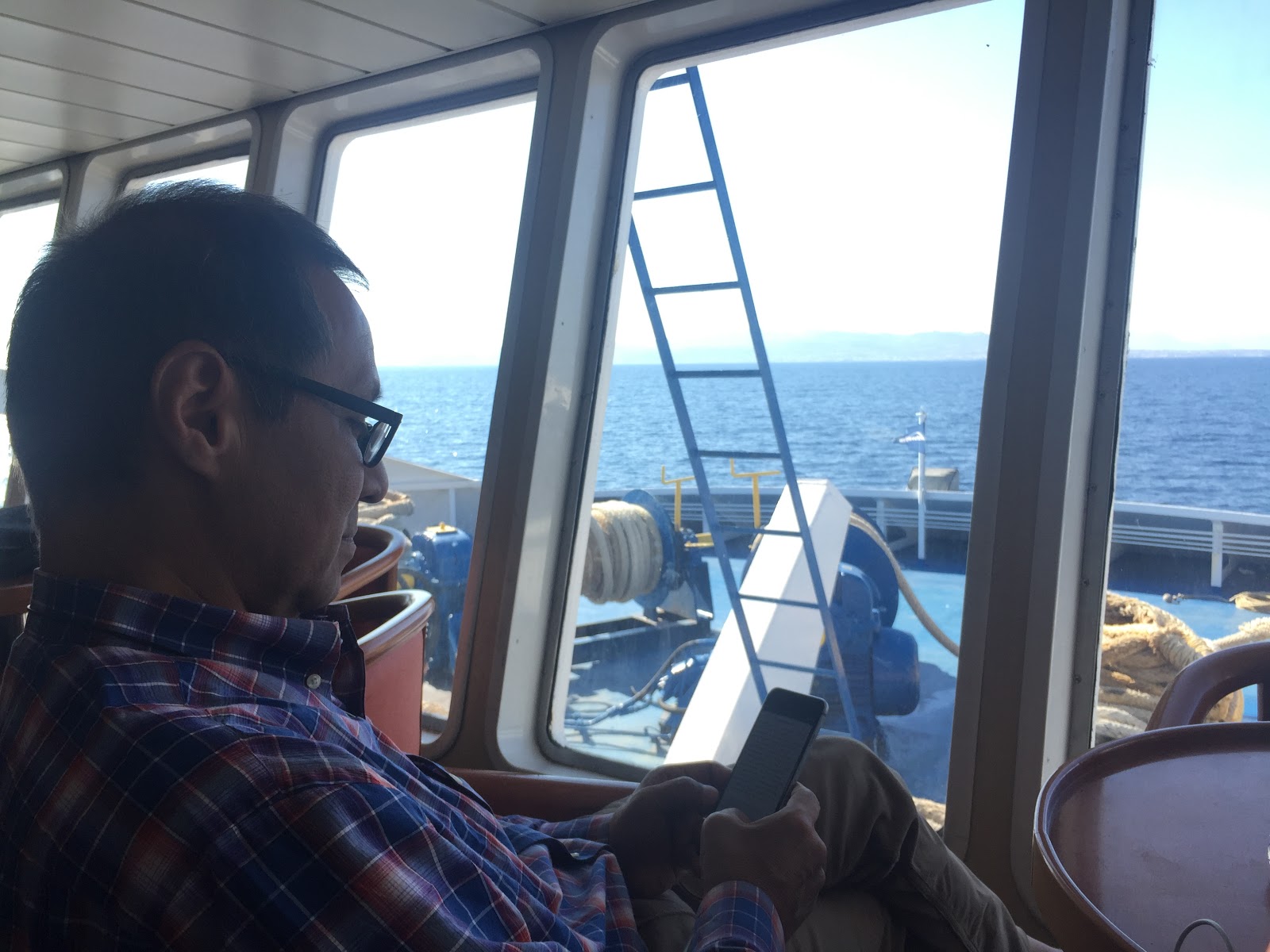

Madrid, September 18-19, 2017
We are on the road, in celebration of our sixtieth birthdays, traveling in an eastward direction, for eleven weeks, until we arrive home in mid-December.

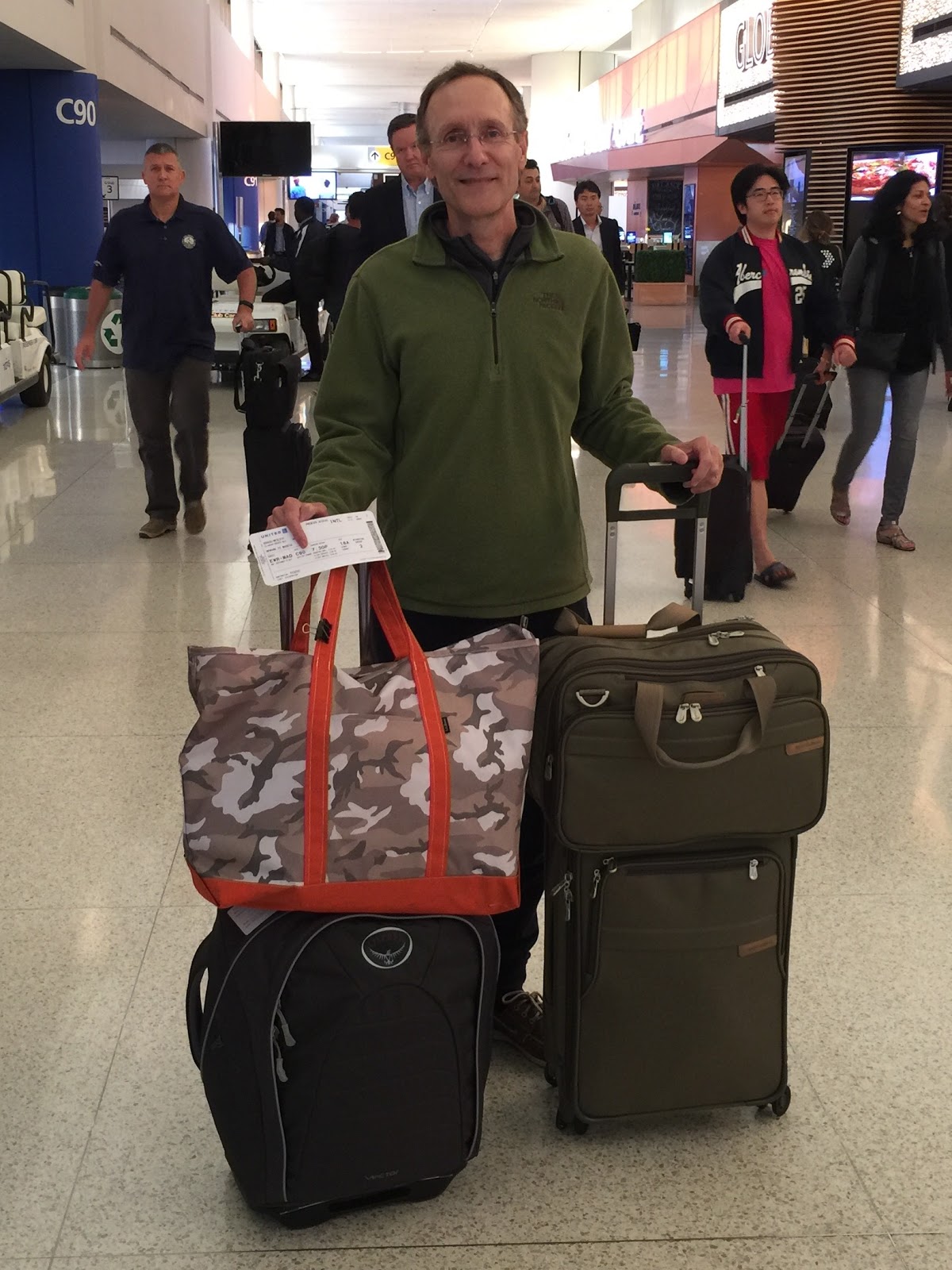
Our trip began in Spain. We departed from Los Angeles on a Monday morning and arrived in Madrid on Tuesday morning.

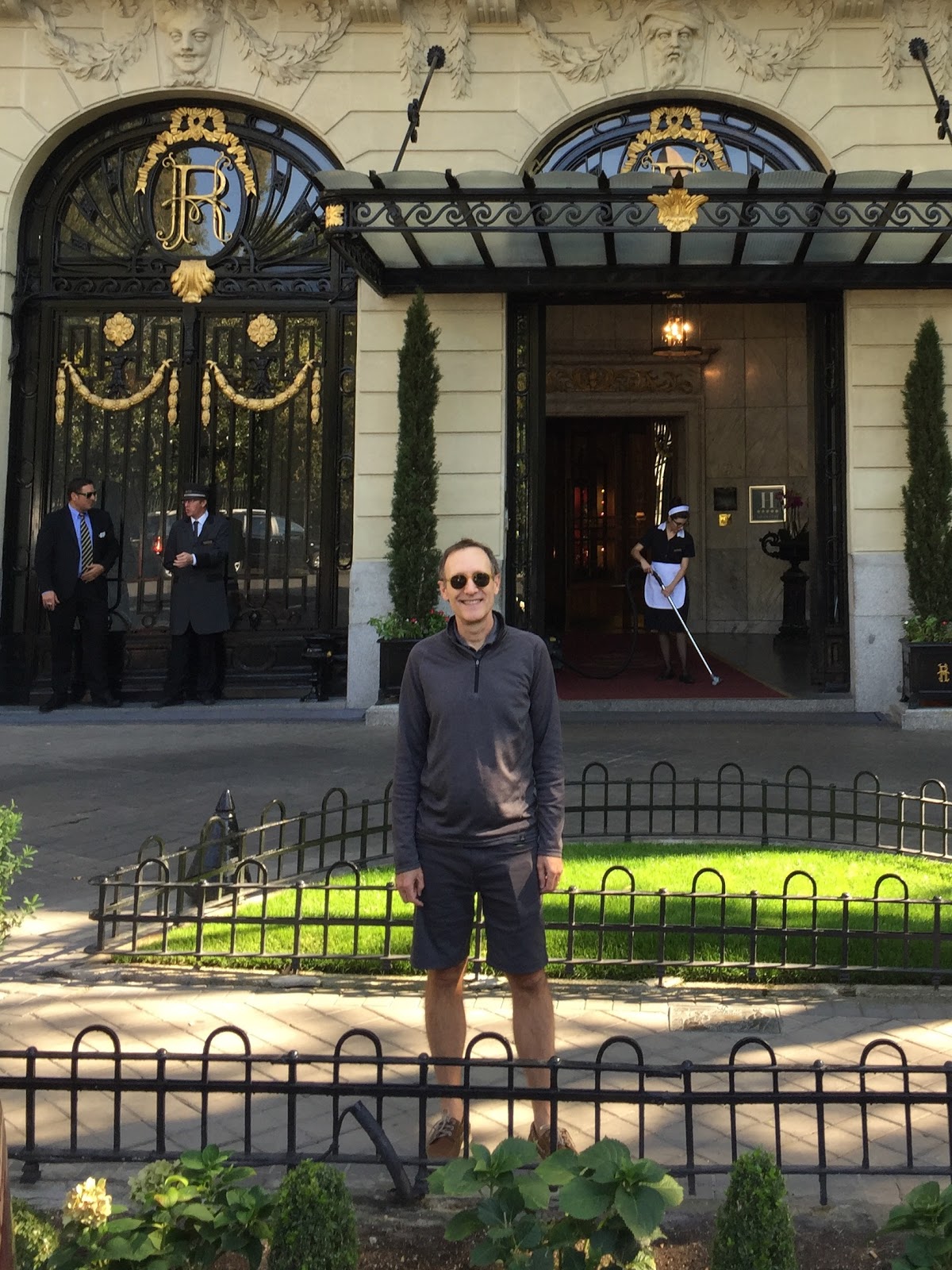
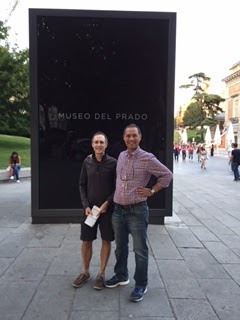
We have been, several times, to Madrid. It has several attractions which I probably would never tire of. It also has a sprawl, like Los Angeles, which makes it cumbersome to get around. This time, as usual, we focussed on the intersection where the Prado Museum is located. That is also where the Hotel Ritz is and that, to my total and happy surprise, is where we stayed.

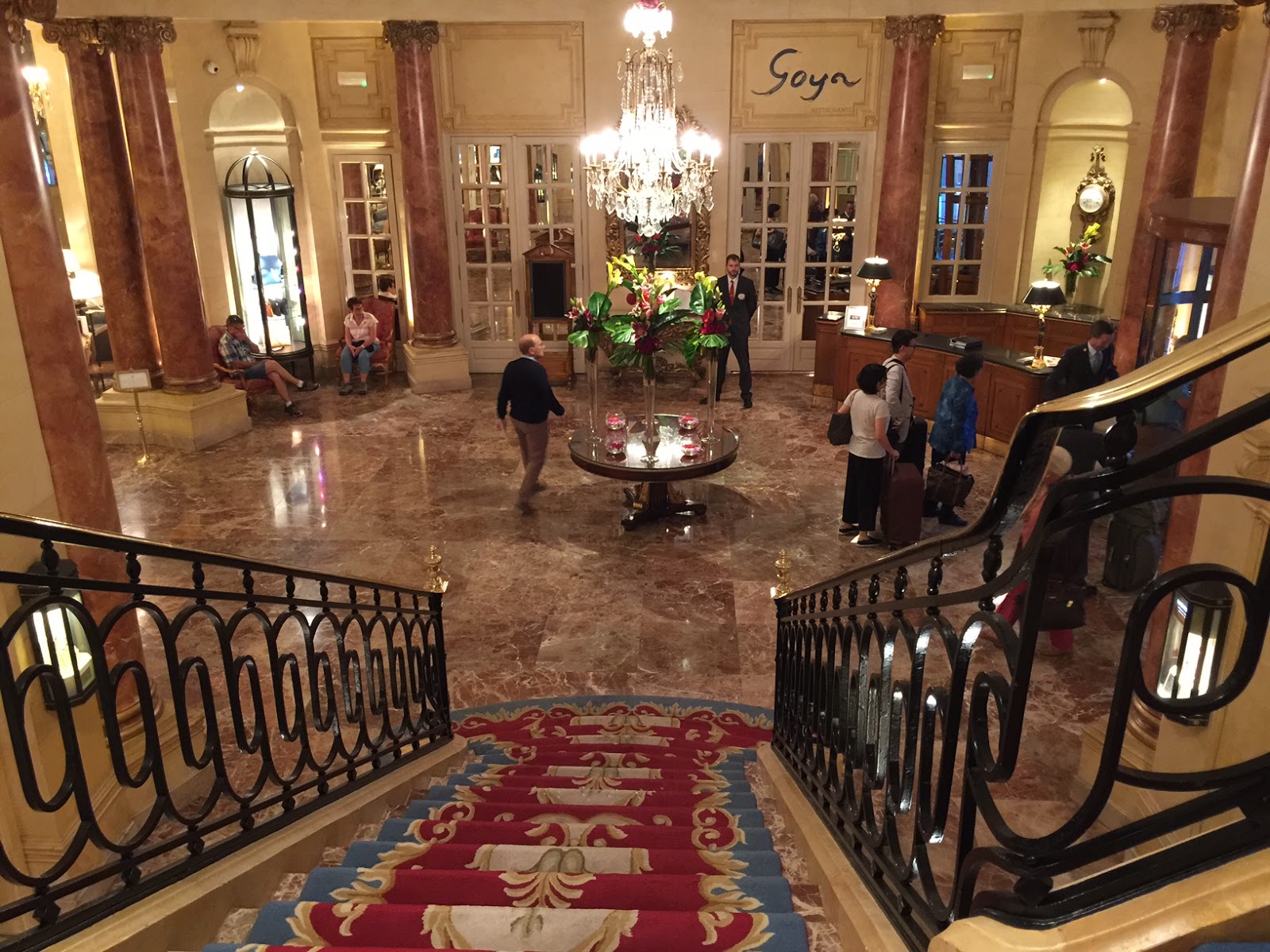
We were tired and it was so very nice to be pampered on arrival. While our room was prepared, we were seated in a room with chandeliers, velvet upholstery, an arrangement of lilies almost the size of us. From small comfortable chair we reached out to the small round table for coffee, cookies and hot chocolate, which in Spain is typically dark and thickened to an easily drinkable pudding.

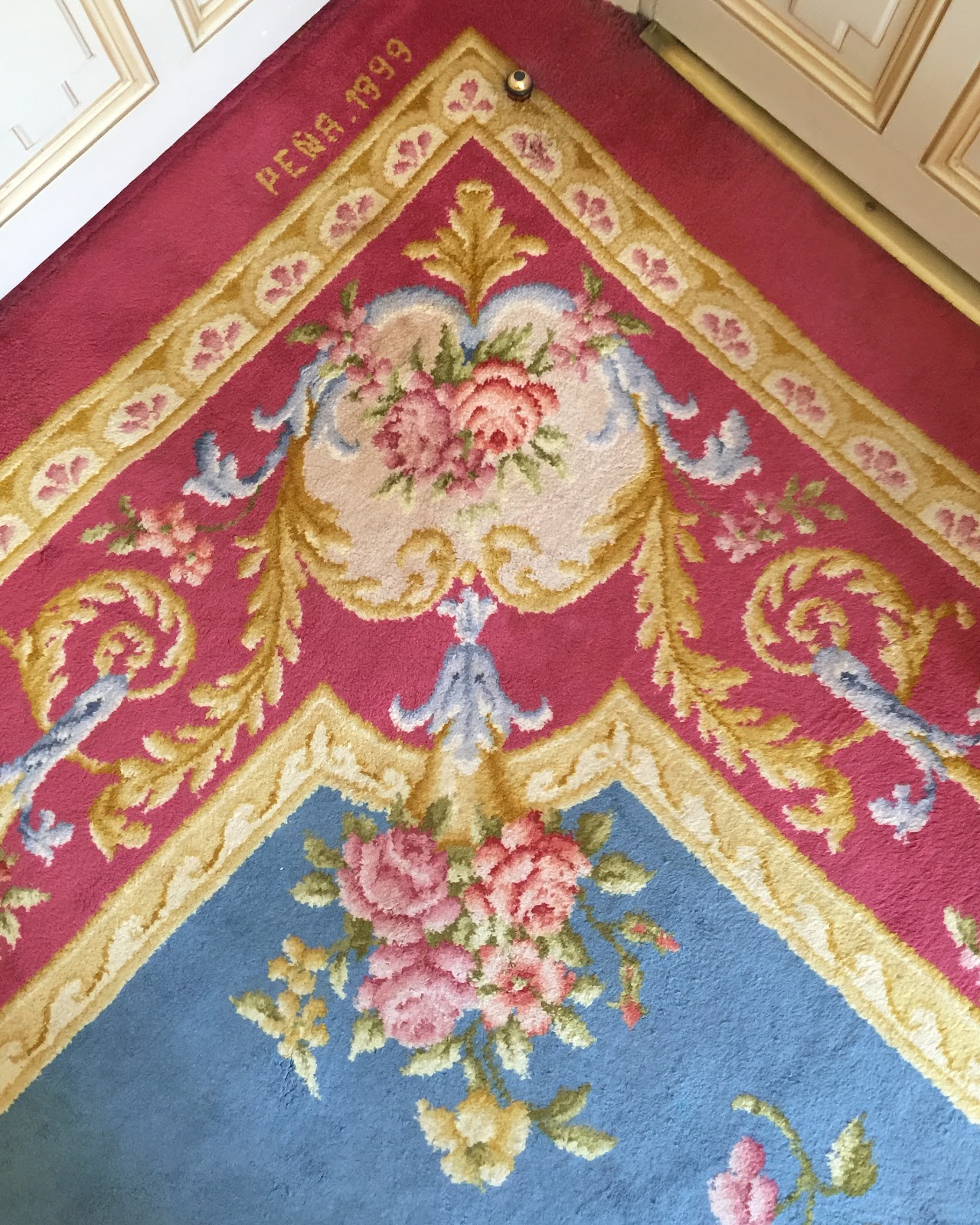
Our room was fun to explore. The window opened onto a vista of leafy trees. Down below was a dining garden with bougainvillea and fountains. The bathroom was equipped with a bathtub, deep and long and a separate stall shower, clad in marble. There were soft towels in small, medium and large with raised nap which spelled, R I T Z.  The bath products were Wesley’s favorites, made by Penhaligon of London. The colorful carpet was woven with designs of floral sprays and garlands. In it’s corner was an embroidered name and date by it’s maker, I assume. The bed linens were exceptional. Far beyond Egyptian cotton and percale and sateen damask, they were woven of linen with delicate embroidery and ironed, cool and crisp to the touch.

We were in Madrid for one night only. Our free time, we spent in the Prado Museum. We walked through the room full of large regal canvases by Velazquez. Was he doing respectfully accurate portraits of the king? His features seem goofy and comical. Or maybe the king was not classically handsome. Of course, we stood before Las Meninas. There is so much going on in the large canvas: royals, pet dogs, children, a dwarf, the painter himself, mirrors which reflect people not otherwise visible in the room. We wandered through a lot of galleries without searching for particular painters or paintings. In the Prado, you can do that and in every gallery you will find masterpieces. We always make a pilgrimage to see a masterpiece recommended by a dear friend. The painting is The Descent From The Cross, created by Rogier van der Weyden in 1435. In it, there are life size people in brilliantly colored robes. They look perfectly alive and as if they could turn and talk to you of the sadness.  The subject is religious, but the feeling is universal that humans empathize with each others trials and struggles and pain. (This painting will figure in our next city, Granada).


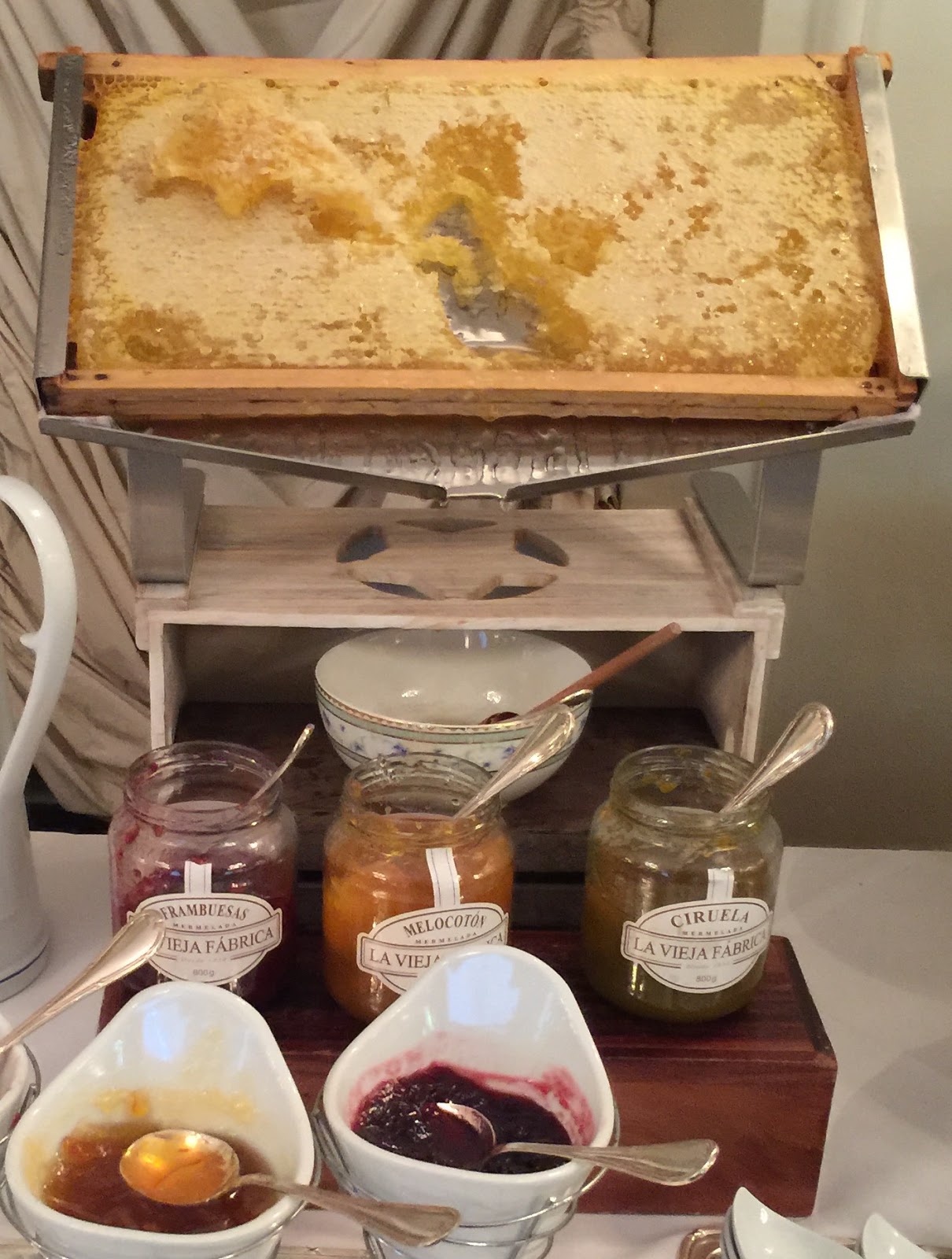
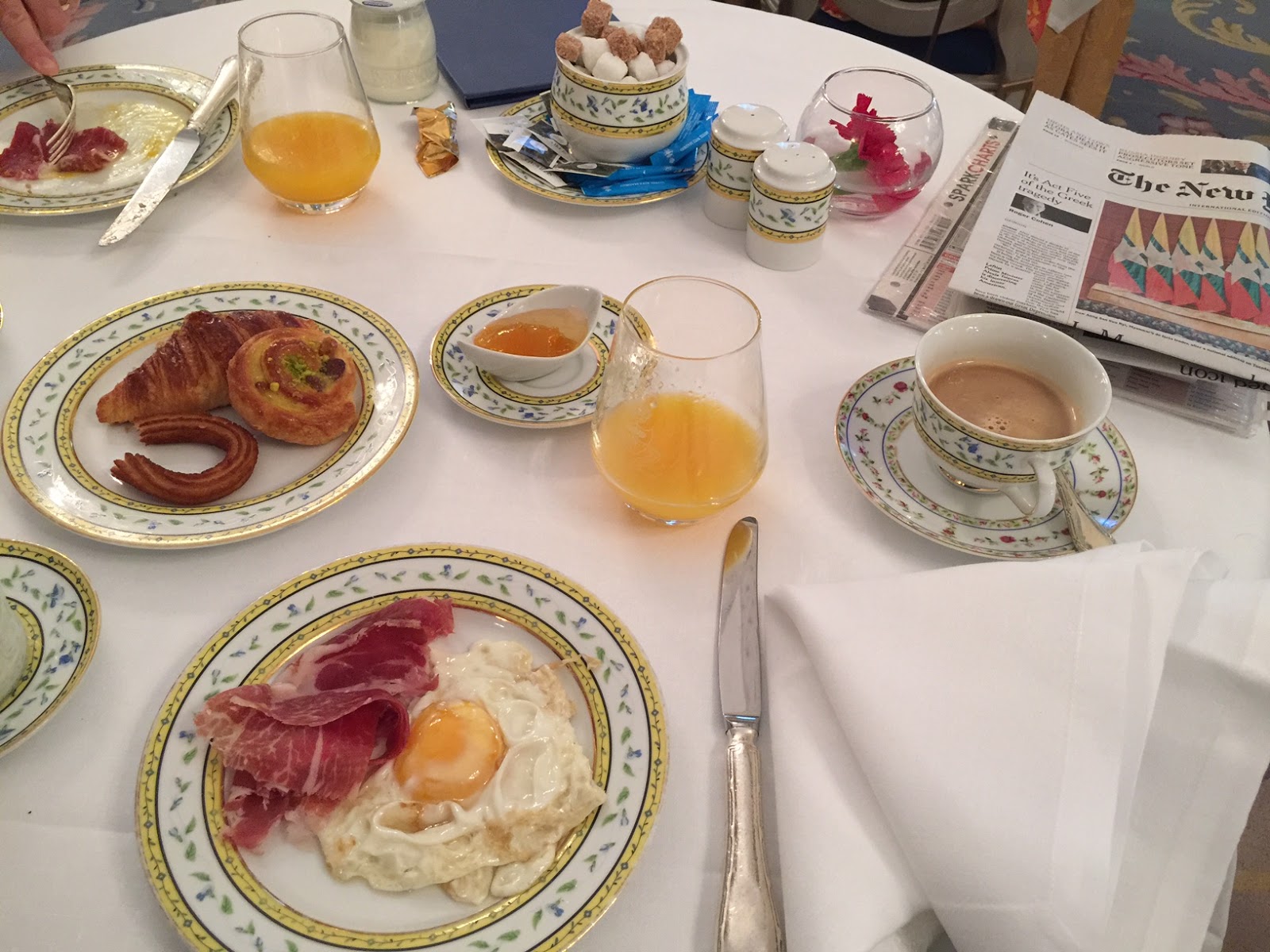
The hotel breakfast was another great pleasure. It was a fantasy spread of perfect items. The juice, fresh squeezed; the honey dripped from it’s inclined honeycomb; the olive oil fried eggs with perfect yolks. Anything else we desired was available from a menu or the server.


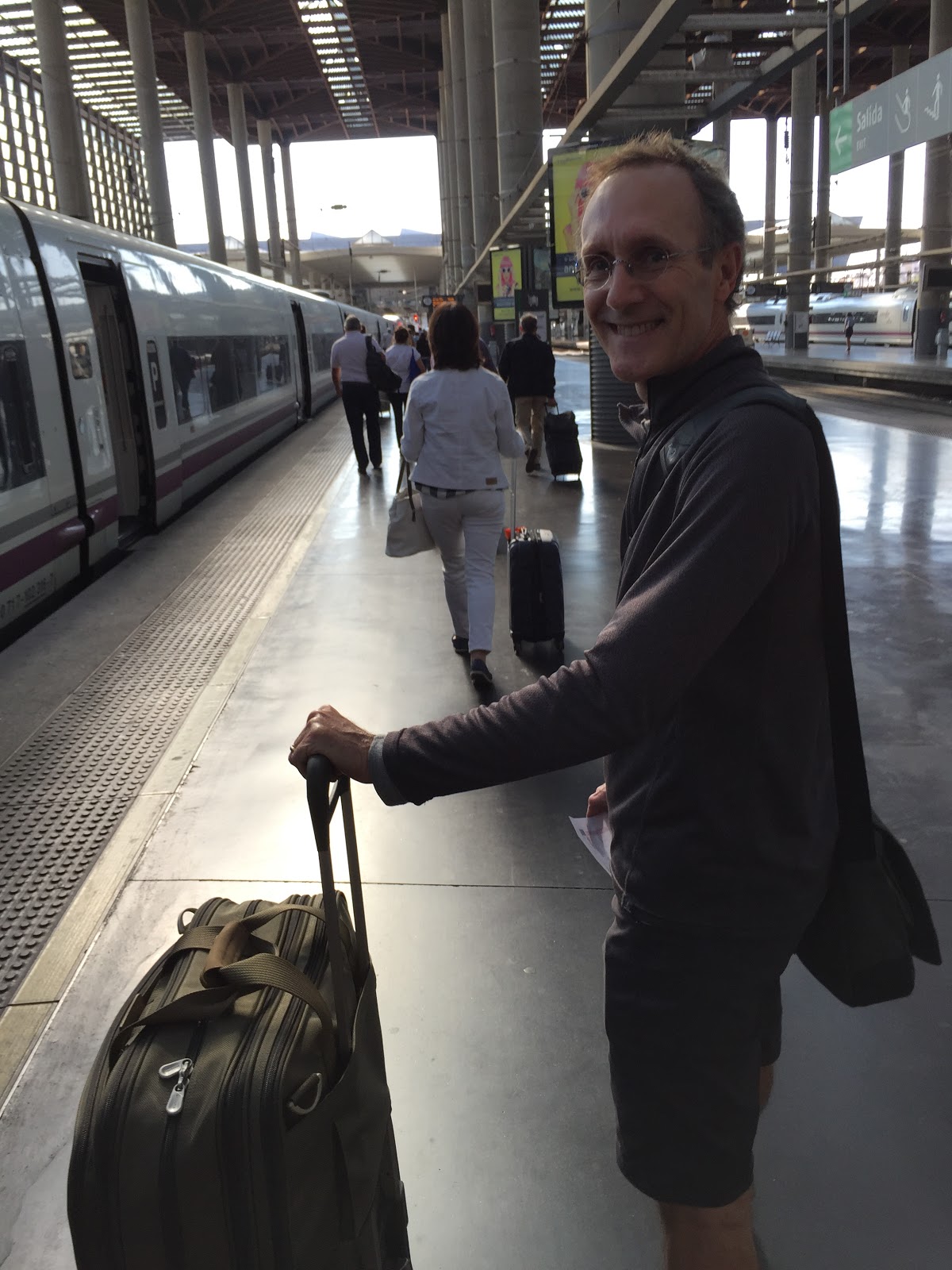
After breakfast, we checked out and from the Hotel Ritz, we walked, past the Museo del Prado, to the Atocha train station. The station consists of it’s original old atrium, no longer with train tracks and a modern addition where the trains arrive to. The old atrium, from the mid-eighteen hundreds consists of an iron frame, (created by an associate of Gustave Eiffel), with attractively paned glass. Twenty-five years ago, it was taken out service and repurposed as a lush garden of palm trees and occasional ponds with turtles and fish. Abutting it’s front end is the modern terminal where we boarded a train for Granada, a city in the southeast of Spain.

See you in Granada ….

Wes and Marlow
Madrid, September 18-19, 2017


Design a site like this with WordPress.com
Get started