Sri Lanka – Kandy, November 3

Wake up at 7:00 AM in Kandy at the Thilanka Hotel.
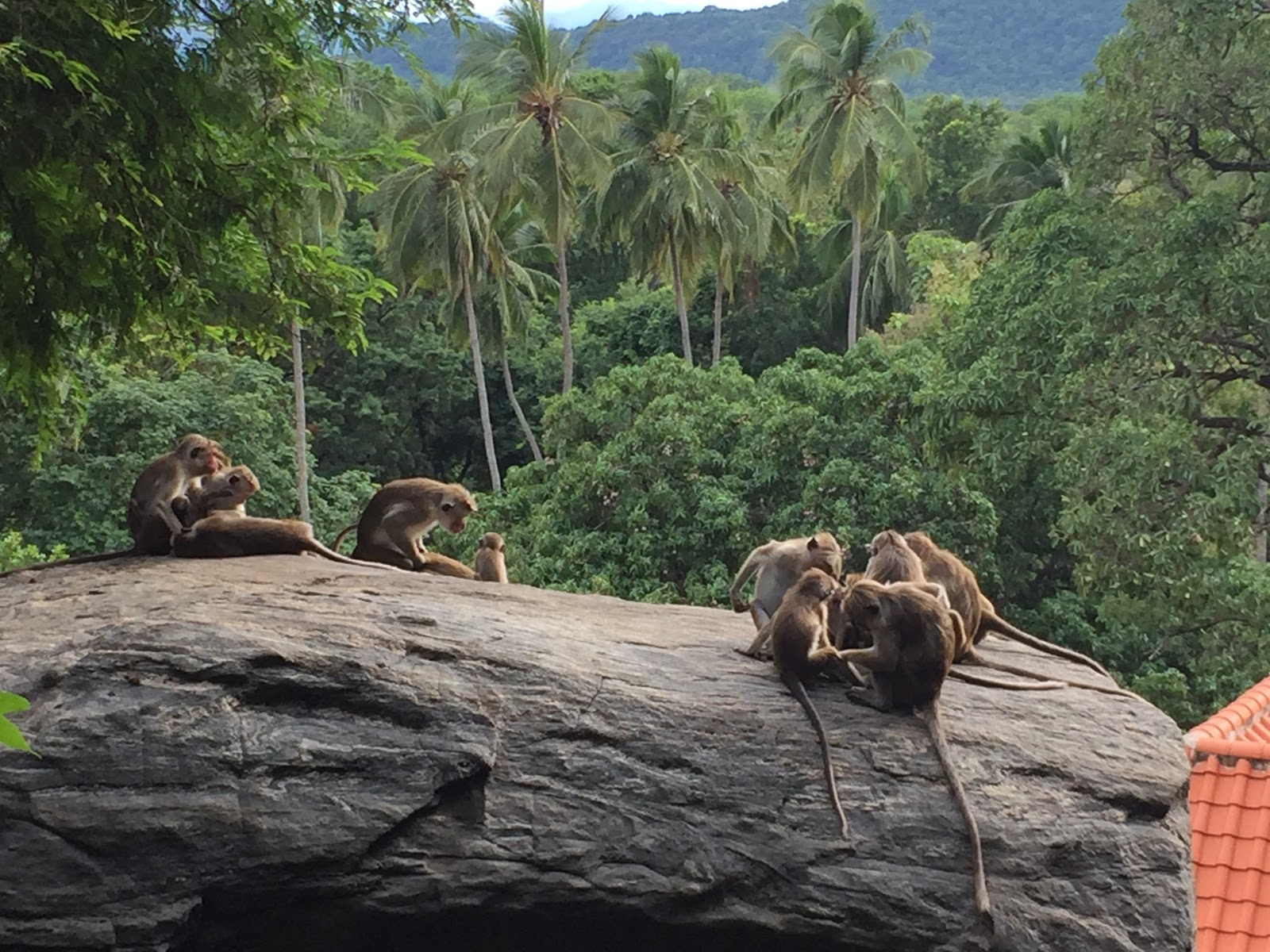
At sunrise we heard monkey racket. They were running on corrugated metal in front of, and over, our porch, but not in our room.

Breakfast at 7:45. Buffalo curd (basically a rich plain yogurt, tasting of sour cream), with a spoon of “bee honey”. Passion fruit juice. Papaya. Mango. Tiny bananas, red and yellow. Ceylon tea with hot milk.

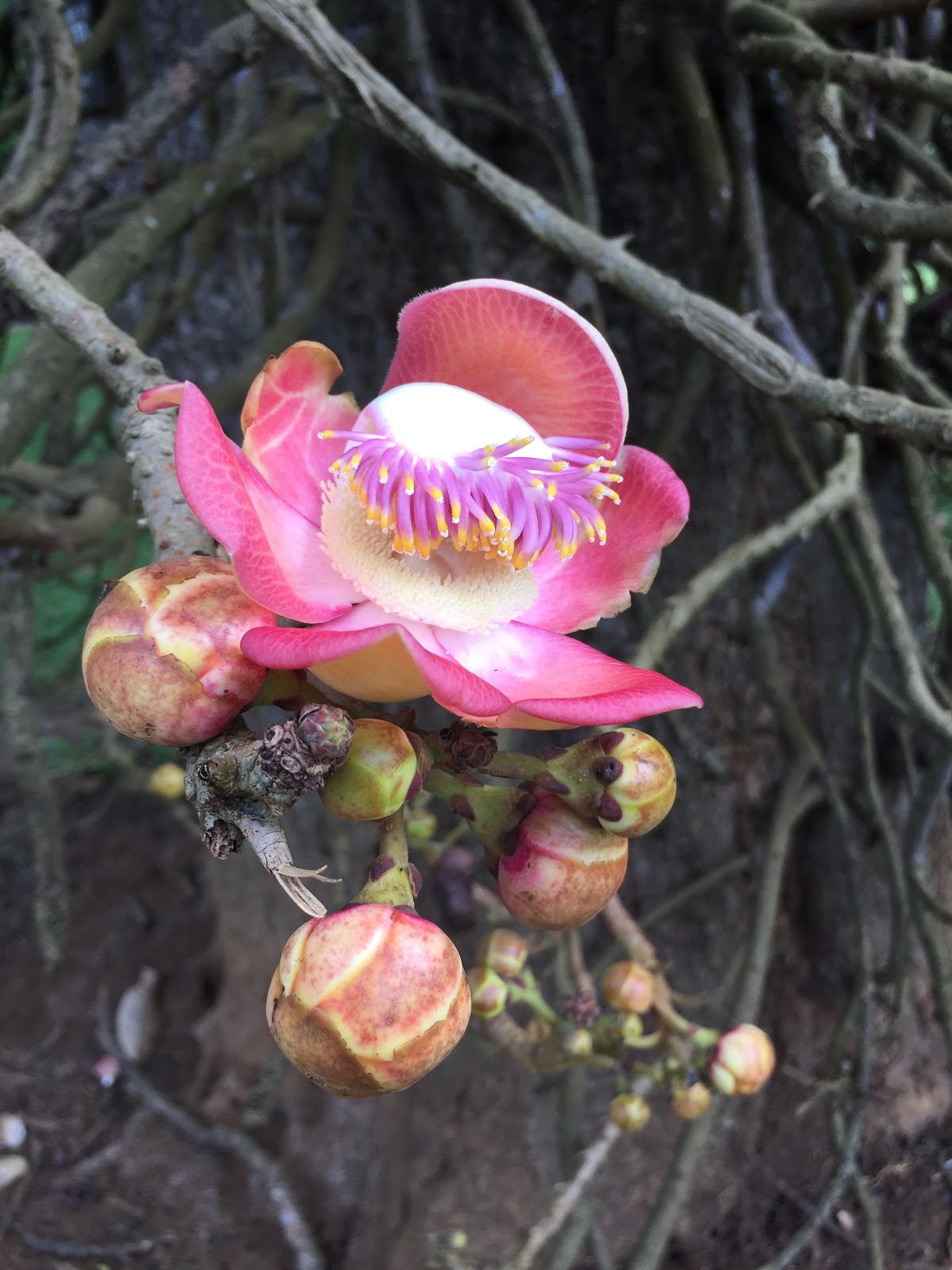
9:00 AM. We are on the road to the Peradeniya Botanical Garden. Established in the 1800’s, it is vast. For one hour, a guide drove us, in a cart, past wonderful things. The largest coconut palms on the planet. A tree of the hardest wood in the world, from Mexico. The largest bamboo specimens. A tree called, Krishna’s Cup, planted sixty years ago by Queen Elizabeth, with flowers dangling like little ladles. There was a tree in the distance, like a sprawling umbrella canopy, so large, the many people under it seem tiny. Another tree, so tall, you can hardly see it’s top, with smooth bark in pastel colors. Do not sit under the “canon ball” tree. There are several long avenues. One with Cabbage Palms. Another has Palmyra Palms, planted in 1887. We met, also, the tree of brazil nuts and of teak. The teaks in this garden look ancient. They are massive and straight, no wonder they end up as planks.

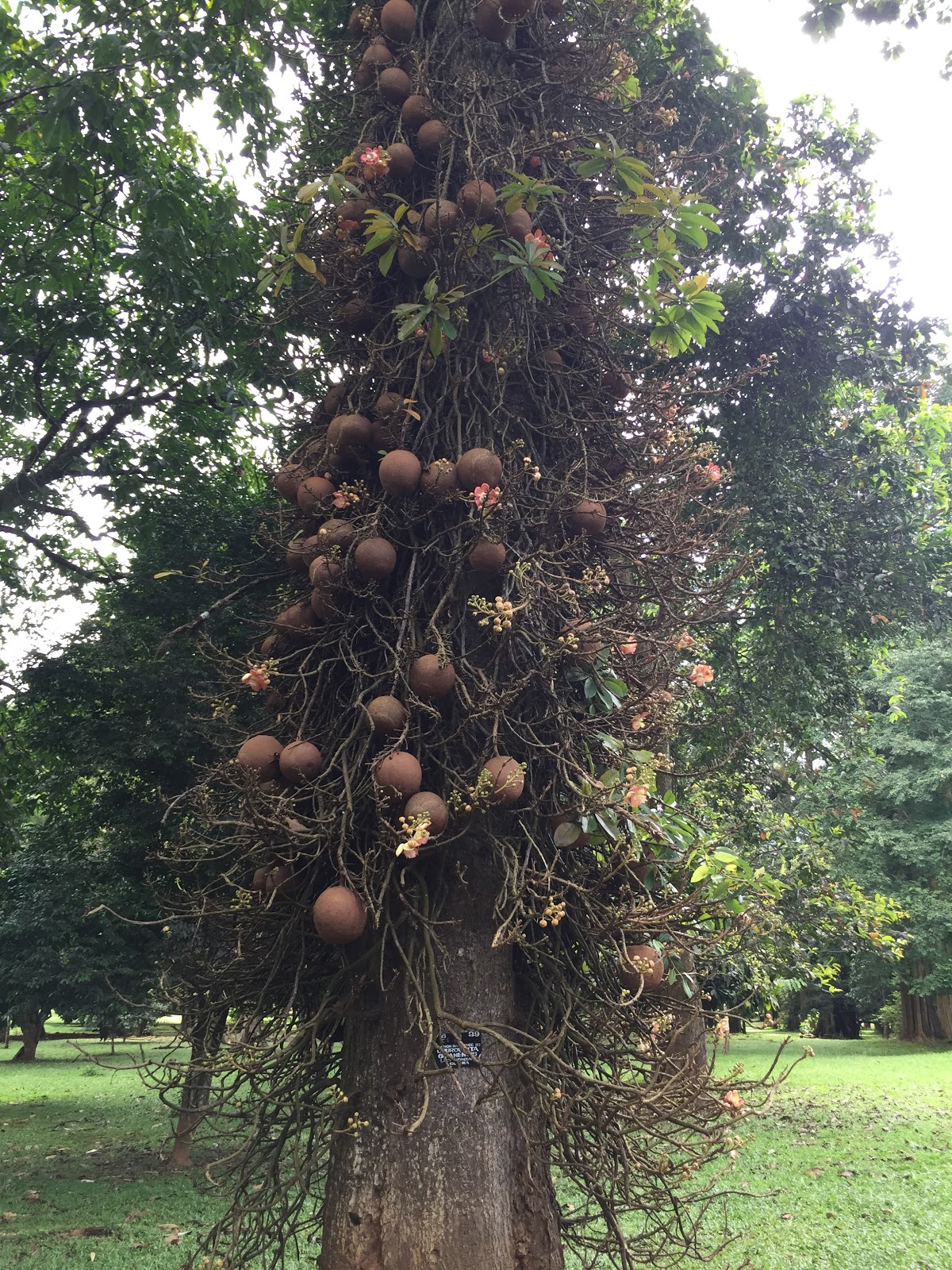
Cannonball tree flower

Just before Sri Lanka declared independence from Britain, in the 1940’s, Lord Mountbatten, had the park to himself. His lovely colonial cottage looks over a great lawn. Now, everyone is welcome. The garden is filled with lovely families of Sri Lankans. I say lovely, because when you make eye contact and smile, their face opens into a radiant lotus blossom of a smile.

Cannonball tree

For the rest of the day, we are driving on curvaceous

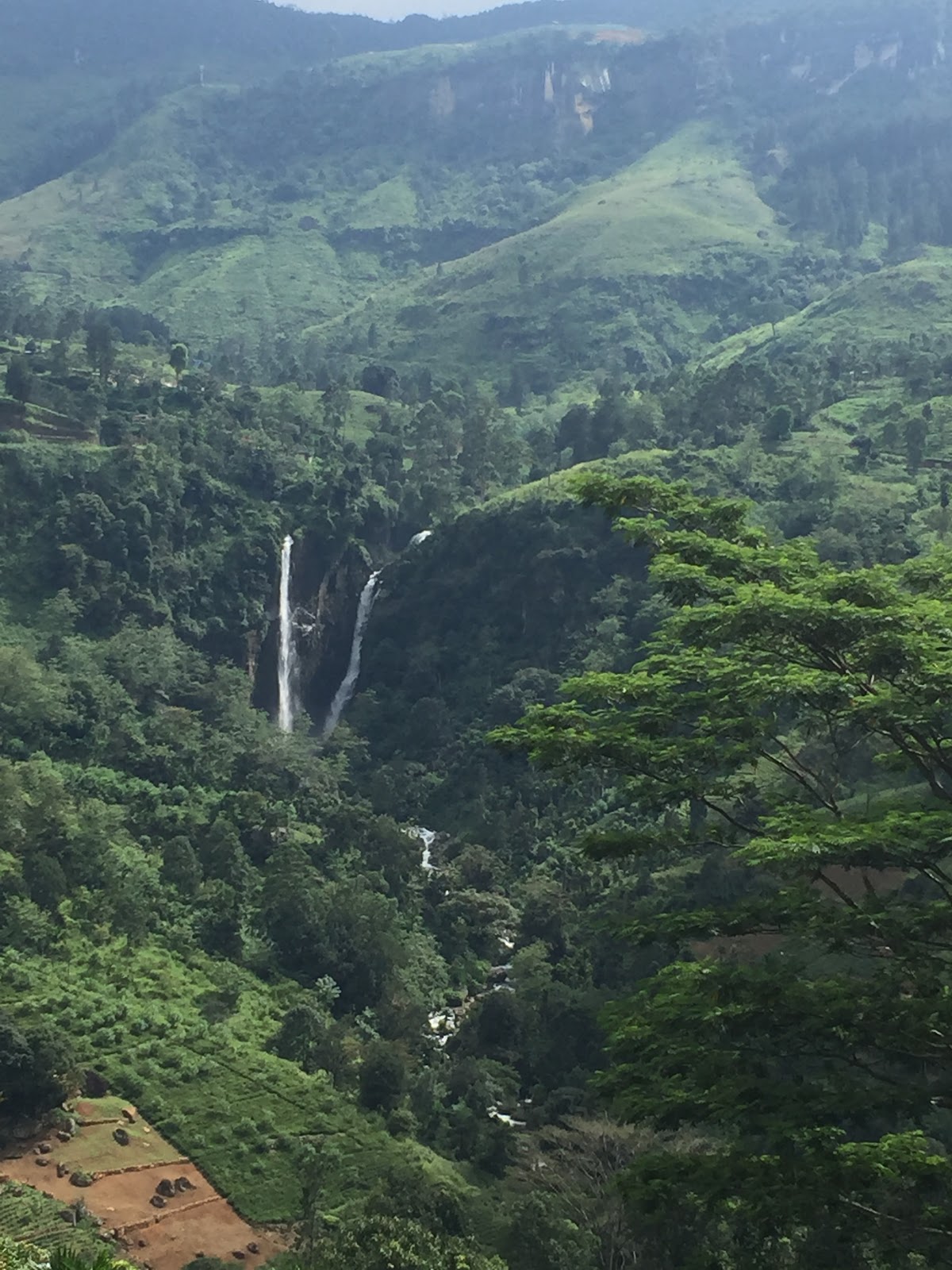
mountain roads. We stop for waterfall vistas. We stop for fruit; cherimoyas unlike their American relatives. Mangos, again, unlike our limited varieties at home. The fruit is cut up at the roadside hut. We eat it bare handed. The juice wets are fingers, hands, wrists.  The vendor pours water from a bottle over our sticky paws. In the trees, we can see nest like structures, bee hives. The area around Ramboda is known for their honey. We stop for honey. It is sold in old arrack bottles. Arrack is an island liquor made from coconut; like a coconut tequila. The honey tastes of tropical fruit.  Even the bees like it. They cluster on the sticky bottle caps.

The weather is turning from clear humid heat to dark stormy rainy heat. The mountain roads are verging on flood. New waterfalls cross the road. The rushing water is red, the color of the earth.

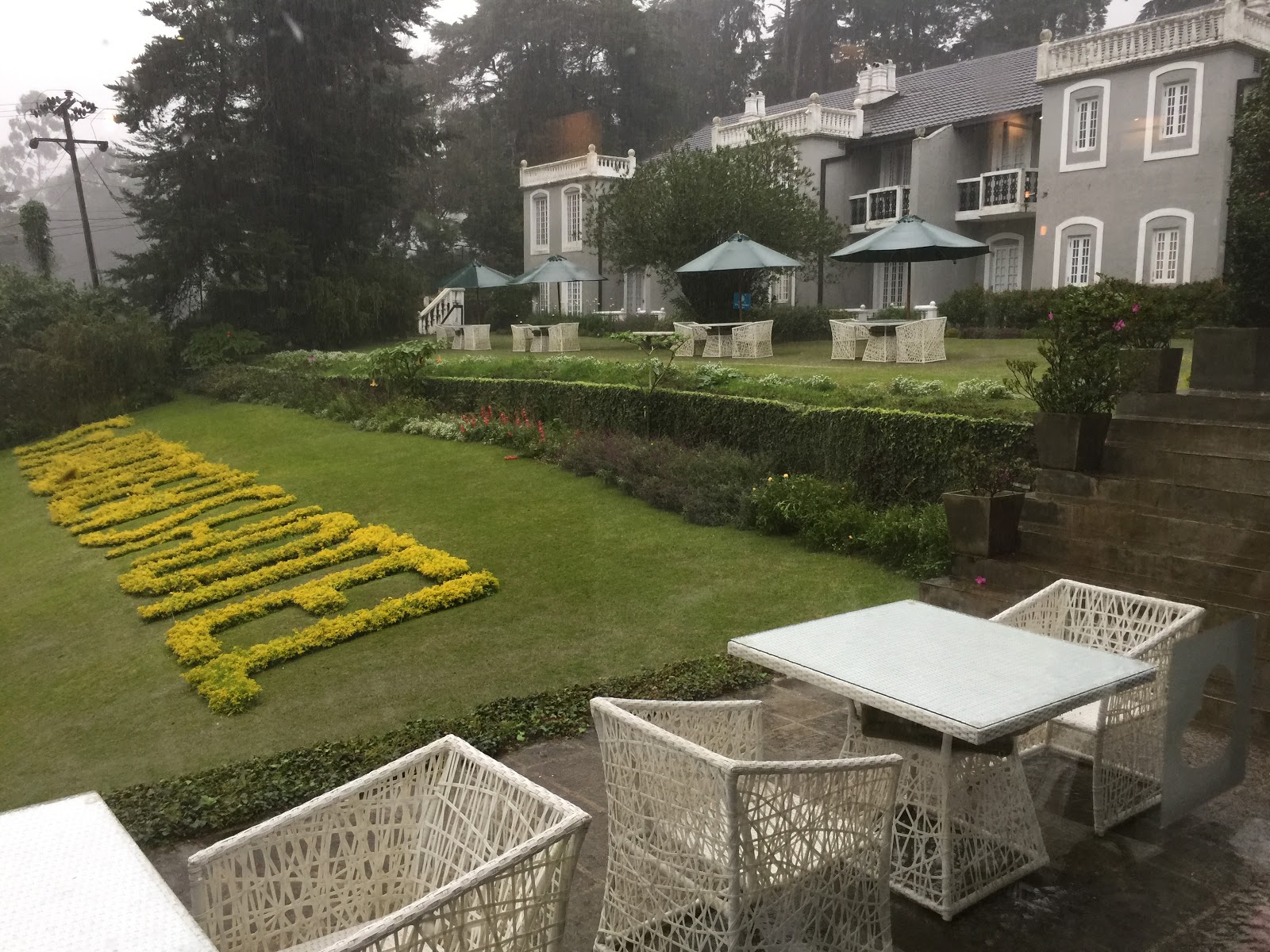
It slows us. Eventually, we arrive at the Saint Andrews Hotel in Nuwara Eliya, (pronounced new-o-rellia). The hotel began, as it sounds, as a Scottish property.  The gardens have shrubs snipped into large kettle and tea cup shapes. The public spaces have fire places, welcome on a stormy night. The dining room has about 150 years of age with ceiling panels of embossed copper.

Before dinner, we visited in the lobby with a friend of our travel companion. The visitor is very smart, articulate and took us, somewhat, under his wing.

Tomorrow, he has arranged, we will begin at a fairground, go to a pastry reception, visit a mountain peak, tour a tea plantation and visit his workplace for lunch.

Sri Lanka – Kandy November 2

We are sorry to do it, but, today, we must checkout of this oasis, Water Garden Sigiriya Hotel.
9:30. On the road. Destination: Heritance Kandalama Hotel. We are stopping only to check it out, (en

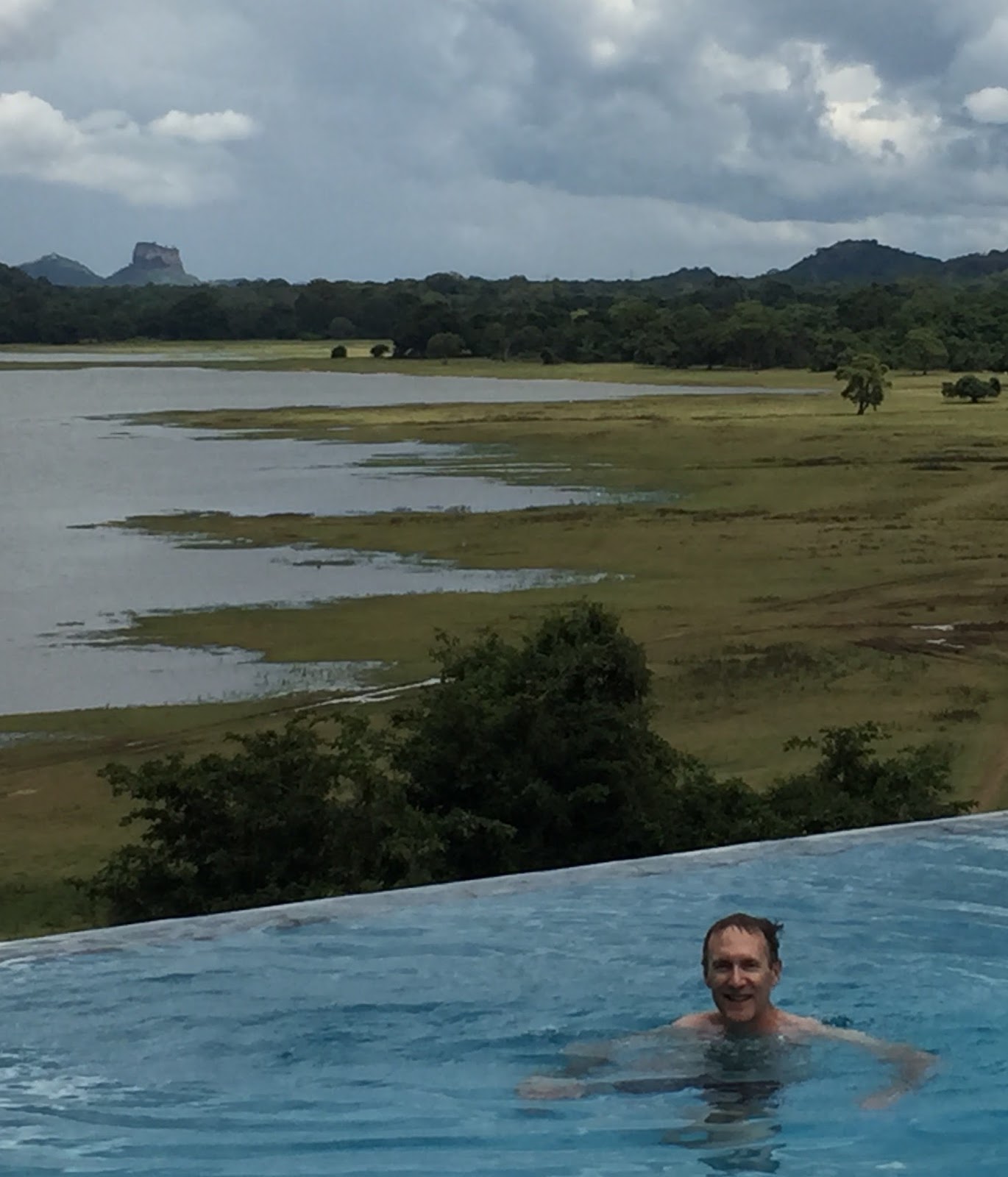
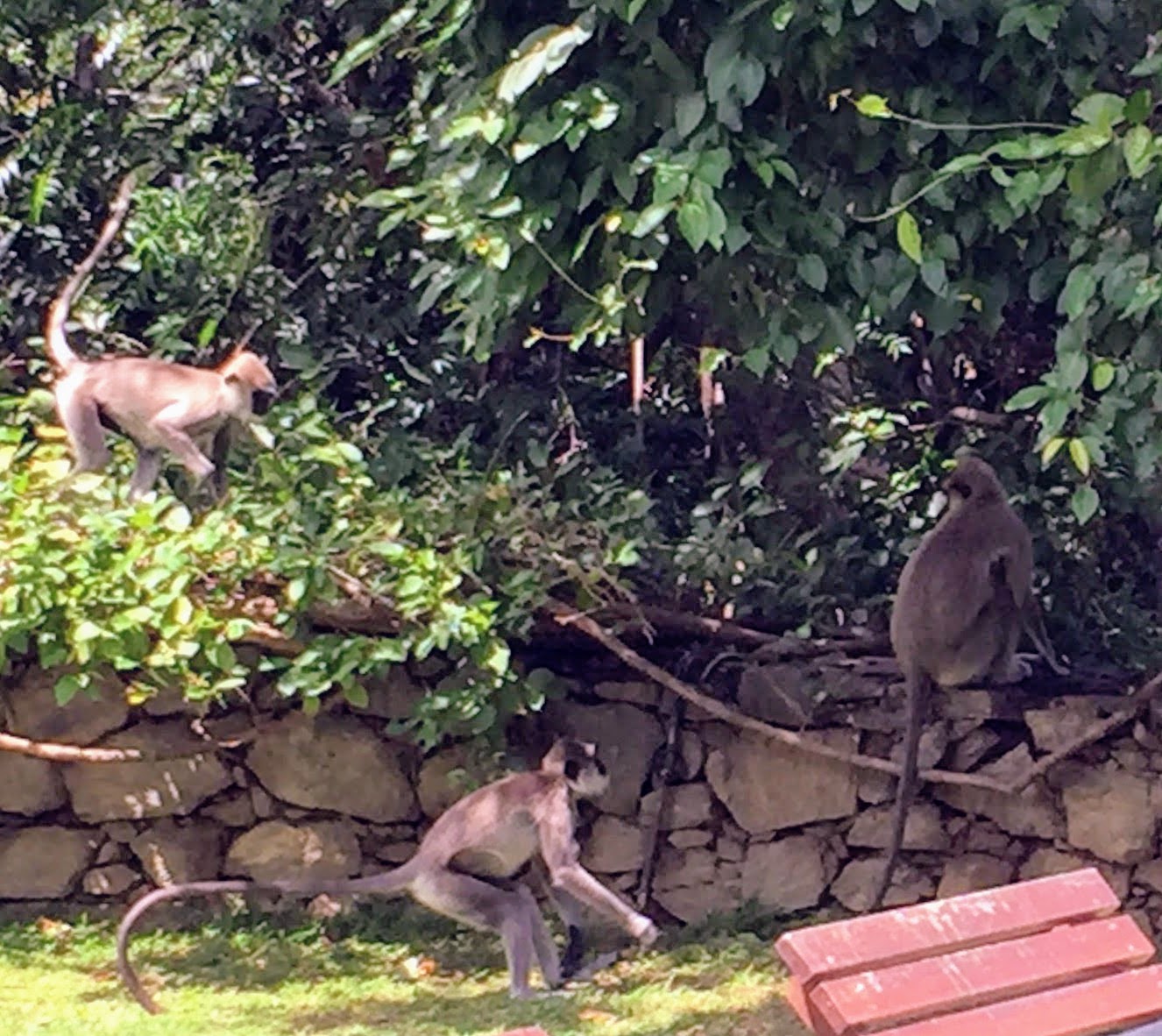
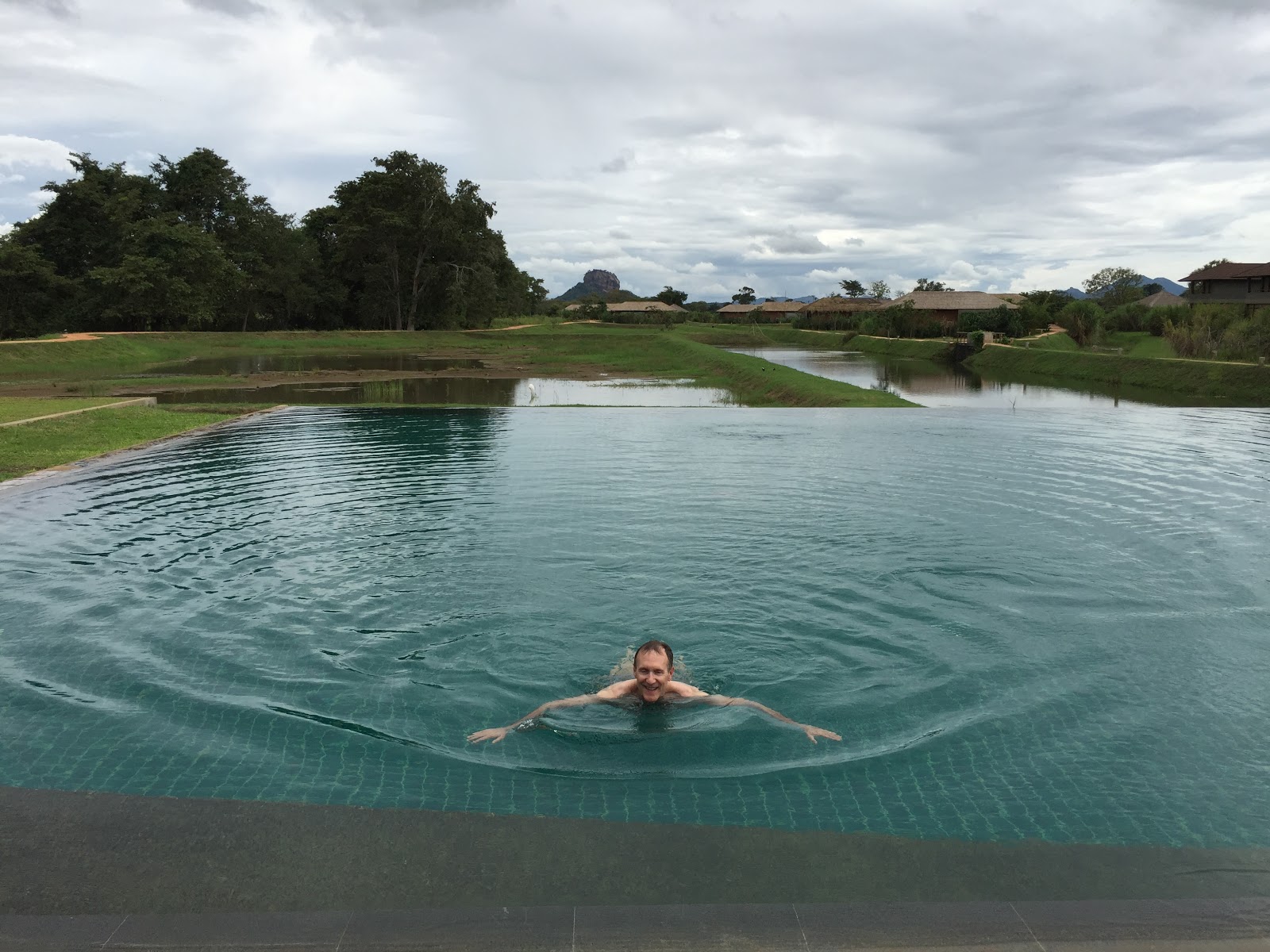
route to Kandy), particularly the swimming pools.  23 years ago, the hotel was built, more like affixed, onan elevated ridge of boulders one kilometer long. It has three swimming pools. One, an infinity pool, appears to hang over a cliff with a vista of a jagged shored lake and Sigiriya rock, (Wes took a dip in this one). The second pool incorporates the existing smooth boulders into it’s bottom. The third pool is conventional, but surrounded by trees full of monkeys, large, small, huge and tiny. Posted signs warn against leaving your windows open unless you want company.

2:00 PM. Another stop on the drive to Kandy: Euphoria Spice. Ruwandi Perera, the proprietor went

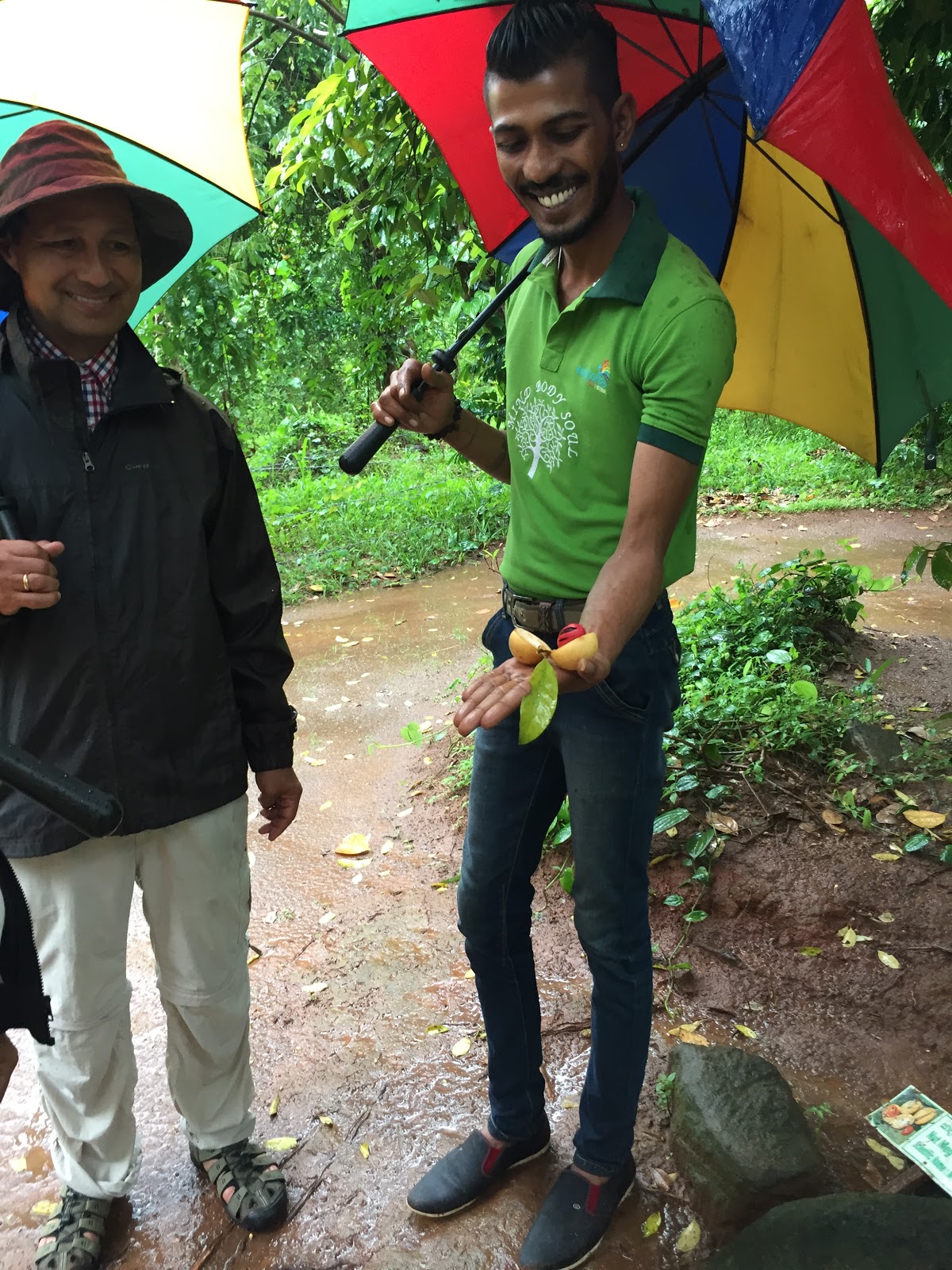
to American University in Washington, D.C.  After two semesters, she returned to Sri Lanka for Euphoria Spice, a forest which produces spices: cinnamon, cardamom, cloves, nutmeg — our American winter holiday spices. A guide walked us through the forest. He spoke of medicinal qualities of the spices while my pleasure obsessed brain imagined delicious swoon-inducing flavors. We made the walk in the pouring rain.

3:00 PM. After the spice tour we stopped, across the street, for buffet lunch at “En Famille”, an open sided A-frame. They seemed happy to have customers for their 400 rupee ($2.70) buffet. For the first time, our driver ate with us. Typically, he eats apart from us.  It was very good. Curries and such, but mostly vegetable dishes. One dish resembled beef chunks. It was breadfruit. (Or was it jackfruit.) We piled our plates. The driver sat down. I sat down. I picked up a fork. He plunged his fingers into his food. I put my fork down and did the same. For finger eating, I learned you need an effective balance of wet and dry things. And the fingers need to work as if you are making dough: pinching, gathering, swirling.

4:30 PM. Arrive at Kandy. We are racing against the clock. We want to make a 5:00 dance show and make a 6:00 PM temple visit.

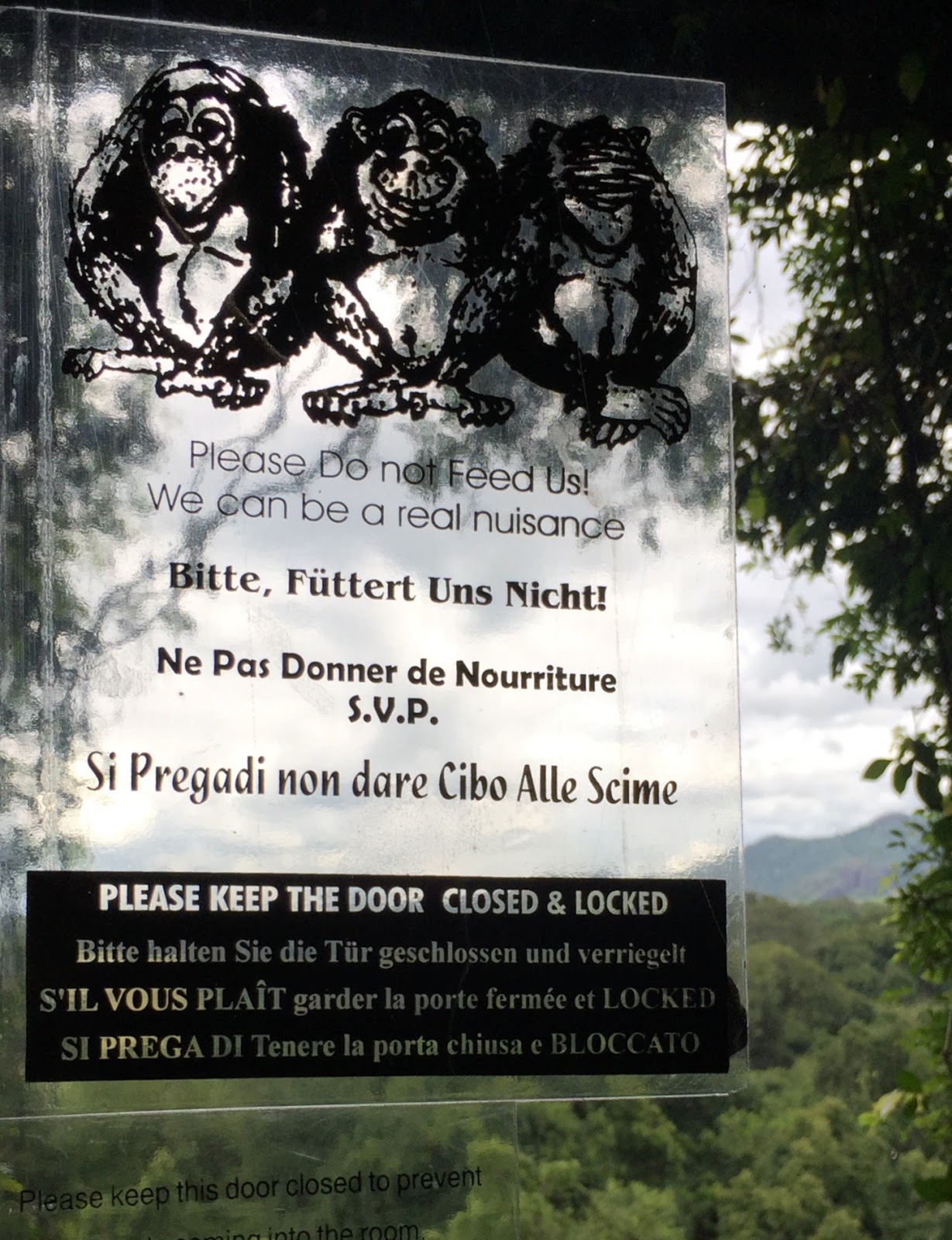
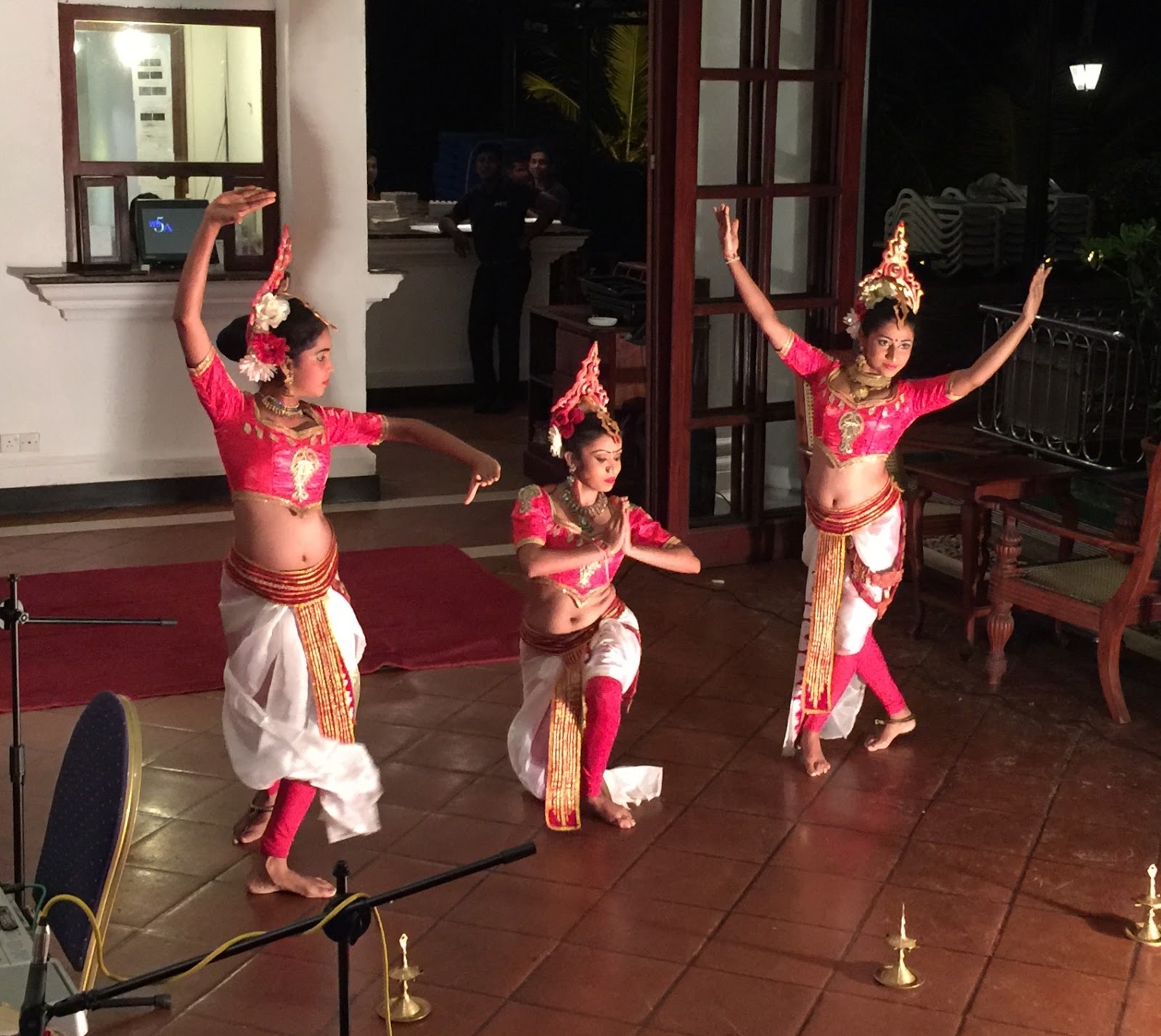
Check-in at the Thilanka Hotel, change clothes, quickly.  Note the patio door sign about curious monkeys. Take a short walk to a theater for traditional Sri Lankan folk dances. The costumes were great. The music was good. The dancers were good. For their dramatic finale, we went outside to watch them walk over freshly shoveled hot coals.

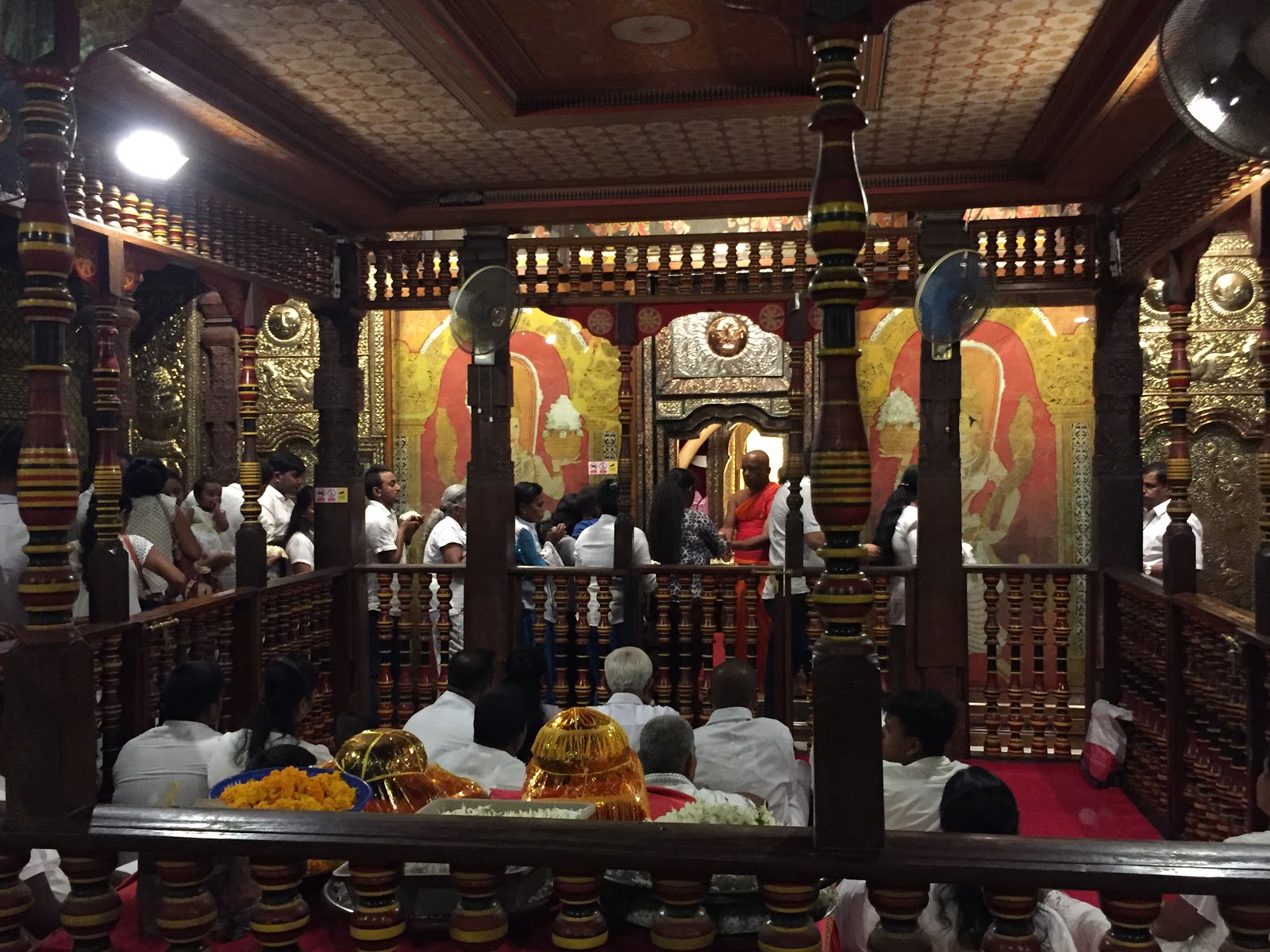
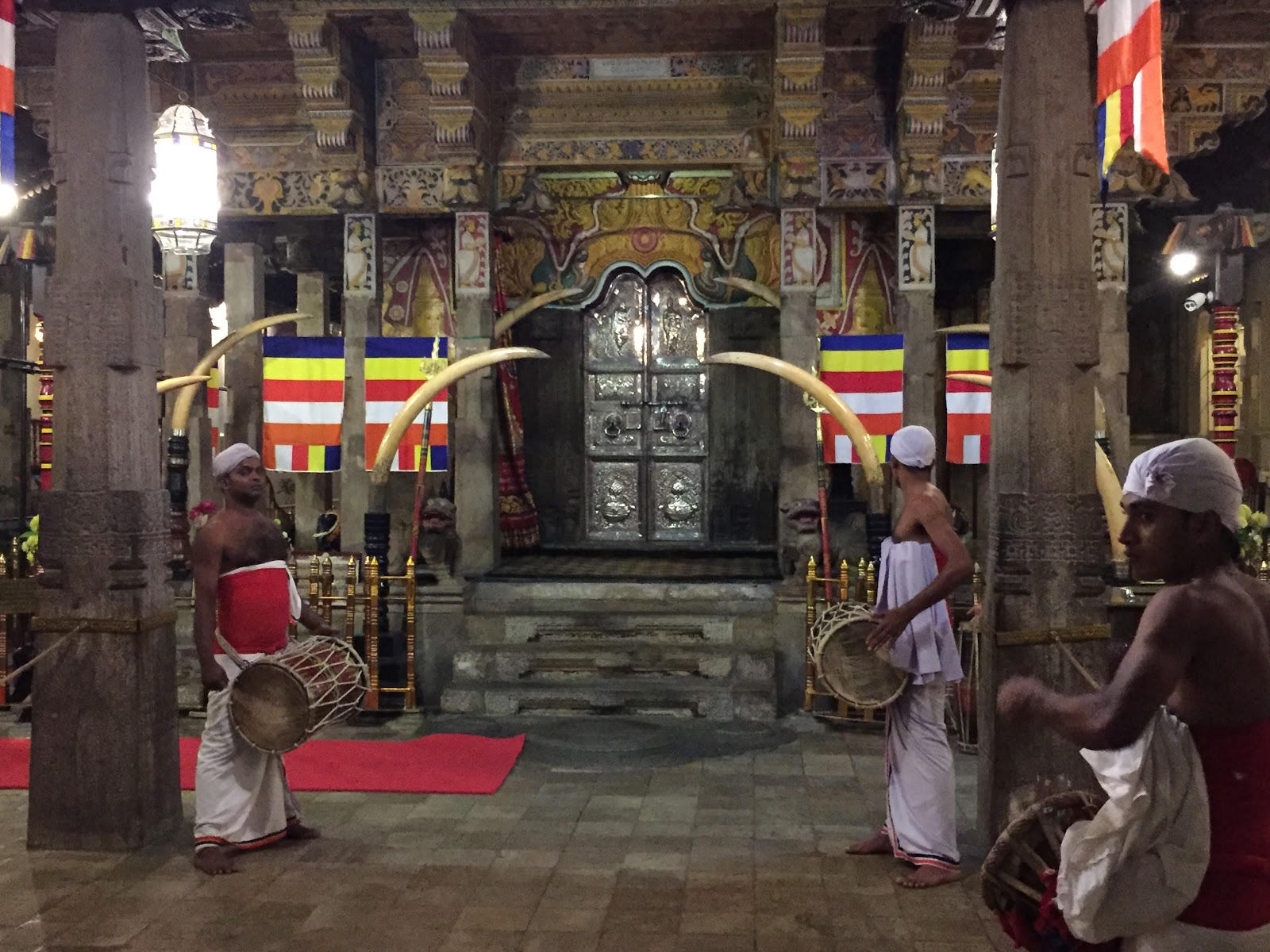
6:00 PM. We arrive at the Dalida Maligawa, the Temple of the Buddha Tooth. It is the home of a tooth from Buddha. He died over 2,300 years ago. The relic is kept in a solid gold cone encrusted with rubies, sapphires and emeralds. The cone is in a small room where long elephant tusks rise from floor to ceiling.  Inside the door, a priest, in a saffron robe, greets the worshippers. There is a basket for flowers and money.  The room is in the center of a three floor building. The three-floor building is a gem in the central courtyard of the outer temple building.

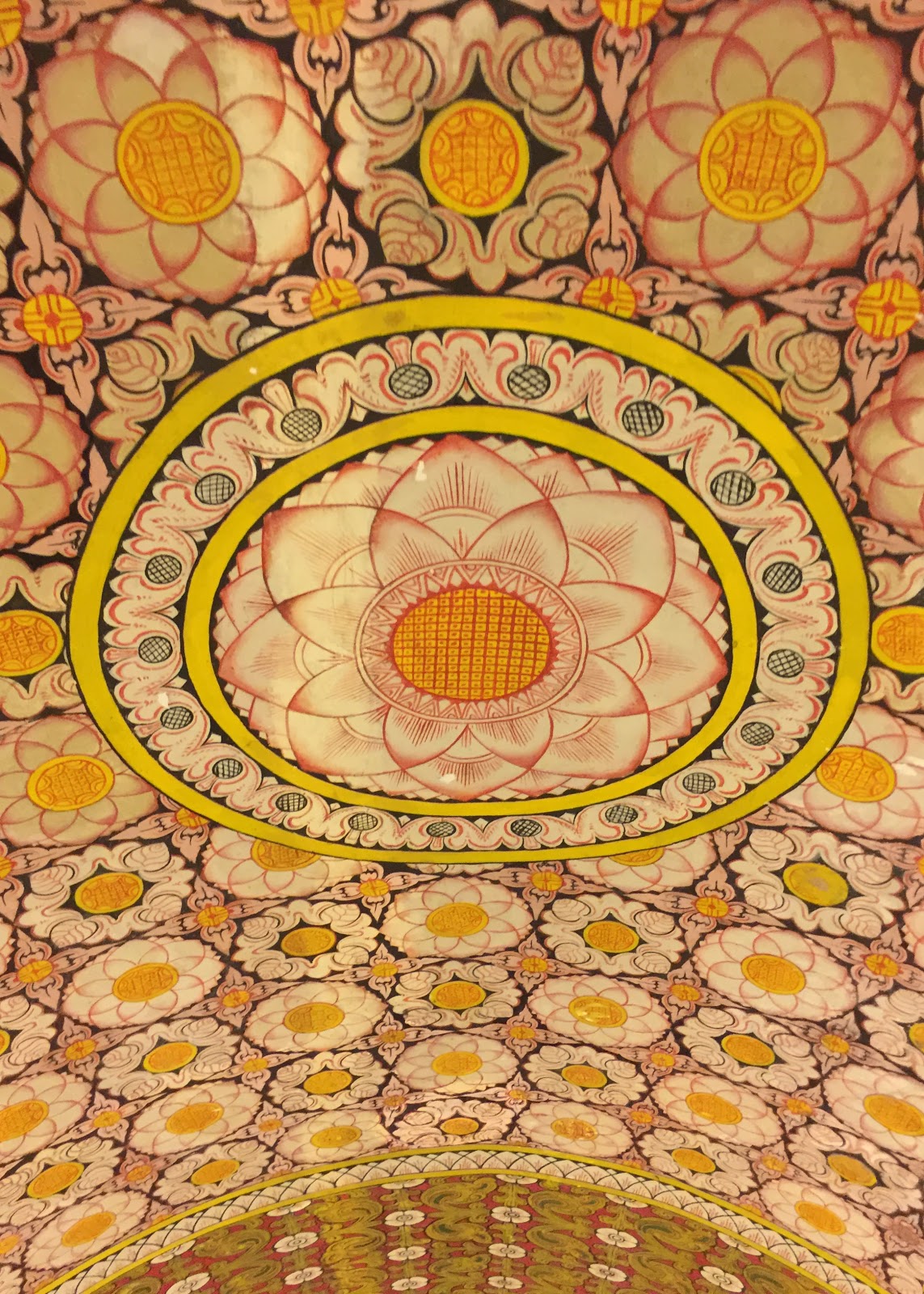
We approached the outer building.  We left our shoes with a shoe clerk and walked barefoot up wide stone stairs. The air was hot and heavy. The cool chiseled stone felt good underfoot. Inside, someone was beating drums. Loud. Insistent. Slow. Steady. Then faster. A reed instrument wailed; it’s sound was raw. We switched from stone stairs to wooden stairs. The drums beat faster. We arrived into a long wooden-floored ante chamber. A marble topped table ran two-thirds of it’s length. It was covered with flowers. Lotus in fuchsia and in white. Heaps of jasmine perfumed the steamy room. It was crowded. Worshippers, palms together, fingers up, hands at their sternum, white pants, white shirts, somber faced, waiting for it to happen. When the decorated metal door opens. When they can see for a second the brilliant gold reliquary. There is a queue. It is long; across the room; down the stairs. That is on one side of the flower topped long table. On the other side, a swarm of people; tourists, backpackers and Buddhists. Some jostle, mostly the tourists, for a good sightline to the door. Others are content to be in the presence of a sacred relic. When the door opens, they feel an energy, presence, spirit without needing to see it. The drums repeat their cycle of slow pulse moving to quick pulse. The night air is sweltering, but in this setting more like sultry. I do not know how often the door opens on the reliquary, but we are lucky it occurred for us. Today, is also a full moon. Sri Lankans celebrate a three day holiday every full moon.

We wandered through other parts of the building. There are rooms and rooms of Buddhas. In one room, three walls are lined with large paintings with words beneath them. Together, they tell, from start to finish, how the Buddha tooth found it’s way from the mouth of Buddha to this temple.

The crowds thinned out. Closing time approached. Walking toward the outside, my feet enjoyed the cool stone. They did not want to get back into shoes. Outside, the night air had cooled to perfection. We returned to the Thilanka Hotel. Secured our door against the monkeys and drifted off to blissful sleep.

Sri Lanka – November 1, 2017

Thursday. Up at 7:00. Cup of Ceylon black tea with milk, no sugar. Excellent day. The rain is gone. There is just enough cloud to temper the sun, still it will be hot.

8:30. In the van. On the road to Polonnaruwa, a UNESCO World Heritage Site. Approximately 50 kilometers northeast of our Sigiriya base. The Sri Lankan names are long. They look complicated, but if you look closely, they are made up of two letter bits, which are a consonant followed by a vowel. Po lon na ru wa. Si gi ri ya.

As we drive, I am reading a bit about Sri Lanka’s history. Most recently, starting around 1500, they were occupied/ruled by three countries in succession. Portugal, the Netherlands, and Great Britain; for 150 years each. Sri Lanka declared independence in 1948. The population categories,  in a very general sense, are the Sinhalese (Buddhist), the Tamils (Islamic), and the Moors (Hindu). The majority are Sinhalese. The Moors, the minority and the Tamils in between. Sinhalese recorded history begins around 2300 years ago with the arrival of Vijaya, a prince from North India.

Writing, now, in real time … We have been on the road, in the van, for an hour. The roadsides continue to be full of colorful unusual sights. The driver points out a “lizard” on a canal bank. We stop. Get out. Walk closer. On the upper bank is a “lizard” 5 feet long, but climbing out of the water is his big brother, 8 feet long nose to tail. A man has a stick. A piece of fish is on the end. (He has done this before). He dangles the fish to tease “big lizard” out of the water, up the bank and to the road. He makes it rear up erect. An impressive white belly under slate gray top. Seriously long tongue. Finally, “big lizard” gets the fish, his treat. The “lizard” wrangler called it a “water monitor”. I am relieved. I thought it was a komodo dragon. Komodos eat humans. The wrangler was pleased with a tip of 100 rupees, (70 cents).

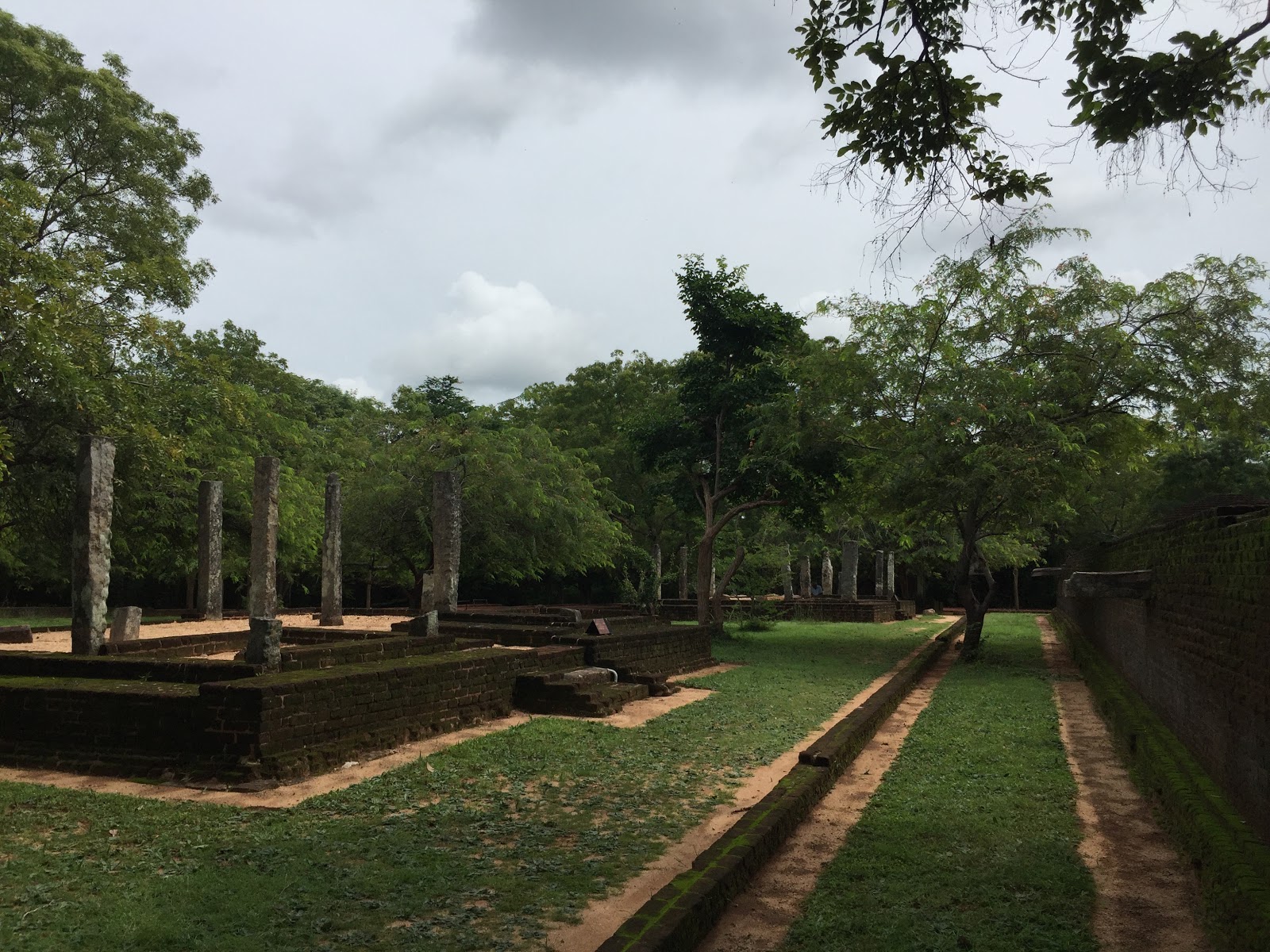
We are driving along the border of the Polonnaruwa ruins’s border. I will call it a campus of ruins. The campus was once a city. It occupies dozens, if not hundreds, of acres.  There is a bit of a fence with a strand of barbed wire. Inside the fence, the foliage is dense.  The green sprouts from the red earth. We see glimpses of ruins. By ruins I mean footprints of long gone buildings. Occasionally, some or much of a building survives. On the other side of the street cows lounge.  They may belong to someone, but they roam freely.  They are brown or white or black, with horns and without horns. They seem too svelte for eating, unlike our edible American edible cows, fattened up like sumo wrestlers. Over the lake is a vast black swirl of birds.

Now, at the museum for ruins, a posted map shows the vast sprawl we have arrived to. More than can be seen in one day.

One hour later … We walked quickly through the museum. They have models of how the entire city might have appeared in 1100. The best room, at least my favorite, held original bronze statues of Shiva, Ganesh, etc. Three to four feet tall. Beautiful. Finely wrought. Exquisitely detailed. 900 year old masterpieces in outstanding condition.

The first stop on our ruins walk … A statue of a man. 9 feet tall. Carved into soft blond stone. A palm leaf straddles his two hands. He wears a sarong-like garment. In front, a belt, stone carved, is tied into a curled bow. He is 900 years old. An open sided shed roof protects him. A few feet away, there is a dome of red brick. It’s top is gone. The upward curved walls create a wonderful acoustic. The dome is the centerpiece of a small village surrounded by smaller domes, all gone. The whole is canopied by flowering trees. The air is filled with wafting butterflies and dragonflies. (I have read, people come here for dragonfly safaris). Nearby, beneath a leafy tree and seated on a stone wall, an older man in a sarong sits carving Buddha images into a wooden cane.

Second stop … We walk through more ruins. There are so many ruins, we could spend the entire day and not see it all. We strive to be more selective, one more site, that will be enough. Onward, past the monkeys. A lot of monkeys. A quick internet check tells me the Polonnaruwa monkeys, (toque macaques), are unique, endangered and spelled like this, in Sinhalese, (the main Sri Lankan language), රිළවා.

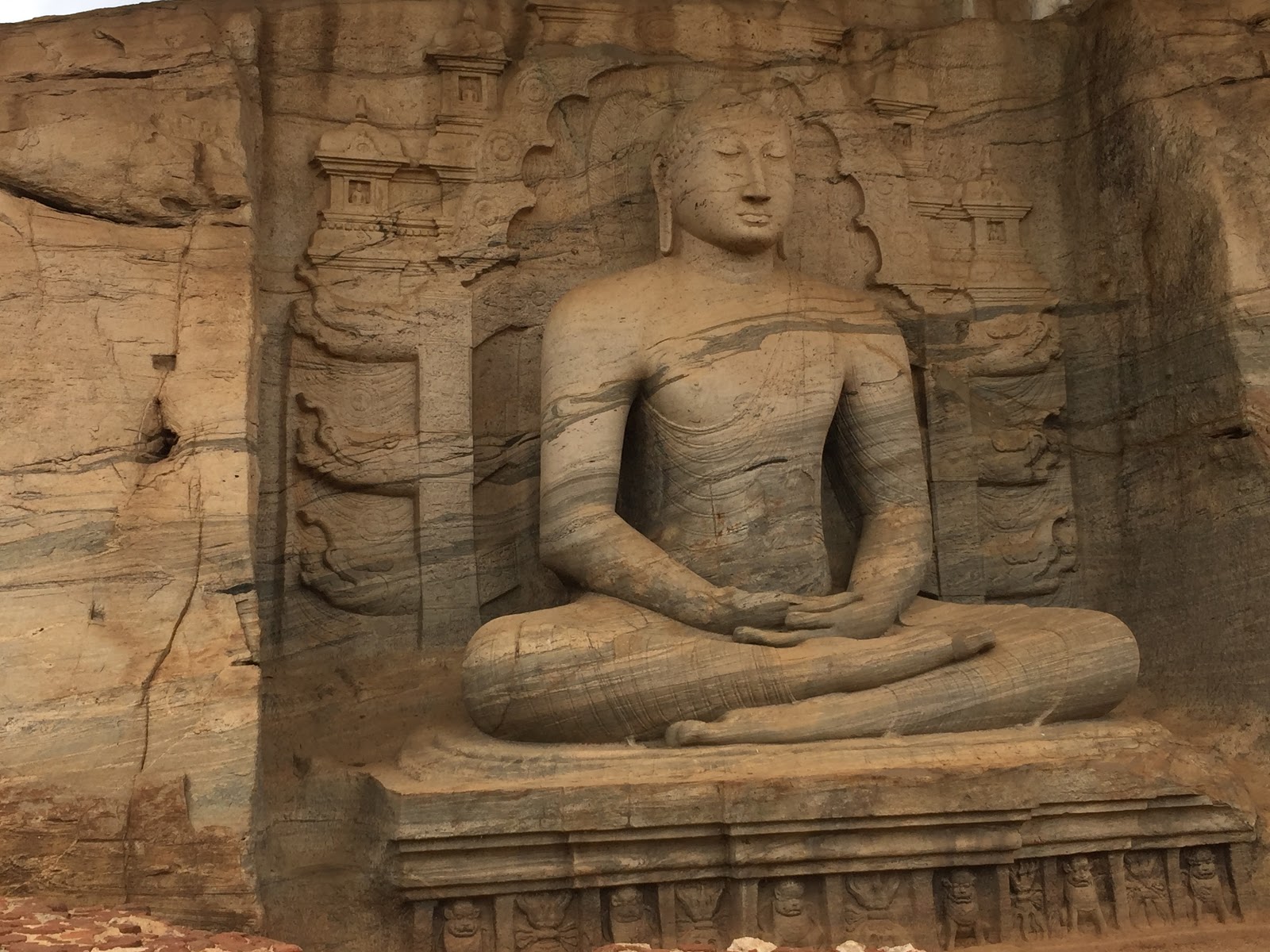
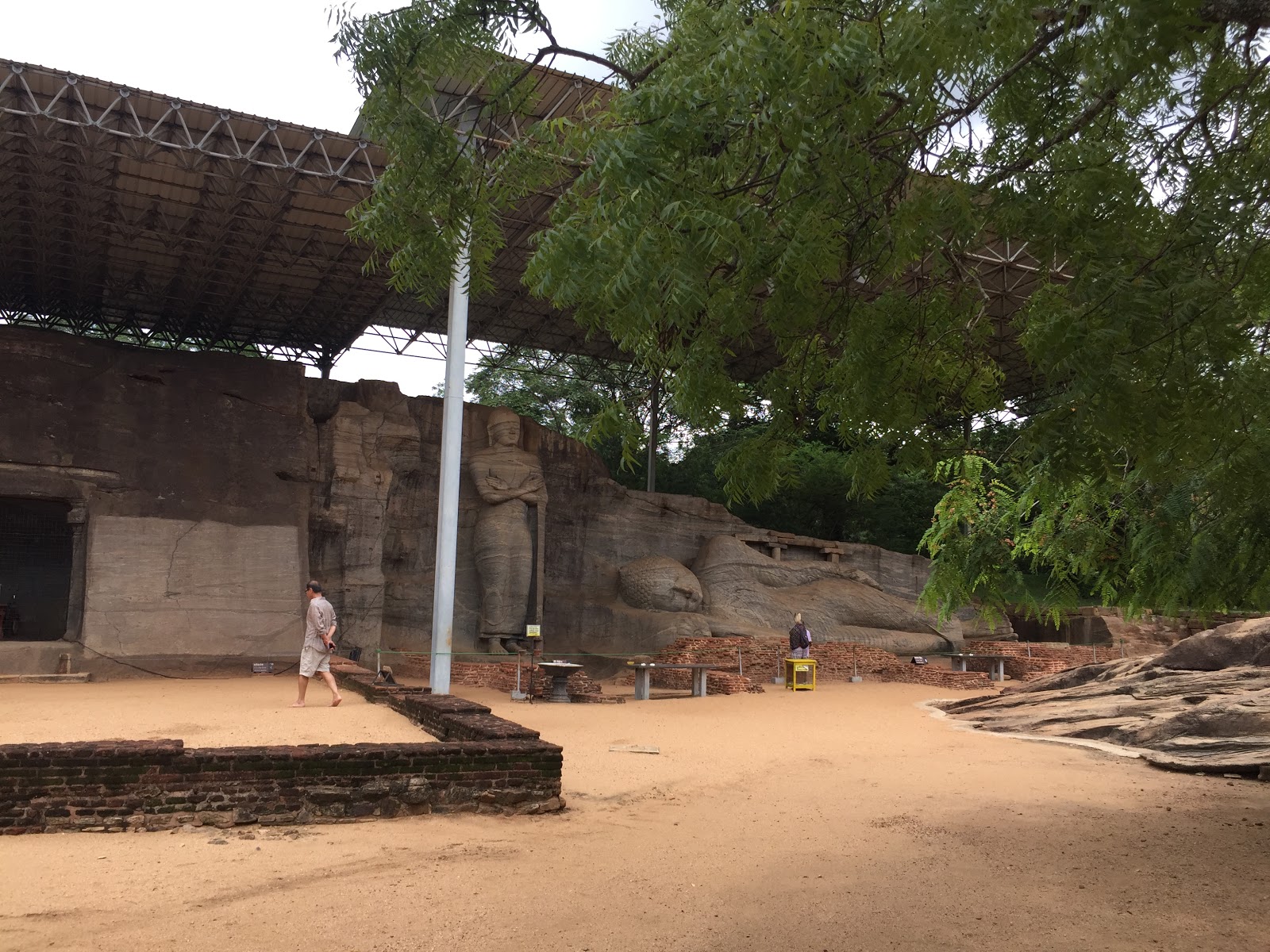
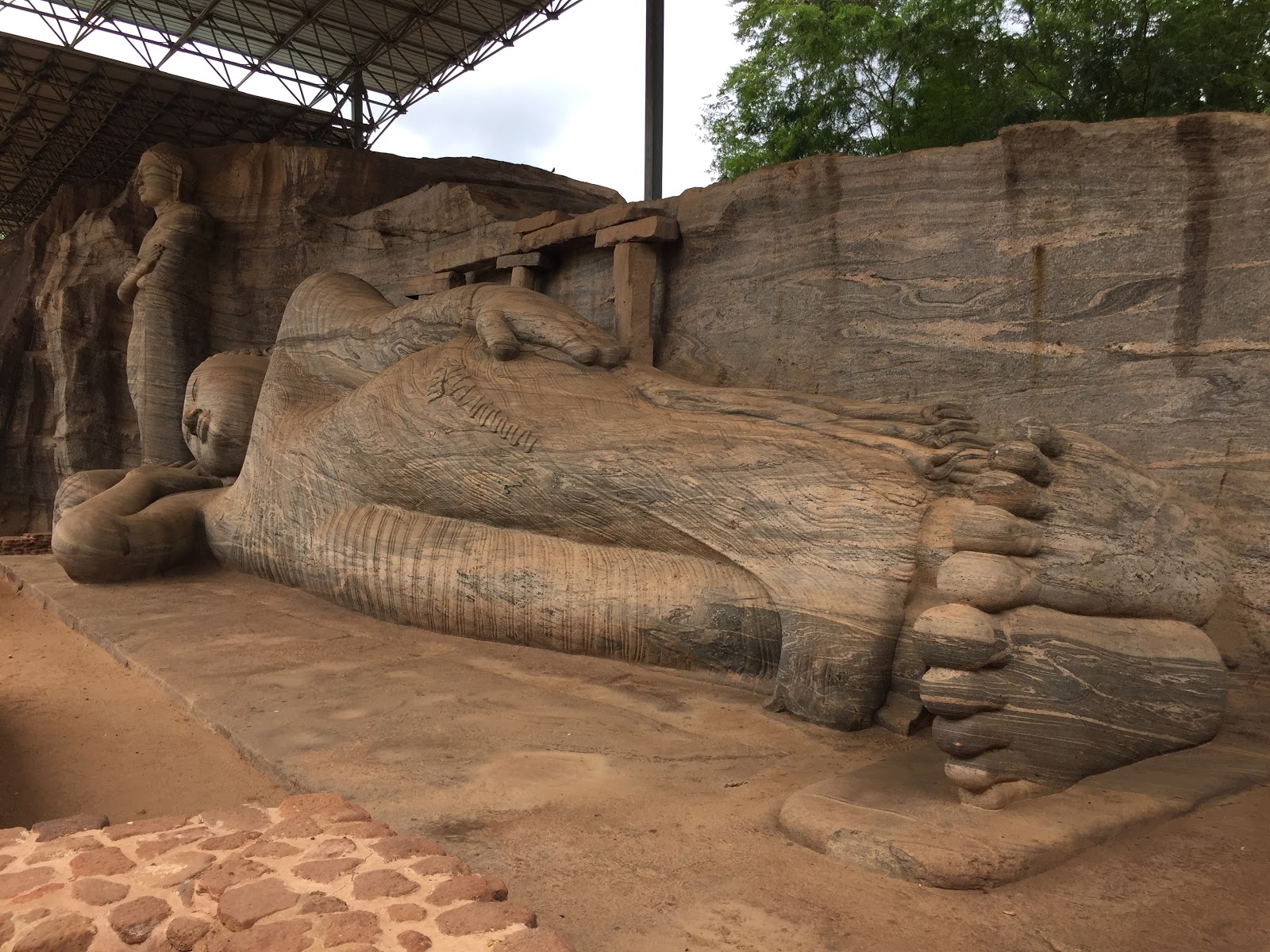
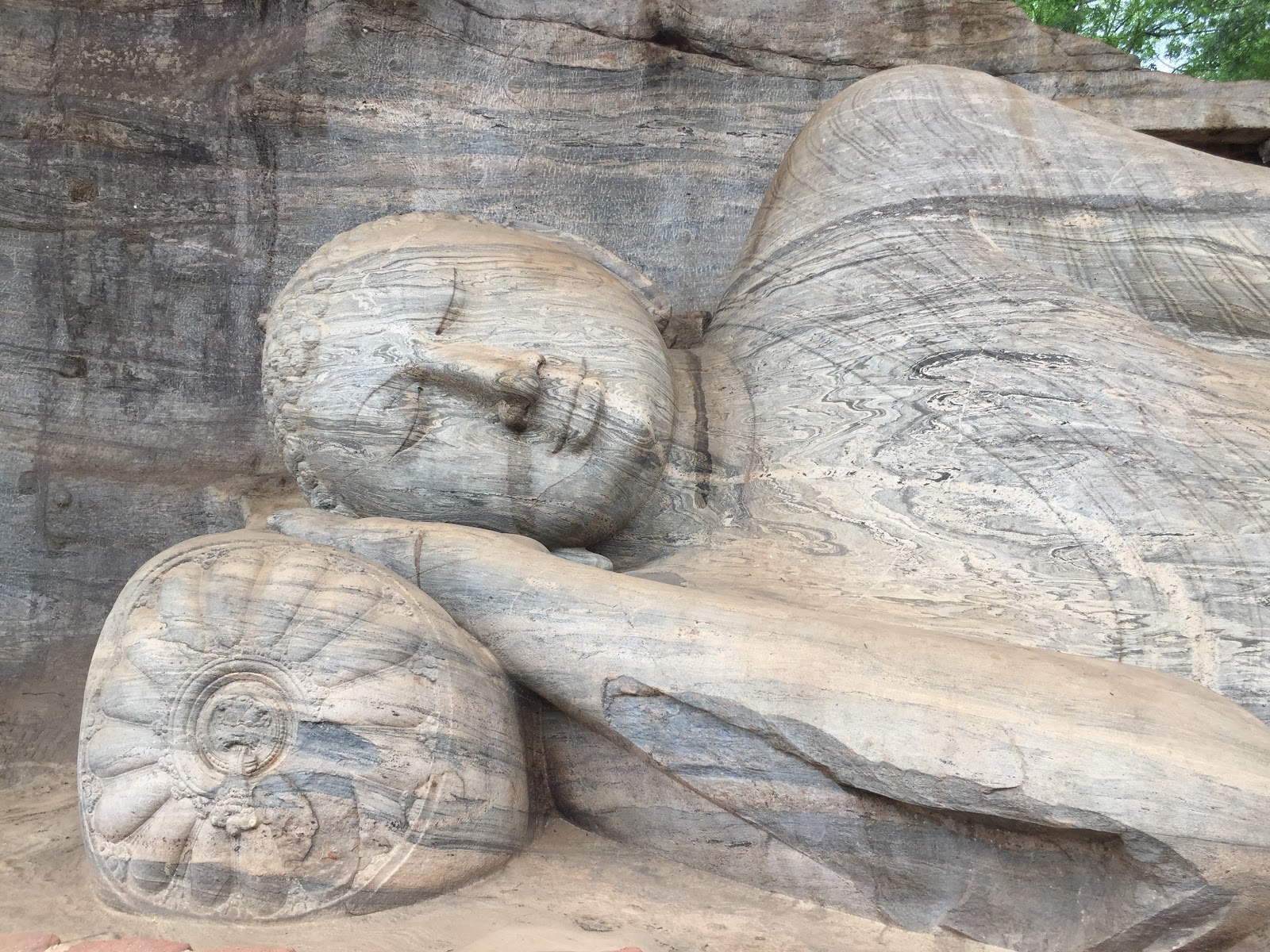
Third stop … Awe inspiring. Truly magnificent. A two hundred foot long boulder was, 900 years ago, carved, (think Mount Rushmore), into Buddha in three positions:  sitting, standing and reclining. The stone has striations of grey and black. The carving is masterful, elegant, graceful. Thinking nothing on this campus can surpass this, we load into the van to leave. The driver suggests one more stop. We say yes, but only one more.

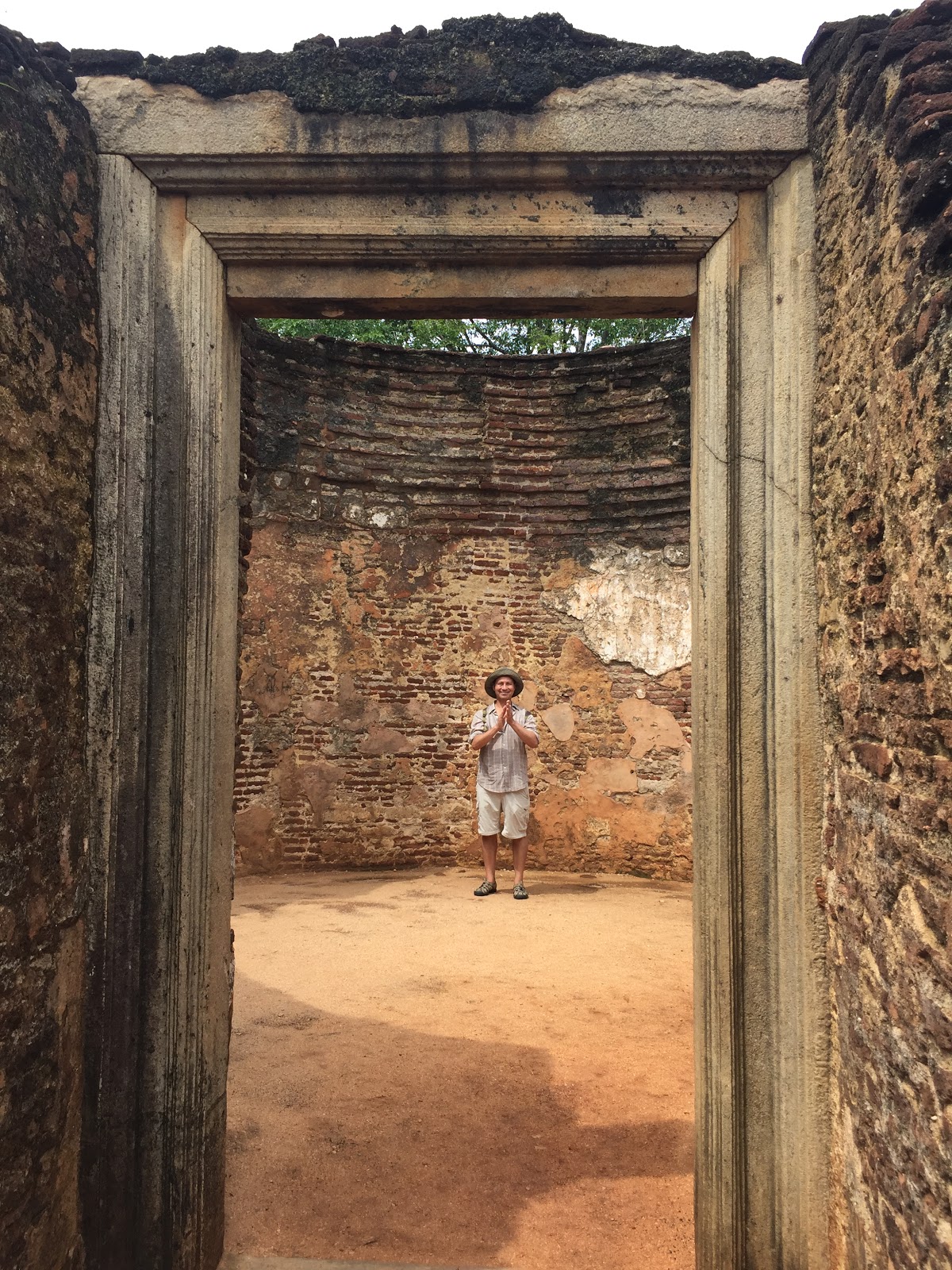
Fourth and final stop … It would have been wrong to miss this one, the Thiwanka Pilimage.  Superficially, it looks like a melting red brick building. The red brick was once covered in concrete, which was carved into lions, cherubs and miscellaneous gods. Enough of the detail remains to get the picture. Inside, there are frescoes. I overhear a guide, in spanish, speaking of extra terrestrials and kama sutra.  The star of the show is a tall shapely Buddha without a head. Any site with a Buddha statue is sacred and requires shoes off and no photos. I am enjoying the barefoot opportunities.

1:00, en route home … We stop at Perera and Sons, P&S, for meat pies (cuisine from British colonial days?). We will have them at the aperitif hour with what Bordeaux remains from last night.

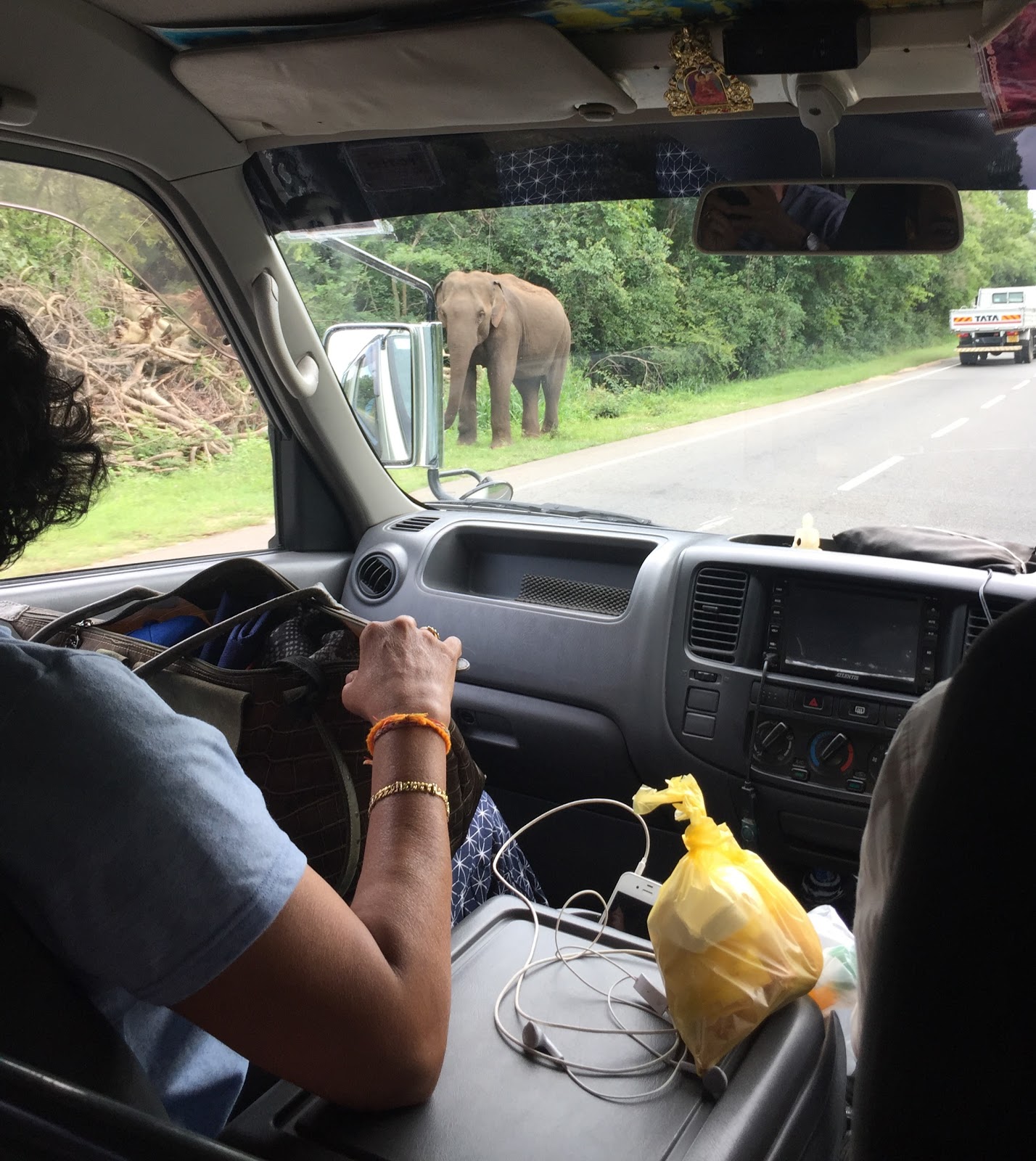
On the road home, we encounter an elephant. On the roadside. Peaceful. A thick crust of dirt on it’s back. Munching leaves.  It has excellent concentration. Entirely undistracted by the relentless whosh of motor traffic.

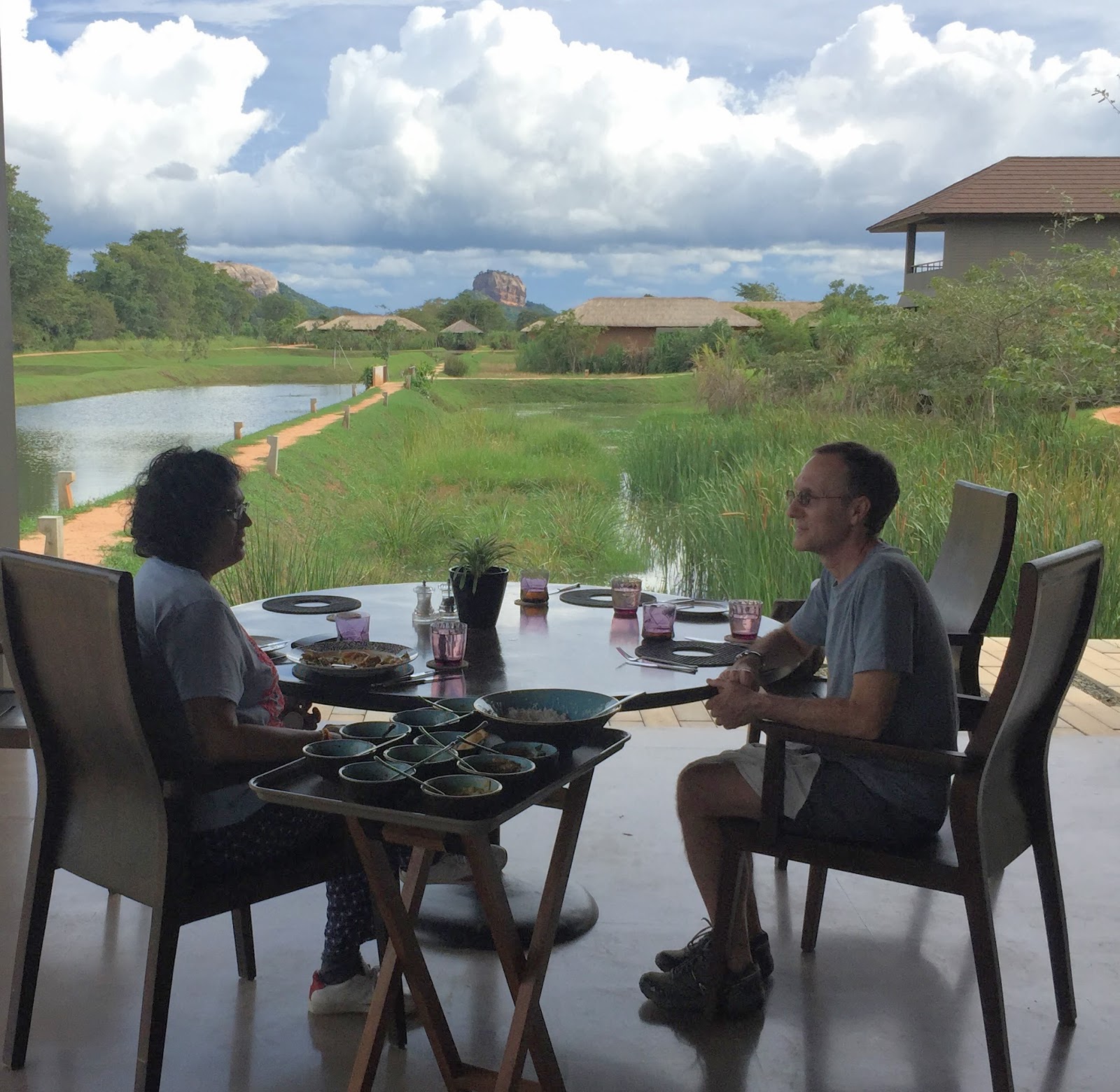
Arriving back at the lodge, 2:00 PM …  Before we left this morning, the kitchen offered, and we are accepting, to have our breakfast late.

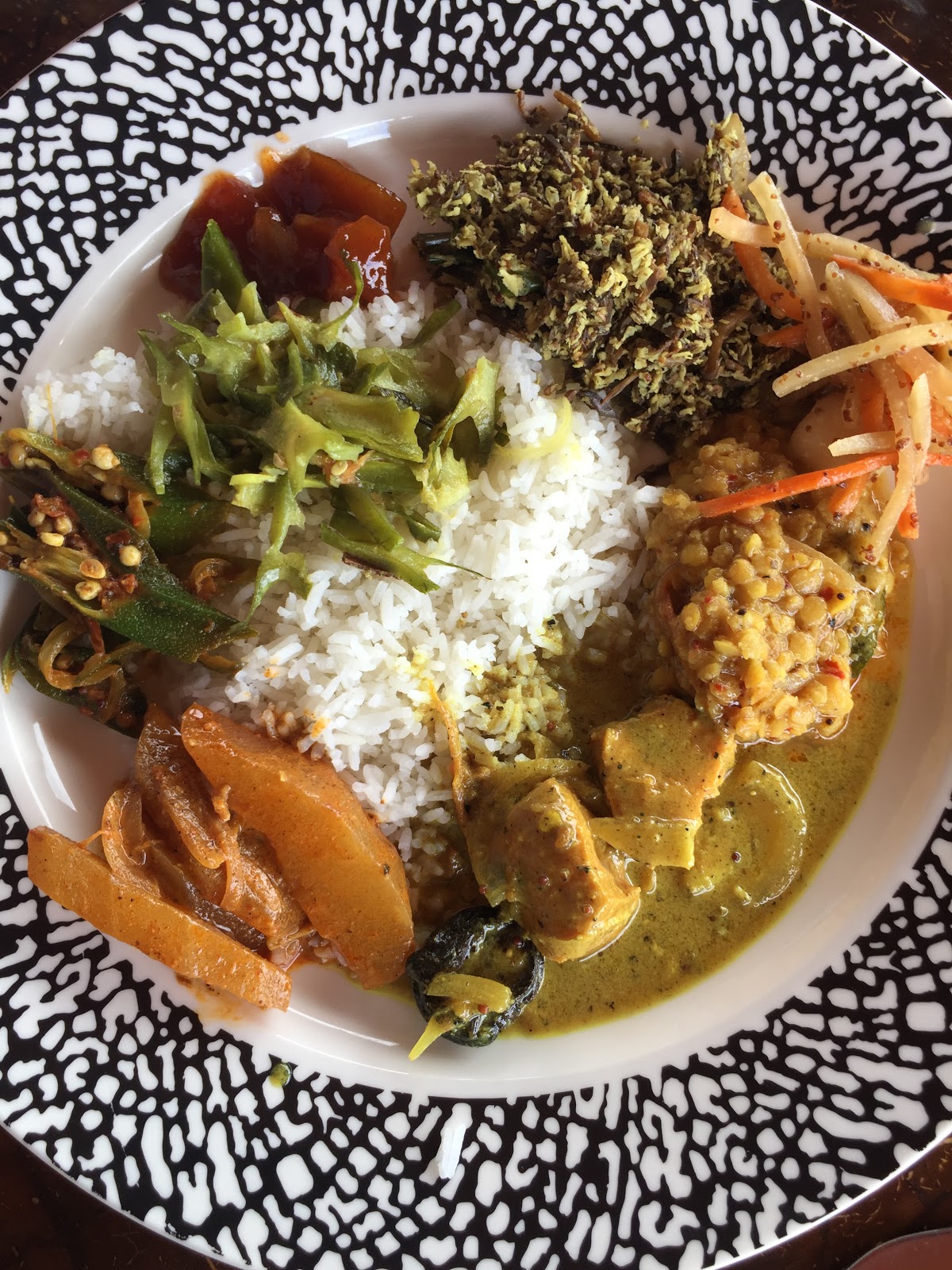
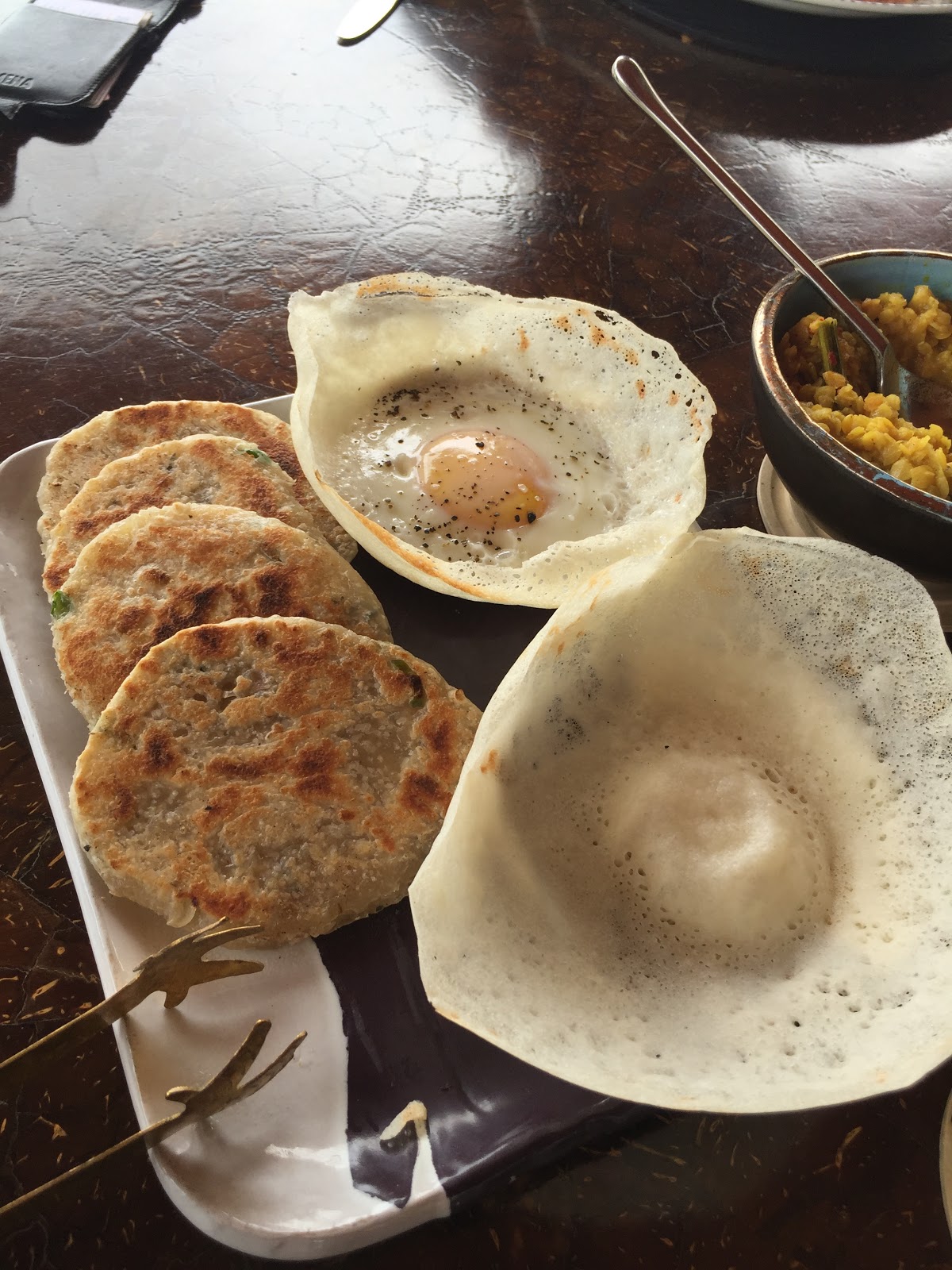
We sat outdoors with a view of the Sigiriya rock. We will have the Sri Lankan breakfast. Egg hopper. Buffalo curd yogurt with honey. Etc. Sri Lankan breakfast is a huge amount of food. Rice comes in several forms. A block cooked in coconut milk. Boiled and extruded so it resembles thin noodles. Chopped up with dried coconut powder. Of course, it needs something wet to balance it. Fish curry. Chicken curry. Yellow lentils. You need, too, a vegetable dish. Shredded and marinated cabbage. Thin sliced mango with pineapple.

Sri Lankan breakfast

The rest of the afternoon we will lounge at the pool, in the pool. Looking past the exotic birds in the rice paddies to the majestic Sigiriya rock.


Ceylon Tea: November 4-6

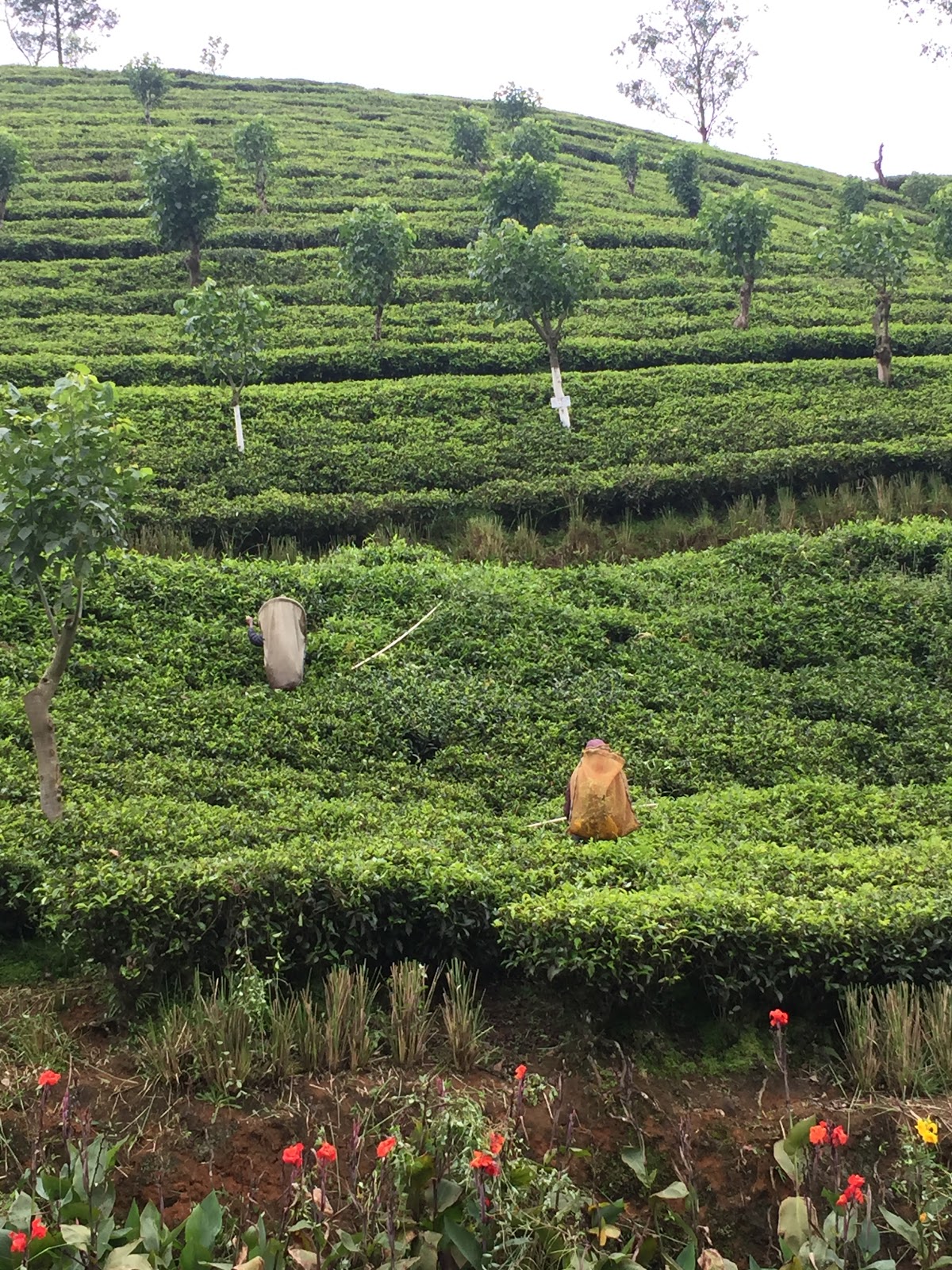
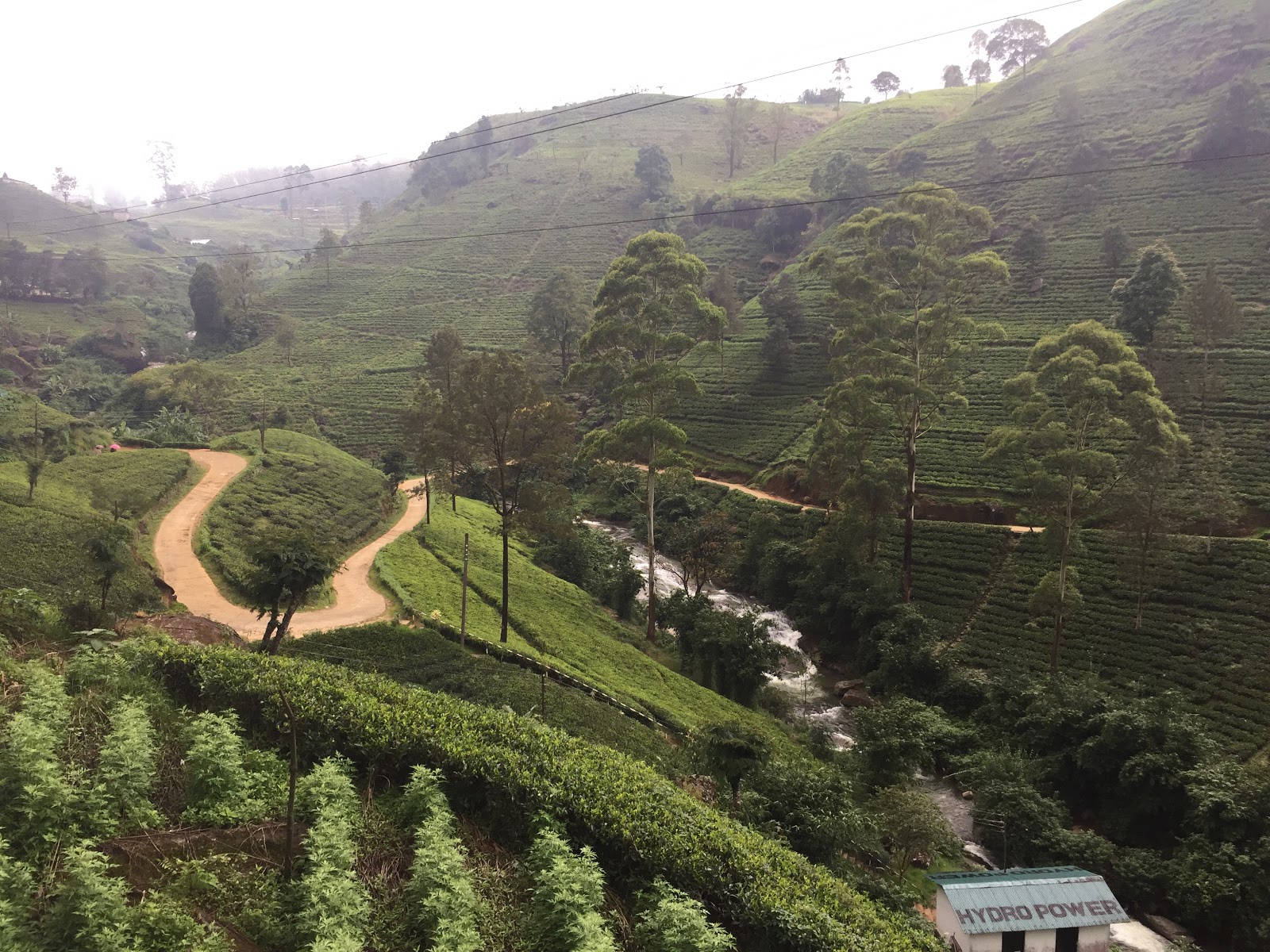
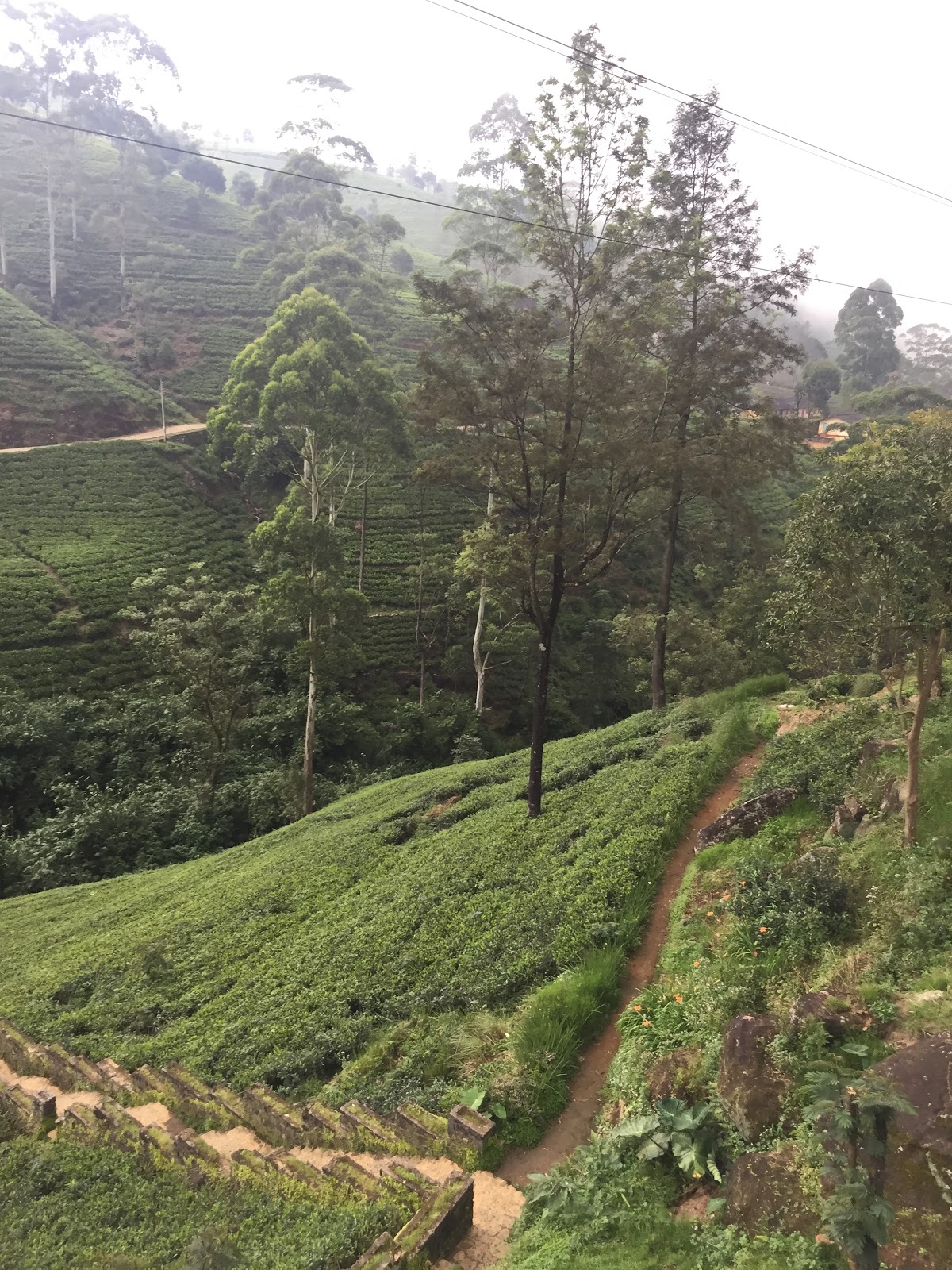
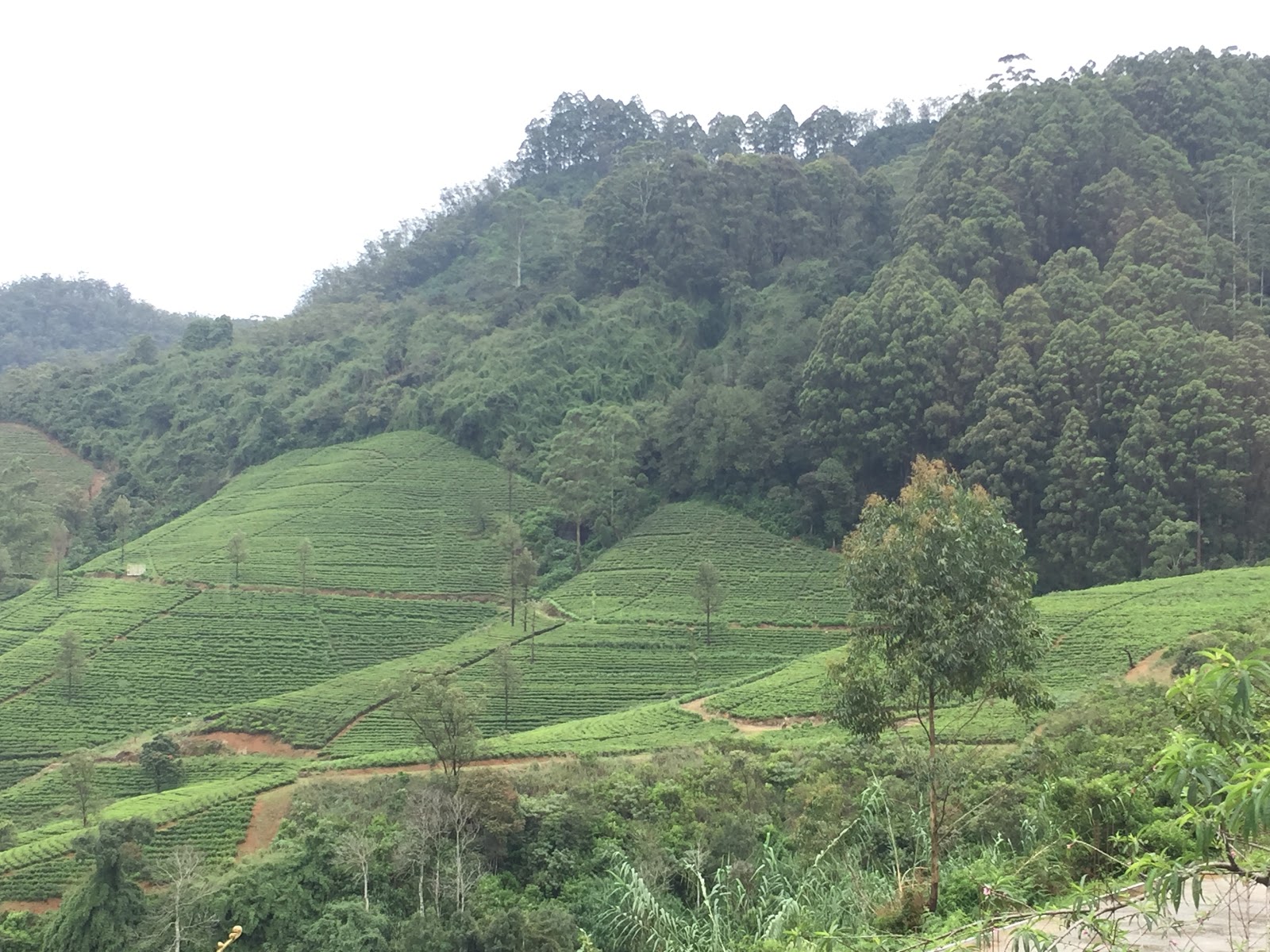
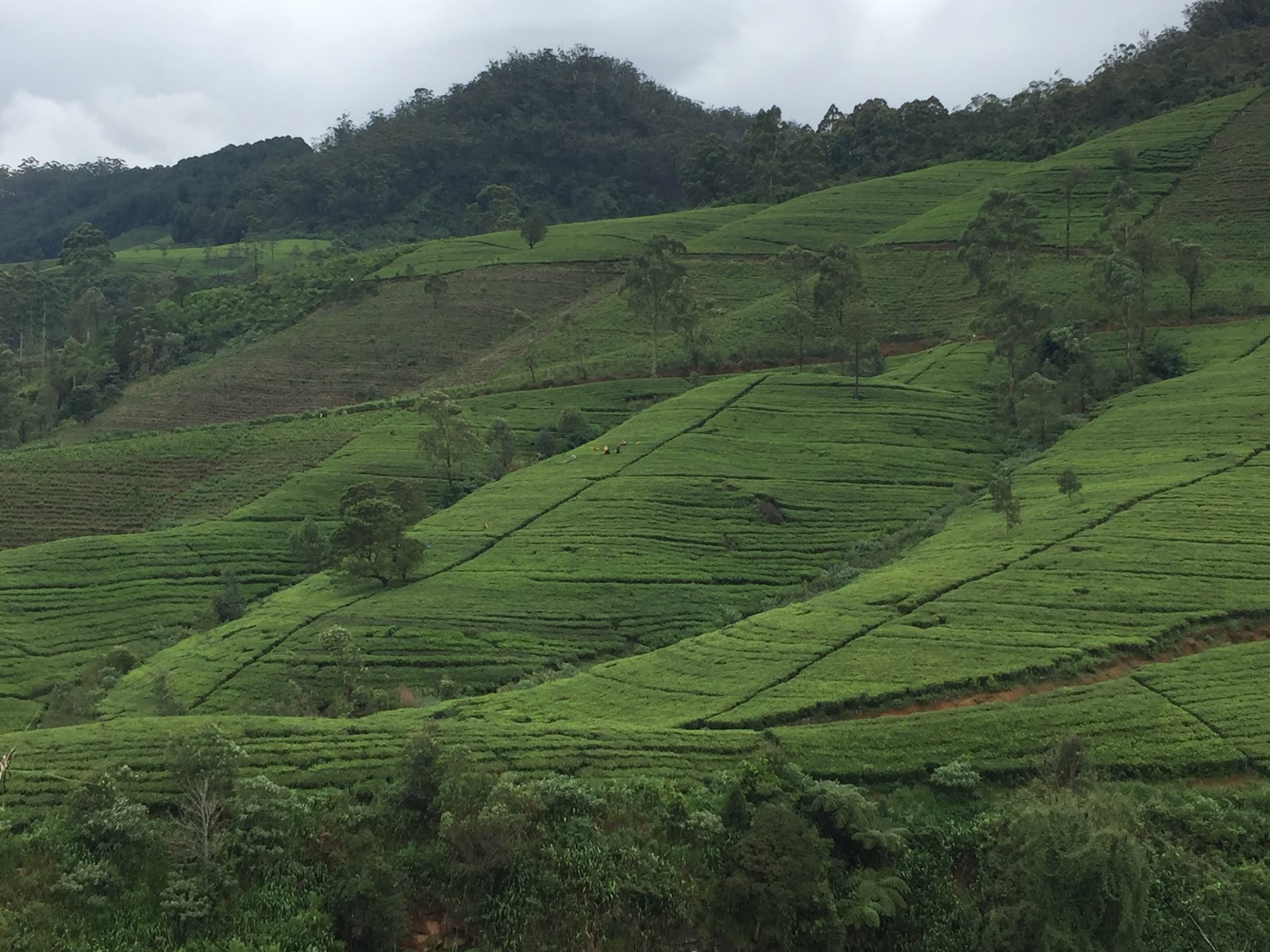
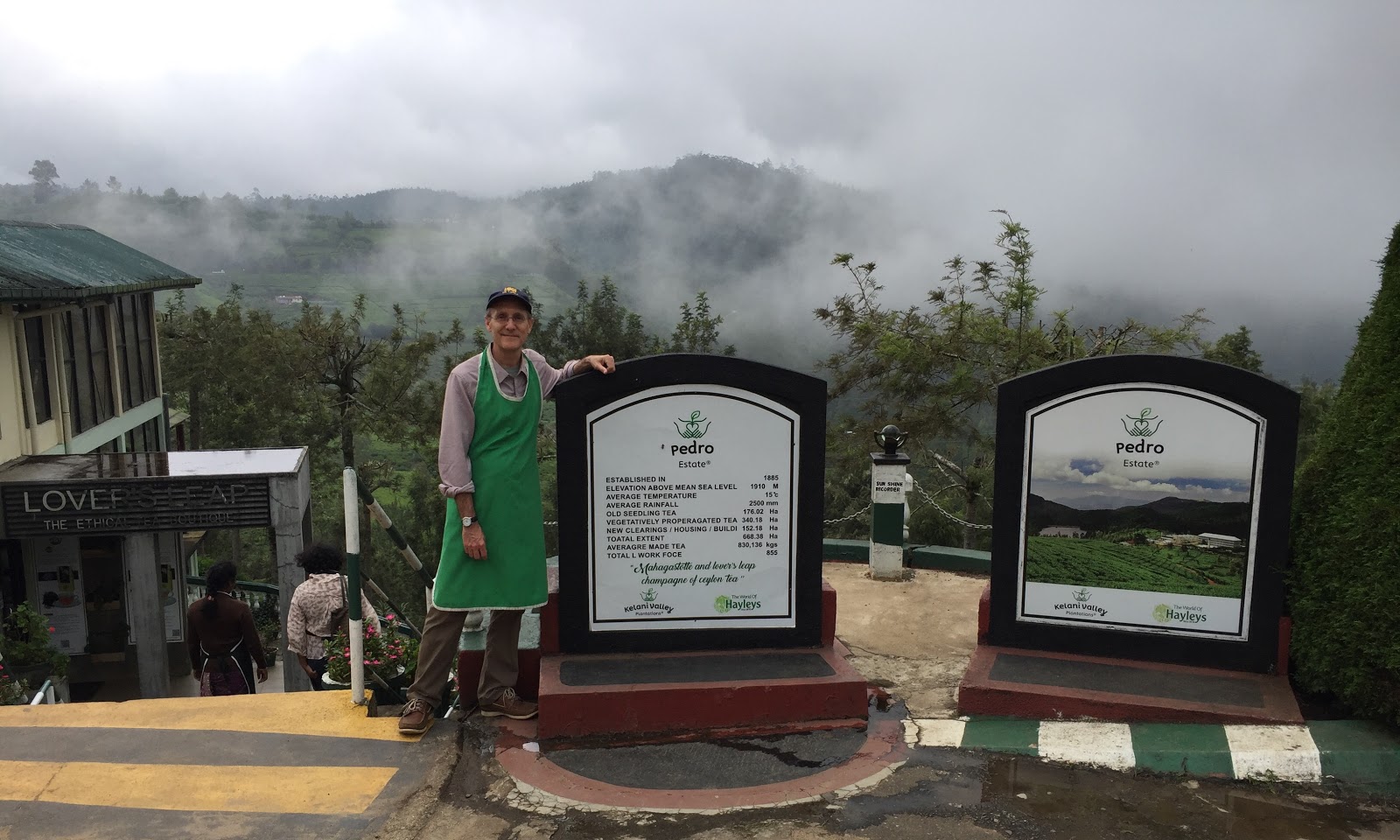
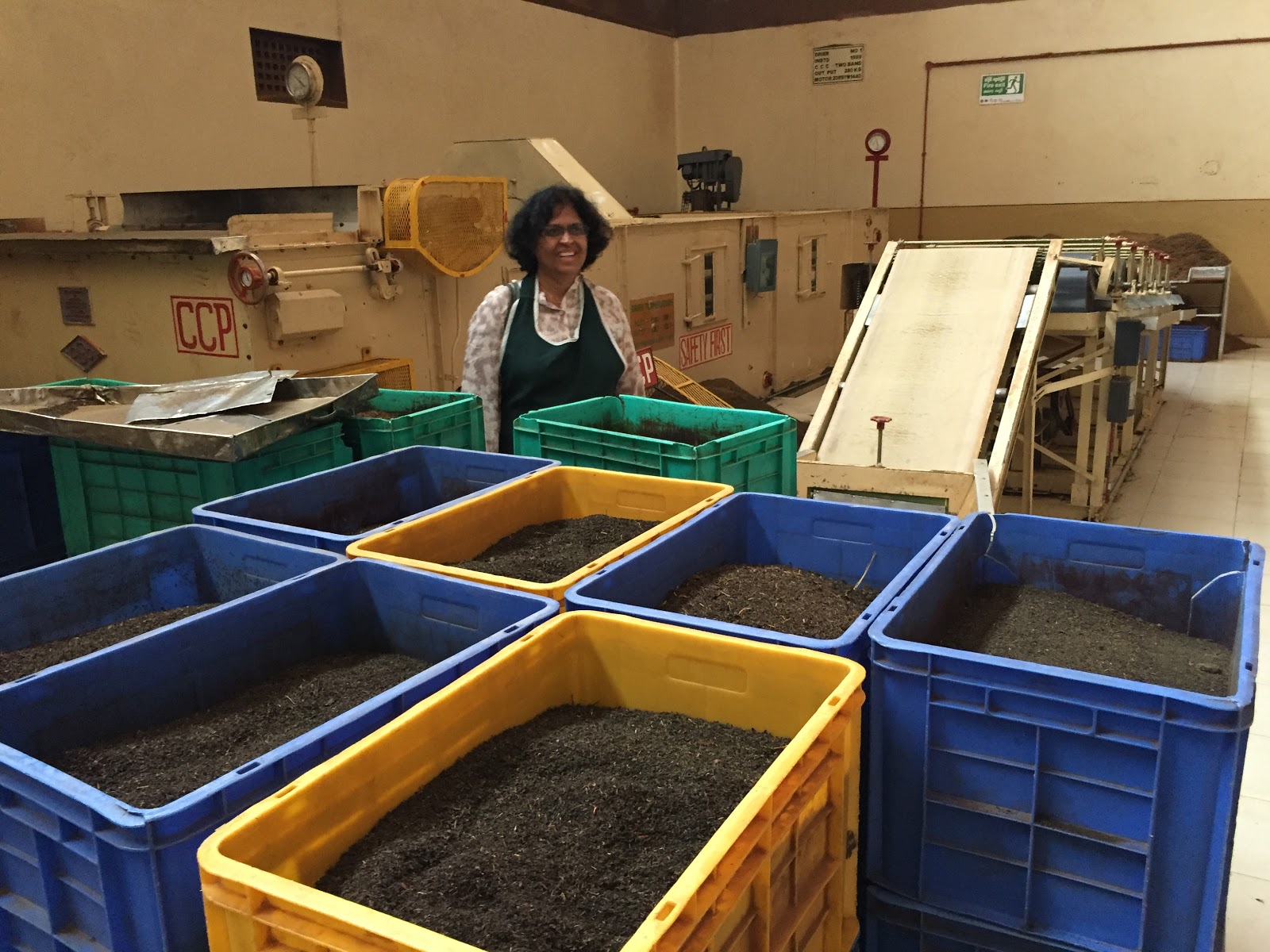
Sri Lanka is where the British established the tea trade in the early 1800’s.  The tea grown in central Sri Lanka is said to be the highest quality and commands the highest price from retail tea manufacturers.  We traveled through the center of tea country – from Kandy and Nuwara Eliya to Ella – in order to see the green hills and to see the tea production process.  

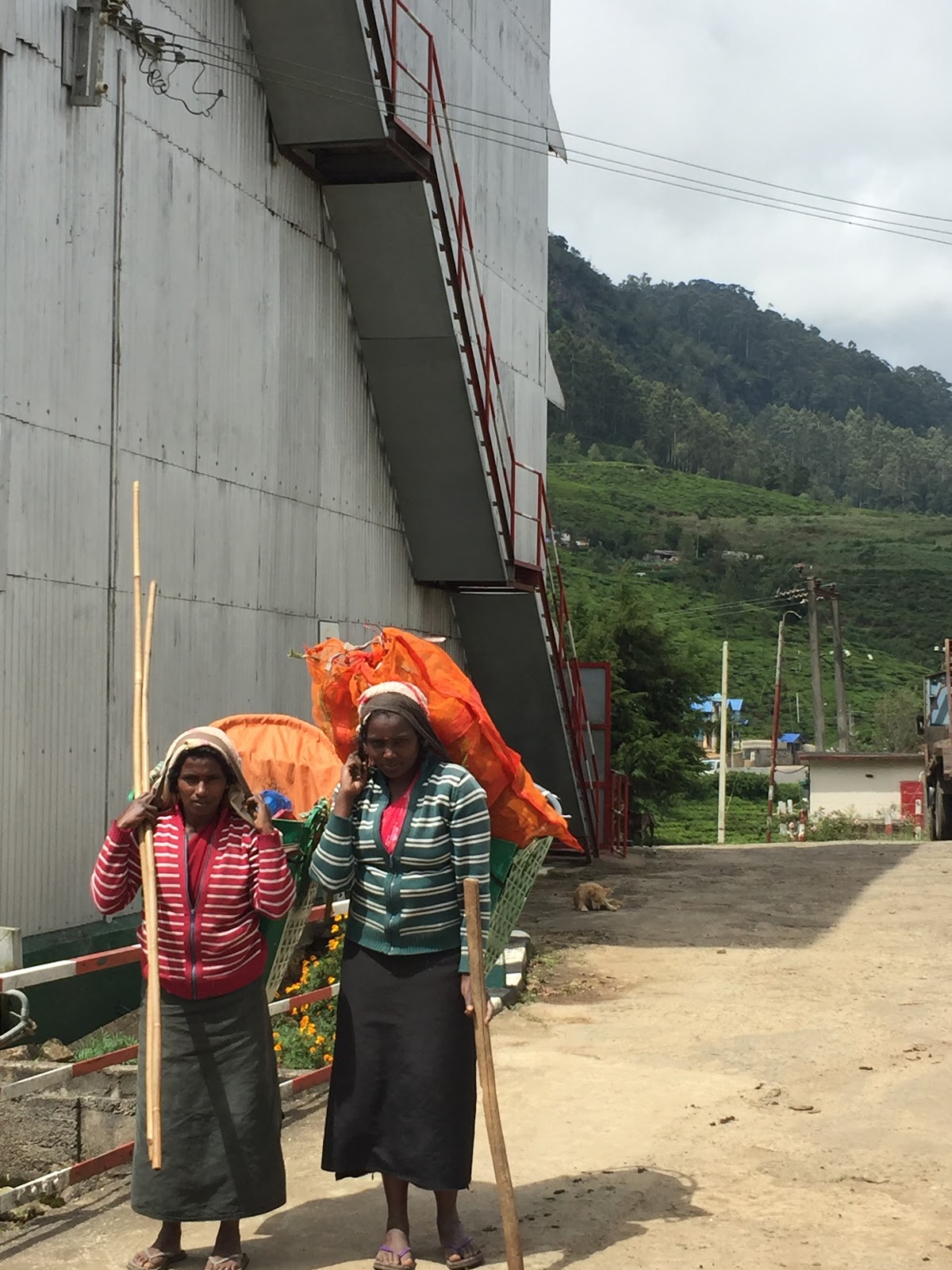
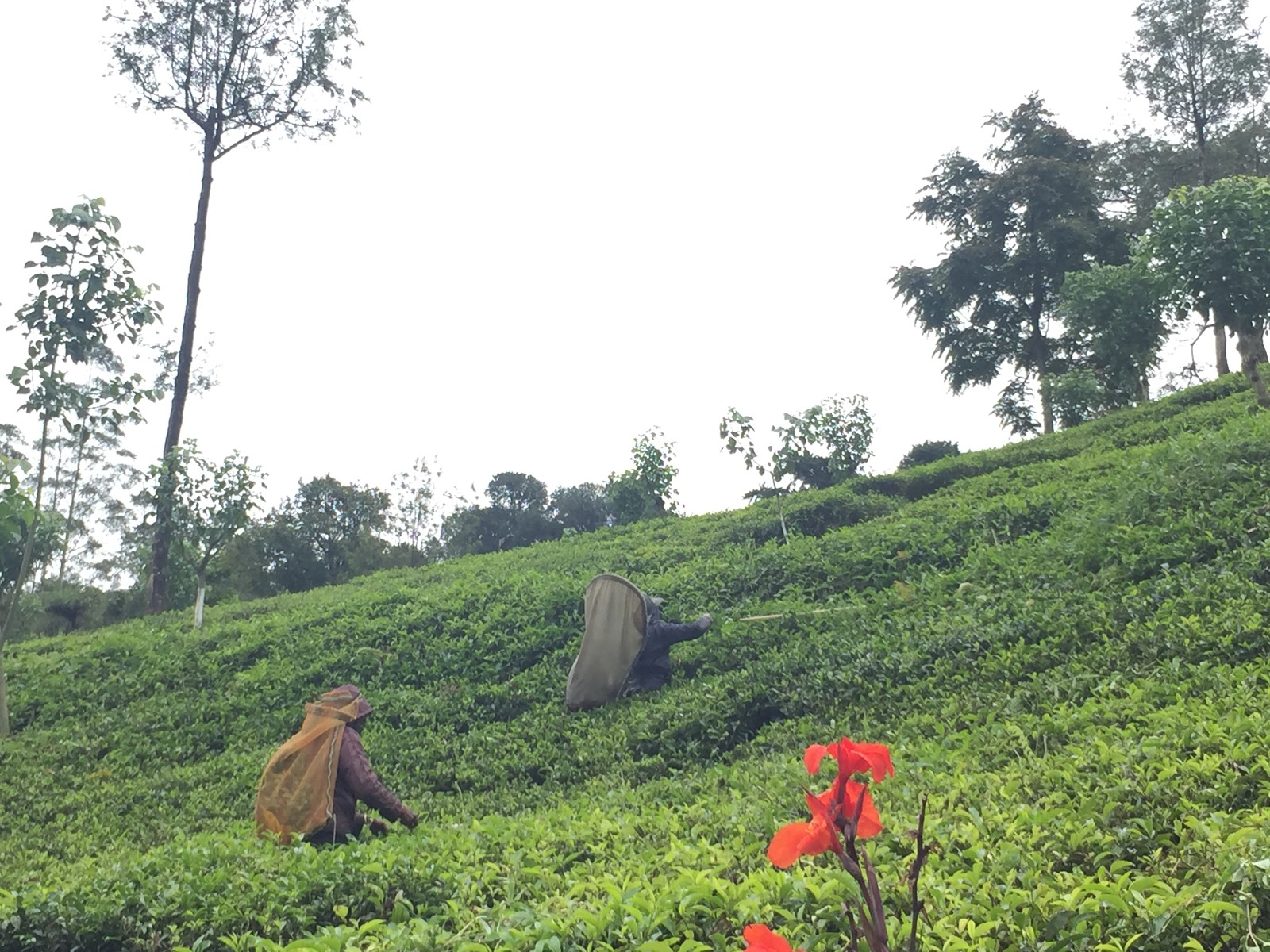
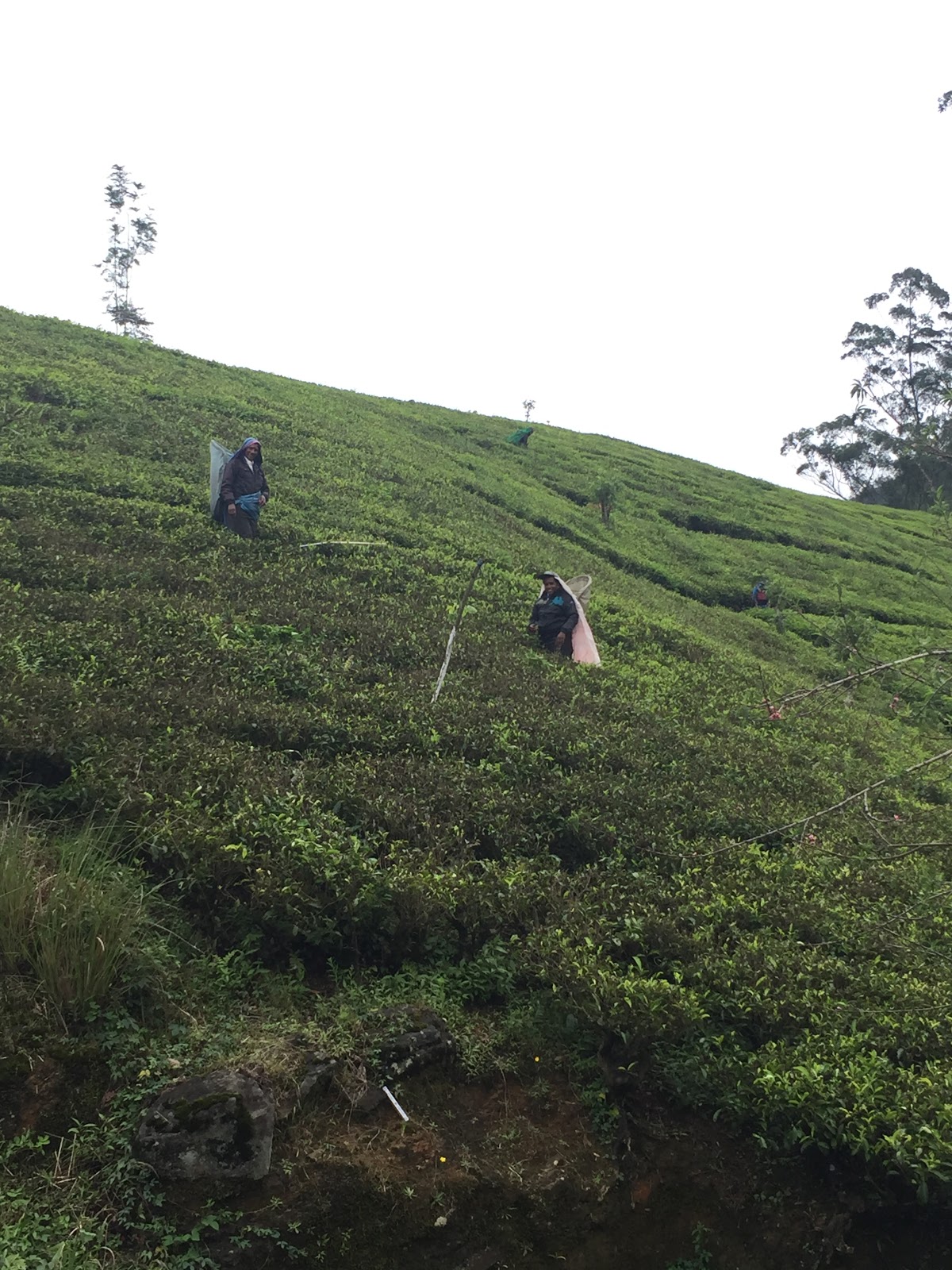
The tea hills are divided among many “tea plantations” which are individually owned tea processing facilities (“tea factories”).  The tea factories employ hundreds of “tea pickers” who work in the tea hills and pluck the leaves.  The tea pickers are primarily hindu women from india because the wages are too low to attract Sri Lankans.  One of the inspirations for our trip to Sri Lanka was a photo Bernard Millant showed me of tea pickers working in the hills.  I was captivated by their colorful saris and large baskets worn on their backs contrasted against the spectacularly steep and verdant hills and wanted to experience this on our trip.  

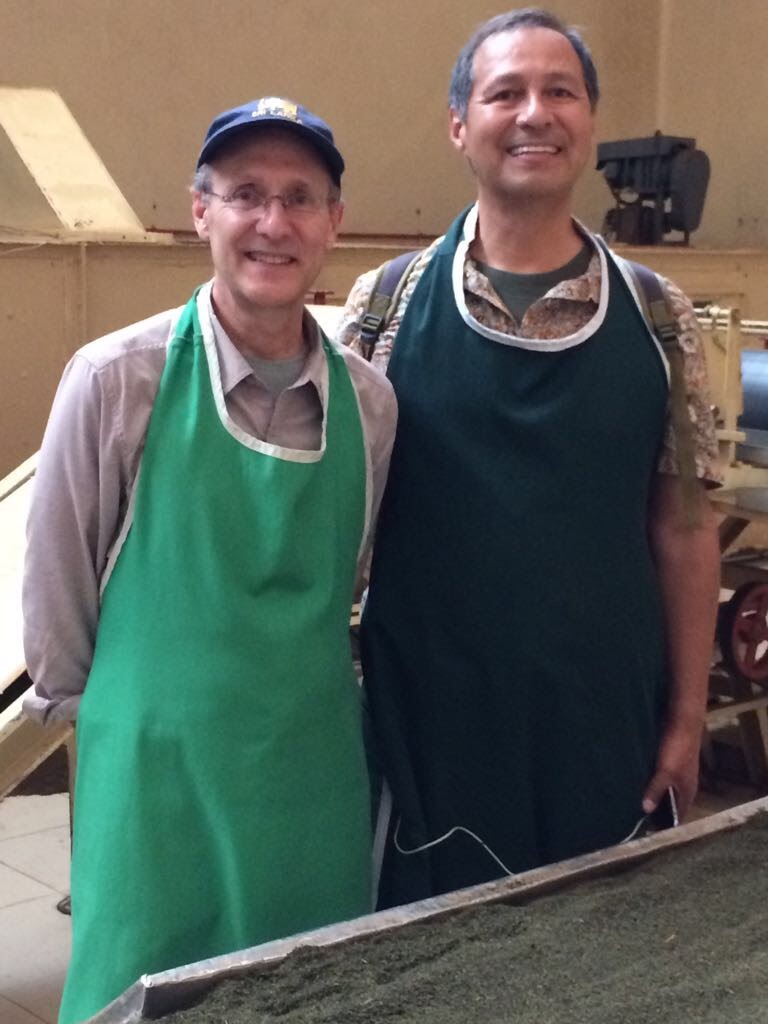
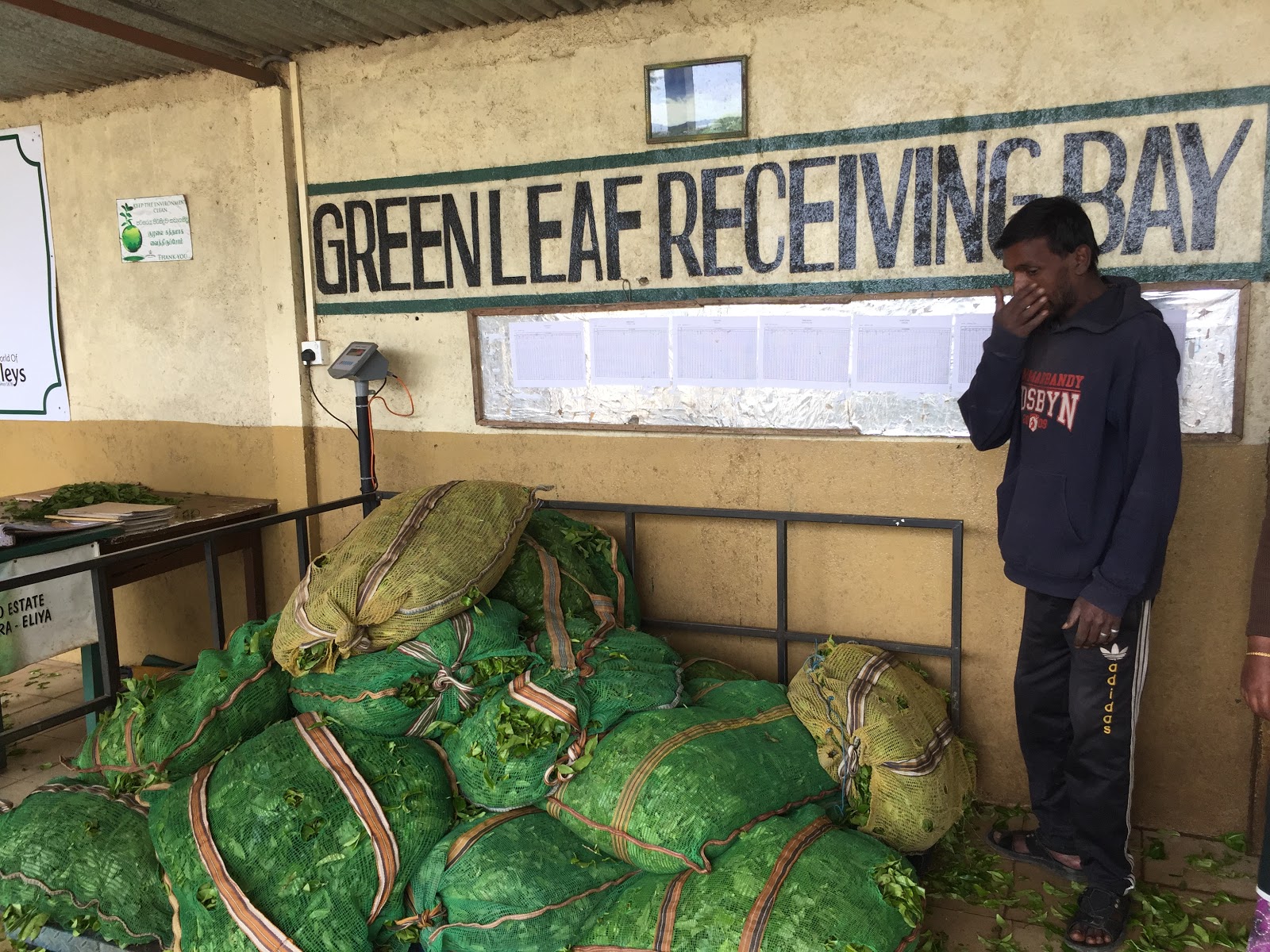
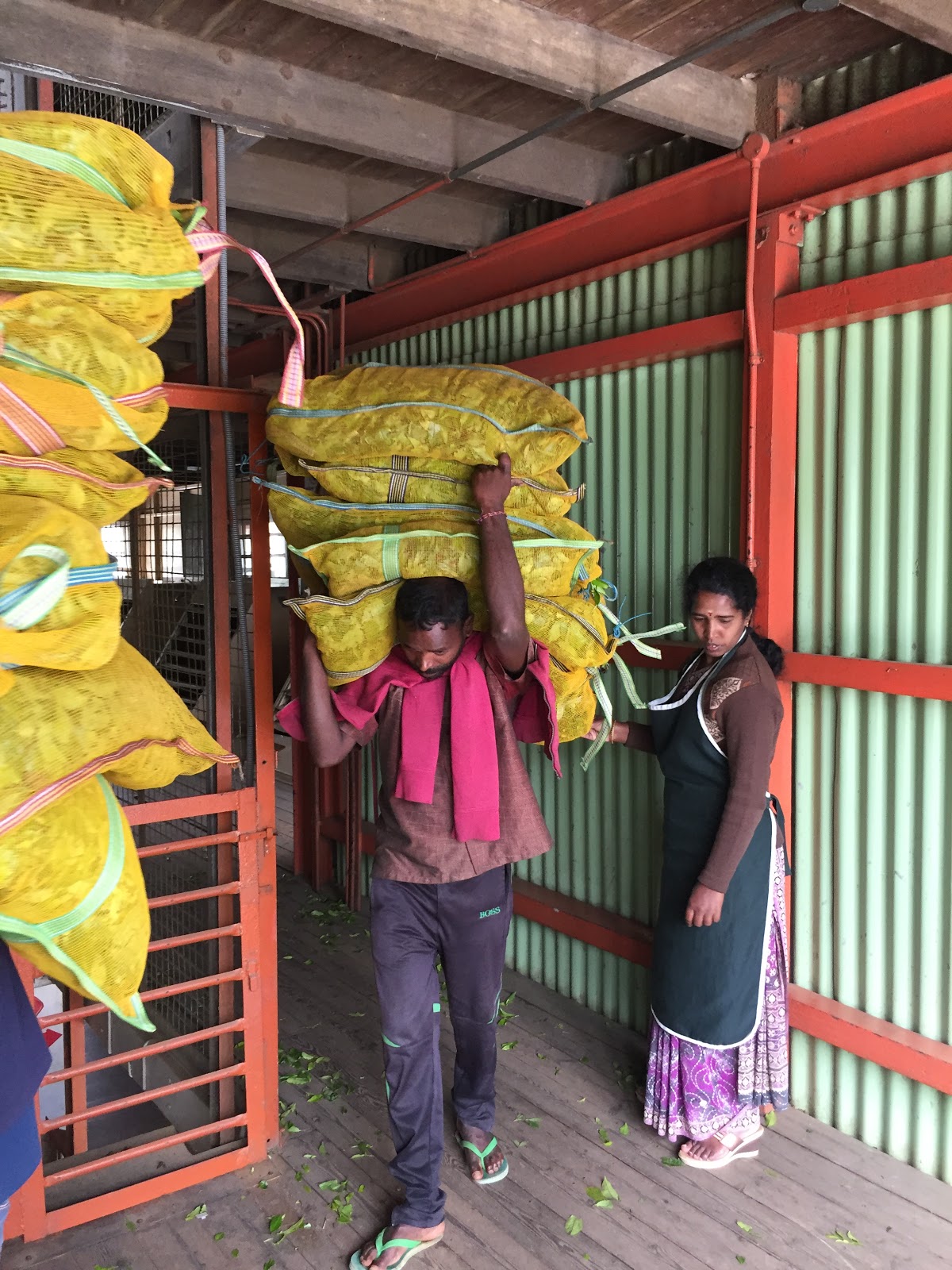
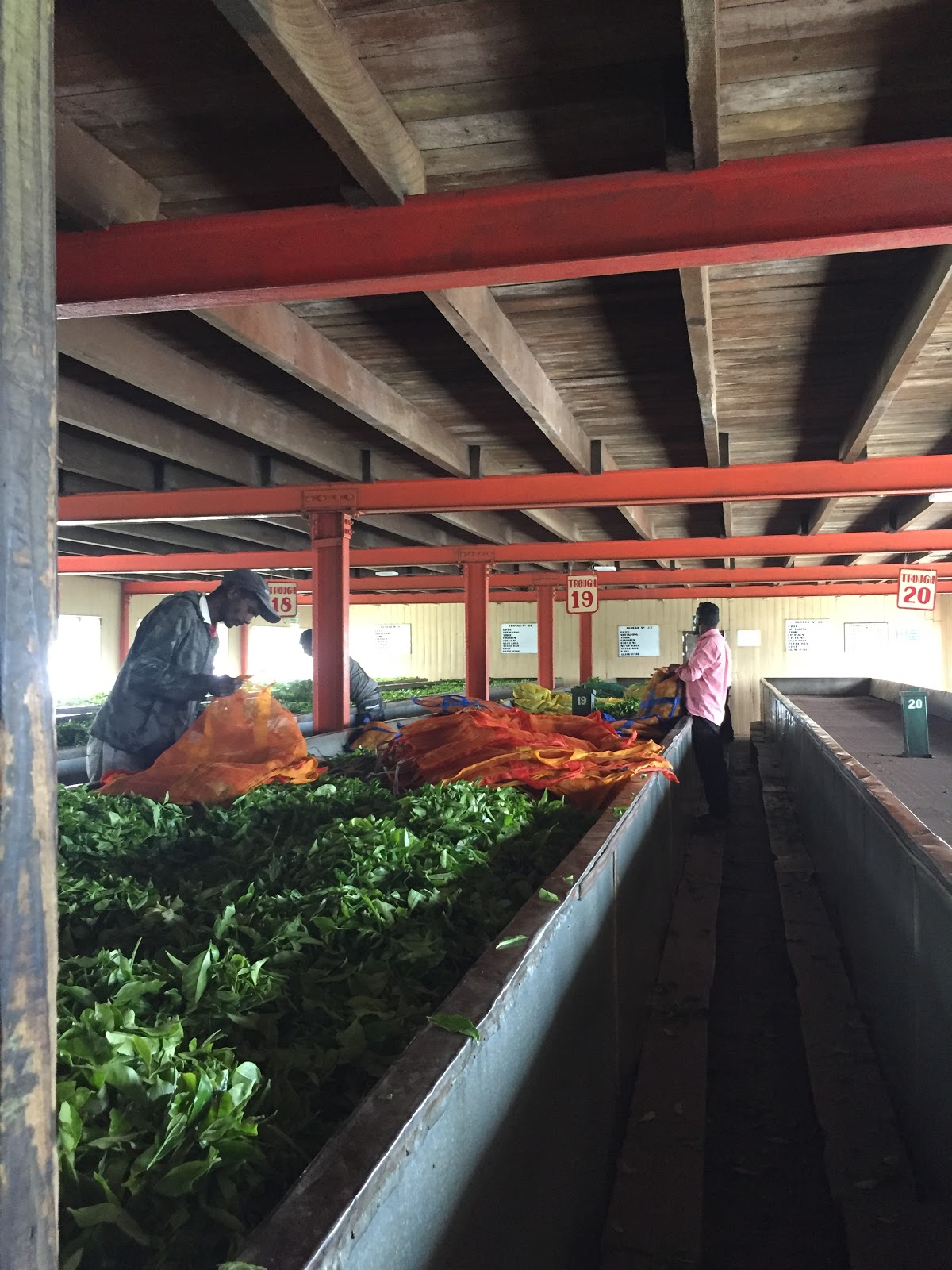
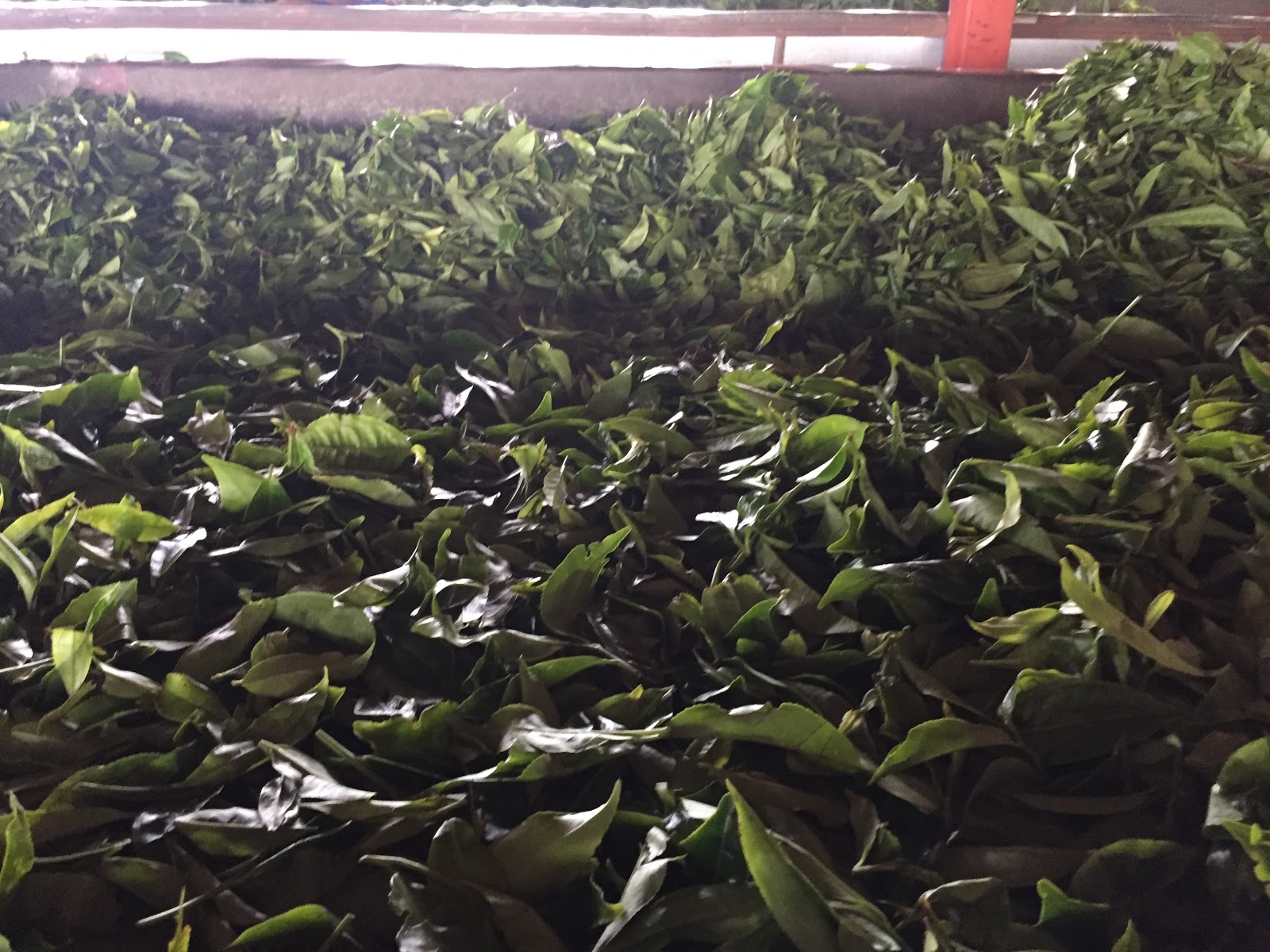
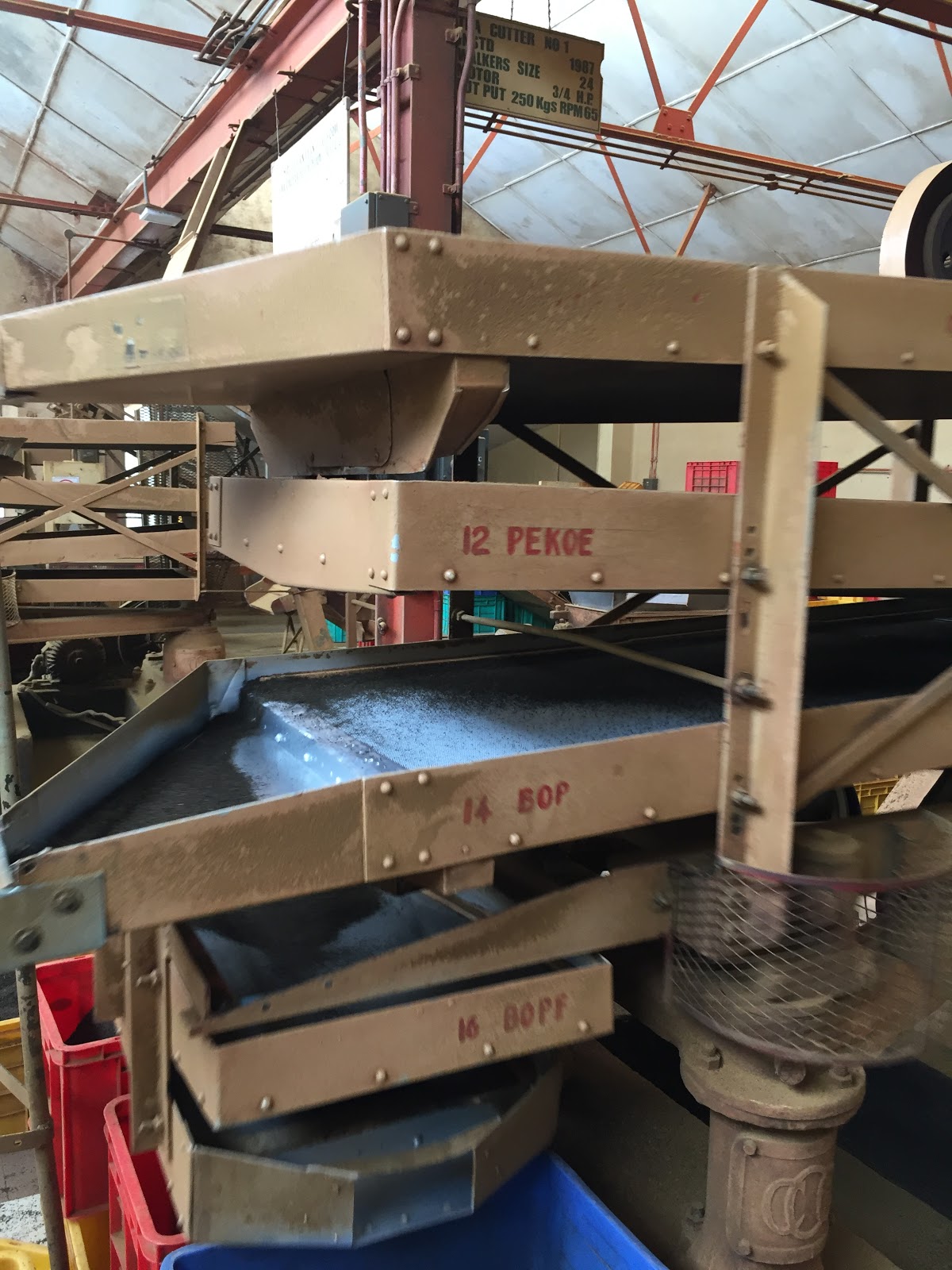
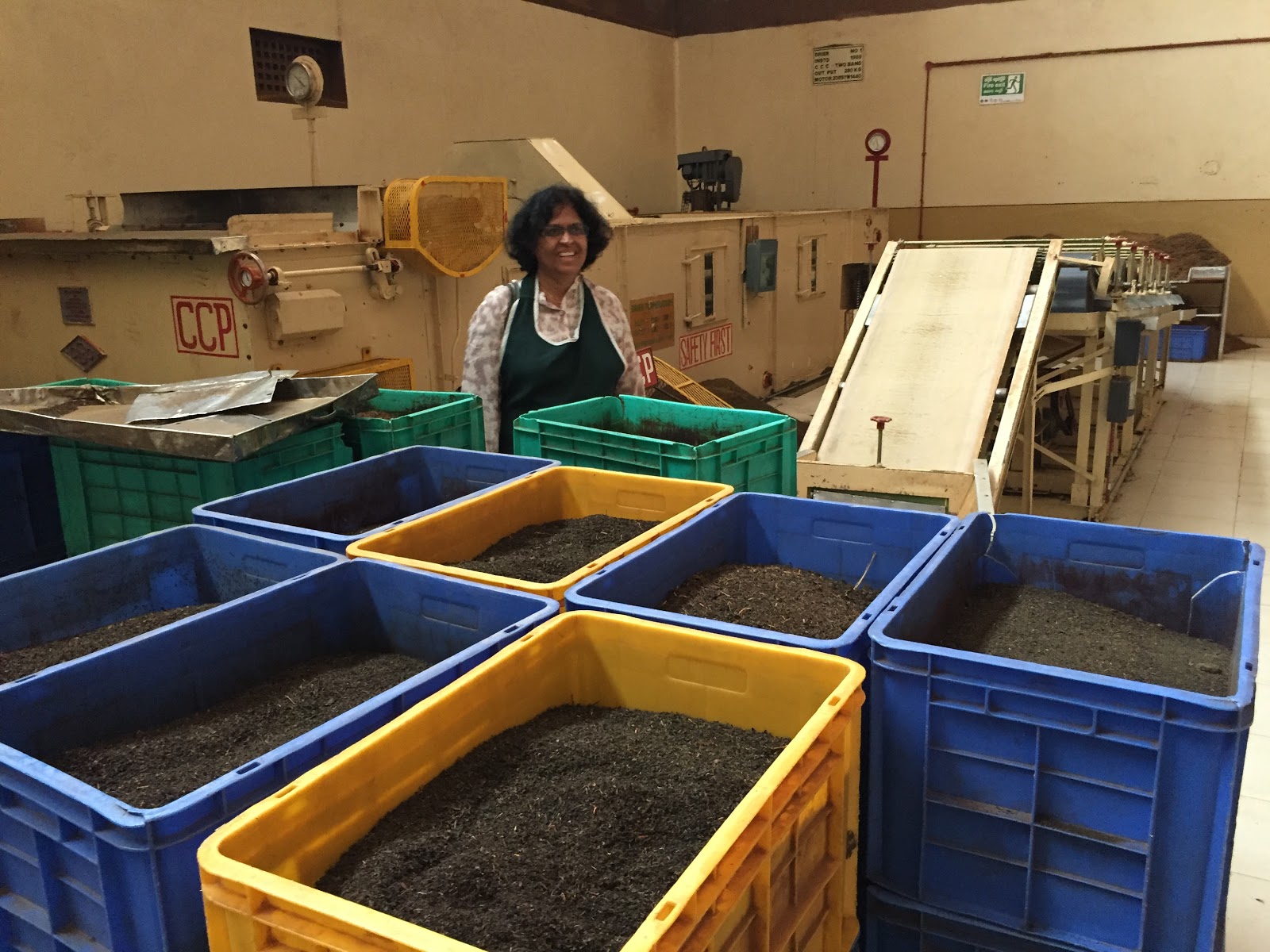
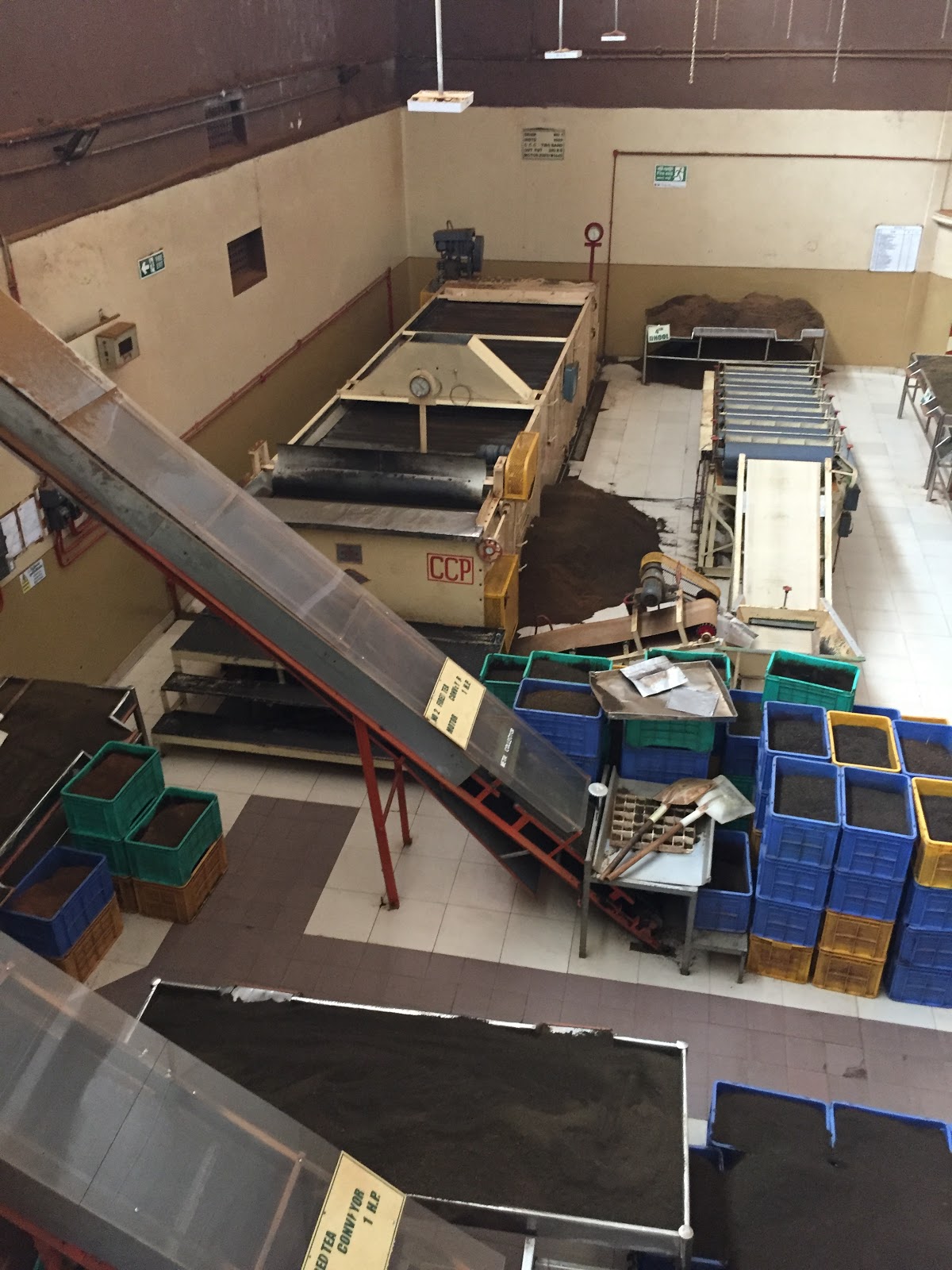
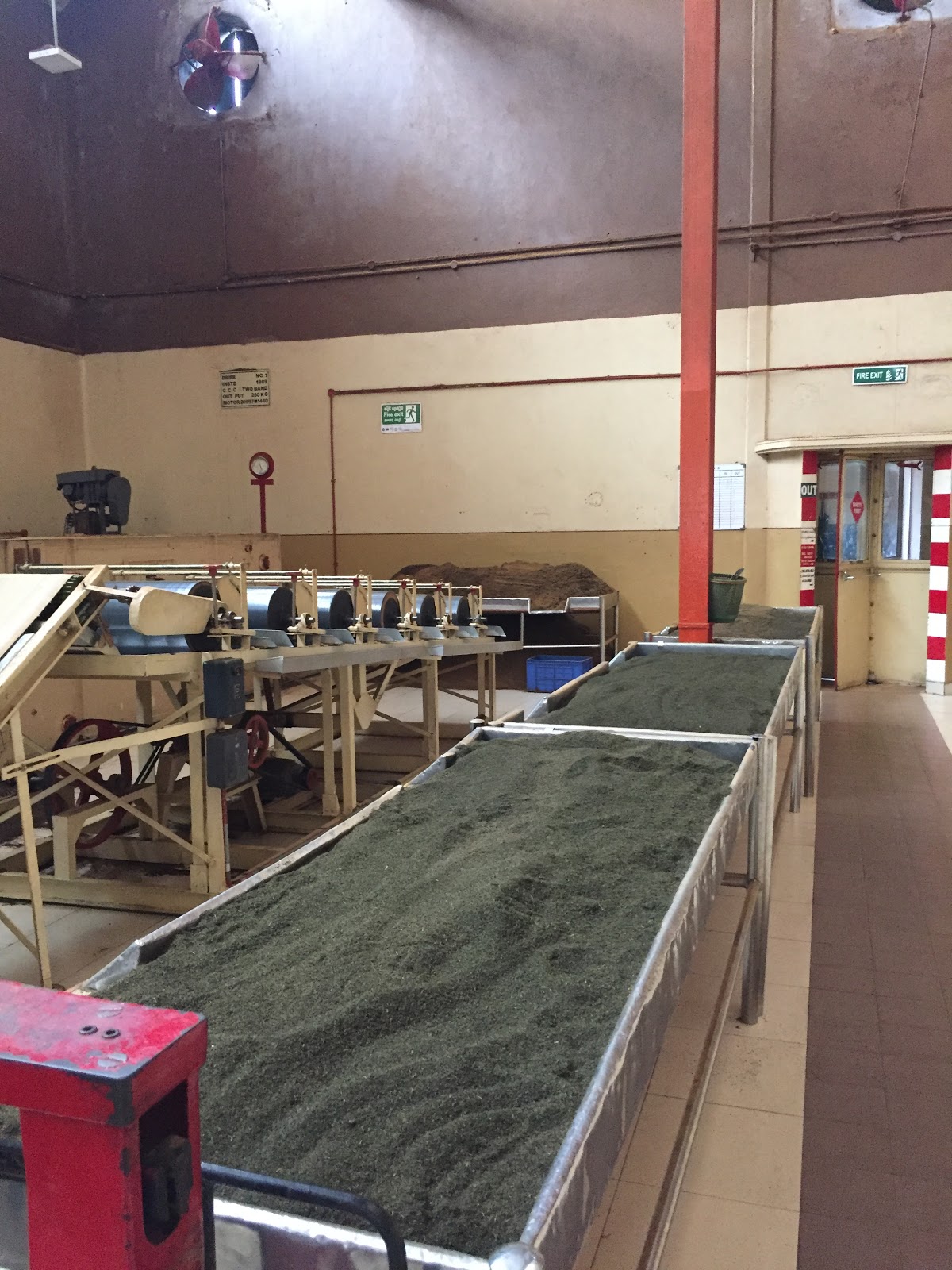
The tea produced here is fresh!  Tea pickers deliver the picked leaves to the production site twice a day at the end of their morning and afternoon shifts.  The process begins by weighing each bag of tea leaves and crediting the woman who delivered the bag.  Next the tea leaves are spread in large beds over grates where fans distribute warm air under the leaves – a process referred to as “withering” where the moisture is reduced by about half.  After four hours the leaves are dry enough to break into smaller bits.  More heat is applied and then the leaves are sorted by size and quality and then bagged in 100 kilo bags.  The entire process takes place in a 24 hour period.  By the end of the 24 hours the tea is ready to be trucked to the twice weekly tea auction in Colombo.  At the tea auction retail tea companies purchase the tea for export to their facilities in other countries where the tea is blended, bagged and distributed.  
Terraces of tea plants

Spreading fresh tea leaves on the withering grates
Withering tea

Machine used to separate tea by leaf size

Sri Lanka – November 5, Train from Nuwara Eliya to Ella

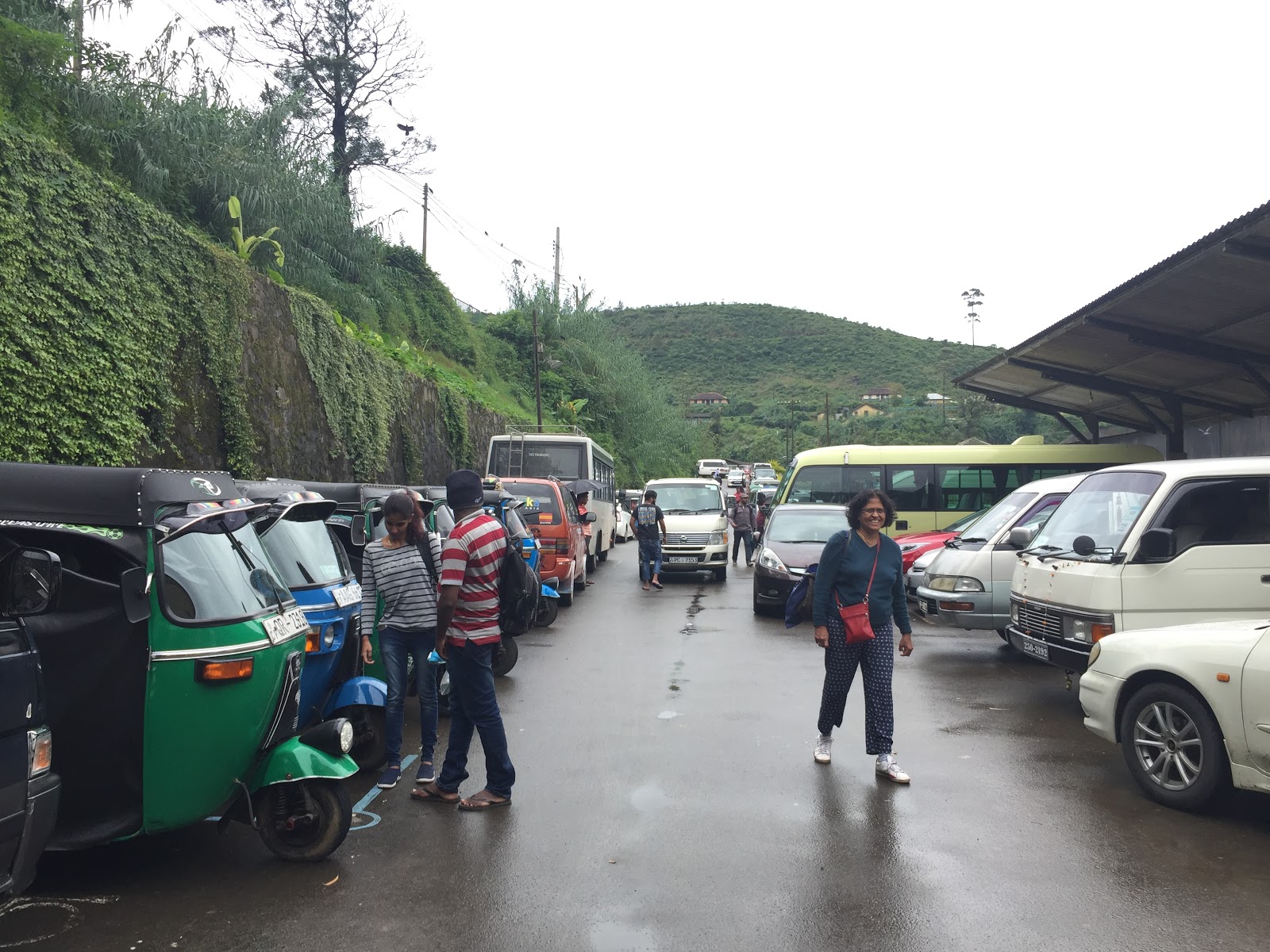
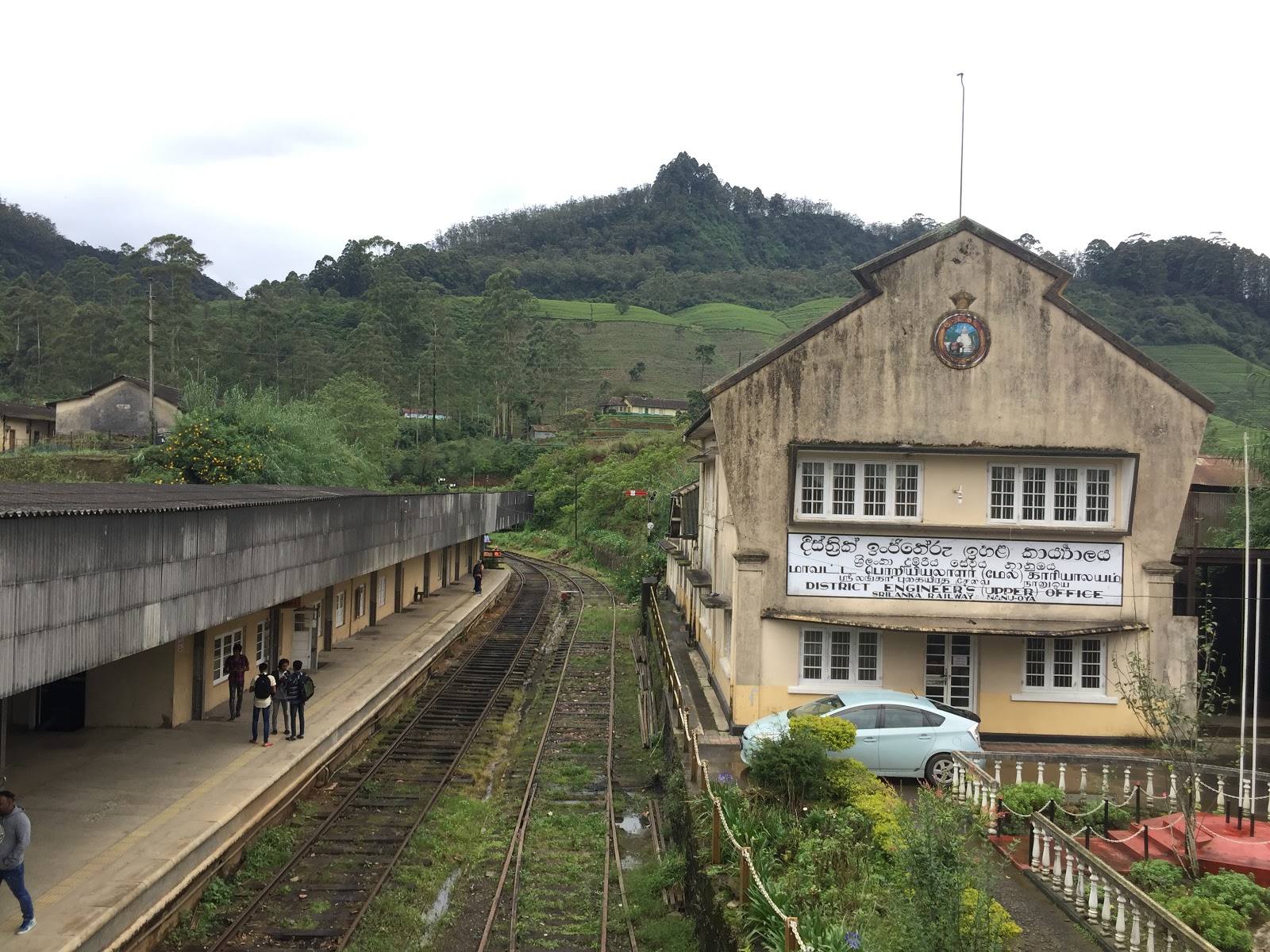
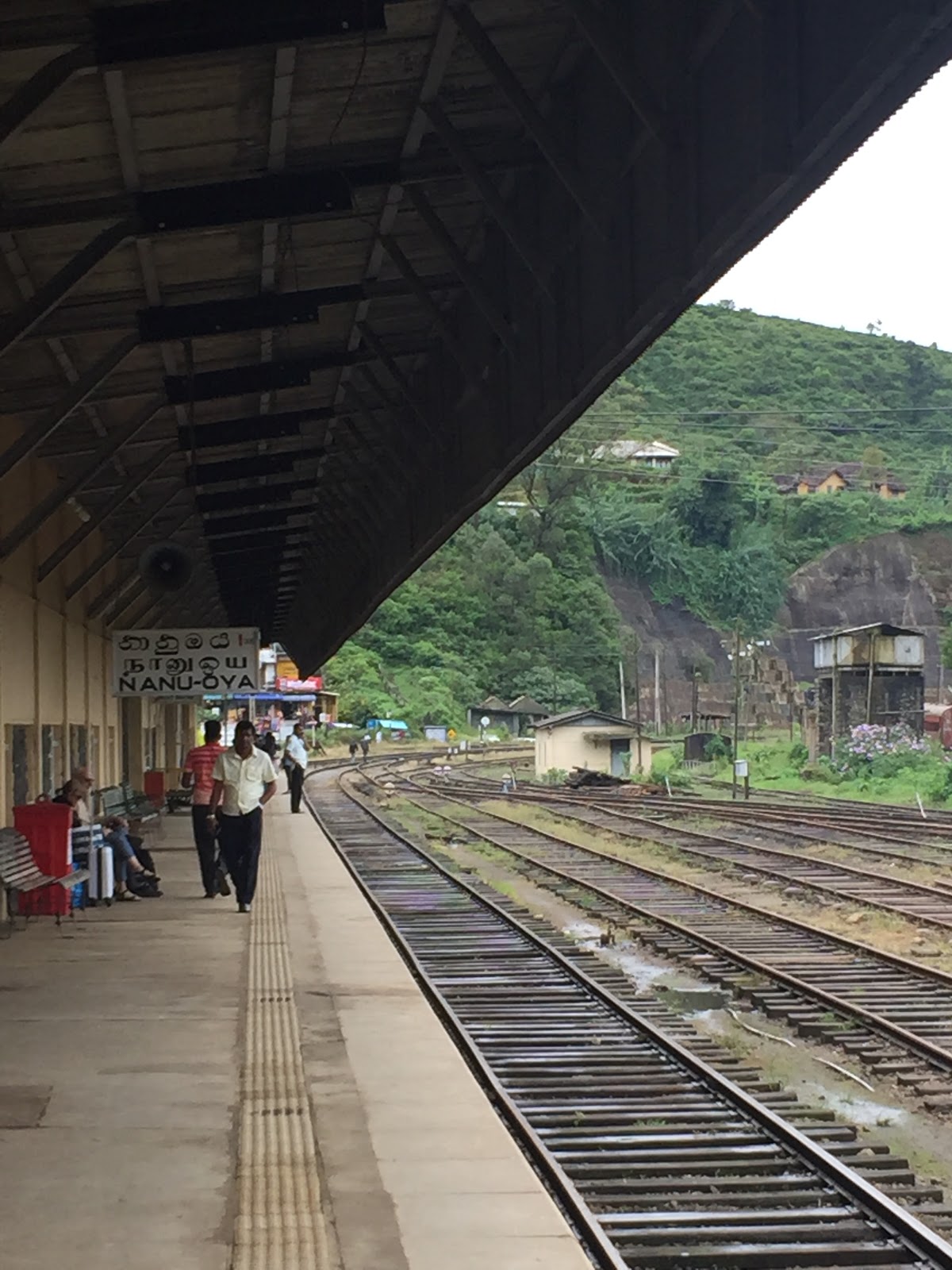
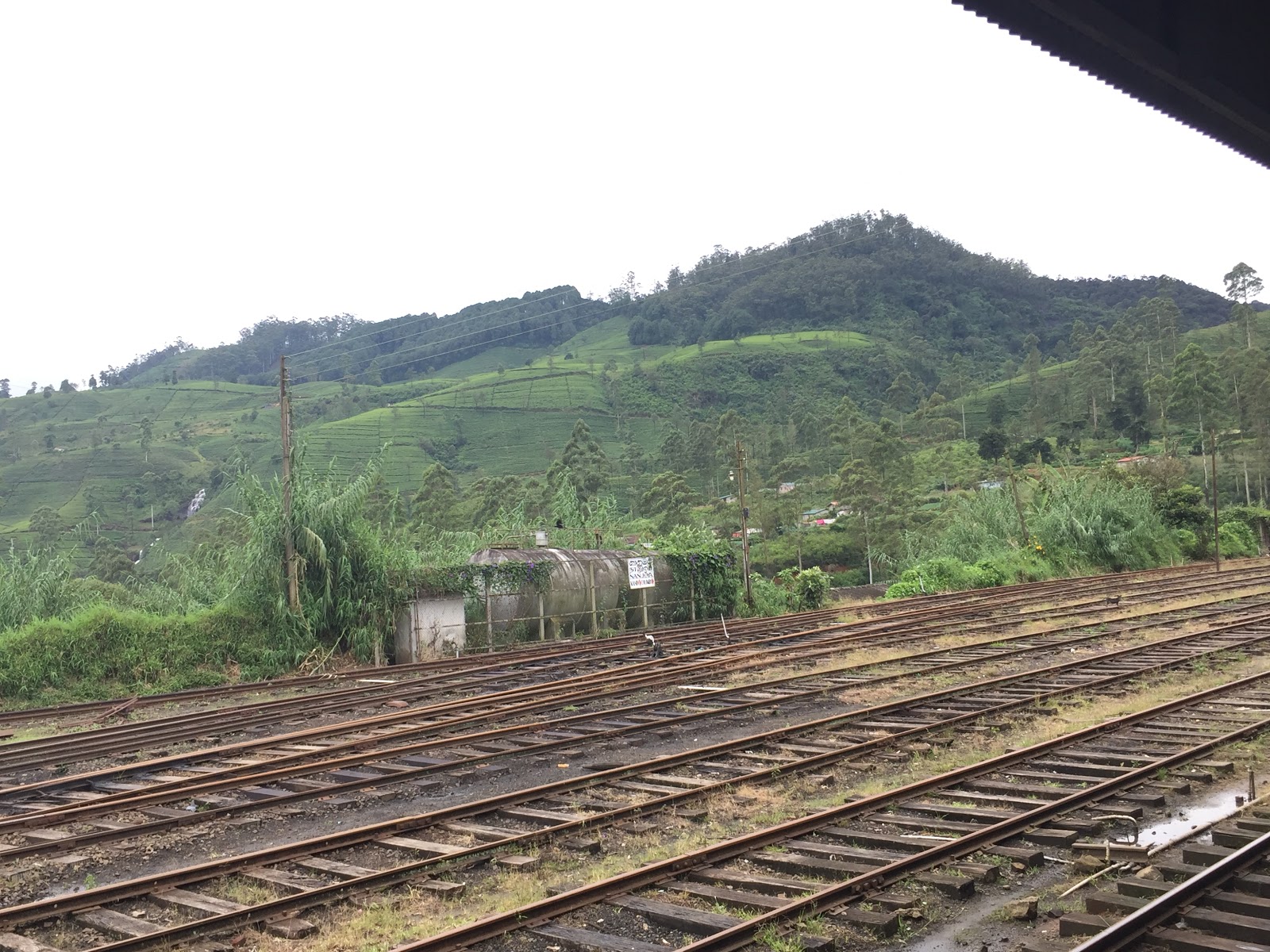
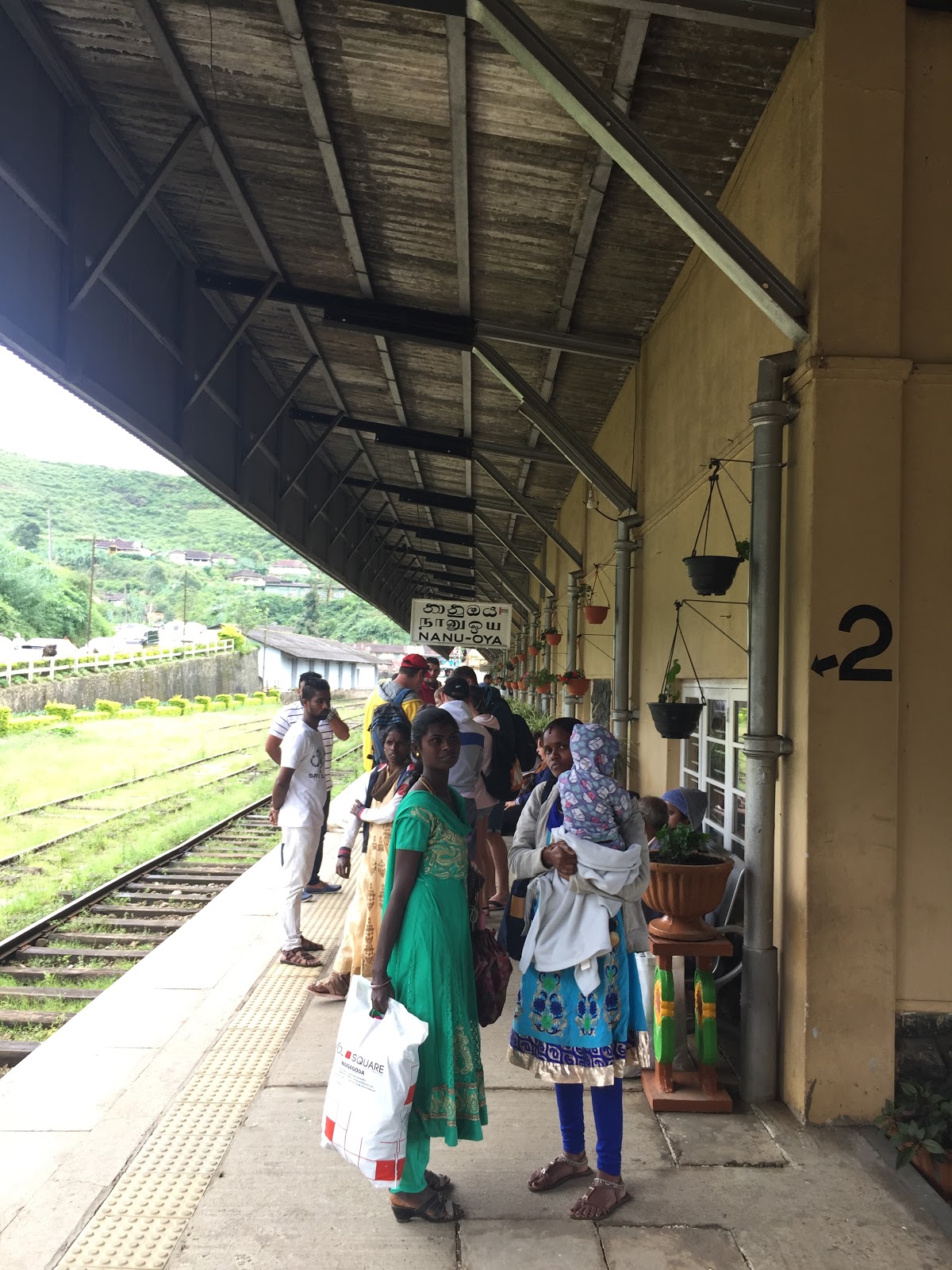
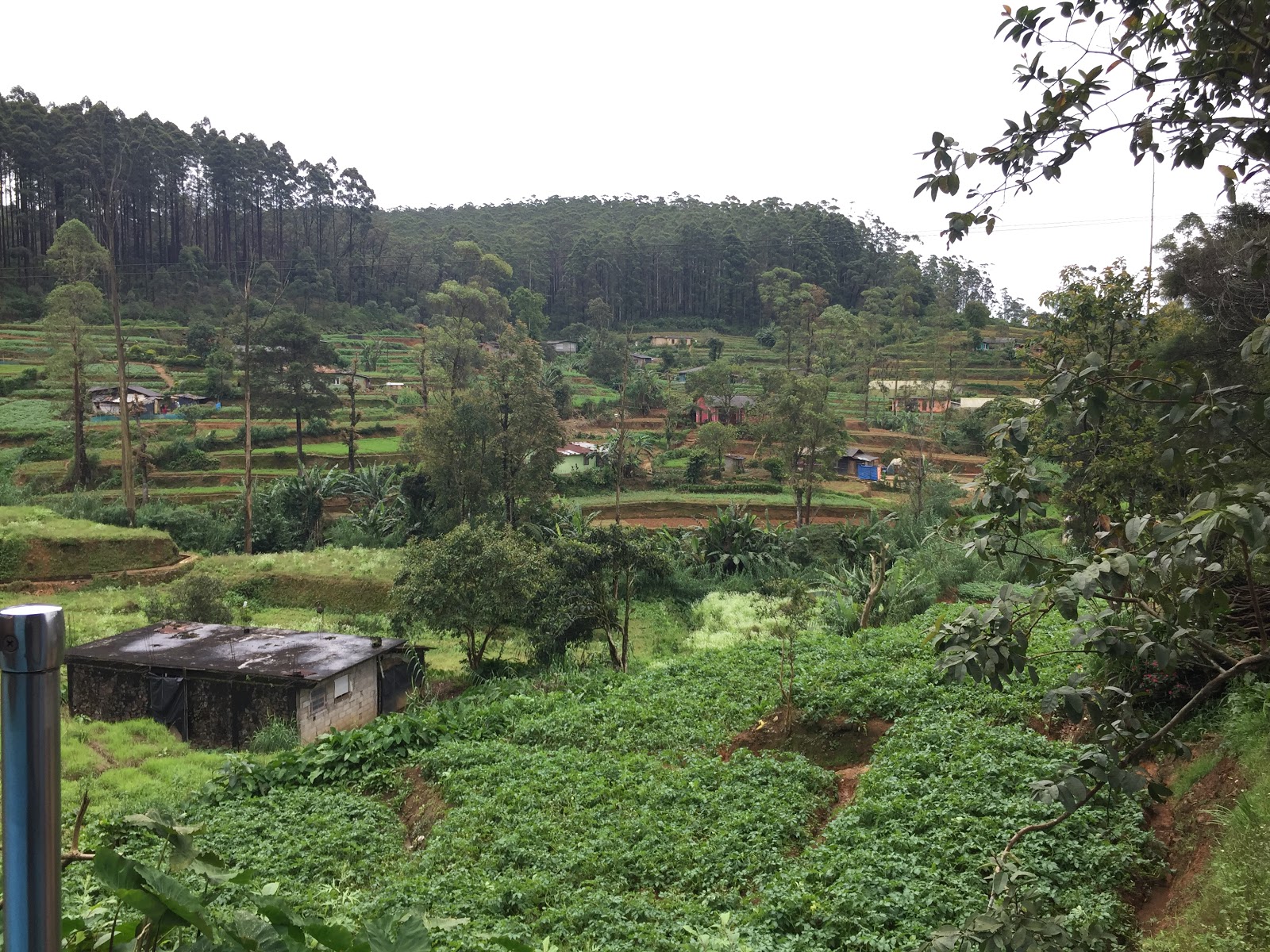
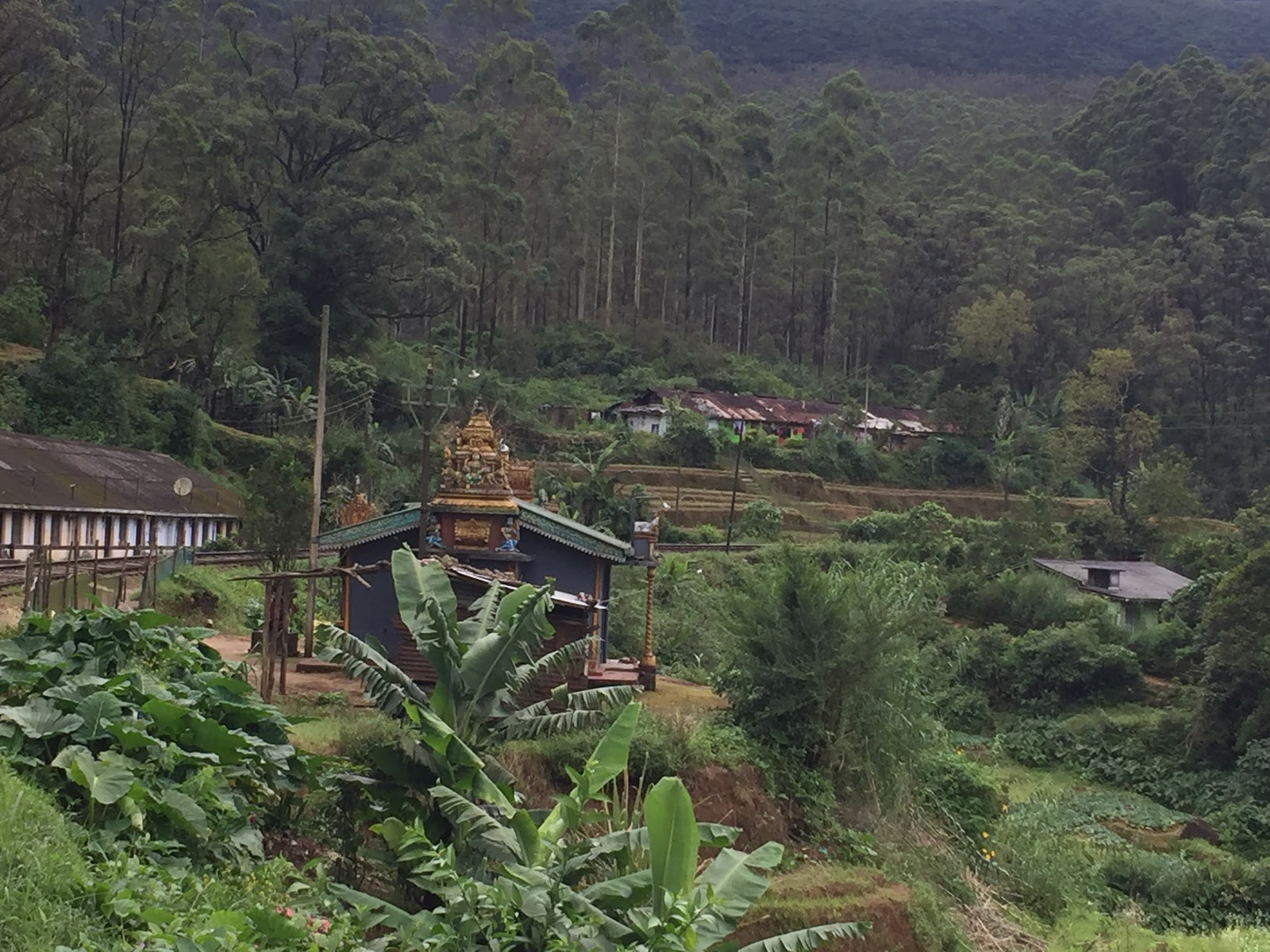
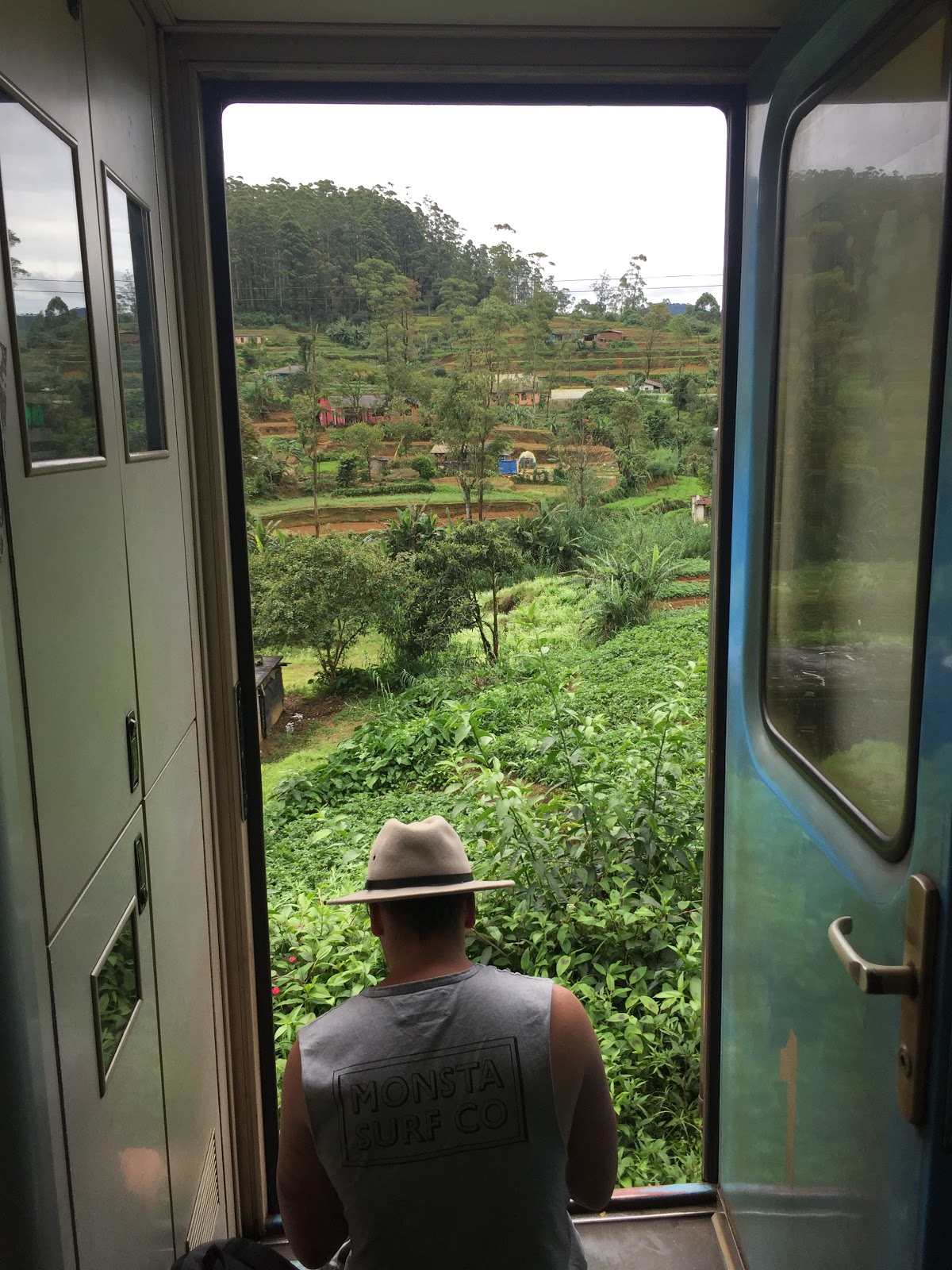
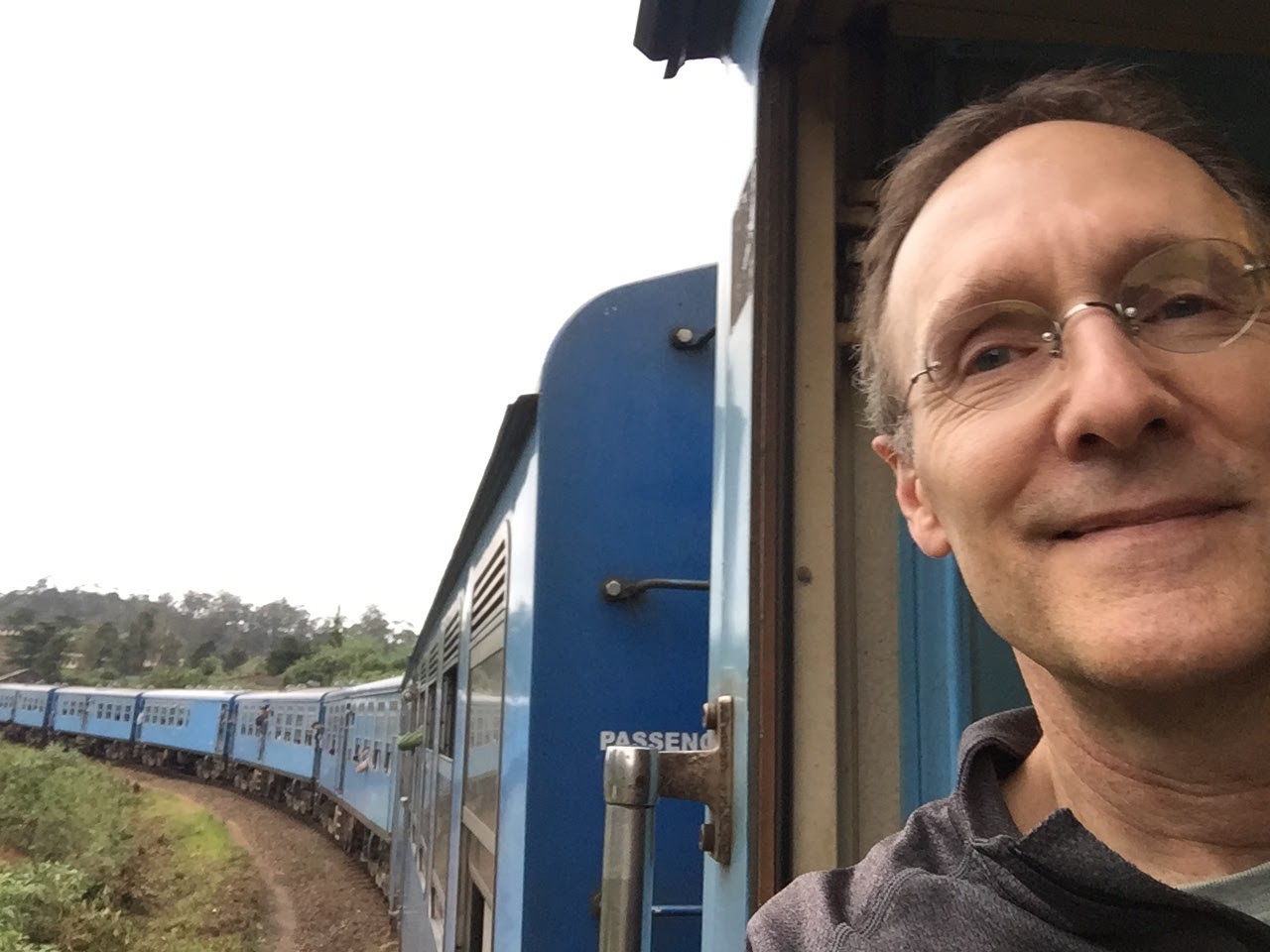
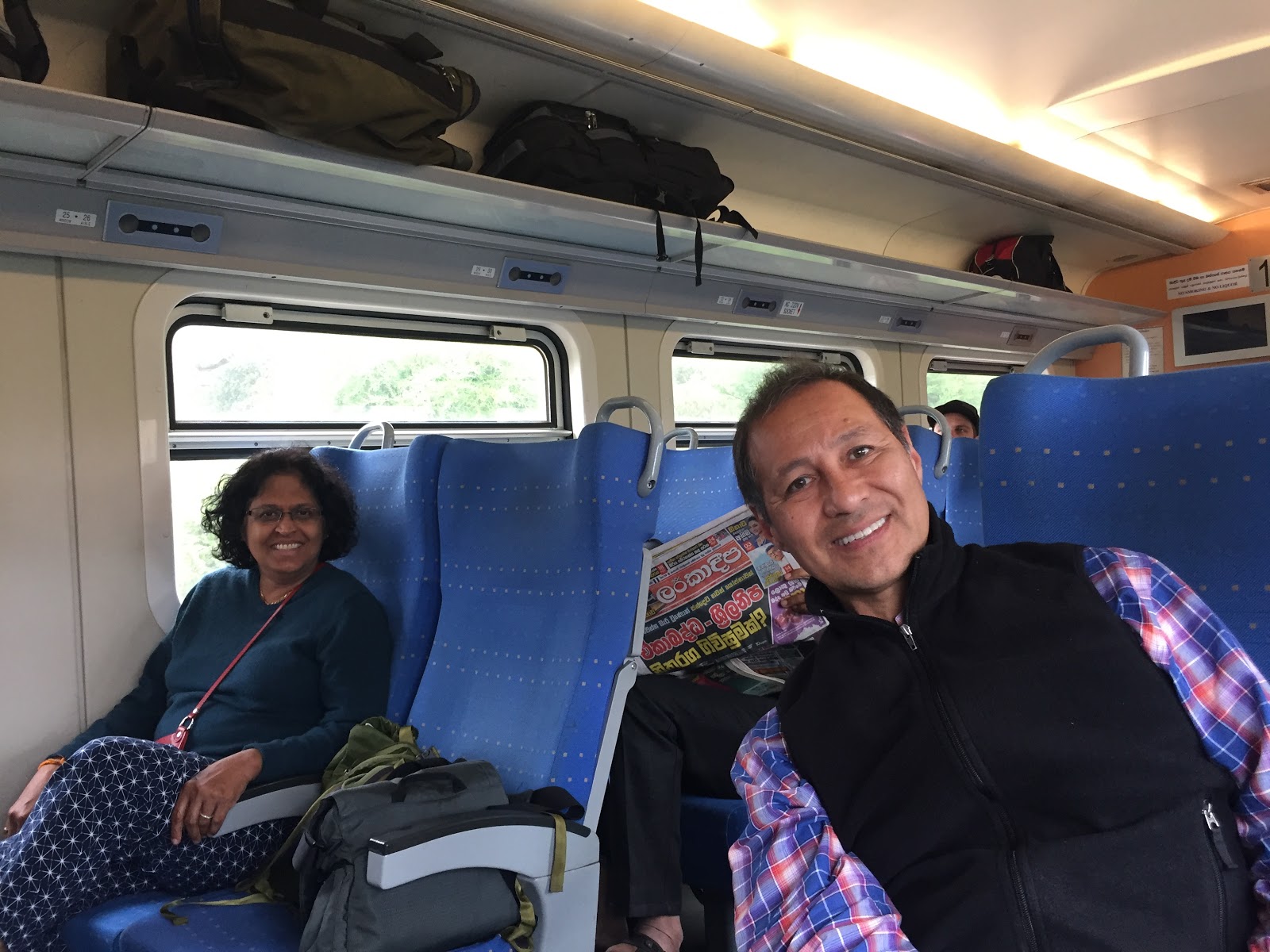
The British tea plantation owners built a network of train lines through the hills of central Sri Lanka now known as “tea country”.  A journey on the train is one of the highlights of a visit here so we scheduled a short ride on one of the more interesting routes.  The tickets were requested over one month earlier due to the high demand.  We checked out of our hotel in Nuwara Eliya and our driver took us to the nearby train station where we would board the train and our bags would stay with the driver.  He drove the 2+ hours to Ella and met us at the Ella train station.  The ride met our expectations and you can tell from these photos how incredible the views were.

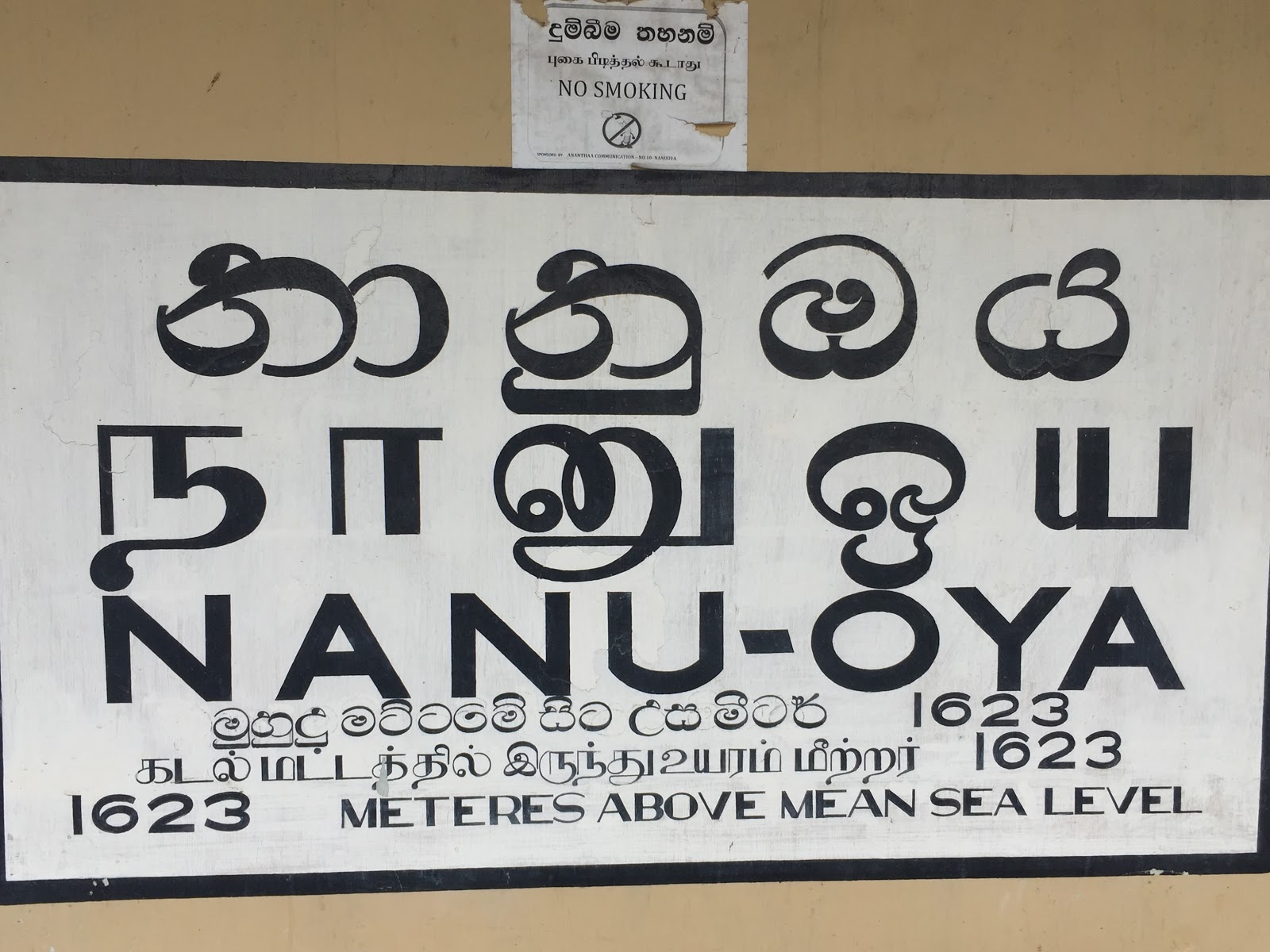
Arriving at Nanu-oya station near Nuwara Eliya

Nanu-oya station in one of the most beautiful settings of any train station

Sri Lanka – Mirissa, November 6, Birthday One

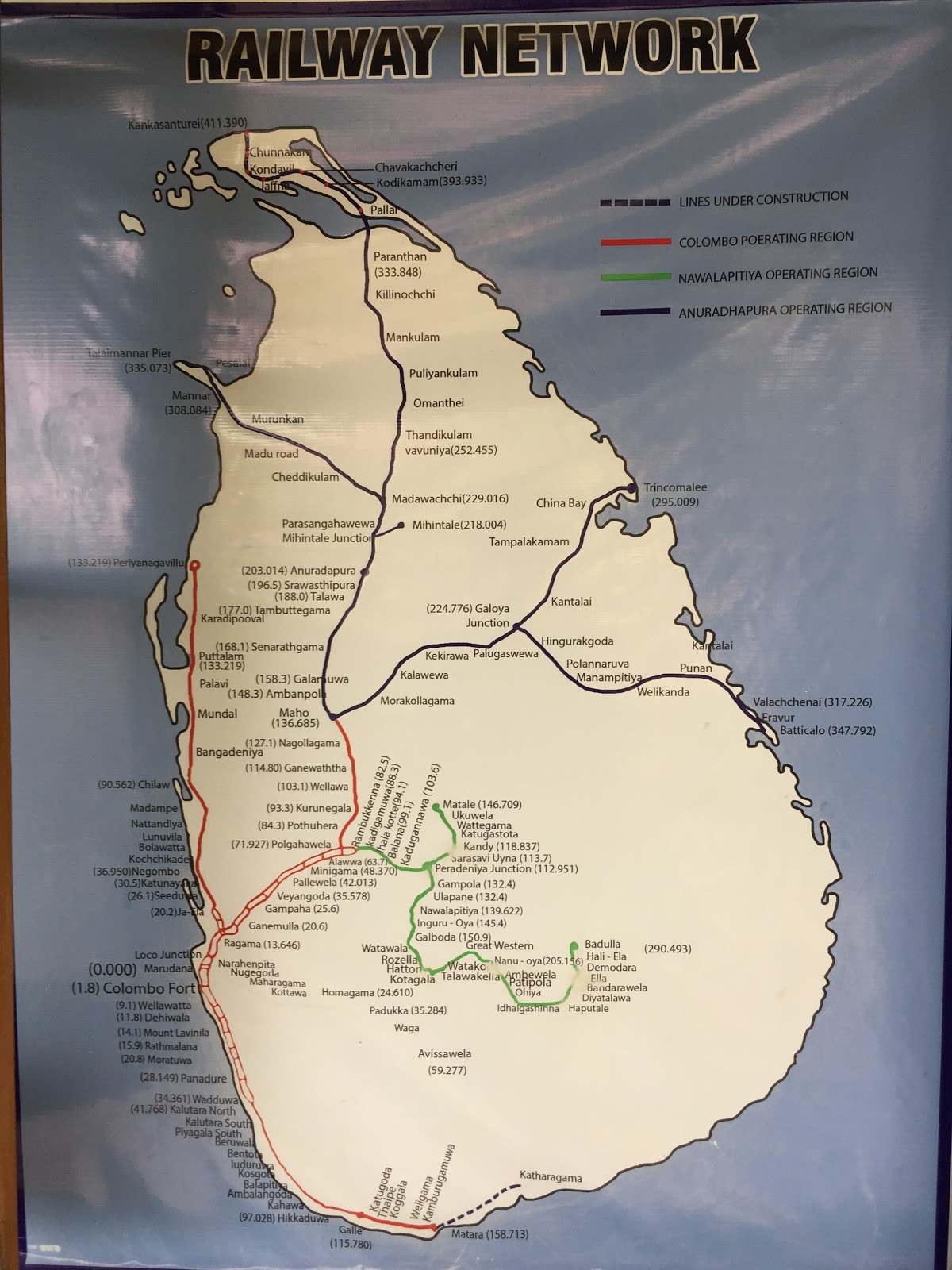
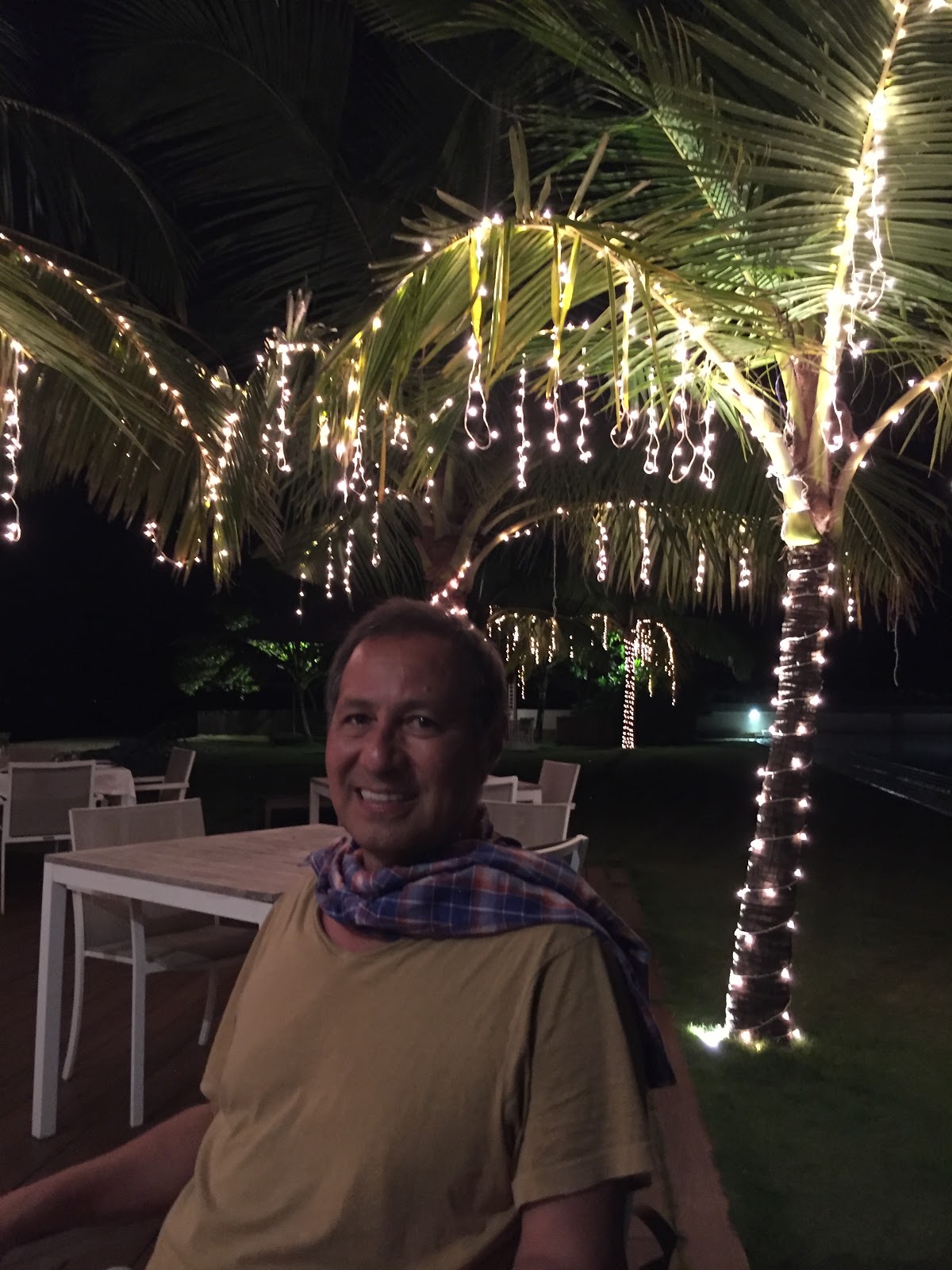
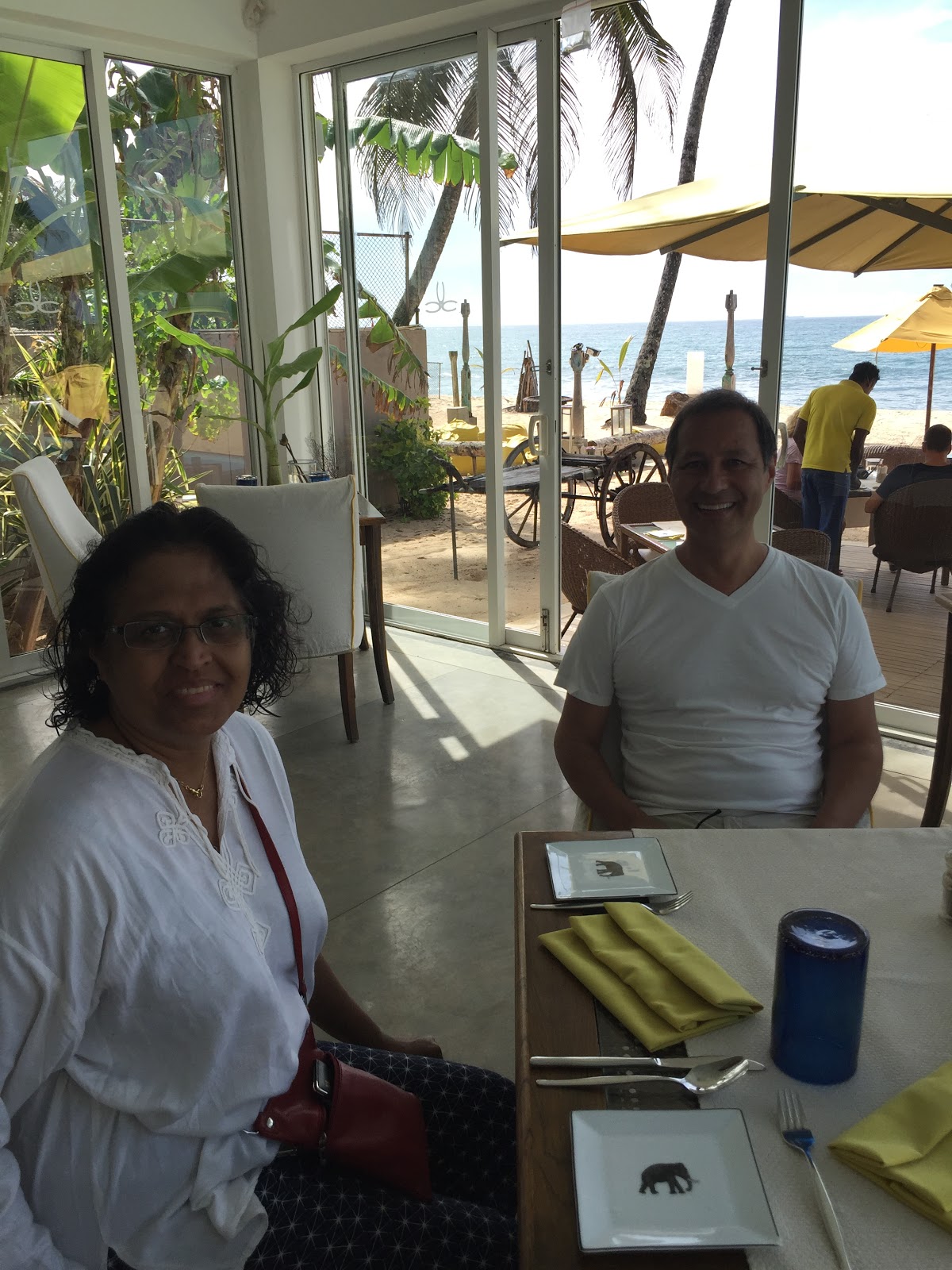
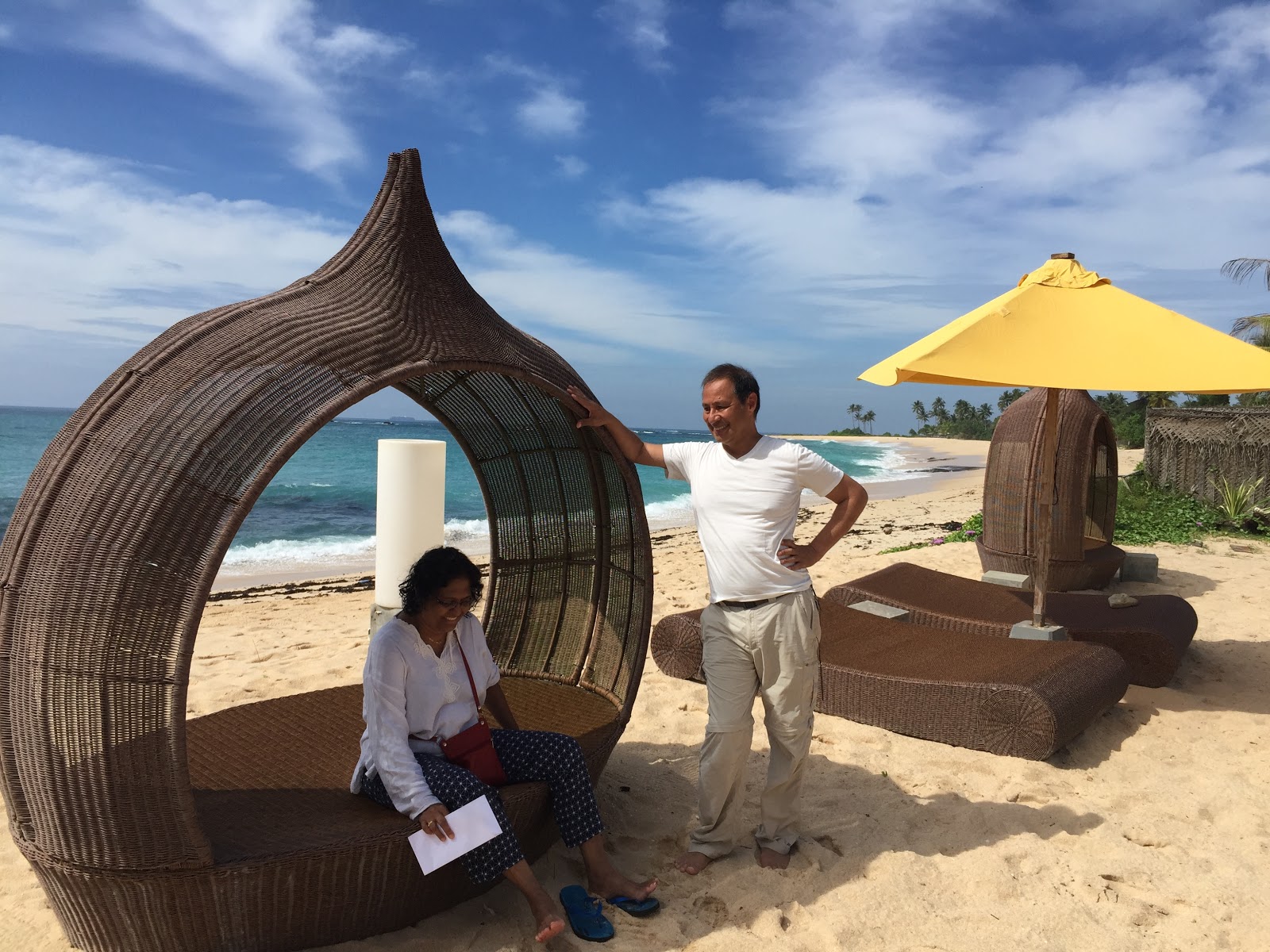
We celebrated Marlow’s 60th birthday in Mirissa at the southern tip of Sri Lanka.  We arrived here after spending one week traveling in the hills and jungles of the middle of the country (e.g., Dambula and Kandy on the map).  Now it was time for the beach!

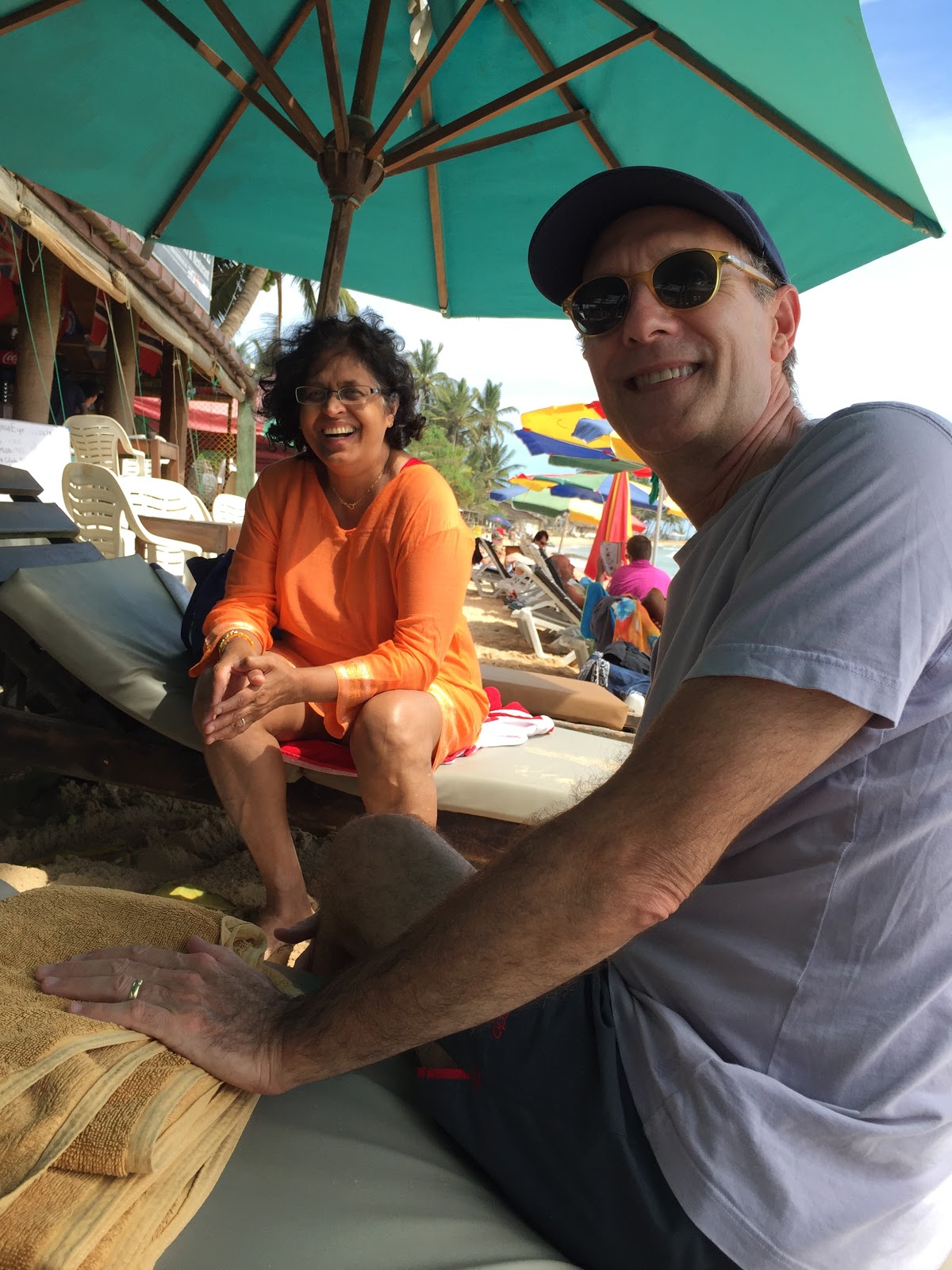
We are staying in a small hotel directly on the beach near the fishing town of Mirissa.  Mirissa is also the center of whale watching excursions.  November starts the four-month migration season and we were told there were many blue whales just off the coast, but we wanted to just enjoy the good weather and the beach.

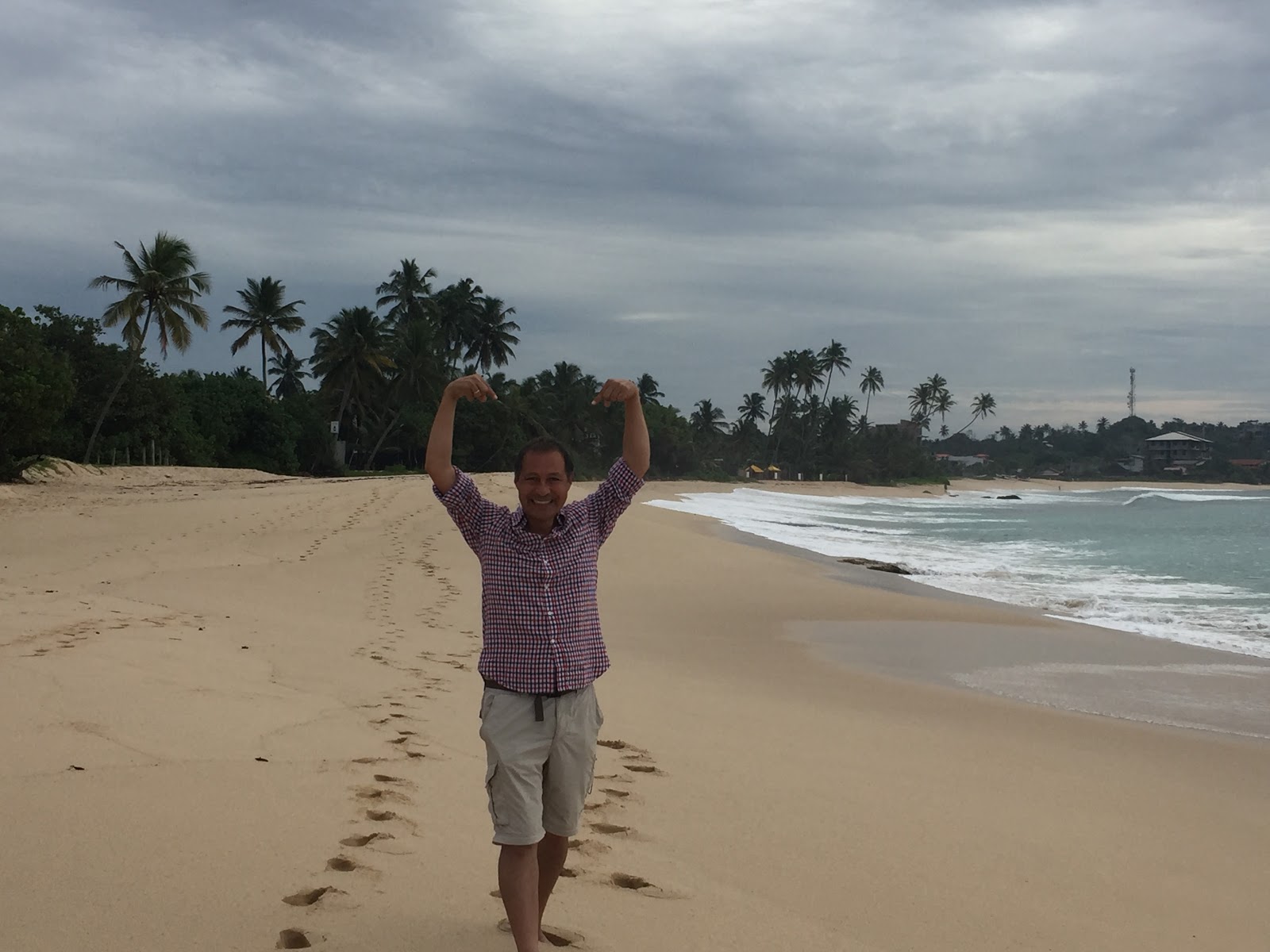
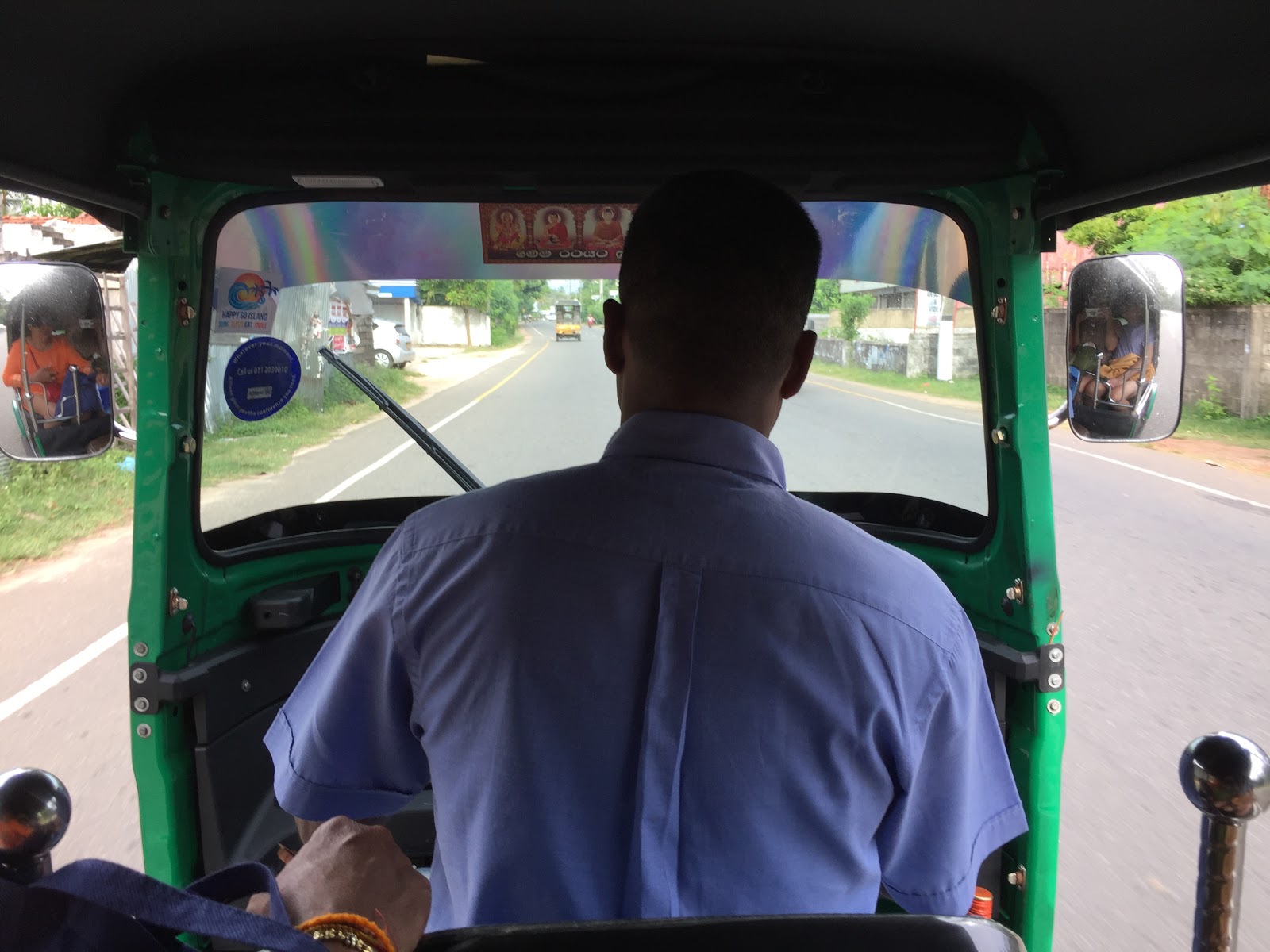
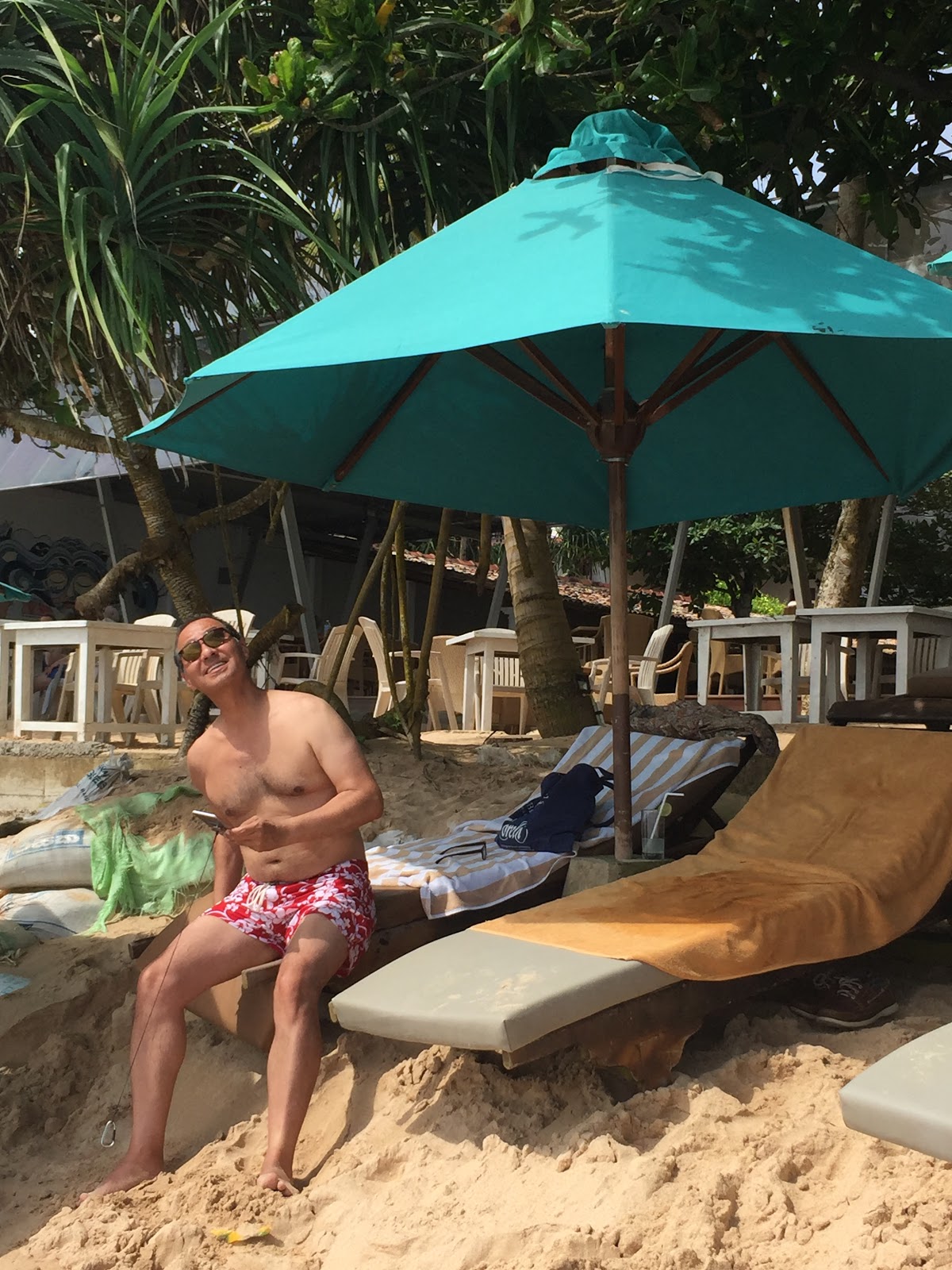
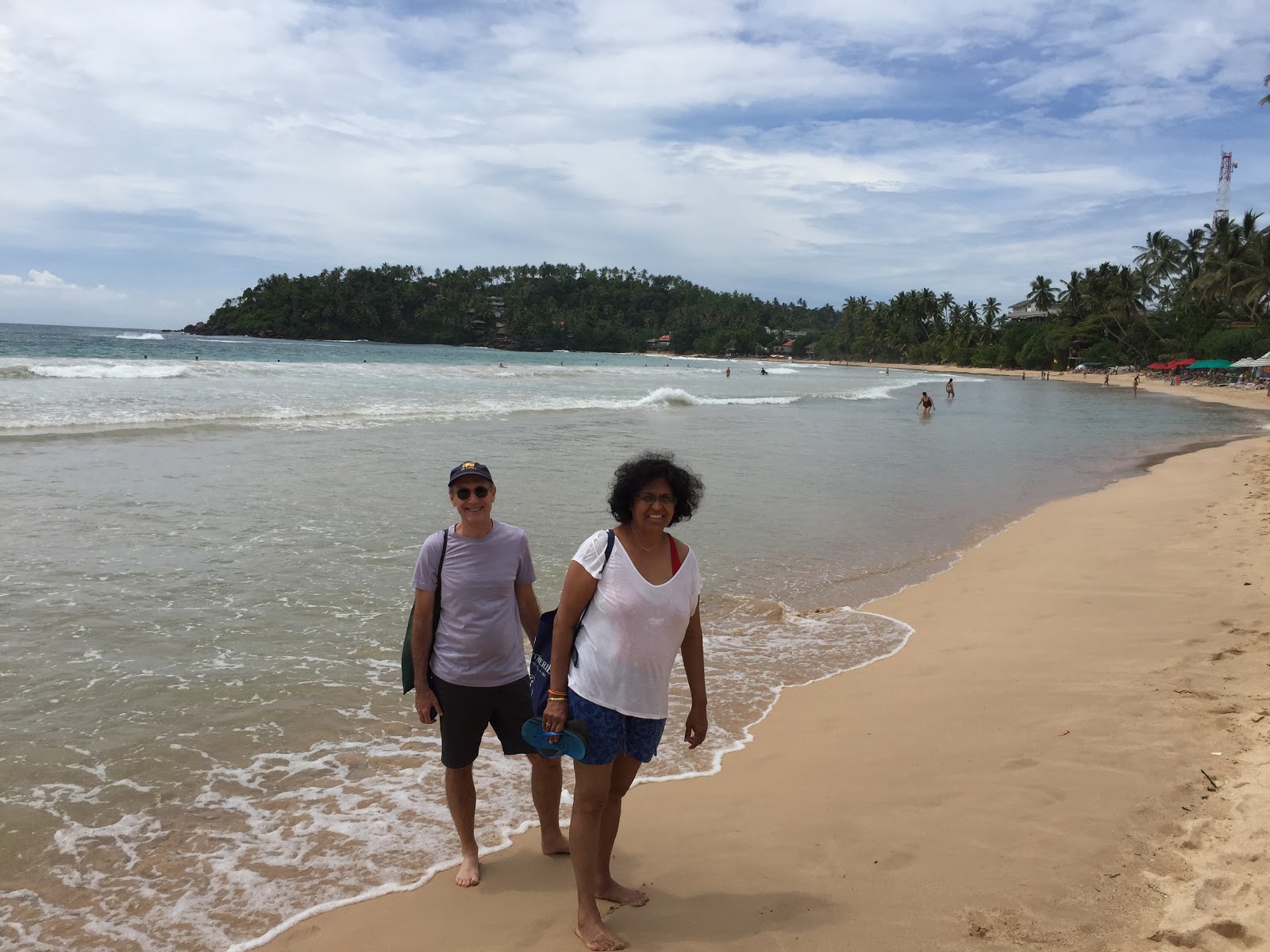
The beach directly in front of our hotel was not ideal for swimming due to the high waves and reef.  The beach area was ideal for walking and wading into the Indian Ocean but not swimming.  So we took a tuktuk a few kilometers down the road to Mirissa Beach where there were many small beach restaurants and chairs with umbrellas.

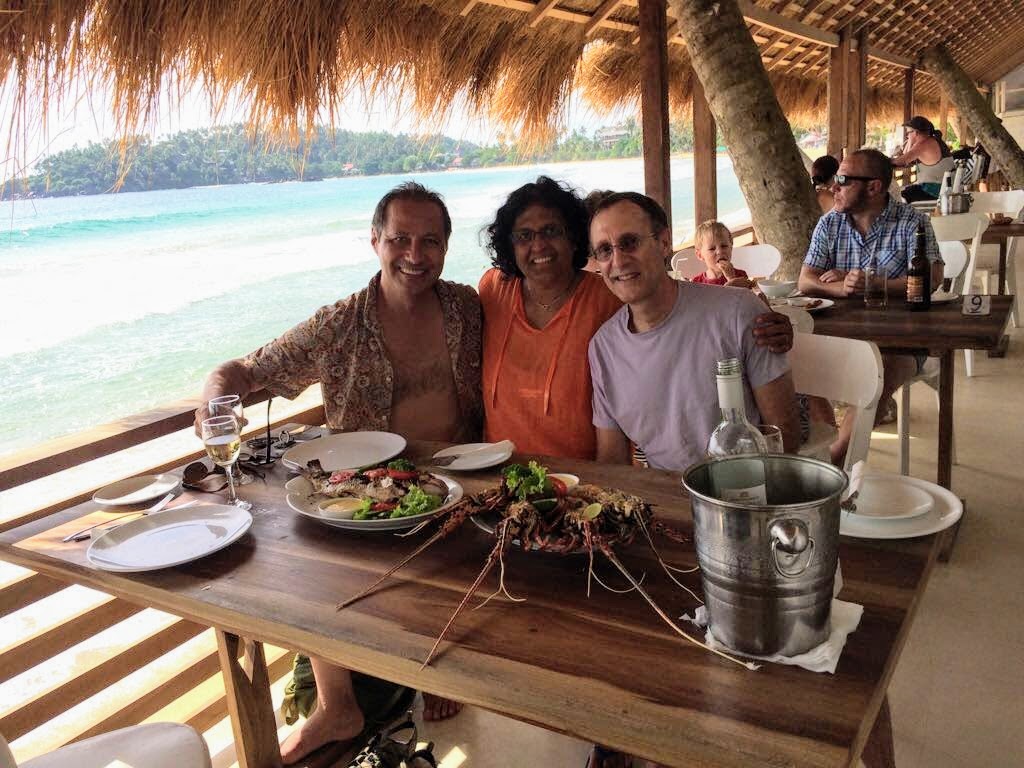
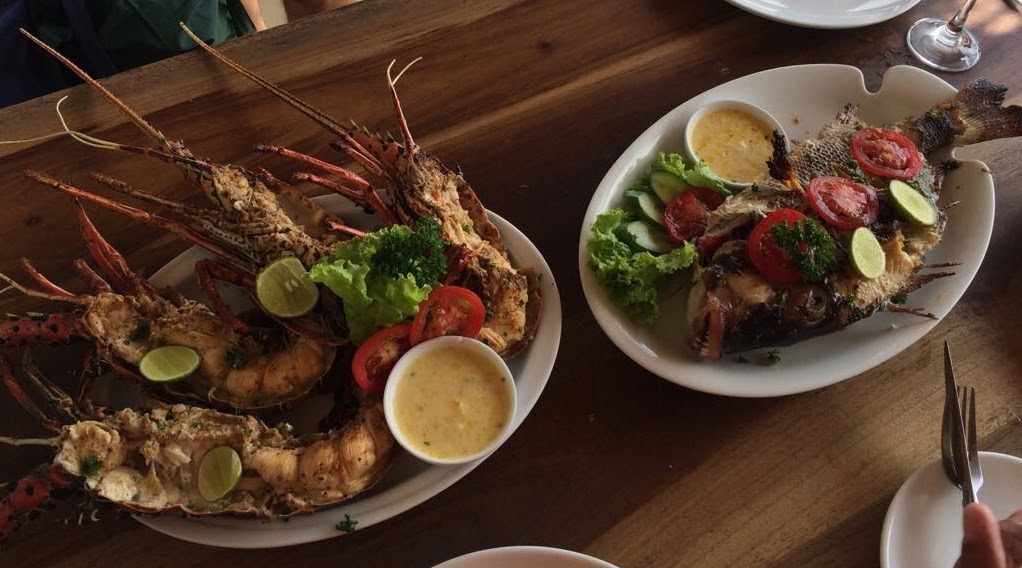
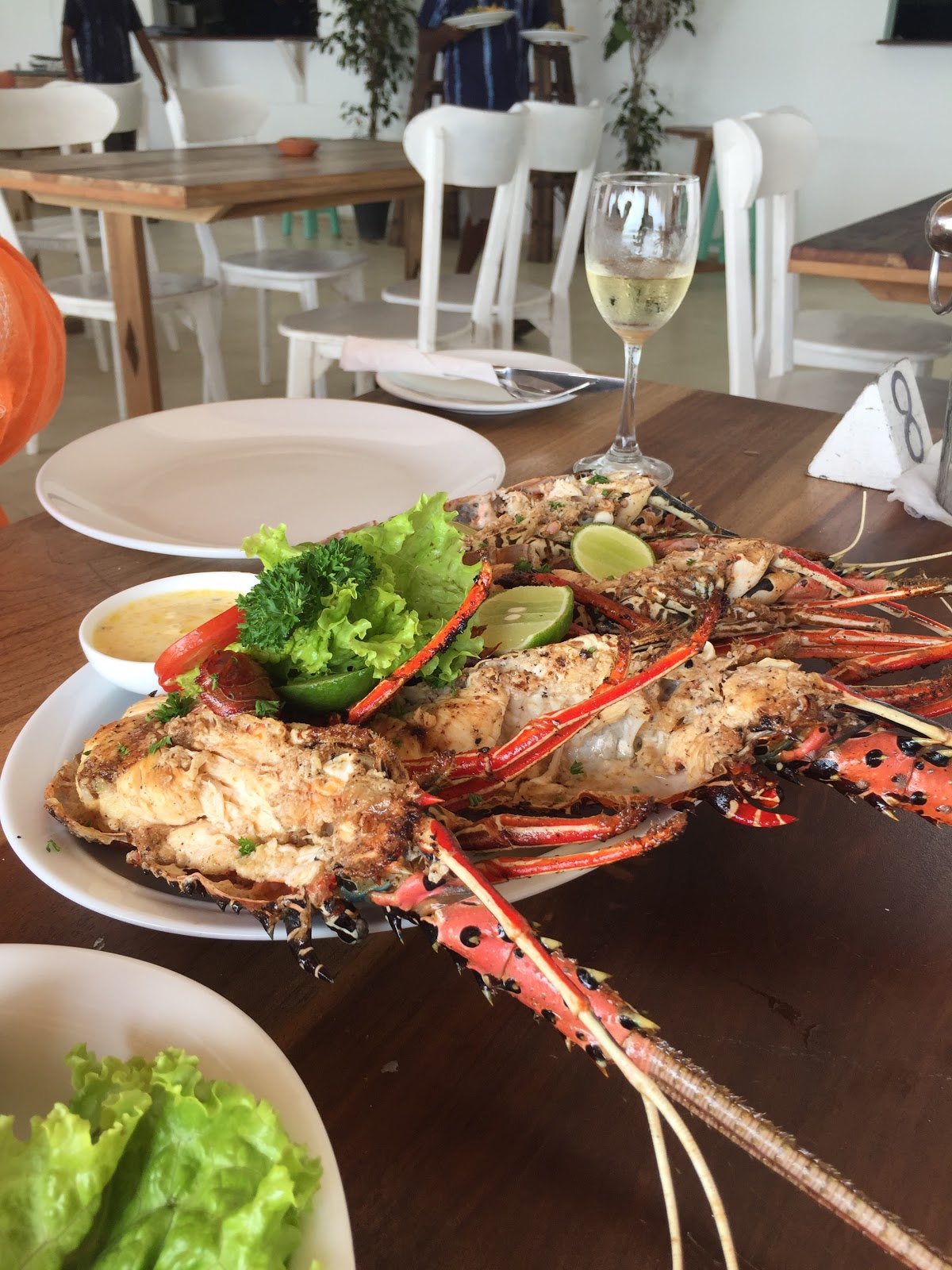
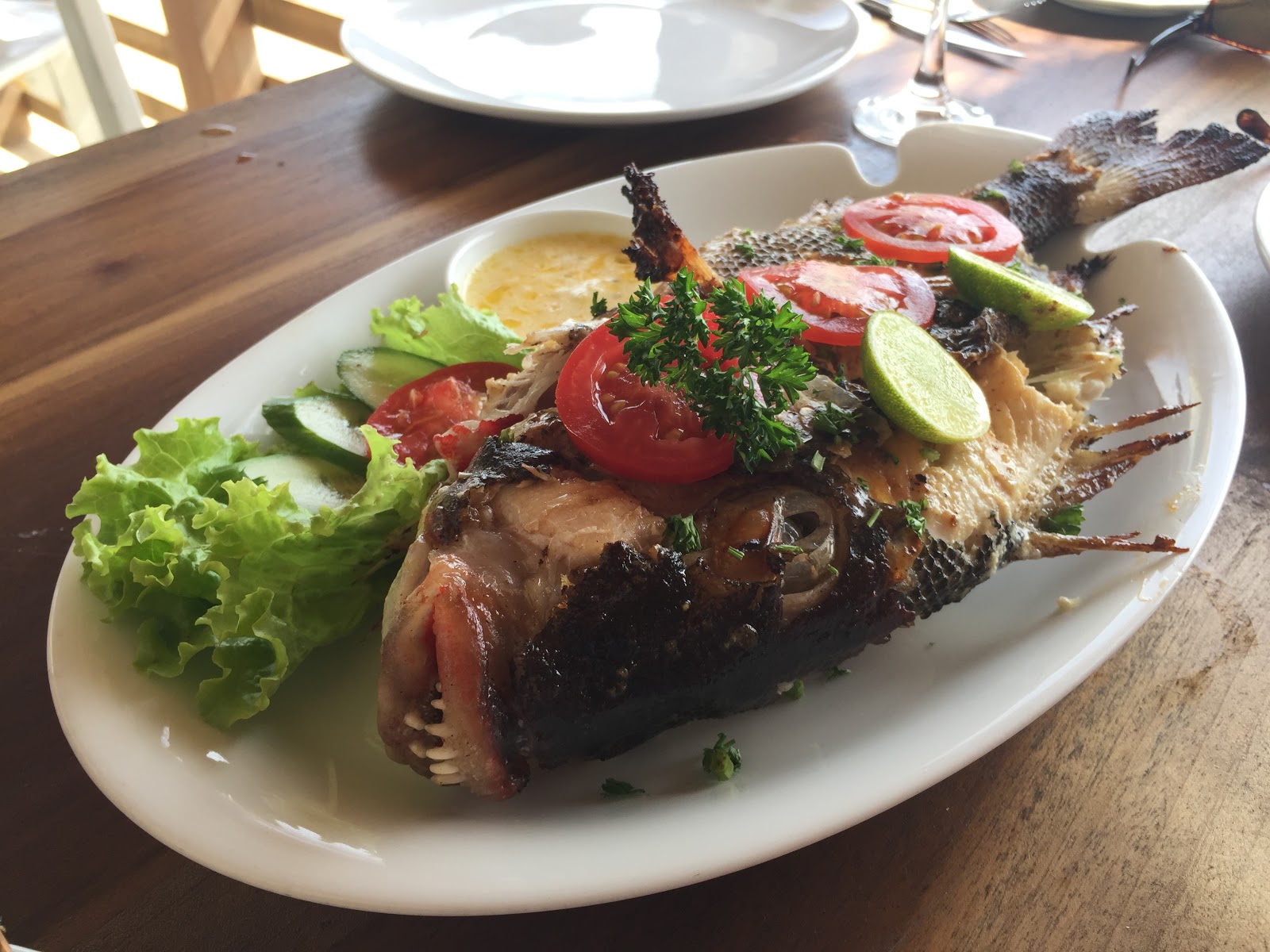
Sepali was intent on celebrating Marlow’s birthday as a day-long affair.  So after an hour or so playing in the water, Sepali and I went on a walk along the beach to investigate the restaurant options for lunch.  She asked several restaurants to show her the fish and lobsters they had available for grilling.  We found one restaurant that had exactly what she preferred so we placed an order and scheduled a table for lunch to return in 30 minutes.  The menu included one grilled mullet and two grilled spiny lobsters.

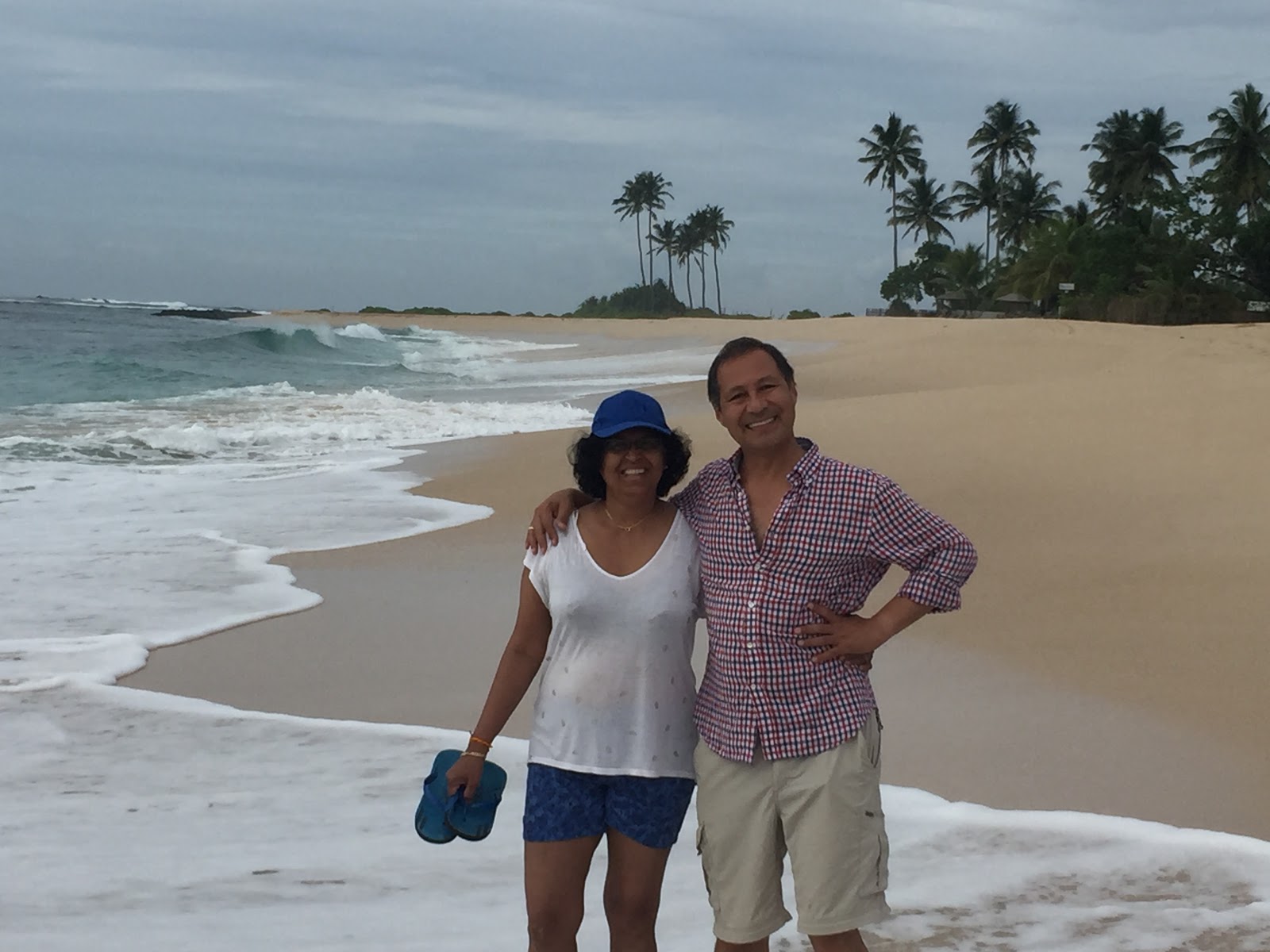
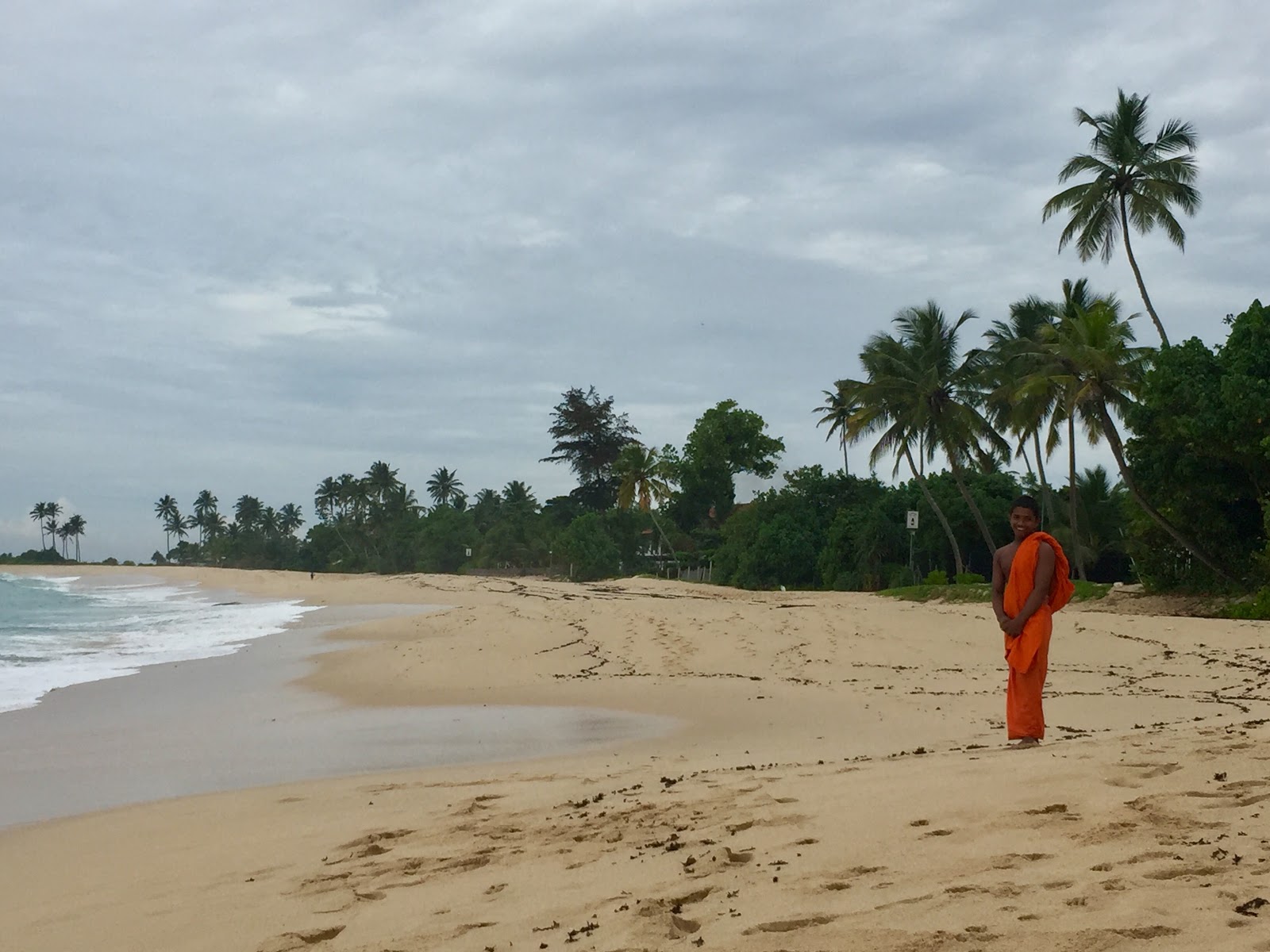
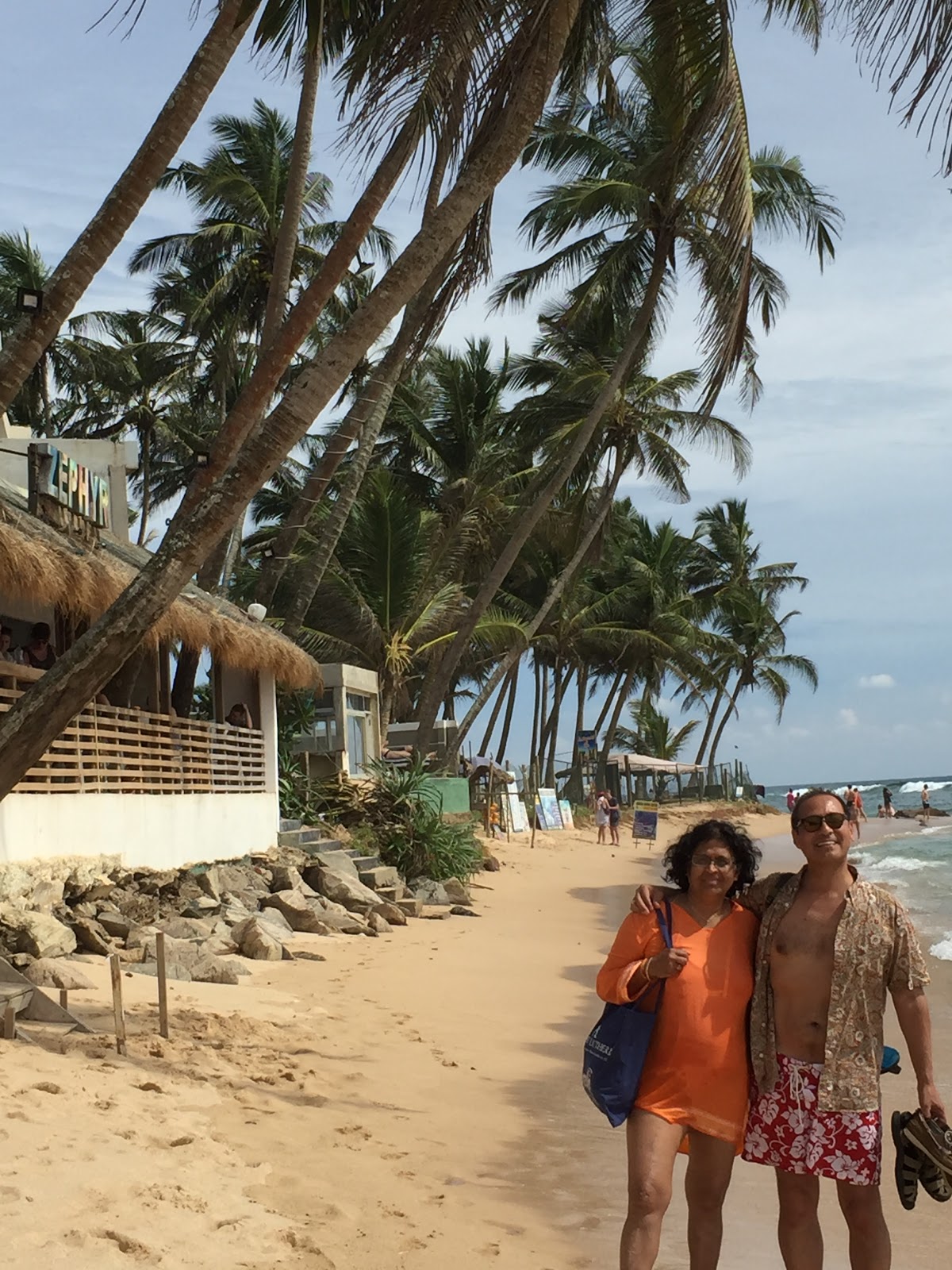
Birthday morning walk in front of our hotel
Our hotel is next to a temple
Tuktuk ride to the beach

Looking for the perfect birthday lunch

Spiny lobster

Mullet
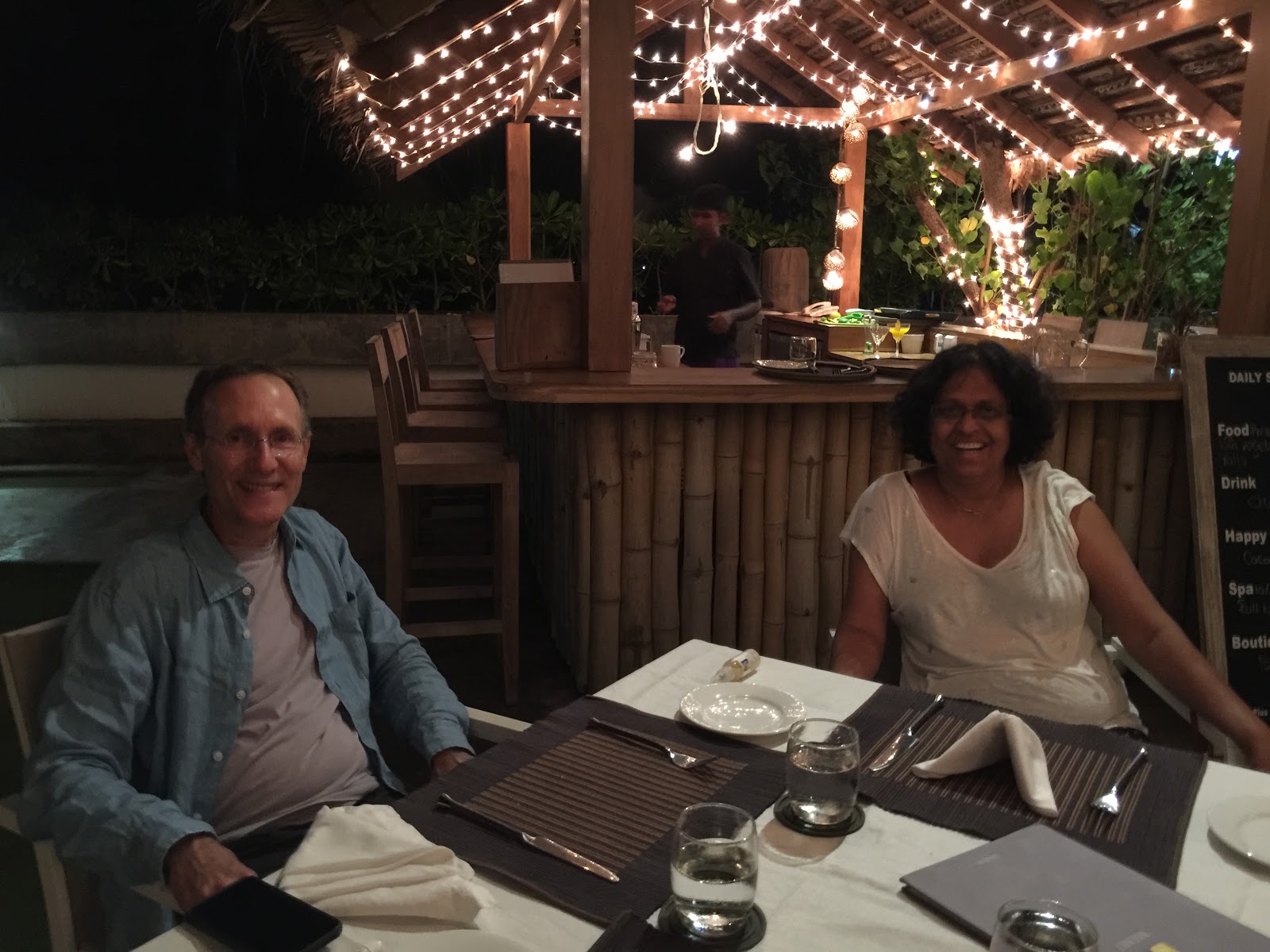
Birthday evening

Birthday boy
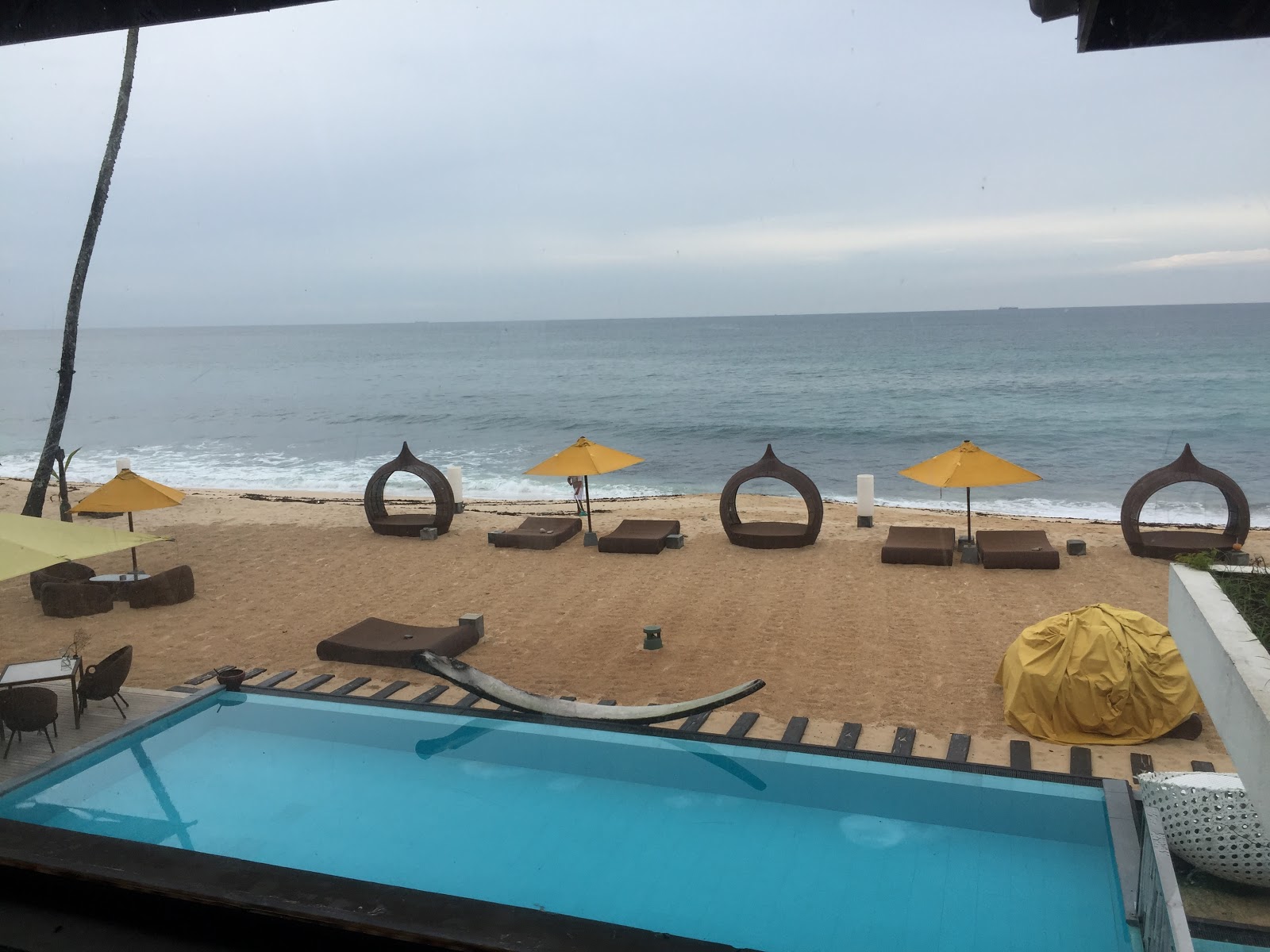
The arc along the pool is a whale rib that washed up on the beach

Hotel

Sri Lanka – Roadside stops

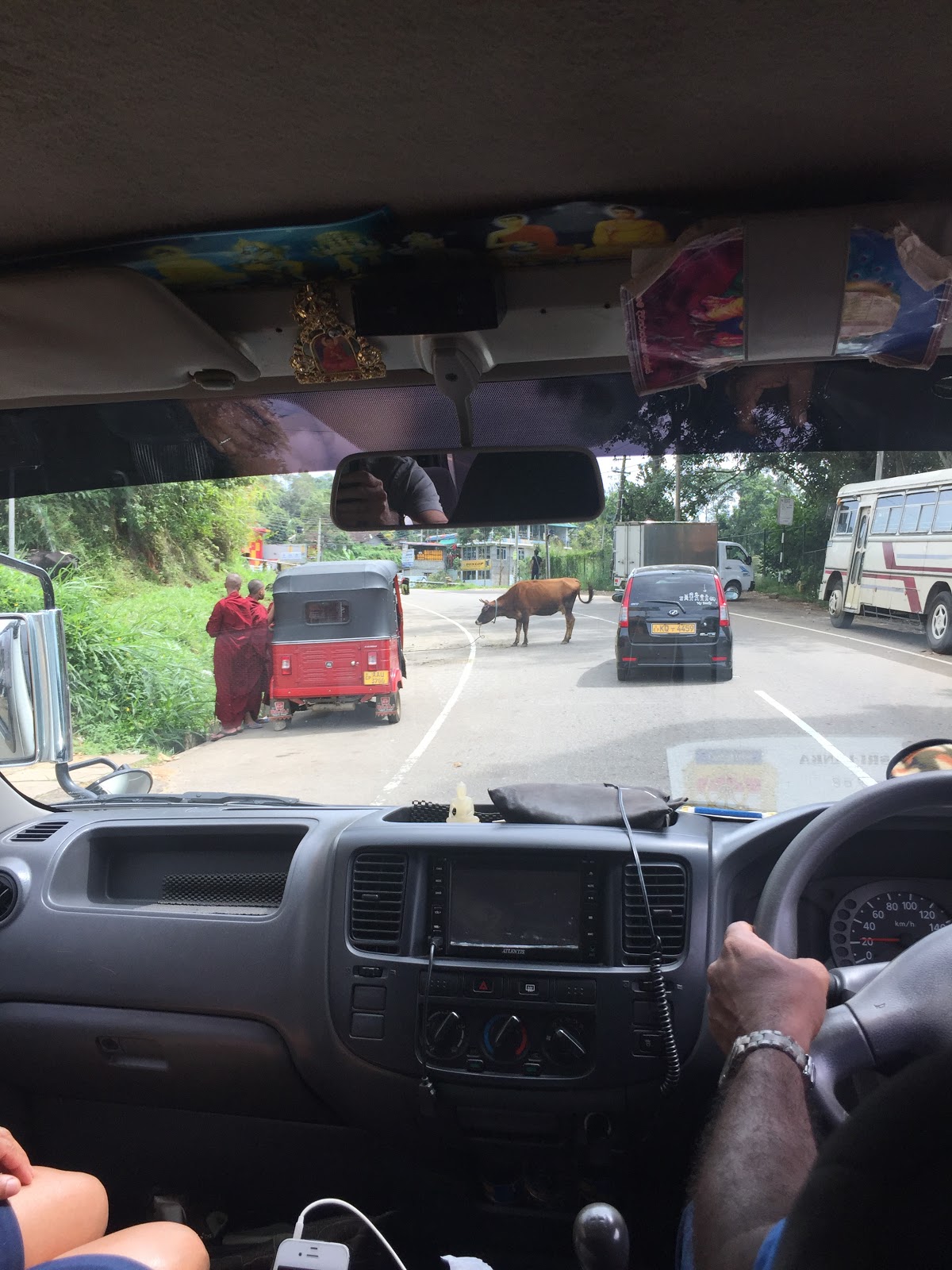
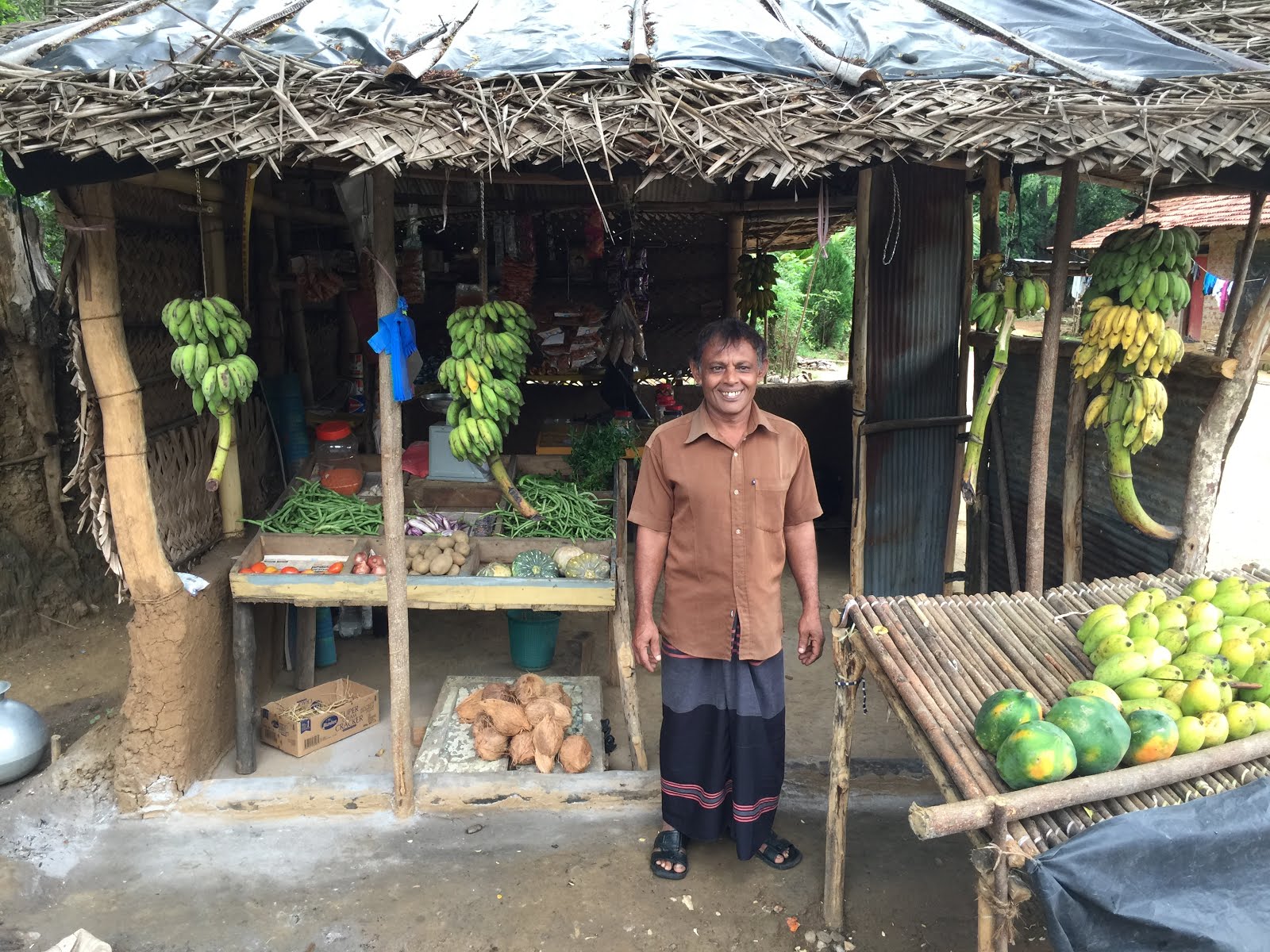
We stop from time to time at various food stands that line the roads.  Sepali will have a hunger for a particular fruit, our driver will request a break for a snack and a stretch or we will see something that catches our eyes.  We have enjoyed many mangos, papayas, pineapples, bee honey, jack fruit and bananas during our drives.  On this particular drive, Sepali asked our driver to slow down as he passed any stand selling mangos.  But only ripe yellow mangos and not too small.  He must have slowed in front of a dozen stands before arriving at an acceptable stand.  

At this stop, the shop proprietor and his neighbors seemed amused by the western visitors.  By the time we got back into our van there must have been at least 10 neighbors standing at the side of the road watching us.  He asked that we take a photo and mail it to him.  


Sri Lanka, Sigiriya, October 31, 2017

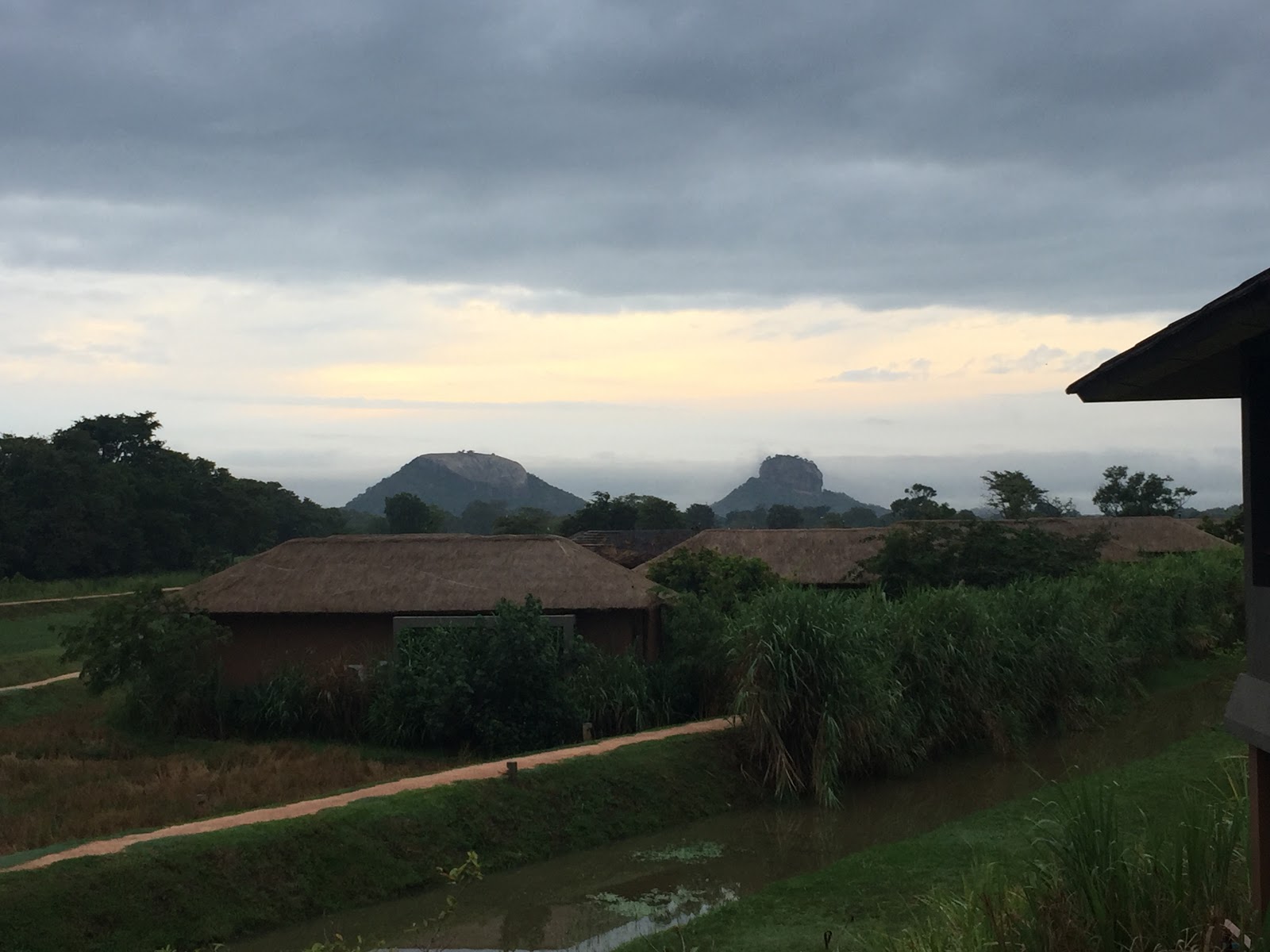
Sigiriya hill on the right

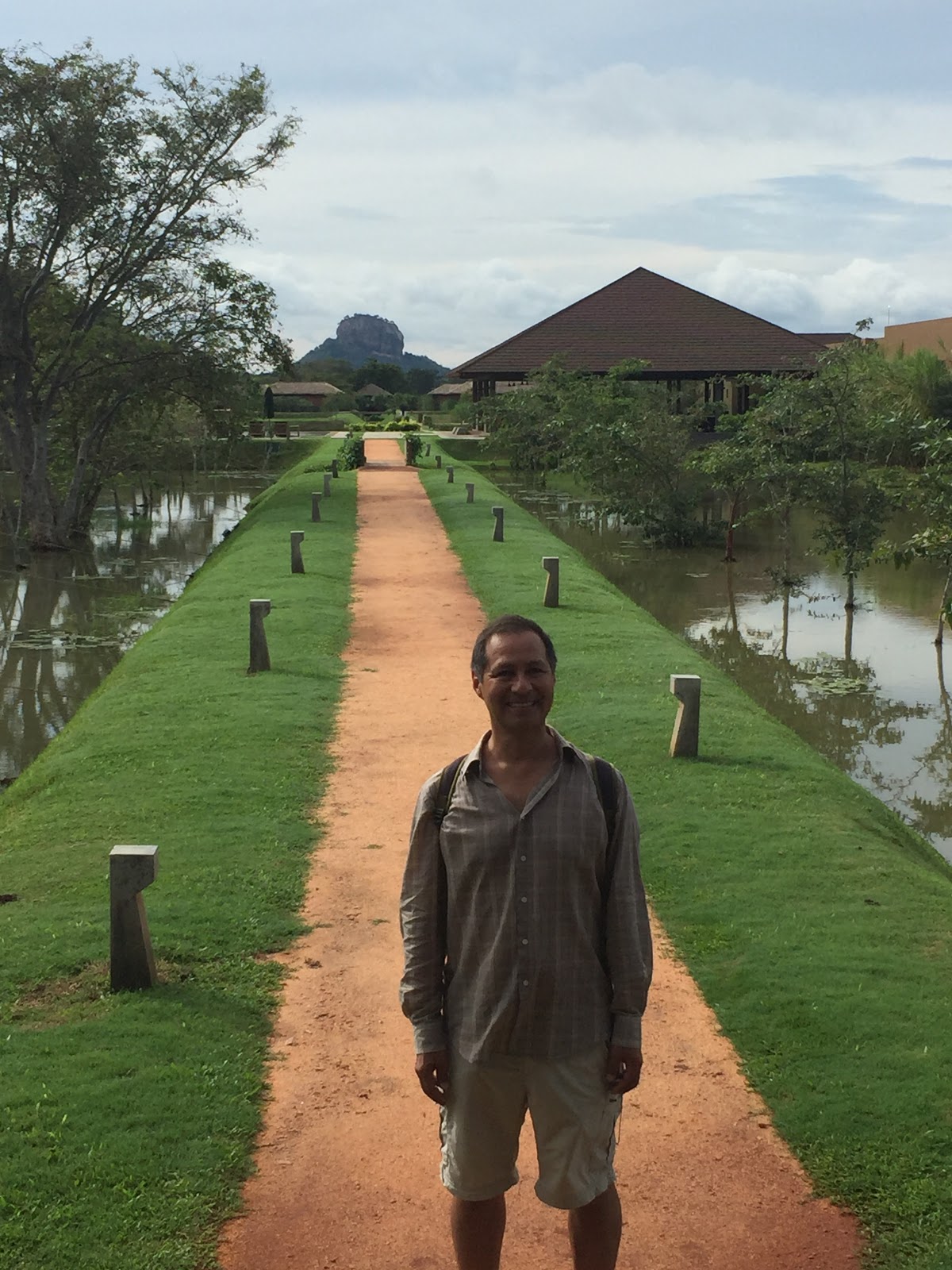
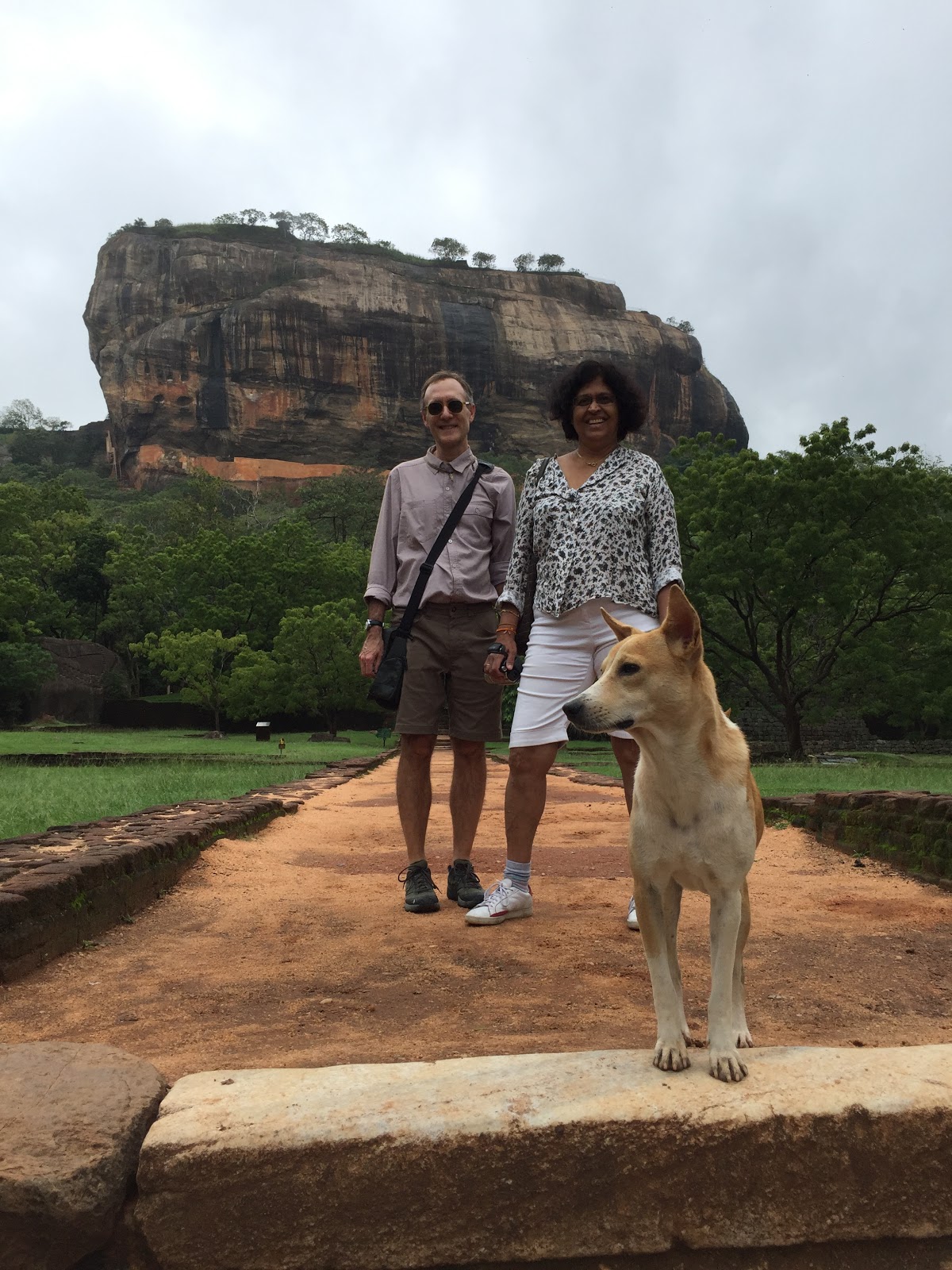
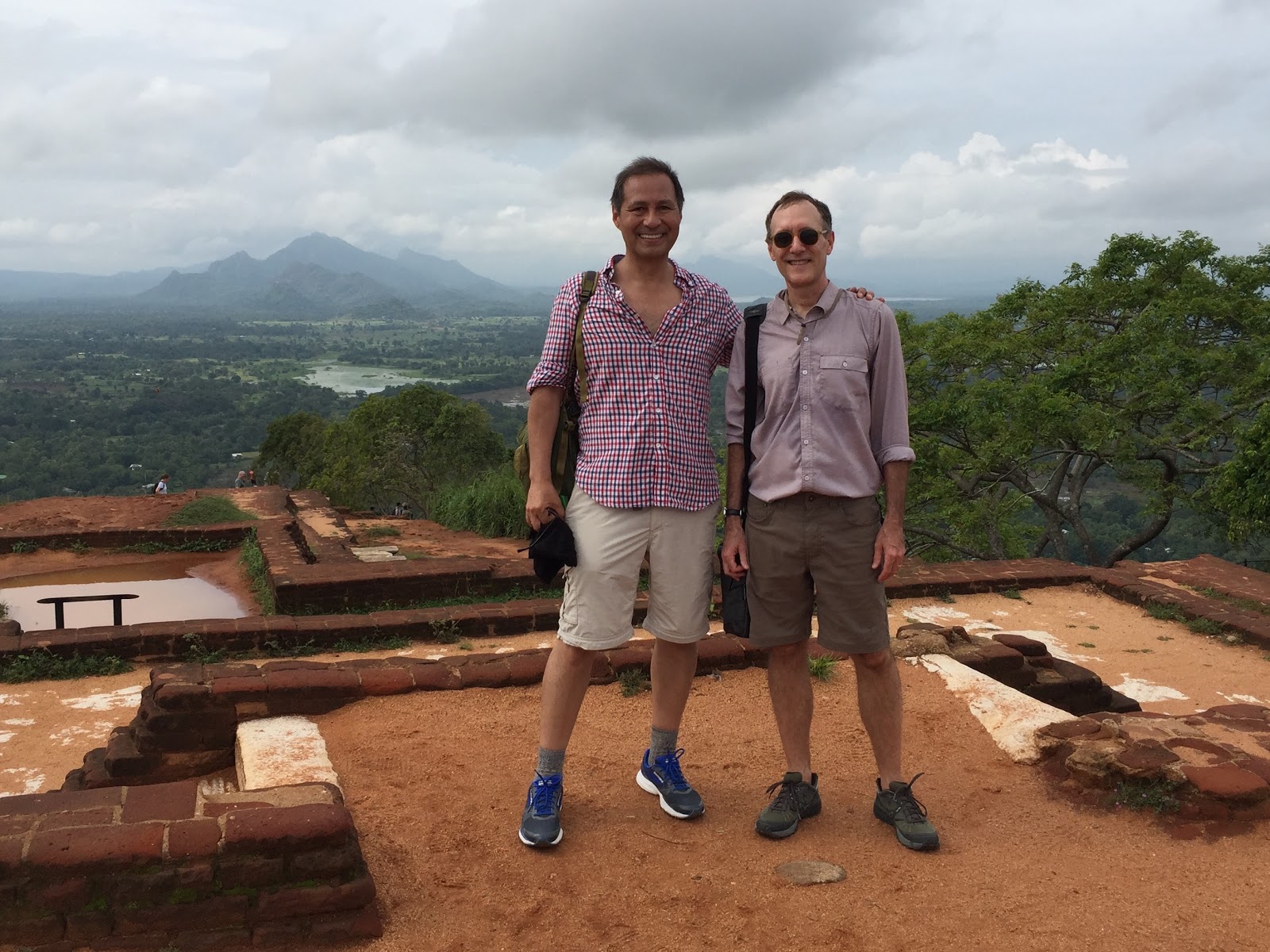
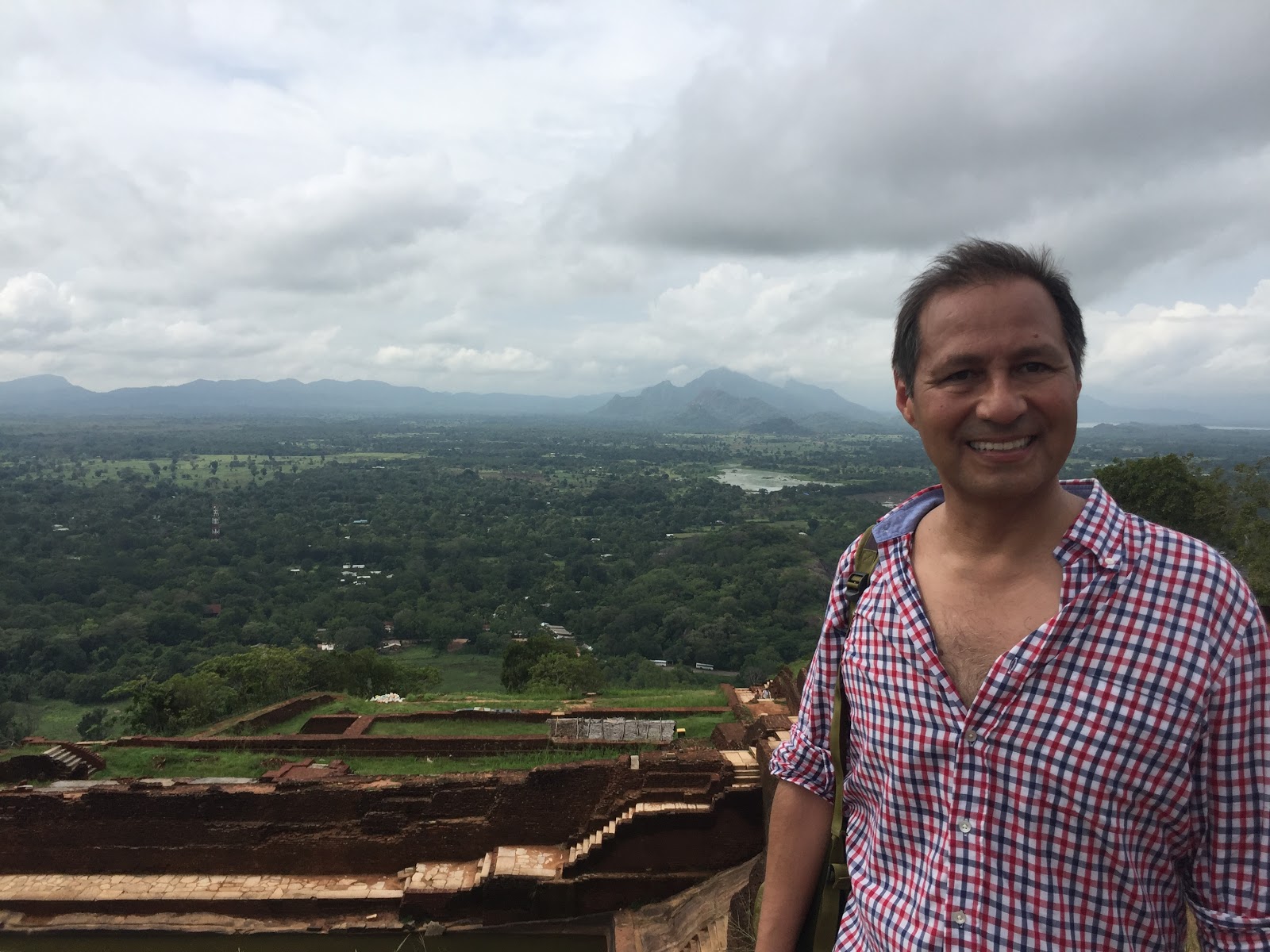
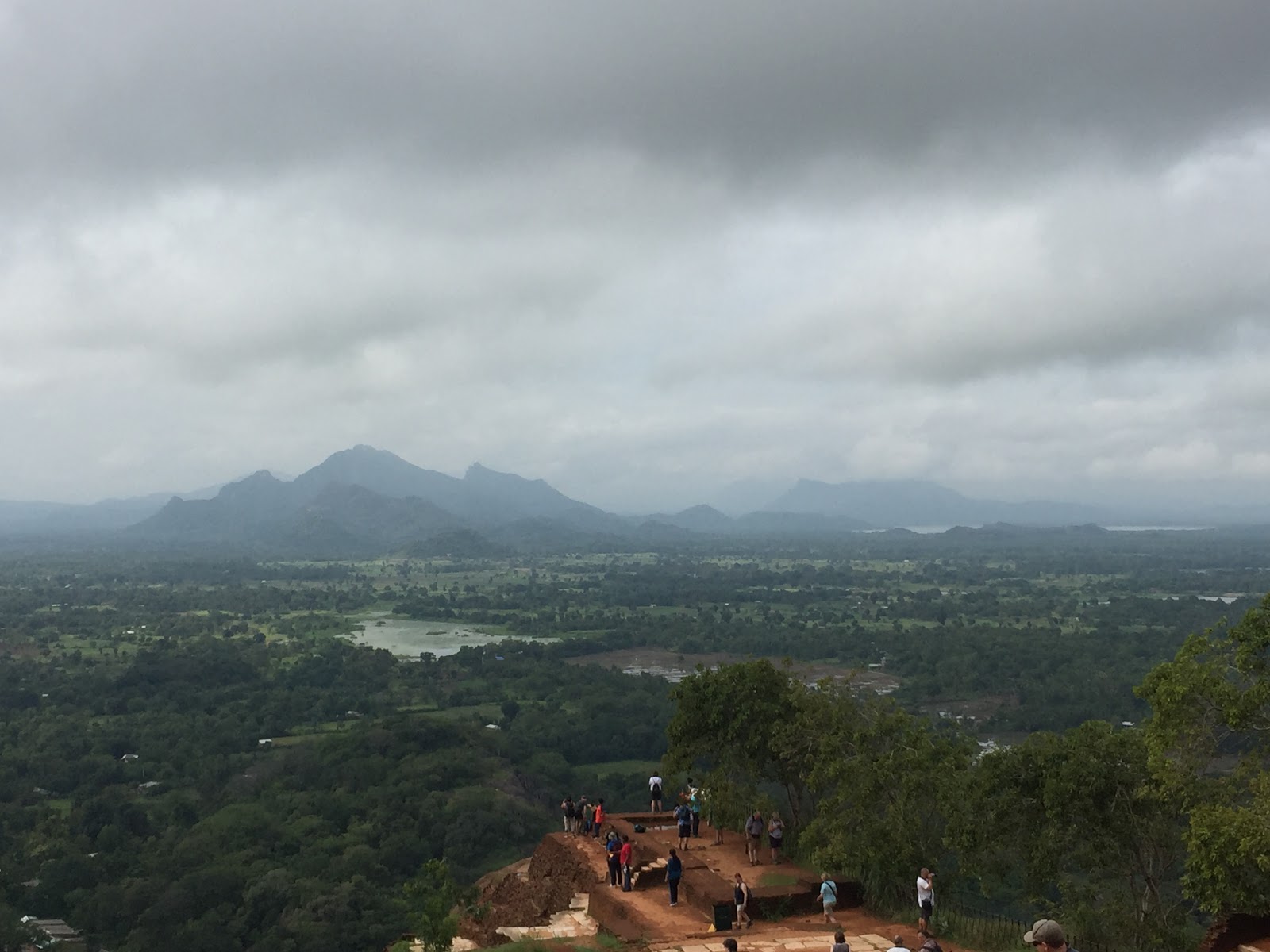
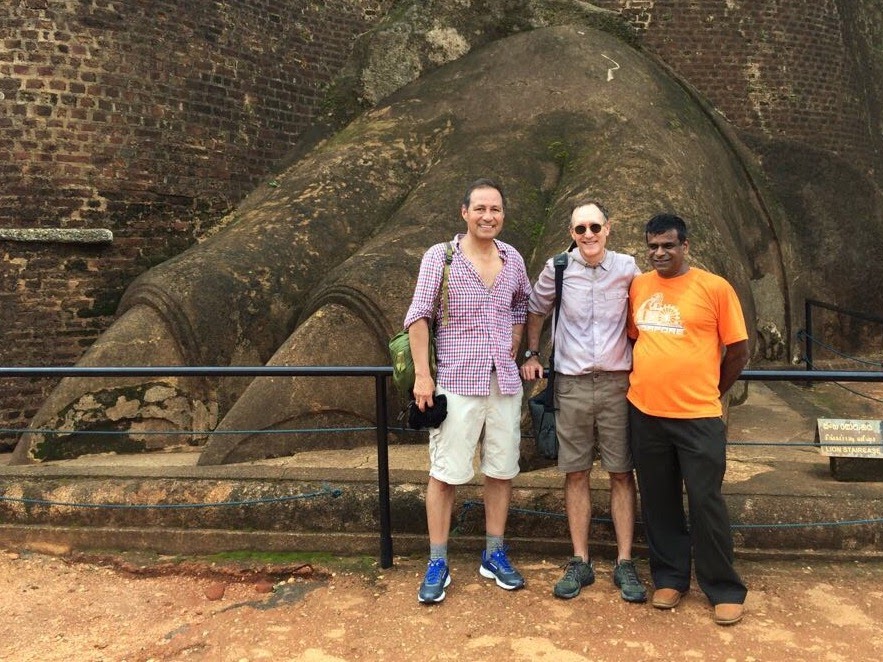
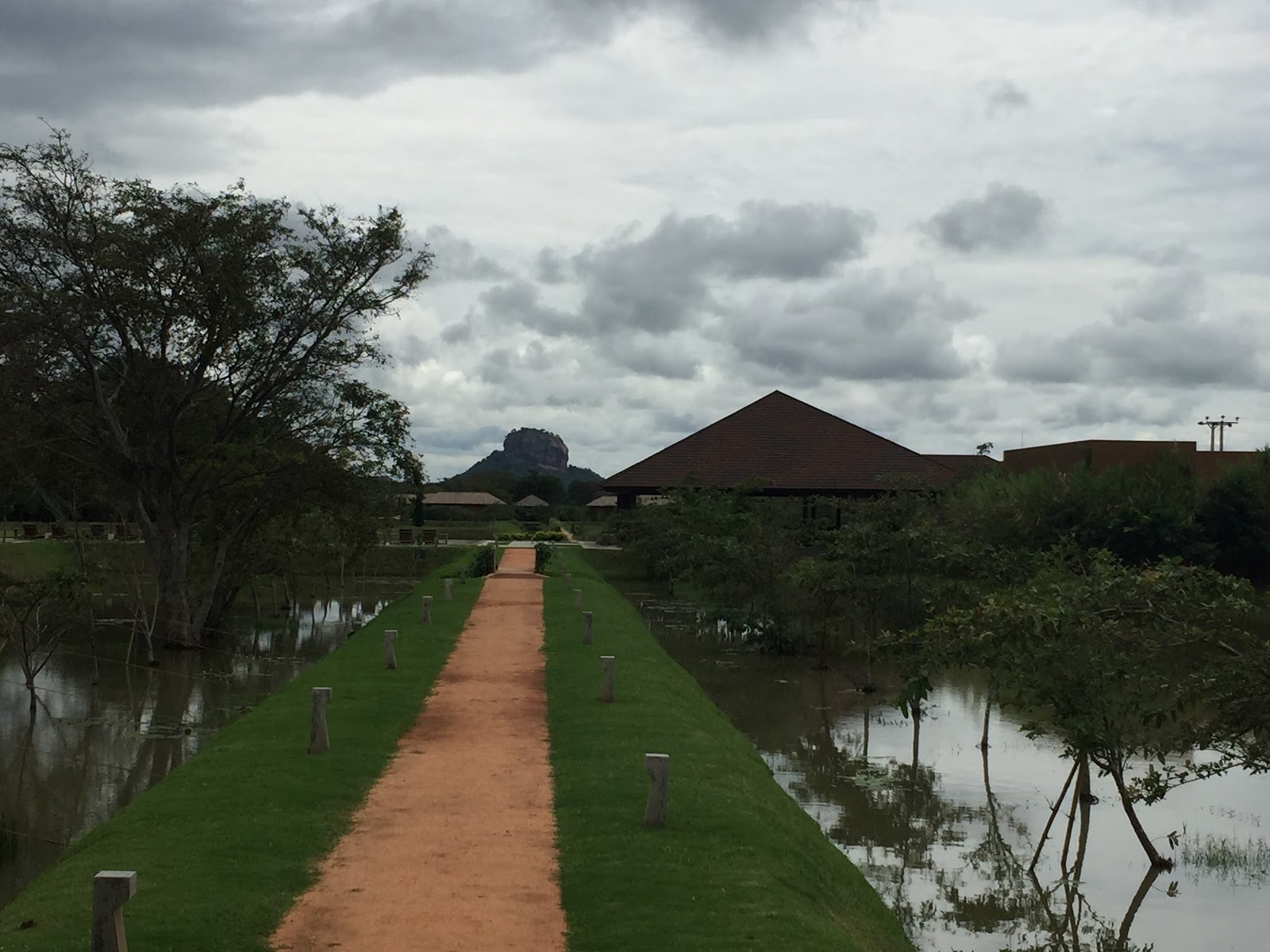
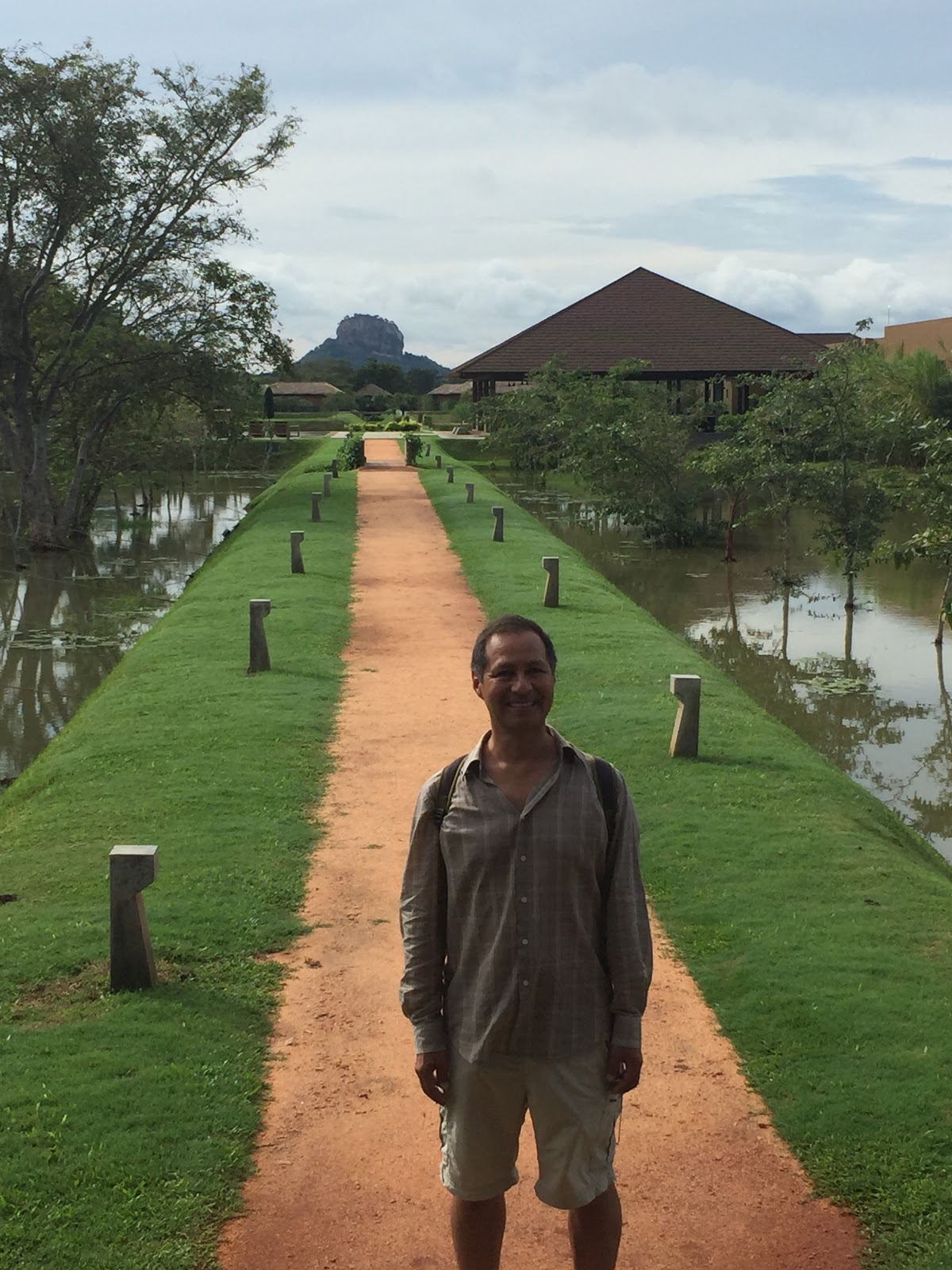
Tuesday. Up at 5:45 AM. The room is so nice. The vista is magnificent. Two hills jut out in the distance. One of them we will climb today. The sky is not blue. It is silvery and that is good for our two hour walk up the “Lion” Mountain, Sigiriya. It was the site, in the year 400, of the king’s palace. Now, it is a UNESCO World Heritage Site. Half way up the 700 feet ascent, there is a massive entryway in the image of a lion’s paws. As we walked to the van we looked up at the peaked roof of one building. At the tippy top point there was a peacock serenading us. A few feet later at the reception building a peacock paced back and forth on the roof ridge.

The drive this morning started on an unpaved one lane red earth road. Quite bouncy. Very bouncy. Dogs sprawled on the road. Some moved out of the way slowly. Others stayed put, gave us a glance and we drove around them or honked them into action. Lots of them are unowned, just wild. There are soldiers in uniform, rifles over shoulders, jogging, walking casually toward the base. Everything remains green. The color scheme is beautiful: red, green, brown, and blue when the sky is clear. School children walk calmly, in uniforms, freshly combed hair or pig tails, backpacks, toward school through the morning chaos. Women and men starting work. Little buildings, mostly open air.

Thirty mins later ….

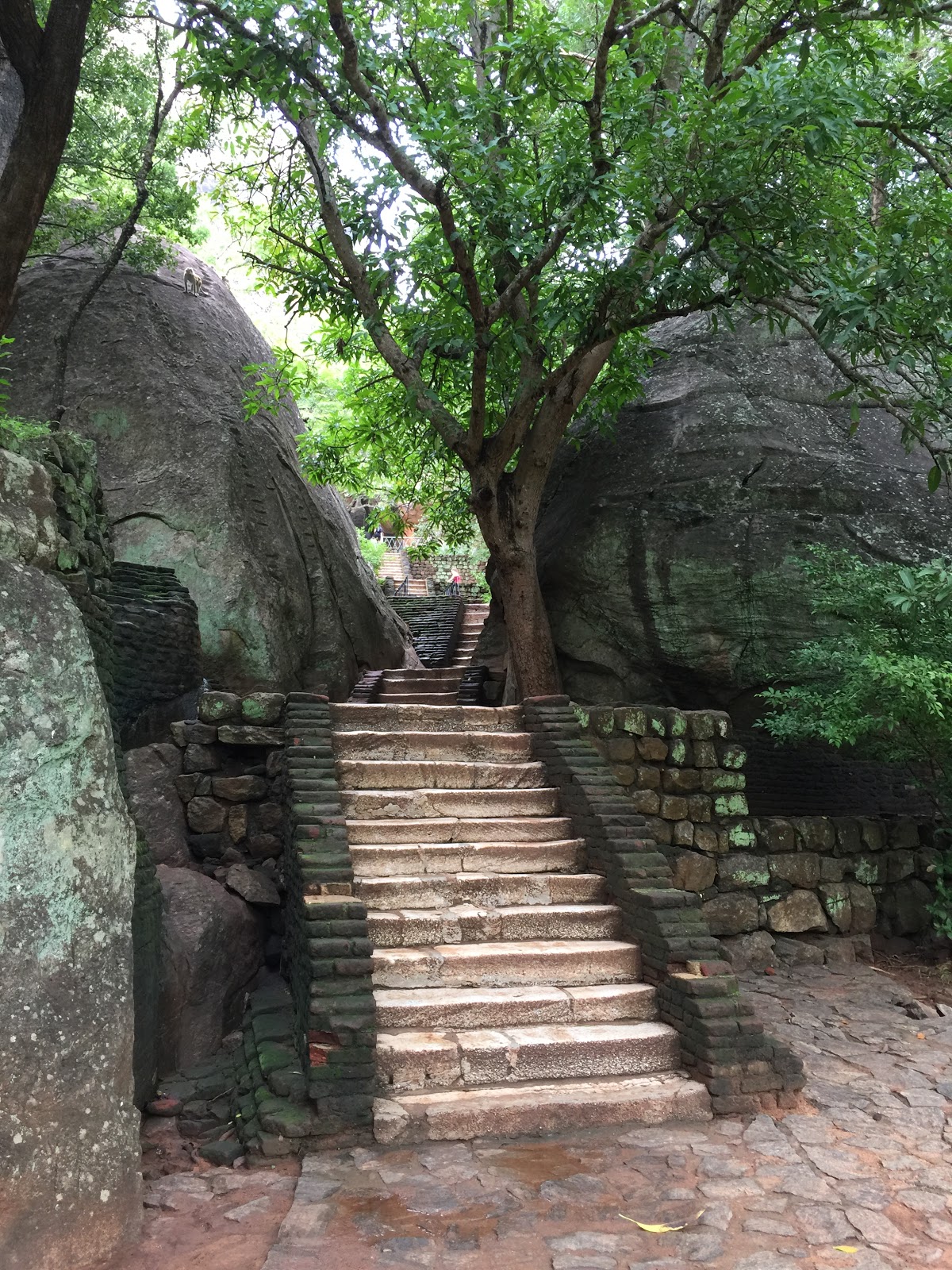
We have entered the Siguriya park. There are remnants of formal gardens. We walk through them en route to the ascent. The paths, long and straight, are red earth. The grass is naturally green. Lots of stray men offer their service as guides.

90 Minutes later ….

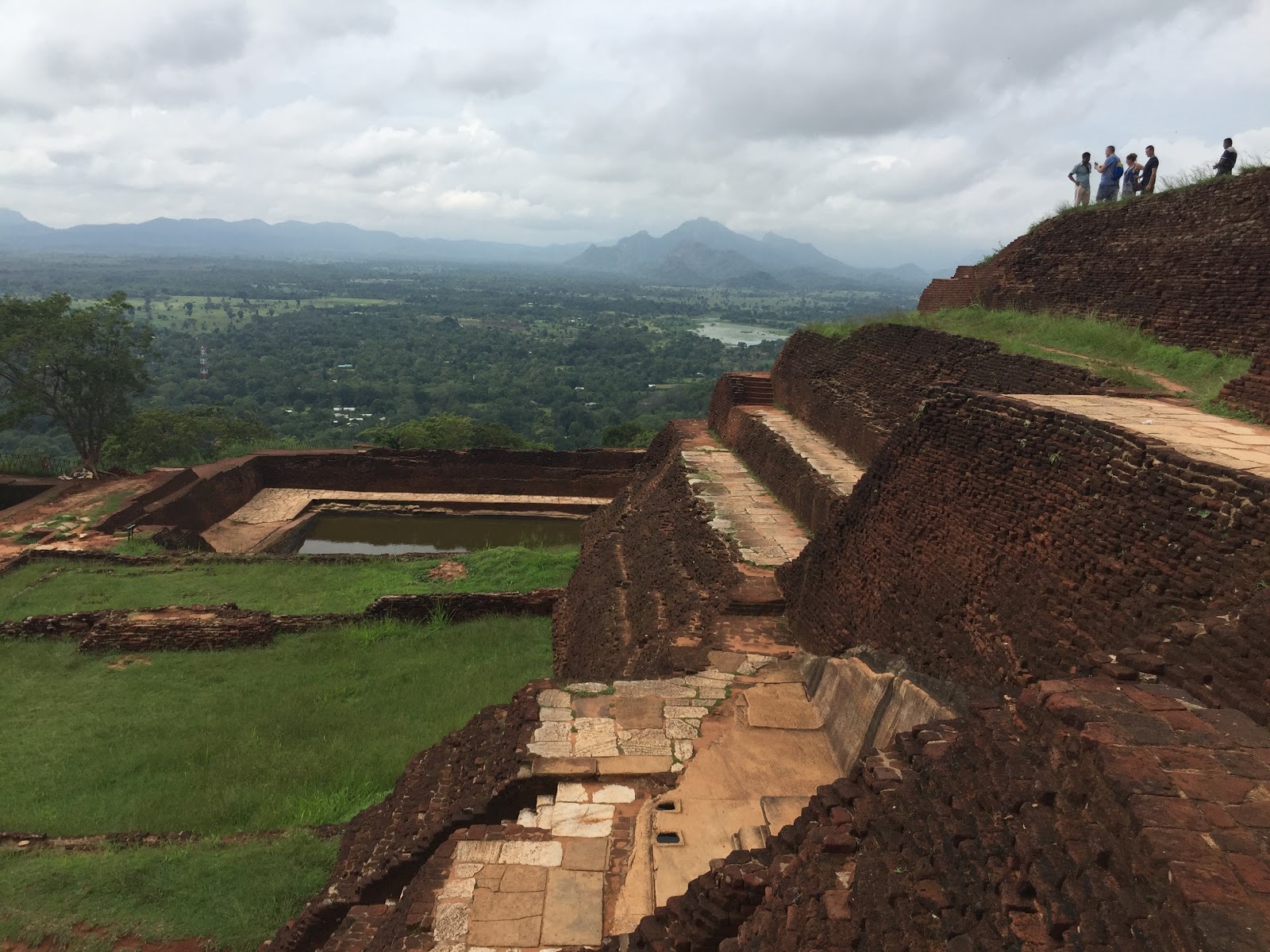
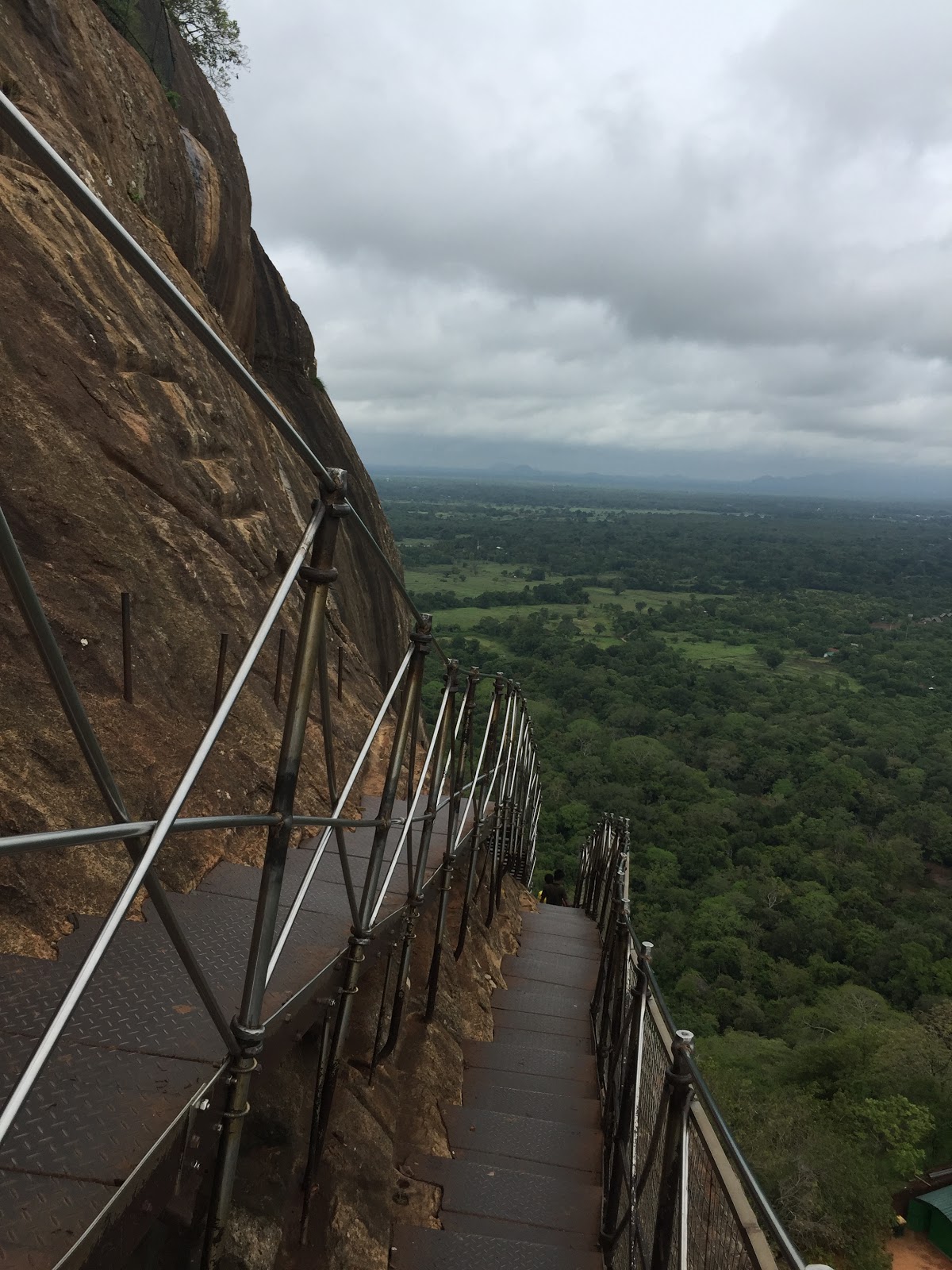
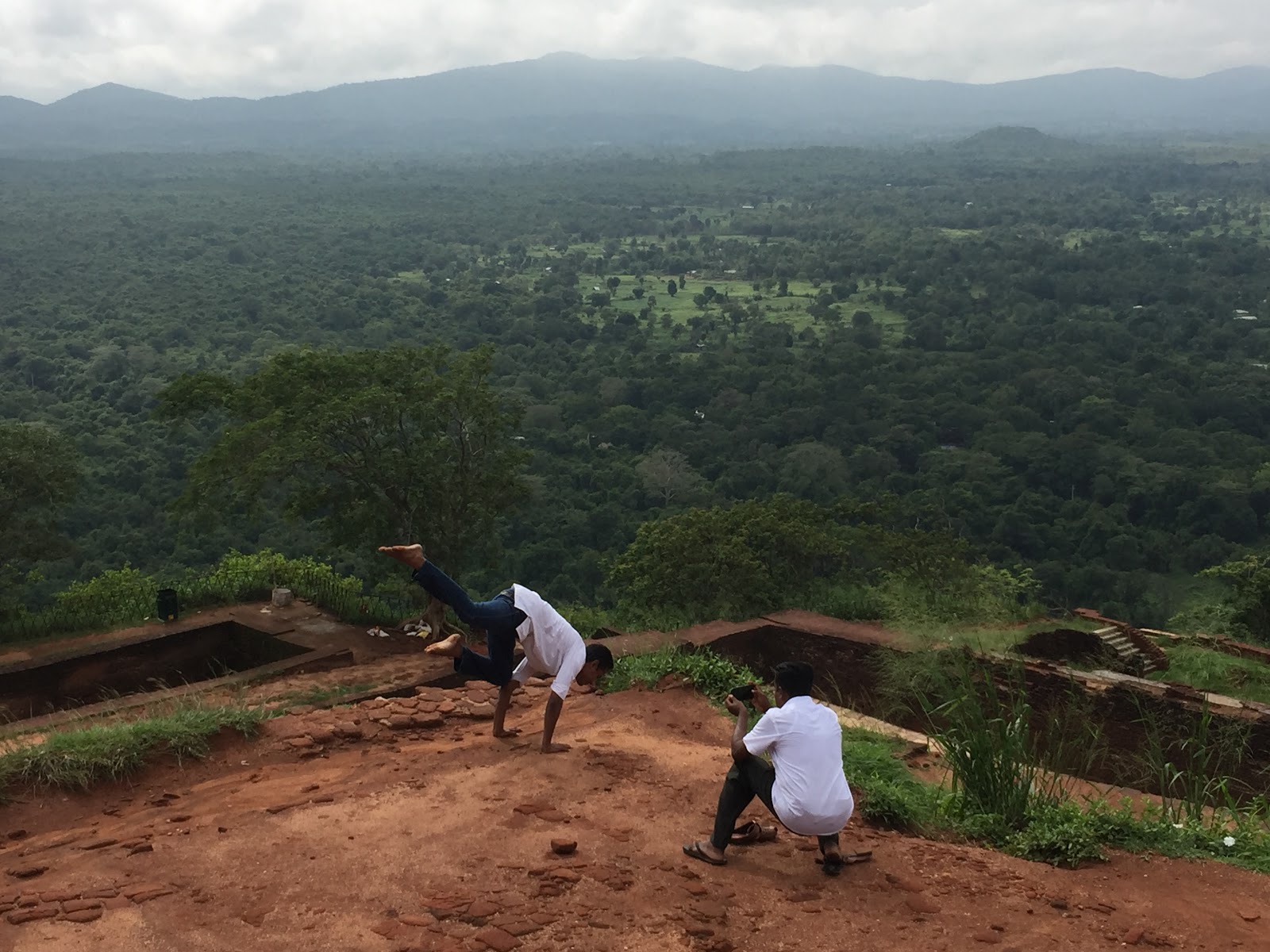
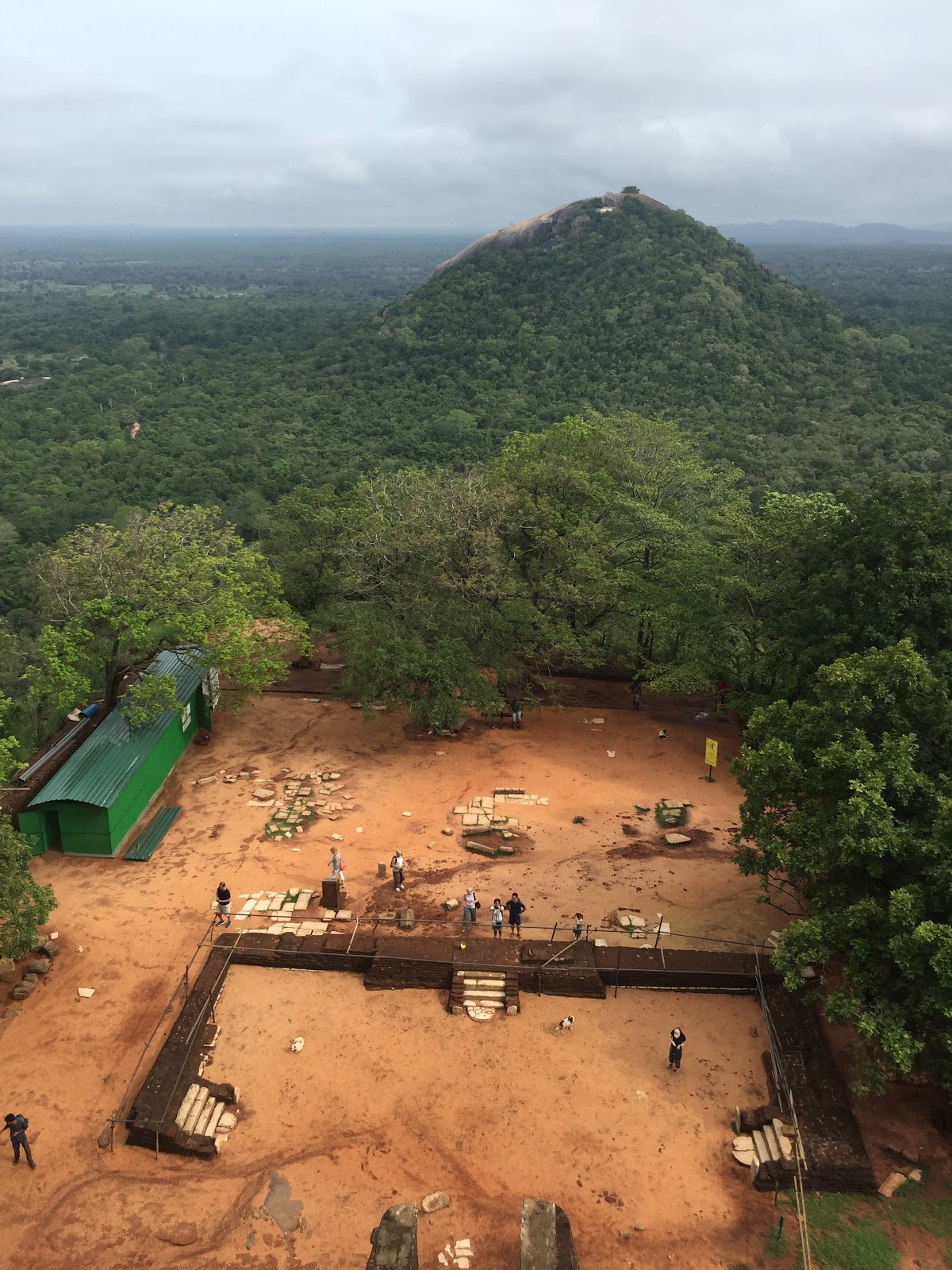
We have walked the steps to the top of Sigiriya. I hear a guide say, “1352 steps”. That is different from the literature which says 1200. Up here, at the top, you can spin around and see a magnificent 360 degree view. It would be great to have brought a picnic or book or knitting and spend the whole day here. It feels good to be able to see natural beauty in massive abundance.

There is a swimming pool, olympic size, carved out into the stone. I heard it is not for swimming. It was a cistern, to catch rain water, then through a circuit of pipes allow gravity to deliver it down and down the hill to water the elaborate gardens. They say it still works 1600 after it’s installation. One last thing, dragon flies, there are so many flitting about. It lends the scene an air of fairy tale fantasy.

With our driver Priyantha

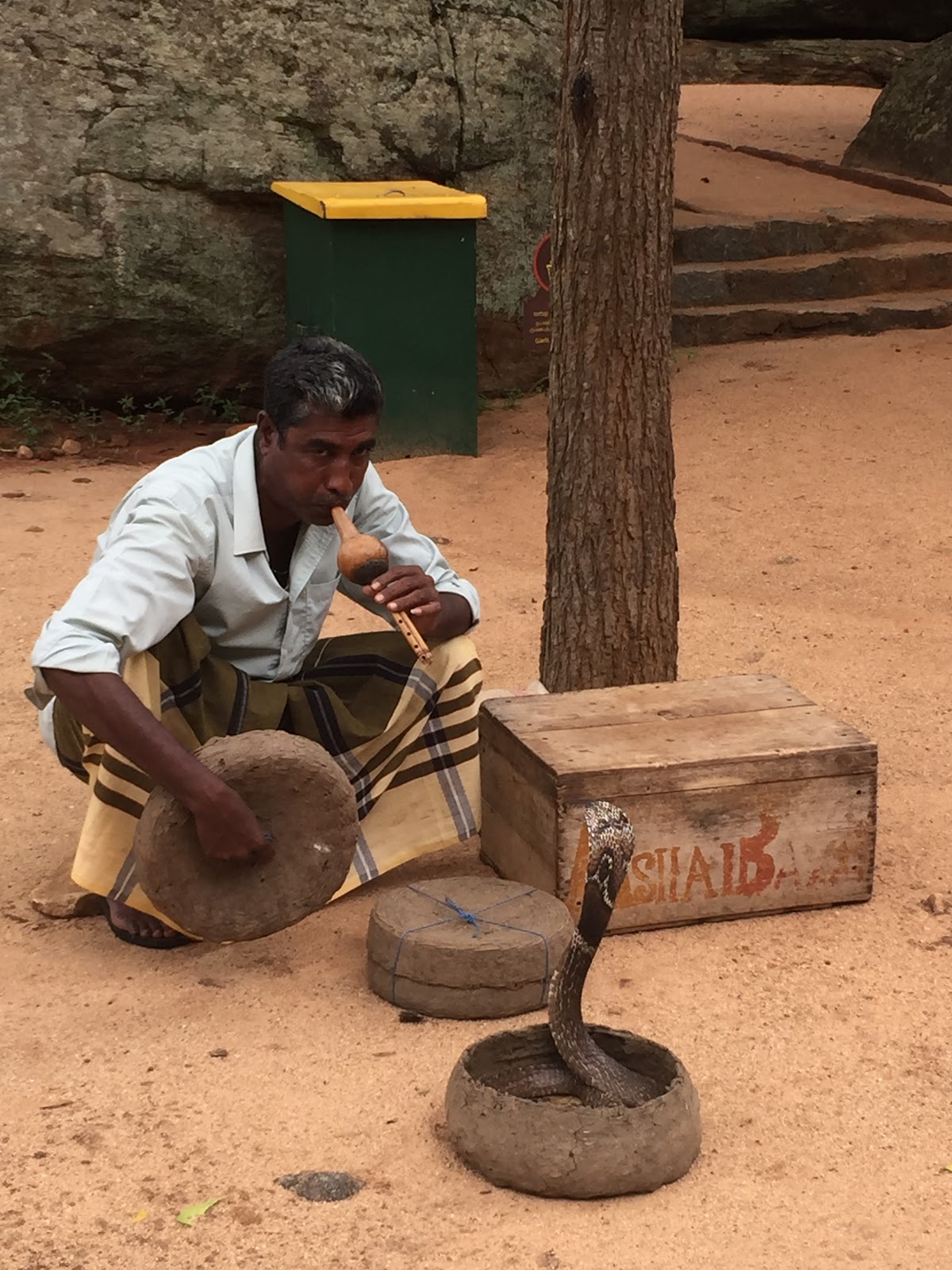
Nearly down the hill we passed a snake charmer. He was unsmiling. He had two small round tortilla baskets.  The could have held tortillas, but they each had a cobra. The charmer played his pipe. The cobra, with a startling swift move, popped his head out of the small round basket. It was a short presentation. I did not sense danger. Mostly, the snake was fascinating. A cobra has a great shaped head. The cobra returned to his basket. Attention turned to a larger box, rectangular, which held another snake. One appropriate for human shoulders. Maybe it was a boa. First, it hugged Wes. Then me. It was cool and smooth. I would have been scared. I was not because the handler in a sarong was clearly the apparent master of the snake’s behavior.

Back in the van ….
Men are working, shirtless, with wooden rakes in flooded muddy rice paddies. In a tree, there is a small hut for a gunman. He fires a shot into the air when an elephant tries to enter. Is that to say there are wild elephants roaming the town?

About the men in sarongs, knee length, calf length or to the floor. They look comfortable, but like an afterbath towel wrapped around the waist, how do ensure it stays put?

Noon, back at the Hotel Sigiriya Water Garden ….

Egg hoppers

We have had a full day. It is only noon. We left before breakfast. Now, we will have it, Sri Lankan breakfast. Curries, egg hoppers, interesting things. We seem to be one of only three occupied rooms here. Like it is all for us. We over ate. We took an hour break to wallow in the huge warm pool. It was neither warm nor cold, but just perfect. It is an infinity pool. We dangled arms over the infinity ledge. Straight ahead are the red earth paths of the lodge. They point directly to the Sigiriya Rock from our morning adventure. But closer to the pool, thirty feet away, begins a bird sanctuary. We dangled our arms over that mentioned ledge and watched egrets and herons and hawks, and birds with turquoise tops and orange bellies, as peacocks wandered to and fro.

At 3:30 PM back in the van ….

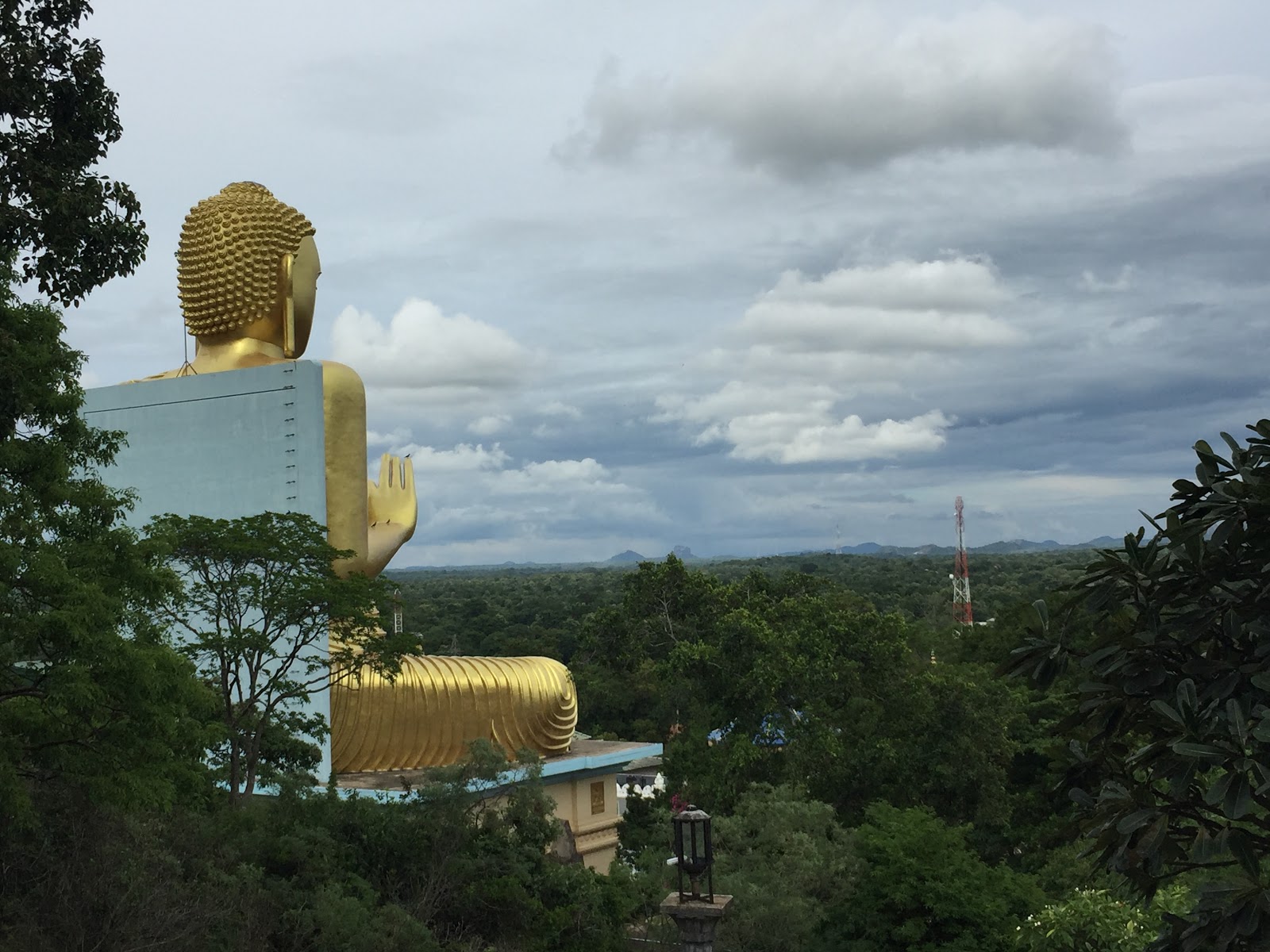
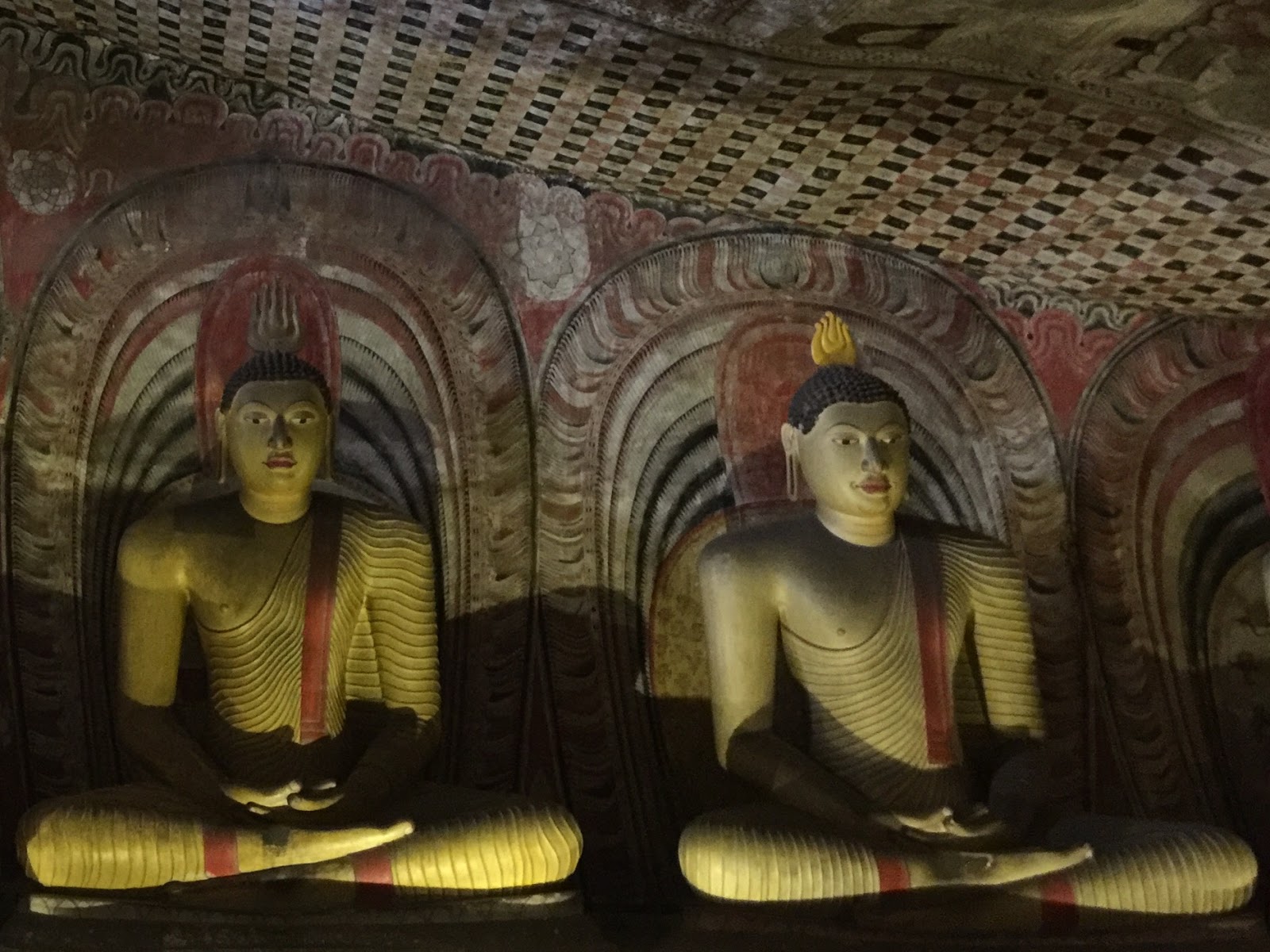
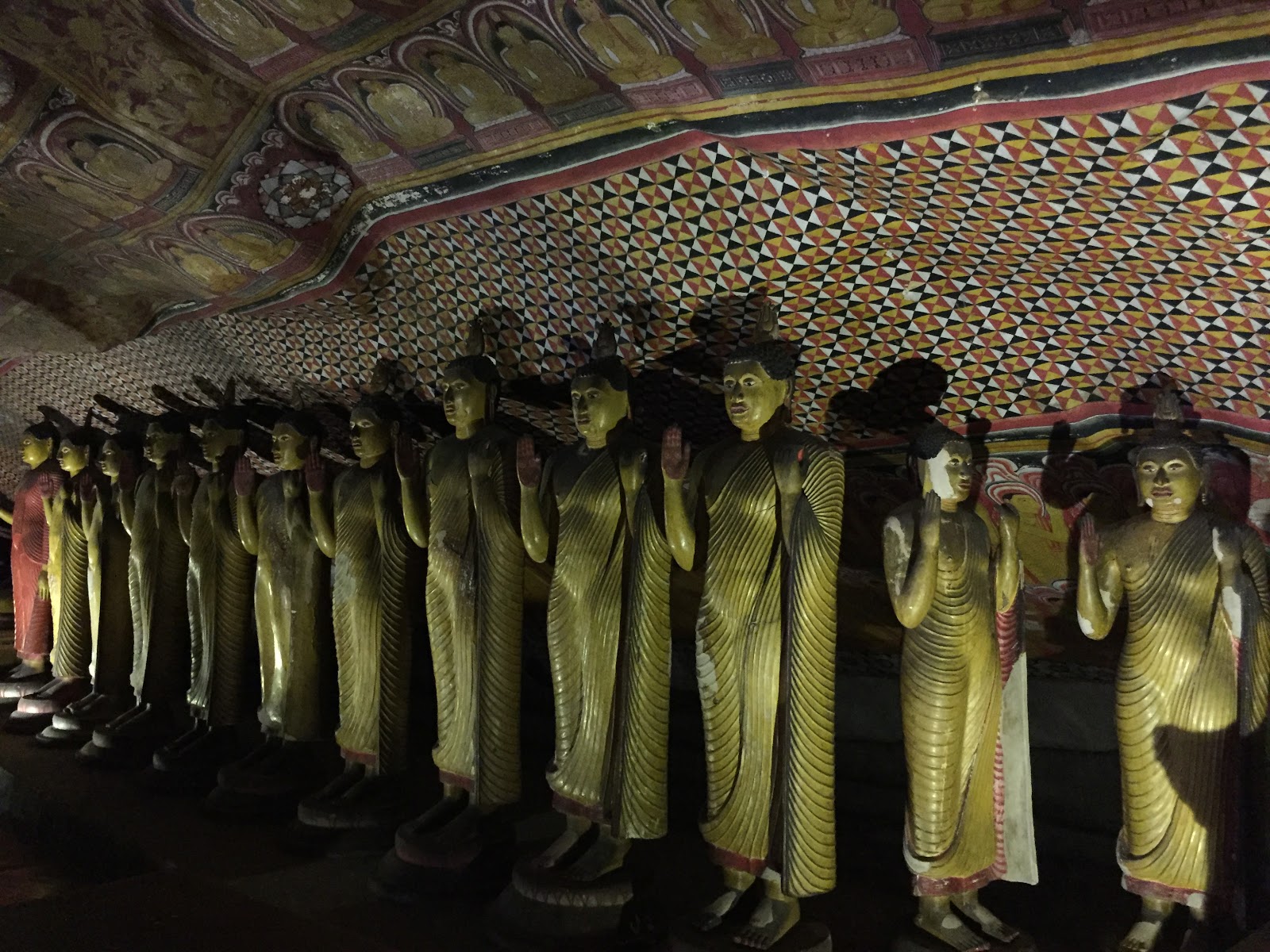
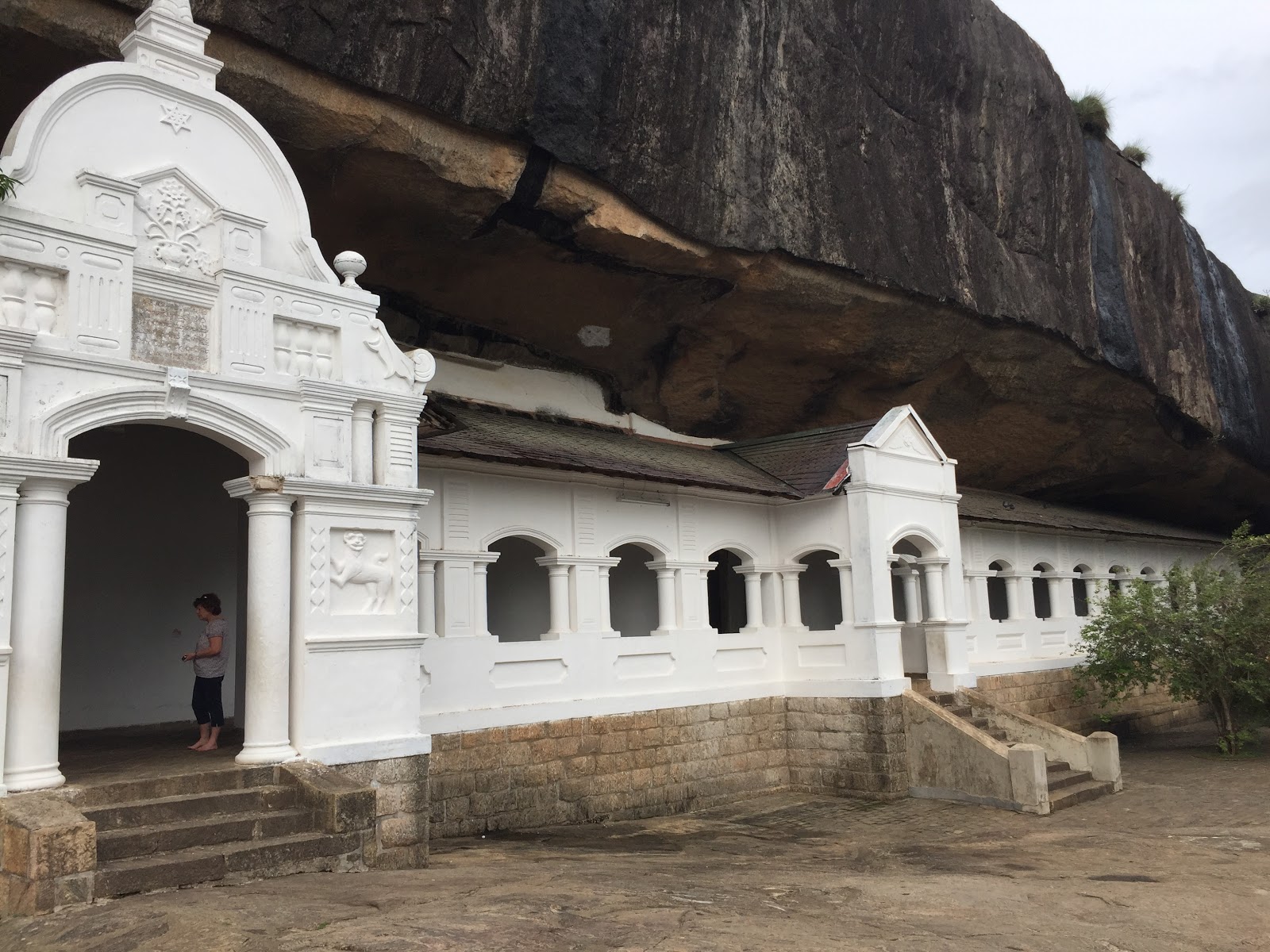
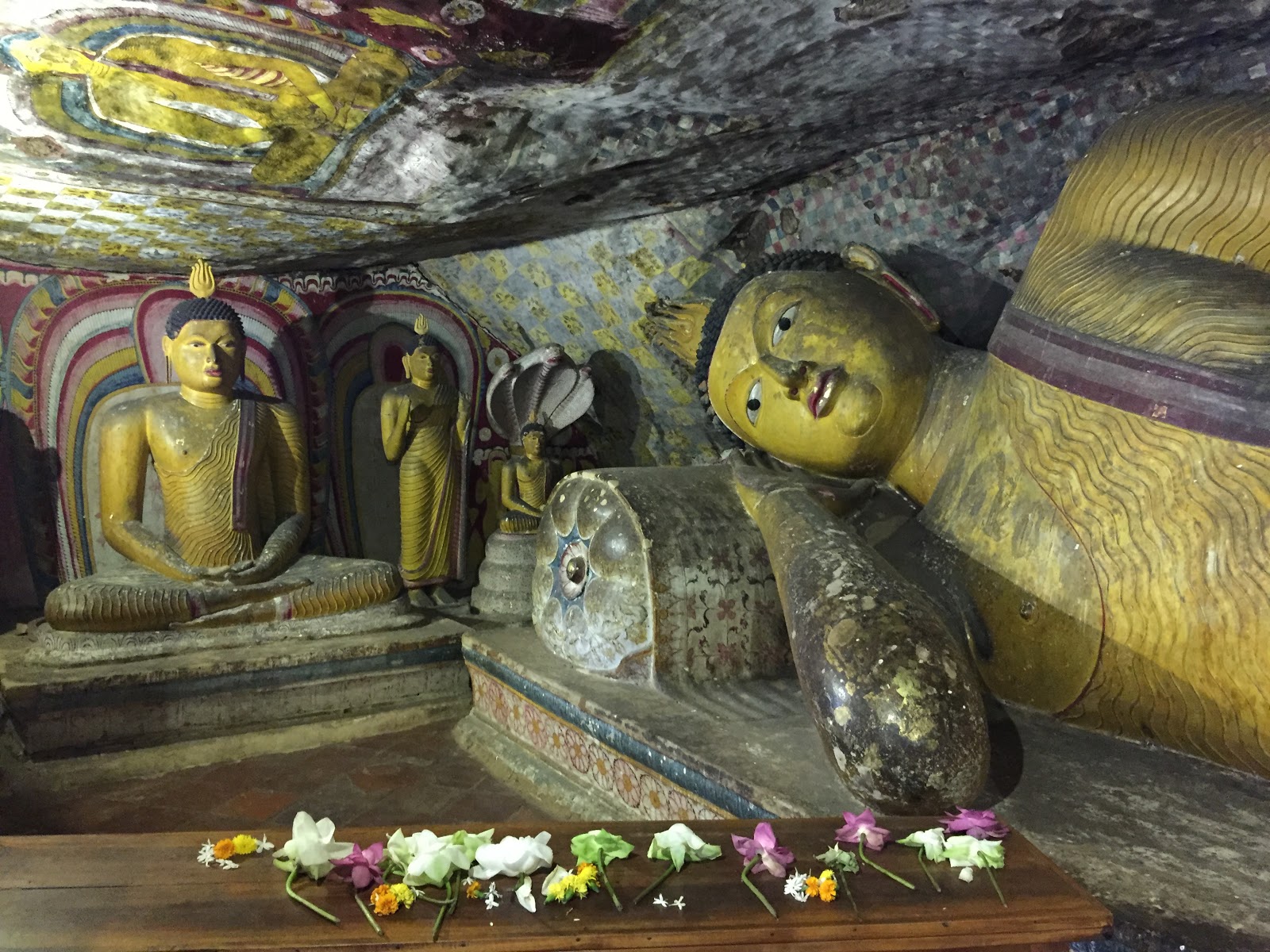
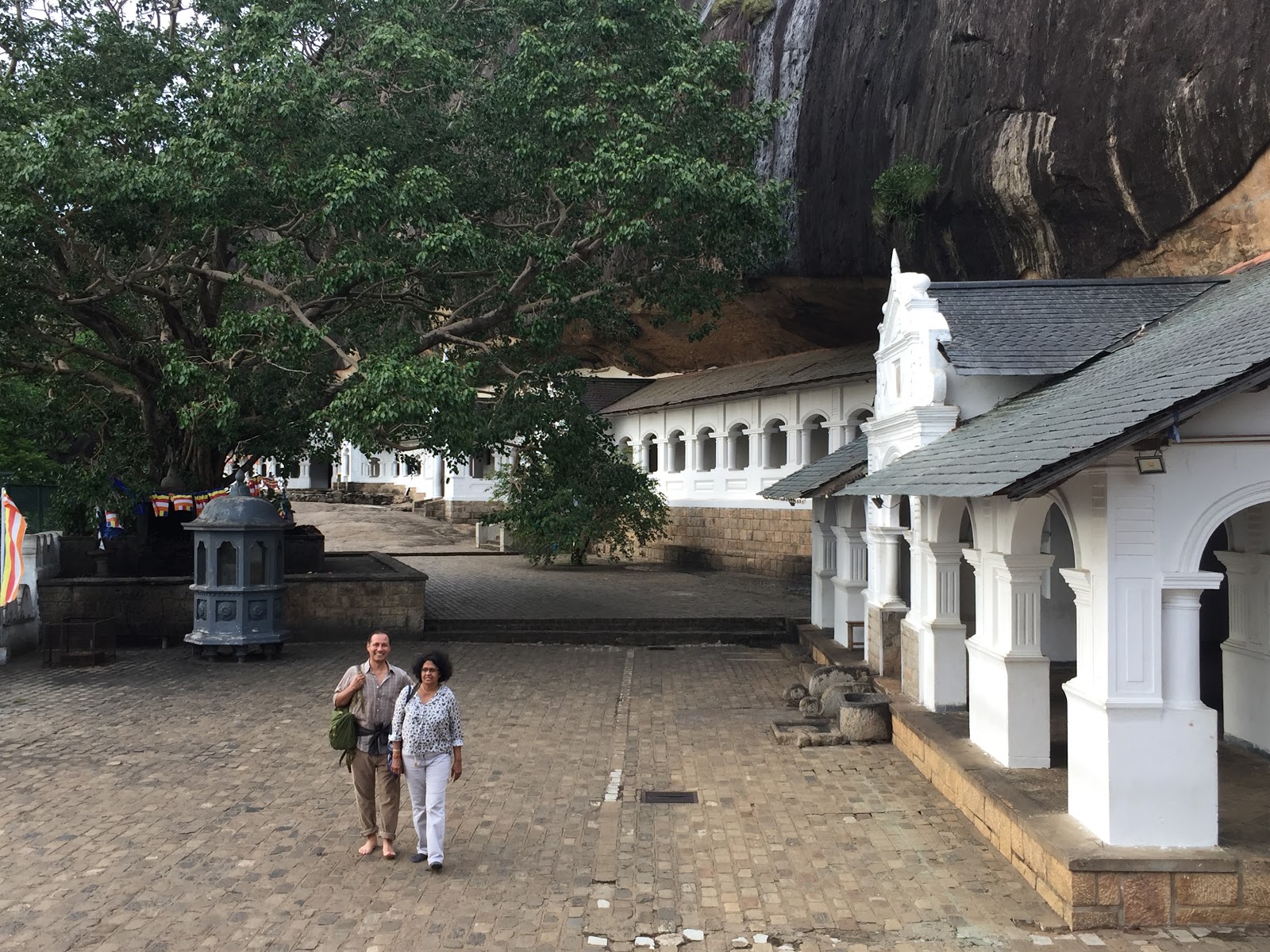
On the road to Dambulla, another Unesco World Heritage Sites. This time we visited a fully functioning Buddhist temple. A temple in caves, the underside of mountain top boulders. The caves have frescoes and between the five caves there are over 150 statues, mostly of Buddha. Of the frescoes and statues, some are as old as 2200 years old and some as young as 200 years.

The Dambulla site also required climbing about 500 feet up. Again, we were drenched. I muttered to myself, “it better be worth it”. Before I could get actually cranky, we arrived to the caves and it was very much worth it.

Driving back to the lodge. It began to rain. Someone in the car said, “I would like to see an elephant”. Voila, from the opposing direction and in the slow lane, meandering, in the dark and glistening wet was a wild elephant. It was eerie, rainy, dark, headlight lit.

Tonight, before dinner, we sipped a beautiful Bordeaux wine. At dinner we sat outdoors. The air was balmy and just right. We ate lightly. A little soup. A little salad. Over head a busy bat flitted scooping up the insects that might have given us company. Today, we saw two thousand years of Buddha related history. And our mini-safari, animals galore: a large iguana, herons, egrets, a bat and a wild elephant in the slow lane.

Sri Lanka: Arrival, September 29 – 30

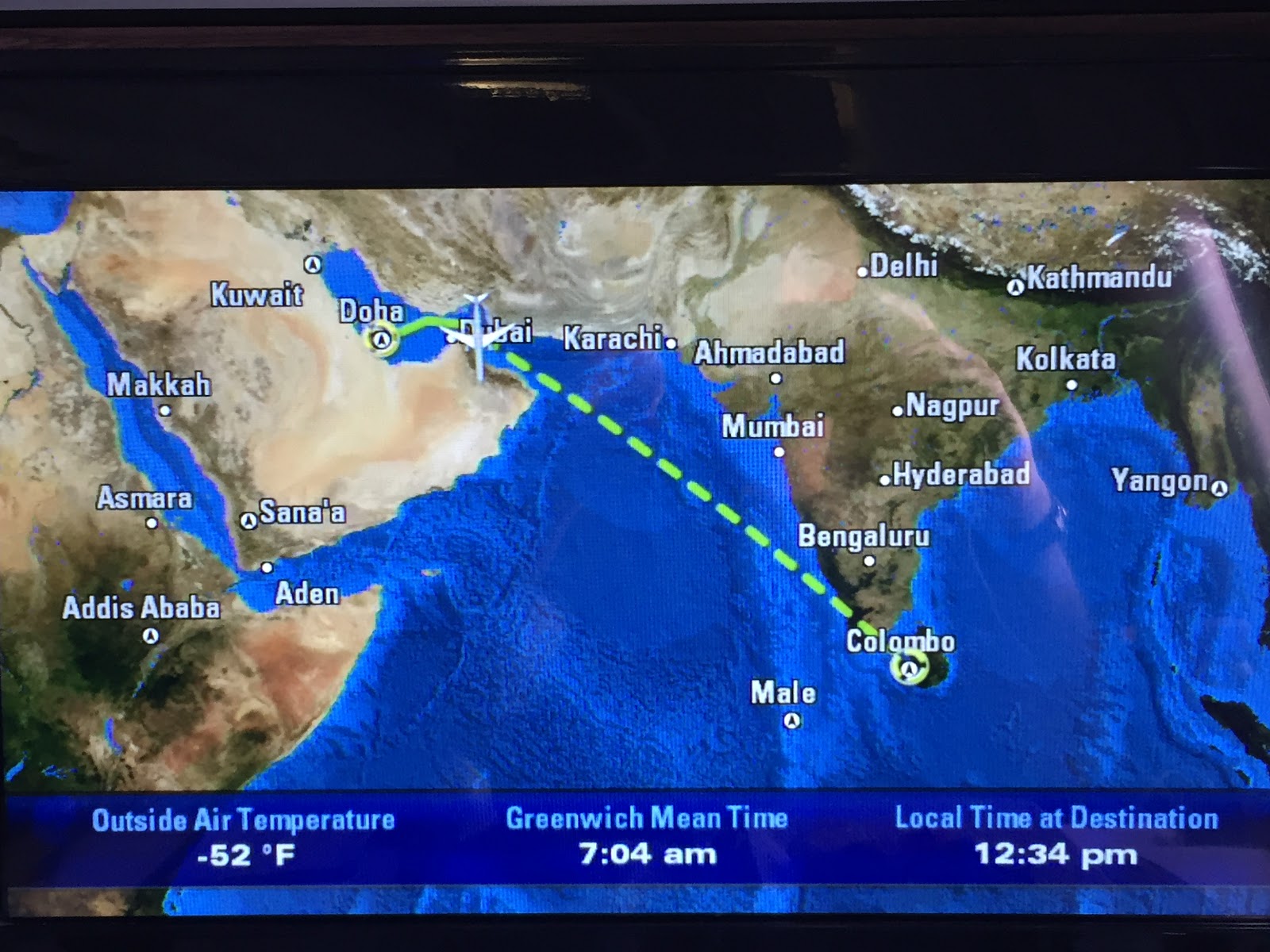
Outstanding flight from Doha, Qatar to  Bandaranaike Airport in Colombo, Sri Lanka.  Note in the flight path below how the flight had to take a detour over Saudi Arabia because we were flying on Qatar Airlines which is unable to fly over the airspace of several neighboring countries.  
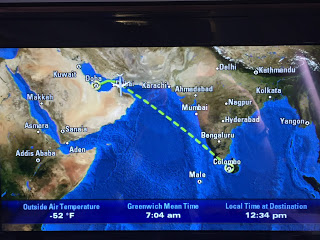
Flight path to Colombo.

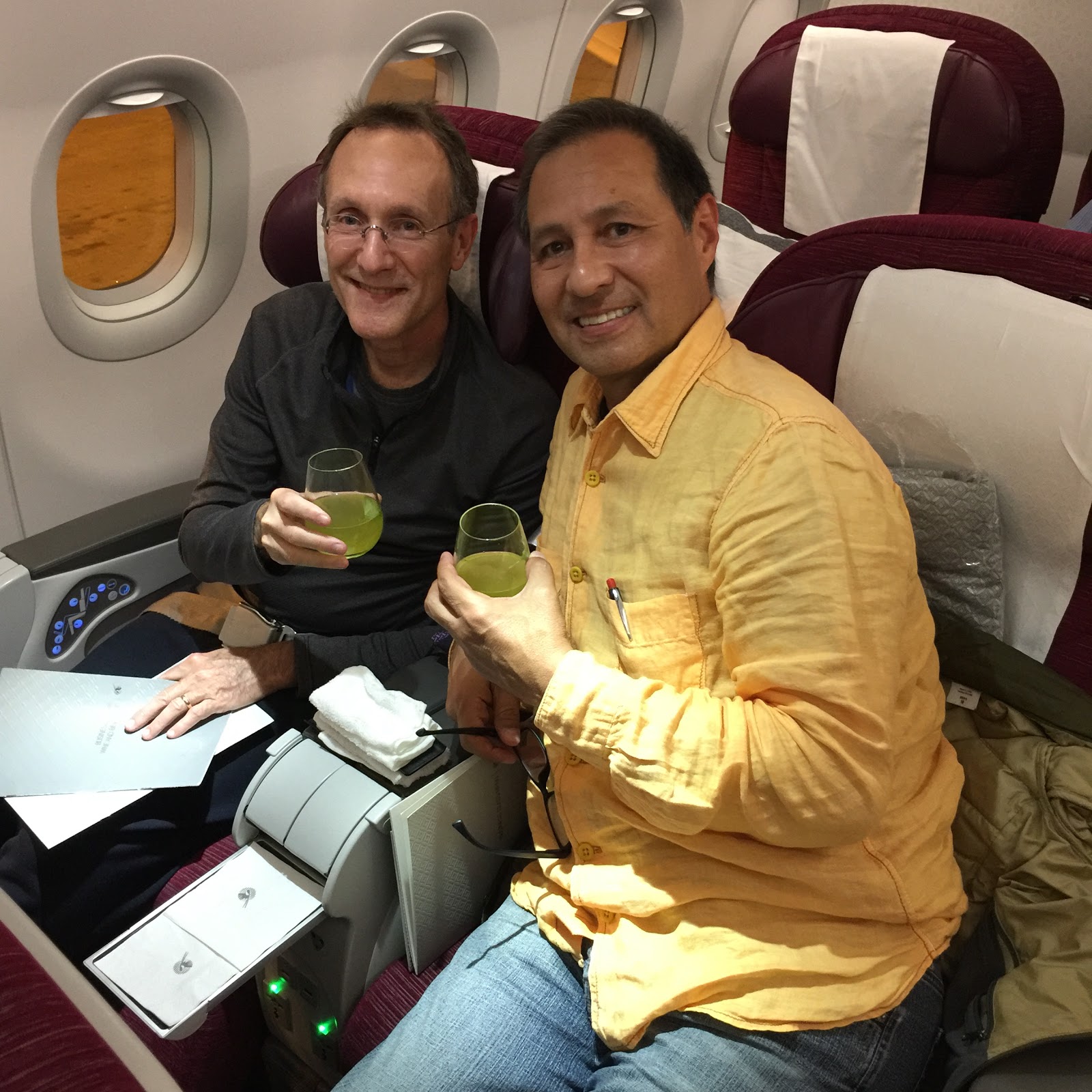
We sat in row two. Our seats reclined fully to flat. Ahh. Across the aisle was a Sheik in the traditional expertly pressed white dress shirt which goes to the ankles. He wore the black band to hold his red and white scarf on his head. The true give away was the greeter at the bottom of the jet stairs. His sign read, “Sheik” something or other.

Our good seats included being first off the plane. We exited down a portable stairway and on to the tarmac. That’s where the “Sheik” sign was. From there, it was pretty quick passing through immigration, etc.

In the terminal we heard, “taxi”, “taxi”, “taxi” coming from all directions.  Wes knew just where to go. The taxi ride was a bit over an hour.  The traffic was Keystone Cops.  Chaotic. The “tuk tuk”s (3-wheel, tiny taxis) weaved in an out of traffic. It was like a video game, things popping out of nowhere. We are surprised to see the “england” style, steering wheel on the right.

It is raining here. It is also humid and very warm, more than balmy.  It is extremely green. Plumeria and palms.

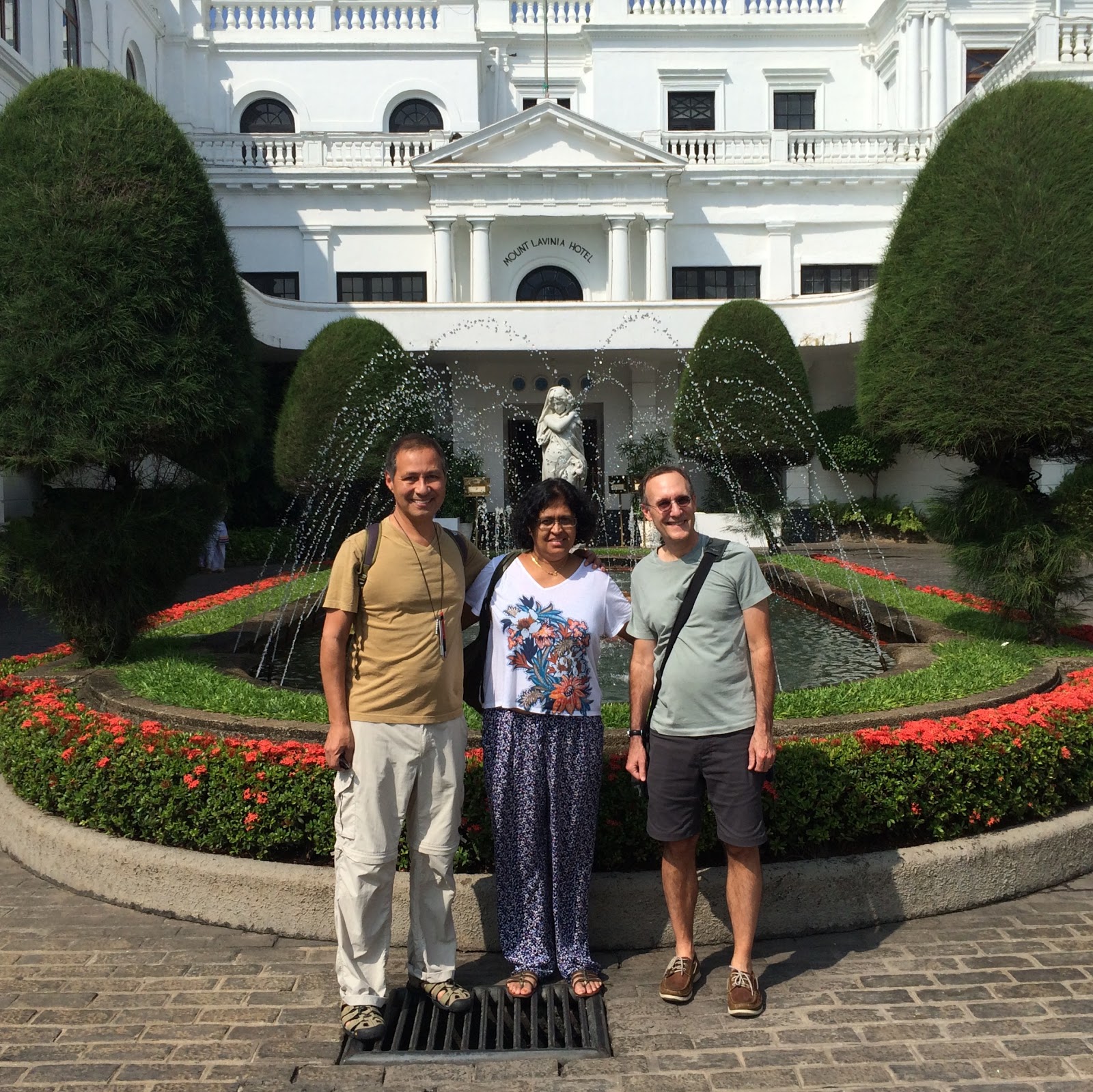
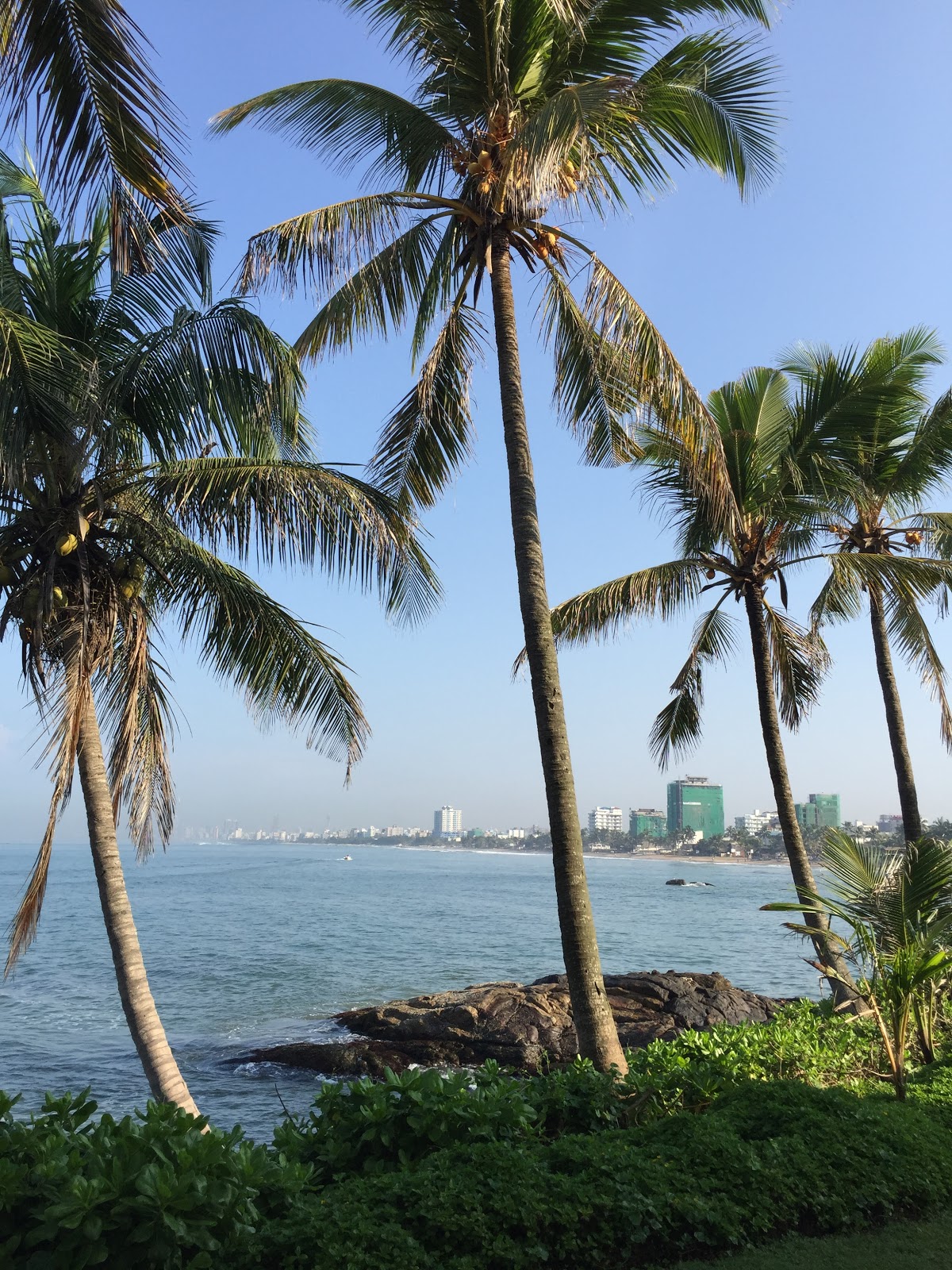
Mount Lavinia Hotel is our destination. Once upon a time in a land called Ceylon there was a Scottish man, Sir Thomas Maitland. He was the second person to serve as “His Majesty’s Governor. He arrived in 1805, could not find a house to his liking and built a grand scale mansion. It is at the waterfront. Colombo’s tall buildings are visible to the north

Later Sunday night …

Dinner buffet at Mount Lavinia Hotel. It is a huge spread! Western food, Sri Lankan food. I am guessing there were maybe forty different things on offer. The problem with buffets. What if you have not any self control. What if you feel compelled to try every new thing.  As we stuffed our faces. Plateful after plateful.

There were a trio of dancers and one solo dancer. The costumes were interesting. It was very nice. I was happy to see so many vegetables. Okra seems a popular one here. It was served several ways. Not a one was slimy. Here, they are good with okra. I also had chick pea dishes and an egg hopper made in a small bowl shaped pan (mini-wok) like part crepe and part fried egg. You eat it with “sambal”, a onion relish sort of carmelized sort of pickled. Looking forward to a good sleep. We left Athens early the day before and flew two flights, albeit thoroughly in comfort, both after midnight. Good night ….

The next day … Monday morning …
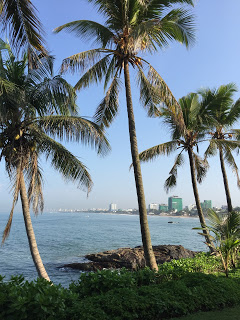
Colombo in the background

Our room was on the ground floor. It opened directly to a mid size lawn which ended in palm trees and boulders then the crashing waves of the Indian Ocean. We woke at 6:30 AM. Opened the curtains. Saw the grass, the sea and one dozen chinese women with curly brown hair.  They were dressed in flowing colorful fabrics and photographing each other and tossing silk scarves into the air.  They remained oblivious to the racket they made, which reminded me of the honking and squawking racket made by geese when we visited a convent on the Greek island, Aegina, last week. But mostly I was amused by the curly brown hair and I thought, boy, that does not look like the Chairman Mao communism we were told was so bad.  Locals tell of recent deals where the Chinese government has loaned huge amounts of money to Sri Lanka. At terms which are entirely not in Sri Lanka’s best interest.  So, they say, there are a lot of affluent Chinese roaming around.

Later, Monday mid-day …

We are on the road now.  It is difficult to describe. So much is different. Not really different because it is all still people and streets and buildings and food, but the look (so green), the people (different shades of brown), the buildings (small scale, concrete shelled, open air), the vegetation (palms, plumeria, banana, pineapple, cashews), the vehicles (tuk tuks in red green and blue), the earth (red). Dense. Everything abuts everything. Heavy, chaotic traffic. Din of horns and acceleration. Inside our van, it is cool. Outside, the air squeezes the moisture out of you. Rice paddies. A man knee deep. I am not sure what he is doing. He is dark, skinny, old, shirtless. His clothes are a fabric wrap around his waist. Last night, it poured for our arrival. This morning, it stopped. Our drive to Sigiriya will take four to six hours. It is only 11:41 AM. There is a lot more to absorb today. It is nice to have a van and driver. And extra special to be with a friend from Paris, a Sri Lanka native. Last night, she showed us her sprawling childhood home.
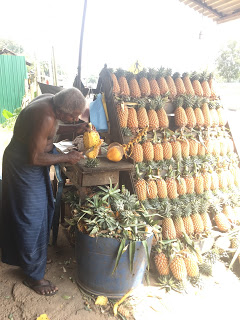
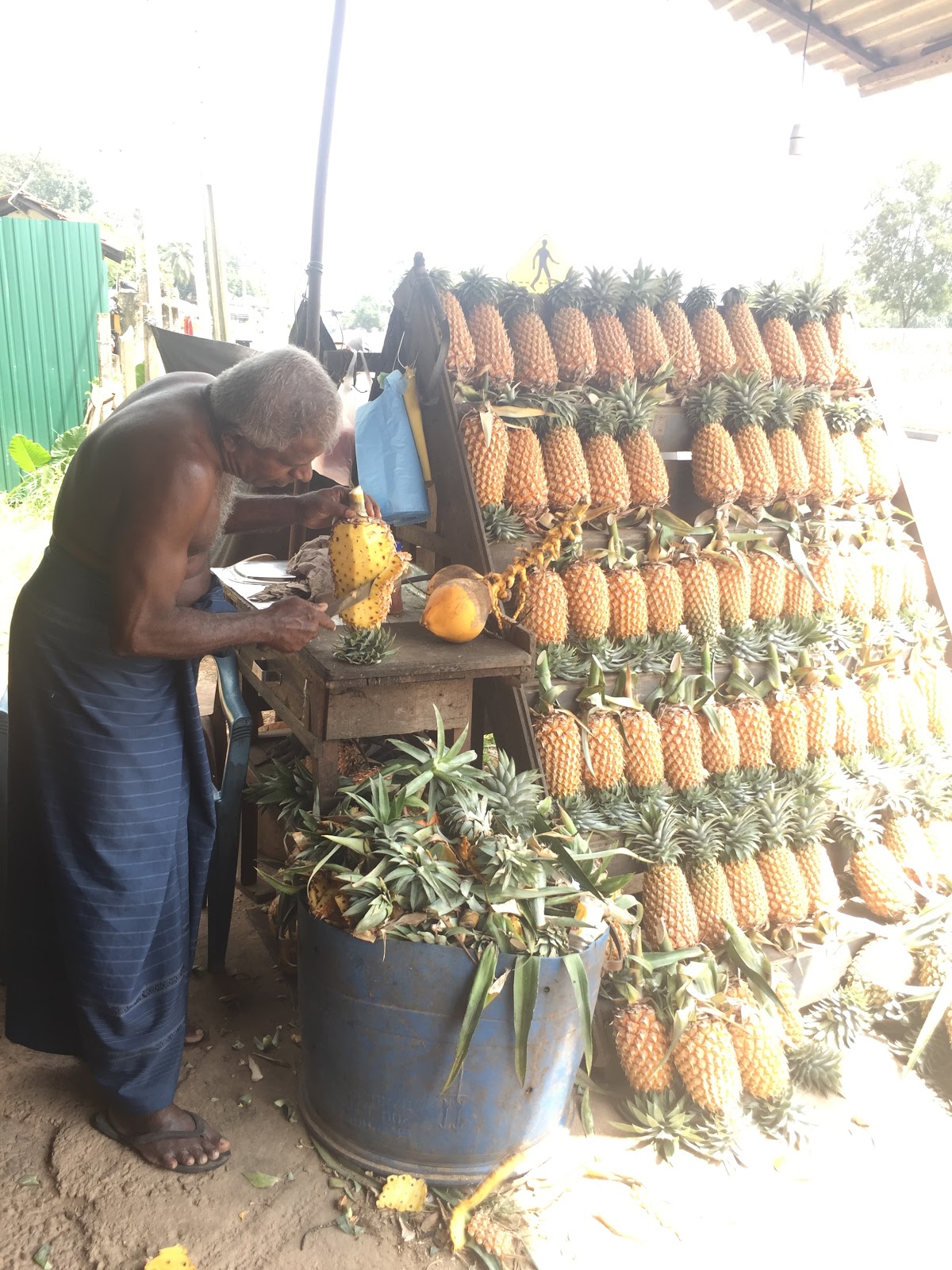
We just stopped at another shirtless, skinny man. This one sells pineapples. The longest ones I’ve ever seen. He just cut one up, put it in a bag, and gave us chili salt. Back in the van. Ahh, relief from the crushing heat.

We just passed a field of buffalo. Last night, I had buffalo milk curd (tastes like creme fraiche, but richer) with fruit syrup for dessert while watching traditional Sri Lankan dancers. Now, driving through cashew plantations. Here, it is 11:54 in the morning. The time difference is odd; it is however many hours ahead plus a half-hour.

There was a wedding this morning at the hotel. It had seriously interesting dance costumes.  Very beautiful. Actually, there were two weddings. They were both making photographs. We got a few snapshots, too. At one point, the same gang of Chinese ladies invaded the wedding photo shoot. Each individual insisted on a selfie with the bridal party. The brides were princess like. The men wore fascinating traditional coats. Ornate like toreador jackets, but with a wild contoured body.

Still driving. So many things passing by that are new to my eyes. Just passed an assortment of long legged wading birds (herons?) in a rice paddy.

I think in an hour we will visit an elephant and have lunch.

An hour later ….

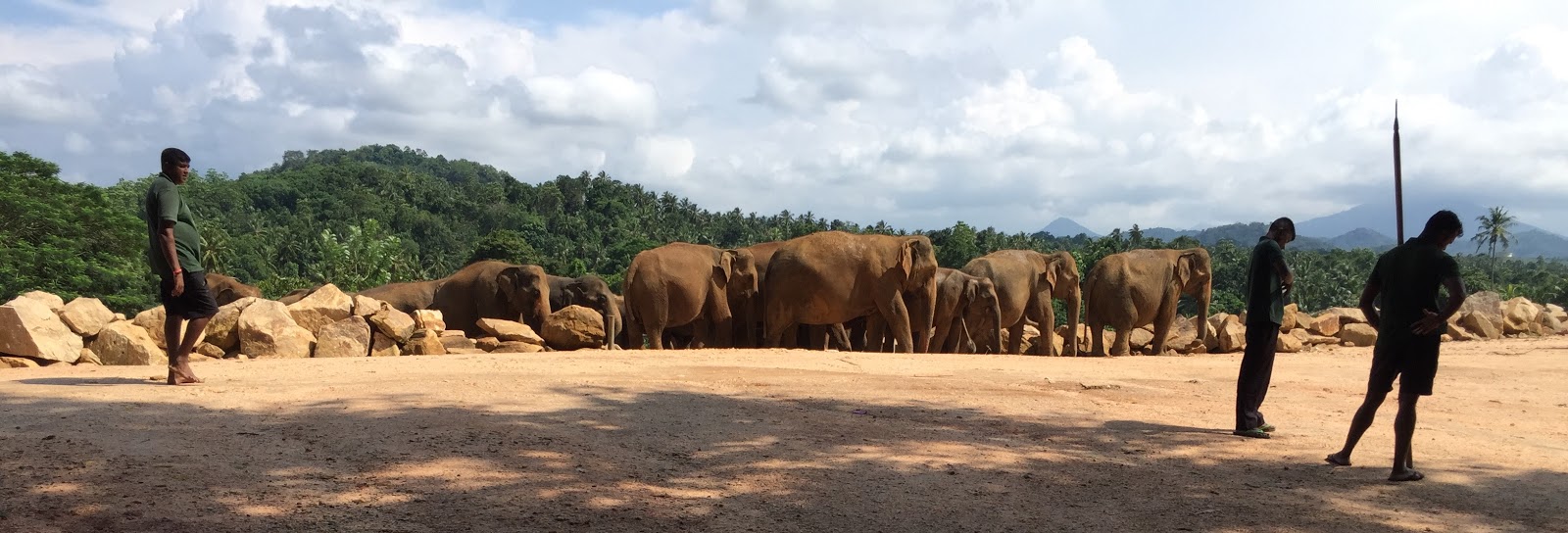
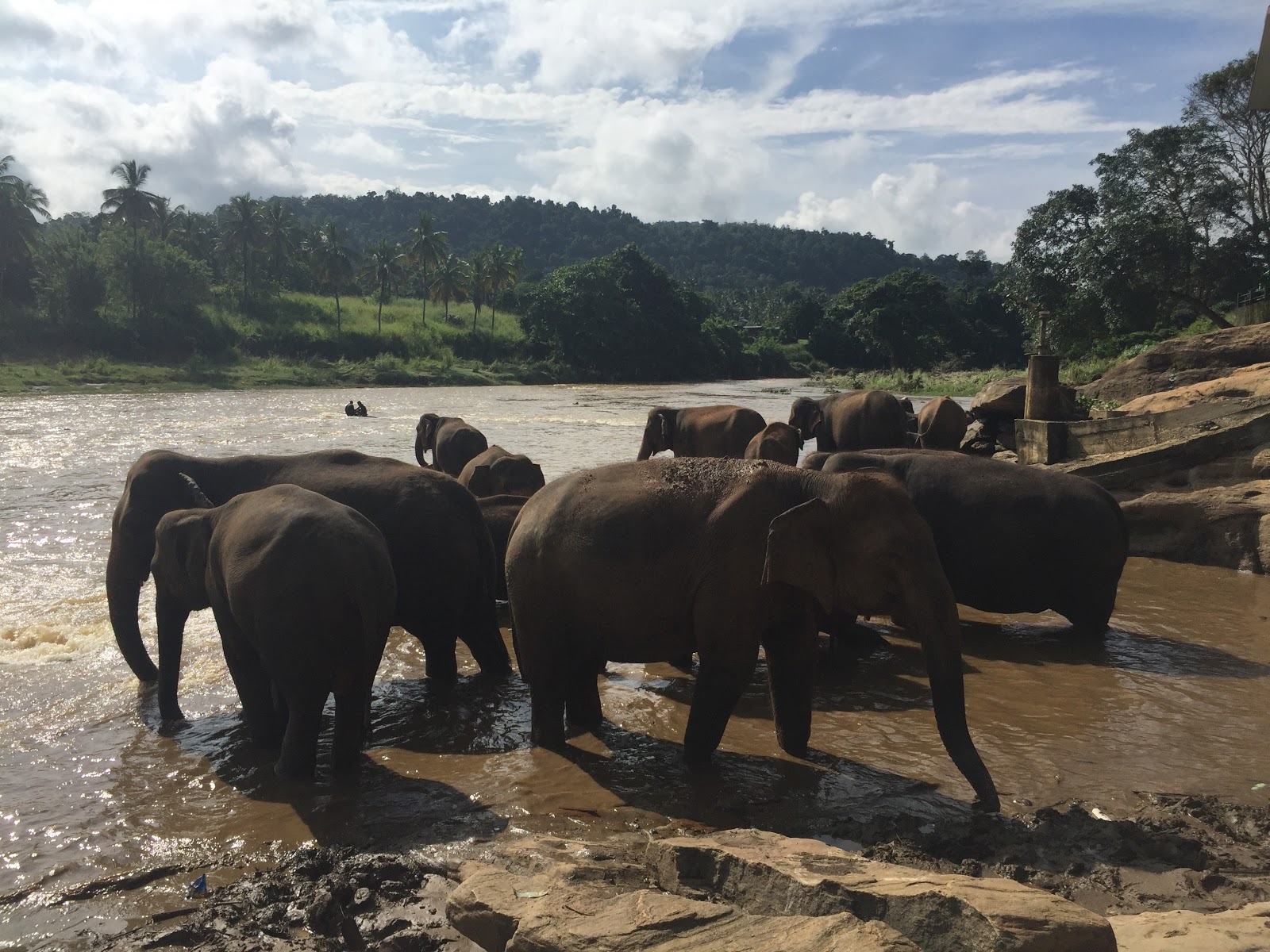
We went to the Pinnawala Elephant Orphanage. The government owns and operates it. We saw about 27 elephants. The best part was when they walked from their park to the river for a mud bath and a good swim. It must have felt good. We, bystanders, might as well have been in a sauna. It is hot and humid, it cannot be overstated. But it was a beautiful day.

We sat in a cafe. The elephants, below us, in full view. Across the river, the banks were dense with palms. The water was pretty swift and strewn with boulders.  The rain last night was probably still coursing through it.

Now, at 5:23, it is again raining, heavily. Most people in the small towns we pass are wearing flat leather sandals. That looks like a good idea for the off and on rainfalls. Traditional shoes don’t stand a chance.

We are headed for the village of Sigiriya. It has a climbable rock of the same name. In the morning, we will climb it. Very early, before it rains and before the sun is too intense. Pouring! Here, right now, on the road, pouring. Not flooded, but over-generously wet.

In Sigiriya we will occupy a two story suite with a private pool.

Arrival at the Water Garden Sigiriya ….

A dirt road leads to the hotel. Rice paddies on both sides are filled with peacocks. Filled!

Wow! We have arrived at the gate. It looks very luxurious, understated. More peacocks block the road. Acres and acres. Far spaced large bungalows blend in. A narrow lane of red earth traverses the extra large campus of dwellings that are separated by what might have been rice paddies, but now are shallow pools of bamboo, waterlilies and frogs. The frogs utterances are more sophisticated then our common frogs.  Not a single “ribbet”.

Our suite is in fact a two story house. Beautiful, modern, beautiful materials, elegant, comfortable. The dining hall is down the road. So is a two story lounge bar with covered outdoor space. This is a special destination.

Tomorrow morning, we will meet our driver at 6:30. He will take us on the thirty minute drive to the Sigiriya ascent. They say it is a two hour round trip. Up and up and up a narrow flight of stairs to the former site of a king’s palace.
Athens, October 23 – 28

It is our first trip to Greece. Athens is a good place to start. We have seen in Spain and Italy and Croatia Roman ruins from 2000 years ago. Hardly old at all. Here, old means 2500 to 3000 years old.
Note Agean Sea and islands in distance

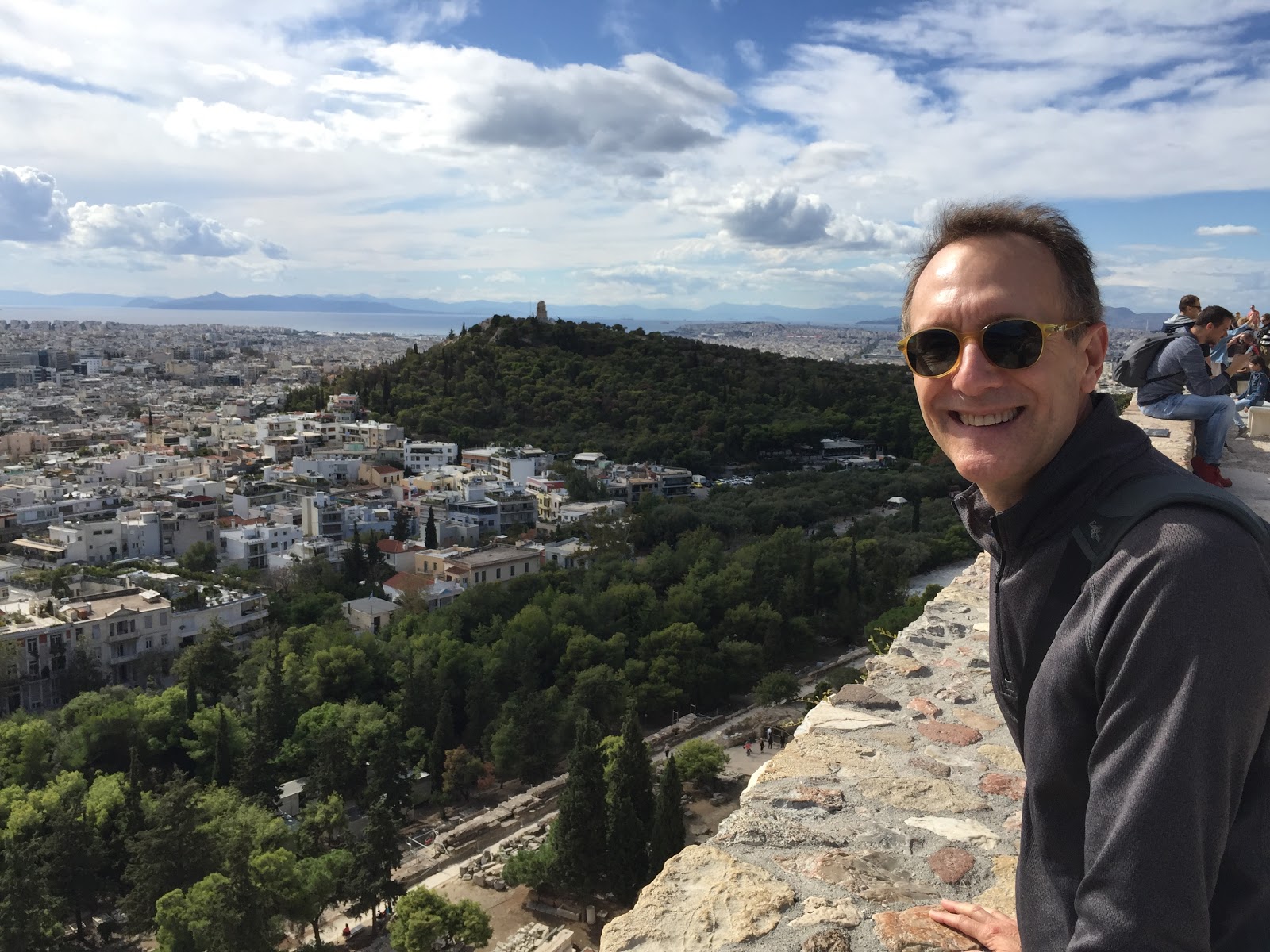
Athens is a waterfront city. It has a sprawl, a white sprawl, which seen from an adjacent island looks like a carpet of white. I suppose, that implies the buildings are similar in size and color.
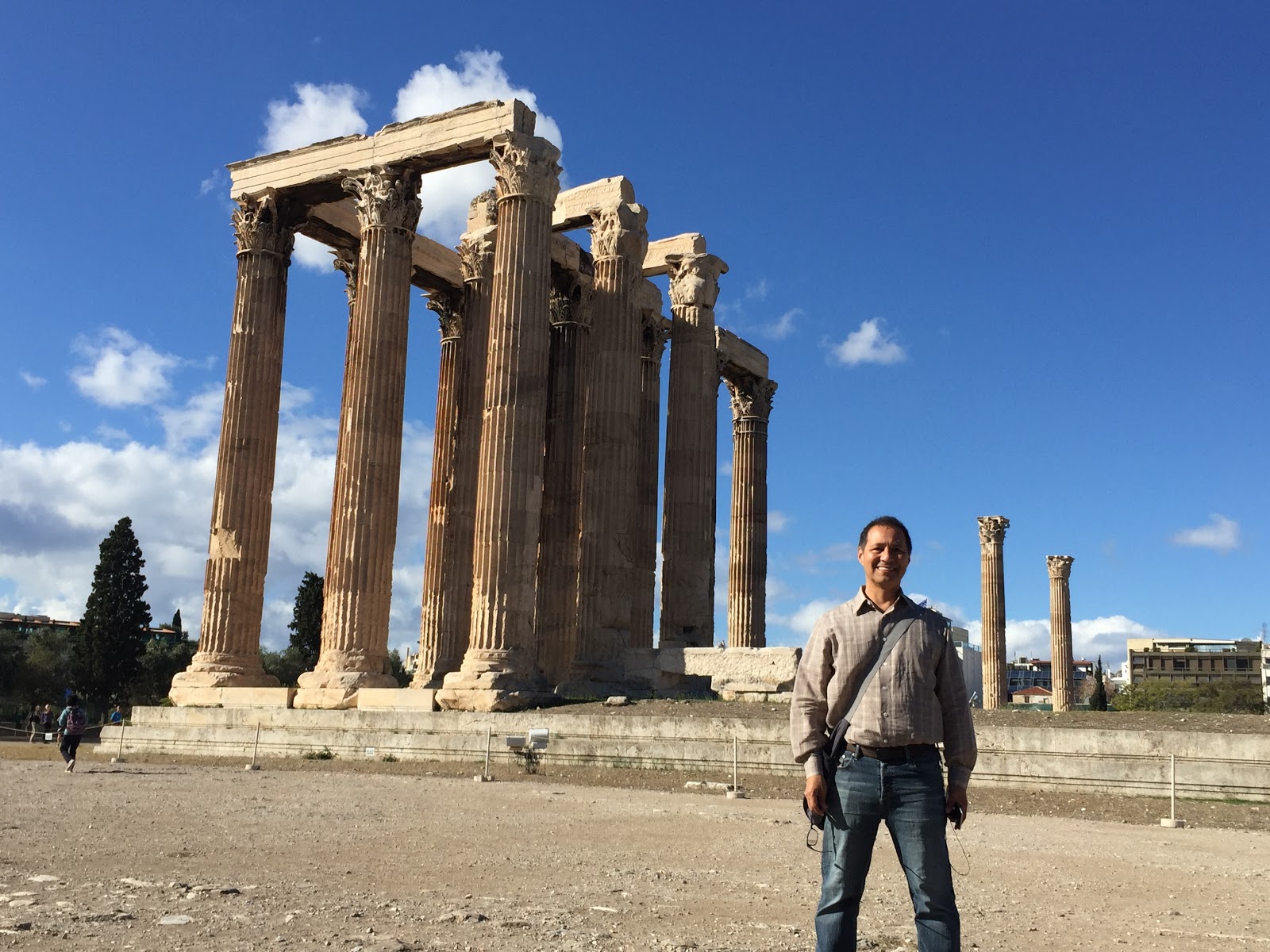
Temple of Zeus

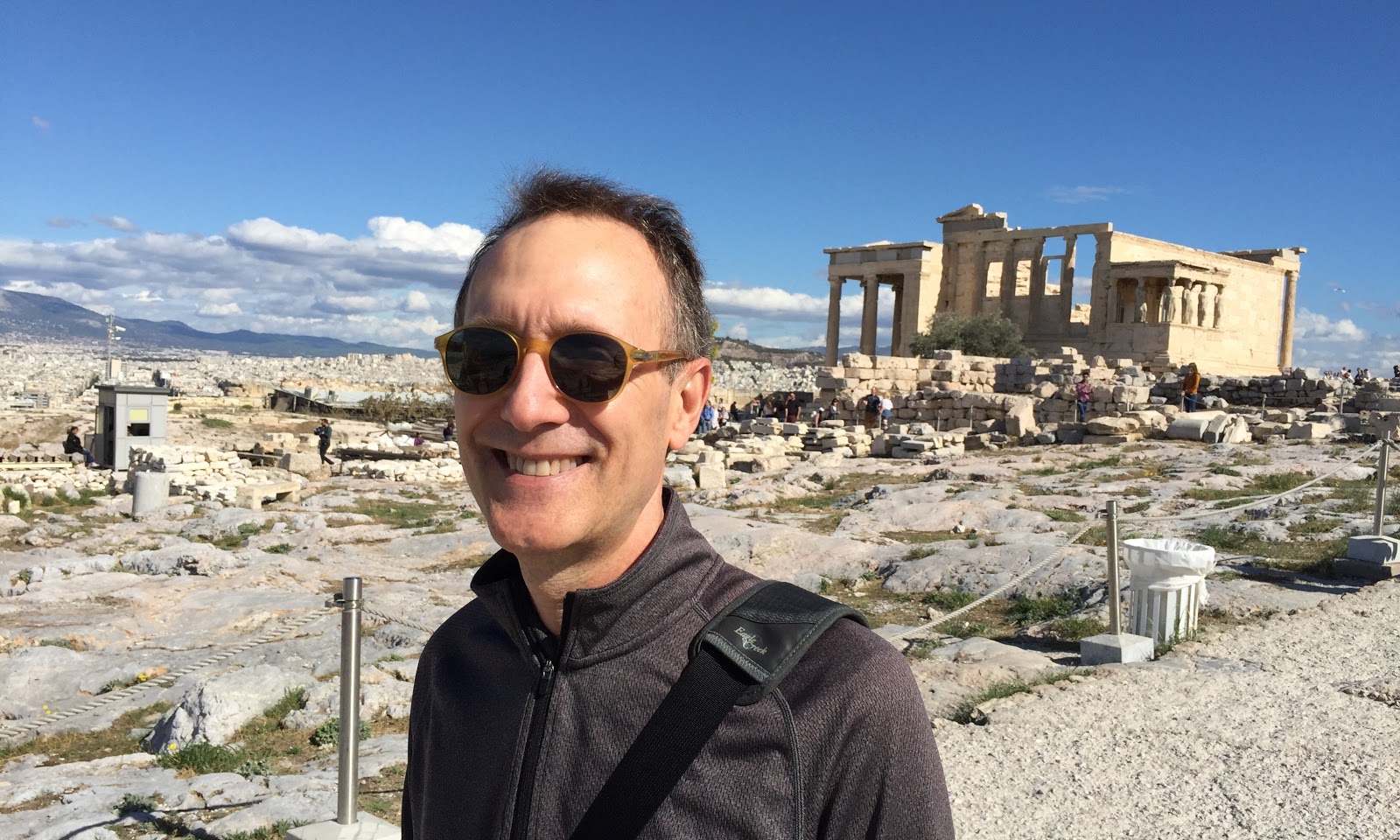
Athens is hilly, too. And atop the hills is where we found the oldest temple buildings. The name Acropolis means high positioned city. The Acropolis is the famous hilltop campus which has the Parthenon plus other grand structures. A simplistic description of a temple, from that era, is a structure whose roof is supported by columns which run the outside perimeter of the building. The number of columns on the long side is twice the number on the short side plus one. The interior contains a large high ceilinged chamber where there is a super sized statue of the god or goddess honored by the temple. On the exterior, between the column tops and the two-sided pitched roof, are friezes depicting events from the life honored statue. Also there are areas up top for enormous marble statues of Athena or Poseidon.
I did not know before coming here that Romans invaded and conquered Greece about 2100 years ago. They appropriated the buildings to their own gods. This was all before Jesus and christianity existed. 400 years later, when christianity got going, the temples became churches. And when islamic forces came to power, those churches became mosques. And on and on, each conquering power adapting the old Greek buildings.

Given all the people through the centuries who made off with the great marble and bronze statues, it is amazing how much antiquity remains here in the temples and in the museums. There is so much it can overwhelm. But it is apparent how much our present day lives are influenced by what the Greeks established back then.

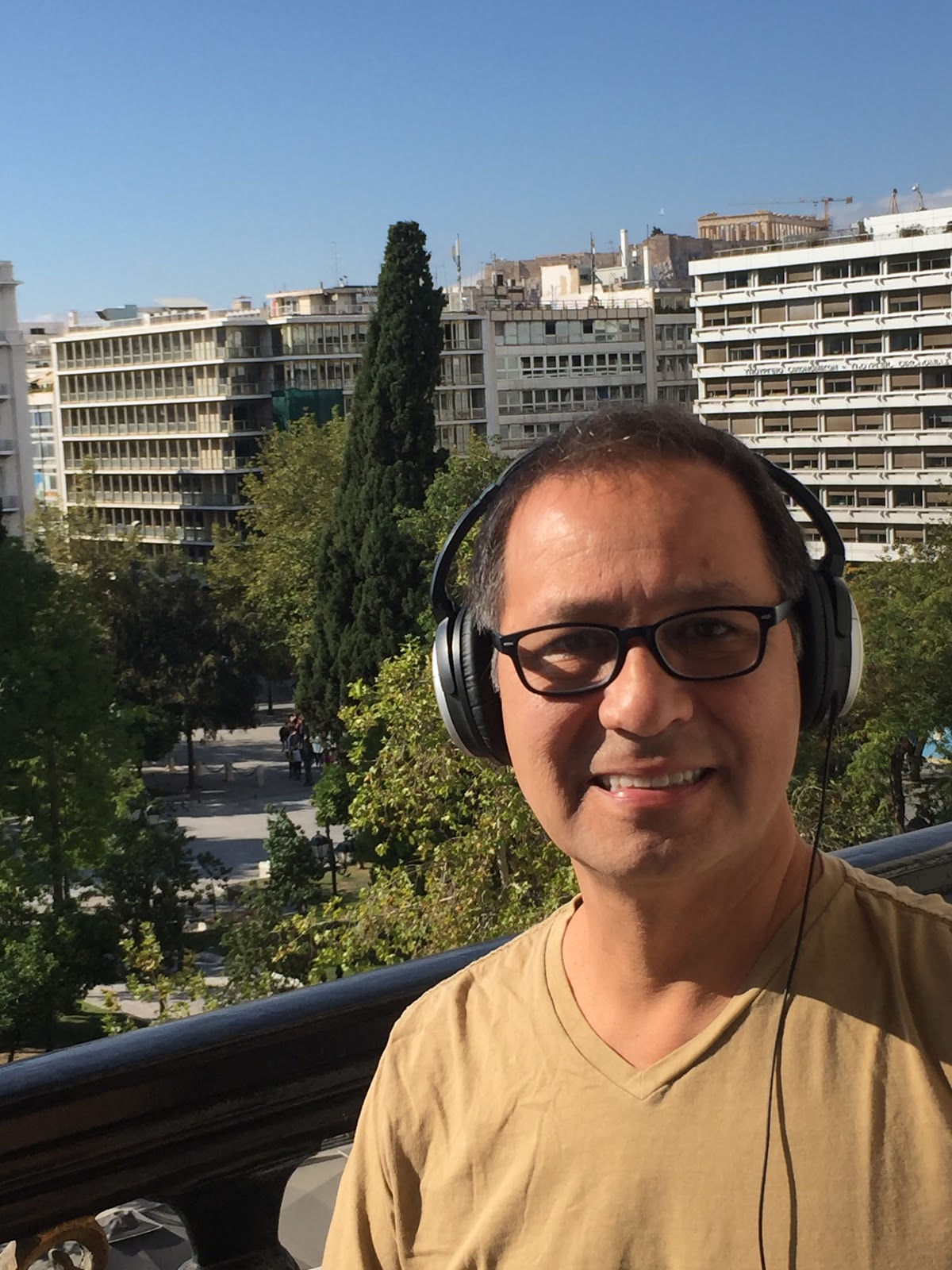
Marlow tuning out the noise of the City on our balcony 
Our hotel is exceptional, the Hotel Grande Bretagne. Formerly a palace 140 years ago, it faces the Parliament building, which itself was a palace in 1840 when Greece won independence from the Turks and appointed a king to be ruled by. All of that is long past. Now, Greece has an elected government which has a major challenge keeping the economy stable. It feels like and the people we encounter mention that times are hard. More than one person has thanked us for coming. The Parliament building maintains a tradition of two guards who stand at attention 24 hours a day. Each pair of guards changes every hour in an elaborate ceremony where they lift their legs like formal horses. 
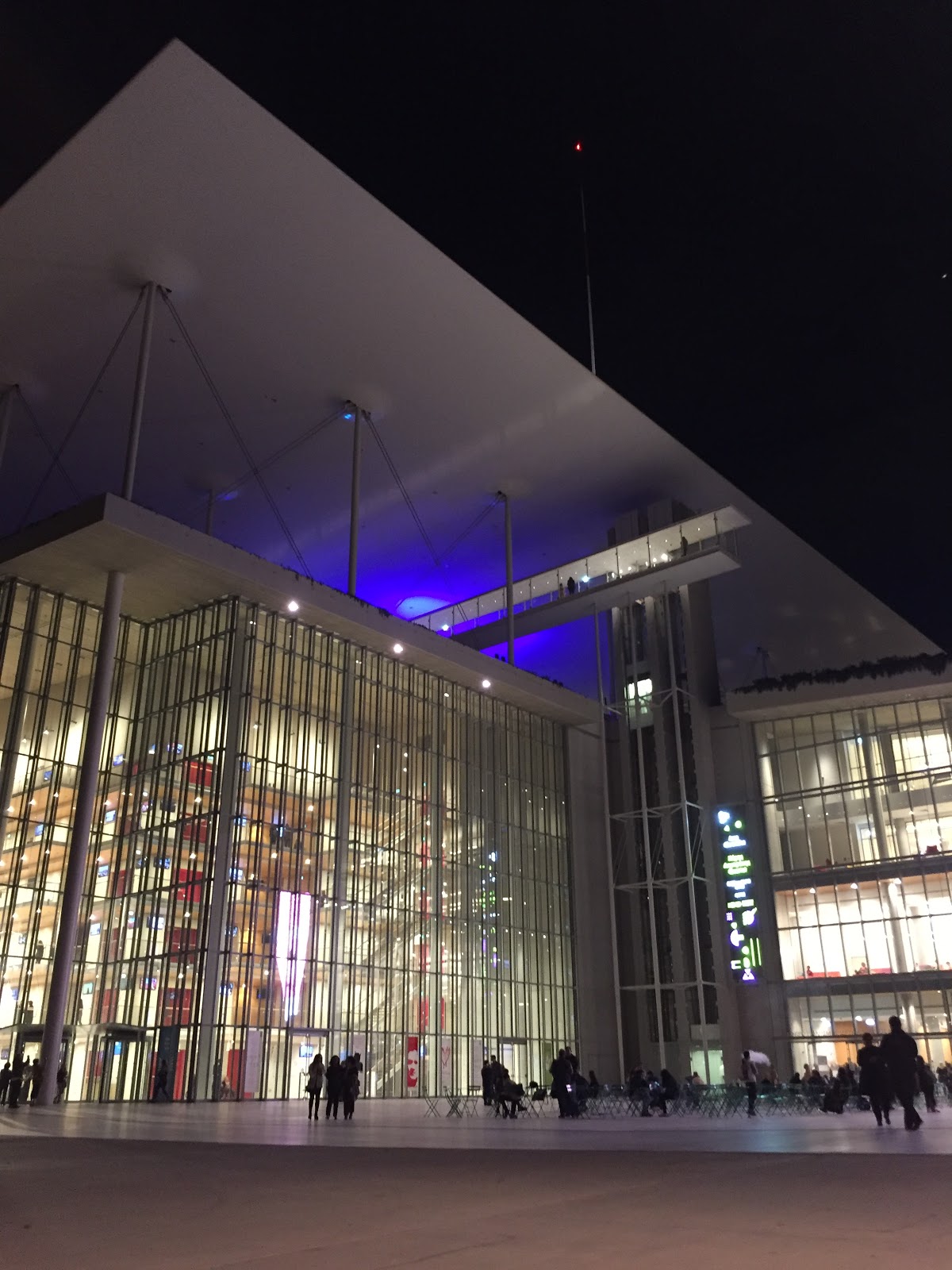
New Athens opera house

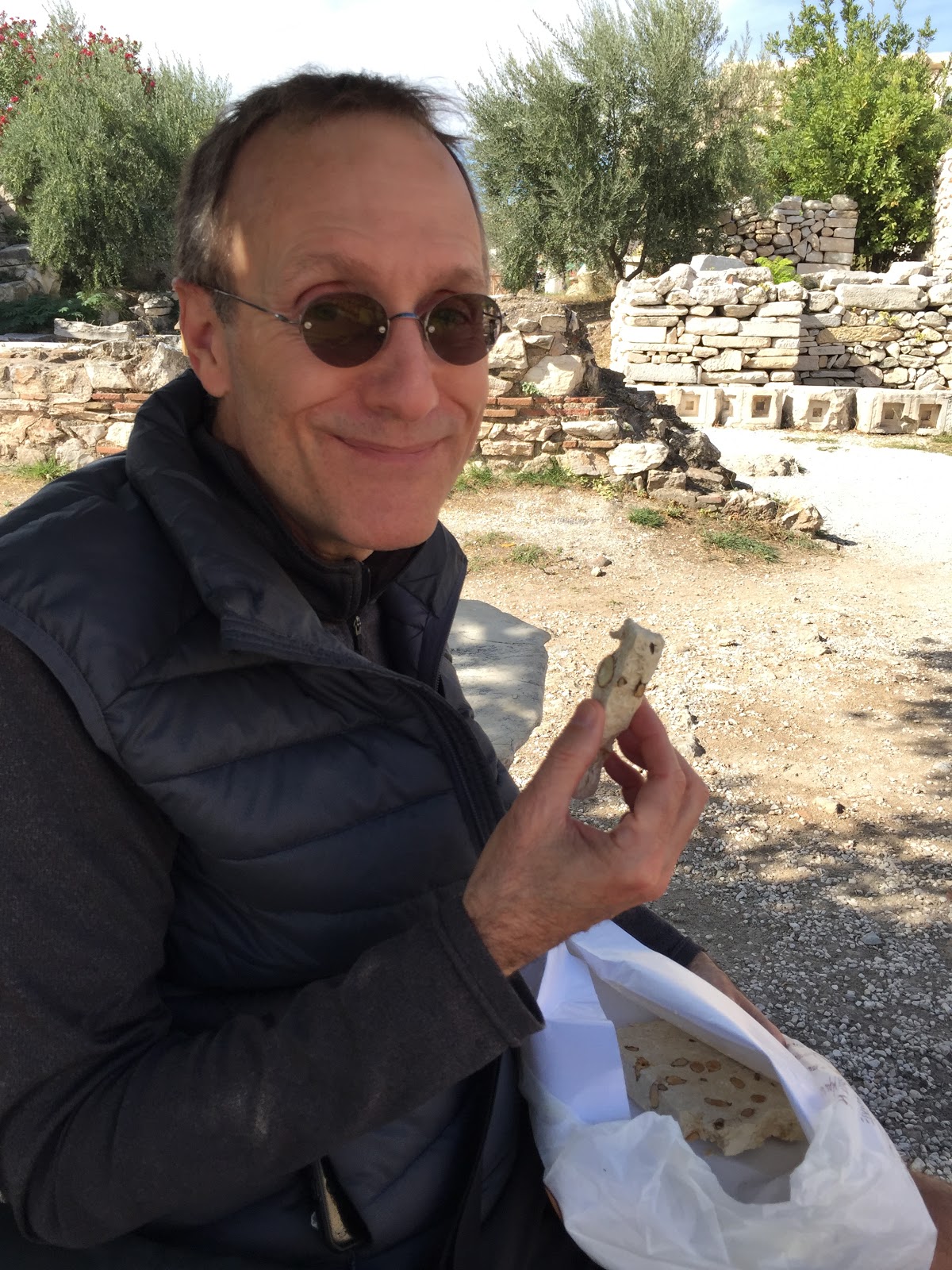
Time for a halva break

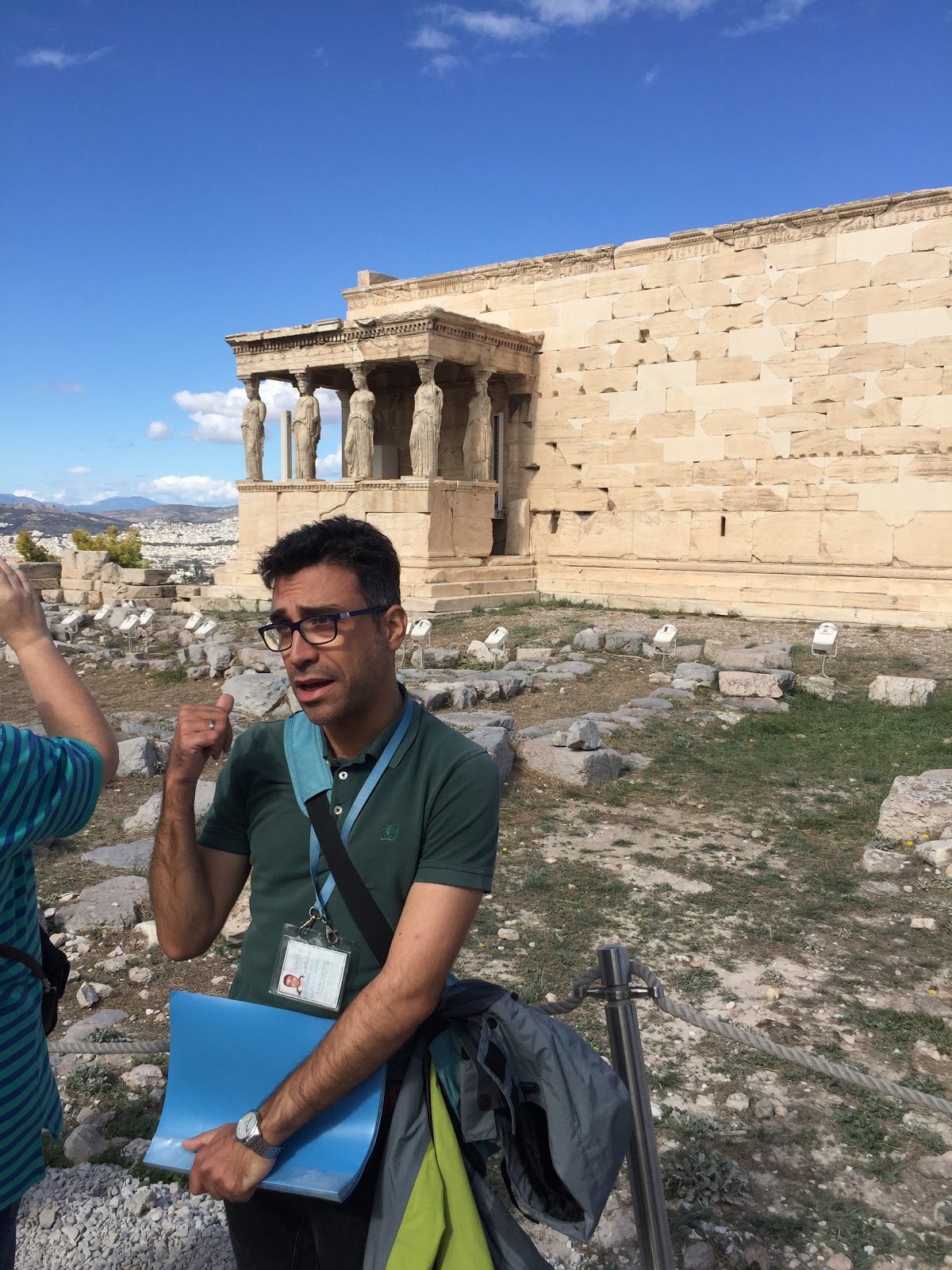
Our Accropolis guide Costas

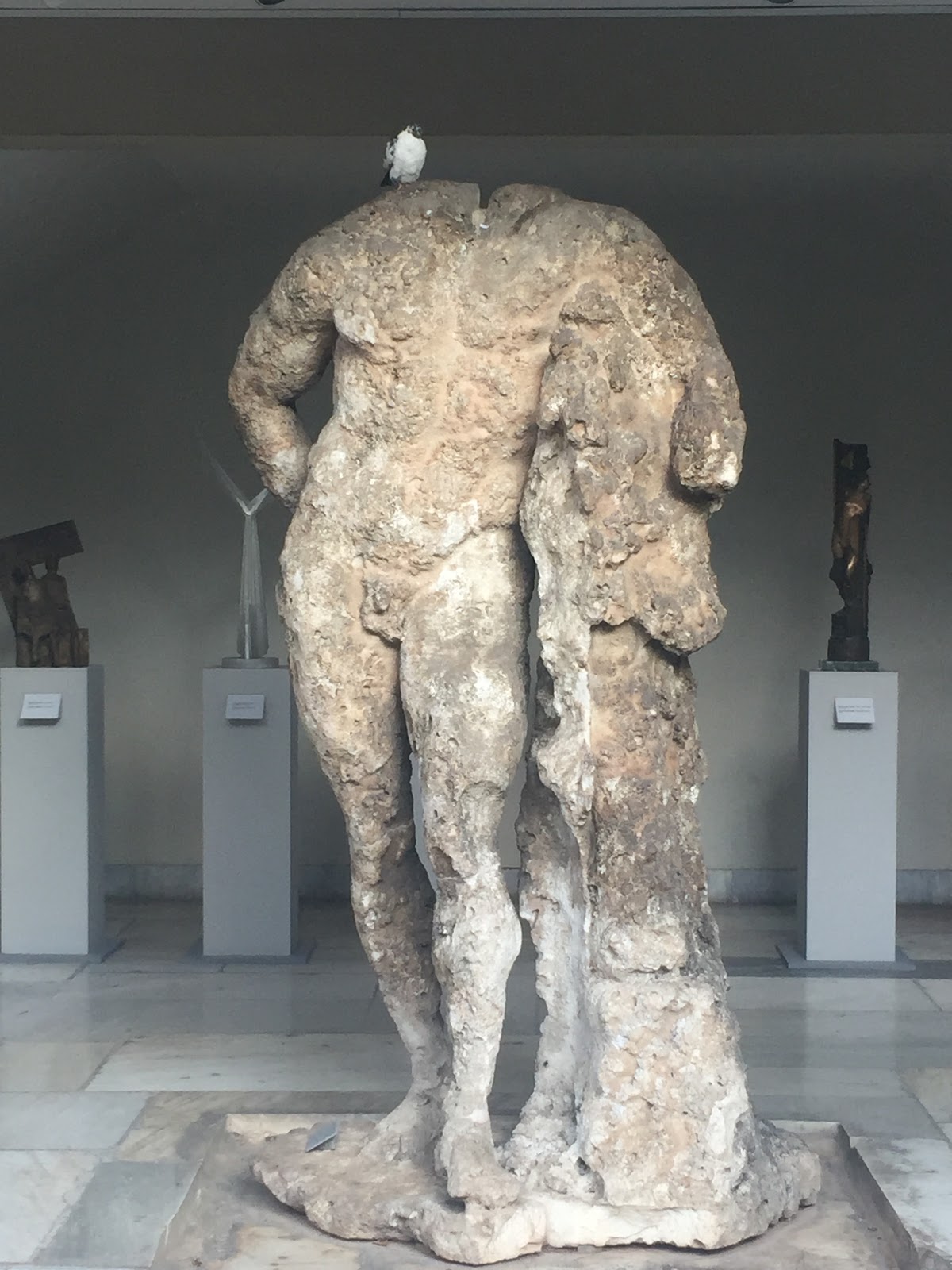
What marble looks like after 2,500 years at the bottom of the sea


Design a site like this with WordPress.com
Get started