
Is just around the corner from the Born market hall seen in the center above.
Sent via BlackBerry from T-Mobile
Is just around the corner from the Born market hall seen in the center above.
Sent via BlackBerry from T-Mobile
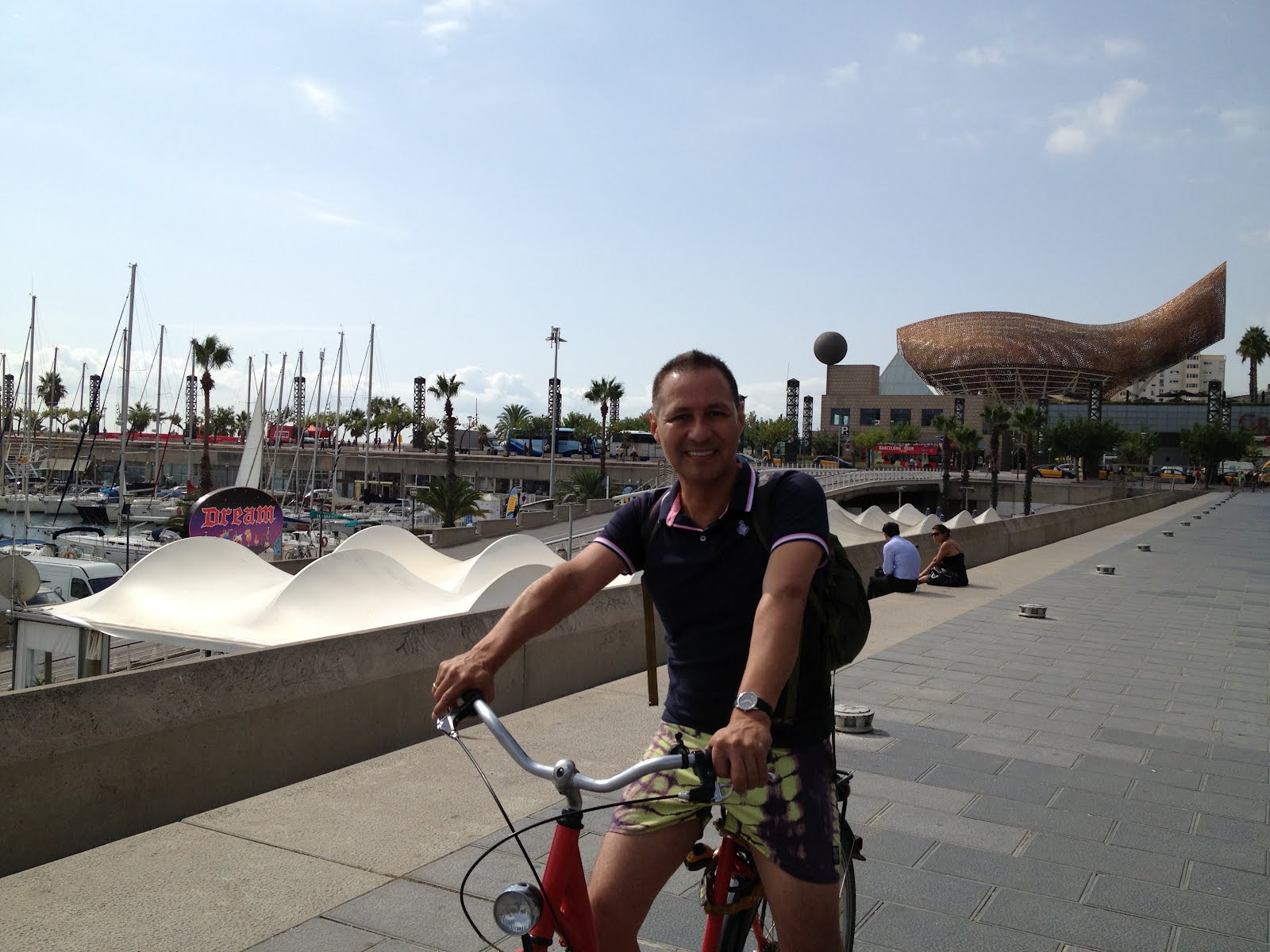

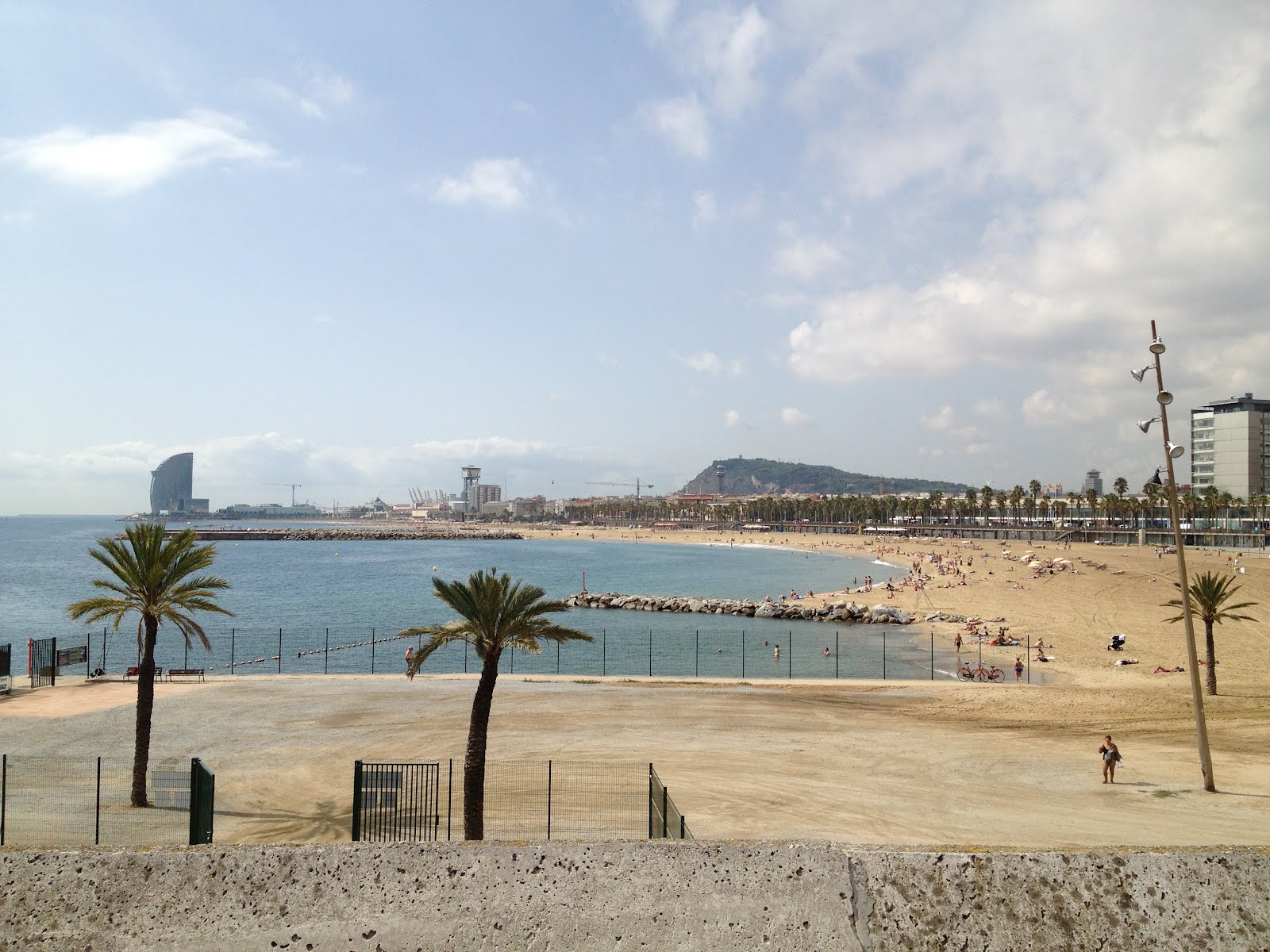
It is 8:15 p.m. We are in Barcelona. It is twilight. We are sitting in a plaza, a small plaza–there are hundreds of them–under a canopy of leafy trees, chestnut and palm.There is a gentle breeze and the sky looks like rain.
Barcelona is old. When Emperor Augustus established an official city here two-thousand years ago–yes, 2000 years ago, old, old, old–there were pre-existing villages many centuries old established atop Montjuic.
This particular part of Barcelona–where we sit, the part visited by travelers–is a maze of narrow streets-too narrow for cars. The streets twist this way and that without right-angles. Getting lost is easy and if you land in an unusually attractive area it is fun, but if you arrive at a gritty, urban, street-urchiny dimly-lit alley it is scary; at least to me it is.
Currently it is 8:15 p.m., too early for dinner for the locals. Instead we are having wine and tapas. The wine is Rioja Crianza. Rioja is the region and Crianza indicates a style of wine-making (aged two-years with at least six-months in oak). Our tapas are two small dishes: 1) Chistorra ala sidra (thin, salty sausage, grilled with cider, sliced into chunky discs); and 2) Escalivada con queso de cabra (mixed vegetables–usually eggplant and red peppers–foil wrapped and roasted till they dissolve–topped with goat cheese and put under the broiler).
Life is good.
Our stay in New York City was marked by good weather, good food and a very good play. The play, “Grace”, has four characters: a husband; a wife; a disfigured neighbor; and an exterminator, Ed Asner. They grapple with finding religion, losing it, and general meaning-of-life issues. The playwrite (how does one spell playwrite?) In an interview said, “at the present time America is having an on-going conversation about whether it is a secular democracy or a religious theocracy”. I am loosely quoting him and I read his words after seeing his play, but he delivered his thesis with a touch that was light, clear and articulate.
But back to Barcelona, on these ultra-narrow streets the buildings on either side are consistently three to four to five floors tall with balconies often hung heavily with drying laundry. It rains frequently. The streets below the balconies are somewhat dark, but clean. Very clean. Every day we see mini-street-cleaning vehicles accompanied by a footman with a high-powered hose traversing the pathways’ nooks and crannies.
Although summer has passed and autumn has begun, the locals are still dressed in shorts, tee-shirts and sandals. And I must say, at the risk of generalizing, the Spanish, the Catalan people–men and women–are very handsome.
“Catalan,” for the unfamiliar, is the name of this region and of it’s language and of it’s culture. The language began one-thousand years ago as a spoken tongue. Two-hundred years later it evolved into a written language with it’s own poetry and literature.
Several times the Catalan culture and language were under threat of extinction, but it’s hold on the local people is so strong it could not be exterminated. When threatened it went into hiding in the mountain villages one in particular, Montserrat, the site of a legendary monastery where Catalan was preserved while it was outlawed by the government of that time. Today, though everyone speaks Spanish (or as it is called here, Castilian) the semi-official language is Catalan. It is taught in the public schools and is the language of the greatest minds in this region.
As a spoken language, the sound of it hits my ear like a melange of Spanish, Portuguese and French. Of course, if I said that to a Catalan they’d smack me.
After all of these sidebars, I return to our table in the plaza at the Tantarantana Bar where our glasses are empty and our tapas plates have been cleared.
Will we now go in search of dinner? Or dessert? Or an adventure on a narrow winding street……?
Marlow and Wes in Barcelona, 18 September 2012
When I last wrote on Thursday night from Carnegie Hall, the conductor, Franz Welser-Möst was about to begin the concert.His downbeat set in motion a 100-minute tale for solo singers and orchestra written near 1915 by the composer Richard Strauss, (no relation to the waltz king.)
The composition is called Salome. Typically done on an opera stage with sets and costumes, this performance was done “concert” style which meant the opera stars, in formal attire, inhabited platforms on stage right and left and behind the orchestra.
Most people are familiar with Salome’s Dance of the Seven Veils. That is the fun part. The less fun part is when Salome, granted whatever wish she desires, says she wants a human head on a platter of silver.
The particular head she desired belonged to Jochanaan. He was a principled man of purity engaged in the serious business of “spread-the-word.” He refused Salome’s advances. She wanted a kiss.
In the end she got her kiss which her man could not prevent because his head was severed and on a platter. That did not dampen her enthusiasm. She kissed away with passion and ardor. And she nibbled his cheeks, as well.
A price was to be paid for her blood lust. It was determined she had gone too far and it was proclaimed: “She must die.” And she did. And it was over.
Creepy stuff. It is from the Bible. Jochanaan is John the Baptist.
The performance was less thrilling than the previous evening’s.
A big fuss was made over soprano, Nina Stemme. It was her Carnegie Hall and Cleveland Orchestra debut.
Her performance was pretty. It was beautiful. But one never would have imagined she was a demented, sadistic revengestress.
Friday, May 25, 2012. My day began with an early morning visit to Eataly to procure croissants stuffed with salted prosciutto. They are oh-so-good.
I bought several. Not for myself, but to bestow upon Yung Chin, the bow maker and Carlos Arcieri, the violin maker. They love good food and these are good.
I took the subway to the 54th Street instrument shops. My first stop was to see the bow-maker.
Customers were milling about with bows. One young lady was seated at the work bench. She was 17 years old. Her presence was part of a high school project–a mini internship–and she was assisting with the rosin on the bows. Yes, she was also a violinist with 14 years of private lessons behind her, but she has been accepted at Princeton this fall and will study engineering. Good for her. Brains and talent.
Next I visited the the violin-maker, his atelier also abuzz with customers. One in particular, Suzanne Scott-Moncrieff, was fascinating. She is a lovely player, but chooses to work in the field of mental health. Music is one of her therapeutic tools. She has studied viola in London and in New York City with two violists whom think the world of, Mr. John White at the Royal Academy of Music and Ms. Mallow, a grand-child of the great American violist, the late Lillian Fuchs.
I told Ms. Suzanne Scott-Moncrieff, my new acquaintance, that I have occasional trouble with a “Moncrieff”, the one that made the–too old fashioned for me–translation of Remembrance of Things Past by Marcel Proust. In it’s day–1920’s–the translation was valued. Now it feels like so much stuffy, Victorian, drawing room dialog. I expected Suzanne to claim no knowledge of that man, instead, she said, “that was my great-uncle.” Now, when I shake my fist at Moncrieff’s syrupy words I will smile and think of his lovely grand-niece, the violist.
Suzanne departed and Gian Carlo Arcieri arrived. He shares the shop with his excellent father. Gian Carlo makes excellent violins and I enjoyed showing them off to Pam Gates. Pam is a colleague from Los Angeles. She was visiting NYC and by coincidence she walked into the shop while I was there.Allow me a sidebar about the bow-maker and the violin-maker. They both have tremendous expertise. They both are capable of producing, from scratch, an exquisite playing object. They both have been at their trades for many decades. However, for some makers, real life intervenes. Marriage. Family. Mortgage. Children’s college tuition. And they find less and less time to produce their own work. Instead they turn to quick, lucrative repair work. I sing the praises of these two men. They sacrificed a life of creating instruments to be available to us, the players, who depend on their ultra-refined skills. I am grateful and cannot express how much I appreciate them. I call them the “aprons”, as opposed to the suits who typically run the shops and have limited knowledge, but are barracuda business men and good actors that play the role of expert.
I moved on to my dinner date with the lovely “anonymous 1” and her friend, the equally lovely “anonymous 2”.
We met downtown (19th Street and Broadway) at ABC Kitchen. I have a relative, a niece, the estimable Karen Shu, who works there. She is a chef prodigy and has a position of serious responsibility in ABC Kitchen’s kitchen.
She was away for the Memorial Day weekend. In her absence she left instructions for the care and feeding of me and my two companions.
Chef Dan came to our table. He welcomed us and made useful recommendations.
We began with cocktails. They were extremely good. Yes, they contained booze, but they were so well blended–with fresh lemon and lime juices, rhubarb puree, basil simple syrup–that I did not notice the booze because my palate was busy ooh-ing and ahh-ing wallowing in the vibrant flavors. They were heavenly.
Of the dishes that arrived to our table, one-third of them arrived “compliments of the chef”. Our full array of consumables included:
•Cocktail: Lemonade with thyme and vodka
•Cocktail: Daiquiri of fresh lime juice, light rum and basil simple syrup
•Cocktail: Rhubarb Cosmopolitan
•Sauteed Fiddle Head Ferns
•Chicken Liver spread on toast
•First of season heirloom tomatoes sliced onto toast
•Salad: Sugar Snap Peas julienned on endive
•Salad: Roasted Beets with micro-greens in a pool of fresh yogurt
•Pizza: Bacon chunks, chopped ramps, fresh black pepper and poached egg in the center
•Roasted Asparagus topped with a sauteed, crumb-coated, poached egg
•Soup: Sweet English Pea with floating gougere
•Fresh Ricotta topped with Rhubarb Puree to spread on toastABC Kitchen is located one block away from the Union Square Farmers Market. On the menu the emphasis is on fresh vegetables.
And the ambiance is attractive and comfortable with excellent service. Finally, the extra attention of Chef Karen adds a measure of love absent in the typical restaurant experience.
I intended to leave ABC in time for my 7:30 ballet appointment, but the meal was so enjoyable I let my departure time come and go.I arrived at The Metropolitan Opera House during the first act of La Bayadere. Late seating was not allowed. I watched Act One in a small theater–nine rows, 16 seats each–just off the lobby, with a large screen.
On the movie screen the ballet looks like so much old-fashioned tutu-mania, but what is corny on the screen, when seen live in the theater, evolves into thrilling, real-time, human physical achievement.
The dance company is called “The American Ballet Theater”. They use The Metropolitan Opera House for their May to June season.
I do not know much about ballet dancing. And I am not much drawn to the romantic, fantasy, fairy-tale stories of the famous ballets. But last year a New York Times photo caught my eye.
In the photo, a ballerina was in the air. She hovered. Or did she float. She looked as if she was blown by the wind. As if she were the leaves on a tree when a breeze hits them and they all move in a coordinated direction. To my eye she looked as if her movements were directed by natural elements. I was fascinated and I jumped at the chance to see her live on stage.
Her name is Osipova. She is Prima Ballerina of a company in St. Petersburg, Russia, but she is an international star and annualy visit the major ballet stages around the world.
Today, my lunch companion explained to me that a leading contemporary choreographer, Alex Ratmansky–who is expert at identifying unusual or unconventional or peculiar qualities in dancers–has created dances for her that turn her oddities into sparkling brilliance.
Saturday, May 26, 2012. It was a scorcher. Blazing sun. Moist air. Sweat beaded up the moment I stepped outside.
I have resisted temptation, but today is the day I will buy, from Eataly, then eat a croissant, sliced and stuffed with salted prosciutto. It is caloric. It is delicious. And today I will eat one.
After purchasing said item, I made my way uptown to the Metropolitan Museum of Art. I arrived sweat-drenched. The indoor air-conditioned climate was welcome.
Even if one goes to the MET to visit a particular gallery it is difficult to get to that gallery without stopping to visit the many temptations one notices through every doorway.
I was headed for the special exhibit devoted to the art collections of the Stein Family–as in Gertrude Stein. En route I was tempted by an Islamic gallery. I gave in. I stopped into galleries of 7th-Century Byzantine art from the specific area of the Nile and Jordan rivers.
It interested me that the jury was still out on the subject of Jesus: whether he was two persons, one human, the other divine. The Council of Chalcedon in 451 wrestled with the issue. In the end, some followers went with: he was a human. And others went with: he was a non-human spirit.
Another controversy occurred under Emperor Leo III (717-741) regarding the appropriateness of religious imagery in the empire, Iconoclasm. Eventually, in 842, Iconoclasm “was officially repelled and tesserae” (tiny tile fragments in mosaics) that depicted religious faces were removed, scrambled and re-installed.
One last item, (of interest because it was so ordinary,) was a 6th-Century letter from Egypt written on papyrus. It sought a status report on the order of wool for Patricia: “It is not ready. Come back later.”
I tried again to get to the Stein Collection. But I saw a large marble statue from the late 1500’s. A male nude. Playing the violin. I have never seen a three dimensional sculpture of a violin. I photographed it for study later.
Finally, I got to the Stein Collection. Gertrude and her brothers, Michael and Leo lived in Paris for decades beginning about 1903.
There were show stopping paintings: Picasso, The Boy with a Horse, 1905; Cezanne, The Bathers, 1897.
In another room there was a plaque expressing regret that Sally Stein (Gertrude’s sister-in-law), an intimate correspondent with Henri Matisse burned all of their correspondence.
On another wall, a brief, very brief mention was made of World War II and the Nazi Occupation of France. Jewish, Gertrude Stein survived WWII in good shape. She had negotiated an agreement to be protected from the Germans. Monsieur Fäy was her french contact and he had direct ties to the Nazis.
Finally, we all know that “cubism” was a major revolution in painting at the start of the 20th-Century. Picasso was one of the pioneers. On exhibit were a dozen plus paintings from 1914. They serve as a visual laboratory. He tries this idea and that idea. Some of them work well. Others look unconvincing. After working out ideas in those paintings he was the undisputed king of cubism.
After the Metropolitan Museum of Art, I did not have an afternoon plan so I bought a ticket to the silly, slapstick, British variety show called, One Man, Two Guv’nors.
As expected, it was silly and slapstick and I enjoyed it alot. The star, new to America, is a personable, smart, funny, British every-man.
Afterward, I met friends at Sardi’s. I had two daiquiris (lime juice and light rum) and a club sandwich.
From there I headed to the East Village and stopped in on Duane Cerny at D/L Cerny where niece, Lily’s prom dress was tailor made. It was very humid and water poured from my brow like an overflowing tub. In spite of that, we had a fine conversation about Lily, and about the Catskill Mountains where Duane has a house on 40 acres–since 11 years ago–that he has been adding a barn to with his own two hands.
And we reminisced about Seth Abrams, an actor friend of Duane’s that I met in the shop. Born with a defective heart, Seth was a at risk of a major stroke. Two Decembers ago he had that stroke. He is determined to recover. He is an actor on the verge of great opportunities. Duane’s clothes are 1950-ish in their aesthetic and Seth, Duane’s regular customer, is the perfect model for them.
Duane and I chatted too long. Fortunately, my next destination, The Public Theater, was across the street. I had 8 minutes before my show was to begin.I saw February House, a new musical by Gabriel Kahane, a 20-something year old “genius” son of the international concert pianist, Jeffrey Kahane.
Gabriel’s show depicts the events of an actual house in Brooklyn during the years 1940 and 1941 when a cluster of genius-level creative artists–writers, composers, stripper, in particular, Carson McCullers, W.H. Auden, Gypsy Rose Lee–shared a house together. Most of them were on the cusp of fame, at the start of their careers and had gravitated to New York City from far-flung places–London, England and North Carolina, etcetera.The premise of the show was interesting. The style of the songs varied from very tuneful and accessible to very modern, dissonant and challenging. I am not one to shy away from “challenging”, but I found the tuneful songs more effective than the challenging ones.
The composer is very talented and mature beyond his years. This show is terrific in many aspects. And the other aspects were like a work-in-progress that had unrealized greatness waiting to be refined from the musical sketches.
I went to the show in baggy shorts, tee shirt and flip-flops, not appropriate theater clothes, but necessary for the climate.
After the show I walked back to the hotel via Washington Square and Greenwich Village. The streets were full. There was a balmy breeze. And though my flip-flopped feet were tired the walk was very satisfying and earned me a good sleep.
Sunday, May 27, 2012. My revels have come to an end. I call my trips to New York City, “feeding my brain.” This trip was a feast. I absorbed smart language, met interesting strangers, heard brilliant virtuoso music performances, saw a human defy gravity in the name of ballet. And I shared company with, broke bread with and drank cocktails with fascinating companions.
Life is good.
And the perfect conclusion came in the form of dear friends–more than friends, really–Kathy and Sam who arrived to NYC in time for a Sunday breakfast.
I checked out of my hotel and met them at the Lucerne Hotel cafe, Nice Matin, on the Upper West Side.
We have traveled the world together: Cuba, Spain, Japan, Belgium, Scandinavia. We have traveled and we shall continue to travel together. Where shall we go next? That was the lively topic we discussed over berries with melon, pineapple, yogurt and granola. And over oatmeal with yellow raisins and half and half. And over brioche toast with butter and jam.
Life is very good.
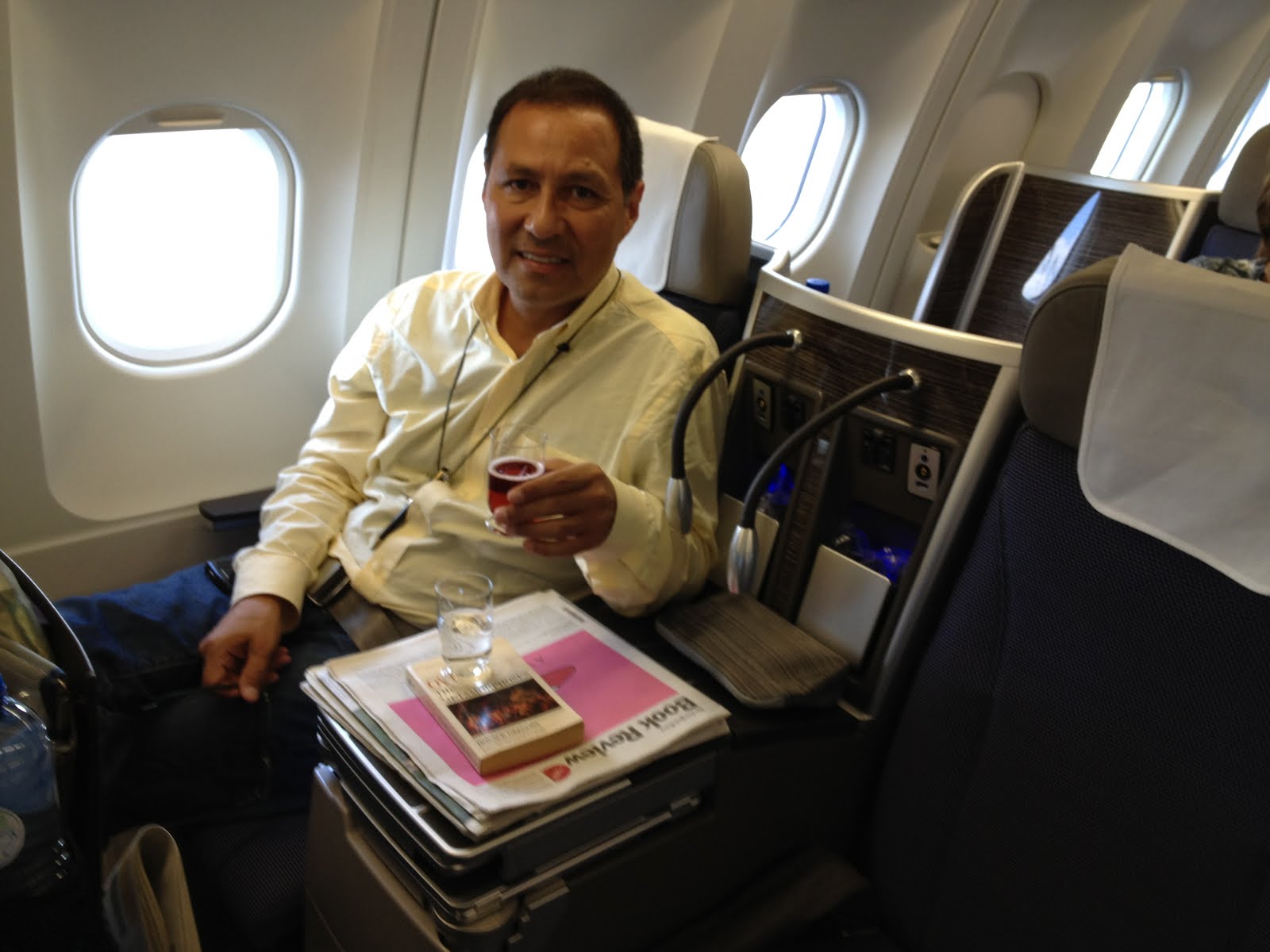
Now I am on the plane, basking in the luxury of business class–Wes is too good to me; thank you, Wesley–where they are pampering me with food and wine as we soar home at 500 plus miles-per-hour.
Thank you for reading.
Marlow: May 27, 2012, in the air en route to California
Sent via BlackBerry from T-Mobile
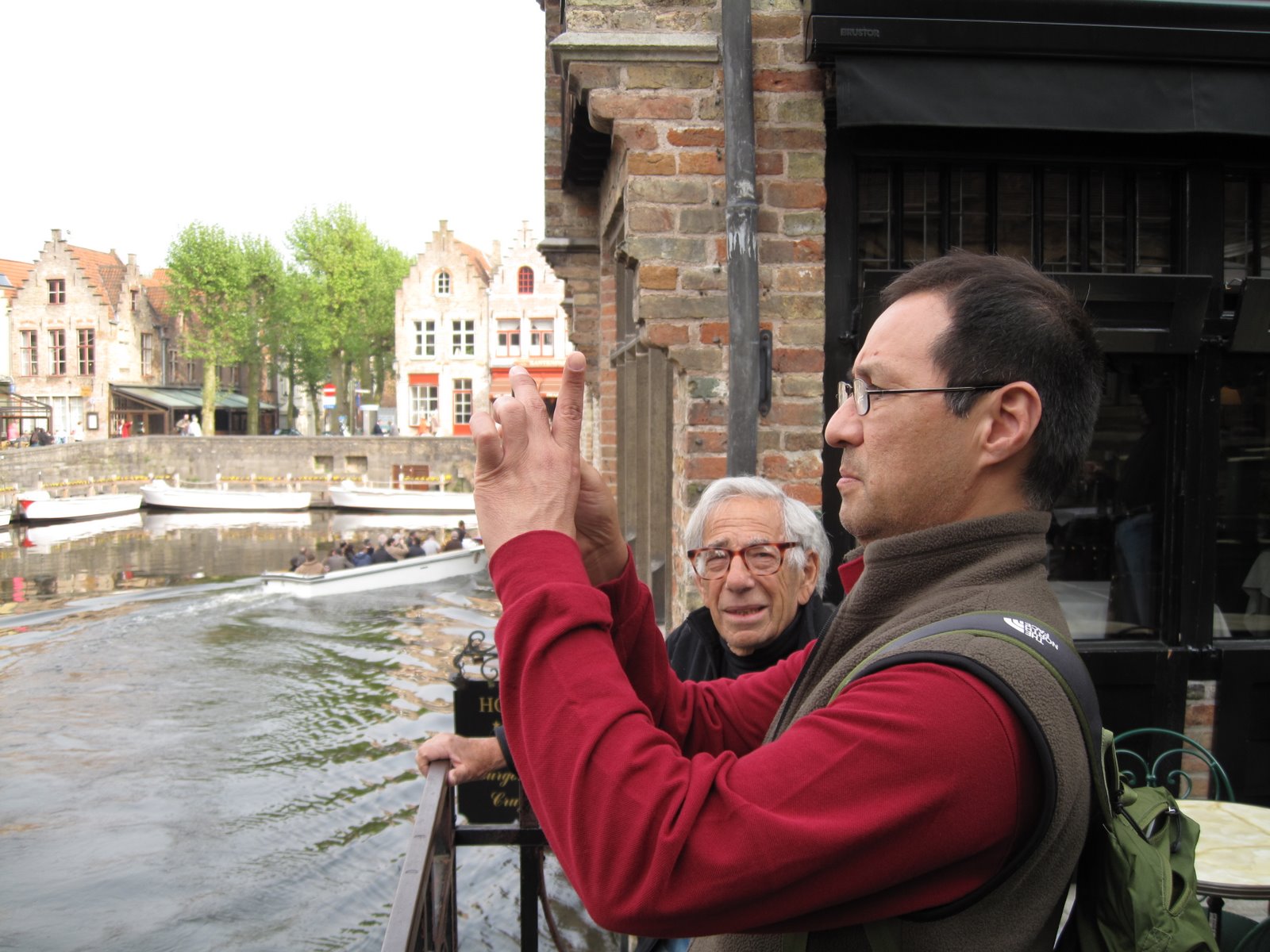
Marlow writes: 5/18/09, Final Entry, Paris Charles de Gaulle Airport. Another great trip is concluding. Wes is a virtuoso planner. Smooth and seamless travel. Thank you, Wes.
This weekend in Paris was intermittently rainy. Not stormy. Just occasional light showers. At times, we bicycled. In the rain. At rush hour. In heavy traffic. And I loved it. During this stay, I became more oriented with the lay out of Paris in a few bike rides than I had during twenty years of travel here in cars, trains and taxis.
We were, more or less, low key. We ate out a few times in local cafés, nothing elaborate. We brought in food. Rose Champagne. Fresh chevre. Baguettes. And two times, Roland prepared meals: artichoke heart, thin sliced with parmeggiano shavings, lemon juice and olive oil; and chicken soup with fresh herbs, tiny pasta, lemon juice, finished with lemon zest and fresh parsley and served with fresh, oven-hot parmesan bread. Thank you, Roland.
Another meal and the reason for us coming to Paris (rather than traveling home from Bruges) was our dinner on Thursday evening with Mr. Bernard Millant and his partner, Sepali. Several months ago, I contacted Mr. Millant and asked if he would join us for dinner in Paris. He was gracious and instead asked us to be his guests.
The venue was in the Bois de Boulogne, a large park–forest really–in Paris. The restaurant was a beautiful and enchanting chalet on an island. We took a boat across the water.
Conversation was lively. The food was delicious. Sepali was beautiful and interesting. And the evening sped by. Afterward, Bernard and Sepali drove us home. Along the way, places of interest were pointed out. Paris after dark, with hosts as excellent as Bernard and Sepali, is a special and memorable experience.
Last night, we were joined for dinner by Joel Soultanian. A Paris violist who Roland and I have known for more than 30 years. When Wes and I last saw Joel it was in the Dordogne in southern France where his wife was born. Her village, Ste. Genies, is gorgeous: rolling green hills, ancient stone buildings, rivers.
We are now aboard our plane: Paris to Chicago. Waiting for the doors to close.
It has been a fantastic voyage. My writing has been far too wordy and too heavy laden with superlatives. But. But how can one not exclaim loudly the beauty, majesty of the Norwegian fjords. Somethings in life are superlative. And their unique and special qualities cannot be overstated. Such was the nature of our journey. Thank you, Wes, for your fine planning. And Sam and Roland for your companionship.
Thank you for reading.
Sent via BlackBerry from T-Mobile
Filmed from the window in Roland’s room on the top floor of the apartment building. You can see why we spent so much time in the apartment – the views were just wonderful.
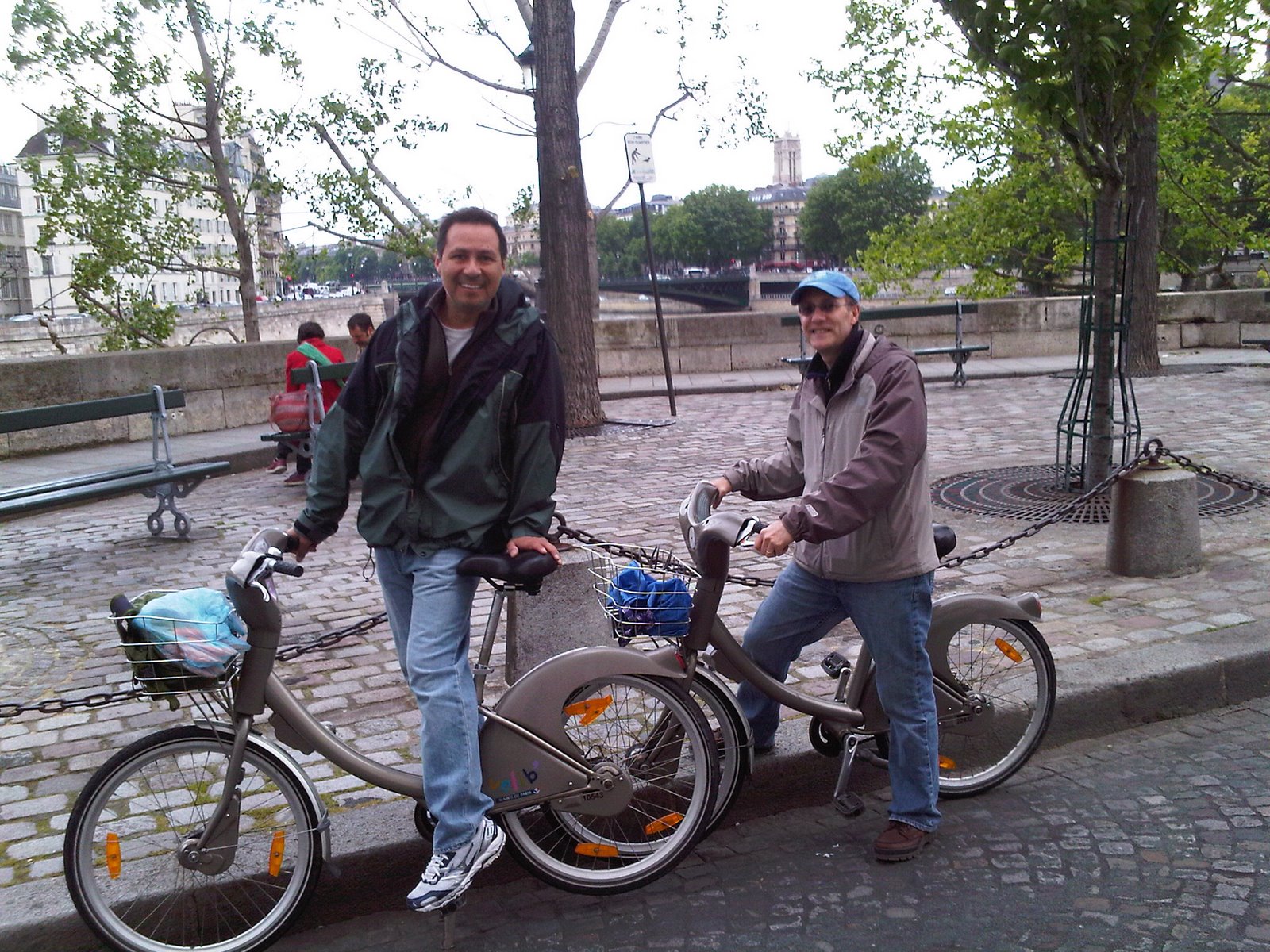
Exploring Paris by bike!
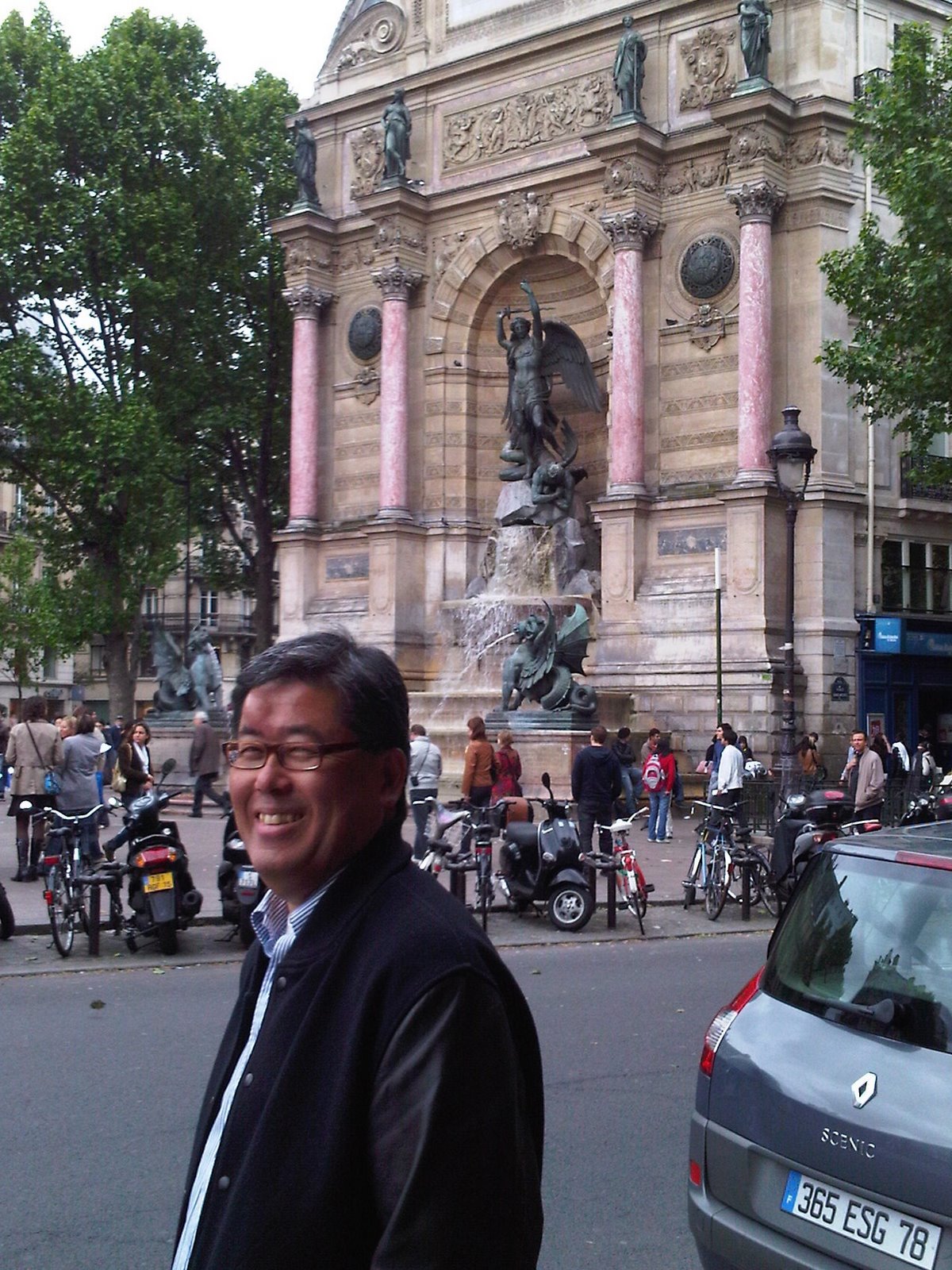
Roland enjoying Paris!
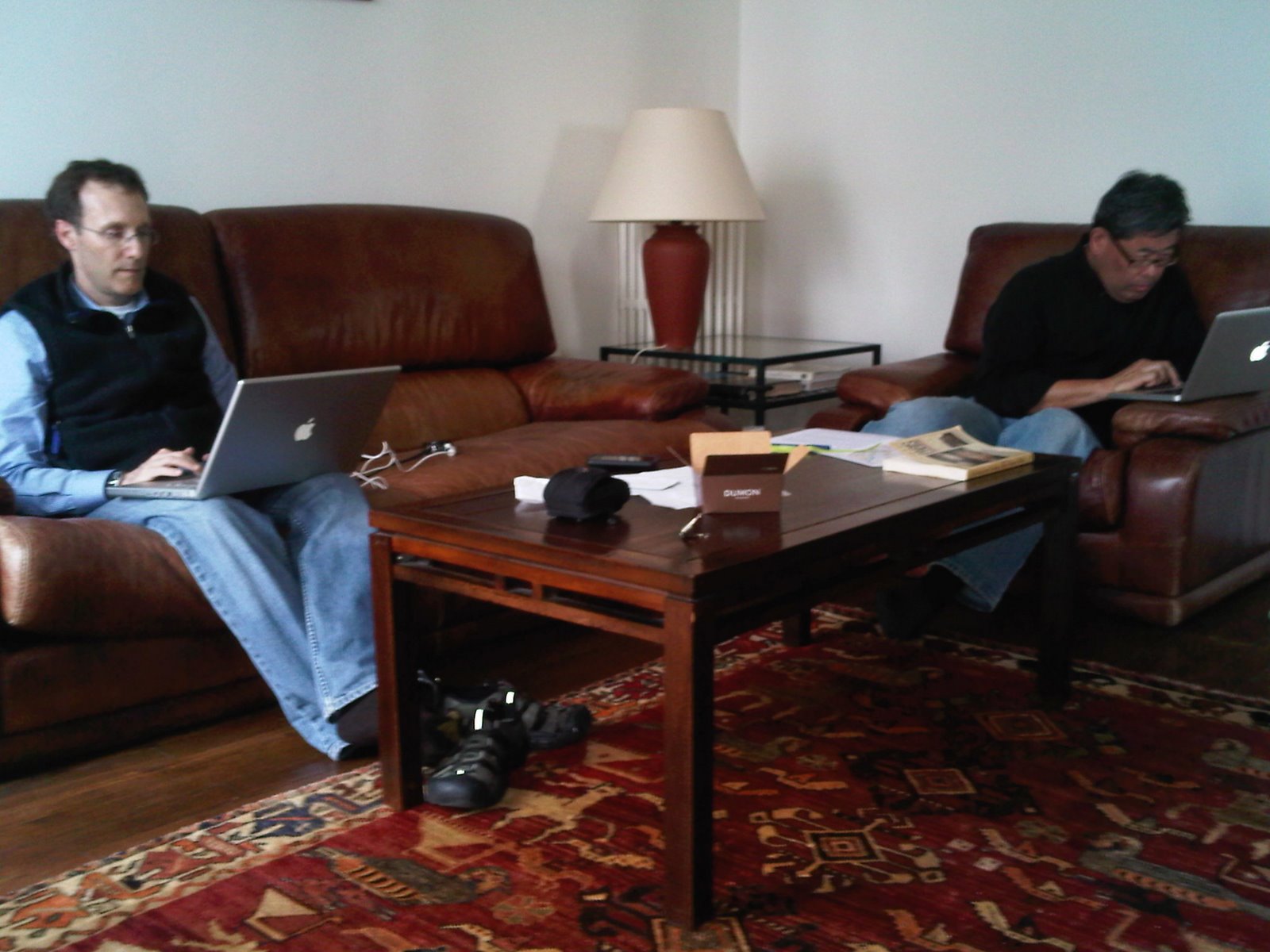
Marlow’s traveling companions
We’ve been exploring Paris by bike. Taking advantage of the many “free” bike rental stations called “Velib” located around the City. After registering for a cost of one Euro, you can use any bike for up to 30 minutes at no charge. You can return the bike to any bike station. The service is all automated and you use a kiosk to handle the rental transaction. It is very convenient and makes it easy to move from one area to another. There are hundreds of bike rental stations around the City and each station has between 15 and 30 bikes available for use at any time.
We arrived in Paris on Thursday night and it was familiar enough that it felt a bit like we had arrived at home. We’ve spent a lot of time just enjoying the apartment. Roland has been treating us to wonderful home-cooked meals. We’ve been shopping in street markets and pretending that we live here. If only for the weekend.
Tonight we will be having dinner with an old friend of Marlow and Roland’s who now lives in Paris. And the taxi arrives at 8 a.m. tomorrow morning to take us to the airport for our flight back home.
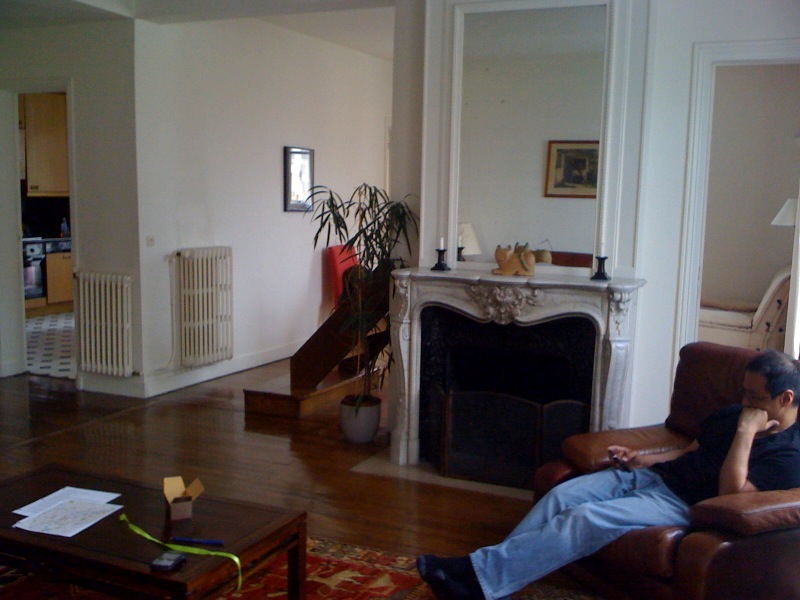
We arrived in Paris this afternoon after a short train trip from Brugges, with a change of train in Brussels to the high-speed Thylys train. The train travels at a standard speed until it reaches the France border where the train tracks have been upgraded to accommodate higher speeds. Once in France, the speed of the train almost triples and we reached Paris in just over an hour.
We are staying in a two bedroom apartment in the Marais. It is quite large, about 1,100 square feet. Very nice kitchen and living spaces. The only draw back is the forth floor walk-up. But the views are incredible. We look out over the rooftops of the Marais and can see the Eifel Tower and Centre Pompidou from our windows.
Tonight we had dinner in a restaurant in the Bois de Boulogne located on an island in the large lake. We took a short two minute boat to reach the restaurant that is located in a swiss chalet reputedly moved here by Napoleon in the early 1800’s.


 Wes & Marlow Travel Blog